DICOM PS3.16 2026b — Ресурс сопоставления содержимого (Content Mapping Resource)
Copyright © 2026 NEMA
Содержание
- Уведомление и отказ от ответственности
- Предисловие
- 1. Область и сфера применения
- 2. Нормативные ссылки
- 3. Определения
- 4. Обозначения и сокращения
- 5. Соглашения
- 6. Форма спецификаций шаблонов
-
- 6.1. Определение полей таблицы шаблона
-
- 6.1.1. Номер строки
- 6.1.2. Уровень вложенности (Nesting Level, NL)
- 6.1.3. Отношение с исходным элементом содержимого (родительским)
- 6.1.4. Тип значения (Value Type, VT)
- 6.1.5. Имя концепта (Concept Name)
- 6.1.6. Кратность значения (Value Multiplicity, VM)
- 6.1.7. Тип требования
- 6.1.8. Условие
- 6.1.9. Ограничение набора значений
- 6.2. Специальные соглашения для таблиц шаблонов
- 7. Спецификации контекстных групп DCMR
- 8. Схемы кодирования
- A. Structured Reporting Templates (Normative)
-
- General Templates.
-
- TID 300. Measurement
- TID 301. Measurement Content
- TID 310. Measurement Properties
- TID 311. Measurement Statistical Properties
- TID 312. Normal Range Properties
- TID 314. Ratio
- TID 315. Equation or Table
- TID 320. Image or Spatial Coordinates
- TID 321. Waveform or Temporal Coordinates
- TID 350. References to Supporting Evidence
- TID 351. Previous Reports
- TID 400. Reference Location
- TID 1000. Quotation
- TID 1001. Observation Context
- TID 1002. Observer Context
- TID 1003. Person Observer Identifying Attributes
- TID 1004. Device Observer Identifying Attributes
- TID 1005. Procedure Study Context
- TID 1006. Subject Context
- TID 1007. Subject Context, Patient
- TID 1008. Subject Context, Fetus
- TID 1009. Subject Context, Specimen
- TID 1010. Subject Context, Device
- TID 1015. Person Observer Description
- TID 1020. Person Participant
- TID 1021. Device Participant
- TID 1025. Indications for Procedure
- TID 1200. Language Designation
- TID 1201. Language of Value
- TID 1202. Language of Name and Value
- TID 1204. Language of Content Item and Descendants
- TID 1210. Equivalent Meaning(s) of Concept Name
- TID 1211. Equivalent Meaning(s) of Value
- TID 1350. Negation Modifier, Presence of Finding
- TID 1400. Linear Measurement
- TID 1401. Area Measurement
- TID 1402. Volume Measurement
- TID 1404. Numeric Measurement
- TID 1406. Three Dimensional Linear Measurement
- TID 1410. Planar ROI Measurements and Qualitative Evaluations
- TID 1411. Volumetric ROI Measurements and Qualitative Evaluations
- TID 1419. ROI Measurements
- TID 1420. Measurements Derived From Multiple ROI Measurements
- TID 1500. Measurement Report
- TID 1501. Measurement and Qualitative Evaluation Group
- TID 1502. Time Point Context
- TID 1600. Image Library
- TID 1601. Image Library Entry
- TID 1602. Image Library Entry Descriptors
- TID 1603. Image Library Entry Descriptors for Projection Radiography
- TID 1604. Image Library Entry Descriptors for Cross-Sectional Modalities
- TID 1605. Image Library Entry Descriptors for CT
- TID 1606. Image Library Entry Descriptors for MR
- TID 1607. Image Library Entry Descriptors for PET
- TID 1608. Image Library Entry Descriptors for Prostate Multiparametric MR
- TID 1700. Generic Blood Lab Measurements
- TID 1701. Imaging Study Quality
- Diagnostic Imaging Report Templates.
-
- TID 2000. Basic Diagnostic Imaging Report
- TID 2001. Basic Diagnostic Imaging Report Observations
- TID 2002. Report Narrative
- TID 2005. Transcribed Diagnostic Imaging Report
- TID 2006. Imaging Report With Conditional Radiation Exposure and Protection Information
- TID 2007. Imaging Procedure Description
- TID 2008. Radiation Exposure and Protection Information
- TID 2010. Key Object Selection
- Optometry and Ophthalmology Templates.
-
- TID 2020. Spectacle Prescription Report
- TID 2021. Template for Spectacle Prescription Details
- TID 2100. Macular Grid Thickness and Volume Report
- TID 2101. Macular Grid Thickness and Volume Measurement
- TID 2102. Quality Rating Identification
- TID 2120. Ophthalmology Measurements Group
- TID 2121. Visual Field Key Measurements
- TID 2122. Optic Disc Key Measurements
- TID 2123. Circumpapillary Retinal Nerve Fiber Layer Key Measurements
- TID 2124. Macular Thickness Key Measurements
- TID 2125. Ganglion Cell Key Measurements
- TID 2126. Endothelial Cell Count Key Measurements
- TID 2127. Ophthalmic Image ROI Measurements
- Procedure Log IOD Templates.
-
- TID 3001. Procedure Log
- TID 3010. Log Entry Qualifiers
- TID 3100. Procedure Action
- TID 3101. Image Acquisition
- TID 3102. Waveform Acquisition
- TID 3103. Referenced Object
- TID 3104. Consumables
- TID 3105. Lesion Identification and Properties
- TID 3106. Drugs/Contrast Administered
- TID 3107. Device Used
- TID 3108. Intervention
- TID 3109. Measurements
- TID 3110. Impressions or Findings
- TID 3111. Percutaneous Entry
- TID 3112. Specimen Obtained
- TID 3113. Patient Support
- TID 3114. Patient Assessment
- TID 3115. ECG ST Assessment
- Quantitative Ventricular Analysis Report SR IOD Templates.
- Quantitative Arterial Analysis Report SR IOD Templates.
- IVUS Report Templates.
- Stress Testing Report Templates.
-
- TID 3300. Stress Testing Report
- TID 3301. Stress Test Procedure Description
- TID 3303. Stress Test Phase Data
- TID 3304. Stress Test Measurement Group
- TID 3307. NM/PET Perfusion Measurement Group
- TID 3309. Stress Echo Measurement Group
- TID 3311. Stress Test Summary
- TID 3312. Physiological Summary
- TID 3313. Stress ECG Summary
- TID 3317. Stress Imaging Summary
- TID 3318. Comparison to Prior Stress Study
- TID 3320. Conclusions and Recommendations
- Hemodynamics Report Templates.
-
- TID 3500. Hemodynamics Report
- TID 3501. Hemodynamics Measurement Group
- TID 3504. Arterial Pressure Measurement
- TID 3505. Atrial Pressure Measurement
- TID 3506. Venous Pressure Measurement
- TID 3507. Ventricular Pressure Measurement
- TID 3508. Gradient Measurement
- TID 3509. Blood Velocity Measurement
- TID 3510. Vital Signs
- TID 3515. Cardiac Output Measurement by Indicator Dilution
- TID 3516. Blood Lab Measurements
- TID 3520. Hemodynamic Clinical Context
- TID 3521. Relative Time
- TID 3530. Hemodynamic Acquisition Context
- TID 3550. Pressure Waveform Measurements
- TID 3560. Derived Hemodynamic Measurements
- TID 3570. Summary, Hemodynamics
- TID 3601. Procedure Context
- TID 3602. Cardiovascular Patient Characteristics
- TID 3603. Procedure Environmental Characteristics
- ECG Report Templates.
-
- TID 3700. ECG Report
- TID 3701. Clinical Context, ECG (Retired)
- TID 3702. Prior ECG Study
- TID 3704. Patient Characteristics for ECG
- TID 3708. ECG Waveform Information
- TID 3713. ECG Global Measurements
- TID 3714. ECG Lead Measurements
- TID 3715. ECG Measurement Source
- TID 3717. ECG Qualitative Analysis
- TID 3718. ECG Interpretive Statement (Retired)
- TID 3719. Summary, ECG
- Waveform Annotation Templates.
- Cath Lab Clinical Report Templates.
-
- TID 3800. Cardiac Catheterization Report
- TID 3802. Cardiovascular Patient History
- TID 3803. Patient Presentation, Cath
- TID 3806. Cath Procedure
- TID 3807. Percutaneous Coronary Intervention Procedure
- TID 3808. Lesion Intervention Information
- TID 3809. Other Interventional Procedures
- TID 3810. Cardiac Catheterization Findings
- TID 3812. Hemodynamic Findings
- TID 3814. Left Ventriculography Findings
- TID 3815. Right Ventriculography Findings
- TID 3816. Ventricular Assessment
- TID 3817. Coronary Arteriography Findings
- TID 3818. Other Cardiographic Findings
- TID 3819. Common Findings
- TID 3820. Adverse Outcomes, Cath
- TID 3824. Summary, Cath
- TID 3828. Discharge Summary, Cath
- TID 3829. Problem Properties
- TID 3830. Procedure Properties
- TID 3831. Medical Device Use
- CT/MR Cardiovascular Analysis Report Templates.
-
- TID 3900. CT/MR Cardiovascular Analysis Report
- TID 3901. Procedure Summary
- TID 3902. Vascular Analysis
- TID 3905. Calcium Scoring Results
- TID 3906. Vascular Section Measurements
- TID 3907. Vessel Measurements
- TID 3908. Vascular Lesion
- TID 3909. Best Illustration of Findings
- TID 3910. Flow Quantification
- TID 3911. Plaque Properties
- TID 3912. Stenosis Properties
- TID 3913. Aneurysm Properties
- TID 3914. Arterial Dissection Properties
- TID 3915. Vascular Occlusion Properties
- TID 3916. Stent Properties
- TID 3917. Aneurysm Measurements
- TID 3920. Ventricular Analysis Results
- TID 3921. Ventricular Measurements
- TID 3922. Absolute Values of Ventricular Measurements
- TID 3923. BSA-Normalized Ventricular Measurements
- TID 3924. Heart Rate-Normalized Ventricular Measurements
- TID 3925. Ventricular Thickening Analysis
- TID 3926. Myocardial Perfusion Analysis
- TID 3927. Report Summary
- TID 3929. Cardiovascular Analysis Observation Context
- TID 3990. Two Dimensional Measurement Graph
- Mammography CAD SR IOD Templates.
-
- TID 4000. Mammography CAD Report
- TID 4001. Mammography CAD Overall Impression/Recommendation
- TID 4002. Mammography CAD Impression/Recommendation Body
- TID 4003. Mammography CAD Individual Impression/Recommendation
- TID 4004. Mammography CAD Composite Feature
- TID 4005. Mammography CAD Composite Feature Body
- TID 4006. Mammography CAD Single Image Finding
- TID 4007. Mammography CAD Breast Composition
- TID 4008. Mammography CAD Breast Geometry
- TID 4009. Mammography CAD Individual Calcification
- TID 4010. Mammography CAD Calcification Cluster
- TID 4011. Mammography CAD Density
- TID 4012. Mammography CAD Non-lesion
- TID 4013. Mammography CAD Selected Region
- TID 4014. CAD Image Quality
- TID 4015. CAD Detections Performed
- TID 4016. CAD Analyses Performed
- TID 4017. CAD Detection Performed
- TID 4018. CAD Analysis Performed
- TID 4019. Algorithm Identification
- TID 4020. CAD Image Library Entry
- TID 4021. Mammography CAD Geometry
- TID 4022. CAD Observation Context
- TID 4023. CAD Operating Points
- Chest CAD SR IOD Templates.
-
- TID 4100. Chest CAD Report
- TID 4101. Chest CAD Findings Summary
- TID 4102. Chest CAD Composite Feature
- TID 4103. Chest CAD Composite Feature Body
- TID 4104. Chest CAD Single Image Finding
- TID 4105. Chest CAD Descriptors
- TID 4106. Response Evaluation
- TID 4107. Chest CAD Geometry
- TID 4108. Tracking Identifier
- Colon CAD SR IOD Templates.
- Breast Imaging Report Templates.
-
- TID 4200. Breast Imaging Report
- TID 4201. Breast Imaging Procedure Reported
- TID 4202. Breast Imaging Report Narrative
- TID 4203. Breast Imaging Assessment
- TID 4204. Breast Imaging Report Intervention Section
- TID 4205. Breast Composition Section
- TID 4206. Breast Imaging Report Finding Section
- TID 4207. Breast Imaging Pathology Results
- TID 4208. Breast Imaging Report Supplementary Data
- TID 4209. Breast Patient Characteristics
- Prostate Imaging Report Templates.
- OB-GYN Report Templates.
-
- TID 5000. OB-GYN Ultrasound Procedure Report
- TID 5001. OB-GYN Patient Characteristics
- TID 5002. OB-GYN Procedure Summary Section
- TID 5003. OB-GYN Fetus Summary
- TID 5004. Fetal Biometry Ratio Section
- TID 5005. Fetal Biometry Section
- TID 5006. Fetal Long Bones Section
- TID 5007. Fetal Cranium Section
- TID 5008. Fetal Biometry Group
- TID 5009. Fetal Biophysical Profile Section
- TID 5010. Amniotic Sac Section
- TID 5011. Early Gestation Section
- TID 5012. Ovaries Section
- TID 5013. Follicles Section
- TID 5014. Follicle Measurement Group
- TID 5015. Pelvis and Uterus Section
- TID 5016. LWH Volume Group
- TID 5017. Follicle Count Group
- TID 5025. OB-GYN Fetal Vascular Ultrasound Measurement Group
- TID 5026. OB-GYN Pelvic Vascular Ultrasound Measurement Group
- TID 5030. Fetal Anatomy Survey Section
- Vascular Ultrasound Report Templates.
- Echocardiography Procedure Report Templates.
-
- TID 5200. Echocardiography Procedure Report
- TID 5201. Echocardiography Patient Characteristics
- TID 5202. Echo Section
- TID 5203. Echo Measurement
- TID 5204. Wall Motion Analysis
- TID 5220. Pediatric, Fetal and Congenital Cardiac Ultrasound Reports
- TID 5221. Cardiac Ultrasound Pediatric Echo Measurement Section
- TID 5222. Pediatric, Fetal and Congenital Cardiac Ultrasound Section
- TID 5223. Pediatric, Fetal and Congenital Cardiac Ultrasound Measurement
- TID 5225. Cardiac Ultrasound Fetal Characteristics
- TID 5226. Cardiac Ultrasound Summary Section
- TID 5227. Cardiac Ultrasound Fetal Summary Section
- TID 5228. Cardiac Ultrasound Fetal Measurement Section
- TID 5229. Cardiac Ultrasound Post-Coordinated Measurement Section
- TID 5230. Fetal Cardiovascular Profile Section
- TID 5240. Myocardial Strain Analysis
- Simplified Adult Echocardiography Templates.
- Structural Heart Procedure Templates.
- Ultrasound Shear Wave Elastography Templates.
- Implantation Plan SR Document Templates.
- Acquisition Context SR IOD Templates.
-
- TID 8101. Preclinical Small Animal Image Acquisition Context
- TID 8110. Biosafety Conditions
- TID 8121. Animal Housing
- TID 8122. Animal Feeding
- TID 8130. Anesthesia
- TID 8131. Medications and Mixture Medications
- TID 8140. Heating Conditions
- TID 8150. Circadian Effects
- TID 8170. Physiological Monitoring Performed During Procedure
- TID 8182. Exogenous Substance Administration
- Relevant Patient Information Templates.
- X-Ray Radiation Dose SR IOD Templates.
-
- TID 10001. Projection X-Ray Radiation Dose
- TID 10002. Accumulated X-Ray Dose
- TID 10003. Irradiation Event X-Ray Data
- TID 10003A. Irradiation Event X-Ray Detector Data
- TID 10003B. Irradiation Event X-Ray Source Data
- TID 10003C. Irradiation Event X-Ray Mechanical Data
- TID 10004. Accumulated Fluoroscopy and Acquisition Projection X-Ray Dose
- TID 10005. Accumulated Mammography X-Ray Dose
- TID 10006. Accumulated Cassette-based Projection Radiography Dose
- TID 10007. Accumulated Total Projection Radiography Dose
- CT Radiation Dose SR IOD Templates.
- Radiopharmaceutical Radiation Dose SR IOD Templates.
- Patient Radiation Dose SR IOD Templates.
- Enhanced X-Ray Radiation Dose SR IOD Templates.
-
- TID 10040. Enhanced X-Ray Radiation Dose
- TID 10041. Accumulated Dose Data
- TID 10042. Irradiation Event Summary Data
- TID 10043. Irradiation Details
- TID 10044. Radiation Source Characteristics
- TID 10045. Radiation Technique
- TID 10046. Filtration
- TID 10047. Attenuators
- TID 10048. Radiation Output
- TID 10049. Radiation Field Area
- TID 10050. X-Ray Source Reference Coordinate System
- TID 10051. Beam Position
- TID 10052. Attenuator Position
- TID 10053. Patient Attenuation Characteristics
- TID 10054. Procedure Characteristics
- TID 10055. Attenuator Characteristics
- Imaging Agent Administration SR IOD Templates.
-
- Planned Imaging Agent Administration SR IOD Templates.
-
- TID 11001. Planned Imaging Agent Administration
- TID 11002. Imaging Agent Information
- TID 11003. Imaging Agent Administration Activity
- TID 11004. Imaging Agent Component
- TID 11005. Imaging Agent Administration Consumable
- TID 11006. Imaging Agent Administration Steps
- TID 11007. Imaging Agent Administration Step
- TID 11008. Imaging Agent Administration Phase
- Performed Imaging Agent Administration SR IOD Templates.
- Miscellaneous Ultrasound Report Templates.
- B. DCMR Context Groups (Normative)
-
- B.1. Context Groups
- CID 2. Anatomic Modifier
- CID 4. Anatomic Region
- CID 5. Transducer Approach
- CID 6. Transducer Orientation
- CID 7. Ultrasound Beam Path
- CID 8. Angiographic Interventional Device
- CID 9. Image Guided Therapeutic Procedure
- CID 10. Interventional Drug
- CID 11. Administration Route
- CID 12. Imaging Contrast Agent
- CID 13. Imaging Contrast Agent Ingredient
- CID 18. Radiopharmaceutical Isotope
- CID 19. Patient Orientation
- CID 20. Patient Orientation Modifier
- CID 21. Patient Equipment Relationship
- CID 23. Cranio-Caudad Angulation
- CID 25. Radiopharmaceutical
- CID 26. Nuclear Medicine Projection
- CID 27. Basic Cardiac View
- CID 29. Acquisition Modality
- CID 30. DICOM Device
- CID 31. Abstract Prior
- CID 32. Non-Acquisition Modality
- CID 33. Modality
- CID 34. Waveform Acquisition Modality
- CID 42. Numeric Value Qualifier
- CID 43. Numeric Value Failure Qualifier
- CID 44. Numeric Value Unknown Qualifier
- CID 50. Instance Availability Status
- CID 60. Imaging Agent Administration Adverse Event
- CID 61. Time Relative to Procedure (Retired)
- CID 62. Imaging Agent Administration Phase Type
- CID 63. Imaging Agent Administration Mode
- CID 64. Imaging Agent Administration Patient State
- CID 65. Imaging Agent Administration Premedication
- CID 66. Imaging Agent Administration Medication
- CID 67. Imaging Agent Administration Completion Status
- CID 68. Imaging Agent Administration Pharmaceutical Presentation Unit
- CID 69. Imaging Agent Administration Consumable
- CID 70. Flush
- CID 71. Imaging Agent Administration Injector Event Type
- CID 72. Imaging Agent Administration Step Type
- CID 73. Bolus Shaping Curve
- CID 74. Imaging Agent Administration Consumable Catheter Type
- CID 75. Low High or Equal
- CID 76. Premedication Type
- CID 82. Measurement Unit
- CID 83. Real World Value Mapping Unit
- CID 84. PET Unit
- CID 85. SUV Unit
- CID 91. Functional Condition Present During Acquisition
- CID 92. Joint Position During Acquisition
- CID 93. Joint Positioning Method
- CID 94. Physical Force Applied During Acquisition
- CID 100. Quantitative Diagnostic Imaging Procedure
- CID 101. Imaging Procedure
- CID 102. LOINC-RSNA Radiology Imaging Procedure
- CID 103. NICIP Short Code Imaging Procedure
- CID 104. NICIP SNOMED Imaging Procedure
- CID 105. ICD-10-PCS Imaging Procedure
- CID 106. ICD-10-PCS Nuclear Medicine Procedure
- CID 107. ICD-10-PCS Radiation Therapy Procedure
- CID 108. Diagnostic Imaging Procedure without IV Contrast
- CID 109. Diagnostic Imaging Procedure with IV Contrast
- CID 210. Qualitative Evaluation Modifier Type
- CID 211. Qualitative Evaluation Modifier Value
- CID 212. Generic Anatomic Location Modifier
- CID 217. Visual Explanation
- CID 218. Quantitative Image Feature
- CID 219. Geometry Graphical Representation
- CID 220. Significance Level
- CID 221. Measurement Range Concept
- CID 222. Normality
- CID 223. Normal Range Value
- CID 224. Selection Method
- CID 225. Measurement Uncertainty Concept
- CID 226. Population Statistical Descriptor
- CID 227. Sample Statistical Descriptor
- CID 228. Equation or Table
- CID 230. Yes-No
- CID 231. Yes-No Only
- CID 240. Present-Absent
- CID 241. Present-Absent Only
- CID 242. Normal-Abnormal
- CID 244. Laterality
- CID 245. Laterality with Median
- CID 246. Relative Laterality
- CID 247. Laterality Left-Right Only
- CID 250. Positive-Negative
- CID 251. Complication Severity
- CID 252. S-M-L Size Descriptor
- CID 270. Observer Type
- CID 271. Observation Subject Class
- CID 272. Specific Observation Subject Class
- CID 280. Longitudinal Temporal Event Type
- CID 281. Similarity Measure
- CID 300. Multi-energy Relevant Material
- CID 301. Multi-energy Material Unit
- CID 400. Audit Event ID
- CID 401. Audit Event Type Code
- CID 402. Audit Active Participant Role ID Code
- CID 403. Security Alert Type Code
- CID 404. Audit Participant Object ID Type Code
- CID 405. Media Type Code
- CID 406. Application Type Code
- CID 501. Volumetric View Description
- CID 502. Volumetric View Modifier
- CID 601. Biosafety Level
- CID 602. Biosafety Control Reason
- CID 603. Animal Room Type
- CID 604. Device Reuse
- CID 605. Animal Bedding Material
- CID 606. Animal Shelter Type
- CID 607. Animal Feed Type
- CID 608. Animal Feed Source
- CID 609. Animal Feeding Method
- CID 610. Water Type
- CID 611. Anesthesia Category Code Type for Small Animal Anesthesia
- CID 612. Anesthesia Category Code Type from Anesthesia Quality Initiative
- CID 613. Anesthesia Induction Code Type for Small Animal Anesthesia
- CID 614. Anesthesia Induction Code Type from Anesthesia Quality Initiative
- CID 615. Anesthesia Maintenance Code Type for Small Animal Anesthesia
- CID 616. Anesthesia Maintenance Code Type from Anesthesia Quality Initiative
- CID 617. Airway Management Method Code Type for Small Animal Anesthesia
- CID 618. Airway Management Method Code Type from Anesthesia Quality Initiative
- CID 619. Airway Management Sub-Method Code Type for Small Animal Anesthesia
- CID 620. Airway Management Sub-Method Code Type from Anesthesia Quality Initiative
- CID 621. Medication Type for Small Animal Anesthesia
- CID 622. Medication Type Code Type from Anesthesia Quality Initiative
- CID 623. Medication for Small Animal Anesthesia
- CID 624. Inhalational Anesthesia Agent for Small Animal Anesthesia
- CID 625. Injectable Anesthesia Agent for Small Animal Anesthesia
- CID 626. Premedication Agent for Small Animal Anesthesia
- CID 627. Neuromuscular Blocking Agent for Small Animal Anesthesia
- CID 628. Ancillary Medications for Small Animal Anesthesia
- CID 629. Carrier Gases for Small Animal Anesthesia
- CID 630. Local Anesthetics for Small Animal Anesthesia
- CID 631. Procedure Phase Requiring Anesthesia
- CID 632. Surgical Procedure Phase Requiring Anesthesia
- CID 633. Phase of Imaging Procedure Requiring Anesthesia (Retired)
- CID 634. Animal Handling Phase
- CID 635. Heating Method
- CID 636. Temperature Sensor Device Component Type for Small Animal Procedure
- CID 637. Exogenous Substance Type
- CID 638. Exogenous Substance
- CID 639. Tumor Graft Histologic Type
- CID 640. Fibril
- CID 641. Virus
- CID 642. Cytokine
- CID 643. Toxin
- CID 644. Exogenous Substance Administration Site
- CID 645. Exogenous Substance Origin Tissue
- CID 646. Preclinical Small Animal Imaging Procedure
- CID 647. Position Reference Indicator for Frame of Reference
- CID 701. Content Assessment Type
- CID 702. RT Content Assessment Type
- CID 703. Assessment Basis
- CID 800. Protocol Assertion
- CID 900. Sensitive Content Category
- CID 901. Sensitive Content Detail
- CID 1000. CT Transverse Plane Reference Basis
- CID 1001. Anatomical Reference Basis
- CID 1002. Anatomical Reference Basis - Head
- CID 1003. Anatomical Reference Basis - Spine
- CID 1004. Anatomical Reference Basis - Chest
- CID 1005. Anatomical Reference Basis - Abdomen/Pelvis
- CID 1006. Anatomical Reference Basis - Extremity
- CID 1010. Reference Geometry - Plane
- CID 1011. Reference Geometry - Point
- CID 1015. Patient Alignment Method
- CID 1200. Contraindications For CT Imaging
- CID 1201. Contraindications For XA Imaging
- CID 3000. Audio Channel Source
- CID 3001. ECG Lead
- CID 3003. Hemodynamic Waveform Source
- CID 3004. Arterial Pulse Waveform
- CID 3005. Respiration Waveform
- CID 3010. Cardiovascular Anatomic Structure
- CID 3011. Electrophysiology Anatomic Location
- CID 3014. Coronary Artery Segment
- CID 3015. Coronary Artery
- CID 3016. Major Coronary Artery
- CID 3019. Cardiovascular Anatomic Structure Modifier
- CID 3020. Assessment from CAD-RADS™
- CID 3021. CAD-RADS™ Stenosis Assessment Modifier
- CID 3022. CAD-RADS™ Assessment Modifier
- CID 3030. EEG Lead
- CID 3031. Lead Location Near or in Muscle
- CID 3032. Lead Location Near Peripheral Nerve
- CID 3033. EOG Lead
- CID 3034. Body Position Channel
- CID 3035. EEG Annotation – Neurophysiologic Enumeration
- CID 3036. EMG Annotation – Neurophysiological Enumeration
- CID 3037. EOG Annotation – Neurophysiological Enumeration
- CID 3038. Pattern Event
- CID 3039. Device-related and Environment-related Event
- CID 3040. EEG Annotation - Neurological Monitoring Measurement
- CID 3041. Neurophysiologic Stimulation Mode
- CID 3042. Analog Waveform Filter
- CID 3043. Digital Waveform Filter
- CID 3044. Waveform Filter Lookup Table Input Frequency Unit
- CID 3045. Waveform Filter Lookup Table Output Magnitude Unit
- CID 3046. Sleep Stage
- CID 3047. Waveform Annotation Classification
- CID 3048. Waveform Annotations Document Title
- CID 3049. EEG Procedure
- CID 3050. Patient Consciousness
- CID 3082. Cardiology Measurement Unit (Retired)
- CID 3083. Radioactivity Unit
- CID 3090. Time Synchronization Channel Type
- CID 3101. Cardiac Procedural State Value
- CID 3102. Rest/Stress State
- CID 3104. Cardiac Synchronization Technique
- CID 3106. PET Cardiology Protocol
- CID 3107. PET Cardiology Radiopharmaceutical
- CID 3108. NM/PET Procedure
- CID 3110. Nuclear Cardiology Protocol
- CID 3111. Nuclear Cardiology Radiopharmaceutical
- CID 3112. Attenuation Correction
- CID 3113. Perfusion Defect Type
- CID 3114. Study Quality
- CID 3115. Stress Imaging Quality Issue
- CID 3116. NM Extracardiac Finding
- CID 3117. Attenuation Correction Method
- CID 3118. Level of Risk
- CID 3119. LV Function
- CID 3120. Perfusion Finding
- CID 3121. Perfusion Morphology
- CID 3122. Ventricular Enlargement
- CID 3200. Stress Test Procedure
- CID 3201. Indications for Stress Test
- CID 3202. Chest Pain
- CID 3203. Exerciser Device
- CID 3204. Stress Agent
- CID 3205. Indications for Pharmacological Stress Test
- CID 3206. Non-invasive Cardiac Imaging Procedure
- CID 3207. Stress Test Procedure Phase
- CID 3208. Exercise ECG Summary Code
- CID 3209. Stress Imaging Summary Code
- CID 3210. Speed of Response
- CID 3211. BP Response
- CID 3212. Treadmill Speed
- CID 3213. Stress Hemodynamic Finding
- CID 3215. Perfusion Finding Method
- CID 3217. Comparison Finding
- CID 3220. Stress Symptom
- CID 3221. Stress Test Termination Reason
- CID 3227. QTc Measurement
- CID 3228. ECG Timing Measurement
- CID 3229. ECG Axis Measurement
- CID 3230. ECG Finding
- CID 3231. ST Segment Finding
- CID 3232. ST Segment Location
- CID 3233. ST Segment Morphology
- CID 3234. Ectopic Beat Morphology
- CID 3235. Perfusion Comparison Finding
- CID 3236. Tolerance Comparison Finding
- CID 3237. Wall Motion Comparison Finding
- CID 3238. Stress Scoring Scale
- CID 3239. Perceived Exertion Scale
- CID 3240. Electrophysiology Measurement Function/Technique
- CID 3241. Hemodynamic Measurement Technique
- CID 3250. Catheterization Procedure Phase
- CID 3254. Electrophysiology Procedure Phase
- CID 3261. Stress Protocol
- CID 3262. ECG Patient State Value
- CID 3263. Electrode Placement Value
- CID 3264. XYZ Electrode Placement Values (Retired)
- CID 3271. Hemodynamic Physiological Challenge
- CID 3335. ECG Annotation
- CID 3337. Hemodynamic Annotation
- CID 3339. Electrophysiology Annotation
- CID 3400. Procedure Log Title
- CID 3401. Log Note Type
- CID 3402. Patient Status and Event
- CID 3403. Percutaneous Entry
- CID 3404. Staff Action
- CID 3405. Procedure Action Value
- CID 3406. Non-coronary Transcatheter Intervention
- CID 3407. Object Reference Purpose
- CID 3408. Consumable Action
- CID 3409. Drug/Contrast Administration
- CID 3410. Drug/Contrast Numeric Parameter
- CID 3411. Intracoronary Device
- CID 3412. Intervention Action/Status
- CID 3413. Adverse Outcome
- CID 3414. Procedure Urgency
- CID 3415. Cardiac Rhythm
- CID 3416. Respiration Rhythm
- CID 3418. Lesion Risk
- CID 3419. Finding Title
- CID 3421. Procedure Action
- CID 3422. Device Use Action
- CID 3423. Numeric Device Characteristic
- CID 3425. Intervention Parameter
- CID 3426. Consumables Parameter
- CID 3427. Equipment Event
- CID 3428. Cardiovascular Imaging Procedure
- CID 3429. Catheterization Device
- CID 3430. DateTime Qualifier
- CID 3440. Peripheral Pulse Location
- CID 3441. Patient Assessment
- CID 3442. Peripheral Pulse Method
- CID 3446. Skin Condition
- CID 3448. Airway Assessment
- CID 3451. Calibration Object
- CID 3452. Calibration Method
- CID 3453. Cardiac Volume Method
- CID 3455. Index Method
- CID 3456. Sub-segment Method
- CID 3458. Contour Realignment
- CID 3460. Circumferential Extent
- CID 3461. Regional Extent
- CID 3462. Chamber Identification
- CID 3463. Ventricle Identification
- CID 3465. QA Reference Method
- CID 3466. Plane Identification
- CID 3467. Ejection Fraction
- CID 3468. ED Volume
- CID 3469. ES Volume
- CID 3470. Vessel Lumen Cross-sectional Area Calculation Method
- CID 3471. Estimated Volume
- CID 3472. Cardiac Contraction Phase
- CID 3480. IVUS Procedure Phase
- CID 3481. IVUS Distance Measurement
- CID 3482. IVUS Area Measurement
- CID 3483. IVUS Longitudinal Measurement
- CID 3484. IVUS Index/Ratio
- CID 3485. IVUS Volume Measurement
- CID 3486. Vascular Measurement Site
- CID 3487. Intravascular Volumetric Region
- CID 3488. Min/Max/Mean
- CID 3489. Calcium Distribution
- CID 3491. IVUS Lesion Morphology
- CID 3492. Vascular Dissection Classification
- CID 3493. IVUS Relative Stenosis Severity
- CID 3494. IVUS Non Morphological Finding
- CID 3495. IVUS Plaque Composition
- CID 3496. IVUS Fiducial Point
- CID 3497. IVUS Arterial Morphology
- CID 3500. Pressure Unit
- CID 3502. Hemodynamic Resistance Unit
- CID 3503. Indexed Hemodynamic Resistance Unit
- CID 3510. Catheter Size Unit
- CID 3515. Specimen Collection
- CID 3520. Blood Source Type
- CID 3524. Blood Gas Pressure
- CID 3525. Blood Gas Content
- CID 3526. Blood Gas Saturation
- CID 3527. Blood Base Excess
- CID 3528. Blood pH
- CID 3529. Arterial / Venous Content
- CID 3530. Oxygen Administration Action
- CID 3531. Oxygen Administration
- CID 3550. Circulatory Support Action
- CID 3551. Ventilation Action
- CID 3552. Pacing Action
- CID 3553. Circulatory Support
- CID 3554. Ventilation
- CID 3555. Pacing
- CID 3560. Blood Pressure Method
- CID 3600. Relative Time
- CID 3602. Hemodynamic Patient State
- CID 3604. Arterial Lesion Location
- CID 3606. Arterial Source Location
- CID 3607. Venous Source Location
- CID 3608. Atrial Source Location
- CID 3609. Ventricular Source Location
- CID 3610. Gradient Source Location
- CID 3611. Pressure Measurement
- CID 3612. Blood Velocity Measurement
- CID 3613. Hemodynamic Time Measurement
- CID 3614. Non-mitral Valve Area
- CID 3615. Valve Area
- CID 3616. Hemodynamic Period Measurement
- CID 3617. Valve Flow
- CID 3618. Hemodynamic Flow
- CID 3619. Hemodynamic Resistance Measurement
- CID 3620. Hemodynamic Ratio
- CID 3621. Fractional Flow Reserve
- CID 3627. Measurement Type
- CID 3628. Cardiac Output Method
- CID 3629. Procedure Intent
- CID 3630. Cardiovascular Anatomic Location
- CID 3640. Hypertension
- CID 3641. Hemodynamic Assessment
- CID 3642. Degree Finding
- CID 3651. Hemodynamic Measurement Phase
- CID 3663. Body Surface Area Equation
- CID 3664. Oxygen Consumption Equation/Table
- CID 3666. P50 Equation
- CID 3667. Framingham Score
- CID 3668. Framingham Table
- CID 3670. ECG Procedure Type
- CID 3671. Reason for ECG Study
- CID 3672. Pacemaker
- CID 3673. Diagnosis (Retired)
- CID 3675. Other Filters (Retired)
- CID 3676. Lead Measurement Technique
- CID 3677. Summary Codes ECG
- CID 3678. QT Correction Algorithm
- CID 3679. ECG Morphology Description (Retired)
- CID 3680. ECG Lead Noise Description
- CID 3681. ECG Lead Noise Modifier (Retired)
- CID 3682. Probability (Retired)
- CID 3683. Modifier (Retired)
- CID 3684. Trend (Retired)
- CID 3685. Conjunctive Term (Retired)
- CID 3686. ECG Interpretive Statement (Retired)
- CID 3687. Electrophysiology Waveform Duration
- CID 3688. Electrophysiology Waveform Voltage
- CID 3689. ECG Global Waveform Duration
- CID 3690. ECG Control Numeric Variable
- CID 3691. ECG Control Text Variable
- CID 3692. ICD
- CID 3700. Cath Diagnosis
- CID 3701. Cardiac Valve/Tract
- CID 3703. Wall Motion
- CID 3704. Myocardium Wall Morphology Finding
- CID 3705. Chamber Size
- CID 3706. Overall Contractility
- CID 3707. VSD Description
- CID 3709. Aortic Root Description
- CID 3710. Coronary Dominance
- CID 3711. Valvular Abnormality
- CID 3712. Vessel Descriptor
- CID 3713. TIMI Flow Characteristic
- CID 3714. Thrombus
- CID 3715. Lesion Margin
- CID 3716. Severity
- CID 3717. Left Ventricle Myocardial Wall 17 Segment Model
- CID 3718. Myocardial Wall Segments in Projection
- CID 3719. Canadian Clinical Classification
- CID 3720. Cardiac History Date (Retired)
- CID 3721. Cardiovascular Surgery
- CID 3722. Diabetic Therapy
- CID 3723. MI Type
- CID 3724. Smoking History
- CID 3726. Coronary Intervention Indication
- CID 3727. Catheterization Indication
- CID 3728. Cath Finding
- CID 3729. Admission Status
- CID 3730. Insurance Payor
- CID 3733. Primary Cause of Death
- CID 3735. Acute Coronary Syndrome Time Period
- CID 3736. NYHA Classification
- CID 3737. Ischemia Non-invasive Test
- CID 3738. Pre-Cath Angina Type
- CID 3739. Cath Procedure Type
- CID 3740. Thrombolytic Administration
- CID 3741. Lab Visit Medication Administration
- CID 3742. PCI Medication Administration
- CID 3743. Clopidogrel/Ticlopidine Administration
- CID 3744. EF Testing Method
- CID 3745. Calculation Method
- CID 3746. Percutaneous Entry Site
- CID 3747. Percutaneous Closure
- CID 3748. Angiographic EF Testing Method
- CID 3749. PCI Procedure Result
- CID 3750. Previously Dilated Lesion
- CID 3752. Guidewire Crossing
- CID 3754. Vascular Complication
- CID 3755. Cath Complication
- CID 3756. Cardiac Patient Risk Factor
- CID 3757. Cardiac Diagnostic Procedure
- CID 3758. Cardiovascular Family History
- CID 3760. Hypertension Therapy
- CID 3761. Antilipemic Agent
- CID 3762. Antiarrhythmic Agent
- CID 3764. Myocardial Infarction Therapy
- CID 3769. Concern Type
- CID 3770. Problem Status
- CID 3772. Health Status
- CID 3773. Use Status
- CID 3774. Social History
- CID 3777. Cardiovascular Implant
- CID 3778. Stage
- CID 3779. Implanted Device
- CID 3780. Left Ventricle Myocardial Wall 16 Segment Model (Retired)
- CID 3781. Left Ventricle Myocardial Wall 18 Segment Model
- CID 3782. Left Ventricle Basal Wall 6 Segments
- CID 3783. Left Ventricle Midlevel Wall 6 Segments
- CID 3784. Left Ventricle Apical Wall 4 Segments
- CID 3785. Left Ventricle Apical Wall 6 Segments
- CID 3802. Plaque Structure
- CID 3804. Stenosis Measurement Method
- CID 3805. Stenosis Type
- CID 3806. Stenosis Shape
- CID 3807. Volume Measurement Method
- CID 3808. Aneurysm Type
- CID 3809. Associated Condition
- CID 3810. Vascular Morphology
- CID 3813. Stent Finding
- CID 3814. Stent Composition
- CID 3815. Source of Vascular Finding
- CID 3817. Vascular Sclerosis Type
- CID 3820. Non-invasive Vascular Procedure
- CID 3821. Papillary Muscle Included/Excluded
- CID 3823. Respiratory Status
- CID 3826. Heart Rhythm
- CID 3827. Vessel Segment
- CID 3829. Pulmonary Artery
- CID 3831. Stenosis Length
- CID 3832. Stenosis Grade
- CID 3833. Cardiac Ejection Fraction
- CID 3835. Cardiac Volume Measurement
- CID 3836. Time-based Perfusion Measurement
- CID 3837. Fiducial Feature
- CID 3838. Diameter Derivation
- CID 3839. Coronary Vein
- CID 3840. Pulmonary Vein
- CID 3843. Myocardial Subsegment
- CID 3850. Contrast Bolus Substance
- CID 4005. Partial View Section for Mammography
- CID 4009. DX Anatomy Imaged
- CID 4010. DX View
- CID 4011. DX View Modifier
- CID 4012. Projection Eponymous Name
- CID 4013. Anatomic Region for Mammography
- CID 4014. View for Mammography
- CID 4015. View Modifier for Mammography
- CID 4016. Anatomic Region for Intra-oral Radiography
- CID 4017. Anatomic Region Modifier for Intra-oral Radiography
- CID 4018. Primary Anatomic Structure for Intra-oral Radiography (Permanent Dentition - Designation of Teeth)
- CID 4019. Primary Anatomic Structure for Intra-oral Radiography (Deciduous Dentition - Designation of Teeth)
- CID 4020. PET Radionuclide
- CID 4021. PET Radiopharmaceutical
- CID 4025. Primary Anatomic Structure for Intra-oral Radiography (Supernumerary Dentition - Designation of Teeth)
- CID 4026. Primary Anatomic Structure for Intra-oral and Craniofacial Radiography - Teeth
- CID 4028. Craniofacial Anatomic Region
- CID 4029. Dermatology Anatomic Site
- CID 4030. CT, MR and PET Anatomy Imaged
- CID 4031. Common Anatomic Region
- CID 4032. MR Spectroscopy Metabolite
- CID 4033. MR Proton Spectroscopy Metabolite
- CID 4040. Endoscopy Anatomic Region
- CID 4042. XA/XRF Anatomy Imaged
- CID 4050. Drug or Contrast Agent Characteristic
- CID 4051. General Device
- CID 4052. Phantom Device
- CID 4053. CTDI Phantom Device
- CID 4061. Head and Neck Primary Anatomic Structure
- CID 4062. VL View
- CID 4063. VL Dental View
- CID 4064. VL View Modifier
- CID 4065. VL Dental View Modifier
- CID 4066. Orthognathic Functional Condition
- CID 4067. Orthodontic Finding by Inspection
- CID 4068. Orthodontic Observable Entity
- CID 4069. Dental Occlusion
- CID 4070. Orthodontic Treatment Progress
- CID 4071. General Photography Device
- CID 4072. Devices for the Purpose of Dental Photography
- CID 4100. T1 Measurement Method
- CID 4101. Tracer Kinetic Model
- CID 4102. Perfusion Measurement Method
- CID 4103. Arterial Input Function Measurement Method
- CID 4104. Bolus Arrival Time Derivation Method
- CID 4105. Perfusion Analysis Method
- CID 4106. Quantitative Method Used for Perfusion and Tracer Kinetic Model
- CID 4107. Tracer Kinetic Model Parameter
- CID 4108. Perfusion Model Parameter
- CID 4109. Model-Independent Dynamic Contrast Analysis Parameter
- CID 4110. Tracer Kinetic Modeling Covariate
- CID 4111. Contrast Characteristic
- CID 4200. Ophthalmic Imaging Agent
- CID 4201. Patient Eye Movement Command
- CID 4202. Ophthalmic Photography Acquisition Device
- CID 4203. Ophthalmic Photography Illumination
- CID 4204. Ophthalmic Filter
- CID 4205. Ophthalmic Lens
- CID 4206. Ophthalmic Channel Description
- CID 4207. Ophthalmic Image Position
- CID 4208. Mydriatic Agent
- CID 4209. Ophthalmic Anatomic Structure Imaged
- CID 4210. Ophthalmic Tomography Acquisition Device
- CID 4211. Ophthalmic OCT Anatomic Structure Imaged
- CID 4214. Ophthalmic Horizontal Direction
- CID 4215. Ophthalmic Vertical Direction
- CID 4216. Ophthalmic Visual Acuity Type
- CID 4220. Visual Fixation Quality During Acquisition
- CID 4221. Visual Fixation Quality Problem
- CID 4222. Ophthalmic Macular Grid Problem
- CID 4230. Ophthalmic Ultrasound Axial Measurements Type
- CID 4231. Lens Status
- CID 4232. Vitreous Status
- CID 4233. Ophthalmic Axial Length Measurements Segment Name
- CID 4234. Refractive Surgery Type
- CID 4235. Keratometry Descriptor
- CID 4236. IOL Calculation Formula
- CID 4237. Lens Constant Type
- CID 4238. Refractive Error Type
- CID 4239. Anterior Chamber Depth Definition
- CID 4240. Ophthalmic Measurement or Calculation Data Source
- CID 4241. Ophthalmic Axial Length Selection Method
- CID 4242. Cornea Measurement Method Descriptor
- CID 4243. Ophthalmic Quality Metric Type
- CID 4244. Ophthalmic Agent Concentration Unit
- CID 4245. Wide Field Ophthalmic Photography Transformation Method
- CID 4250. Visual Field Static Perimetry Test Pattern
- CID 4251. Visual Field Static Perimetry Test Strategy
- CID 4252. Visual Field Static Perimetry Screening Test Mode
- CID 4253. Visual Field Static Perimetry Fixation Strategy
- CID 4254. Visual Field Static Perimetry Test Analysis Result
- CID 4255. Visual Field Illumination Color
- CID 4256. Visual Field Procedure Modifier
- CID 4257. Visual Field Global Index Name
- CID 4260. Ophthalmic Mapping Unit for Real World Value Mapping
- CID 4261. Ophthalmic Mapping Acquisition Method
- CID 4262. Retinal Thickness Definition
- CID 4263. Ophthalmic Thickness Map Value Type
- CID 4264. Ophthalmic Map Purpose of Reference
- CID 4265. Ophthalmic Thickness Deviation Category
- CID 4266. Ophthalmic Anatomic Structure Reference Point
- CID 4267. Corneal Topography Mapping Unit for Real World Value Mapping
- CID 4268. Corneal Topography Map Value Type
- CID 4270. OCT-A Processing Algorithm Family
- CID 4271. En Face Image Type
- CID 4272. OPT Scan Pattern Type
- CID 4273. Retinal Segmentation Surface
- CID 4274. En Face Processing Algorithm Family
- CID 4275. Anterior Eye Segmentation Surface
- CID 4280. Visual Field Measurements
- CID 4281. Optic Disc Key Measurements
- CID 4282. Retinal Sector Methods
- CID 4283. RNFL Sector Measurements
- CID 4284. RNFL Clockface Measurements
- CID 4285. Macular Thickness Key Measurements
- CID 4286. Ganglion Cell Measurement Extent
- CID 4287. Ganglion Cell Key Measurements
- CID 4288. Ganglion Cell Sector Measurements
- CID 4289. Ganglion Cell Sector Methods
- CID 4290. Endothelial Cell Count Measurements
- CID 4291. Ophthalmic Image ROI Measurements
- CID 4401. Fitzpatrick Skin Type
- CID 4402. History of Malignant Melanoma
- CID 4403. History of Melanoma in Situ
- CID 4404. History of Non-Melanoma Skin Cancer
- CID 4405. Skin Disorder
- CID 4406. Patient Reported Lesion Characteristic
- CID 4407. Lesion Palpation Finding
- CID 4408. Lesion Visual Finding
- CID 4409. Skin Procedure
- CID 4410. Topical Treatment
- CID 4411. Lesion Color
- CID 4412. Specimen Stain for Confocal Microscopy
- CID 5000. Language
- CID 5001. Country
- CID 5002. Organization
- CID 6000. Overall Breast Composition
- CID 6001. Overall Breast Composition from BI-RADS®
- CID 6002. Change Since Last Mammogram or Prior Surgery
- CID 6003. Change Since Last Mammogram or Prior Surgery from BI-RADS®
- CID 6004. Mammography Shape Characteristic
- CID 6005. Shape Characteristic from BI-RADS®
- CID 6006. Mammography Margin Characteristic
- CID 6007. Margin Characteristic from BI-RADS®
- CID 6008. Density Modifier
- CID 6009. Density Modifier from BI-RADS®
- CID 6010. Mammography Calcification Type
- CID 6011. Calcification Type from BI-RADS®
- CID 6012. Calcification Distribution Modifier
- CID 6013. Calcification Distribution Modifier from BI-RADS®
- CID 6014. Mammography Single Image Finding
- CID 6015. Single Image Finding from BI-RADS®
- CID 6016. Mammography Composite Feature
- CID 6017. Composite Feature from BI-RADS®
- CID 6018. Clockface Location or Region
- CID 6019. Clockface Location or Region from BI-RADS®
- CID 6020. Quadrant Location
- CID 6021. Quadrant Location from BI-RADS®
- CID 6022. Side
- CID 6023. Side from BI-RADS®
- CID 6024. Depth
- CID 6025. Depth from BI-RADS®
- CID 6026. Mammography Assessment
- CID 6027. Assessment from BI-RADS®
- CID 6028. Mammography Recommended Follow-up
- CID 6029. Recommended Follow-up from BI-RADS®
- CID 6030. Mammography Pathology Code
- CID 6031. Benign Pathology Code from BI-RADS®
- CID 6032. High Risk Lesion Pathology Code from BI-RADS®
- CID 6033. Malignant Pathology Code from BI-RADS®
- CID 6034. CAD Output Intended Use
- CID 6035. Composite Feature Relation
- CID 6036. Feature Scope
- CID 6037. Mammography Quantitative Temporal Difference Type
- CID 6038. Mammography Qualitative Temporal Difference Type
- CID 6039. Nipple Characteristic
- CID 6040. Non-lesion Object Type
- CID 6041. Mammography Image Quality Finding
- CID 6042. Result Status
- CID 6043. Mammography CAD Analysis Type
- CID 6044. Image Quality Assessment Type
- CID 6045. Mammography Quality Control Standard Type
- CID 6046. Follow-up Interval Unit
- CID 6047. CAD Processing and Finding Summary
- CID 6048. CAD Operating Point Axis Label
- CID 6050. Breast Procedure Reported
- CID 6051. Breast Procedure Reason
- CID 6052. Breast Imaging Report Section Title
- CID 6053. Breast Imaging Report Element
- CID 6054. Breast Imaging Finding
- CID 6055. Breast Clinical Finding or Indicated Problem
- CID 6056. Associated Finding for Breast
- CID 6057. Ductography Finding for Breast
- CID 6058. Procedure Modifiers for Breast
- CID 6059. Breast Implant Type
- CID 6060. Breast Biopsy Technique
- CID 6061. Breast Imaging Procedure Modifier
- CID 6062. Interventional Procedure Complication
- CID 6063. Interventional Procedure Result
- CID 6064. Ultrasound Finding for Breast
- CID 6065. Instrument Approach
- CID 6066. Target Confirmation
- CID 6067. Fluid Color
- CID 6068. Tumor Stages From AJCC
- CID 6069. Nottingham Combined Histologic Grade
- CID 6070. Bloom-Richardson Histologic Grade
- CID 6071. Histologic Grading Method
- CID 6072. Breast Implant Finding
- CID 6080. Gynecological Hormone
- CID 6081. Breast Cancer Risk Factor
- CID 6082. Gynecological Procedure
- CID 6083. Procedures for Breast
- CID 6084. Mammoplasty Procedure
- CID 6085. Therapies for Breast
- CID 6086. Menopausal Phase
- CID 6087. General Risk Factor
- CID 6088. OB-GYN Maternal Risk Factor
- CID 6089. Substance
- CID 6090. Relative Usage/Exposure Amount
- CID 6091. Relative Frequency of Event Value
- CID 6092. Usage/Exposure Qualitative Concept
- CID 6093. Usage/Exposure/Amount Qualitative Concept
- CID 6094. Usage/Exposure/Frequency Qualitative Concept
- CID 6095. Procedure Numeric Property
- CID 6096. Pregnancy Status
- CID 6097. Side of Family
- CID 6098. Clinical Course of Disease
- CID 6099. Racial Group
- CID 6100. Chest Component Category
- CID 6101. Chest Finding or Feature
- CID 6102. Chest Finding or Feature Modifier
- CID 6103. Abnormal Lines Finding or Feature
- CID 6104. Abnormal Opacity Finding or Feature
- CID 6105. Abnormal Lucency Finding or Feature
- CID 6106. Abnormal Texture Finding or Feature
- CID 6107. Width Descriptor
- CID 6108. Chest Anatomic Structure Abnormal Distribution
- CID 6109. Radiographic Anatomy Finding or Feature
- CID 6110. Lung Anatomy Finding or Feature
- CID 6111. Bronchovascular Anatomy Finding or Feature
- CID 6112. Pleura Anatomy Finding or Feature
- CID 6113. Mediastinum Anatomy Finding or Feature
- CID 6114. Osseous Anatomy Finding or Feature
- CID 6115. Osseous Anatomy Modifier
- CID 6116. Muscular Anatomy
- CID 6117. Vascular Anatomy
- CID 6118. Size Descriptor
- CID 6119. Chest Border Shape
- CID 6120. Chest Border Definition
- CID 6121. Chest Orientation Descriptor
- CID 6122. Chest Content Descriptor
- CID 6123. Chest Opacity Descriptor
- CID 6124. Location in Chest
- CID 6125. General Chest Location
- CID 6126. Location in Lung
- CID 6127. Segment Location in Lung
- CID 6128. Chest Distribution Descriptor
- CID 6129. Chest Site Involvement
- CID 6130. Severity Descriptor
- CID 6131. Chest Texture Descriptor
- CID 6132. Chest Calcification Descriptor
- CID 6133. Chest Quantitative Temporal Difference Type
- CID 6134. Chest Qualitative Temporal Difference Type
- CID 6135. Image Quality Finding
- CID 6136. Chest Types of Quality Control Standard
- CID 6137. CAD Analysis Type
- CID 6138. Chest Non-lesion Object Type
- CID 6139. Non-lesion Modifier
- CID 6140. Calculation Method
- CID 6141. Attenuation Coefficient Measurement
- CID 6142. Calculated Value
- CID 6143. Lesion Response
- CID 6144. RECIST Defined Lesion Response
- CID 6145. Baseline Category
- CID 6146. Time Point Type
- CID 6147. Response Criteria
- CID 6148. Mediastinum Finding or Feature
- CID 6149. Mediastinum Anatomy
- CID 6151. Background Echotexture
- CID 6152. Orientation
- CID 6153. Lesion Boundary
- CID 6154. Echo Pattern
- CID 6155. Posterior Acoustic Feature
- CID 6157. Vascularity
- CID 6158. Correlation to Other Finding
- CID 6159. Malignancy Type
- CID 6160. Breast Primary Tumor Assessment From AJCC
- CID 6161. Pathological Regional Lymph Node Assessment for Breast
- CID 6162. Assessment of Metastasis for Breast
- CID 6163. Menstrual Cycle Phase
- CID 6164. Time Interval
- CID 6165. Breast Linear Measurement
- CID 6166. CAD Geometry Secondary Graphical Representation
- CID 6170. Lobe of Lung
- CID 6171. Zone of Lung
- CID 6200. Colon Overall Assessment
- CID 6201. Colon Finding or Feature
- CID 6202. Colon Finding or Feature Modifier
- CID 6203. Colon Non-lesion Object Type
- CID 6204. Anatomic Non-colon Finding
- CID 6205. Clockface Location for Colon
- CID 6206. Recumbent Patient Orientation for Colon
- CID 6207. Colon Quantitative Temporal Difference Type
- CID 6208. Colon Types of Quality Control Standard
- CID 6209. Colon Morphology Descriptor
- CID 6210. Location in Intestinal Tract
- CID 6211. Colon CAD Material Description
- CID 6212. Calculated Value for Colon Finding
- CID 6300. Prostate Anatomy
- CID 6301. Prostate Sector Anatomy from PI-RADS v2
- CID 6302. Prostate Sector Anatomy from European Concensus 16 Sector (Minimal) Model
- CID 6303. Prostate Sector Anatomy from European Concensus 27 Sector (Optimal) Model
- CID 6304. Prostate Sector Anatomy from PI-RADS v2.1
- CID 6310. Prostate Reporting System
- CID 6311. MR Signal Intensity
- CID 6312. Cross-sectional Scan Plane Orientation
- CID 6313. History of Prostate Disease
- CID 6314. Prostate MRI Study Quality Finding
- CID 6315. Prostate MRI Series Quality Finding
- CID 6316. MR Imaging Artifact
- CID 6317. Prostate DCE MRI Quality Finding
- CID 6318. Prostate DWI MRI Quality Finding
- CID 6319. Abdominal Intervention Type
- CID 6320. Abdominopelvic Intervention
- CID 6321. Prostate Cancer Diagnostic Procedure
- CID 6322. Prostate Cancer Family History
- CID 6323. Prostate Cancer Therapy
- CID 6324. Prostate MRI Assessment
- CID 6325. Overall Assessment from PI-RADS®
- CID 6326. Image Quality Control Standard
- CID 6327. Prostate Imaging Indication
- CID 6328. PI-RADS® v2 Lesion Assessment Category
- CID 6329. PI-RADS® v2 T2WI PZ Lesion Assessment Category
- CID 6330. PI-RADS® v2 T2WI TZ Lesion Assessment Category
- CID 6331. PI-RADS® v2 DWI Lesion Assessment Category
- CID 6332. PI-RADS® v2 DCE Lesion Assessment Category
- CID 6333. mpMRI Assessment Type
- CID 6334. mpMRI Assessment Type from PI-RADS®
- CID 6335. mpMRI Assessment Value
- CID 6336. MRI Abnormality
- CID 6337. mpMRI Prostate Abnormality from PI-RADS®
- CID 6338. mpMRI Benign Prostate Abnormality from PI-RADS®
- CID 6339. MRI Shape Characteristic
- CID 6340. Prostate MRI Shape Characteristic from PI-RADS®
- CID 6341. MRI Margin Characteristic
- CID 6342. Prostate MRI Margin Characteristic from PI-RADS®
- CID 6343. MRI Signal Characteristic
- CID 6344. Prostate MRI Signal Characteristic from PI-RADS®
- CID 6345. MRI Enhancement Pattern
- CID 6346. Prostate MRI Enhancement Pattern from PI-RADS®
- CID 6347. Prostate MRI Extra-prostatic Finding
- CID 6348. Prostate MRI Assessment of Extra-prostatic Anatomic Site
- CID 6349. MR Coil Type
- CID 6350. Endorectal Coil Fill Substance
- CID 6351. Prostate Relational Measurement
- CID 6352. Prostate Cancer Diagnostic Blood Lab Measurement
- CID 6353. Prostate Imaging Types of Quality Control Standard
- CID 6401. Non-lesion Object Type - Physical Object
- CID 6402. Non-lesion Object Type - Substance
- CID 6403. Non-lesion Object Type - Tissue
- CID 6404. Chest Non-lesion Object Type - Physical Object
- CID 6405. Chest Non-lesion Object Type - Tissue
- CID 7000. Diagnostic Imaging Report Document Title
- CID 7001. Diagnostic Imaging Report Heading
- CID 7002. Diagnostic Imaging Report Element
- CID 7003. Diagnostic Imaging Report Purpose of Reference
- CID 7004. Waveform Purpose of Reference
- CID 7005. Contributing Equipment Purpose of Reference
- CID 7006. SR Document Purpose of Reference
- CID 7007. Signature Purpose
- CID 7008. Media Import
- CID 7009. Purpose of Reference to Predecessor Report
- CID 7010. Key Object Selection Document Title
- CID 7011. Rejected for Quality Reason
- CID 7012. Best in Set
- CID 7013. Non-Image Source Instance Purpose of Reference
- CID 7014. Export Additional Information Document Title
- CID 7015. Export Delay Reason
- CID 7016. Level of Difficulty
- CID 7017. Category of Teaching Material - Imaging
- CID 7018. Miscellaneous Document Title
- CID 7019. Segmentation Non-Image Source Purpose of Reference
- CID 7020. Document Title
- CID 7021. Measurement Report Document Title
- CID 7022. Radiotherapy Purpose of Reference
- CID 7023. RT Process Output
- CID 7024. RT Process Input
- CID 7025. RT Process Input Used
- CID 7026. Radiotherapeutic Dose Measurement Device
- CID 7027. Segmented Radiotherapeutic Dose Measurement Device
- CID 7030. Institutional Department/Unit/Service
- CID 7031. Reason for Removal from Operational Use
- CID 7035. Actionable Finding Classification
- CID 7036. Image Quality Assessment
- CID 7039. Pediatric Size Category
- CID 7040. Broselow-Luten Pediatric Size Category
- CID 7041. Calcium Scoring Patient Size Category
- CID 7042. CMDCTECC Calcium Scoring Patient Size Category
- CID 7050. De-identification Method
- CID 7060. Encapsulated Document Source Purpose of Reference
- CID 7061. Model Document Title
- CID 7062. Purpose of Reference to Predecessor 3D Model
- CID 7063. Model Scale Unit
- CID 7064. Model Usage
- CID 7070. Real Time Video Rendition Title
- CID 7100. RCS Registration Method Type
- CID 7101. Brain Atlas Fiducial
- CID 7110. Fiducial Category
- CID 7111. Fiducial
- CID 7112. Radiotherapy Fiducial
- CID 7140. Brain Structure for Volumetric Measurement
- CID 7150. Segmentation Property Category
- CID 7151. Segmentation Property Type
- CID 7152. Cardiac Structure Segmentation Type
- CID 7153. CNS Segmentation Type
- CID 7154. Abdominal Segmentation Type
- CID 7155. Thoracic Segmentation Type
- CID 7156. Vascular Segmentation Type
- CID 7157. Device Segmentation Type
- CID 7158. Artifact Segmentation Type
- CID 7159. Lesion Segmentation Type
- CID 7160. Pelvic Organ Segmentation Type
- CID 7161. Physiology Segmentation Type
- CID 7162. Surface Processing Algorithm Family
- CID 7163. Breast Tissue Segmentation Type
- CID 7164. Quality Segmentation Property Type
- CID 7165. Abstract Segmentation Type
- CID 7166. Common Tissue Segmentation Type
- CID 7167. Peripheral Nervous System Segmentation Type
- CID 7168. Brain Lesion Segmentation Type With Necrosis
- CID 7169. Brain Lesion Segmentation Type Without Necrosis
- CID 7170. Couinaud Liver Segment
- CID 7171. Liver Segmentation Type
- CID 7180. Abstract Multi-dimensional Image Model Component Semantic
- CID 7181. Abstract Multi-dimensional Image Model Component Unit
- CID 7182. Abstract Multi-dimensional Image Model Dimension Semantic
- CID 7183. Abstract Multi-dimensional Image Model Dimension Unit
- CID 7184. Abstract Multi-dimensional Image Model Axis Direction
- CID 7185. Abstract Multi-dimensional Image Model Axis Orientation
- CID 7186. Abstract Multi-dimensional Image Model Qualitative Dimension Sample Semantic
- CID 7191. Tissue Segmentation Property Type
- CID 7192. Anatomical Structure Segmentation Property Type
- CID 7193. Physical Object Segmentation Property Type
- CID 7194. Morphologically Abnormal Structure Segmentation Property Type
- CID 7195. Function Segmentation Property Type
- CID 7196. Spatial and Relational Concept Segmentation Property Type
- CID 7197. Body Substance Segmentation Property Type
- CID 7198. Substance Segmentation Property Type
- CID 7199. Anatomically Localized Lesion Segmentation Type
- CID 7201. Referenced Image Purpose of Reference
- CID 7202. Source Image Purpose of Reference
- CID 7203. Image Derivation
- CID 7205. Purpose of Reference to Alternate Representation
- CID 7210. Related Series Purpose of Reference
- CID 7215. Spectroscopy Purpose of Reference
- CID 7220. RT Dose Derivation
- CID 7221. RT Dose Purpose of Reference
- CID 7222. Parametric Map Derivation Image Purpose of Reference
- CID 7230. Automation of Measurement
- CID 7250. Multi-Frame Subset Type
- CID 7260. Diffusion Acquisition Value Type
- CID 7261. Diffusion Model Value Type
- CID 7262. Diffusion Tractography Algorithm Family
- CID 7263. Diffusion Tractography Measurement Type
- CID 7270. MR Diffusion Component Semantic
- CID 7271. MR Diffusion Anisotropy Index
- CID 7272. MR Diffusion Model Parameter
- CID 7273. MR Diffusion Model
- CID 7274. MR Diffusion Model Fitting Method
- CID 7275. MR Diffusion Model Specific Method
- CID 7276. MR Diffusion Model Input
- CID 7277. Diffusion Rate Area Over Time Unit
- CID 7300. Implant Material
- CID 7301. Intervention Type
- CID 7302. Implant Template View Orientation
- CID 7303. Implant Template Modified View Orientation
- CID 7304. Implant Target Anatomy
- CID 7305. Implant Planning Landmark
- CID 7306. Human Hip Implant Planning Landmark
- CID 7307. Implant Component Type
- CID 7308. Human Hip Implant Component Type
- CID 7309. Human Trauma Implant Component Type
- CID 7310. Implant Fixation Method
- CID 7320. Planning Method
- CID 7445. Device Participating Role
- CID 7448. Third Person Pronoun Set
- CID 7449. Reader Specialty
- CID 7450. Person Role
- CID 7451. Family Member
- CID 7452. Organizational Role
- CID 7453. Performing Role
- CID 7454. Animal Taxonomic Rank Value
- CID 7455. Sex
- CID 7456. Age Unit
- CID 7457. Sex - Male Female or Both
- CID 7458. Person Gender Identity
- CID 7459. Category of Sex Parameters for Clinical Use
- CID 7460. Linear Measurement Unit
- CID 7461. Area Measurement Unit
- CID 7462. Volume Measurement Unit
- CID 7464. General Region of Interest Measurement Modifier
- CID 7465. Measurement Derived From Multiple ROI Measurements
- CID 7466. PET Region of Interest Measurement
- CID 7467. Gray Level Co-occurrence Matrix Measurement
- CID 7468. Texture Measurement
- CID 7469. Generic Intensity and Size Measurement
- CID 7470. Linear Measurement
- CID 7471. Area Measurement
- CID 7472. Volume Measurement
- CID 7473. General Area Calculation Method
- CID 7474. General Volume Calculation Method
- CID 7475. Gray Level Run Length Based Feature
- CID 7476. Gray Level Size Zone Based Feature
- CID 7477. Global Shape Descriptor
- CID 7478. Intensity Histogram Feature
- CID 7479. Grey Level Distance Zone Based Feature
- CID 7480. Breed
- CID 7481. Breed Registry
- CID 7482. DX Anatomy Imaged for Animal
- CID 7483. Common Anatomic Regions for Animal
- CID 7484. DX View for Animal
- CID 7486. Mixed Breed
- CID 7490. Research Animal Source Registry
- CID 7500. Neighbourhood Grey Tone Difference Based Feature
- CID 7501. Neighbouring Grey Level Dependence Based Feature
- CID 7550. Angle Measurement
- CID 7551. Generic Purpose of Reference to Images and Coordinates in Measurement
- CID 7552. Generic Purpose of Reference to Images in Measurement
- CID 7553. Generic Purpose of Reference to Coordinates in Measurement
- CID 7600. Lymph Node Anatomic Site
- CID 7601. Head and Neck Cancer Anatomic Site
- CID 7602. Vertebral Anatomic Structure
- CID 7603. Vertebra
- CID 7604. Intervertebral Disc
- CID 7701. Fiber Tract In Brainstem
- CID 7702. Projection and Thalamic Fiber
- CID 7703. Association Fiber
- CID 7704. Limbic System Tract
- CID 7705. Commissural Fiber
- CID 7706. Cranial Nerve
- CID 7707. Spinal Cord Fiber
- CID 7710. Tractography Anatomic Site
- CID 8101. Container Type
- CID 8102. Container Component Type
- CID 8103. Anatomic Pathology Specimen Type
- CID 8104. Breast Tissue Specimen Type
- CID 8109. Specimen Collection Procedure
- CID 8110. Specimen Sampling Procedure
- CID 8111. Specimen Preparation Procedure
- CID 8112. Specimen Stain
- CID 8113. Specimen Preparation Step
- CID 8114. Specimen Fixative
- CID 8115. Specimen Embedding Media
- CID 8120. Whole Slide Microscopy Image Referenced Image Purpose of Reference
- CID 8121. Microscopy Lens Type
- CID 8122. Microscopy Illuminator and Sensor Color
- CID 8123. Microscopy Illumination Method
- CID 8124. Microscopy Filter
- CID 8125. Microscopy Illuminator Type
- CID 8130. Staining Protocol
- CID 8131. Pathology Imaging Protocol
- CID 8132. Magnification Selection
- CID 8133. Tissue Selection
- CID 8134. Anatomic Structure
- CID 8135. Microscopy Annotation Property Type
- CID 8136. Microscopy Measurement Type
- CID 8201. Surface Scan Acquisition Type
- CID 8202. Surface Scan Mode Type
- CID 8203. Surface Scan Registration Method Type
- CID 8300. Visual Evaluation Method
- CID 8301. Test Pattern Code
- CID 8302. Measurement Pattern Code
- CID 8303. Display Device Type
- CID 9000. Physical Quantity Descriptor
- CID 9231. Workitem Definition
- CID 9232. Non-DICOM Output Types (Retired)
- CID 9233. Requested Report Type
- CID 9241. Radiotherapy General Workitem Definition
- CID 9242. Radiotherapy Acquisition Workitem Definition
- CID 9243. Radiotherapy Registration Workitem Definition
- CID 9250. Scheduled Processing Parameter Concept Codes for RT Treatment
- CID 9260. Radiotherapy Acquisition WorkItem Subtasks
- CID 9261. Patient Position Acquisition Radiation Source Locations
- CID 9262. Energy Derivation Types
- CID 9263. KV Imaging Acquisition Techniques
- CID 9264. MV Imaging Acquisition Techniques
- CID 9265. Patient Position Acquisition - Projection Techniques
- CID 9266. Patient Position Acquisition – CT Techniques
- CID 9267. Patient Positioning Related Object Purposes
- CID 9268. Patient Position Acquisition Devices
- CID 9269. RT Radiation Meterset Units
- CID 9270. Acquisition Initiation Types
- CID 9271. RT Image Patient Position Acquisition Devices
- CID 9272. RT ROI Image Acquisition Context
- CID 9273. Patient Position Acquisition – MR Techniques
- CID 9300. Procedure Discontinuation Reason
- CID 9301. Modality PPS Discontinuation Reason
- CID 9302. Media Import PPS Discontinuation Reason
- CID 9303. Interpretation Request Discontinuation Reason
- CID 9401. IEC61217 Device Position Parameter
- CID 9402. IEC61217 Gantry Position Parameter
- CID 9403. IEC61217 Patient Support Position Parameter
- CID 9500. Dosimetric Objective Type
- CID 9501. Prescription Anatomy Category
- CID 9502. RT Segment Annotation Category
- CID 9503. Radiotherapy Therapeutic Role Category
- CID 9504. RT Geometric Information
- CID 9505. Fixation or Positioning Device
- CID 9506. Brachytherapy Device
- CID 9507. External Body Model
- CID 9508. Non-specific Volume
- CID 9509. Purpose of Reference For RT Physician Intent Input
- CID 9510. Purpose of Reference For RT Treatment Planning Input
- CID 9511. General External Radiotherapy Procedure Technique
- CID 9512. Tomotherapeutic Radiotherapy Procedure Technique
- CID 9513. Fixation Device
- CID 9514. Anatomical Structure For Radiotherapy
- CID 9515. RT Patient Support Device
- CID 9516. Radiotherapy Bolus Device Type
- CID 9517. Radiotherapy Block Device Type
- CID 9518. Radiotherapy Accessory No-slot Holder Device Type
- CID 9519. Radiotherapy Accessory Slot Holder Device Type
- CID 9520. Segmented RT Accessory Device
- CID 9521. Radiotherapy Treatment Energy Unit
- CID 9522. Multi-source Radiotherapy Procedure Technique
- CID 9523. Robotic Radiotherapy Procedure Technique
- CID 9524. Radiotherapy Procedure Technique
- CID 9525. Radiation Therapy Particle
- CID 9526. Ion Therapy Particle
- CID 9527. Teletherapy Isotope
- CID 9528. Brachytherapy Isotope
- CID 9529. Single Dose Dosimetric Objective
- CID 9530. Percentage and Dose Dosimetric Objective
- CID 9531. Volume and Dose Dosimetric Objective
- CID 9532. No-Parameter Dosimetric Objective
- CID 9533. Delivery Time Structure
- CID 9534. Radiotherapy Target
- CID 9535. Radiotherapy Dose Calculation Role
- CID 9536. Radiotherapy Prescribing and Segmenting Person Role
- CID 9537. Effective Dose Calculation Method Category
- CID 9538. Radiation Transport-based Effective Dose Method Modifier
- CID 9539. Fractionation-based Effective Dose Method Modifier
- CID 9540. Movable Beam Limiting Device Type
- CID 9541. Beam Limiting Device Type
- CID 9542. Compensator Device Type
- CID 9543. Radiotherapy Treatment Machine Mode
- CID 9544. Radiotherapy Distance Reference Location
- CID 9545. Fixed Beam Limiting Device Type
- CID 9546. Radiotherapy Wedge Type
- CID 9547. RT Beam Limiting Device Orientation Label
- CID 9548. General Accessory Device Type
- CID 9549. Radiation Generation Mode Type
- CID 9550. C-Arm Photon-Electron Delivery Rate Unit
- CID 9551. Treatment Delivery Device Type
- CID 9552. C-Arm Photon-Electron Dosimeter Unit
- CID 9553. Treatment Point
- CID 9554. Equipment Reference Point
- CID 9555. Radiotherapy Treatment Planning Person Role
- CID 9556. Radiotherapy Robotic Node Set
- CID 9557. Tomotherapeutic Dosimeter Unit
- CID 9558. Tomotherapeutic Dose Rate Unit
- CID 9559. Robotic Delivery Device Dosimeter Unit
- CID 9560. Robotic Delivery Device Dose Rate Unit
- CID 9561. Treatment Termination Reason
- CID 9562. Radiotherapy Treatment Delivery Person Role
- CID 9563. Radiotherapy Interlock Resolution
- CID 9564. Treatment Session Confirmation Assertion
- CID 9565. Treatment Tolerance Violation Cause
- CID 9566. Clinical Tolerance Violation Type
- CID 9567. Machine Tolerance Violation Type
- CID 9568. Radiotherapy Treatment Interlock
- CID 9569. Isocentric Patient Support Position Parameter
- CID 9570. RT Overridden Treatment Parameter
- CID 9571. Patient Treatment Preparation Method
- CID 9572. Patient Shielding Device
- CID 9573. Patient Treatment Preparation Device
- CID 9574. Patient Position Displacement Reference Point
- CID 9575. Patient Alignment Device
- CID 9576. Reasons for RT Radiation Treatment Omission
- CID 9577. Patient Treatment Preparation Procedure
- CID 9578. Motion Management Setup Device
- CID 9579. RT Segment Material
- CID 9580. RT Segmentation Property Category
- CID 9581. Radiotherapy Registration Mark
- CID 9582. Radiotherapy Dose Region
- CID 9583. RT Plan Radiotherapy Procedure Technique
- CID 9584. RT Plan Approval Assertion
- CID 9585. RT Dose Calculation Algorithm Family
- CID 9586. Radiotherapy Dose Real World Units
- CID 9587. Radiotherapy Dose Interpreted Type Codes
- CID 9588. Radiotherapy Dose Interpreted Type Modifier Codes
- CID 9589. Radiotherapy Dose Intent Codes
- CID 10000. Scope of Accumulation
- CID 10001. UID Type
- CID 10002. Irradiation Event Type
- CID 10003. Equipment Plane Identification
- CID 10004. Fluoro Mode
- CID 10005. X-Ray Radiation Dose Procedure Type Reported
- CID 10006. X-Ray Filter Material
- CID 10007. X-Ray Filter Type
- CID 10008. Dose Related Distance Measurement
- CID 10009. Measured/Calculated
- CID 10010. Dose Measurement Device
- CID 10011. Effective Dose Evaluation Method
- CID 10012. Dose Index for Dose Calibration
- CID 10013. CT Acquisition Type
- CID 10014. CT IV Contrast Imaging Technique
- CID 10015. CT Dose Reference Authority
- CID 10016. Anode Target Material
- CID 10017. X-Ray Grid
- CID 10020. Source of Projection X-Ray Dose Information
- CID 10021. Source of CT Dose Information
- CID 10022. Label Type
- CID 10023. Size Specific Dose Estimation Method for CT
- CID 10024. Water Equivalent Diameter Method
- CID 10025. Radiation Dose Reference Point
- CID 10030. Detector Type
- CID 10031. CR/DR Mechanical Configuration
- CID 10032. Projection X-Ray Acquisition Device Type
- CID 10033. CT Reconstruction Algorithm
- CID 10034. Reason for Repeating Acquisition
- CID 10035. X-Ray Modulation Type
- CID 10036. Metal Artifact Reduction Algorithm Family
- CID 10040. Radiopharmaceutical Organ Dose Reference Authority
- CID 10041. Source of Radioisotope Activity Information
- CID 10043. Intravenous Extravasation Symptom
- CID 10044. Radiosensitive Organ
- CID 10045. Radiopharmaceutical Patient State
- CID 10046. GFR Measurement
- CID 10047. GFR Measurement Method
- CID 10050. Summary Radiation Exposure Quantity
- CID 10060. Organ for Radiation Dose Estimate
- CID 10061. Absorbed Radiation Dose Type
- CID 10062. Equivalent Radiation Dose Type
- CID 10063. Radiation Dose Estimate Distribution Representation
- CID 10064. Patient Model Type
- CID 10065. Radiation Transport Model Type
- CID 10066. Attenuator Category
- CID 10067. Radiation Attenuator Material
- CID 10068. Estimate Method Type
- CID 10069. Radiation Dose Estimate Parameter
- CID 10070. Radiation Dose Type
- CID 10071. Radiation Dose Unit
- CID 10072. Reported Value Type
- CID 10073. Value Timing
- CID 10074. RDSR Frame of Reference Origin
- CID 11001. Photoacoustic Illumination Method
- CID 11002. Acoustic Coupling Medium
- CID 11003. Ultrasound Transducer Technology
- CID 11004. Speed of Sound Correction Mechanisms
- CID 11005. Photoacoustic Reconstruction Algorithm Family
- CID 11006. Photoacoustic Imaged Property
- CID 12001. Ultrasound Protocol Type
- CID 12002. Ultrasound Protocol Stage Type
- CID 12003. OB-GYN Date
- CID 12004. Fetal Biometry Ratio
- CID 12005. Fetal Biometry Measurement
- CID 12006. Fetal Long Bones Biometry Measurement
- CID 12007. Fetal Cranium Measurement
- CID 12008. OB-GYN Amniotic Sac Measurement
- CID 12009. Early Gestation Biometry Measurement
- CID 12010. Follicle Type
- CID 12011. Ultrasound Pelvis and Uterus Measurement
- CID 12012. OB Equation/Table
- CID 12013. Gestational Age Equation/Table
- CID 12014. OB Fetal Body Weight Equation/Table
- CID 12015. Fetal Growth Equation/Table
- CID 12016. Estimated Fetal Weight Percentile Equation/Table
- CID 12017. Growth Distribution Rank
- CID 12018. OB-GYN Summary
- CID 12019. OB-GYN Fetus Summary
- CID 12020. Fetal Biometry Anatomic Site
- CID 12021. Fetal Long Bone Anatomic Site
- CID 12022. Fetal Cranium Anatomic Site
- CID 12023. Pelvis and Uterus Anatomic Site
- CID 12024. OB-GYN Ultrasound Report Document Title
- CID 12025. OB-GYN Ultrasound Beam Path
- CID 12026. Estimated Delivery Date Method
- CID 12027. Ultrasound Z-Score Population Index
- CID 12028. Fetal Ultrasound Z-Score Reference Authority
- CID 12030. Ultrasound Contrast/Bolus Agent
- CID 12031. Protocol Interval Event
- CID 12032. Transducer Scan Pattern
- CID 12033. Ultrasound Transducer Geometry
- CID 12034. Ultrasound Transducer Beam Steering
- CID 12035. Ultrasound Transducer Application
- CID 12036. Ultrasound Attenuation Imaging Site
- CID 12040. Fetal Anatomy Survey Assessment
- CID 12041. Fetal Anatomy Survey Assessment - Head
- CID 12042. Fetal Anatomy Survey Assessment - Face and Neck
- CID 12043. Fetal Anatomy Survey Assessment - Chest
- CID 12044. Fetal Anatomy Survey Assessment - Heart
- CID 12045. Fetal Anatomy Survey Assessment - Abdomen and Pelvis
- CID 12046. Fetal Anatomy Survey Assessment - Spine
- CID 12047. Fetal Anatomy Survey Assessment - Extremities
- CID 12048. Fetal Anatomy Survey Assessment - Maternal
- CID 12049. Fetal Anatomy Survey Practice Guideline
- CID 12100. Vascular Ultrasound Report Document Title
- CID 12101. Vascular Summary
- CID 12102. Temporal Period Relating to Procedure or Therapy
- CID 12103. Vascular Ultrasound Anatomic Location
- CID 12104. Extracranial Artery
- CID 12105. Intracranial Cerebral Vessel
- CID 12106. Intracranial Cerebral Vessel (Unilateral)
- CID 12107. Upper Extremity Artery
- CID 12108. Upper Extremity Vein
- CID 12109. Lower Extremity Artery
- CID 12110. Lower Extremity Vein
- CID 12111. Abdominopelvic Artery (Paired)
- CID 12112. Abdominopelvic Artery (Unpaired)
- CID 12113. Abdominopelvic Vein (Paired)
- CID 12114. Abdominopelvic Vein (Unpaired)
- CID 12115. Renal Vessel
- CID 12116. Vessel Segment Modifier
- CID 12117. Vessel Branch Modifier
- CID 12118. Measurement Orientation
- CID 12119. Vascular Ultrasound Property
- CID 12120. Ultrasound Blood Velocity Measurement
- CID 12121. Vascular Index/Ratio
- CID 12122. Other Vascular Property
- CID 12123. Carotid Ratio
- CID 12124. Renal Ratio
- CID 12125. Abdominopelvic Vessel
- CID 12130. Organ Part (Non-Lateralized)
- CID 12131. Organ Part (Lateralized)
- CID 12140. Pelvic Vasculature Anatomical Location
- CID 12141. Fetal Vasculature Anatomical Location
- CID 12200. Echocardiography Left Ventricle Measurement
- CID 12201. Left Ventricle Linear Measurement
- CID 12202. Left Ventricle Volume Measurement
- CID 12203. Left Ventricle Other Measurement
- CID 12204. Echocardiography Right Ventricle Measurement
- CID 12205. Echocardiography Left Atrium Measurement
- CID 12206. Echocardiography Right Atrium Measurement
- CID 12207. Echocardiography Mitral Valve Measurement
- CID 12208. Echocardiography Tricuspid Valve Measurement
- CID 12209. Echocardiography Pulmonic Valve Measurement
- CID 12210. Echocardiography Pulmonary Artery Measurement
- CID 12211. Echocardiography Aortic Valve Measurement
- CID 12212. Echocardiography Aorta Measurement
- CID 12214. Echocardiography Pulmonary Vein Measurement
- CID 12215. Echocardiography Vena Cava Measurement
- CID 12216. Echocardiography Hepatic Vein Measurement
- CID 12217. Echocardiography Cardiac Shunt Measurement
- CID 12218. Echocardiography Congenital Anomaly Measurement
- CID 12219. Pulmonary Vein Modifier
- CID 12220. Echocardiography Common Measurement
- CID 12221. Flow Direction
- CID 12222. Orifice Flow Property
- CID 12223. Echocardiography Stroke Volume Origin
- CID 12224. Ultrasound Image Mode
- CID 12226. Echocardiography Image View
- CID 12227. Echocardiography Measurement Method
- CID 12228. Echocardiography Volume Method
- CID 12229. Echocardiography Area Method
- CID 12230. Gradient Method
- CID 12231. Volume Flow Method
- CID 12232. Myocardium Mass Method
- CID 12233. Cardiac Phase
- CID 12234. Respiration State
- CID 12235. Mitral Valve Anatomic Site
- CID 12236. Echocardiography Anatomic Site
- CID 12237. Echocardiography Anatomic Site Modifier
- CID 12238. Wall Motion Scoring Scheme
- CID 12239. Cardiac Output Property
- CID 12240. Left Ventricle Area Measurement
- CID 12241. Tricuspid Valve Finding Site
- CID 12242. Aortic Valve Finding Site
- CID 12243. Left Ventricle Finding Site
- CID 12244. Congenital Finding Site
- CID 12245. Cardiac Ultrasound Report Title
- CID 12246. Cardiac Ultrasound Indication for Study
- CID 12247. Pediatric, Fetal and Congenital Cardiac Surgical Intervention
- CID 12248. Cardiac Ultrasound Summary Code
- CID 12249. Cardiac Ultrasound Fetal Summary Code
- CID 12250. Cardiac Ultrasound Common Linear Measurement
- CID 12251. Cardiac Ultrasound Linear Valve Measurement
- CID 12252. Cardiac Ultrasound Cardiac Function
- CID 12253. Cardiac Ultrasound Area Measurement
- CID 12254. Cardiac Ultrasound Hemodynamic Measurement
- CID 12255. Cardiac Ultrasound Myocardium Measurement
- CID 12257. Cardiac Ultrasound Left Ventricle Measurement
- CID 12258. Cardiac Ultrasound Right Ventricle Measurement
- CID 12259. Cardiac Ultrasound Ventricles Measurement
- CID 12260. Cardiac Ultrasound Pulmonary Artery Measurement
- CID 12261. Cardiac Ultrasound Pulmonary Vein
- CID 12262. Cardiac Ultrasound Pulmonary Valve Measurement
- CID 12263. Cardiac Ultrasound Venous Return Pulmonary Measurement
- CID 12264. Cardiac Ultrasound Venous Return Systemic Measurement
- CID 12265. Cardiac Ultrasound Atria and Atrial Septum Measurement
- CID 12266. Cardiac Ultrasound Mitral Valve Measurement
- CID 12267. Cardiac Ultrasound Tricuspid Valve Measurement
- CID 12268. Cardiac Ultrasound Atrioventricular Valve Measurement
- CID 12269. Cardiac Ultrasound Interventricular Septum Measurement
- CID 12270. Cardiac Ultrasound Aortic Valve Measurement
- CID 12271. Cardiac Ultrasound Outflow Tract Measurement
- CID 12272. Cardiac Ultrasound Semilunar Valve, Annulate and Sinus Measurement
- CID 12273. Cardiac Ultrasound Aortic Sinotubular Junction Measurement
- CID 12274. Cardiac Ultrasound Aorta Measurement
- CID 12275. Cardiac Ultrasound Coronary Artery Measurement
- CID 12276. Cardiac Ultrasound Aorto Pulmonary Connection Measurement
- CID 12277. Cardiac Ultrasound Pericardium and Pleura Measurement
- CID 12279. Cardiac Ultrasound Fetal General Measurement
- CID 12280. Cardiac Ultrasound Target Site
- CID 12281. Cardiac Ultrasound Target Site Modifier
- CID 12282. Cardiac Ultrasound Venous Return Systemic Finding Site
- CID 12283. Cardiac Ultrasound Venous Return Pulmonary Finding Site
- CID 12284. Cardiac Ultrasound Atria and Atrial Septum Finding Site
- CID 12285. Cardiac Ultrasound Atrioventricular Valve Finding Site
- CID 12286. Cardiac Ultrasound Interventricular Septum Finding Site
- CID 12287. Cardiac Ultrasound Ventricle Finding Site
- CID 12288. Cardiac Ultrasound Outflow Tract Finding Site
- CID 12289. Cardiac Ultrasound Semilunar Valve, Annulus and Sinus Finding Site
- CID 12290. Cardiac Ultrasound Pulmonary Artery Finding Site
- CID 12291. Cardiac Ultrasound Aorta Finding Site
- CID 12292. Cardiac Ultrasound Coronary Artery Finding Site
- CID 12293. Cardiac Ultrasound Aortopulmonary Connection Finding Site
- CID 12294. Cardiac Ultrasound Pericardium and Pleura Finding Site
- CID 12300. Core Echo Measurement
- CID 12301. Measurement Selection Reason
- CID 12302. Echo Finding Observation Type
- CID 12303. Echo Measurement Type
- CID 12304. Cardiovascular Measured Property
- CID 12305. Basic Echo Anatomic Site
- CID 12306. Echo Flow Direction
- CID 12307. Cardiac Phase and Time Point
- CID 12308. Ultrasound Shear Wave Measurement
- CID 12309. Core Echo Strain Measurement
- CID 12310. Myocardial Strain Method
- CID 12311. Echo Measured Strain Property
- CID 12312. Fetal Echocardiography Image View
- CID 12313. Cardiac Ultrasound Fetal Arrhythmia Measurements
- CID 12314. Common Fetal Echocardiography Measurements
- CID 12320. General Ultrasound Report Document Title
- CID 12321. Elastography Site
- CID 12322. Elastography Measurement Site
- CID 12323. Ultrasound Relevant Patient Condition
- CID 12324. Shear Wave Detection Method
- CID 12325. Liver Ultrasound Study Indication
- CID 12331. Structural Heart Procedure
- CID 12332. Structural Heart Device
- CID 12333. Structural Heart Measurement
- CID 12334. Aortic Valve Structural Measurement
- CID 12335. Mitral Valve Structural Measurement
- CID 12336. Tricuspid Valve Structural Measurement
- CID 12337. Structural Heart Echo Measurement
- CID 12338. Left Atrial Appendage Closure Measurement
- CID 12339. Structural Heart Procedure Anatomic Site
- CID 12341. Indication for Structural Heart Procedure
- CID 12342. Bradycardiac Agent
- CID 12343. Transesophageal Echocardiography Scan Plane
- CID 12344. Structural Heart Measurement Report Document Title
- CID 12345. Cardiac Structure Calcification Qualitative Evaluation
- C. Acquisition Context Module, Protocol and Workflow Context Templates (Normative)
-
- Templates for Acquisition, Protocol and Workflow Context.
-
- TID 3401. ECG Acquisition Context
- TID 3403. Catheterization Acquisition Context
- TID 3450. Cardiac Electrophysiology Acquisition Context
- TID 3460. Projection Radiography Acquisition Context
- TID 3465. VL Orthodontic Acquisition Context
- TID 3470. NM/PET Acquisition Context
- TID 3471. PET Covariates Acquisition Context
- TID 3480. Neurophysiologic Stimulation Acquisition Context
- TID 8001. Specimen Preparation
- TID 8002. Specimen Sampling
- TID 8003. Specimen Staining
- TID 8004. Specimen Localization
- TID 8010. Slide Imaging Parameters
- TID 8200. Radiology Reading Task Parameters
- TID 8300. Skin Imaging Acquisition Context
- TID 8301. Specimen Staining for Cutaneous Confocal Microscopy
- TID 15100. Contrast Agent/Pre-Medication Protocol Context
- TID 15101. NM/PET Protocol Context
- TID 15200. JJ1017 Protocol Context
- TID 15300. RT Prescription Annotation
- TID 15301. RT Segment Characteristics
- TID 15302. Patient Support Position Parameters
- TID 15303. Radiotherapy Treatment Scheduled Processing Parameters
- TID 15304. Radiotherapy Treatment Progress Parameters
- TID 15305. Patient Setup Fixation Device Parameters
- TID 15306. Patient Setup Alignment Device Parameters
- TID 15307. Acquisition Initiation Parameters
- TID 15308. Imaging Source Geometry Parameters
- TID 15309. Image Receptor Geometry Parameters
- TID 15310. Imaging Device Position Parameters
- TID 15311. RT Dose Calculation Model Parameters
- TID 15400. Real-World Quantity Definition
- TID 15401. Real-World Quantity Definition for X-Ray Attenuation Properties
- D. DICOM Controlled Terminology Definitions (Normative)
- E. French Language Meanings of Selected Codes Used in the DCMR (Normative)
- F. Japanese Language Meanings of Selected Codes Used in The DCMR (Normative)
- G. English Code Meanings of Selected Codes (Normative)
- H. Code Meanings of LOINC Codes in DCMR
- I. Relationship of Endoscopy Procedures to Anatomic Regions (Informative)
- J. SNOMED Retired Codes
- K. Relevant Patient Information Templates (Normative)
- L. Correspondence of Anatomic Region Codes and Body Part Examined Defined Terms
- M. German Language Meanings of Selected Codes Used in The DCMR (Normative)
- N. Externally Defined Value Sets (Informative)
- O. SNOMED Concept ID to SNOMED ID Mapping
- P. Correspondence of X-Ray Filter Material Codes and Defined Terms
List of Figures
- A-3. Quantitative Ventricular Analysis Report SR IOD Template Structure
- A-4. Quantitative Arterial Analysis Report SR IOD Template Structure
- A-4b. Direction of Blood Flow
- A-5. IVUS Report Template Hierarchy
- A-6. Hemodynamic Report Template Hierarchy
- A-7. Cardiac Catheterization Report Template Hierarchy
- A-8. Mammography CAD SR IOD Template Structure
- A-8a. Example of Breast Outline Including Pectoral Muscle Tissue
- A-8b. Example of Pectoral Muscle Outline
- A-9. Chest CAD SR IOD Template Structure
- A-9b. Colon CAD SR IOD Template Structure
- A-10. Breast Imaging Report Template Structure
- A.4300-1. Prostate Imaging Report Template Structure
- A.4300-2. Prostate Imaging Findings Template Structure
- A-10b. Simplified Adult Echocardiography Template Structure
- A-10c. Structural Heart Procedure Template Structure
- A-11. Implantation Plan SR Document IOD Template Structure
- A-12. Implant Assembly and Components Terminology
- A-13. References to Registration Objects
- A-14. X-Ray Radiation Dose SR IOD Template Structure
- A-15. CT Radiation Dose SR IOD Template Structure
- A-16. Spiral Acquisition Parameters
- A-17. Radiopharmaceutical Radiation Dose SR IOD Template Structure
- A-18. Patient Radiation Dose Structured Report IOD Template Structure
- A-18b. Enhanced X-Ray Radiation Dose Structured Report IOD Template Structure
- A-19. Planned Imaging Agent Administration SR IOD Template Structure
- A-20. Performed Imaging Agent Administration SR IOD Template Structure
List of Tables
- TID <#>. <SR Context Template Name>
- TID <#>. <Acquisition Context Template Name>
- TID <#>. <Protocol Context Template Name>
- 6.1.3-1. Syntax of Relationship Constraints
- 6.1.6-1. Permitted Values for VM
- CID <#>. <Context Group Name>
- 7.2.1-1. Include Context Group Macro
- 8-1. Coding Schemes
- 8-2. HL7v3 Coding Schemes
- TID 300. Parameters
- TID 300. Measurement
- TID 301. Parameters
- TID 301. Measurement Content
- TID 310. Parameters
- TID 310. Measurement Properties
- TID 311. Parameters
- TID 311. Measurement Statistical Properties
- TID 312. Parameters
- TID 312. Normal Range Properties
- TID 314. Parameters
- TID 314. Ratio
- TID 315. Parameters
- TID 315. Equation or Table
- TID 320. Parameters
- TID 320. Image or Spatial Coordinates
- TID 321. Parameters
- TID 321. Waveform or Temporal Coordinates
- TID 350. References to Supporting Evidence
- TID 351. Previous Reports
- TID 400. Reference Location
- TID 1000. Quotation
- TID 1001. Observation Context
- TID 1002. Observer Context
- TID 1003. Person Observer Identifying Attributes
- TID 1004. Device Observer Identifying Attributes
- TID 1005. Procedure Study Context
- TID 1006. Subject Context
- TID 1007. Subject Context, Patient
- TID 1008. Subject Context, Fetus
- TID 1009. Subject Context, Specimen
- TID 1010. Subject Context, Device
- TID 1015. Person Observer Description
- TID 1020. Parameters
- TID 1020. Person Participant
- TID 1021. Parameters
- TID 1021. Device Participant
- TID 1025. Parameters
- TID 1025. Indications for Procedure
- TID 1200. Language Designation
- TID 1201. Language of Value
- TID 1202. Language of Name and Value
- TID 1204. Language of Content Item and Descendants
- TID 1210. Equivalent Meaning(s) of Concept Name
- TID 1211. Equivalent Meaning(s) of Value
- TID 1350. Negation Modifier, Presence of Finding
- TID 1400. Linear Measurement
- TID 1401. Area Measurement
- TID 1402. Volume Measurement
- TID 1404. Numeric Measurement
- TID 1406. Three Dimensional Linear Measurement
- TID 1410. Parameters
- TID 1410. Planar ROI Measurements and Qualitative Evaluations
- TID 1411. Parameters
- TID 1411. Volumetric ROI Measurements and Qualitative Evaluations
- TID 1419. Parameters
- TID 1419. ROI Measurements
- TID 1420. Parameters
- TID 1420. Measurements Derived From Multiple ROI Measurements
- TID 1500. Measurement Report
- TID 1501. Parameters
- TID 1501. Measurement and Qualitative Evaluation Group
- TID 1502. Time Point Context
- TID 1600. Image Library
- TID 1601. Image Library Entry
- TID 1602. Image Library Entry Descriptors
- TID 1603. Image Library Entry Descriptors for Projection Radiography
- TID 1604. Image Library Entry Descriptors for Cross-Sectional Modalities
- TID 1605. Image Library Entry Descriptors for CT
- TID 1606. Image Library Entry Descriptors for MR
- TID 1607. Image Library Entry Descriptors for PET
- TID 1608. Image Library Entry Descriptors for Prostate Multiparametric MR
- TID 1700. Parameters
- TID 1700. Generic Blood Lab Measurements
- TID 1701. Parameters
- TID 1701. Imaging Study Quality
- TID 2000. Basic Diagnostic Imaging Report
- TID 2001. Basic Diagnostic Imaging Report Observations
- TID 2002. Report Narrative
- TID 2005. Transcribed Diagnostic Imaging Report
- TID 2006. Imaging Report With Conditional Radiation Exposure and Protection Information
- TID 2007. Imaging Procedure Description
- TID 2008. Radiation Exposure and Protection Information
- TID 2010. Key Object Selection
- TID 2020. Spectacle Prescription Report
- TID 2021. Spectacle Prescription Details
- TID 2100. Macular Grid Thickness and Volume Report
- TID 2101. Parameters
- TID 2101. Macular Grid Thickness and Volume Measurement
- TID 2102. Quality Rating Identification
- TID 2120. Parameters
- TID 2120. Ophthalmology Measurements Group
- TID 2121. Visual Field Key Measurements
- TID 2122. Optic Disc Key Measurements
- TID 2123. Circumpapillary Retinal Nerve Fiber Layer Key Measurements
- TID 2124. Macular Thickness Key Measurements
- TID 2125. Ganglion Cell Key Measurements
- TID 2126. Endothelial Cell Count Key Measurements
- TID 2127. Ophthalmic Image ROI Measurements
- TID 3001. Procedure Log
- TID 3010. Log Entry Qualifiers
- TID 3100. Procedure Action
- TID 3101. Image Acquisition
- TID 3102. Waveform Acquisition
- TID 3103. Referenced Object
- TID 3104. Consumables
- TID 3105. Lesion Identification and Properties
- TID 3106. Drugs/Contrast Administered
- TID 3107. Device Used
- TID 3108. Intervention
- TID 3109. Measurements
- TID 3110. Impressions or Findings
- TID 3111. Percutaneous Entry
- TID 3112. Specimen Obtained
- TID 3113. Patient Support
- TID 3114. Patient Assessment
- TID 3115. ECG ST Assessment
- TID 3202. Quantitative Ventricular Analysis Report
- TID 3205. Parameters
- TID 3205. Calibration
- TID 3206. VA Main Results
- TID 3207. AA Main Results
- TID 3208. Frame-To-Frame Result
- TID 3209. Centerline Wall Motion
- TID 3210. Radial Based Wall Motion
- TID 3211. Landmark Based Wall Motion
- TID 3213. Quantitative Arterial Analysis
- TID 3214. Analyzed Segment
- TID 3215. Angiographic Lesion Analysis
- TID 3216. Stenotic Flow Reserve
- TID 3217. Sub-Segmental Data
- TID 3218. Position in Arterial Segment
- TID 3219. Segment Values
- TID 3250. IVUS Report
- TID 3251. IVUS Vessel
- TID 3252. IVUS Lesion
- TID 3253. IVUS Measurements
- TID 3254. IVUS Qualitative Assessments
- TID 3255. IVUS Volume Measurement
- TID 3300. Stress Testing Report
- TID 3301. Stress Test Procedure Description
- TID 3303. Stress Test Phase Data
- TID 3304. Stress Test Measurement Group
- TID 3307. NM/PET Perfusion Measurement Group
- TID 3309. Stress Echo Measurement Group
- TID 3311. Stress Test Summary
- TID 3312. Physiological Summary
- TID 3313. Stress ECG Summary
- TID 3317. Stress Imaging Summary
- TID 3318. Comparison to Prior Stress Study
- TID 3320. Conclusions and Recommendations
- TID 3500. Hemodynamics Report
- TID 3501. Hemodynamics Measurement Group
- TID 3504. Arterial Pressure Measurement
- TID 3505. Atrial Pressure Measurement
- TID 3506. Venous Pressure Measurement
- TID 3507. Ventricular Pressure Measurement
- TID 3508. Gradient Measurement
- TID 3509. Blood Velocity Measurement
- TID 3510. Vital Signs
- TID 3515. Cardiac Output Measurement By Indicator Dilution
- TID 3516. Blood Lab Measurements
- TID 3520. Hemodynamic Clinical Context
- TID 3521. Parameters
- TID 3521. Relative Time
- TID 3530. Parameters
- TID 3530. Hemodynamic Acquisition Context
- TID 3550. Pressure Waveform Measurements
- TID 3560. Derived Hemodynamic Measurements
- TID 3570. Summary, Hemodynamics
- TID 3601. Procedure Context
- TID 3602. Cardiovascular Patient Characteristics
- TID 3603. Procedure Environmental Characteristics
- TID 3700. ECG Report
- TID 3702. Prior ECG Study
- TID 3704. Patient Characteristics for ECG
- TID 3708. ECG Waveform Information
- TID 3713. ECG Global Measurements
- TID 3714. ECG Lead Measurements
- TID 3715. ECG Measurement Source
- TID 3717. Qualitative Analysis, ECG
- TID 3719. Summary, ECG
- TID 3750. Waveform Annotations
- TID 3751. Parameters
- TID 3751. Waveform Pattern or Event
- TID 3752. Parameters
- TID 3752. Waveform Measurement
- TID 3753. Annotation Note
- TID 3754. Waveform Library
- TID 3755. Waveform Library Entry
- TID 3756. Waveform Library Entry Descriptors
- TID 3757. Waveform Library Entry Multiplex Group Descriptors
- TID 3800. Cardiac Catheterization Report
- TID 3802. Cardiovascular Patient History
- TID 3803. Patient Presentation, Cath
- TID 3806. Cath Procedure
- TID 3807. Percutaneous Coronary Intervention Procedure
- TID 3808. Lesion Intervention Information
- TID 3809. Other Interventional Procedures
- TID 3810. Cardiac Catheterization Findings
- TID 3812. Hemodynamic Findings
- TID 3814. Left Ventriculography Findings
- TID 3815. Right Ventriculography Findings
- TID 3816. Ventricular Assessment
- TID 3817. Coronary Arteriography Findings
- TID 3818. Other Cardiographic Findings
- TID 3819. Parameters
- TID 3819. Common Findings
- TID 3820. Adverse Outcomes, Cath
- TID 3824. Summary, Cath
- TID 3828. Discharge Summary, Cath
- TID 3829. Parameters
- TID 3829. Problem Properties
- TID 3830. Parameters
- TID 3830. Procedure Properties
- TID 3831. Parameters
- TID 3831. Medical Device Use
- TID 3900. CT/MR Cardiovascular Analysis Report
- TID 3901. Procedure Summary
- TID 3902. Parameters
- TID 3902. Vascular Analysis
- TID 3905. Calcium Scoring Results
- TID 3906. Parameters
- TID 3906. Vascular Section Measurements
- TID 3907. Vessel Measurements
- TID 3908. Vascular Lesion
- TID 3909. Best Illustration of Findings
- TID 3910. Flow Quantification
- TID 3911. Plaque Properties
- TID 3912. Stenosis Properties
- TID 3913. Aneurysm Properties
- TID 3914. Arterial Dissection Properties
- TID 3915. Vascular Occlusion Properties
- TID 3916. Stent Properties
- TID 3917. Aneurysm Measurements
- TID 3920. Ventricular Analysis Result
- TID 3921. Parameters
- TID 3921. Ventricular Measurements
- TID 3922. Absolute Values of Ventricular Measurements
- TID 3923. BSA-Normalized Ventricular Measurements
- TID 3924. Heart Rate-Normalized Ventricular Measurements
- TID 3925. Thickening Analysis
- TID 3926. Myocardial Perfusion Analysis
- TID 3927. Report Summary
- TID 3929. Cardiovascular Analysis Observation Context
- TID 3990. Parameters
- TID 3990. Two Dimensional Measurement Graph
- TID 4000. Mammography CAD Report
- TID 4001. Mammography CAD Overall Impression/Recommendation
- TID 4002. Mammography CAD Impression/Recommendation Body
- TID 4003. Mammography CAD Individual Impression/Recommendation
- TID 4004. Mammography CAD Composite Feature
- TID 4005. Mammography CAD Composite Feature Body
- TID 4006. Mammography CAD Single Image Finding
- TID 4007. Mammography CAD Breast Composition
- TID 4008. Mammography CAD Breast Geometry
- TID 4009. Mammography CAD Individual Calcification
- TID 4010. Mammography CAD Calcification Cluster
- TID 4011. Mammography CAD Density
- TID 4012. Mammography CAD Non-lesion
- TID 4013. Mammography CAD Selected Region
- TID 4014. Parameters
- TID 4014. CAD Image Quality
- TID 4015. Parameters
- TID 4015. CAD Detections Performed
- TID 4016. Parameters
- TID 4016. CAD Analyses Performed
- TID 4017. Parameters
- TID 4017. CAD Detection Performed
- TID 4018. Parameters
- TID 4018. CAD Analysis Performed
- TID 4019. Algorithm Identification
- TID 4020. Parameters
- TID 4020. CAD Image Library Entry
- TID 4021. Mammography CAD Geometry
- TID 4022. CAD Observation Context
- TID 4023. CAD Operating Points
- TID 4100. Chest CAD Report
- TID 4101. Chest CAD Findings Summary
- TID 4102. Chest CAD Composite Feature
- TID 4103. Chest CAD Composite Feature Body
- TID 4104. Chest CAD Single Image Finding
- TID 4105. Chest CAD Descriptors
- TID 4106. Response Evaluation
- TID 4107. Chest CAD Geometry
- TID 4108. Tracking Identifier
- TID 4120. Colon CAD Report
- TID 4121. Colon CAD Findings Summary
- TID 4122. CAD Common Image Properties Entry
- TID 4125. Colon CAD Composite Feature
- TID 4126. Colon CAD Composite Feature Body
- TID 4127. Colon CAD Single Image Finding
- TID 4128. Colon CAD Descriptors
- TID 4129. Colon CAD Geometry
- TID 4200. Breast Imaging Report
- TID 4201. Breast Imaging Procedure Reported
- TID 4202. Breast Imaging Report Narrative
- TID 4203. Breast Imaging Assessment
- TID 4204. Breast Imaging Report Intervention Section
- TID 4205. Breast Composition Section
- TID 4206. Breast Imaging Report Finding Section
- TID 4207. Breast Imaging Pathology Results
- TID 4208. Breast Imaging Report Supplementary Data
- TID 4209. Breast Patient Characteristics
- TID 4300. Prostate Multiparametric MR Imaging Report
- TID 4301. Genitourinary Patient History
- TID 4302. Prostate Imaging Findings
- TID 4303. Overall Prostate Finding
- TID 4304. Localized Prostate Finding
- TID 4305. Extra-prostatic Finding
- TID 4306. PI-RADS® Localized Abnormality Assessment
- TID 5000. OB-GYN Ultrasound Procedure Report
- TID 5001. OB-GYN Patient Characteristics
- TID 5002. OB-GYN Procedure Summary Section
- TID 5003. OB-GYN Procedure Fetus Summary
- TID 5004. Fetal Biometry Ratio Section
- TID 5005. Fetal Biometry Section
- TID 5006. Fetal Long Bones Section
- TID 5007. Fetal Cranium Section
- TID 5008. Parameters
- TID 5008. Fetal Biometry Group
- TID 5009. Fetal Biophysical Profile Section
- TID 5010. Amniotic Sac Section
- TID 5011. Early Gestation Section
- TID 5012. Ovaries Section
- TID 5013. Parameters
- TID 5013. Follicles Section
- TID 5014. Follicle Measurement Group
- TID 5015. Pelvis and Uterus Section
- TID 5016. Parameters
- TID 5016. LWH Volume Group
- TID 5017. Follicle Count Group
- TID 5025. Parameters
- TID 5025. OB-GYN Fetal Vascular Ultrasound Measurement Group
- TID 5026. Parameters
- TID 5026. OB-GYN Pelvic Vascular Ultrasound Measurement Group
- TID 5030. Fetal Anatomy Survey Section
- TID 5100. Vascular Ultrasound Report
- TID 5101. Vascular Patient Characteristics
- TID 5102. Vascular Procedure Summary Section
- TID 5103. Parameters
- TID 5103. Vascular Ultrasound Section
- TID 5104. Parameters
- TID 5104. Vascular Ultrasound Measurement Group
- TID 5105. Ultrasound Graft Section
- TID 5200. Echocardiography Procedure Report
- TID 5201. Echocardiography Patient Characteristics
- TID 5202. Parameters
- TID 5202. Echo Section
- TID 5203. Parameters
- TID 5203. Echo Measurement
- TID 5204. Parameters
- TID 5204. Wall Motion Analysis
- 5204-1. Numeric Score Assignment for Segmental Findings
- TID 5220. Pediatric, Fetal and Congenital Cardiac Ultrasound Reports
- TID 5221. Cardiac Ultrasound Pediatric Echo Measurement Section
- TID 5222. Parameters
- TID 5222. Pediatric, Fetal and Congenital Cardiac Ultrasound Section
- TID 5223. Parameters
- TID 5223. Pediatric, Fetal and Congenital Cardiac Ultrasound Measurement
- TID 5225. Cardiac Ultrasound Fetal Characteristics
- TID 5226. Cardiac Ultrasound Summary Section
- TID 5227. Cardiac Ultrasound Fetal Summary Section
- TID 5228. Cardiac Ultrasound Fetal Measurement Section
- TID 5229. Parameters
- TID 5229. Cardiac Ultrasound Post-Coordinated Measurement Section
- TID 5230. Fetal Cardiovascular Profile Section
- TID 5240. Myocardial Strain Analysis
- TID 5300. Simplified Echo Procedure Report
- TID 5301. Parameters
- TID 5301. Pre-coordinated Cardiac Measurement
- TID 5302. Parameters
- TID 5302. Post-coordinated Cardiac Measurement
- TID 5303. Parameters
- TID 5303. Adhoc Measurement
- TID 5320. Structural Heart Measurement Report
- TID 5401. Ultrasound Shear Wave Elastography Section
- TID 5402. Shear Wave Elastography Measurement
- TID 7000. Implantation Plan
- TID 7001. Related Implantation Reports
- TID 8101. Preclinical Small Animal Image Acquisition Context
- TID 8110. Biosafety Conditions
- TID 8121. Animal Housing
- TID 8122. Animal Feeding
- TID 8130. Anesthesia
- TID 8131. Parameters
- TID 8131. Medications and Mixture Medications
- TID 8140. Heating Conditions
- TID 8150. Circadian Effects
- TID 8170. Physiological Monitoring Performed During Procedure
- TID 8182. Parameters
- TID 8182. Exogenous Substance Administration
- TID 9000. Relevant Patient Information for Breast Imaging
- TID 9001. Gynecological History
- TID 9002. Parameters
- TID 9002. Medication, Substance, Environmental Exposure
- TID 9003. Parameters
- TID 9003. Previous Procedure
- TID 9004. Parameters
- TID 9004. Indicated Problem
- TID 9005. Parameters
- TID 9005. Risk Factor
- TID 9006. Obstetric History
- TID 9007. Parameters
- TID 9007. General Relevant Patient Information
- TID 10001. Projection X-Ray Radiation Dose
- TID 10002. Parameters
- TID 10002. Accumulated X-Ray Dose
- TID 10003. Irradiation Event X-Ray Data
- TID 10003A. Irradiation Event X-Ray Detector Data
- TID 10003B. Irradiation Event X-Ray Source Data
- TID 10003C. Irradiation Event X-Ray Mechanical Data
- TID 10004. Accumulated Fluoroscopy and Acquisition Projection X-Ray Dose
- TID 10005. Accumulated Mammography X-Ray Dose
- TID 10006. Accumulated Cassette-Based Projection Radiography Dose
- TID 10007. Accumulated Total Projection Radiography Dose
- TID 10011. CT Radiation Dose
- TID 10012. CT Accumulated Dose Data
- TID 10013. CT Irradiation Event Data
- TID 10014. Scanning Length
- TID 10015. CT Dose Check Details
- TID 10021. Radiopharmaceutical Radiation Dose
- TID 10022. Radiopharmaceutical Administration Event Data
- TID 10023. Organ Dose
- TID 10024. Imaging Agent Administration Patient Characteristics
- TID 10030. Patient Radiation Dose
- TID 10031. Radiation Dose Estimate
- TID 10032. Radiation Dose Estimate Representation
- TID 10033. Radiation Dose Estimate Methodology
- TID 10034. Radiation Dose Estimate Parameters
- TID 10040. Enhanced X-Ray Radiation Dose
- TID 10041. Accumulated Dose Data
- TID 10042. Irradiation Event Summary Data
- TID 10043. Irradiation Details
- TID 10044. Radiation Source Characteristics
- TID 10045. Radiation Technique
- TID 10046. Filtration
- TID 10047. Attenuators
- TID 10048. Radiation Output
- TID 10049. Radiation Field Area
- TID 10050. X-Ray Source Reference Coordinate System
- TID 10051. Beam Position
- TID 10052. Attenuator Position
- TID 10053. Patient Attenuation Characteristics
- TID 10054. Procedure Characteristics
- TID 10055. Attenuator Characteristics
- TID 11001. Planned Imaging Agent Administration
- TID 11002. Imaging Agent Information
- TID 11003. Imaging Agent Administration Activity
- TID 11004. Imaging Agent Component
- TID 11005. Imaging Agent Administration Consumable
- TID 11006. Imaging Agent Administration Steps
- TID 11007. Imaging Agent Administration Step
- TID 11008. Imaging Agent Administration Phase
- TID 11020. Performed Imaging Agent Administration
- TID 11021. Imaging Agent Administration Adverse Events
- TID 11022. Imaging Agent Administration Injector Events
- TID 11023. Imaging Agent Administration Graph
- TID 12000. General Ultrasound Report
- TID 12001. Ultrasound Patient Characteristics
- TID 12002. Ultrasound Attenuation Coefficient Section
- CID 2. Anatomic Modifier
- CID 4. Anatomic Region
- CID 5. Transducer Approach
- CID 6. Transducer Orientation
- CID 7. Ultrasound Beam Path
- CID 8. Angiographic Interventional Device
- CID 9. Image Guided Therapeutic Procedure
- CID 10. Interventional Drug
- CID 11. Administration Route
- CID 12. Imaging Contrast Agent
- CID 13. Imaging Contrast Agent Ingredient
- CID 18. Radiopharmaceutical Isotope
- CID 19. Patient Orientation
- CID 20. Patient Orientation Modifier
- CID 21. Patient Equipment Relationship
- CID 23. Cranio-Caudad Angulation
- CID 25. Radiopharmaceutical
- CID 26. Nuclear Medicine Projection
- CID 27. Basic Cardiac View
- CID 29. Acquisition Modality
- CID 30. DICOM Device
- CID 31. Abstract Prior
- CID 32. Non-Acquisition Modality
- CID 33. Modality
- CID 34. Waveform Acquisition Modality
- CID 42. Numeric Value Qualifier
- CID 43. Numeric Value Failure Qualifier
- CID 44. Numeric Value Unknown Qualifier
- CID 50. Instance Availability Status
- CID 60. Imaging Agent Administration Adverse Event
- CID 62. Imaging Agent Administration Phase Type
- CID 63. Imaging Agent Administration Mode
- CID 64. Imaging Agent Administration Patient State
- CID 65. Imaging Agent Administration Premedication
- CID 66. Imaging Agent Administration Medication
- CID 67. Imaging Agent Administration Completion Status
- CID 68. Imaging Agent Administration Pharmaceutical Presentation Unit
- CID 69. Imaging Agent Administration Consumable
- CID 70. Flush
- CID 71. Imaging Agent Administration Injector Event Type
- CID 72. Imaging Agent Administration Step Type
- CID 73. Bolus Shaping Curve
- CID 74. Imaging Agent Administration Consumable Catheter Type
- CID 75. Low High or Equal
- CID 76. Premedication Type
- CID 83. Real World Value Mapping Unit
- CID 84. PET Unit
- CID 85. SUV Unit
- CID 91. Functional Condition Present During Acquisition
- CID 92. Joint Position During Acquisition
- CID 93. Joint Positioning Method
- CID 94. Physical Force Applied During Acquisition
- CID 100. Quantitative Diagnostic Imaging Procedure
- CID 101. Imaging Procedure
- CID 108. Diagnostic Imaging Procedure without IV Contrast
- CID 109. Diagnostic Imaging Procedure with IV Contrast
- CID 210. Qualitative Evaluation Modifier Type
- CID 211. Qualitative Evaluation Modifier Value
- CID 212. Generic Anatomic Location Modifier
- CID 217. Visual Explanation
- CID 218. Quantitative Image Feature
- CID 219. Geometry Graphical Representation
- CID 220. Significance Level
- CID 221. Measurement Range Concept
- CID 222. Normality
- CID 223. Normal Range Value
- CID 224. Selection Method
- CID 225. Measurement Uncertainty Concept
- CID 226. Population Statistical Descriptor
- CID 227. Sample Statistical Descriptor
- CID 228. Equation or Table
- CID 230. Yes-No
- CID 231. Yes-No Only
- CID 240. Present-Absent
- CID 241. Present-Absent Only
- CID 242. Normal-Abnormal
- CID 244. Laterality
- CID 245. Laterality with Median
- CID 246. Relative Laterality
- CID 247. Laterality Left-Right Only
- CID 250. Positive-Negative
- CID 251. ComplicationSeverity
- CID 252. S-M-L Size Descriptor
- CID 270. Observer Type
- CID 271. Observation Subject Class
- CID 272. Specific Observation Subject Class
- CID 280. Longitudinal Temporal Event Type
- CID 281. Similarity Measure
- CID 300. Multi-energy Relevant Material
- CID 301. Multi-energy Material Unit
- CID 400. Audit Event ID
- CID 401. Audit Event Type Code
- CID 402. Audit Active Participant Role ID Code
- CID 403. Security Alert Type Code
- CID 404. Audit Participant Object ID Type Code
- CID 405. Media Type Code
- CID 406. Application Type Code
- CID 501. Volumetric View Description
- CID 502. Volumetric View Modifier
- CID 601. Biosafety Level
- CID 602. Biosafety Control Reason
- CID 603. Animal Room Type
- CID 604. Device Reuse
- CID 605. Animal Bedding Material
- CID 606. Animal Shelter Type
- CID 607. Animal Feed Type
- CID 608. Animal Feed Source
- CID 609. Animal Feeding Method
- CID 610. Water Type
- CID 611. Anesthesia Category Code Type for Small Animal Anesthesia
- CID 612. Anesthesia Category Code Type from Anesthesia Quality Initiative
- CID 613. Anesthesia Induction Code Type for Small Animal Anesthesia
- CID 614. Anesthesia Induction Code Type from Anesthesia Quality Initiative
- CID 615. Anesthesia Maintenance Code Type for Small Animal Anesthesia
- CID 616. Anesthesia Maintenance Code Type from Anesthesia Quality Initiative
- CID 617. Airway Management Method Code Type for Small Animal Anesthesia
- CID 618. Airway Management Method Code Type from Anesthesia Quality Initiative
- CID 619. Airway Management Sub-Method Code Type for Small Animal Anesthesia
- CID 620. Airway Management Sub-Method Code Type from Anesthesia Quality Initiative
- CID 621. Medication Type for Small Animal Anesthesia
- CID 622. Medication Type Code Type from Anesthesia Quality Initiative
- CID 623. Medication for Small Animal Anesthesia
- CID 624. Inhalational Anesthesia Agent for Small Animal Anesthesia
- CID 625. Injectable Anesthesia Agent for Small Animal Anesthesia
- CID 626. Premedication Agent for Small Animal Anesthesia
- CID 627. Neuromuscular Blocking Agent for Small Animal Anesthesia
- CID 628. Ancillary Medications for Small Animal Anesthesia
- CID 629. Carrier Gases for Small Animal Anesthesia
- CID 630. Local Anesthetics for Small Animal Anesthesia
- CID 631. Procedure Phase Requiring Anesthesia
- CID 632. Surgical Procedure Phase Requiring Anesthesia
- CID 634. Animal Handling Phase
- CID 635. Heating Method
- CID 636. Temperature Sensor Device Component Type for Small Animal Procedure
- CID 637. Exogenous Substance Type
- CID 638. Exogenous Substance
- CID 639. Tumor Graft Histologic Type
- CID 640. Fibril
- CID 641. Virus
- CID 642. Cytokine
- CID 643. Toxin
- CID 644. Exogenous Substance Administration Site
- CID 645. Exogenous Substance Origin Tissue
- CID 646. Preclinical Small Animal Imaging Procedure
- CID 647. Position Reference Indicator for Frame of Reference
- CID 701. Content Assessment Type
- CID 702. RT Content Assessment Type
- CID 703. Assessment Basis
- CID 800. Protocol Assertion
- CID 900. Sensitive Content Category
- CID 901. Sensitive Content Detail
- CID 1000. CT Transverse Plane Reference Basis
- CID 1001. Anatomical Reference Basis
- CID 1002. Anatomical Reference Basis - Head
- CID 1003. Anatomical Reference Basis - Spine
- CID 1004. Anatomical Reference Basis - Chest
- CID 1005. Anatomical Reference Basis - Abdomen/Pelvis
- CID 1006. Anatomical Reference Basis - Extremity
- CID 1010. Reference Geometry - Plane
- CID 1011. Reference Geometry - Point
- CID 1015. Patient Alignment Method
- CID 1200. Contraindications For CT Imaging
- CID 1201. Contraindications For XA Imaging
- CID 3000. Audio Channel Source
- CID 3001. ECG Lead
- CID 3003. Hemodynamic Waveform Source
- CID 3004. Arterial Pulse Waveform
- CID 3005. Respiration Waveform
- CID 3010. Cardiovascular Anatomic Structure
- CID 3011. Electrophysiology Anatomic Location
- CID 3014. Coronary Artery Segment
- CID 3015. Coronary Artery
- CID 3016. Major Coronary Artery
- CID 3019. Cardiovascular Anatomic Structure Modifier
- CID 3020. Assessment from CAD-RADS™
- CID 3021. CAD-RADS™ Stenosis Assessment Modifier
- CID 3022. CAD-RADS™ Assessment Modifier
- CID 3030. EEG Lead
- CID 3031. Lead Location Near or in Muscle
- CID 3032. Lead Location Near Peripheral Nerve
- CID 3033. EOG Lead
- CID 3034. Body Position Channel
- CID 3035. EEG Annotation – Neurophysiologic Enumeration
- CID 3036. EMG Annotation – Neurophysiological Enumeration
- CID 3037. EOG Annotation – Neurophysiological Enumeration
- CID 3038. Pattern Event
- CID 3039. Device-related and Environment-related Event
- CID 3040. EEG Annotation - Neurological Monitoring Measurement
- CID 3041. Neurophysiologic Stimulation Mode
- CID 3042. Analog Waveform Filter
- CID 3043. Digital Waveform Filter
- CID 3044. Waveform Filter Lookup Table Input Frequency Unit
- CID 3045. Waveform Filter Lookup Table Output Magnitude Unit
- CID 3046. Sleep Stage
- CID 3047. Waveform Annotation Classification
- CID 3048. Waveform Annotations Document Title
- CID 3049. EEG Procedure
- CID 3050. Patient Consciousness
- CID 3083. Unit Radioactivity
- CID 3090. Time Synchronization Channel Type
- CID 3101. Cardiac Procedural State Value
- CID 3102. Rest/Stress State
- CID 3104. Cardiac Synchronization Technique
- CID 3106. PET Cardiology Protocol
- CID 3107. PET Cardiology Radiopharmaceutical
- CID 3108. NM/PET Procedure
- CID 3110. Nuclear Cardiology Protocol
- CID 3111. Nuclear Cardiology Radiopharmaceutical
- CID 3112. Attenuation Correction
- CID 3113. Perfusion Defect Type
- CID 3114. Study Quality
- CID 3115. Stress Imaging Quality Issue
- CID 3116. NM Extracardiac Finding
- CID 3117. Attenuation Correction Method
- CID 3118. Level of Risk
- CID 3119. LV Function
- CID 3120. Perfusion Finding
- CID 3121. Perfusion Morphology
- CID 3122. Ventricular Enlargement
- CID 3200. Stress Test Procedure
- CID 3201. Indications for Stress Test
- CID 3202. Chest Pain
- CID 3203. Exerciser Device
- CID 3204. Stress Agent
- CID 3205. Indications for Pharmacological Stress Test
- CID 3206. Non-invasive Cardiac Imaging Procedure
- CID 3207. Stress Test Procedure Phase
- CID 3208. Exercise ECG Summary Code
- CID 3209. Stress Imaging Summary Code
- CID 3210. Speed of Response
- CID 3211. BP Response
- CID 3212. Treadmill Speed
- CID 3213. Stress Hemodynamic Finding
- CID 3215. Perfusion Finding Method
- CID 3217. Comparison Finding
- CID 3220. Stress Symptom
- CID 3221. Stress Test Termination Reason
- CID 3227. QTc Measurement
- CID 3228. ECG Timing Measurement
- CID 3229. ECG Axis Measurement
- CID 3230. ECG Finding
- CID 3231. ST Segment Finding
- CID 3232. ST Segment Location
- CID 3233. ST Segment Morphology
- CID 3234. Ectopic Beat Morphology
- CID 3235. Perfusion Comparison Finding
- CID 3236. Tolerance Comparison Finding
- CID 3237. Wall Motion Comparison Finding
- CID 3238. Stress Scoring Scale
- CID 3239. Perceived Exertion Scale
- CID 3240. Electrophysiology Measurement Function/Technique
- CID 3241. Hemodynamic Measurement Technique
- CID 3250. Catheterization Procedure Phase
- CID 3254. Electrophysiology Procedure Phase
- CID 3261. Stress Protocol
- CID 3262. ECG Patient State Value
- CID 3263. Electrode Placement Value
- CID 3271. Hemodynamic Physiological Challenge
- CID 3335. ECG Annotation
- CID 3337. Hemodynamic Annotation
- CID 3339. Electrophysiology Annotation
- CID 3400. Procedure Log Title
- CID 3401. Log Note Type
- CID 3402. Patient Status and Event
- CID 3403. Percutaneous Entry
- CID 3404. Staff Action
- CID 3405. Procedure Action Value
- CID 3406. Non-coronary Transcatheter Intervention
- CID 3407. Object Reference Purpose
- CID 3408. Consumable Action
- CID 3409. Drug/Contrast Administration
- CID 3410. Drug/Contrast Numeric Parameter
- CID 3411. Intracoronary Device
- CID 3412. Intervention Action/Status
- CID 3413. Adverse Outcome
- CID 3414. Procedure Urgency
- CID 3415. Cardiac Rhythm
- CID 3416. Respiration Rhythm
- CID 3418. Lesion Risk
- CID 3419. Finding Title
- CID 3421. Procedure Action
- CID 3422. Device Use Action
- CID 3423. Numeric Device Characteristic
- CID 3425. Intervention Parameter
- CID 3426. Consumables Parameter
- CID 3427. Equipment Event
- CID 3428. Cardiovascular Imaging Procedure
- CID 3429. Catheterization Device
- CID 3430. DateTime Qualifier
- CID 3440. Peripheral Pulse Location
- CID 3441. Patient Assessment
- CID 3442. Peripheral Pulse Method
- CID 3446. Skin Condition
- CID 3448. Airway Assessment
- CID 3451. Calibration Object
- CID 3452. Calibration Method
- CID 3453. Cardiac Volume Method
- CID 3455. Index Method
- CID 3456. Sub-segment Method
- CID 3458. Contour Realignment
- CID 3460. Circumferential Extent
- CID 3461. Regional Extent
- CID 3462. Chamber Identification
- CID 3463. Ventricle Identification
- CID 3465. QA Reference Method
- CID 3466. Plane Identification
- CID 3467. Ejection Fraction
- CID 3468. ED Volume
- CID 3469. ES Volume
- CID 3470. Vessel Lumen Cross-sectional Area Calculation Method
- CID 3471. Estimated Volume
- CID 3472. Cardiac Contraction Phase
- CID 3480. IVUS Procedure Phase
- CID 3481. IVUS Distance Measurement
- CID 3482. IVUS Area Measurement
- CID 3483. IVUS Longitudinal Measurement
- CID 3484. IVUS Index/Ratio
- CID 3485. IVUS Volume Measurement
- CID 3486. Vascular Measurement Site
- CID 3487. Intravascular Volumetric Region
- CID 3488. Min/Max/Mean
- CID 3489. Calcium Distribution
- CID 3491. IVUS Lesion Morphology
- CID 3492. Vascular Dissection Classification
- CID 3493. IVUS Relative Stenosis Severity
- CID 3494. IVUS Non Morphological Finding
- CID 3495. IVUS Plaque Composition
- CID 3496. IVUS Fiducial Point
- CID 3497. IVUS Arterial Morphology
- CID 3500. Pressure Unit
- CID 3502. Hemodynamic Resistance Unit
- CID 3503. Indexed Hemodynamic Resistance Unit
- CID 3510. Catheter Size Unit
- CID 3515. Specimen Collection
- CID 3520. Blood Source Type
- CID 3524. Blood Gas Pressure
- CID 3525. Blood Gas Content
- CID 3526. Blood Gas Saturation
- CID 3527. Blood Base Excess
- CID 3528. Blood pH
- CID 3529. Arterial / Venous Content
- CID 3530. Oxygen Administration Action
- CID 3531. Oxygen Administration
- CID 3550. Circulatory Support Action
- CID 3551. Ventilation Action
- CID 3552. Pacing Action
- CID 3553. Circulatory Support
- CID 3554. Ventilation
- CID 3555. Pacing
- CID 3560. Blood Pressure Method
- CID 3600. Relative Time
- CID 3602. Hemodynamic Patient State
- CID 3604. Arterial Lesion Location
- CID 3606. Arterial Source Location
- CID 3607. Venous Source Location
- CID 3608. Atrial Source Location
- CID 3609. Ventricular Source Location
- CID 3610. Gradient Source Location
- CID 3611. Pressure Measurement
- CID 3612. Blood Velocity Measurement
- CID 3613. Hemodynamic Time Measurement
- CID 3614. Non-mitral Valve Area
- CID 3615. Valve Area
- CID 3616. Hemodynamic Period Measurement
- CID 3617. Valve Flow
- CID 3618. Hemodynamic Flow
- CID 3619. Hemodynamic Resistance Measurement
- CID 3620. Hemodynamic Ratio
- CID 3621. Fractional Flow Reserve
- CID 3627. Measurement Type
- CID 3628. Cardiac Output Method
- CID 3629. Procedure Intent
- CID 3630. Cardiovascular Anatomic Location
- CID 3640. Hypertension
- CID 3641. Hemodynamic Assessment
- CID 3642. Degree Finding
- CID 3651. Hemodynamic Measurement Phase
- CID 3663. Body Surface Area Equation
- CID 3664. Oxygen Consumption Equation/Table
- CID 3666. P50 Equation
- CID 3667. Framingham Score
- CID 3668. Framingham Table
- CID 3670. ECG Procedure Type
- CID 3671. Reason for ECG Study
- CID 3676. Lead Measurement Technique
- CID 3677. Summary Codes ECG
- CID 3678. QT Correction Algorithm
- CID 3680. ECG Lead Noise Description
- CID 3687. Electrophysiology Waveform Duration
- CID 3688. Electrophysiology Waveform Voltage
- CID 3689. ECG Global Waveform Duration
- CID 3690. ECG Control Numeric Variable
- CID 3691. ECG Control Text Variable
- CID 3700. Cath Diagnosis
- CID 3701. Cardiac Valve/Tract
- CID 3703. Wall Motion
- CID 3704. Myocardium Wall Morphology Finding
- CID 3705. Chamber Size
- CID 3706. Overall Contractility
- CID 3707. VSD Description
- CID 3709. Aortic Root Description
- CID 3710. Coronary Dominance
- CID 3711. Valvular Abnormality
- CID 3712. Vessel Descriptor
- CID 3713. TIMI Flow Characteristic
- CID 3714. Thrombus
- CID 3715. Lesion Margin
- CID 3716. Severity
- CID 3717. Left Ventricle Myocardial Wall 17 Segment Model
- CID 3718. Myocardial Wall Segments in Projection
- CID 3719. Canadian Clinical Classification
- CID 3721. Cardiovascular Surgery
- CID 3722. Diabetic Therapy
- CID 3723. MI Type
- CID 3724. Smoking History
- CID 3726. Coronary Intervention Indication
- CID 3727. Catheterization Indication
- CID 3728. Cath Finding
- CID 3729. Admission Status
- CID 3730. Insurance Payor
- CID 3733. Primary Cause of Death
- CID 3735. Acute Coronary Syndrome Time Period
- CID 3736. NYHA Classification
- CID 3737. Ischemia Non-invasive Test
- CID 3738. Pre-Cath Angina Type
- CID 3739. Cath Procedure Type
- CID 3740. Thrombolytic Administration
- CID 3741. Lab Visit Medication Administration
- CID 3742. PCI Medication Administration
- CID 3743. Clopidogrel/Ticlopidine Administration
- CID 3744. EF Testing Method
- CID 3745. Calculation Method
- CID 3746. Percutaneous Entry Site
- CID 3747. Percutaneous Closure
- CID 3748. Angiographic EF Testing Method
- CID 3749. PCI Procedure Result
- CID 3750. Previously Dilated Lesion
- CID 3752. Guidewire Crossing
- CID 3754. Vascular Complication
- CID 3755. Cath Complication
- CID 3756. Cardiac Patient Risk Factor
- CID 3757. Cardiac Diagnostic Procedure
- CID 3758. Cardiovascular Family History
- CID 3760. Hypertension Therapy
- CID 3761. Antilipemic Agent
- CID 3762. Antiarrhythmic Agent
- CID 3764. Myocardial Infarction Therapy
- CID 3769. Concern Type
- CID 3770. Problem Status
- CID 3772. Health Status
- CID 3773. Use Status
- CID 3774. Social History
- CID 3777. Cardiovascular Implant
- CID 3778. Stage
- CID 3779. Implanted Device
- CID 3781. Left Ventricle Myocardial Wall 18 Segment Model
- CID 3782. Left Ventricle Basal Wall 6 Segments
- CID 3783. Left Ventricle Midlevel Wall 6 Segments
- CID 3784. Left Ventricle Apical Wall 4 Segments
- CID 3785. Left Ventricle Apical Wall 6 Segments
- CID 3802. Plaque Structure
- CID 3804. Stenosis Measurement Method
- CID 3805. Stenosis Type
- CID 3806. Stenosis Shape
- CID 3807. Volume Measurement Method
- CID 3808. Aneurysm Type
- CID 3809. Associated Condition
- CID 3810. Vascular Morphology
- CID 3813. Stent Finding
- CID 3814. Stent Composition
- CID 3815. Source of Vascular Finding
- CID 3817. Vascular Sclerosis Type
- CID 3820. Non-invasive Vascular Procedure
- CID 3821. Papillary Muscle Included/Excluded
- CID 3823. Respiratory Status
- CID 3826. Heart Rhythm
- CID 3827. Vessel Segment
- CID 3829. Pulmonary Artery
- CID 3831. Stenosis Length
- CID 3832. Stenosis Grade
- CID 3833. Cardiac Ejection Fraction
- CID 3835. Cardiac Volume Measurement
- CID 3836. Time-based Perfusion Measurement
- CID 3837. Fiducial Feature
- CID 3838. Diameter Derivation
- CID 3839. Coronary Vein
- CID 3840. Pulmonary Vein
- CID 3843. Myocardial Subsegment
- CID 3850. Contrast Bolus Substance
- CID 4005. Partial View Section for Mammography
- CID 4009. DX Anatomy Imaged
- CID 4010. DX View
- CID 4011. DX View Modifier
- CID 4012. Projection Eponymous Name
- CID 4013. Anatomic Region for Mammography
- CID 4014. View for Mammography
- CID 4015. View Modifier for Mammography
- CID 4016. Anatomic Region for Intra-oral Radiography
- CID 4017. Anatomic Region Modifier for Intra-oral Radiography
- CID 4018. Primary Anatomic Structure for Intra-oral Radiography (Permanent Dentition - Designation of Teeth)
- CID 4019. Primary Anatomic Structure for Intra-oral Radiography (Deciduous Dentition - Designation of Teeth)
- CID 4020. PET Radionuclide
- CID 4021. PET Radiopharmaceutical
- CID 4025. Primary Anatomic Structure for Intra-oral Radiography (Supernumerary Dentition - Designation of Teeth)
- CID 4026. Primary Anatomic Structure for Intra-oral and Craniofacial Radiography - Teeth
- CID 4028. Craniofacial Anatomic Region
- CID 4029. Dermatology Anatomic Site
- CID 4030. CT, MR and PET Anatomy Imaged
- CID 4031. Common Anatomic Region
- CID 4032. MR Spectroscopy Metabolite
- CID 4033. MR Proton Spectroscopy Metabolite
- CID 4040. Endoscopy Anatomic Region
- CID 4042. XA/XRF Anatomy Imaged
- CID 4050. Drug or Contrast Agent Characteristic
- CID 4051. General Device
- CID 4052. Phantom Device
- CID 4053. CTDI Phantom Device
- CID 4061. Head and Neck Primary Anatomic Structure
- CID 4062. VL View
- CID 4063. VL Dental View
- CID 4064. VL View Modifier
- CID 4065. VL Dental View Modifier
- CID 4066. Orthognathic Functional Condition
- CID 4067. Orthodontic Finding by Inspection
- CID 4068. Orthodontic Observable Entity
- CID 4069. Dental Occlusion
- CID 4070. Orthodontic Treatment Progress
- CID 4071. General Photography Device
- CID 4072. Devices for the Purpose of Dental Photography
- CID 4100. T1 Measurement Method
- CID 4101. Tracer Kinetic Model
- CID 4102. Perfusion Measurement Method
- CID 4103. Arterial Input Function Measurement Method
- CID 4104. Bolus Arrival Time Derivation Method
- CID 4105. Perfusion Analysis Method
- CID 4106. Quantitative Method Used for Perfusion and Tracer Kinetic Model
- CID 4107. Tracer Kinetic Model Parameter
- CID 4108. Perfusion Model Parameter
- CID 4109. Model-Independent Dynamic Contrast Analysis Parameter
- CID 4110. Tracer Kinetic Modeling Covariate
- CID 4111. Contrast Characteristic
- CID 4200. Ophthalmic Imaging Agent
- CID 4201. Patient Eye Movement Command
- CID 4202. Ophthalmic Photography Acquisition Device
- CID 4203. Ophthalmic Photography Illumination
- CID 4204. Ophthalmic Filter
- CID 4205. Ophthalmic Lens
- CID 4206. Ophthalmic Channel Description
- CID 4207. Ophthalmic Image Position
- CID 4208. Mydriatic Agent
- CID 4209. Ophthalmic Anatomic Structure Imaged
- CID 4210. Ophthalmic Tomography Acquisition Device
- CID 4211. Ophthalmic OCT Anatomic Structure Imaged
- CID 4214. Ophthalmic Horizontal Direction
- CID 4215. Ophthalmic Vertical Direction
- CID 4216. Ophthalmic Visual Acuity Type
- CID 4220. Visual Fixation Quality During Acquisition
- CID 4221. Visual Fixation Quality Problem
- CID 4222. Ophthalmic Macular Grid Problem
- CID 4230. Ophthalmic Ultrasound Axial Measurements Type
- CID 4231. Lens Status
- CID 4232. Vitreous Status
- CID 4233. Ophthalmic Axial Length Measurements Segment Name
- CID 4234. Refractive Surgery Type
- CID 4235. Keratometry Descriptor
- CID 4236. IOL Calculation Formula
- CID 4237. Lens Constant Type
- CID 4238. Refractive Error Type
- CID 4239. Anterior Chamber Depth Definition
- CID 4240. Ophthalmic Measurement or Calculation Data Source
- CID 4241. Ophthalmic Axial Length Selection Method
- CID 4242. Cornea Measurement Method Descriptor
- CID 4243. Ophthalmic Quality Metric Type
- CID 4244. Ophthalmic Agent Concentration Unit
- CID 4245. Wide Field Ophthalmic Photography Transformation Method
- CID 4250. Visual Field Static Perimetry Test Pattern
- CID 4251. Visual Field Static Perimetry Test Strategy
- CID 4252. Visual Field Static Perimetry Screening Test Mode
- CID 4253. Visual Field Static Perimetry Fixation Strategy
- CID 4254. Visual Field Static Perimetry Test Analysis Result
- CID 4255. Visual Field Illumination Color
- CID 4256. Visual Field Procedure Modifier
- CID 4257. Visual Field Global Index Name
- CID 4260. Ophthalmic Mapping Unit for Real World Value Mapping
- CID 4261. Ophthalmic Mapping Acquisition Method
- CID 4262. Retinal Thickness Definition
- CID 4263. Ophthalmic Thickness Map Value Type
- CID 4264. Ophthalmic Map Purpose of Reference
- CID 4265. Ophthalmic Thickness Deviation Category
- CID 4266. Ophthalmic Anatomic Structure Reference Point
- CID 4267. Corneal Topography Mapping Unit for Real World Value Mapping
- CID 4268. Corneal Topography Map Value Type
- CID 4270. OCT-A Processing Algorithm Family
- CID 4271. En Face Image Type
- CID 4272. OPT Scan Pattern Type
- CID 4273. Retinal Segmentation Surface
- CID 4274. En Face Processing Algorithm Family
- CID 4275. Anterior Eye Segmentation Surface
- CID 4280. Visual Field Measurements
- CID 4281. Optic Disc Key Measurements
- CID 4282. Retinal Sector Methods
- CID 4283. RNFL Sector Measurements
- CID 4284. RNFL Clockface Measurements
- CID 4285. Macular Thickness Key Measurements
- CID 4286. Ganglion Cell Measurement Extent
- CID 4287. Ganglion Cell Key Measurements
- CID 4288. Ganglion Cell Sector Measurements
- CID 4289. Ganglion Cell Sector Methods
- CID 4290. Endothelial Cell Count Measurements
- CID 4291. Ophthalmic Image ROI Measurements
- CID 4401. Fitzpatrick Skin Type
- CID 4402. History of Malignant Melanoma
- CID 4403. History of Melanoma in Situ
- CID 4404. History of Non-Melanoma Skin Cancer
- CID 4405. Skin Disorder
- CID 4406. Patient Reported Lesion Characteristic
- CID 4407. Lesion Palpation Finding
- CID 4408. Lesion Visual Finding
- CID 4409. Skin Procedure
- CID 4410. Topical Treatment
- CID 4411. Lesion Color
- CID 4412. Specimen Stain for Confocal Microscopy
- CID 6000. Overall Breast Composition
- CID 6001. Overall Breast Composition from BI-RADS®
- CID 6002. Change Since Last Mammogram or Prior Surgery
- CID 6003. Change Since Last Mammogram or Prior Surgery from BI-RADS®
- CID 6004. Mammography Shape Characteristic
- CID 6005. Shape Characteristic from BI-RADS®
- CID 6006. Mammography Margin Characteristic
- CID 6007. Margin Characteristic from BI-RADS®
- CID 6008. Density Modifier
- CID 6009. Density Modifier from BI-RADS®
- CID 6010. Mammography Calcification Type
- CID 6011. Calcification Type from BI-RADS®
- CID 6012. Calcification Distribution Modifier
- CID 6013. Calcification Distribution Modifier from BI-RADS®
- CID 6014. Mammography Single Image Finding
- CID 6015. Single Image Finding from BI-RADS®
- CID 6016. Mammography Composite Feature
- CID 6017. Composite Feature from BI-RADS®
- CID 6018. Clockface Location or Region
- CID 6019. Clockface Location or Region from BI-RADS®
- CID 6020. Quadrant Location
- CID 6021. Quadrant Location from BI-RADS®
- CID 6022. Side
- CID 6023. Side from BI-RADS®
- CID 6024. Depth
- CID 6025. Depth from BI-RADS®
- CID 6026. Mammography Assessment
- CID 6027. Assessment from BI-RADS®
- CID 6028. Mammography Recommended Follow-up
- CID 6029. Recommended Follow-up from BI-RADS®
- CID 6030. Mammography Pathology Code
- CID 6031. Benign Pathology Code from BI-RADS®
- CID 6032. High Risk Lesion Pathology Code from BI-RADS®
- CID 6033. Malignant Pathology Code from BI-RADS®
- CID 6034. CAD Output Intended Use
- CID 6035. Composite Feature Relation
- CID 6036. Feature Scope
- CID 6037. Mammography Quantitative Temporal Difference Type
- CID 6038. Mammography Qualitative Temporal Difference Type
- CID 6039. Nipple Characteristic
- CID 6040. Non-lesion Object Type
- CID 6041. Mammography Image Quality Finding
- CID 6042. Result Status
- CID 6043. Mammography CAD Analysis Type
- CID 6044. Image Quality Assessment Type
- CID 6045. Mammography Quality Control Standard Type
- CID 6046. Follow-up Interval Unit
- CID 6047. CAD Processing and Finding Summary
- CID 6048. CAD Operating Point Axis Label
- CID 6050. Breast Procedure Reported
- CID 6051. Breast Procedure Reason
- CID 6052. Breast Imaging Report Section Title
- CID 6053. Breast Imaging Report Element
- CID 6054. Breast Imaging Finding
- CID 6055. Breast Clinical Finding or Indicated Problem
- CID 6056. Associated Finding for Breast
- CID 6057. Ductography Finding for Breast
- CID 6058. Procedure Modifiers for Breast
- CID 6059. Breast Implant Type
- CID 6060. Breast Biopsy Technique
- CID 6061. Breast Imaging Procedure Modifier
- CID 6062. Interventional Procedure Complication
- CID 6063. Interventional Procedure Result
- CID 6064. Ultrasound Finding for Breast
- CID 6065. Instrument Approach
- CID 6066. Target Confirmation
- CID 6067. Fluid Color
- CID 6068. Tumor Stages From AJCC
- CID 6069. Nottingham Combined Histologic Grade
- CID 6070. Bloom-Richardson Histologic Grade
- CID 6071. Histologic Grading Method
- CID 6072. Breast Implant Finding
- CID 6080. Gynecological Hormone
- CID 6081. Breast Cancer Risk Factor
- CID 6082. Gynecological Procedure
- CID 6083. Procedures for Breast
- CID 6084. Mammoplasty Procedure
- CID 6085. Therapies for Breast
- CID 6086. Menopausal Phase
- CID 6087. General Risk Factor
- CID 6088. OB-GYN Maternal Risk Factor
- CID 6089. Substance
- CID 6090. Relative Usage/Exposure Amount
- CID 6091. Relative Frequency of Event Value
- CID 6092. Usage/Exposure Qualitative Concept
- CID 6093. Usage/Exposure/Amount Qualitative Concept
- CID 6094. Usage/Exposure/Frequency Qualitative Concept
- CID 6095. Procedure Numeric Property
- CID 6096. Pregnancy Status
- CID 6097. Side of Family
- CID 6098. Clinical Course of Disease
- CID 6099. Racial Group
- CID 6100. Chest Component Category
- CID 6101. Chest Finding or Feature
- CID 6102. Chest Finding or Feature Modifier
- CID 6103. Abnormal Lines Finding or Feature
- CID 6104. Abnormal Opacity Finding or Feature
- CID 6105. Abnormal Lucency Finding or Feature
- CID 6106. Abnormal Texture Finding or Feature
- CID 6107. Width Descriptor
- CID 6108. Chest Anatomic Structure Abnormal Distribution
- CID 6109. Radiographic Anatomy Finding or Feature
- CID 6110. Lung Anatomy Finding or Feature
- CID 6111. Bronchovascular Anatomy Finding or Feature
- CID 6112. Pleura Anatomy Finding or Feature
- CID 6113. Mediastinum Anatomy Finding or Feature
- CID 6114. Osseous Anatomy Finding or Feature
- CID 6115. Osseous Anatomy Modifier
- CID 6116. Muscular Anatomy
- CID 6117. Vascular Anatomy
- CID 6118. Size Descriptor
- CID 6119. Chest Border Shape
- CID 6120. Chest Border Definition
- CID 6121. Chest Orientation Descriptor
- CID 6122. Chest Content Descriptor
- CID 6123. Chest Opacity Descriptor
- CID 6124. Location in Chest
- CID 6125. General Chest Location
- CID 6126. Location in Lung
- CID 6127. Segment Location in Lung
- CID 6128. Chest Distribution Descriptor
- CID 6129. Chest Site Involvement
- CID 6130. Severity Descriptor
- CID 6131. Chest Texture Descriptor
- CID 6132. Chest Calcification Descriptor
- CID 6133. Chest Quantitative Temporal Difference Type
- CID 6134. Chest Qualitative Temporal Difference Type
- CID 6135. Image Quality Finding
- CID 6136. Chest Types of Quality Control Standard
- CID 6137. CAD Analysis Type
- CID 6138. Chest Non-lesion Object Type
- CID 6139. Non-lesion Modifier
- CID 6140. Calculation Method
- CID 6141. Attenuation Coefficient Measurement
- CID 6142. Calculated Value
- CID 6143. Lesion Response
- CID 6144. RECIST Defined Lesion Response
- CID 6145. Baseline Category
- CID 6146. Time Point Type
- CID 6147. Response Criteria
- CID 6148. Mediastinum Finding or Feature
- CID 6149. Mediastinum Anatomy
- CID 6151. Background Echotexture
- CID 6152. Orientation
- CID 6153. Lesion Boundary
- CID 6154. Echo Pattern
- CID 6155. Posterior Acoustic Feature
- CID 6157. Vascularity
- CID 6158. Correlation to Other Finding
- CID 6159. Malignancy Type
- CID 6160. Breast Primary Tumor Assessment From AJCC
- CID 6161. Pathological Regional Lymph Node Assessment for Breast
- CID 6162. Assessment of Metastasis for Breast
- CID 6163. Menstrual Cycle Phase
- CID 6164. Time Interval
- CID 6165. Breast Linear Measurement
- CID 6166. CAD Geometry Secondary Graphical Representation
- CID 6170. Lobe of Lung
- CID 6171. Zone of Lung
- CID 6200. Colon Overall Assessment
- CID 6201. Colon Finding or Feature
- CID 6202. Colon Finding or Feature Modifier
- CID 6203. Colon Non-lesion Object Type
- CID 6204. Anatomic Non-colon Finding
- CID 6205. Clockface Location for Colon
- CID 6206. Recumbent Patient Orientation for Colon
- CID 6207. Colon Quantitative Temporal Difference Type
- CID 6208. Colon Types of Quality Control Standard
- CID 6209. Colon Morphology Descriptor
- CID 6210. Location in Intestinal Tract
- CID 6211. Colon CAD Material Description
- CID 6212. Calculated Value for Colon Finding
- CID 6300. Prostate Anatomy
- CID 6301. Prostate Sector Anatomy from PI-RADS v2
- CID 6302. Prostate Sector Anatomy from European Concensus 16 Sector (Minimal) Model
- CID 6303. Prostate Sector Anatomy from European Concensus 27 Sector (Optimal) Model
- CID 6304. Prostate Sector Anatomy from PI-RADS v2.1
- CID 6310. Prostate Reporting System
- CID 6311. MR Signal Intensity
- CID 6312. Cross-sectional Scan Plane Orientation
- CID 6313. History of Prostate Disease
- CID 6314. Prostate MRI Study Quality Finding
- CID 6315. Prostate MRI Series Quality Finding
- CID 6316. MR Imaging Artifact
- CID 6317. Prostate DCE MRI Quality Finding
- CID 6318. Prostate DWI MRI Quality Finding
- CID 6319. Abdominal Intervention Type
- CID 6320. Abdominopelvic Intervention
- CID 6321. Prostate Cancer Diagnostic Procedure
- CID 6322. Prostate Cancer Family History
- CID 6323. Prostate Cancer Therapy
- CID 6324. Prostate MRI Assessment
- CID 6325. Overall Assessment from PI-RADS®
- CID 6326. Image Quality Control Standard
- CID 6327. Prostate Imaging Indication
- CID 6328. PI-RADS® v2 Lesion Assessment Category
- CID 6329. PI-RADS® v2 T2WI PZ Lesion Assessment Category
- CID 6330. PI-RADS® v2 T2WI TZ Lesion Assessment Category
- CID 6331. PI-RADS® v2 DWI Lesion Assessment Category
- CID 6332. PI-RADS® v2 DCE Lesion Assessment Category
- CID 6333. mpMRI Assessment Type
- CID 6334. mpMRI Assessment Type from PI-RADS®
- CID 6335. mpMRI Assessment Value
- CID 6336. MRI Abnormality
- CID 6337. mpMRI Prostate Abnormality from PI-RADS®
- CID 6338. mpMRI Benign Prostate Abnormality from PI-RADS®
- CID 6339. MRI Shape Characteristic
- CID 6340. Prostate MRI Shape Characteristic from PI-RADS®
- CID 6341. MRI Margin Characteristic
- CID 6342. Prostate MRI Margin Characteristic from PI-RADS®
- CID 6343. MRI Signal Characteristic
- CID 6344. Prostate MRI Signal Characteristic from PI-RADS®
- CID 6345. MRI Enhancement Pattern
- CID 6346. Prostate MRI Enhancement Pattern from PI-RADS®
- CID 6347. Prostate MRI Extra-prostatic Finding
- CID 6348. Prostate MRI Assessment of Extra-prostatic Anatomic Site
- CID 6349. MR Coil Type
- CID 6350. Endorectal Coil Fill Substance
- CID 6351. Prostate Relational Measurement
- CID 6352. Prostate Cancer Diagnostic Blood Lab Measurement
- CID 6353. Prostate Imaging Types of Quality Control Standard
- CID 6401. Non-lesion Object Type - Physical Object
- CID 6402. Non-lesion Object Type - Substance
- CID 6403. Non-lesion Object Type - Tissue
- CID 6404. Chest Non-lesion Object Type - Physical Object
- CID 6405. Chest Non-lesion Object Type - Tissue
- CID 7000. Diagnostic Imaging Report Document Title
- CID 7001. Diagnostic Imaging Report Heading
- CID 7002. Diagnostic Imaging Report Element
- CID 7003. Diagnostic Imaging Report Purpose of Reference
- CID 7004. Waveform Purpose of Reference
- CID 7005. Contributing Equipment Purpose of Reference
- CID 7006. SR Document Purpose of Reference
- CID 7008. Media Import
- CID 7009. Purpose of Reference to Predecessor Report
- CID 7010. Key Object Selection Document Title
- CID 7011. Rejected for Quality Reason
- CID 7012. Best in Set
- CID 7013. Non-Image Source Instance Purpose of Reference
- CID 7014. Export Additional Information Document Title
- CID 7015. Export Delay Reason
- CID 7016. Level of Difficulty
- CID 7017. Category of Teaching Material - Imaging
- CID 7018. Miscellaneous Document Title
- CID 7019. Segmentation Non-Image Source Purpose of Reference
- CID 7021. Measurement Report Document Title
- CID 7022. Radiotherapy Purpose of Reference
- CID 7023. RT Process Output
- CID 7024. RT Process Input
- CID 7025. RT Process Input Used
- CID 7026. Radiotherapeutic Dose Measurement Device
- CID 7027. Segmented Radiotherapeutic Dose Measurement Device
- CID 7030. Institutional Department/Unit/Service
- CID 7031. Reason for Removal from Operational Use
- CID 7035. Actionable Finding Classification
- CID 7036. Image Quality Assessment
- CID 7039. Pediatric Size Category
- CID 7040. Broselow-Luten Pediatric Size Category
- CID 7041. Calcium Scoring Patient Size Category
- CID 7042. CMDCTECC Calcium Scoring Patient Size Category
- CID 7050. De-identification Method
- CID 7060. Encapsulated Document Source Purpose of Reference
- CID 7061. Model Document Title
- CID 7062. Purpose of Reference to Predecessor 3D Model
- CID 7063. Model Scale Unit
- CID 7064. Model Usage
- CID 7070. Real Time Video Rendition Title
- CID 7100. RCS Registration Method Type
- CID 7101. Brain Atlas Fiducial
- CID 7110. Fiducial Category
- CID 7111. Fiducial
- CID 7112. Radiotherapy Fiducial
- CID 7140. Brain Structure for Volumetric Measurement
- CID 7150. Segmentation Property Category
- CID 7151. Segmentation Property Type
- CID 7152. Cardiac Structure Segmentation Type
- CID 7153. CNS Segmentation Type
- CID 7154. Abdominal Segmentation Type
- CID 7155. Thoracic Segmentation Type
- CID 7156. Vascular Segmentation Type
- CID 7157. Device Segmentation Type
- CID 7158. Artifact Segmentation Type
- CID 7159. Lesion Segmentation Type
- CID 7160. Pelvic Organ Segmentation Type
- CID 7161. Physiology Segmentation Type
- CID 7162. Surface Processing Algorithm Family
- CID 7163. Breast Tissue Segmentation Type
- CID 7164. Quality Segmentation Property Type
- CID 7165. Abstract Segmentation Type
- CID 7166. Common Tissue Segmentation Type
- CID 7167. Peripheral Nervous System Segmentation Type
- CID 7168. Brain Lesion Segmentation Type With Necrosis
- CID 7169. Brain Lesion Segmentation Type Without Necrosis
- CID 7170. Couinaud Liver Segment
- CID 7171. Liver Segmentation Type
- CID 7180. Abstract Multi-dimensional Image Model Component Semantic
- CID 7181. Abstract Multi-dimensional Image Model Component Unit
- CID 7182. Abstract Multi-dimensional Image Model Dimension Semantic
- CID 7183. Abstract Multi-dimensional Image Model Dimension Unit
- CID 7184. Abstract Multi-dimensional Image Model Axis Direction
- CID 7185. Abstract Multi-dimensional Image Model Axis Orientation
- CID 7186. Abstract Multi-dimensional Image Model Qualitative Dimension Sample Semantic
- CID 7191. Tissue Segmentation Property Type
- CID 7192. Anatomical Structure Segmentation Property Type
- CID 7193. Physical Object Segmentation Property Type
- CID 7194. Morphologically Abnormal Structure Segmentation Property Type
- CID 7195. Function Segmentation Property Type
- CID 7196. Spatial and Relational Concept Segmentation Property Type
- CID 7197. Body Substance Segmentation Property Type
- CID 7198. Substance Segmentation Property Type
- CID 7199. Anatomically Localized Lesion Segmentation Type
- CID 7201. Referenced Image Purpose of Reference
- CID 7202. Source Image Purpose of Reference
- CID 7203. Image Derivation
- CID 7205. Purpose of Reference to Alternate Representation
- CID 7210. Related Series Purpose of Reference
- CID 7215. Spectroscopy Purpose of Reference
- CID 7220. RT Dose Derivation
- CID 7221. RT Dose Purpose of Reference
- CID 7222. Parametric Map Derivation Image Purpose of Reference
- CID 7230. Automation of Measurement
- CID 7250. Multi-Frame Subset Type
- CID 7260. Diffusion Acquisition Value Type
- CID 7261. Diffusion Model Value Type
- CID 7262. Diffusion Tractography Algorithm Family
- CID 7263. Diffusion Tractography Measurement Type
- CID 7270. MR Diffusion Component Semantic
- CID 7271. MR Diffusion Anisotropy Index
- CID 7272. MR Diffusion Model Parameter
- CID 7273. MR Diffusion Model
- CID 7274. MR Diffusion Model Fitting Method
- CID 7275. MR Diffusion Model Specific Method
- CID 7276. MR Diffusion Model Input
- CID 7277. Diffusion Rate Area Over Time Unit
- CID 7300. Implant Material
- CID 7301. Intervention Type
- CID 7302. Implant Template View Orientation
- CID 7303. Implant Template Modified View Orientation
- CID 7304. Implant Target Anatomy
- CID 7305. Implant Planning Landmark
- CID 7306. Human Hip Implant Planning Landmark
- CID 7307. Implant Component Type
- CID 7308. Human Hip Implant Component Type
- CID 7309. Human Trauma Implant Component Type
- CID 7310. Implant Fixation Method
- CID 7320. Planning Method
- CID 7445. Device Participating Role
- CID 7448. Third Person Pronoun Set
- CID 7449. Reader Specialty
- CID 7450. Person Role
- CID 7451. Family Member
- CID 7452. Organizational Role
- CID 7453. Performing Role
- CID 7454. Animal Taxonomic Rank Value
- CID 7455. Sex
- CID 7456. Age Unit
- CID 7457. Sex - Male Female or Both
- CID 7458. Person Gender Identity
- CID 7459. Category of Sex Parameters for Clinical Use
- CID 7460. Linear Measurement Unit
- CID 7461. Area Measurement Unit
- CID 7462. Volume Measurement Unit
- CID 7464. General Region of Interest Measurement Modifier
- CID 7465. Measurement Derived From Multiple ROI Measurements
- CID 7466. PET Region of Interest Measurement
- CID 7467. Gray Level Co-occurrence Matrix Measurement
- CID 7468. Texture Measurement
- CID 7469. Generic Intensity and Size Measurement
- CID 7470. Linear Measurement
- CID 7471. Area Measurement
- CID 7472. Volume Measurement
- CID 7473. General Area Calculation Method
- CID 7474. General Volume Calculation Method
- CID 7475. Gray Level Run Length Based Feature
- CID 7476. Gray Level Size Zone Based Feature
- CID 7477. Global Shape Descriptor
- CID 7478. Intensity Histogram Feature
- CID 7479. Grey Level Distance Zone Based Feature
- CID 7480. Breed
- CID 7481. Breed Registry
- CID 7482. DX Anatomy Imaged for Animal
- CID 7483. Common Anatomic Regions for Animal
- CID 7484. DX View for Animal
- CID 7486. Mixed Breed
- CID 7490. Research Animal Source Registry
- CID 7500. Neighbourhood Grey Tone Difference Based Feature
- CID 7501. Neighbouring Grey Level Dependence Based Feature
- CID 7550. Angle Measurement
- CID 7551. Generic Purpose of Reference to Images and Coordinates in Measurement
- CID 7552. Generic Purpose of Reference to Images in Measurement
- CID 7553. Generic Purpose of Reference to Coordinates in Measurement
- CID 7600. Lymph Node Anatomic Site
- CID 7601. Head and Neck Cancer Anatomic Site
- CID 7602. Vertebral Anatomic Structure
- CID 7603. Vertebra
- CID 7604. Intervertebral Disc
- CID 7701. Fiber Tract In Brainstem
- CID 7702. Projection and Thalamic Fiber
- CID 7703. Association Fiber
- CID 7704. Limbic System Tract
- CID 7705. Commissural Fiber
- CID 7706. Cranial Nerve
- CID 7707. Spinal Cord Fiber
- CID 7710. Tractography Anatomic Site
- CID 8101. Container Type
- CID 8102. Container Component Type
- CID 8103. Anatomic Pathology Specimen Type
- CID 8104. Breast Tissue Specimen Type
- CID 8109. Specimen Collection Procedure
- CID 8110. Specimen Sampling Procedure
- CID 8111. Specimen Preparation Procedure
- CID 8112. Specimen Stain
- CID 8113. Specimen Preparation Step
- CID 8114. Specimen Fixative
- CID 8115. Specimen Embedding Media
- CID 8120. Whole Slide Microscopy Image Referenced Image Purpose of Reference
- CID 8121. Microscopy Lens Type
- CID 8122. Microscopy Illuminator and Sensor Color
- CID 8123. Microscopy Illumination Method
- CID 8124. Microscopy Filter
- CID 8125. Microscopy Illuminator Type
- CID 8130. Staining Protocol
- CID 8131. Pathology Imaging Protocol
- CID 8132. Magnification Selection
- CID 8133. Tissue Selection
- CID 8134. Anatomic Structure
- CID 8135. Microscopy Annotation Property Type
- CID 8136. Microscopy Measurement Type
- CID 8201. Surface Scan Acquisition Type
- CID 8202. Surface Scan Mode Type
- CID 8203. Surface Scan Registration Method Type
- CID 8300. Visual Evaluation Method
- CID 8301. Test Pattern Code
- CID 8302. Measurement Pattern Code
- CID 8303. Display Device Type
- CID 9000. Physical Quantity Descriptor
- CID 9231. Workitem Definition
- CID 9233. Requested Report Type
- CID 9241. Radiotherapy General Workitem Definition
- CID 9242. Radiotherapy Acquisition Workitem Definition
- CID 9243. Radiotherapy Registration Workitem Definition
- CID 9250. Scheduled Processing Parameter Concept Codes for RT Treatment
- CID 9260. Radiotherapy Acquisition WorkItem Subtasks
- CID 9261. Patient Position Acquisition Radiation Source Locations
- CID 9262. Energy Derivation Types
- CID 9263. KV Imaging Acquisition Techniques
- CID 9264. MV Imaging Acquisition Techniques
- CID 9265. Patient Position Acquisition - Projection Techniques
- CID 9266. Patient Position Acquisition – CT Techniques
- CID 9267. Patient Positioning Related Object Purposes
- CID 9268. Patient Position Acquisition Devices
- CID 9269. RT Radiation Meterset Units
- CID 9270. Acquisition Initiation Types
- CID 9271. RT Image Patient Position Acquisition Devices
- CID 9272. RT ROI Image Acquisition Context
- CID 9273. Patient Position Acquisition – MR Techniques
- CID 9300. Procedure Discontinuation Reason
- CID 9301. Modality PPS Discontinuation Reason
- CID 9302. Media Import PPS Discontinuation Reason
- CID 9303. Interpretation Request Discontinuation Reason
- CID 9401. IEC61217 Device Position Parameter
- CID 9402. IEC61217 Gantry Position Parameter
- CID 9403. IEC61217 Patient Support Position Parameter
- CID 9500. Dosimetric Objective Type
- CID 9501. Prescription Anatomy Category
- CID 9502. RT Segment Annotation Category
- CID 9503. Radiotherapy Therapeutic Role Category
- CID 9504. RT Geometric Information
- CID 9505. Fixation or Positioning Device
- CID 9506. Brachytherapy Device
- CID 9507. External Body Model
- CID 9508. Nonspecific Volume
- CID 9509. Purpose of Reference for RT Physician Intent Input
- CID 9510. Purpose of Reference for RT Treatment Planning Input
- CID 9511. General External Radiotherapy Procedure Technique
- CID 9512. Tomotherapeutic Radiotherapy Procedure Technique
- CID 9513. Fixation Device
- CID 9514. Anatomical Structure for Radiotherapy
- CID 9515. RT Patient Support Device
- CID 9516. Radiotherapy Bolus Device Type
- CID 9517. Radiotherapy Block Device Type
- CID 9518. Radiotherapy Accessory No-Slot Holder Device Type
- CID 9519. Radiotherapy Accessory Slot Holder Device Type
- CID 9520. Segmented RT Accessory Device
- CID 9521. Radiotherapy Treatment Energy Unit
- CID 9522. Multi-Source Radiotherapy Procedure Technique
- CID 9523. Robotic Radiotherapy Procedure Technique
- CID 9524. Radiotherapy Procedure Technique
- CID 9525. Radiation Therapy Particle
- CID 9526. Ion Therapy Particle
- CID 9527. Teletherapy Isotope
- CID 9528. Brachytherapy Isotope
- CID 9529. Single Dose Dosimetric Objective
- CID 9530. Percentage and Dose Dosimetric Objective
- CID 9531. Volume and Dose Dosimetric Objective
- CID 9532. No-Parameter Dosimetric Objective
- CID 9533. Delivery Time Structure
- CID 9534. Radiotherapy Target
- CID 9535. Radiotherapy Dose Calculation Role
- CID 9536. Radiotherapy Prescribing and Segmenting Person Role
- CID 9537. Effective Dose Calculation Method Category
- CID 9538. Radiation Transport-Based Effective Dose Method Modifier
- CID 9539. Fractionation-Based Effective Dose Method Modifer
- CID 9540. Movable Beam Limiting Device Type
- CID 9541. Beam Limiting Device Type
- CID 9542. Compensator Device Type
- CID 9543. Radiotherapy Treatment Machine Mode
- CID 9544. Radiotherapy Distance Reference Location
- CID 9545. Fixed Beam Limiting Device Type
- CID 9546. Radiotherapy Wedge Type
- CID 9547. RT Beam Limiting Device Orientation Label
- CID 9548. General Accessory Device Type
- CID 9549. Radiation Generation Mode Type
- CID 9550. C-Arm Photon-Electron Delivery Rate Unit
- CID 9551. Treatment Delivery Device Type
- CID 9552. C-Arm Photon-Electron Dosimeter Unit
- CID 9553. Treatment Point
- CID 9554. Equipment Reference Point
- CID 9555. Radiotherapy Treatment Planning Person Role
- CID 9556. Radiotherapy Robotic Node Set
- CID 9557. Tomotherapeutic Dosimeter Unit
- CID 9558. Tomotherapeutic Dose Rate Unit
- CID 9559. Robotic Delivery Device Dosimeter Unit
- CID 9560. Robotic Delivery Device Dose Rate Unit
- CID 9561. Treatment Termination Reason
- CID 9562. Radiotherapy Treatment Delivery Person Role
- CID 9563. Radiotherapy Interlock Resolution
- CID 9564. Treatment Session Confirmation Assertion
- CID 9565. Treatment Tolerance Violation Cause
- CID 9566. Clinical Tolerance Violation Type
- CID 9567. Machine Tolerance Violation Type
- CID 9568. Radiotherapy Treatment Interlock
- CID 9569. Isocentric Patient Support Position Parameter
- CID 9570. RT Overridden Treatment Parameter
- CID 9571. Patient Treatment Preparation Method
- CID 9572. Patient Shielding Device
- CID 9573. Patient Treatment Preparation Device
- CID 9574. Patient Position Displacement Reference Point
- CID 9575. Patient Alignment Device
- CID 9576. Reasons for RT Radiation Treatment Omission
- CID 9577. Patient Treatment Preparation Procedure
- CID 9578. Motion Management Setup Device
- CID 9579. RT Segment Material
- CID 9580. RT Segmentation Property Category
- CID 9581. Radiotherapy Registration Mark
- CID 9582. Radiotherapy Dose Region
- CID 9583. RT Plan Radiotherapy Procedure Technique
- CID 9584. RT Plan Approval Assertion
- CID 9585. RT Dose Calculation Algorithm Family
- CID 9586. Radiotherapy Dose Real World Units
- CID 9587. Radiotherapy Dose Interpreted Type Codes
- CID 9588. Radiotherapy Dose Interpreted Type Modifier Codes
- CID 9589. Radiotherapy Dose Intent Codes
- CID 10000. Scope of Accumulation
- CID 10001. UID Type
- CID 10002. Irradiation Event Type
- CID 10003. Equipment Plane Identification
- CID 10004. Fluoro Mode
- CID 10005. X-Ray Radiation Dose Procedure Type Reported
- CID 10006. X-Ray Filter Material
- CID 10007. X-Ray Filter Type
- CID 10008. Dose Related Distance Measurement
- CID 10009. Measured/Calculated
- CID 10010. Dose Measurement Device
- CID 10011. Effective Dose Evaluation Method
- CID 10012. Dose Index for Dose Calibration
- CID 10013. CT Acquisition Type
- CID 10014. CT IV Contrast Imaging Technique
- CID 10015. CT Dose Reference Authority
- CID 10016. Anode Target Material
- CID 10017. X-Ray Grid
- CID 10020. Source of Projection X-Ray Dose Information
- CID 10021. Source of CT Dose Information
- CID 10022. Label Type
- CID 10023. Size Specific Dose Estimation Method for CT
- CID 10024. Water Equivalent Diameter Method
- CID 10025. Radiation Dose Reference Point
- CID 10030. Detector Type
- CID 10031. CR/DR Mechanical Configuration
- CID 10032. Projection X-Ray Acquisition Device Type
- CID 10033. CT Reconstruction Algorithm
- CID 10034. Reason for Repeating Acquisition
- CID 10035. X-Ray Modulation Type
- CID 10036. Metal Artifact Reduction Algorithm Family
- CID 10040. Radiopharmaceutical Organ Dose Reference Authority
- CID 10041. Source of Radioisotope Activity Information
- CID 10043. Intravenous Extravasation Symptom
- CID 10044. Radiosensitive Organ
- CID 10045. Radiopharmaceutical Patient State
- CID 10046. GFR Measurement
- CID 10047. GFR Measurement Method
- CID 10050. Summary Radiation Exposure Quantity
- CID 10060. Organ for Radiation Dose Estimate
- CID 10061. Absorbed Radiation Dose Type
- CID 10062. Equivalent Radiation Dose Type
- CID 10063. Radiation Dose Estimate Distribution Representation
- CID 10064. Patient Model Type
- CID 10065. Radiation Transport Model Type
- CID 10066. Attenuator Category
- CID 10067. Radiation Attenuator Material
- CID 10068. Estimate Method Type
- CID 10069. Radiation Dose Estimate Parameter
- CID 10070. Radiation Dose Type
- CID 10071. Radiation Dose Unit
- CID 10072. Reported Value Type
- CID 10073. Value Timing
- CID 10074. RDSR Frame of Reference Origin
- CID 11001. Photoacoustic Illumination Method
- CID 11002. Acoustic Coupling Medium
- CID 11003. Ultrasound Transducer Technology
- CID 11004. Speed of Sound Correction Mechanisms
- CID 11005. Photoacoustic Reconstruction Algorithm Family
- CID 11006. Photoacoustic Imaged Property
- CID 12001. Ultrasound Protocol Type
- CID 12002. Ultrasound Protocol Stage Type
- CID 12003. OB-GYN Date
- CID 12004. Fetal Biometry Ratio
- CID 12005. Fetal Biometry Measurement
- CID 12006. Fetal Long Bones Biometry Measurement
- CID 12007. Fetal Cranium Measurement
- CID 12008. OB-GYN Amniotic Sac Measurement
- CID 12009. Early Gestation Biometry Measurement
- CID 12010. Follicle Type
- CID 12011. Ultrasound Pelvis and Uterus Measurement
- CID 12012. OB Equation/Table
- CID 12013. Gestational Age Equation/Table
- CID 12014. OB Fetal Body Weight Equation/Table
- CID 12015. Fetal Growth Equation/Table
- CID 12016. Estimated Fetal Weight Percentile Equation/Table
- CID 12017. Growth Distribution Rank
- CID 12018. OB-GYN Summary
- CID 12019. OB-GYN Fetus Summary
- CID 12020. Fetal Biometry Anatomic Site
- CID 12021. Fetal Long Bone Anatomic Site
- CID 12022. Fetal Cranium Anatomic Site
- CID 12023. Pelvis and Uterus Anatomic Site
- CID 12024. OB-GYN Ultrasound Report Document Title
- CID 12025. OB-GYN Ultrasound Beam Path
- CID 12026. Estimated Delivery Date Method
- CID 12027. Ultrasound Z-Score Population Index
- CID 12028. Fetal Ultrasound Z-Score Reference Authority
- CID 12030. Ultrasound Contrast/Bolus Agent
- CID 12031. Protocol Interval Event
- CID 12032. Transducer Scan Pattern
- CID 12033. Ultrasound Transducer Geometry
- CID 12034. Ultrasound Transducer Beam Steering
- CID 12035. Ultrasound Transducer Application
- CID 12036. Ultrasound Attenuation Imaging Site
- CID 12040. Fetal Anatomy Survey Assessment
- CID 12041. Fetal Anatomy Survey Assessment - Head
- CID 12042. Fetal Anatomy Survey Assessment - Face and Neck
- CID 12043. Fetal Anatomy Survey Assessment - Chest
- CID 12044. Fetal Anatomy Survey Assessment - Heart
- CID 12045. Fetal Anatomy Survey Assessment - Abdomen and Pelvis
- CID 12046. Fetal Anatomy Survey Assessment - Spine
- CID 12047. Fetal Anatomy Survey Assessment - Extremities
- CID 12048. Fetal Anatomy Survey Assessment - Maternal
- CID 12049. Fetal Anatomy Survey Practice Guideline
- CID 12100. Vascular Ultrasound Report Document Title
- CID 12101. Vascular Summary
- CID 12102. Temporal Period Relating to Procedure or Therapy
- CID 12103. Vascular Ultrasound Anatomic Location
- CID 12104. Extracranial Artery
- CID 12105. Intracranial Cerebral Vessel
- CID 12106. Intracranial Cerebral Vessel (Unilateral)
- CID 12107. Upper Extremity Artery
- CID 12108. Upper Extremity Vein
- CID 12109. Lower Extremity Artery
- CID 12110. Lower Extremity Vein
- CID 12111. Abdominopelvic Artery (Paired)
- CID 12112. Abdominopelvic Artery (Unpaired)
- CID 12113. Abdominopelvic Vein (Paired)
- CID 12114. Abdominopelvic Vein (Unpaired)
- CID 12115. Renal Vessel
- CID 12116. Vessel Segment Modifier
- CID 12117. Vessel Branch Modifier
- CID 12118. Measurement Orientation
- CID 12119. Vascular Ultrasound Property
- CID 12120. Ultrasound Blood Velocity Measurement
- CID 12121. Vascular Index/Ratio
- CID 12122. Other Vascular Property
- CID 12123. Carotid Ratio
- CID 12124. Renal Ratio
- CID 12125. Abdominopelvic Vessel
- CID 12130. Organ Part (Non-Lateralized)
- CID 12131. Organ Part (Lateralized)
- CID 12140. Pelvic Vasculature Anatomical Location
- CID 12141. Fetal Vasculature Anatomical Location
- CID 12200. Echocardiography Left Ventricle Measurement
- CID 12201. Left Ventricle Linear Measurement
- CID 12202. Left Ventricle Volume Measurement
- CID 12203. Left Ventricle Other Measurement
- CID 12204. Echocardiography Right Ventricle Measurement
- CID 12205. Echocardiography Left Atrium Measurement
- CID 12206. Echocardiography Right Atrium Measurement
- CID 12207. Echocardiography Mitral Valve Measurement
- CID 12208. Echocardiography Tricuspid Valve Measurement
- CID 12209. Echocardiography Pulmonic Valve Measurement
- CID 12210. Echocardiography Pulmonary Artery Measurement
- CID 12211. Echocardiography Aortic Valve Measurement
- CID 12212. Echocardiography Aorta Measurement
- CID 12214. Echocardiography Pulmonary Vein Measurement
- CID 12215. Echocardiography Vena Cava Measurement
- CID 12216. Echocardiography Hepatic Vein Measurement
- CID 12217. Echocardiography Cardiac Shunt Measurement
- CID 12218. Echocardiography Congenital Anomaly Measurement
- CID 12219. Pulmonary Vein Modifier
- CID 12220. Echocardiography Common Measurement
- CID 12221. Flow Direction
- CID 12222. Orifice Flow Property
- CID 12223. Echocardiography Stroke Volume Origin
- CID 12224. Ultrasound Image Mode
- CID 12226. Echocardiography Image View
- CID 12227. Echocardiography Measurement Method
- CID 12228. Echocardiography Volume Method
- CID 12229. Echocardiography Area Method
- CID 12230. Gradient Method
- CID 12231. Volume Flow Method
- CID 12232. Myocardium Mass Method
- CID 12233. Cardiac Phase
- CID 12234. Respiration State
- CID 12235. Mitral Valve Anatomic Site
- CID 12236. Echocardiography Anatomic Site
- CID 12237. Echocardiography Anatomic Site Modifier
- CID 12238. Wall Motion Scoring Scheme
- CID 12239. Cardiac Output Property
- CID 12240. Left Ventricle Area Measurement
- CID 12241. Tricuspid Valve Finding Site
- CID 12242. Aortic Valve Finding Site
- CID 12243. Left Ventricle Finding Site
- CID 12244. Congenital Finding Site
- CID 12245. Cardiac Ultrasound Report Title
- CID 12246. Cardiac Ultrasound Indication for Study
- CID 12247. Pediatric, Fetal and Congenital Cardiac Surgical Intervention
- CID 12248. Cardiac Ultrasound Summary Code
- CID 12249. Cardiac Ultrasound Fetal Summary Code
- CID 12250. Cardiac Ultrasound Common Linear Measurement
- CID 12251. Cardiac Ultrasound Linear Valve Measurement
- CID 12252. Cardiac Ultrasound Cardiac Function
- CID 12253. Cardiac Ultrasound Area Measurement
- CID 12254. Cardiac Ultrasound Hemodynamic Measurement
- CID 12255. Cardiac Ultrasound Myocardium Measurement
- CID 12257. Cardiac Ultrasound Left Ventricle Measurement
- CID 12258. Cardiac Ultrasound Right Ventricle Measurement
- CID 12259. Cardiac Ultrasound Ventricles Measurement
- CID 12260. Cardiac Ultrasound Pulmonary Artery Measurement
- CID 12261. Cardiac Ultrasound Pulmonary Vein
- CID 12262. Cardiac Ultrasound Pulmonary Valve Measurement
- CID 12263. Cardiac Ultrasound Venous Return Pulmonary Measurement
- CID 12264. Cardiac Ultrasound Venous Return Systemic Measurement
- CID 12265. Cardiac Ultrasound Atria and Atrial Septum Measurement
- CID 12266. Cardiac Ultrasound Mitral Valve Measurement
- CID 12267. Cardiac Ultrasound Tricuspid Valve Measurement
- CID 12268. Cardiac Ultrasound Atrioventricular Valve Measurement
- CID 12269. Cardiac Ultrasound Interventricular Septum Measurement
- CID 12270. Cardiac Ultrasound Aortic Valve Measurement
- CID 12271. Cardiac Ultrasound Outflow Tract Measurement
- CID 12272. Cardiac Ultrasound Semilunar Valve, Annulate and Sinus Measurement
- CID 12273. Cardiac Ultrasound Aortic Sinotubular Junction Measurement
- CID 12274. Cardiac Ultrasound Aorta Measurement
- CID 12275. Cardiac Ultrasound Coronary Artery Measurement
- CID 12276. Cardiac Ultrasound Aorto Pulmonary Connection Measurement
- CID 12277. Cardiac Ultrasound Pericardium and Pleura Measurement
- CID 12279. Cardiac Ultrasound Fetal General Measurement
- CID 12280. Cardiac Ultrasound Target Site
- CID 12281. Cardiac Ultrasound Target Site Modifier
- CID 12282. Cardiac Ultrasound Venous Return Systemic Finding Site
- CID 12283. Cardiac Ultrasound Venous Return Pulmonary Finding Site
- CID 12284. Cardiac Ultrasound Atria and Atrial Septum Finding Site
- CID 12285. Cardiac Ultrasound Atrioventricular Valve Finding Site
- CID 12286. Cardiac Ultrasound Interventricular Septum Finding Site
- CID 12287. Cardiac Ultrasound Ventricle Finding Site
- CID 12288. Cardiac Ultrasound Outflow Tract Finding Site
- CID 12289. Cardiac Ultrasound Semilunar Valve, Annulus and Sinus Finding Site
- CID 12290. Cardiac Ultrasound Pulmonary Artery Finding Site
- CID 12291. Cardiac Ultrasound Aorta Finding Site
- CID 12292. Cardiac Ultrasound Coronary Artery Finding Site
- CID 12293. Cardiac Ultrasound Aortopulmonary Connection Finding Site
- CID 12294. Cardiac Ultrasound Pericardium and Pleura Finding Site
- CID 12300. Core Echo Measurement
- CID 12301. Measurement Selection Reason
- CID 12302. Echo Finding Observation Type
- CID 12303. Echo Measurement Type
- CID 12304. Cardiovascular Measured Property
- CID 12305. Basic Echo Anatomic Site
- CID 12306. Echo Flow Direction
- CID 12307. Cardiac Phase and Time Point
- CID 12308. Ultrasound Shear Wave Measurement
- CID 12309. Core Echo Strain Measurement
- CID 12310. Myocardial Strain Method
- CID 12311. Echo Measured Strain Property
- CID 12312. Fetal Echocardiography Image View
- CID 12313. Cardiac Ultrasound Fetal Arrhythmia Measurements
- CID 12314. Common Fetal Echocardiography Measurements
- CID 12320. General Ultrasound Report Document Title
- CID 12321. Elastography Site
- CID 12322. Elastography Measurement Site
- CID 12323. Ultrasound Relevant Patient Condition
- CID 12324. Shear Wave Detection Method
- CID 12325. Liver Ultrasound Study Indication
- CID 12331. Structural Heart Procedure
- CID 12332. Structural Heart Device
- CID 12333. Structural Heart Measurement
- CID 12334. Aortic Valve Structural Measurement
- CID 12335. Mitral Valve Structural Measurement
- CID 12336. Tricuspid Valve Structural Measurement
- CID 12337. Structural Heart Echo Measurement
- CID 12338. Left Atrial Appendage Closure Measurement
- CID 12339. Structural Heart Procedure Anatomic Site
- CID 12341. Indication for Structural Heart Procedure
- CID 12342. Bradycardiac Agent
- CID 12343. Transesophageal Echocardiography Scan Plane
- CID 12344. Structural Heart Measurement Report Document Title
- CID 12345. Cardiac Structure Calcification Qualitative Evaluation
- TID 3401. ECG Acquisition Context
- TID 3403. Catheterization Acquisition Context
- TID 3450. Cardiac Electrophysiology Acquisition Context
- TID 3460. Projection Radiography Acquisition Context
- TID 3465. VL Orthodontic Acquisition Context
- TID 3470. NM/PET Acquisition Context
- TID 3471. PET Covariates Acquisition Context
- TID 3480. Neurophysiologic Stimulation Acquisition Context
- TID 8001. Specimen Preparation
- TID 8002. Specimen Sampling
- TID 8003. Specimen Staining
- TID 8004. Specimen Localization
- TID 8010. Slide Imaging Parameters
- TID 8200. Radiology Reading Task Parameters
- TID 8300. Skin Imaging Acquisition Context
- TID 8301. Specimen Staining for Cutaneous Confocal Microscopy
- TID 15100. Contrast Agent/Pre-Medication Protocol Context
- TID 15101. NM/PET Protocol Context
- TID 15200. JJ1017 Protocol Context
- TID 15300. RT Prescription Annotation
- TID 15301. RT Segment Characteristics
- TID 15302. Patient Support Position Parameters
- TID 15303. Radiotherapy Treatment Scheduled Processing Parameters
- TID 15304. Radiotherapy Treatment Progress Parameters
- TID 15305. Patient Setup Fixation Device Parameters
- TID 15306. Patient Setup Fixation Alignment Parameters
- TID 15307. Acquisition Initiation Parameters
- TID 15308. Imaging Source Geometry Parameters
- TID 15309. Image Receptor Geometry Parameters
- TID 15310. Imaging Device Position Parameters
- TID 15311. RT Dose Calculation Model Parameters
- TID 15400. Real-World Quantity Definition
- TID 15401. Real-World Quantity Definition for X-Ray Attenuation Properties
- D-1. DICOM Controlled Terminology Definitions (Coding Scheme Designator "DCM" Coding Scheme Version "01")
- E-1. French Language Meanings of Selected Codes
- E-2. Mapping of Pathology Codes used in DICOM to ADICAP
- F-1. Japanese Language Meanings of Selected Codes
- G-1. English Code Meanings of Selected Codes
- H-1. Code Meanings of LOINC Codes
- I-1. Examples of the Common Nomenclature for the Type of Endoscopy Performed
- J-1. SNOMED Codes Retired from DICOM Use
- J-2. SNOMED Synonyms Retired from DICOM Use
- L-1. Corresponding Codes and Terms for Human Use
- L-2. Corresponding Codes and Terms for Large Animals
- L-3. Corresponding Codes And Terms for Small Animal Use
- L-4. Correspondence between Animal-specific and Generic NCI Thesaurus Codes
- L-5. Pairedness of Anatomic Concepts
- M-1. German Language Meanings of Selected Codes
- N.1-1. HL7 Value Sets
- N.1.1-1. ActPriority Value Set
- N.1.2-1. AdministrativeGender Value Set
- N.1.3-1. ImageMediaType Value Set
- N.1.4-1. NullFlavor Value Set
- N.1.5-1. ObservationInterpretation Value Set
- N.1.6-1. x_BasicConfidentialityKind Value Set
- N.1.7-1. x_serviceEventPerformer Value Set
- N.2-1. LOINC Value Sets
- N.2.1-1. LOINC Imaging Document Codes (examples)
- N.2.2-1. LOINC Y/N/NA
- O-1. SNOMED Concept ID to SNOMED ID Mapping
- P-1. Corresponding Codes and Terms
Информация, содержащаяся в данной публикации, была признана технически обоснованной по консенсусу лиц, участвовавших в разработке и утверждении документа на момент его разработки. Консенсус не обязательно означает единодушное согласие каждого лица, участвовавшего в разработке настоящего документа.
Стандарты и руководства NEMA, одним из которых является настоящий документ, разрабатываются в рамках процесса добровольной разработки стандартов на основе консенсуса. Этот процесс объединяет добровольцев и/или учитывает мнения лиц, заинтересованных в теме, освещаемой данной публикацией. Хотя NEMA администрирует этот процесс и устанавливает правила для обеспечения справедливости при достижении консенсуса, она не пишет документ и независимо не проверяет, не оценивает и не подтверждает точность или полноту какой-либо информации, а также обоснованность каких-либо суждений, содержащихся в её стандартах и руководствах.
NEMA не несёт ответственности за любой вред здоровью, имуществу или иной ущерб любого характера — специальный, косвенный, случайный или компенсационный, — прямо или косвенно возникший в результате публикации, использования, применения настоящего документа или доверия к нему. NEMA не даёт никаких гарантий, явных или подразумеваемых, в отношении точности или полноты какой-либо информации, опубликованной в настоящем документе, и не гарантирует, что информация в этом документе будет отвечать каким-либо конкретным целям или потребностям. NEMA не берёт на себя обязательств гарантировать эффективность продукции или услуг какого-либо отдельного производителя или продавца в силу настоящего стандарта или руководства.
Публикуя и предоставляя доступ к настоящему документу, NEMA не берёт на себя обязательства оказывать профессиональные или иные услуги от имени или в интересах какого-либо лица или организации, а также не выполняет какие-либо обязанности, которые одно лицо или организация несёт перед другим. Любой пользователь настоящего документа должен полагаться на собственное независимое суждение или, при необходимости, обращаться за консультацией к компетентному специалисту при определении разумной осмотрительности в конкретных обстоятельствах. Информация и другие стандарты по теме, освещаемой данной публикацией, могут быть доступны из иных источников, к которым пользователь может обратиться для получения дополнительных сведений или мнений, не охваченных данной публикацией.
NEMA не обладает полномочиями и не берёт на себя обязательства контролировать или обеспечивать соблюдение положений настоящего документа. NEMA не сертифицирует, не испытывает и не инспектирует продукцию, конструкции или установки на предмет безопасности или охраны здоровья. Любая сертификация или иное заявление о соответствии информации, связанной со здоровьем или безопасностью, содержащейся в настоящем документе, не может быть отнесена к NEMA и является исключительной ответственностью лица, выдавшего сертификат или сделавшего такое заявление.
Настоящий Стандарт DICOM был разработан в соответствии с процедурами Комитета по стандартам DICOM (DICOM Standards Committee).
Стандарт DICOM структурирован как многочастевой документ в соответствии с руководящими принципами, установленными в [ISO/IEC Directives, Part 2].
PS3.1 следует использовать в качестве базового справочного документа для текущих частей настоящего Стандарта.
DICOM® является зарегистрированным товарным знаком National Electrical Manufacturers Association для его публикаций стандартов, относящихся к цифровой передаче медицинской информации, все права защищены.
HL7® и CDA® являются зарегистрированными товарными знаками Health Level Seven International, все права защищены.
SNOMED®, SNOMED Clinical Terms®, SNOMED CT® являются зарегистрированными товарными знаками SNOMED International, все права защищены.
LOINC® является зарегистрированным товарным знаком Regenstrief Institute, Inc, все права защищены.
Настоящая часть Стандарта DICOM определяет Ресурс сопоставления содержимого DICOM (DICOM Content Mapping Resource, DCMR), который определяет Шаблоны (Templates) и Контекстные группы (Context Groups), используемые в других частях Стандарта.
Следующие стандарты содержат положения, которые посредством ссылок в настоящем тексте составляют положения настоящего Стандарта. На момент публикации указанные редакции были действующими. Все стандарты подлежат пересмотру, и сторонам соглашений, основанных на настоящем Стандарте, рекомендуется изучить возможности применения самых последних редакций указанных ниже стандартов.
2.1 Общие сведения
[Alderman 1992] Coronary Artery Disease. 1992. 12. 1189-208. “The angiographic definitions of the bypass angioplasty revascularization investigation”. http://journals.lww.com/coronary-artery/Abstract/1992/12000/The_angiographie_definitions_of_the_Bypass.12.aspx .
[Berry 2012] 2012. “The AASM Manual for the scoring of sleep and associated events: rules, terminology and technical specifications. Version 2.0.”. http://www.aasmnet.org .
[ASTM E 1762-04] . Standard Guide for Electronic Authentication of Health Care Information, ASTM International.
[ASTM E 2084-00] . Standard Specification for Authentication of Healthcare Information Using Digital Signatures, ASTM International.
[ASTM F 75] . Standard Specification for Cobalt-28 Chromium-6 Molybdenum Alloy Castings and Casting Alloy for Surgical Implants.
[ASTM F 90] . Standard Specification for Wrought Cobalt-20Chromium-15Tungsten-10Nickel Alloy for Surgical Implant Applications.
[ASTM F 136] . Standard Specification for Wrought Titanium-6Aluminum-4Vanadium ELI (Extra Low Interstitial) Alloy for Surgical Implant Applications.
[ASTM F 138] . Standard Specification for Wrought 18Chromium-14Nickel-2.5Molybdenum Stainless Steel Bar and Wire for Surgical Implants.
[ASTM F 688] . Standard Specification for Wrought Cobalt-35Nickel-20Chromium-10Molybdenum Alloy Plate, Sheet, and Foil for Surgical Implants.
[ASTM F 1058] . Standard Specification for Wrought 40Cobalt-20Chromium-16Iron-15Nickel-7Molybdenum Alloy Wire, Strip, and Strip Bar for Surgical Implant Applications.
[ASTM F 1295] . Standard Specification for Wrought Titanium-6Aluminum-7Niobium Alloy for Surgical Implant Applications.
[AAPM Report 204] 2011. Size-Specific Dose Estimates (SSDE) in Pediatric and Adult Body CT Examinations. http://www.aapm.org/pubs/reports/RPT_204.pdf .
[AAPM Report 220] September 2014. Report of AAPM Task Group 220 - Use of Water Equivalent Diameter for Calculating Patient Size and Size-Specific Dose Estimates (SSDE) in CT. http://www.aapm.org/pubs/reports/rpt_220.pdf .
[AAPM OR 03] 2005. Assessment of Display Performance for Medical Imaging Systems. http://www.aapm.org/pubs/reports/OR_03.pdf .
[ETDRS Report Number 10] . Report Number 10, Grading Diabetic Retinopathy from Stereoscopic Color Fundus Photographs- An Extension of the Modified Airlie House Classification. Ophthalmology, May 1991, vol98 (p786-805), Supplement.
[Feuvret] International Journal of Radiation Oncology, Biology, Physics. 2006. 2. 333-342. “Conformity index: a review”. http://dx.doi.org/10.1016/j.ijrobp.2005.09.028 .
[IBSI Features] >arXiv. 17 Sep 2018. “Image biomarker standardisation initiative - Reference manual”. http://arxiv.org/abs/1612.07003 .
[ICRU Report 62] 1999. Prescribing, recording, and reporting photon beam therapy (supplement to ICRU Report 50).
[IEC 60601-2-1] . Medical Electrical Equipment - Part 2-1: Particular requirements for the basic safety and essential performance of electron accelerators in the range 1 MeV to 50 MeV.
[IEC 60601-2-44] . Medical Electrical Equipment - Part 2-44: Particular Requirements for the Safety of X-Ray Equipment for Computed Tomography.
[IEC 60601-2-64] . Medical Electrical Equipment - Part 2-64: Particular requirements for the basic safety and essential performance of light ion beam medical electrical equipment.
[IEC 62563-1] 2009. Ed 1.0. Medical Electrical Equipment - Medical image display systems - Part 1: Evaluation methods.
[IEC 62985] 2019. Methods For Calculating Size Specific Dose Estimates (SSDE) For Computed Tomography.
[IHE RAD TF-1] IHE Radiology (RAD) Technical Framework, Volume 1 - Integration Profiles. http://www.ihe.net/uploadedFiles/Documents/Radiology/IHE_RAD_TF_Vol1.pdf .
[ISO/IEC Directives, Part 2] 2021. 9.0. Rules for the structure and drafting of International Standards. http://www.iso.org/sites/directives/current/part2/index.xhtml .
[ISO 639-3] 2007. Codes for the representation of names of languages — Part 3: Alpha-3 code for comprehensive coverage of languages.
[ISO 5832-3] . Implants for surgery – Metallic materials — Part 3: Wrought titanium 6-aluminium 4-vanadium alloy.
[ISO 5832-4] . Implants for surgery – Metallic materials — Part 4: Cobalt-chromium-molybdenum casting alloy.
[ISO 5832-5] . Implants for surgery – Metallic materials — Part 5: Wrought cobalt-chromium-tungsten-nickel alloy.
[ISO 5832-6] . Implants for surgery – Metallic materials — Part 6: Wrought cobalt-nickel-chromium-molybdenum alloy.
[ISO 5832-7] . Implants for surgery – Metallic materials — Part 7: Forgeable and cold-formed cobalt-chromium-nickel-molybdenum-iron alloy.
[ISO 5832-11] . Implants for surgery – Metallic materials — Part 11: Wrought titanium 6-aluminium 7-niobium alloy.
[ISO 5832-14] . Implants for surgery – Metallic materials — Part 14: Wrought titanium 15-molybdenum 5-zirconium 3-aluminium alloy.
[ISO 8824-1] 2015. Information Technology - Abstract Syntax 1 (ASN.1): Specification of Basic Notation.
[ISO 9834-1] 2012. Information technology - Open Systems Interconnection - Procedures for the operation of OSI Registration Authorities: General procedures and top arcs of the ASN.1 Object Identifier tree.
[JJ1017] October 5, 2005. 3.0. Guidelines for HIS, RIS, PACS - Modality Data Communication on Scheduling, Billing, and Examination Records. http://www.jira-net.or.jp/commission/system/04_information/files/JJ1017VER3_20051005.doc .
[Kenneweg 2019] J Am Acad Dermatol. 2019. 6. 1564–84. “Developing an international standard for the classification of surface anatomic location for use in clinical practice and epidemiologic research”. doi:10.1016/j.jaad.2018.08.035 http://www.jaad.org/article/S0190-9622(18)32489-7/ .
[NEMA XR 25-2019] 2019. Computed Tomography Dose Check Standard. http://www.nema.org/Standards/view/Computed-Tomography-Dose-Check .
[RadLex] 2006. A Lexicon for Uniform Indexing and Retrieval of Radiology Information Resources. http://www.radlex.org/ .
[RadElement] Common Data Elements (CDEs) for Radiology. http://radelement.org/ .
[RFC 3881] September 2004. Security Audit and Access Accountability Message - XML Data Definitions for Healthcare Applications.
[RFC 3986] January 2005. Uniform Resource Identifier (URI): Generic Syntax. http://www.rfc-editor.org/info/rfc3986 .
[J1086_201210] Oct 2012. Numbering Metals and Alloys. http://www.sae.org/standards/content/j1086_201210/ .
[Scanlon 1999] Journal of the American College of Cardiology. May 1999. 6. 1756-824. “ACC/AHA guidelines for coronary angiography - A report of the American College of Cardiology/American Heart Association Task Force on Practice Guidelines (Committee on Coronary Angiography) developed in collaboration with the Society for Cardiac Angiography and Interventions”. doi:10.1016/S0735-1097(99)00126-6 http://www.sciencedirect.com/science/article/pii/S0735109799001266 .
[Seeck 2017] Clinical Neurophysiology. 2017. 10. 2070-7. “The standardized EEG electrode array of the IFCN”. doi:10.1016/j.clinph.2017.06.254 http://www.sciencedirect.com/science/article/pii/S1388245717304832 .
[SMPTE RP133] 1991. Specifications for Medical Diagnostic Imaging Test Pattern for Television Monitors and Hard-copy Recording Cameras.
[Stout et al 2013] Molecular Imaging. 2013. 7. 1-15. “Guidance for Methods Descriptions Used in Preclinical Imaging Papers”. http://journals.sagepub.com/doi/pdf/10.2310/7290.2013.00055 .
2.2 BI-RADS® Terminology and Nomenclature
A portion of the terminology used within the Mammography CAD SR SOP Class and the Breast Imaging Report and Relevant Patient Information for Breast Imaging Templates is derived from BI-RADS®, a copyrighted lexicon of breast imaging terminology and nomenclature licensed by DICOM from the American College of Radiology.
[BI-RADS®] 1998. 3.0. Breast Imaging Reporting and Data System Atlas. http://www.acr.org/Quality-Safety/Resources/BIRADS .
2.3 MQCM 1999 Terminology and Nomenclature
References to MQCM 1999 are made in the description of the Mammography CAD SR SOP Class. In this MQCM 1999 refers to the Mammography Quality Control Manual 1999, available from the American College of Radiology. This document describes a standardized approach to mammographic acquisition standards, patient positioning, and so on. The DICOM Standard does not require Mammography CAD SR SOP Class implementations to adhere to MQCM 1999.
[MQCM] 1999. Mammography Quality Control Manual. http://www.acr.org/Education/Education-Catalog/Products/639 .
2.4 MQSA Terminology and Nomenclature
References to MQSA are made in the description of the Mammography CAD SR SOP Class. In this MQSA refers to the Mammography Quality Standards Act final rules. While MQSA is a federal regulation of the United States government, it provides the only widely published standards for mammographic quality and is incorporated in this document for that reason. The DICOM Standard does not require Mammography CAD SR SOP Class implementations to adhere to MQSA.
[MQSA] 2002. Mammography Quality Standards Act Regulations. http://www.fda.gov/Radiation-EmittingProducts/MammographyQualityStandardsActandProgram/Regulations/ucm110906.htm .
2.5 ACR Position Statement
[ACR Position Statement] 2001. Quality Control and Improvement, Safety, Infection Control, and Patient Education. http://www.acr.org/Quality-Safety/Radiology-Safety .
2.6 Chest Radiology and CT
References are made in the description of the Chest CAD SR Templates and Context Groups.
[Fraser and Pare] 1999. 4th. xvii-xxxi. Diagnosis of Diseases of the Chest. Terms Used in Chest Radiology.
[Fraser and Pare] 1999. 4th. xxxiii-xxxvi. Diagnosis of Diseases of the Chest. Terms for CT of the Lungs.
[ACR CT PE] 2001. 109-113. ACR Standards. ACR Standard for the Performance of Computed Tomography for the Detection of Pulmonary Embolism in Adults.
[ACR HR CT] 2001. 115-118. ACR Standards. ACR Standard for the Performance of High-Resolution Computed Tomography (HRCT) of the Lungs in Adults.
2.7 Response Evaluation Criteria
References to Response Evaluation Criteria are made from the Chest CAD SR Templates and Context Groups
[RECIST] Journal of the National Cancer Institute. February 2, 2000. 3. 205-216. “New Guidelines to Evaluate the Response to Treatment in Solid Tumors”. http://www.eortc.be/recist/ .
[WHO] 1979. WHO Handbook for Reporting Results for Cancer Treatment. WHO Offset Publication No. 48. http://whqlibdoc.who.int/publications/9241700483.pdf .
2.8 Myocardial Segmentation
[Cerqueira 2002] Circulation. 2002. 4. 539. “AHA Scientific Statement: Standardized Myocardial Segmentation and Nomenclature for Tomographic Imaging of the Heart”. doi:10.1161/hc0402.102975 Describes 16- and 17-segment models. .
[Voigt 2015] Eur Heart J Cardiovasc Imaging. 2015. 1. 1-11. “Definitions for a common standard for 2D speckle tracking echocardiography: consensus document of the EACVI/ASE/Industry Task Force to standardize deformation imaging”. doi:10.1093/ehjci/jeu184 Describes 16-, 17-, and 18-segment models. .
2.11 Quantitative Arteriography and Ventriculography
[Sheehan, 1986] Circulation. 1986. 2. 293-305. “Advantages and applications of the centerline method for characterizing regional ventricular function”. doi:10.1161/01.CIR.74.2.293
[Slager, 1986] J Am Coll Cardiol.. 1986. 2. 317-26. “Quantitative assessment of regional left ventricular motion using endocardial landmarks”. doi:10.1016/S0735-1097(86)80498-3
[Kennedy, 1970] Am Heart J. 1970. 3. 343. “Left ventricular volume and mass from single-plane cineangiocardiogram. A comparison of anteroposterior and right anterior oblique methods”.
[Dodge, 1960] Am Heart J. 1960. 5. 762. “The use of biplane angiocardiography for the measurement of left ventricular volume in man”. http://www.sciencedirect.com/science/article/pii/0002870360903598 .
[Wynne, 1978] Am J Cardiol. 1978. 4. 726. “Estimation of left ventricular volumes in man from biplane cineangiograms filmed in oblique projections”.
[Boak, 1977] Cathet Cardiovasc Diagn. 1977. 3. 217-30. “A geometric basis for calculation of right ventricular volume in man”. doi:10.1002/ccd.1810030305
[Ferlinz, 1977] Am Heart J. 1977. 1. 87-90. “Measurements of right ventricular volumes in man from single plane cineangiograms. A comparison to the biplane approach”. http://www.sciencedirect.com/science/article/pii/S0002870377803487 .
[Graham, 1973] Circulation. 1973. 1. 144-53. “Right ventricular volume determinations in children. Normal values and observations with volume or pressure overload”. doi:10.1161/01.CIR.47.1.144
[Arcilla, 1971] Chest. 1971. 5. 446. “Angiographic method for volume estimation of right and left ventricles”. doi:10.1378/chest.60.5.446
2.12 IVUS
[Mintz, 2001] Journal of the American College of Cardiology. 2001. 5. 1478-1492. “American College of Cardiology Clinical Expert Consensus Document on Standards for Acquisition, Measurement and Reporting of Intravascular Ultrasound Studies (IVUS)”. doi:10.1016/S0735-1097(01)01175-5
[Di Mario, 1998] European Heart Journal. 1998. 2. 207-229. “Clinical Application and Image Interpretation in Intravascular Ultrasound”. doi:10.1053/euhj.1996.0433
2.13 C-RADS CT Colonography Reporting and Data System
[Zalis, 2005] Radiology. 2005. 1. 3-9. “CT Colonography Reporting and Data System: A Consensus Proposal”. doi:10.1148/radiol.2361041926
2.14 Implants
[Eggli, 1998] J Bone Joint Surg Br. 1998. 3. 382-390. “The value of preoperative planning for total hip arthroplasty”. http://www.bjj.boneandjoint.org.uk/content/80-B/3/382 .
2.15 LOINC
[LOINC] 2014. Logical Observation Identifier Names and Codes. http://loinc.org/ .
This product includes all or a portion of the LOINC® table, LOINC panels and forms file, LOINC document ontology file, and/or LOINC hierarchies file, or is derived from one or more of the foregoing, subject to a license from Regenstrief Institute, Inc. Your use of the LOINC table, LOINC codes, LOINC panels and forms file, LOINC document ontology file, and LOINC hierarchies file also is subject to this license, a copy of which is available at http://loinc.org/terms-of-use. The current complete LOINC table, LOINC Users' Guide, LOINC panels and forms file, LOINC document ontology file, and LOINC hierarchies file are available for download at http://loinc.org/. The LOINC table and LOINC codes are copyright © 1995-2014, Regenstrief Institute, Inc. and the Logical Observation Identifiers Names and Codes (LOINC) Committee. The LOINC panels and forms file, LOINC document ontology file, and LOINC hierarchies file are copyright © 1995-2014, Regenstrief Institute, Inc. All rights reserved.
The LOINC table (in all formats), LOINC panels and forms file, LOINC document ontology file, and LOINC hierarchies are provided "as is." Any express or implied warranties are disclaimed, including, but not limited to, the implied warranties of merchantability and fitness for a particular purpose.
A small portion of the LOINC table may include content (e.g., survey instruments) that is subject to copyrights owned by third parties. Such content has been mapped to LOINC terms under applicable copyright and terms of use. Notice of such third party copyright and license terms would need to be included if such content is included.
2.16 UCUM
[UCUM] 2013. Unified Code for Units of Measure. http://unitsofmeasure.org/ .
This product includes all or a portion of the UCUM table, UCUM codes, and UCUM definitions or is derived from it, subject to a license from Regenstrief Institute, Inc. and The UCUM Organization. Your use of the UCUM table, UCUM codes, UCUM definitions also is subject to this license, a copy of which is available at http://unitsofmeasure.org/. The current complete UCUM table, UCUM Specification are available for download at http://unitsofmeasure.org/. The UCUM table and UCUM codes are copyright © 1995-2013, Regenstrief Institute, Inc. and the Unified Codes for Units of Measures (UCUM) Organization. All rights reserved.
The UCUM table (in all formats), UCUM definitions, and specification are provided "as is." Any express or implied warranties are disclaimed, including, but not limited to, the implied warranties of merchantability and fitness for a particular purpose.
2.17 Anesthesia Quality Institute Schema
[AQI Schema] 2015/07/30. Anesthesia Quality Institute Schema. http://www.aqihq.org/qcdrDataSample/prodFiles/2018%20Files/AQISchDoc/default.html .
Used by permission of the Anesthesia Quality Institute (AQI) (http://www.aqihq.org/), established by the American Society of Anesthesiologists (ASA).
2.18 Point-of-Care Medical Device Nomenclature
Extracts of ISO/IEEE 11073 reprinted by permission of IEEE, 3 Park Avenue, New York, NY 10016-5997 USA. Copyright by IEEE. http://standards.ieee.org/.
Under license from IEEE, the term codes and descriptions of the ISO/IEEE 11073 Nomenclature are available at no cost through the Rosetta Terminology Mapping Management System of the U.S. National Institute of Standards and Technology. http://rtmms.nist.gov/rtmms/index.htm
[ISO/IEEE 11073-10101] 2004. Health informatics - Point-of-care medical device communication - Nomenclature.
2.19 SNOMED Clinical Terms
This DICOM Standard incorporates SNOMED CT® International Edition 2021/07/31, used by permission of SNOMED International. SNOMED CT®, was originally created by The College of American Pathologists (CAP). SNOMED International was formerly known as the International Health Terminology Standards Development Organisation (IHTSDO).
The SNOMED CT terms used in this Standard (the SNOMED CT DICOM Subset) are the subject of a licensing agreement between NEMA and SNOMED International that allows the use of this defined subset in DICOM conformant applications without further license or payment of fee. Any use of SNOMED CT beyond the terms published in the DICOM Standard is subject to SNOMED CT licensing rules, which may include a fee. For further information about SNOMED CT licensing, go to http://www.snomed.org/snomed-ct/get-snomed or contact SNOMED International at info@snomed.org.
This DICOM Standard incorporates various veterinary terms from the SNOMED CT VetSCT extension, used by permission of the Veterinary Terminology Services Laboratory (VTSL) (http://vtsl.vetmed.vt.edu/). These terms were previously included in SNOMED CT but have since been inactivated as moved elsewhere.
2.20 Prostate Reporting Terminology and Nomenclature
The Prostate Imaging and Report and Data System Version 2 (PI-RADS) is a joint effort of the European Society of Urogenital Radiology, the American College of Radiology and the AdMeTech Foundation.
[PI-RADS] Eur Urol. 2016/01. 1. 16-40. “PI-RADS Prostate Imaging - Reporting and Data System: 2015, Version 2”. doi:10.1016/j.eururo.2015.08.052 http://www.europeanurology.com/article/S0302-2838%2815%2900848-9/ .
Note
PI-RADS is also available from the following source:
-
American College of Radiology: http://www.acr.org/~/media/ACR/Documents/PDF/QualitySafety/Resources/PIRADS/PIRADS%20V2.pdf
[PI-RADS v2.1] Eur Urol. 2019/09. 3. 340–351. “Prostate Imaging Reporting and Data System Version 2.1: 2019 Update of Prostate Imaging Reporting and Data System Version 2”. doi:10.1016/j.eururo.2019.02.033 http://www.europeanurology.com/article/S0302-2838(19)30180-0/abstract .
[Prostate Eu Concensus] Eur Urol. 2011. 4. 477-94. “Magnetic resonance imaging for the detection, localisation, and characterisation of prostate cancer: recommendations from a European consensus meeting”. doi:10.1016/j.eururo.2010.12.009 http://www.europeanurology.com/article/S0302-2838(10)01187-5/ .
[ESUR Guidelines] Eur Radiol. 2012/04. 4. 746-57. “ESUR prostate MR guidelines 2012”. doi:10.1007/s00330-011-2377-y http://www.ncbi.nlm.nih.gov/pmc/articles/PMC3297750/ .
[Rozenkrantz 2013] Radiology. 2013/11. 2. 482–492. “Prostate cancer localization using multiparametric MR imaging: comparison of Prostate Imaging Reporting and Data System (PI-RADS) and Likert scales”. doi:10.1148/radiol.13122233 http://dx.doi.org/10.1148/radiol.13122233 .
[Kuru 2013] BJU Int. 2013. 5. 568–577. “Definitions of terms, processes and a minimum dataset for transperineal prostate biopsies: a standardization approach of the Ginsburg Study Group for Enhanced Prostate Diagnostics”. doi:10.1111/bju.12132 http://onlinelibrary.wiley.com/doi/10.1111/bju.12132/full .
2.21 Imaging Agent Administration Concepts
Injector and modality manufacturers use the CiA 425 CANopen standard for communication and synchronization between devices.
2.22 CAD-RADS™ Terminology and Nomenclature
A portion of the terminology used within the CT/MR Cardiovascular Analysis Report is derived from CAD-RADS™.
[CAD-RADS™] Journal of Cardiovascular Computed Tomography. 2016. 269-81. “CAD-RADS™ Coronary Artery Disease – Reporting and Data System. An expert consensus document of the Society of Cardiovascular Computed Tomography (SCCT), the American College of Radiology (ACR) and the North American Society for Cardiovascular Imaging (NASCI). Endorsed by the American College of Cardiology.”. doi:10.1016/j.jcct.2016.04.005 http://www.journalofcardiovascularct.com/article/S1934-5925(16)30048-X/ .
Для целей настоящего Стандарта применяются следующие определения.
3.1 Определения кодов и контролируемой терминологии
В настоящей части Стандарта DICOM обычно используются следующие определения:
- Baseline Context Group Identifier (BCID)
-
Идентификатор, определяющий предлагаемую Контекстную группу для атрибута Code Sequence.
See Table 5.6-1 “Conventions for Specification of Context Groups” in PS3.3 .
- Baseline Template Identifier (BTID)
-
Идентификатор, определяющий Шаблон, предлагаемый для использования при создании набора элементов содержимого.
- Coding Scheme
-
Словарь (лексикон) концептов (терминов) с присвоенными кодами и чётко определёнными значениями.
- Context Group
-
Набор кодированных концептов, определённый Ресурсом сопоставления, образующий набор, подходящий для использования в конкретном контексте.
- Context Group Version
- Context ID (CID)
- Defined Context Group Identifier (DCID)
-
Идентификатор, определяющий Контекстную группу для атрибута Code Sequence, которая должна использоваться.
See Table 5.6-1 “Conventions for Specification of Context Groups” in PS3.3 .
- Defined Template Identifier (DTID)
-
Идентификатор, определяющий Шаблон, который должен использоваться при создании набора элементов содержимого.
- DICOM Content Mapping Resource (DCMR)
-
Ресурс сопоставления, определяющий Шаблоны и Контекстные группы для использования в IOD DICOM.
- Extensible Context Group
-
Контекстная группа, которая может быть расширена конкретным приложением путём включения дополнительных концептов.
See Table 5.6-1 “Conventions for Specification of Context Groups” in PS3.3 .
- Extensible Template
-
Шаблон, который может быть расширен конкретным приложением путём включения дополнительных элементов содержимого сверх указанных в Шаблоне.
- Mapping Resource
-
Ресурс, определяющий контекстно-зависимые ограничения использования (то есть ограничения набора значений или типа отношения) для атрибутов. Ресурс, определяющий сопоставление содержимого внешней контролируемой терминологии с компонентами стандарта сообщений.
- Non-Extensible Context Group
-
Контекстная группа, определённый набор концептов которой не должен расширяться приложением.
See Table 5.6-1 “Conventions for Specification of Context Groups” in PS3.3 .
- Non-Extensible Template
-
Шаблон, определяющий точный набор элементов содержимого и соответствующих наборов значений, которые должны использоваться и не должны расширяться приложением.
- Relationship Type
-
Связь между двумя концептами. Примеры: «HAS PROPERTIES», «CONTAINS», «INFERRED FROM».
- Root Template
-
Шаблон, первым элементом содержимого которого является элемент содержимого CONTAINER, предназначенный для кодирования в наборе данных верхнего уровня экземпляра SOP. То есть корневой узел дерева содержимого.
- Template
-
Шаблон (образец), описывающий элементы содержимого, типы значений, типы отношений и наборы значений, которые могут использоваться в части дерева содержимого структурированного отчёта или в других конструкциях элементов содержимого, таких как Acquisition Context или Protocol Context. Аналогичен модулю информационной объектной дефиниции.
- Template ID (TID)
- Value Set
-
Допустимые значения атрибута Code Sequence в данном контексте. Задаётся либо как одно или несколько отдельных значений, либо посредством ссылки на Контекстную группу.
3.2 Информационные объектные дефиниции
В настоящей части Стандарта используются следующие термины, определённые в PS3.3:
3.3 Определения, связанные с введением контрастного вещества
- Imaging Agent
-
Вещество, вводимое для улучшения визуализации определённых органов, тканей, заболеваний и физиологических функций. Адаптировано из Wikipedia http://en.wikipedia.org/wiki/Imaging_agent.
Note
-
К визуализирующим агентам относятся йодсодержащие рентгеновские и гадолиниевые МР-контрастные вещества.
-
Промывка физиологическим раствором не является визуализирующим агентом, но может вводиться совместно с визуализирующими агентами.
-
Воздух, используемый в качестве отрицательного контрастного вещества, является визуализирующим агентом.
-
3.4 Определения из части «Введение и обзор» DICOM
В настоящей части Стандарта используются следующие термины, определённые в PS3.1:
3.5 Определения сервисных классов DICOM
В настоящей части Стандарта используются следующие термины, определённые в PS3.4:
3.6 Структуры данных и кодирование DICOM
В настоящей части Стандарта используются следующие термины, определённые в PS3.5:
3.7 Радиотерапия
- Monitor Units (MU)
-
Единица выходного излучения, используемая для количественной оценки Meterset. См. Section C.36.1.1.3 “Meterset” in PS3.3 .
3.8 Определения структурированного отчёта
В настоящей части Стандарта используются следующие термины, определённые в PS3.3:
- Content Item
- Content Tree
В настоящей части Стандарта используются следующие обозначения и сокращения.
- ACR
- ASE
- BCID
- BTID
- CAP
- Chest CAD
-
Компьютерное обнаружение и/или компьютерная диагностика для рентгенографии грудной клетки
- CNAME
- Colon CAD
-
Компьютерное обнаружение и/или компьютерная диагностика для рентгенографии толстой кишки
- CSV
- DCID
- DCMR
- DICOM
- DT
- DTID
- EV
- FHIR
- HTML
- IHE
- IHE SVS
- JSON
- Mammography CAD
-
Компьютерное обнаружение и/или компьютерная диагностика для маммографии
- MPPS
- NEMA
- OWL
- RDSR
- RECIST
- SNOMED
- TNAME
- UCUM
- WHO
- XML
Следующие сокращения прописными буквами обозначают конкретные атрибуты:
Термины, перечисленные в Section 3, пишутся с заглавной буквы по всему документу.
Шаблоны — это образцы, определяющие имена концептов, требования, условия, типы значений, кратность значений, ограничения набора значений, типы отношений и другие атрибуты элементов содержимого для конкретного приложения.
IOD может определять, что конкретные Стандартные шаблоны должны использоваться или могут использоваться для определения или ограничения содержимого конструкции элемента содержимого. Конструкция элемента содержимого включает кодированное имя концепта и один из нескольких типов кодированных значений. Конструкции элементов содержимого используются в:
-
основном наборе данных и рекурсивно вложенных Content Sequence (0040,A730) модуля SR Document Content Module
-
Acquisition Context Sequence (0040,0555) модуля Acquisition Context Module,
-
Protocol Context Sequence (0040,0440) и Content Item Modifier Sequence (0040,0441) модулей Scheduled Procedure Step Module, Image Acquisition Results Module и других.
-
Specimen Preparation Step Content Item Sequence (0040,0612) модуля Specimen Module.
Annex A и Annex C настоящей части определяют Стандартные шаблоны.
Note
Реализаторы Стандарта могут определять Стандартные расширенные и частные шаблоны. Правила определения Стандартных расширенных и частных шаблонов SR аналогичны правилам определения Стандартных расширенных и частных классов SOP. Одна строка таблицы шаблона соответствует одной строке таблицы модуля в IOD PS3.3.
Каждый Стандартный шаблон определяется таблицей шаблона в настоящей части. Каждая таблица шаблона определяет ровно один шаблон, соответствующий образцу содержимого в рамках конструкции элемента содержимого.
Каждая таблица шаблона указывает, является ли порядок элементов содержимого значимым или незначимым. Экземпляры SOP, содержимое которых основано на шаблоне со значимым порядком, должны кодировать элементы содержимого верхнего уровня в порядке, указанном в шаблоне, а вспомогательные элементы содержимого под каждым родительским элементом — в указанном порядке, и так далее для каждого уровня вложенности. Значимость порядка применяется только к самому шаблону; включённые вспомогательные шаблоны могут иметь иную значимость порядка.
Note
Даже если шаблон указывает, что порядок незначим, порядок кодирования элементов содержимого в экземпляре SOP может иметь значение. Например, элементы содержимого CONTAINER со значением Continuity of Content (0040,A050), равным CONTINUOUS, кодируют элементы содержимого в повествовательной последовательности, а журналы процедур кодируют элементы содержимого во временнóм порядке.
Элементы содержимого из вспомогательных шаблонов могут перемежаться только в том случае, если и родительский, и вспомогательный шаблоны указывают, что порядок незначим. Это позволяет впоследствии выполнять рефакторинг в переиспользуемые шаблоны.
Диапазон концептов и опций, допустимых в семействе документов SR, изменяется обратно пропорционально уровню ограничений, накладываемых соответствующим шаблоном SR. Чем уже диапазон концептов и чем более ограничены допустимые шаблоном опции, тем предсказуемее будет содержимое документов SR.
Note
-
Очень специфичный шаблон определяет семейство документов SR, очень похожих друг на друга. Они имеют узкий диапазон опций содержимого (например, высокий уровень ограничения значений элементов содержимого; использование CODE или NUM с определёнными идентификаторами контекстных групп), и поэтому их содержимое высоко предсказуемо. Очень общий (например, разрешительный или широкий) шаблон определяет семейство документов SR, которые могут значительно различаться между собой. Они имеют более широкий диапазон опций содержимого (например, низкий уровень ограничения значений элементов содержимого; использование TEXT с относительно небольшим ограничением значений элементов содержимого), и их содержимое менее предсказуемо.
-
Степень интероперабельности, которая может быть достигнута для семейства документов SR, созданных на основе шаблона, может быть намеренно и точно установлена на желаемом уровне посредством соответствующего проектирования шаблона для достижения необходимой степени предсказуемости содержимого документов SR.
Шаблоны SR описываются с помощью таблиц следующей формы:
Шаблоны Acquisition Context описываются с помощью таблиц следующей формы:
Шаблоны Protocol Context описываются с помощью таблиц следующей формы:
Семантика полей (столбцов) таблиц шаблонов определена в подразделах настоящего раздела. Строка таблицы шаблона определяет либо один элемент содержимого, либо включение другого шаблона, который может определять любое количество элементов содержимого (см. Section 6.2.3 для определения понятия «включённые шаблоны»). Каждая таблица шаблона именуется заголовком, идентифицируется номером TID и далее поясняется описанием, таким как разъяснение содержимого, назначения и сценариев использования шаблона.
Для описания отдельных строк, то есть элементов содержимого, может использоваться отдельная таблица следующей формы:
Описания элементов содержимого
Первый столбец содержит ссылку на строку(и) таблицы шаблона с использованием соответствующего номера(ов) строки (см. Section 6.1.1), например, «Row 1» относится к строке, обозначенной как первая строка таблицы шаблона, а «Rows 2, 3» относится к строкам, обозначенным как вторая и третья строки таблицы шаблона. При ссылке на несколько строк номера строк перечисляются полностью. Второй столбец содержит описание указанной строки (строк).
Note
Для формы ссылок на кодированные концепты, контекстные группы и шаблоны определены следующие соглашения.
Значения Code Meaning заключаются в кавычки (например, «cm»). Значения Code Value и обозначения Coding Scheme Designator не заключаются в кавычки, если только в строке не встречается запятая.
Ссылки на кодированные концепты имеют следующую форму:
-
например, перечислимое значение (Enumerated Value), для которого определены только CV, CSD и CM, представляется следующим образом: EV (CV, CSD, "CM"), например EV (76752008, SCT, "Breast").
-
MemberOf { BCID or DCID (CID) CNAME } — конструкция MemberOf выбирает один термин из указанной контекстной группы.
Если требуется ссылка на конкретную версию схемы кодирования, она имеет следующую форму:
Ссылки на контекстные группы имеют следующую форму:
Ссылки на шаблоны имеют следующую форму:
Каждая строка таблицы шаблона обозначается номером строки. Первая строка нумеруется как 1, а последующие строки нумеруются по возрастанию с шагом 1. Этот номер обозначает строку для удобства описания, а также для ссылок в условиях.
Note
Когда шаблоны изменяются путём добавления новой строки, вставляемой в существующую таблицу шаблона, то есть не добавляемой после последней строки, к номеру строки предшествующей строки добавляется буквенный суффикс. Например, номер строки «2a» или «2b» используется для вставки новой строки между строками «2» и «3».
Номер строки элемента содержимого в шаблоне может как совпадать, так и не совпадать с порядковой позицией соответствующего элемента последовательности (Sequence Item), представляющего элемент содержимого, в Content Sequence (0040,A730), в зависимости от количества повторений элемента содержимого.
Элемент содержимого, указанный в первой строке таблицы шаблона, может иметь любой тип значения. В частности, он не обязан быть CONTAINER.
Когда между двумя элементами содержимого присутствует отношение «родитель-потомок», родитель считается исходным элементом содержимого (Source Content Item), а потомок — целевым элементом содержимого (Target Content Item); см. Section C.17.3.2.4 Content Sequence and Relationship Type in PS3.3 .
Уровень вложенности элементов содержимого обозначается символами «>», по одному на каждый уровень вложенности ниже исходного (Source) элемента содержимого шаблона, аналогично изображению вложенных последовательностей элементов в таблицах модулей в PS3.3. Когда необходимо указать целевой элемент(ы) содержимого отношения, они указываются в строке(ах), непосредственно следующей за соответствующим исходным элементом содержимого. Уровень вложенности целевого элемента содержимого на единицу больше уровня вложенности соответствующего (родительского) исходного элемента содержимого. Элемент содержимого, указанный в строке 1 таблицы шаблона, находится на верхнем уровне (то есть символ «>» никогда не присутствует в поле NL для первого элемента содержимого в таблице).
Шаблоны Acquisition Context не имеют поля Nesting Level. Шаблоны Protocol Context и UPS Processing Parameter допускают один уровень вложенности, реализуемый через Content Item Modifier Sequence (см. PS3.3).
В этом поле указывается тип отношения (Relationship Type) и ограничения «по значению» (by-value) или «по ссылке» (by-reference), если они определены, как описано в Table 6.1.3-1.
Тип отношения и режим указываются для каждой строки, определяющей целевой элемент содержимого.
Тип отношения и режим также могут указываться при включении другого шаблона — «сверху вниз», «снизу вверх» или обоими способами (то есть в строке «INCLUDE Template» вызывающего шаблона, или во всех строках включаемого шаблона, или в обоих местах). Не должно быть противоречия между типом отношения и режимом строки, включающей другой шаблон, и типом отношения и режимом строк включаемого шаблона. См. Section 6.2.3 для дальнейшего описания понятия «включённые шаблоны».
Note
IOD SR определяют перечислимые значения для типов отношений. Если в частном классе SOP указан тип отношения, отличный от одного из определённых терминов для Relationship Type (0040,A010), существует значительный риск для интероперабельности. Документация, сопровождающая шаблоны для частных классов SOP, должна определять любые расширения типов отношений так же, как стандартные типы отношений определены в PS3.3.
Шаблоны Acquisition Context и Protocol Context не имеют поля Relationship.
Поле Value Type определяет тип значения SR элемента содержимого либо содержит слово «INCLUDE», указывающее, что должен быть включён другой шаблон (подставленный вместо строки). См. Section 6.2.3 для дальнейшего описания понятия «включённые шаблоны».
Любые ограничения на имя концепта указываются в поле Concept Name в виде определённых или перечислимых кодированных записей, либо в виде базовых или определённых идентификаторов контекстных групп. В качестве альтернативы, когда поле VT содержит «INCLUDE», поле Concept Name указывает включаемый шаблон. См. Section 6.2.3 для дальнейшего описания понятия «включённые шаблоны».
Отсутствие записи в поле Concept Name означает, что может использоваться любой код из любой схемы кодирования, включая коды из частных схем кодирования.
Поле VM указывает количество повторений элемента содержимого заданного образца или включённого шаблона в этой позиции. Table 6.1.6-1 определяет значения, допустимые в этом поле.
Table 6.1.6-1. Допустимые значения для VM
Поле Requirement Type определяет требования к наличию или отсутствию элемента содержимого или включённого шаблона.
Note
Обычно нет необходимости отдельно указывать тип требования для SCU и SCP классов SOP SR, поскольку SCP обязан поддерживать всё содержимое любого получаемого документа SR. Поэтому для классов SOP SR тип требования фактически применяется только к SCU.
Используются следующие обозначения:
- M
-
Обязательный (Mandatory). Должен присутствовать. Пустая Measured Value Sequence (0040,A300) не допускается при неизвестном значении, только при сбоях. См. Section 6.1.7.1.
- MC
-
Обязательный условный (Mandatory Conditional). Должен присутствовать, если выполняется указанное условие. Пустая Measured Value Sequence (0040,A300) не допускается при неизвестном значении, только при сбоях. См. Section 6.1.7.1.
- U
-
Пользовательская опция (User Option). Может присутствовать или отсутствовать.
- UC
-
Пользовательская опция условная (User Option Conditional). Может отсутствовать. Может присутствовать в соответствии с указанным условием.
Note
Между VM и типом требования существует взаимодействие в отношении количества фактических повторений элемента содержимого (или включённого шаблона), как показано ниже:
Section C.18.1 Numeric Measurement Macro in PS3.3 допускает, чтобы Measured Value Sequence (0040,A300), содержащая Numeric Value (0040,A30A) и Measurement Units Code Sequence (0040,08EA), имела нулевую длину.
Note
Это не применяется к Section 10.2 Content Item Macro in PS3.3 , которая не допускает пустую Measured Value Sequence (0040,A300) и не включает Numeric Value Qualifier Code Sequence (0040,A301).
Неизвестное состояние должно отличаться от допустимых состояний, связанных со сбоем арифметики, устройства или алгоритма (в этих случаях числовая строка, соответствующая представлению значения (Value Representation) DS в PS3.5, не может быть создана).
Если тип требования шаблона — M или MC, то:
-
Measured Value Sequence (0040,A300) нулевой длины допускается по любой из причин, перечисленных в CID 43 “Numeric Value Failure Qualifier”
-
Measured Value Sequence (0040,A300) нулевой длины не допускается по любой из причин, перечисленных в CID 44 “Numeric Value Unknown Qualifier”, или по любой иной семантически эквивалентной причине
Поле Condition определяет любые условия, от которых зависит наличие или отсутствие элемента содержимого или его значений. Это поле указывает любые имена концептов или значения, от которых существуют зависимости.
Ссылки в выражениях Condition на кодированные концепты или значения — будь то выбор элемента содержимого для проверки или указание значения для сравнения — имеют форму (CV, CSD, "CM"). Как и всегда для кодированных записей, сопоставление выполняется по CV и CSD, независимо от строкового значения CM.
Также могут делаться ссылки на номера строк (например, для указания условий исключающего ИЛИ, охватывающих несколько строк таблицы шаблона). При ссылке на несколько строк номера строк должны быть полностью перечислены, например, «Rows 1, 2, 3». При ссылке на одну строку используется форма единственного числа, например, «Row 2».
В поле Condition используются следующие сокращения:
- XOR
-
Исключающее ИЛИ (Exclusive OR). Должна быть выбрана одна и только одна строка из взаимоисключающих вариантов.
- IF
-
Должен присутствовать, если условие истинно (TRUE); в противном случае может присутствовать.
- IFF
-
Тогда и только тогда (If and only if). Должен присутствовать, если условие истинно (TRUE); в противном случае не должен присутствовать.
Любые ограничения на набор значений для элемента содержимого CODE указываются в этом поле в виде определённых или перечислимых кодированных записей, либо в виде базовых или определённых контекстных групп.
Отсутствие записи в поле Value Set Constraint для элемента содержимого CODE означает, что может использоваться любой код из любой схемы кодирования, включая коды из частных схем кодирования.
Поле Value Set Constraint может указывать значение по умолчанию для элемента содержимого на случай, если элемент содержимого отсутствует, либо в виде фиксированного значения, либо по ссылке на другой элемент содержимого, либо по ссылке на атрибут набора данных вне Content Sequence (0040,A730). Например:
-
По умолчанию (121006, DCM, "Person")
-
По умолчанию равно значению Institution Name (0008,0080) модуля General Equipment Module
Значение по умолчанию также может указываться для обозначения того, что от элемента содержимого ожидается конкретное значение, если только нет причины для его отличия. Это особенно верно в случае, когда элемент содержимого является обязательным и, следовательно, не должен отсутствовать.
Note
Для элемента содержимого UIDREF в строке 1 TID 1004 “Device Observer Identifying Attributes” столбец Value Set Constraint указывает: «По умолчанию равно значению Device UID (0018,1002) модуля General Equipment Module». Это означает, что значение данного элемента содержимого должно совпадать со значением указанного атрибута, если только нет причины для его отличия.
Любые ограничения на единицы измерения указываются в поле Value Set Constraint тогда и только тогда, когда тип значения — NUM. Ограничения указываются либо в виде определённых или перечислимых кодированных записей, либо в виде базовых или определённых контекстных групп. Например:
-
UNITS = DCID 7460 “Linear Measurement Unit”
Ограничения на единицы измерения применяются только тогда, когда Measured Value Sequence (0040,A300) содержит элемент (то есть числовое значение присутствует).
Note
Наличие ограничений на единицы измерения не означает, что значение обязательно должно быть отправлено, поскольку Measured Value Sequence (0040,A300) имеет Type 2 и может иметь нулевую длину, если это допускается типом требования элемента содержимого в шаблоне.
Отсутствие ограничения на единицы измерения означает, что может использоваться любой код единиц из любой схемы кодирования, включая коды из частных схем кодирования.
Значение Continuity of Content Flag (0040,A050) может быть указано в поле Value Set Constraint тогда и только тогда, когда тип значения — CONTAINER.
Note
Модуль SR Document Content Module определяет «SEPARATE» и «CONTINUOUS» как перечислимые значения для Continuity of Content Flag (0040,A050).
Ограничения на значение Graphic Type (0070,0023) могут быть указаны в поле Value Set Constraint тогда и только тогда, когда тип значения — SCOORD. Ограничение может указывать набор допустимых значений или набор недопустимых значений. Например:
Ограничения на различные аспекты элемента содержимого TABLE могут быть указаны в поле Value Set Constraint, включая способ кодирования табулированных значений — по строкам, по столбцам, по отдельным ячейкам или по ссылке на другие элементы содержимого, — путём указания:
-
фиксированных значений, минимумов и/или максимумов количества строк (NROWS) и/или столбцов (NCOLUMNS) таблицы
-
определённых или перечислимых кодированных записей, либо базовых или определённых контекстных групп для Concept Name Code Sequence (0040,A043), используемых в Table Row Definition Sequence (0040,A806) (ROW n) и/или Table Column Definition Sequence (0040,A807) (COLUMN n)
-
определённых или перечислимых кодированных записей, либо базовых или определённых контекстных групп для Concept Code Sequence (0040,A168), используемых в Cell Values Sequence (0040,A808) (ROW n VALUES) и/или (COLUMN n VALUES) и/или (CELL r, c VALUES)
-
определённых или перечислимых кодированных записей, либо базовых или определённых контекстных групп для Measurement Units Code Sequence (0040,08EA), используемых в Table Row Definition Sequence (0040,A806) (ROW n UNITS) и/или Table Column Definition Sequence (0040,A807) (COLUMN n UNITS) и/или Cell Values Sequence (0040,A808) (CELL r, c UNITS)
-
допустимого VR для использования в Selector Attribute VR (0072,0050) для указанных строк (ROW n VR), столбцов (COLUMN n VR) или ячеек (CELL r,c VR), когда значения кодируются буквально
-
допустимого целевого элемента содержимого по ссылке (TID ttt ROW rrr) для указанных строк (ROW n REF), столбцов (COLUMN n REF) или ячеек (CELL r,c REF), когда значения указываются по ссылке
Также полезно приводить подробное описание формы таблицы в соответствующем Content Item Description.
|
COLUMN 1 = EV (111526, DCM, "DateTime Started") COLUMN 2 = EV (113734, DCM, "X-Ray Tube Current") |
|
Transformation Matrix кодируется как матрица 4 на 4 безразмерных чисел в форме, определённой в Section C.20.2.1.1 Frame of Reference Transformation Matrix in PS3.3 . Таблица может кодироваться как целые строки, целые столбцы или отдельные ячейки числовых значений двойной точности (double float). |
|
COLUMN 1 = EV (111526, DCM, "DateTime Started") COLUMN 2 = EV (111632, DCM, "Anode Target Material") |
Когда элемент содержимого может иметь разные наборы значений, каждый из которых зависит от разных условий, описание каждого отдельного случая начинается в отдельной строке таблицы шаблона.
Когда необходимо указать целевой элемент(ы) содержимого отношения, они указываются в строке(ах), непосредственно следующей за исходным элементом содержимого. Уровень вложенности целевого элемента содержимого (или набора целевых элементов содержимого, указанных косвенно посредством включения другого шаблона, см. Section 6.2.3) на единицу больше уровня вложенности соответствующего исходного элемента содержимого, что обозначается увеличением числа символов «>» в поле Nesting Level.
Когда элемент содержимого может быть исходным элементом содержимого нескольких отношений с разными типами отношений и/или разными режимами отношений и/или разными образцами целевого элемента(ов) содержимого, описание каждого отдельного случая начинается в отдельной строке таблицы шаблона.
Когда исходный элемент содержимого отношения имеет VM больше 1, указанный образец целевых элементов содержимого применяется ко всем экземплярам исходного элемента содержимого.
Note
Например, если шаблон указывает, что VM исходного элемента содержимого равно 1-n, и определяет отношение «по значению» к двум элементам содержимого CODE с конкретными ограничениями набора значений, то каждый экземпляр исходного элемента содержимого имеет отношение «по значению» к двум элементам содержимого CODE с указанными ограничениями значений.
Когда исходный элемент содержимого с типом требования U, UC или MC отсутствует (не создан), никакие целевые элементы содержимого этого исходного элемента содержимого не присутствуют, даже если один или несколько целевых элементов содержимого обозначены типом требования M или MC.
Шаблон может указывать включение другого шаблона, указав «INCLUDE» в поле Value Type и идентификатор включаемого шаблона в поле Concept Name. Все строки указанного шаблона включаются в вызывающий шаблон, фактически заменяя указанным шаблоном строку, в которой вызвано включение. Является ли включение пользовательской опцией, обязательным или условным, указывается в полях Requirement и Condition. Количество повторений включаемого шаблона указывается в поле VM.
Note
Как определено в Section 6.1.3, не может быть противоречия между типом отношения и режимом строки, включающей другой шаблон, и типом отношения и режимом строк включаемого шаблона.
Шаблон, включаемый другим шаблоном, может содержать параметры, которые заменяются значениями, определёнными во вызывающем шаблоне. Параметры могут использоваться для указания кодированных концептов или идентификаторов контекстных групп в полях Concept Name, Condition или Value Set Constraint шаблона.
Включаемый шаблон, принимающий параметры, должен вводиться таблицей, перечисляющей эти параметры, следующей формы:
Параметры обозначаются именем, начинающимся с символа «$».
Вызывающий шаблон может указывать значение параметров включаемого шаблона по имени в поле Value Set Constraint строки INCLUDE. Параметр во включаемом шаблоне должен быть заменён указанным значением параметра. Указание значения параметра должно иметь одну из следующих форм:
Указание значения параметра действительно только для непосредственно включаемого шаблона. Поэтому его необходимо явно переуказывать в промежуточных шаблонах между исходно указывающим шаблоном и целевым шаблоном. Промежуточный шаблон может использовать то же имя параметра, что и вызываемый им шаблон; в этом случае промежуточный шаблон вызывал бы вспомогательный шаблон с указанием в поле Value Set Constraint вида:
$parametername = $parametername
Note
В этом случае левый экземпляр $parametername — это имя во вспомогательном шаблоне, а правый экземпляр — (параметризованное) значение, переданное в текущий шаблон.
Вызывающий шаблон не обязан указывать все параметры включаемых шаблонов. Если параметр не указан, набор значений (термин или контекстная группа) для этого параметра не ограничен. Неограниченное значение в условии (Condition) приведёт к невыполнению условия.
Хотя это может не быть явно показано в конкретном шаблоне, использование любого кодированного имени концепта в любом элементе содержимого может определяться в пост-координированной, а не пре-координированной форме, если это явно не запрещено IOD или шаблоном.
Соответственно, любой такой элемент содержимого может иметь любое количество целевых элементов содержимого через отношение «HAS CONCEPT MOD», даже если это явно не указано в шаблоне. Каждый целевой элемент содержимого такого отношения может быть сложнее одного элемента содержимого, если это допускает IOD (то есть пост-координированный концепт потенциально может определяться сложным поддеревом).
Расширяемый шаблон может быть расширен в приложении, создающем экземпляры SOP, для включения в его определение дополнительных элементов содержимого. Такие элементы содержимого не должны дублировать концепты, для которых в шаблоне определено кодирование. То есть, если в шаблоне предусмотрен способ кодирования концепта, этот концепт не должен кодироваться с помощью другого элемента содержимого в расширении шаблона.
Note
Не требуется, чтобы дополнительные элементы содержимого, включённые в расширение шаблона, размещались в конце шаблона. Дополнительные элементы содержимого могут включаться в любом семантически подходящем месте шаблона, независимо от того, является ли порядок элементов содержимого в шаблоне значимым.
Нерасширяемый шаблон не должен изменяться в приложении путём добавления элементов содержимого в его определение.
Note
Набор элементов содержимого как в расширяемом, так и в нерасширяемом шаблоне может быть изменён в последующих редакциях Стандарта в соответствии с процедурами Комитета по стандартам DICOM.
Нерасширяемый шаблон может включать расширяемый шаблон. При вызове такого шаблона структура содержимого экземпляров SOP, созданных на основе нерасширяемого шаблона, может варьироваться в соответствии с изменяющейся структурой содержимого, допускаемой расширением включаемого шаблона.
Контекстные группы определяют ограничения набора значений для Code Value (0008,0100) (или Long Code Value (0008,0119), или URN Code Value (0008,0120)) и Code Meaning (0008,0104) атрибутов Code Sequence для заданных функциональных или операционных контекстов. Настоящий раздел определяет семантику таблиц контекстных групп DCMR.
Контекстные группы описываются с помощью таблиц следующей формы (необязательные столбцы показаны заголовками курсивом):
Строка таблицы контекстной группы определяет один кодированный концепт. Каждая таблица контекстной группы:
-
имеет присвоенный UID (определённый в PS3.6)
-
связана с различными файлами ресурсов, содержащими представления контекстной группы (в FHIR JSON, FHIR XML и IHE SVS XML)
В случаях, где это необходимо, также может указываться Coding Scheme Version (значение Coding Scheme Version (0008,0103)). Этот столбец может отсутствовать, если Coding Scheme Version не требуется ни для одного из кодированных концептов в контекстной группе.
Значение, указанное в поле Code Meaning, является допустимым значением для указанного Code Value, но не исключает использования иного синонимичного текста на том же или ином языке.
Note
Если в DCMR требуется дальнейшее описание концепта, представленного кодом (вместо ссылки на внешнюю схему кодирования), оно приводится в отдельной таблице.
Необязательные столбцы могут предоставлять информативное сопоставление кодированных концептов контекстной группы с эталонной терминологией, указанной в заголовке столбца. Типичные эталонные терминологии включают SNOMED CT и UMLS.
Необязательный столбец может определять нормативный базовый или заданный набор единиц измерения для числовых измерений, использующих данный концепт, либо в виде отдельного термина (например, DT ({ratio}, UCUM, "ratio")), списка таких терминов, либо ссылки на контекстную группу (например, DCID 7277 "Units of Diffusion Rate Area Over Time").
Контекстная группа может альтернативно определяться описательной ссылкой на внешне определённую схему кодирования.
Note
См., например, CID 82 “Measurement Unit”.
Макрос «Include Context Group» — это лаконичный механизм включения (по ссылке) всех строк указанной контекстной группы во вызывающую контекстную группу, фактически заменяющий указанной контекстной группой строку, в которой вызван макрос. Если указан «Include Context Group», он должен быть указан в столбце Concept Name таблицы контекстной группы. Table 7.2.1-1 определяет синтаксис макроса «Include Context Group». Включение может быть вложенным, поскольку включённые контекстные группы сами могут включать другие контекстные группы. Это создаёт возможность циклического включения и множественного включения, и в этом случае контекстная группа должна состоять из транзитивного замыкания набора всех кодированных концептов внутри включённых контекстных групп.
Контекстная группа 82 определена так, чтобы включать все единицы измерения, относящиеся к IOD DICOM. Ранее предполагалось, что в ресурс сопоставления будет включён расширяемый список пре-координированных кодов.
DICOM теперь принял стандарт Unified Codes for Units of Measurement (UCUM) для всех единиц измерения. Эта схема кодирования позволяет «конструировать» пре-координированные коды из атомарных компонентов.
Специализация стандарта UCUM в том виде, в котором он используется в DICOM, включает следующие правила:
-
версия UCUM, из которой сконструирован код, не требуется, так как она не нужна для разрешения неоднозначности в Code Value или Code Meaning; однако нет ограничения на указание версии в Coding Scheme Version
-
Code Value будет сконструировано из UCUM с использованием «регистрозависимой» (case-sensitive) формы кода UCUM (например, «ml/s»)
-
Code Meaning, отличное от единицы UCUM, может быть одним из следующих:
-
значение «print», указанное в UCUM (например, «mmHg» для Code Value mm[Hg])
-
та же строка, что отправлена в Code Value (например, «ml/s»)
-
сконструировано из «названий» отдельных компонентов с использованием американизированной формы названия (например, «milliliters/second»)
-
сконструировано из «названий» отдельных компонентов с использованием европейской формы названия (например, « millilitres /second»)
-
-
В случае единицы UCUM («1» или выражения в фигурных скобках) запрещается использовать «1» в качестве Code Meaning. Annex G предоставляет значения Code Meaning для Code Value (0008,0100), равного 1. Шаблон или контекстная группа могут ограничивать Code Meaning в соответствии со следующими правилами:
-
единица UCUM по умолчанию 1 должна использовать один из синонимов Code Meaning, указанных в Annex G
-
отношения идентично размерных величин могут использовать ({ratio}, UCUM, "ratio")
-
безразмерные числовые оценки могут использовать ({M:N}, UCUM, "range: M:N") для указания минимального и максимального значения, например, ({0:10}, UCUM, "range: 0:10")
-
счётные значения с аннотацией UCUM должны всегда использовать текст внутри фигурных скобок в качестве Code Meaning, например, ({masses}, UCUM, "masses")
-
составные выражения в фигурных скобках с другими значениями UCUM могут использовать общепринятое клиническое представление, например, ({H.B.}/min, UCUM, "BPM")
-
Стандарт UCUM указывает, что предпочтительными отображаемыми значениями для кодов deg (градусы плоского угла) и Cel (градусы Цельсия) являются «°» и «°C». Однако символ ° не имеет представления в наборе символов DICOM по умолчанию (ASCII, ISO-IR 6). Поэтому Code Meaning, указанное в настоящей части, использует «deg» и «C». Экземпляры SOP, указывающие Specific Character Set, допускающий символ °, могут использовать значения Code Meaning «°» и «°C».
Note
-
Code Meaning «C» формально конфликтует с Code Meaning для кулона (Coulomb). В контексте использования в DICOM вероятность путаницы у пользователя из-за отображения Code Meaning считается незначительной, поскольку кулон мало используется в визуализации, а контекст отображаемого Concept Name элемента позволит различить температуру и электрический заряд. Автоматизированная обработка на основе Code Value не должна сталкиваться с проблемой, так как значения Code Value различаются.
-
Символ ° имеет кодовую позицию Unicode U+00B0 и представляется как 0xB0 в ISO-IR 100 (Latin-1), ISO-IR 101 (Latin-2), ISO-IR 109 (Latin-3), ISO-IR 110 (Latin-4), ISO-IR 126 (Greek), ISO-IR 138 (Hebrew) и ISO-IR 148 (Latin-5). Он не кодируется в ISO-IR 13 (Katakana), ISO-IR 144 (Cyrillic), ISO-IR 127 (Arabic) или ISO-IR 166 (Thai).
Приложение может расширять расширяемую контекстную группу, добавляя термины для новых концептов. Приложения не могут подменять другие термины того же концепта в контекстной группе. Приложения не могут добавлять термин, означающий «не указано», «отсутствует», «неизвестно» или подобное; если такой концепт предполагается допустимым, Стандарт уже включит его в контекстную группу. Такое расширение может быть выполнено без изменения идентификатора контекстной группы, но с указанием расширений контекстной группы (Context Group Extensions) (см. PS3.3).
Нерасширяемые контекстные группы не должны изменяться в приложении.
Table 8-1 перечисляет схемы кодирования (и их обозначения), определённые для использования в DICOM; Table 8-2 перечисляет схемы кодирования HL7v3, на которые есть ссылки для использования в DICOM. Кроме того, может использоваться любая схема кодирования, имеющая запись в реестре схем кодирования HL7 (HL7 v2 Table 0396 или эквивалентном онлайн-реестре), и в этом случае символьное имя HL7 должно использоваться как значение Coding Scheme Designator в DICOM, если оно не конфликтует с записью Table 8-1 и укладывается в представление значения (Value Representation) атрибута Coding Scheme Designator (0008,0102) DICOM. Как указано в HL7 v2 Table 0396, локальные или частные схемы кодирования должны идентифицироваться буквенно-цифровым идентификатором, начинающимся с символов «99».
Note
-
Более ранняя версия этой таблицы ранее содержалась в Annex D PS3.3.
-
Дальнейшее описание см. в Section 8.2 “Coding Scheme Designator and Coding Scheme Version” in PS3.3 .
-
UID схем кодирования приведены только для справки; нормативное определение UID и их значения является ответственностью разработчика схемы кодирования и/или HL7.
-
Текущая версия HL7 v2 Table 0396 доступна по адресу http://www.hl7.org/special/committees/vocab/table_0396/index.cfm.
-
Регистрация схем кодирования HL7 доступна по адресу http://www.hl7.org/oid/index.cfm.
-
Публикация кодов или ссылок на схемы кодирования в DICOM не является предоставлением прав интеллектуальной собственности реализаторам. Использование некоторых схем кодирования может требовать лицензии или приобретения соответствующей публикации схемы кодирования. Реализаторам следует обращаться к соответствующему издателю схемы кодирования; см. также Section 2.
-
Значения Coding Scheme Name (0008,0115), Coding Scheme Responsible Organization (0008,0116) и Coding Scheme Resources Sequence (0008,0109), если доступны, могут использоваться для заполнения соответствующих необязательных атрибутов Coding Scheme Identification Sequence (0008,0110) в Section C.12.1 “SOP Common Module” in PS3.3 .
Table 8-1. Схемы кодирования
|
ACR Index for Radiological Diagnosis Revised, 3rd Edition 1986 |
|||||
|
[ASTM E 2084-00] Signature Purpose codes (see Annex A1 of ASTM E 2084), ASTM Subcommittee E 31.20 Data and System Security for Health Information |
|||||
|
Bypass Angioplasty Revascularization Investigation[Alderman 1992]; endorsed by ACC/AHA Guidelines for Coronary Angiography[Scanlon 1999]. |
|||||
|
ACR Breast Imaging Reporting and Data System [BI-RADS®], Coding Scheme Version (0008,0103) is required; Code Values are section and paragraph identifiers within the publication where the code meaning is defined (e.g., "I.D.1", where I = Breast Imaging Lexicon, D = Special Cases, 1 = Tubular Density, as the Code Value for "Tubular Density"). |
|||||
|
American Medical Association's Current Procedure Terminology 4 (CPT-4) |
|||||
|
American Medical Association's Current Procedure Terminology 5 (CPT-5) |
|||||
|
The Public ID is used as the Code Value. These can be looked up as in the following example (the version is required): http://cdebrowser.nci.nih.gov/CDEBrowser/search?dataElementDetails=9/&cdeId=2178693&version=2.1&PageId=DataElementsGroup |
|||||
|
American Dental Association's (ADA) Current Dental Terminology 2 (CDT-2) |
|||||
|
Dublin Code Metadata for Resource Discovery. The Code Value is the Label field, e.g., "Creator" (capitalization significant). |
|||||
|
DOC: http://dicom.nema.org/medical/dicom/current/output/chtml/part16/chapter_D.html OWL: ftp://medical.nema.org/MEDICAL/Dicom/Resources/Ontology/DCM/dcm.owl.zip |
PS3.16 Content Mapping Resource, Annex D (Note that HL7 also specifies an OID of 2.16.840.1.113883.6.31, but deprecates it in favor of 1.2.840.10008.2.16.4). |
||||
|
DOC: http://dicom.nema.org/medical/dicom/current/output/chtml/part06/chapter_A.html |
|||||
|
DOC: http://sig.biostr.washington.edu/projects/fm/AboutFM.html OWL: http://sig.biostr.washington.edu/share/downloads/fma/release/latest/fma.zip |
|||||
|
Healthcare Financing Administration (HCFA) Common Procedure Coding System (HCPCS) |
|||||
|
International Classification of Diseases revision 10 (ICD-10) |
|||||
|
International Classification of Diseases, Tenth Revision, Clinical Modification |
|||||
|
International Classification of Diseases revision 11 (ICD-11) |
|||||
|
International Classification of Diseases revision 9, with Clinical Modifications (ICD-9-CM) |
|||||
|
DOC: http://www.who.int/standards/classifications/other-classifications/international-classification-of-diseases-for-oncology |
International Classification of Diseases for Oncology, 3rd Edition NoteICD-O-3 version 3.2 is described at http://www.iacr.com.fr/index.php?option=com_content&view=article&id=149. |
||||
|
[RFC 4646], Tags for Identifying Languages, The Internet Society (2005) [RFC 4646] has been superceded by [RFC 5646]. |
|||||
|
[ISO 639-1] Two-letter language codes |
|||||
|
[ISO 639-2] Three-letter language codes |
|||||
|
[ISO 3166-1] alpha-2 Country Codes |
|||||
|
Representation of Human Sexes (not used) ISO5218_1, which uses numeric codes, was improperly specified in CID 7455 Sex in earlier editions of the Standard. The alphabetic codes improperly attributed to that Coding Scheme have been added to the DICOM Controlled Terminology, and thus all references to Coding Scheme ISO5218_1 should be considered equivalent to Coding Scheme DCM. |
|||||
|
[ISO 8824-1] ISO/IEC 8824-1- Information Technology - Abstract Syntax 1 (ASN.1): Specification of Basic Notation, and [ISO 9834-1] - Information technology - Open Systems Interconnection - Procedures for the operation of OSI Registration Authorities: General procedures and top arcs of the ASN.1 Object Identifier tree |
|||||
|
A Taxonomic Serial Number (TSN) is a unique, persistent, non-intelligent identifier for a scientific name in the context of the Integrated Taxonomic Information System (ITIS). |
|||||
|
DOC: http://loinc.org/ FHIR: http://loinc.org |
[LOINC] Logical Observation Identifier Names and Codes |
||||
|
DOC: http://www.informatics.jax.org/searches/AMA.cgi?id=MA:0002405 |
Hayamizu TF, Mangan M, Corradi JP, Kadin JA, Ringwald M. The Adult Mouse Anatomical Dictionary: a tool for annotating and integrating data. Genome Biology 2005;6(3):R29. doi:10.1186/gb-2005-6-3-r29. http://www.ncbi.nlm.nih.gov/pmc/articles/PMC1088948/ |
||||
|
Mayo Clinic Non-radiological Images Specific Body Structure Anatomical Surface Region Guide |
The numeric code of entries in the Mayo Clinic Non-radiological Images Specific Body Structure Anatomical Surface Region Guide. |
||||
|
ISO/IEEE 11073 Medical Device Nomenclature, including all its subsections ([ISO/IEEE 11073-10101], [ISO/IEEE 11073-10101a], [ISO/IEEE 11073-10102], etc.), encoded as decimal strings <partition>:<element> |
|||||
|
The MGI ID from the Mouse Genome Initiative (MGI) nomenclature. |
|||||
|
US National Library of Medicine (NLM) Medical Subject Headings (MeSH) |
|||||
|
Bernstein AD, et al."The NASPE/BPEG Defibrillator Code" PACE, 16:1776-1780, 1993 |
|||||
|
DOC: http://www.hrsonline.org/Practice-Guidance/Clinical-Guidelines-Documents/2002-The-Revised-NASPE-BPEG-Generic-Code-for-Antibradycardia-AdaptiveRate-and-Multisite-Pacing |
NASPE/BPEG Generic Pacemaker Code (2000) Bernstein AD, et al."The Revised NASPE/BPEG Generic Code for antibradycardia, adaptive-rate, and multisite pacing." Pacing Clin Electrophysiol., 25:260-264, 2002 See http://www.hrsonline.org/Practice-Guidance/Clinical-Guidelines-Documents/2002-The-Revised-NASPE-BPEG-Generic-Code-for-Antibradycardia-AdaptiveRate-and-Multisite-Pacing. |
||||
|
American College of Cardiology National Cardiovascular Data Registry™ Cath Lab Module Version 1.1, 1997; Version 2.0b, 1999 |
|||||
|
DOC: http://www.fda.gov/Drugs/InformationOnDrugs/ucm142438.htm |
The Code Value is the 10 digit 3 segment NDC code with "-" between segments included and no asterisk (leading zero placeholder). |
||||
|
DOC: http://braininfo.rprc.washington.edu/aboutBrainInfo.aspx#NeuroNames |
|||||
|
DOC: http://digital.nhs.uk/article/1108/National-Interim-Clinical-Imaging-Procedure-NICIP-Code-Set |
UK National Health Service National Interim Clinical Imaging Procedures (NICIP) Short Code (e.g., "CCHAPC" for CT Thorax abdomen pelvis with contrast) |
||||
|
The numeric code of entries in the New York University Melanoma Clinical Cooperative Group's numbering system. |
|||||
|
DOC: http://www.ihe.net/Technical_Framework/upload/IHE_PAT_Suppl_APSR_Appendix_Value_Sets_2011_03_31.xls |
|||||
|
US National Center for Biotechnology Information (NCBI) PubChem Compound CID. |
|||||
|
FHIR: http://www.radlex.org |
|||||
|
[RFC 3066], Tags for the Identification of Languages, Internet Engineering Task Force NoteHL7 uses "IETF3066" for the symbolic name. [RFC 3066] has been superseded by [RFC 4646], which in turn has been superceded by [RFC 5646]. |
|||||
|
[RFC 3881], Security Audit and Access Accountability Message - XML Data Definitions for Healthcare Applications |
|||||
|
[RFC 5646], Tags for Identifying Languages, The Internet Society (2009) NoteThe HL7 OID Registry specifies "rfc5646", not "ietf5646", as the Desired Symbolic Name (inconsistent with the pattern used for [RFC 4646]). [RFC 5646] constitutes one part of IETF Best Current Practice BCP 47 Tags for Identifying Languages, which also includes [RFC 4647] Matching of Language Tags; [RFC 4647] is not relevant in this context. |
|||||
|
RxNorm provides normalized names for clinical drugs and links its names to many of the drug vocabularies commonly used in pharmacy management and drug interaction software. |
|||||
|
SNOMED DICOM Microglossary (Retired) (see Section 8.1) |
|||||
|
Standard Communications Protocol for Computer-Assisted Electrocardiography, Draft proposal for ISO Standard, AAMI, Revision 1.3 |
|||||
|
SNOMED International Version 3 (see Section 8.1) |
|||||
|
FHIR: http://snomed.info/sct |
[SNOMED], using the CT Code Values |
||||
|
[SNOMED], using the "SNOMED-RT style" Code Values (see Section 8.1) |
|||||
|
DOC: http://uberon.org/ |
The Uberon ID from the Uberon integrated cross-species ontology covering anatomical structures in animals. |
||||
|
[UCUM] Unified Code for Units of Measure |
|||||
|
Unified numbering system (UNS) for metals and alloys [J1086_201210] |
|||||
SNOMED (Систематизированная номенклатура медицины, Systematized Nomenclature of Medicine) Clinical Terms (CT) — предпочтительная система кодирования в DICOM для анатомии, клинических находок, процедур, фармацевтических/биологических продуктов (включая контрастные вещества) и других клинических терминов.
SNOMED имела различные версии, включая SNOMED International (Version 3), выпущенную в 1993 году и пересматривавшуюся до 1998 года, SNOMED Reference Terminology — преемницу SNOMED 3, опубликованную между 1999 и 2001 годами, и SNOMED Clinical Terms — название, используемое с 2002 года. Схема кодирования полностью обратно совместима между SNOMED 3, SNOMED-RT и SNOMED CT. SNOMED CT ввела исключительно числовой набор кодов (ConceptID) в дополнение к прежним буквенно-цифровым кодам (SnomedID), но все концепты терминологии SNOMED имеют как числовой, так и буквенно-цифровой код.
В предыдущих редакциях Стандарта DICOM для кодов SNOMED в DICOM использовались следующие обозначения схем кодирования:
Все случаи использования кодированных терминов SNOMED CT в DICOM теперь обозначаются Coding Scheme Designator «SCT», идентифицирующим их как числовые Concept ID SNOMED CT в качестве Code Value.
Когда принимающая система встречает Coding Scheme Designator «99SDM», «SNM3» или «SRT», буквенно-цифровое значение Code Value в «стиле SNOMED-RT» необходимо сопоставить с соответствующим концептом, обозначенным Concept ID SNOMED CT, присвоенным тому же концепту.
Note
«SRT» в качестве Coding Scheme Designator использовался только в Стандарте DICOM. HL7v2 не стандартизировал Coding Scheme Designator для SNOMED-RT.
При взаимодействии с системами, использующими коды SNOMED CT, прикладные сущности (Application Entities) могут получать и должны отправлять Code Sequence с числовым кодом ConceptID. Такие прикладные сущности несут ответственность за преобразование любого буквенно-цифрового SnomedID с Coding Scheme Designator «SRT», используемого в старых объектах и службах DICOM, в соответствующий числовой код ConceptID.
Note
-
Некоторые системы, не относящиеся к DICOM, могут использовать Coding Scheme Designator «SNOMED-CT» вместо «SCT», как принято в DICOM.
-
Политика организации SNOMED в отношении использования «предшествующих версий» (antecedent versions), включая продолжение использования буквенно-цифровых значений Code Value в «стиле SNOMED-RT», описана по адресу: http://www.snomed.org/news-articles/timetable-for-the-withdrawal-of-legacy-snomed-codes.
-
Поскольку организация SNOMED больше не распространяет справочный набор, содержащий сопоставление SNOMED ID в «стиле SNOMED-RT» с Concept ID SNOMED, полное сопоставление используемых в DICOM значений приведено в Annex O, чтобы позволить реализаторам обрабатывать устаревшие (legacy) объекты от устаревших устройств и архивов.
В общем случае DICOM использует анатомические концепты с термином «structure» (структура), а не с термином «entire» (целиком). Это важное различие в SNOMED. «Entire» — дочерний концепт по отношению к «structure», имеет более узкое значение и обычно используется применительно к лечебным вмешательствам (например, «удаление всей правой почки»). Он используется в противопоставлении другим родственным дочерним концептам родительского концепта, которые могут обозначать части родительской анатомической структуры. Поскольку визуализация обычно охватывает как саму анатомическую структуру, так и область вокруг неё, либо иногда только часть анатомической структуры, DICOM обычно использует концепты «structure», которые более всеобъемлющи, чем концепты «entire».
[ISO 8824-1] и [ISO 9834-1] — стандарты, определённые для генерации идентификаторов объектов, используемых как уникальные идентификаторы (Unique Identifiers) DICOM (см. PS3.5), также могут служить общим механизмом идентификации организаций и объектов, определённых этими организациями.
Когда Coding Scheme Designator — ISO_OID, Code Value должно быть числовой (разделённой точками) формой действительного идентификатора объекта.
Репозиторий известных существующих идентификаторов объектов можно найти по адресу http://www.oid-info.com/index.htm. Например:
-
присвоенный ISO 9834-1 числовой идентификатор объекта для страны Франция — «1.0.3166.2.2.1.250» (поскольку ISO 3166 определяет способ ведения кодов стран с помощью идентификаторов объектов)
-
идентификатор объекта для криптографической хеш-функции RIPEMD-160 — «1.0.10118.3.0.49»
-
идентификатор объекта для таблицы кодов HL7 V2 семейного положения — «2.16.840.1.113883.12.2»
Повторное использование идентификаторов объектов для существующих концептов, не имеющих альтернативной, более подходящей схемы кодирования, совместимой с DICOM, предоставляет механизм, позволяющий избежать определения новых кодов. Например, присвоенные HL7 идентификаторы объектов можно найти по адресу http://www.hl7.org/oid/index.cfm.
Хотя назначение ISO_OID — определять организационные корни для иерархического присвоения идентификаторов объектов, а не непосредственно идентифицировать сами организации, значения организационных корней могут толковаться как идентифицирующие организацию. Например, сама организация DICOM Standards Organization может идентифицироваться значением «1.2.840.10008». См. также CID 5002 “Organization”.
По мере сопровождения настоящего Стандарта и внешних схем кодирования коды, указанные как Concept Name, Concept Value и в условиях (Conditions), могут изменяться. Прежние коды считаются устаревшими (Retired), но реализации могут продолжать их отправлять, и от приёмников будет ожидаться способность продолжать распознавать устаревшие коды, включая Code Value и Coding Scheme Designator, даже если текущий Стандарт их больше не публикует.
Показательным примером является произошедший во всём Стандарте переход от использования значений Code Value в «стиле SNOMED-RT» с Coding Scheme Designator «SRT», «SNM3» или «99SDM» к использованию числовых значений Code Value SNOMED CT с Coding Scheme Designator «SCT». Сопоставление устаревших кодов с новыми кодами SNOMED приведено в Annex O.
This Annex specifies the content of Standard Templates that may be used by DICOM SR IODs.
This Template provides a general structure for a numeric measurement, together with evaluations of its normality and/or significance, and the inference source(s) for its value.
Table TID 300. Parameters
Table TID 300. Measurement
This Template provides a general structure for the content of a numeric measurement, together with evaluations of its normality and/or significance, and the inference source(s) for its value.
Table TID 301. Parameters
Table TID 301. Measurement Content
|
Defaults to DCID 244 “Laterality” |
||||||||
|
EV (126100, DCM, "Real World Value Map used for measurement") |
SOP Class UID shall be Real World Value Mapping Storage ("1.2.840.10008.5.1.4.1.1.67") |
|||||||
|
The HAS CONCEPT MOD items allow the explicit definition of terms for post-coordination of the measurement concept name. Additional post-coordinated modifier terms may be included in a SOP Instance based on this Template, in accordance with section 6.2.4, or as defined by Templates that invoke this Template and explicitly define additional post-coordinated modifiers (e.g., TID 5203). |
|
|
Finding site may be multiple when a region of interest spans multiple anatomical locations and there is not a single pre-coordinated code describing the combination of locations. E.g., when a maligant, inflammatory or traumatic process spans actual or defined anatomical boundaries. There is no requirement that the multiple locations be contiguous. |
|
|
The INFERRED FROM items allow the specification (by-value or by-reference) of numeric values that were used in the derivation of the numeric measurement of Row 1. The nature of the inference is not explicitly conveyed; it may be implicit in the Concept Names of the measurements. Inference by-reference is valid only in SOP Classes that permit the INFERRED FROM relationship by-reference. |
|
|
Multiple SCOORD Content Items may be necessary to describe the source of the measurement. E.g., the measurement of an angle between two non-intersecting line segments requires two separate POLYLINE SCOORD Content Items with the concept name of (121223, DCM, "Arm of angle") conveyed in $Purpose. |
|
|
(260753009, SCT, "Source") may be specified for $ImagePurpose or $WavePurpose as a generic Concept Name when there is a desire to avoid having an anonymous (unnamed) Content Item. |
|
|
Equivalent Meaning of Concept Name allows the creating application to specify the preferred composed concept name representing the measurement and the associated post-coordinated concept modifiers. The concept modifiers may include those specified in this Template, in a Template that invokes this Template, or at the option of the creating application in accordance with Section 6.2.4. This composed concept name may be rendered by a display application. It may be supplied as text or coded concept or both. |
|
|
Row 18 is a reference to an RWV that describes how measurements were made in units that differ from the stored pixel values in the images referenced in Row 13. E.g., for a PET SUVbw measurement, the mapping from activity/concentration units in the referenced image that was used (and which may be reused for measurements in the future) may be encoded in a referenced RWV instance. This reference overrides any reference in an including Template (such as for a Measurement Group). |
This Template provides the properties of a numeric measurement, including evaluations of its normality and/or significance, its relationship to a reference population, and an indication of its selection from a set of measurements.
Table TID 310. Parameters
This Template provides the statistical properties of a reference population for a numeric measurement, and/or the position of a measurement in such a reference population.
Table TID 311. Parameters
Table TID 311. Measurement Statistical Properties
|
IF Row 1 Concept Name = (121416, DCM, "Z-Score of measurement") |
||||||||
This Template provides the normal range of values for a numeric measurement.
This Template allows for encoding of numeric ratios with explicit numerator and denominator. The Container Concept Name (with modifiers) is equivalent to the numeric measurement Concept Name of TID 300, and uses the same parameter names.
Note
Compare to FHIR Ratio DataType http://www.hl7.org/fhir/datatypes.html#Ratio
Table TID 314. Parameters
This Template provides a general structure for inference from an image, either as a whole, or with specific 2D or 3D spatial coordinates, as a single included Template in the invoking Template. If allowed by the IOD, the Image Content Item may be included by-reference.
|
(260753009, SCT, "Source") may be be used as a generic Concept Name when there is a desire to avoid having an anonymous (unnamed) Content Item. |
This Template provides a general structure for referencing a waveform, either as a whole, or with specific temporal coordinates, as a single included Template in the invoking Template. If allowed by the IOD, the Waveform Content Item may be included by-reference.
|
(260753009, SCT, "Source") may be be used as a generic Concept Name when there is a desire to avoid having an anonymous (unnamed) Content Item. |
This Template provides references to supporting evidence in the form of DICOM composite objects. This includes references to images, spatial coordinates on images, and other composite objects, such as Structured Reports.
This general Template provides a means to reference previous Structured Report SOP Instances.
This TID is a subset of the Reference Location Macro. See Section 10.27 “Reference Location Macro” in PS3.3 .
Unless otherwise specified, content in an SR tree is "directly" observed. When material is quoted (from a source that is either a document or something spoken), then it is necessary to specify:
This Template establishes a mechanism for quoting by specifying:
-
the fact that one is quoting, by the presence of the contents of the Template in the tree
-
that the "observer context" above the invocation of this Template establishes who is doing the quoting
-
the source of the quote, by the values of the Content Items in this Template
-
who is being quoted, and who and what the quote is about, by the observation context that is established at the start of the quoted material
This Template may be invoked recursively, to nest quotes within quotes. In essence, the chain of who is quoting whom can be established by maintaining a "stack" of observer context.
If a dimension of observation context is the same in the quoted material as in the enclosing tree, then the observation context does not need to be respecified (e.g., the quote may be about the same subject or procedure). Typically, the observer context would change (unless one were quoting oneself).
In the case of quoting something that was spoken, the "observer" is the person speaking.
TID 1000 is attached using HAS OBS CONTEXT relationships to the top node of the material that is being quoted. The presence of the Quoted Source concept signals the fact that the material is quoted rather than directly observed.
Specifies attributes of observation context that may be defined, extended or replaced at any location in the SR tree.
This includes attributes that specify:
Establishing context includes two aspects of each dimension: identification and description (e.g., patient name and ID vs. patient's age, height or weight).
Whenever one dimension of context is changed or an attribute is added, all attributes of that dimension of context are "flushed", that is they need to be repeated in their entirety. For example, when the subject is changed from patient (name, id) to fetus (number), then the parameters of the patient are discarded. E.g., the patient's ID does not apply to the fetus.
"Extending" the same class and dimension of observation context isn't feasible, since one cannot "null out" or remove a previously set attribute. Any time a dimension of observation context is "replaced", any attributes that are unspecified remain unspecified (i.e., they are not inherited).
Table TID 1001. Observation Context
The observer (person or device) that created the Content Items to which this context applies.
Whenever this Template is invoked, all previously inherited attributes of Observer Context are discarded and replaced.
There may be more than one observer, as this Template may be invoked with a VM 1-n, and both person and device observers. In such a case, the Content Items of TID 1003 “Person Observer Identifying Attributes” and TID 1004 “Device Observer Identifying Attributes” shall be included in the order in which the values of Observer Type are specified. Since TID 1003 “Person Observer Identifying Attributes” and TID 1004 “Device Observer Identifying Attributes” both include a single mandatory Content Item as their first Content Item, which observer is being described can be determined
Table TID 1002. Observer Context
|
Defaults to (121006, DCM, "Person") |
||||||||
|
IFF Row 1 value = (121006, DCM, "Person") or Row 1 is absent |
||||||||
|
IFF Row 1 value = (121007, DCM, "Device") |
||||||||
This Template contains identifying (and optionally descriptive) attributes of persons that are observers.
Table TID 1003. Person Observer Identifying Attributes
|
Defaults to Value of Institution Name (0008,0080) of the General Equipment Module |
||||||||
|
EV (121010, DCM, "Person Observer's Role in the Organization") |
||||||||
|
EV (121011, DCM, "Person Observer's Role in this Procedure") |
||||||||
|
EV (128775, DCM, "Identifier within Person Observer's Role") |
This Template (derived from the Section C.7.5.1 “General Equipment Module” in PS3.3 ) contains identifying (and optionally descriptive) attributes of devices that are observers.
Table TID 1004. Device Observer Identifying Attributes
|
Defaults to Value of Device UID (0018,1002) of the General Equipment Module |
||||||||
|
Defaults to Value of Station Name (0008,1010) of the General Equipment Module |
||||||||
|
Defaults to Value of Manufacturer (0008,0070) of the General Equipment Module |
||||||||
|
Defaults to Value of Manufacturer's Model Name (0008,1090) of the General Equipment Module |
||||||||
|
Defaults to Value of Device Serial Number (0018,1000) of the General Equipment Module |
||||||||
|
EV (121017, DCM, "Device Observer Physical Location During Observation") |
||||||||
|
Defaults to Value of Manufacturer's Device Class UID (0018,100B) of the General Equipment Module. |
||||||||
|
Defaults to Value of UDI Sequence (0018,100A) of the General Equipment Module |
||||||||
This Template contains identifying (and optionally descriptive) attributes of the procedure that is the source of evidence being interpreted.
Whenever this Template is invoked, all previously inherited attributes of Procedure Study Context are discarded and replaced.
Note
If an observed digital image is identified by other than a DICOM UID, a Study Instance UID must be generated for the non-DICOM evidence. The same must be done to document interpretation of hard-copy radiographs generated outside of the scope of the DICOM system.
Table TID 1005. Procedure Study Context
|
Defaults to Value of Study Instance UID (0020, 000D) of the General Study Module |
||||||||
|
Defaults to Value of Accession Number (0008,0050) of the General Study Module |
||||||||
|
Defaults to Value of Procedure Code Sequence (0008,1032) of the General Study Module |
This Template contains identifying (and optionally descriptive) attributes of the subject of the observation.
Subject context identifies (and optionally) describes the subject of the observation, whether it be a patient (human or animal), a fetus (human or animal), a specimen, or a device.
Table TID 1006. Subject Context
|
DCID 271 “Observation Subject Class” Defaults to (121025, DCM, "Patient") |
||||||||
|
IFF Row 1 value = (121025, DCM, "Patient") or Row 1 is absent |
||||||||
|
IFF Row 1 value = (121026, DCM, "Fetus") |
||||||||
|
IFF Row 1 value = (121027, DCM, "Specimen") |
||||||||
|
IFF Row 1 value = (121192, DCM, "Device Subject") |
Identifies (and optionally describes) a patient who is the subject.
Table TID 1007. Subject Context, Patient
|
Defaults to Value of Patient's Name (0010,0010) of the Patient Module |
||||||||
|
Defaults to Value of Patient ID (0010,0020) of the Patient Module |
||||||||
|
Defaults to Value of Patient's Birth Date (0010,0030) of the Patient Module |
||||||||
|
Defaults to a code equivalent to Value of Patient's Sex (0010,0040) of the Patient Module |
||||||||
|
Defaults to a code equivalent to Value of Sex Parameters for Clinical Use Category Sequence (0010,0043) of the Patient Study Module |
||||||||
|
EV (131234, DCM, "Subject Sex Parameters for Clinical Use Category Comment") |
||||||||
|
EV (131235, DCM, "Subject Sex Parameters for Clinical Use Category Reference") |
||||||||
|
Defaults to Value equivalent to Value of Patient's Age (0010,1010) of the Patient Study Module UNITS = DCID 7456 “Age Unit” |
||||||||
|
DCID 7454 “Animal Taxonomic Rank Value” Defaults to Coded Entry Value of Patient Species Code Sequence (0010,2202) of the Patient Module, or if absent, (337915000, SCT, "Homo sapiens"). |
||||||||
|
Defaults to Coded Entry Value of Patient Breed Code Sequence (0010,2293) of the Patient Module |
||||||||
|
Defaults to Coded Entry Value(s) of Ethnic Group Code Sequence (0010,2161) of the Patient Module, or if absent, the coded equivalents of the text Values of Ethnic Groups (0010,2162) of the Patient Module, which is defined as "ethnic group(s) or race(s)", or if absent, the coded equivalent of the text Value of retired Ethnic Group (0010,2160). |
Identifies (and optionally describes) a fetus who is the subject.
Table TID 1008. Subject Context, Fetus
Identifies (and optionally describes) a specimen that is the subject.
Identifies (and optionally describes) a device that is the subject of observations.
Table TID 1010. Subject Context, Device
This Template includes attributes describing the qualifications of the person observer relevant to the content generated by the observer.
This Template describes a person participating in an activity as other than an observer or subject. E.g., for a dose report documenting an irradiating procedure, participants include the person administering the irradiation and the person authorizing the irradiation.
This Template is included with specific contextual parameters from a parent Template.
This Template describes a device participating in an activity as other than an observer or subject. E.g., for a dose report documenting an irradiating procedure, participants include the irradiating device.
This Template is included with specific contextual parameters from a parent Template.
|
If no Device Procedure Role is provided, BCID 7445 “Device Participating Role” may be used. |
|
|
This may be used for the name by which the organization manages the device. |
Defines a mechanism for specifying a language, optionally with designation of the country in which that language applies.
Note
-
For example, the French language could be specified unmodified, or French as written in France or Canada could be distinguished.
-
The language codes specified in CID 5000 “Language” optionally allow the encoding of the country of language in the Code Value for the language. Encoding of the country of language in a separate subsidiary Concept Modifier Content Item is allowed for backward compatibility with previous releases of the Standard.
Defines a mechanism for specifying the language in which the value of the parent Content Item (only) is written. Does not specify the language of the Concept Name of the parent Content Item, nor of any other descendants of the parent Content Item.
Note
The language codes specified in CID 5000 “Language” optionally allow the encoding of the country of language in the Code Value for the language. Encoding of the country of language in a separate subsidiary Concept Modifier Content Item is allowed for backward compatibility with previous releases of the Standard.
Defines a mechanism for specifying the language in which the value and the Concept Name of the parent Content Item (only) is written. Does not specify the language of any other descendants of the parent Content Item.
Note
The language codes specified in CID 5000 “Language” optionally allow the encoding of the country of language in the Code Value for the language. Encoding of the country of language in a separate subsidiary Concept Modifier Content Item is allowed for backward compatibility with previous releases of the Standard.
Defines a mechanism for specifying the language in which the value and the Concept Name of the parent Content Item and any other descendants of the parent Content Item is written.
Note
The language codes specified in CID 5000 “Language” optionally allow the encoding of the country of language in the Code Value for the language. Encoding of the country of language in a separate subsidiary Concept Modifier Content Item is allowed for backward compatibility with previous releases of the Standard.
Table TID 1204. Language of Content Item and Descendants
Defines a mechanism for specifying one or more equivalent meanings for the Concept Name of the parent Content Item.
Table TID 1210. Equivalent Meaning(s) of Concept Name
Note
A coded equivalent meaning for the Concept Name can also be included using the Attribute Equivalent Code Sequence (0008,0121) in the Concept Name Code Sequence (0040,A043) (see Section 8.9 “Equivalent Code Sequence” in PS3.3 ), though the equivalent code(s) in the Equivalent Code Sequence (0008,0121) need not be the same as those in TID 1210.
Defines a mechanism for specifying one or more equivalent meanings for the Value of the parent Content Item.
Table TID 1211. Equivalent Meaning(s) of Value
Note
-
For example, to describe a longer, more meaningful equivalent (in the same language) for a procedure code than is defined in a Coding Scheme:
CODE: (121023, DCM, "Procedure Code") = (50291CC, ICD10PCS, "IMAGING:CNS:CT:SELLA:LOWOSMOLAR:IT, U, E:2PLANE3D")
> HAS CONCEPT MOD TEXT: (121051, DCM, "Equivalent meaning of value") = "imaging study central nervous system of the sella turcica/pituitary gland with low osmolar contrast intrathecal, unenhanced and enhanced, in two planes with 3D reconstructions"
-
For example, to specify a concept name and value in both French and English in Canada:
CODE:(91723000, SCT, "Anatomical structure") = (76752008, SCT, "Breast")
> HAS CONCEPT MOD CODE: (121048, DCM, "Language of name and value") = (en-CA, RFC5646, "English, Canada")
> HAS CONCEPT MOD CODE: (121050, DCM, "Equivalent meaning of concept name") = (91723000, SCT, Structure de l'anatomie")
>> HAS CONCEPT MOD CODE: (121047, DCM, " Langue de la valeur ") = (fr-CA, RFC5646, " Français, Canadien ")
> HAS CONCEPT MOD CODE: (121051, DCM, "Equivalent meaning of value") = (76752008, SCT, "Sein")
>> HAS CONCEPT MOD CODE: (121047, DCM, " Langue de la valeur ") = (fr-CA, RFC5646, " Français, Candie ")
-
3. A coded equivalent meaning for the Concept Value of a CODE Content Item can also be included using the Attribute Equivalent Code Sequence (0008,0121) in the Concept Code Sequence (0040, A168) (see Section 8.9 “Equivalent Code Sequence” in PS3.3 ).
Concept Name Modifier for negation of the presence of a finding represented by a post-coordinated concept.
Note
-
For example, negation modifier applied to "distention" in the post-coordinated structure:
CODE: "anatomic location" = "bile duct"
> HAS PROPERTY CODE: "morphology" = "distention"
-
The presence-negation modifier modifies the entire post-coordinated concept, not just the Source Content Item of the HAS CONCEPT MOD relationship. The entire branch of the tree from the Content Item is included in the post-coordinated structure that is negated.
Table TID 1401. Area Measurement
|
UNITS = DCID 7461 “Area Measurement Unit” |
||||||||
|
IF concept name of Row 1 = (131184002, SCT, "Area of defined region"), and IFF Row 5 or 6 not present. |
||||||||
|
IF concept name of Row 1 = (131184002, SCT, "Area of defined region"), and IFF Row 2 or 6 not present. |
Reference shall be to a Segmentation Image, with a single value specified in Referenced Frame Number |
|||||||
|
IF concept name of Row 1 = (131184002, SCT, "Area of defined region"), and IFF Row 2 or 5 not present. |
Reference shall be to a Segmentation Image, with a single value specified in Referenced Frame Number |
|||||||
|
A Graphic Type of POINT implies that the object is a single pixel and the object's area is the area of the pixel. Otherwise the type shall be a closed POLYLINE (start and end point the same) or a CIRCLE or an ELLIPSE. |
|
|
Referenced Frame Number (0008,1160) is an Attribute of the IMAGE Content Item. If the Referenced Segmentation SOP Instance has Segmentation Type (0062,0001) value BINARY, it identifies the area of defined (measured) region by pixel values in the referenced frame with value 1. For Segmentation Type value FRACTIONAL, the area is computed by an implementation dependent method. Frame number shall be specified even if the Segmentation SOP Instance has only a single frame. |
|
|
The values of (112039, DCM, "Tracking Identifier") and (112040, DCM, "Tracking Unique Identifier"), if present, shall match the corresponding values of Tracking ID (0062,0020) and Tracking UID (0062,0021), if present, in the corresponding Segment of any Segmentation instance referenced in Row 5. |
Table TID 1402. Volume Measurement
|
UNITS = DCID 7462 “Volume Measurement Unit” |
||||||||
|
Reference shall be to a Segmentation Image, with a value specified in Referenced Segment Number |
||||||||
|
Reference shall be to a Segmentation Image, with a value specified in Referenced Segment Number |
||||||||
|
The two dimensional perimeter of the volume's intersection with or projection into the image. A Graphic Type of POINT implies that the volume's intersection or projection in a plane is a single pixel. A single pixel projection perimeter cannot cause a volume calculation to become 0. Otherwise the type shall be a closed POLYLINE (start and end point the same) or a CIRCLE or an ELLIPSE. |
|
|
Referenced Segment Number (0062,000B) is an Attribute of the IMAGE Content Item. If the Referenced Segmentation SOP Instance has Segmentation Type (0062,0001) value BINARY, it identifies the defined (measured) volume by pixel/voxel values in the frames of the referenced segment with value 1. For Segmentation Type value FRACTIONAL, the volume is computed by an implementation dependent method. Segment number shall be specified even if the Segmentation SOP Instance has only a single segment. |
|
|
The values of (112039, DCM, "Tracking Identifier") and (112040, DCM, "Tracking Unique Identifier"), if present, shall match the corresponding values of Tracking ID (0062,0020) and Tracking UID (0062,0021), if present, in the corresponding Segment of any Segmentation instance referenced in Row 5. |
This Template provides a general structure to report measurements for some metric, e.g., density, flow, or concentration, and/or qualitative evaluations, over a planar region of interest in an image. The ROI may be specified by an SCOORD on an image, by a Segmentation Image, by an SCOORD3D defining an area relative to a 3D Frame of Reference, or by a reference to an ROI defined in a radiotherapy Structure Set.
Table TID 1410. Parameters
Table TID 1410. Planar ROI Measurements and Qualitative Evaluations
|
Reference shall be to a Segmentation Image, with a single value specified in Referenced Segment Number (0062,000B). For references to tiled Segmentation Images, one or more values shall be specified in Referenced Frame Number (0008,1160), unless all frames in the referenced Segmentation Image are selected and there is only a single Segment, in which case Referenced Frame Number (0008,1160) will be absent. The referenced tiles shall all be in the same plane. For references to non-tiled Segmentation Images, a single value shall be specified in Referenced Frame Number (0008,1160), unless there is only one frame in the referenced Segmentation Image, in which case Referenced Frame Number (0008,1160) will be absent. |
||||||||
|
Reference shall be to an Instance of the RT Structure Set Storage SOP Class. |
||||||||
|
EV (130489, DCM, "Referenced Region of Interest Identifier") |
Shall be the value of ROI Number (3006,0022) within the single referenced Item of Structure Set ROI Sequence (3006,0020) of the referenced Instance of the RT Structure Set Storage SOP Class. |
|||||||
|
EV (126100, DCM, "Real World Value Map used for measurement") |
SOP Class UID shall be Real World Value Mapping Storage ("1.2.840.10008.5.1.4.1.1.67") |
|||||||
|
$TargetSiteMod = $TargetSiteMod $RangeAuthority = $RangeAuthority |
||||||||
|
Identifies the session during which the measurements were made. The NCI Thesaurus definition is "time, period, or term devoted to some activity". |
|
|
The Tracking Identifier and Tracking Unique Identifier are defined as a text label or unique identifier (respectively) used for tracking a finding or feature, potentially across multiple reporting objects, over time. As such, they are distinct from the Observation UID (0040,A171), which is unique identifier of the specific Content Item and its subsidiary Content Items that constitute an individual observation, and would be different for different observations on different occasions of the same finding or feature. The values of these Content Items shall match the corresponding values of Tracking ID (0062,0020) and Tracking UID (0062,0021), if present, in the corresponding Segment of any Segmentation instance referenced in Row 7. |
|
|
The category and type of the finding describe whatever entity (finding or feature) is identified by Rows 2 and 3. E.g., a finding might be a lesion, a tumor, or a reference region (as distinct from its anatomical location, which is encoded in a different Content Item (Finding Site). When spatial localization is by reference to a Segmentation, the category and type may correspond to the values of Segmented Property Category Code Sequence (0062,0003) and Segmented Property Type Code Sequence (0062,000F), respectively. See also CID 7150 “Segmentation Property Category”. |
|
|
To describe an infinitely small area, such as the center of a lesion, a Graphic Type of POINT may be used. |
|
|
(260753009, SCT, "Source") may be used as a generic Concept Name when there is a desire to avoid having an anonymous (unnamed) Content Item. |
|
|
Referenced Frame Number (0008,1160) and Referenced Segment Number (0062,000B) are Attributes of the IMAGE Content Item. If the Referenced Segmentation SOP Instance has Segmentation Type (0062,0001) value BINARY, it identifies the area of defined (measured) region of interest by pixel values in the referenced frame with value 1. For Segmentation Type value FRACTIONAL, the area is computed by an implementation dependent method. Referenced Frame Number (0008,1160) may reference multiple frames in the same plane for tiled Segmentation Images (such as segmentations of Whole Slide Microscopy images). |
|
|
The area may be defined independently of an image by reference to 3D coordinates in any type of DICOM Reference Coordinate System, whether it be patient-relative (Patient Based Coordinate System), volume-relative (including acquired and presentation state volumes), or whole slide relative (Slide Coordinate System). |
|
|
Identifies the source image that was segmented to identify the ROI, and whose properties are described in this container. |
|
|
A reference to a single ROI that defines a planar ROI, within an RT Structure Set. |
|
|
This referenced image may contain a "screen shot" illustrating a rendered version of the ROI. |
|
|
This referenced image may contain a visual explanation of how an algorithm produces its results, and may be a "screen shot" of the explanation already superimposed on the source image (e.g., a "heat map"), or a parametric map intended to be superimposed on the source image by the receiving application. The type of image and the type of visual explanation is described in the referenced image's own metadata. More than one referenced image may be present, if there is more than one type of visual explanation, or it needs to span more than one single-frame image. |
|
|
The reference to an RWV in Row 10 allows measurements to be made in units that differ from the stored pixel values in the images referenced elsewhere in the Template. E.g., for a PET SUVbw measurement, the mapping from activity/concentration units in the referenced image that was used (and which may be reused for measurements in the future) may be encoded in a referenced RWV instance. This reference applies to any measurements in included Templates, unless overridden). |
|
|
Measurements may be omitted, for example if it is desired to describe only the location of a finding or to provide categorical information about it. |
|
|
Allows encoding a flat list of name-value pairs that are coded questions with coded or text answers, for example, to record categorical observations related to the subject of the measurement group. A single level of coded modifiers may be present. |
This Template provides a general structure to report measurements for some metric, e.g., density, flow, or concentration, and/or qualitative evaluations, over a volumetric region of interest in a set of images or a Frame of Reference. The volumetric ROI may be specified by a set of SCOORDs on an image set representing a volume, by a volumetric Segmentation Image, by a volume defined in a Surface Segmentation, by a set of SCOORD3Ds defining a volume relative to a 3D Frame of Reference, or by a reference to an ROI defined in a radiotherapy Structure Set.
Table TID 1411. Parameters
Table TID 1411. Volumetric ROI Measurements and Qualitative Evaluations
|
Reference shall be to a Segmentation Image or Surface Segmentation object, with a single value specified in Referenced Segment Number |
||||||||
|
Reference shall be to an Instance of the RT Structure Set Storage SOP Class. |
||||||||
|
EV (130489, DCM, "Referenced Region of Interest Identifier") |
Shall be the value of ROI Number (3006,0022) within the single referenced Item of Structure Set ROI Sequence (3006,0020) of the referenced Instance of the RT Structure Set Storage SOP Class. |
|||||||
|
EV (126100, DCM, "Real World Value Map used for measurement") |
SOP Class UID shall be Real World Value Mapping Storage ("1.2.840.10008.5.1.4.1.1.67") |
|||||||
|
$TargetSiteMod = $TargetSiteMod $RangeAuthority = $RangeAuthority |
||||||||
|
Identifies the session during which the measurements were made. The NCI Thesaurus definition is "time, period, or term devoted to some activity". |
|
|
The Tracking Identifier and Tracking Unique Identifier are defined as a text label or unique identifier (respectively) used for tracking a finding or feature, potentially across multiple reporting objects, over time. As such, they are distinct from the Observation UID (0040,A171), which is unique identifier of the specific Content Item and its subsidiary Content Items that constitute an individual observation, and would be different for different observations on different occasions of the same finding or feature. The values of these Content Items shall match the corresponding values of Tracking ID (0062,0020) and Tracking UID (0062,0021), if present, in the corresponding Segment of any Segmentation instance referenced in Row 7. |
|
|
The type and category of the finding describe whatever entity (finding or feature) is identified by Rows 2 and 3. E.g., a finding might be a lesion, a tumor, or a reference region (as distinct from its anatomical location, which is encoded in a different Content Item (Finding Site). When spatial localization is by reference to a Segmentation, the category and type may correspond to the values of Segmented Property Category Code Sequence (0062,0003) and Segmented Property Type Code Sequence (0062,000F), respectively. See also CID 7150 “Segmentation Property Category”. |
|
|
Even though the coordinates are image-relative, not every image slice within the spatial extent of the ROI is required to be encoded. That is, the ROI may be more coarsely sampled than the image slices, and may be irregularly sampled, and the omission of a contour on a slice does not mean that it is omitted from the ROI. For example, a user may not draw an outline on every slice. However, failure to include every intermediate slice does give rise to this potential ambiguity, and is discouraged. |
|
|
A single invocation of TID 1411 defines the entire spatial extent defined of a single ROI. A single structure with multiple fragments disconnected in spatial extent needs to be described as separate ROIs, in separate invocations of TID 1411, with different Tracking Identifiers and Tracking Unique Identifiers, but the same Finding. |
|
|
To describe an infinitely small volume, such as the center of a lesion, a Graphic Type of POINT may be used. |
|
|
(260753009, SCT, "Source") may be used as a generic Concept Name when there is a desire to avoid having an anonymous (unnamed) Content Item. |
|
|
Referenced Segment Number (0062,000B) is an Attribute of the IMAGE Content Item, and shall be present with a single value. If the Referenced SOP Instance is a Segmentation Image, it shall have a defined Frame of Reference. If it has Segmentation Type (0062,0001) value BINARY, it identifies the volume of defined (measured) region of interest by voxel values in the referenced segment with value 1. If it has Segmentation Type value FRACTIONAL, the volume is defined by an implementation dependent method. The extent, sampling rate and orientation of the Segmentation are not required to match that of corresponding image slices (if any), identified in Row 11 or referenced from the Segmentation. If the referenced SOP Instance is a Surface Segmentation, the referenced segment shall constitute a finite volume. It identifies the volume of the defined (measured) region of interest by the interior of the finite volume. Segment number shall be specified even if the Segmentation SOP Instance has only a single segment. |
|
|
Either a single item describing a closed volumetric surface, or multiple items describing a set of parallel closed coplanar areas (contours) is specified. The sampling rate and orientation of the contours is not required to match that of any image slices (if any), nor are the in-plane or cross-plane sampling rates required to be regular. |
|
|
Identifies the source images that were segmented to identify the ROI, when, for example a subset of images in a series was used. |
|
|
Identifies the source series of images that were segmented to identify the ROI, when, for example an entire set of images in a series was used. |
|
|
A reference to a single ROI that defines a volumetric ROI, within an RT Structure Set. |
|
|
These referenced images may contain "screen shot" illustrating rendered versions of the ROI. |
|
|
This referenced image may contain a visual explanation of how an algorithm produces its results, and may be a "screen shot" of the explanation already superimposed on the source image (e.g., a "heat map"), or a parametric map intended to be superimposed on the source image by the receiving application. The type of image and the type of visual explanation is described in the referenced image's own metadata. More than one referenced image may be present, if there is more than one type of visual explanation, or it needs to span more than one single-frame image. |
|
|
The reference to an RWV in Row 14 allows measurements to be made in units that differ from the stored pixel values in the images referenced elsewhere in the Template. E.g., for a PET SUVbw measurement, the mapping from activity/concentration units in the referenced image that was used (and which may be reused for measurements in the future) may be encoded in a referenced RWV instance. This reference applies to any measurements in included Templates, unless overridden). |
|
|
Measurements may be omitted, for example if it is desired to describe only the location of a finding or to provide categorical information about it. |
|
|
Allows encoding a flat list of name-value pairs that are coded questions with coded or text answers, for example, to record categorical observations related to the subject of the measurement group. A single level of coded modifiers may be present. |
This Template encodes measurements for some metric, e.g., density, flow, or concentration.
Table TID 1419. Parameters
Table TID 1419. ROI Measurements
|
EV (126100, DCM, "Real World Value Map used for measurement") |
SOP Class UID shall be Real World Value Mapping Storage ("1.2.840.10008.5.1.4.1.1.67") |
|||||||
This Template encodes measurements for some metric, e.g., density, flow, or concentration, which are acquired over some defined sampling (e.g., over successive time slots in a dynamic contrast enhanced acquisition), or of some comparison between different ROIs.
Table TID 1420. Parameters
Table TID 1420. Measurements Derived From Multiple ROI Measurements
|
DCID 7465 “Measurement Derived From Multiple ROI Measurements” |
||||||||
|
DTID 1410 “Planar ROI Measurements and Qualitative Evaluations” |
$TargetSiteMod = $TargetSiteMod $RangeAuthority = $RangeAuthority |
|||||||
|
DTID 1411 “Volumetric ROI Measurements and Qualitative Evaluations” |
$TargetSiteMod = $TargetSiteMod $RangeAuthority = $RangeAuthority |
|||||||
This Root Template encodes a list of Measurement Groups each containing lists of measurements, together with any derived measurements.
Each Measurement Group is identified by Tracking ID and UIDs.
An image library is available to describe characteristics of the images referenced by the measurements, if any.
Table TID 1500. Measurement Report
|
The Image Library provides potentially relevant characteristics of images associated with the measurements. There is no requirement to include all, or any, of the images referenced in the ROIs and measurements elsewhere in this template. The template may also include images that are associated with, but not directly referenced in, the ROIs and measurements. The Image Library is not replicating the content of the SOP Instance Reference Macro. |
|
|
The conditions require that at least one of the "heading" containers be present, though any of them may be present but empty. |
|
|
Describes the algorithm that applies to all observations within the container, unless overridden at the group or individual observation level. |
|
|
The baseline Context Group allows for generic intensity, size, texture and other feature measurements, regardless of the geometry of the ROI (e.g., linear distance can be measured on volumes, or volume can be estimated from a linear distance), and being baseline, do not constrain the invoker from using other appropriate concepts specific to the application. Different measurements of the same real-world lesion made using different types of measurements (different templates) can be correlated by a shared value of Tracking Unique Identifier. See also Section RRR.5 “Measurement Report SR Document Volumetric ROI with RECIST Linear Distance Specified by Coordinates on CT Example” in PS3.17 . |
|
|
Planar ROI measurements are those defined on a single plane by a segmentation reference or planar spatial coordinates. |
|
|
Volumetric ROI measurements are those defined on a volume by raster or surface segmentation references or a set of 2D or 3D spatial coordinates. |
|
|
Generic measurements include those specified on an image as a whole or by unconstrained graphic coordinates. These may be used for such things as whole image scores or quality measures, and for linear distance measurements, such as for RECIST or WHO tumor treatment response criteria evaluation, or angle measurements. A Measurement Group is used to contain one or more individual measurements that are invocations of TID 300, consistent with TIDs 1410 and 1411, which both already have Measurement Group containers as their roots. |
|
|
These Content Items allow encoding a flat list of name-value pairs that are coded questions with coded or text answers, for example, to record categorical observations related to the entire subject of the report rather than specific measurement groups. A single level of coded modifiers may be present, such as to post-coordinate the laterality if the parent concept involves an anatomic part. |
This Template groups measurements and/or qualitative evaluations into a Measurement Group.
Each Measurement Group is identified by Tracking ID and UIDs, and may be described as having being made at a particular time point.
Measurement groups may contain various common measurement modifiers that are shared by all measurements in the group, such as method and finding site.
Table TID 1501. Parameters
Table TID 1501. Measurement and Qualitative Evaluation Group
|
EV (126100, DCM, "Real World Value Map used for measurement") |
SOP Class UID shall be Real World Value Mapping Storage ("1.2.840.10008.5.1.4.1.1.67") |
|||||||
|
$TargetSiteMod = $TargetSiteMod $RangeAuthority = $RangeAuthority |
||||||||
|
Identifies the session during which the measurements were made. The NCI Thesaurus definition is "time, period, or term devoted to some activity". |
|
|
The included TID 300 contains an optional inclusion of TID 1408 Tracking Identifier as a child of the NUM measurement, which in turns allows for either or both Tracking Identifier and Tracking Unique Identifier Content Items; the intent of Rows 2 and 3 is not to send these Content Items twice, but rather to factor them out into a common location for multiple measurements, and to be consistent with TID 1410 and TID 1411. |
|
|
The category and type of the finding describe whatever entity (finding or feature) is identified by Rows 2 and 3. E.g., a finding might be a lesion, a tumor, or a reference region (as distinct from its anatomical location, which is encoded in a different Content Item (Finding Site). |
|
|
Finding site may be multiple when a region of interest spans multiple anatomical locations and there is not a single pre-coordinated code describing the combination of locations. E.g., when a maligant, inflammatory or traumatic process spans actual or defined anatomical boundaries. There is no requirement that the multiple locations be contiguous. |
|
|
The reference to an RWV in Row 9 allows measurements to be made in units that differ from the stored pixel values in the images referenced elsewhere in the Template. E.g., for a PET SUVbw measurement, the mapping from activity/concentration units in the referenced image that was used (and which may be reused for measurements in the future) may be encoded in a referenced RWV instance. This reference applies to any measurements in included Templates, unless overridden). |
|
|
Describes the algorithm that applies to all measurements in TID 300 Row 1, unless overridden within the individual measurement at TID 300 Row 19. |
|
|
This referenced image may contain a "screen shot" illustrating a rendered version of the ROI. |
|
|
This referenced image may contain a visual explanation of how an algorithm produces its results, and may be a "screen shot" of the explanation already superimposed on the source image (e.g., a "heat map"), or a parametric map intended to be superimposed on the source image by the receiving application. The type of image and the type of visual explanation is described in the referenced image's own metadata. More than one referenced image may be present, if there is more than one type of visual explanation, or it needs to span more than one single-frame image. |
|
|
(260753009, SCT, "Source") may be specified for $ImagePurpose or $WavePurpose as a generic Concept Name when there is a desire to avoid having an anonymous (unnamed) Content Item. |
|
|
Coordinates, image or waveform references that are the subject of this measurement group instead of, or in addition to, coordinate, image or waveform references associated with measurements in Row 10. Note that if an ROI is defined, other templates may be used, such as TID 1410 Planar ROI Measurements and Qualitative Evaluations. |
|
|
Allows encoding a flat list of name-value pairs that are coded questions with coded or text answers, for example, to record categorical observations related to the subject of the measurement group. A single level of coded modifiers may be present. |
This Template describes information about the time point, for example, at which a measurement was obtained.
|
Usually the same value as the Clinical Trial Time Point ID (0012,0050) Attribute in the Clinical Trial Study Module, though not confined to clinical trial use. May or may not be human readable, and not required to be a DICOM UID. |
|
|
All of the subjects within a treatment protocol that are examined at a particular scheduled time point (e.g., "baseline", "pre-treatment", "first post-treatment") will have the same Protocol Time Point Identifier, but different Subject Time Point Identifiers. However, in different protocols, the Protocol Time Point Identifiers for the same conceptual "time point" will be different. E.g., the "baseline" time point will have different Protocol Time Point Identifiers in different protocols. May or may not be human readable, and not required to be a DICOM UID. |
|
|
Typically a short pre-defined label that has the same scope as Protocol Time Point Identifier (i.e., same conceptual time point within a treatment protocol) but is human-readable and understandable, e.g., "BASELINE" or "TP0", "TP1", etc. Usually the same value as Clinical Trial Time Point Description (0012,0051) Attribute in the Clinical Trial Study Module, though not confined to clinical trial use. The Concept Name is selected as (C2348792, UMLS, "Time Point") (which is (C68568, NCIt, "Time Point"), defined as "a specific point in the time continuum, including those established relative to an event") in order to be compatible with external terminologies. |
|
|
More than one type is permitted, e.g., a time point may be "posttreatment" as well as "unscheduled" or "nadir", etc. |
|
|
The order is expected to be monotonically increasing within a particular scope of usage, but is not required to start at 0 or 1, nor required to increase in increments of 1 or even the same increment (e.g., to allow for retrospective insertion of unscheduled time points). In clinical usage, the Time Point Order would be expected to be temporally increasing, but in a clinical trial may be a randomized reading order rather than a temporal order. |
|
|
Longitudinal temporal information may be inherited from Longitudinal Temporal Offset from Event (0012,0052) and Longitudinal Temporal Event Type (0012,0053) in the PS3.3 Section C.7.2.3 Clinical Trial Study Module, or may be specified or overridden within this template (e.g., if different measurements in the same SR Instance were measured on different time points). |
The Image Library contains references to images and selected attributes describing them that facilitate analysis without having to retrieve the entire set of referenced images.
Each instance of the Image Library Entry Template contains the Image SOP Class and Instance UIDs, and selected attributes for an image that facilitate analysis without having to retrieve the entire set of referenced images.
|
These Image Library Entry Descriptors apply to the IMAGE in Row 1 and override descriptors in Row 3 of Section TID 1600 in case of conflict. |
This Template contains selected attributes for an image or group of images. The descriptive information may be copied from images or derived.
Table TID 1602. Image Library Entry Descriptors
|
DTID 1603 “Image Library Entry Descriptors for Projection Radiography” |
IFF Row 1 is present with a value of "CR", "DX", "IO", "MG, "PX", "RF", "RG" or "XA" |
|||||||
|
DTID 1604 “Image Library Entry Descriptors for Cross-Sectional Modalities” |
||||||||
|
The value of Anatomic Region Sequence (0008,2218) in the Image IOD, or a code derived from Body Part Examined (0018,0015) using the mapping described in Annex L. |
This Template contains selected attributes for a projection radiography image or group of such images. The descriptive information may be copied from images or derived.
|
First (row) and second (column) components of Patient Orientation (0020,0020) in the Image IOD. See Section C.7.6.1.1.1 “Patient Orientation” in PS3.3 . |
|
|
The second component of Imager Pixel Spacing (0018,1164) in the Image IOD. See Section C.8.11.4 “DX Detector Module” in PS3.3 . |
|
|
The first component of Imager Pixel Spacing (0018,1164) in the Image IOD. See Section C.8.11.4 “DX Detector Module” in PS3.3 . |
This Template contains selected attributes for a cross-sectional image or group of such images. The descriptive information may be copied from images or derived.
|
The second component of Pixel Spacing (0028,0030) in the Image IOD. See Section 10.7.1.1 “Pixel Spacing” in PS3.3 and Section C.7.6.2 “Image Plane Module” in PS3.3 . |
|
|
The first component of Pixel Spacing (0028,0030) in the Image IOD. See Section 10.7.1.1 “Pixel Spacing” in PS3.3 and Section C.7.6.2 “Image Plane Module” in PS3.3 . |
This Template contains selected attributes for a CT image or group of such images. The descriptive information may be copied from images or derived.
|
A code derived from the Value of Acquisition Type (0018,9302) in the Image IOD. See Section C.8.15.3.2 “CT Acquisition Type Macro” in PS3.3 . |
|
|
A code derived from the Value of Reconstruction Algorithm (0018,9315) in the Image IOD. See Section C.8.15.3.7 “CT Reconstruction Macro” in PS3.3 . |
This Template contains selected attributes for a MR image or group of such images. The descriptive information may be copied from images or derived. Specialized coded Content Items allow more precise description of imaging sequences used for interpretation of multiparametric prostate MRI.
Table TID 1606. Image Library Entry Descriptors for MR
|
The value of Pulse Sequence Name (0018,9005) or Sequence Name (0018,0024) in the Image IOD. See Section C.8.13.4 “MR Pulse Sequence Module” in PS3.3 . |
|
|
Multiple values may apply when entry descriptor corresponds to a parametric map such as Apparent Diffusion Coefficient (ADC) map, which utilizes multiple b-values from a Diffusion-Weighted acquisition. |
This Template contains selected attributes for a PET image or group of such images. The descriptive information may be copied from images or derived.
Note
The content of this Template is similar to that in TID 15101 NM/PET Protocol Context, but is in the form of an SR Template rather than a Protocol Context Template, and the Content Items are not nested as modifiers. There is also some similarity to TID 3307 NM/PET Perfusion Measurement Group.
Table TID 1607. Image Library Entry Descriptors for PET
|
The units for half life are chosen to be seconds, to match the units used for Radionuclide Half Life (0018,1075). See Section C.8.9.2 “PET Isotope Module” in PS3.3 . |
||
|
In an earlier edition of the Standard, an incorrect DCM code was used for this concept, which was already assigned as (109081, DCM, "Prospective gating"). |
||
|
In an earlier edition of the Standard, an incorrect DCM code was used for this concept, which was already assigned as (109082, DCM, "Retrospective gating"). |
This Template includes attributes for image library entries that define the type of the sequence, as needed for PI-RADS interpretation of multiparametric MRI, specify most important sequence-specific attributes, and provide a location for reporting prostate imaging and sequence-specific technical characteristics of the acquisition.
Note
A descriptor specific to prostate MRI and PI-RADS is provided to record Prostate DCE temporal resolution. This term follows the conventions used in the PI-RADS guidelines.
Table TID 1608. Image Library Entry Descriptors for Prostate Multiparametric MR
The Generic Blood Lab Measurements Template provides for the recording of measurements made on a blood sample that is not specific to a particular clinical application. The type and anatomic source of the blood is recorded as acquisition context. The results from the blood chemistry measurement system are quoted; the measurement names may be pre-coordinated with the type or source of the blood, or generic measurement names may be reported. In the latter case, the full measurement concept name may be effectively post-coordinated using the recorded acquisition context.
This template provides the mechanism to describe image quality both at the study and individual series level, following a specific quality control standard.
Table TID 1701. Imaging Study Quality
|
Defaults to BCID 6326 “Image Quality Control Standard” |
||||||||
|
Defaults to BCID 6326 “Image Quality Control Standard” |
||||||||
Basic report Template for general diagnostic imaging interpretation reports.
Can only be instantiated at the root node and cannot be included in other Templates.
No Content Items other than those defined in Observation Context TID 1001 “Observation Context” may be the target of a HAS OBS CONTEXT relationship when TID 2000 “Basic Diagnostic Imaging Report” is invoked.
Individual numeric or image observations that may be useful for inclusion as individual findings or as the source of inferences in a report.
Table TID 2001. Basic Diagnostic Imaging Report Observations
The Report Narrative allows recording of text, code, and numeric observations. The order of Content Items in the Template is not significant; the order of Content Items in a SOP Instance may be significant to the narrative flow of the report.
Basic report Template for general diagnostic imaging interpretation reports produced in a dictation/transcription workflow. SR documents encoded using this Template are intended to be transformable to HL7 Clinical Document Architecture format (see Section X.3 “Transcribed Diagnostic Imaging CDA Instance Content” in PS3.17 and Annexes in PS3.20).
This Template can be instantiated only at the root node, and cannot be included in other Templates.
Observation Context shall be inherited from outside the Structured Report Content Tree, and shall not be changed within the Content Tree. To satisfy the requirement that Observer Context is inherited, either or both the Author Observer Sequence (0040,A078) or the Verifying Observer Sequence (0040,A073) from the SR Document General Module must be present in the SOP Instance.
Table TID 2005. Transcribed Diagnostic Imaging Report
This Template is used for general imaging reports for both radiation producing and non-radiation producing modalities.
For radiation producing modalities, radiation exposure and protection information is required, such as to support nationally-specific legal or standard requirements.
It contains mandatory sections, each of which may appear only once in objects instantiated from the Template, including the medical content of the report that comprises relevant medical history data, information on the current request (i.e., clinical question that is expected to be answered by the requested procedure), impressions on the current imaging procedure that has been performed, and radiation exposure and protection information.
This Template is a specialization of TID 2000 “Basic Diagnostic Imaging Report”, in that it uses the same structure of headings and content, but mandates the presence and order of specific headings, and extends the subordinate content with specific Content Items.
Table TID 2006. Imaging Report With Conditional Radiation Exposure and Protection Information
No Content Items other than those defined in TID 1001 “Observation Context” may be the target of a HAS OBS CONTEXT relationship when TID 2006 “Imaging Report With Conditional Radiation Exposure and Protection Information” is invoked.
|
Even though this information is related to the content of Row 6 in TID 2007 “Imaging Procedure Description”, it is present here for consistency with other report Templates. |
|
|
Information on at least one of the following person observers is mandatory: (For those person observers, requirement types as specified in TID 1003 “Person Observer Identifying Attributes” apply. That means that "Person Observer Name" is the only mandatory Content Item). |
|
|
Each heading (concept code from CID 7001 “Diagnostic Imaging Report Heading”) may appear only once, and may not repeat the headings (concept codes) used when instantiating any other rows of this Template. |
Contains information related to the procedure.
Table TID 2007. Imaging Procedure Description
|
DCID 4028 “Craniofacial Anatomic Region” |
||||||||
|
Shall be equal to the Study Date (0020,0020) in the General Study Module in the images to which this report applies. |
||||||||
|
If present, shall be equal to the Study Time (0020,0030) in the General Study Module in the images to which this report applies. |
||||||||
Contains information related to the radiation exposure and protection of the patient, as is required by national legal requirements or standards.
Other information about the current procedure is described in TID 2006 “Imaging Report With Conditional Radiation Exposure and Protection Information” and not repeated here.
Table TID 2008. Radiation Exposure and Protection Information
|
EV (73569-6, LN, "Radiation Exposure and Protection Information") |
||||||||
|
IFF ionizing radiation is applied in the context of the current procedure |
||||||||
|
EV (440252007, SCT, "Administration of radiopharmaceutical") |
IFF radioactive substance is administered in the context of the current procedure |
|
The clinician responsible for determining that the irradiating procedure was appropriate for the indications. |
|
|
A textual, human-readable description of the radiation exposure is all that is required by this Template (such as is sufficient to comply with, for example, German law). Detailed specification of exposure is out of the scope of this Template. Such information may be given in a separate SR instances such as described in TID 10001 “Projection X-Ray Radiation Dose” or TID 10011 “CT Radiation Dose”, and referenced from TID 2007 “Imaging Procedure Description”. |
The Key Object Selection Template is intended for flagging one or more significant images, waveforms, or other composite SOP Instances. Key Object Selection contains:
Note
-
For instance, when this Template is used to identify images rejected for quality reasons, the device or person performing the quality assessment is identified in observation context items (invoked through TID 1002 “Observer Context”). The reason for rejection can be included both as a code used as a concept modifier for the document title, and as text description.
-
The order of object references may be significant, e.g., when the title concept is "For Conference".
-
Instances referenced in a Key Object Selection Document may be securely referenced by Digital Signature or MAC mechanisms within the SR Document General Module (see PS3.3).
The Template can only be instantiated at the root node and cannot be included in other Templates. The Template is not extensible; that is, no other Content Items may be added to this Template, or the Templates that are included, recursively.
Table TID 2010. Key Object Selection
|
IF Row 1 Concept Name = (113001, DCM, "Rejected for Quality Reasons") or (113010, DCM, "Quality Issue") |
||||||||
|
IF Row 1 Concept Name = (113013, DCM, "Best In Set") |
||||||||
The Spectacle Prescription Report is a structured report used to represent the prescription for a patient. Usually a prescription is for both eyes, but sometimes just one. The Spectacle Prescription Report defines a refractive correction relative to which visual acuity may be measured subjectively, and thus may be referenced by a Visual Acuity Measurements Storage SOP Instance.
The Macular Grid Thickness and Volume Report is a structured report encoding the macular grid thickness and volume values derived from ophthalmic images, such as ophthalmic OPT images. This may encode measurements of either or both eyes.
The macular grid conveyed by this report is based upon the grid employed by the Early Treatment of Diabetic Retinopathy Study (ETDRS) to measure area and proximity of macular edema to the anatomic center (fovea) of the macula. See ETDRS Report Number 10.
Table TID 2100. Macular Grid Thickness and Volume Report
|
EV (111690, DCM, "Macular Grid Thickness and Volume Report") |
||||||||
|
$Laterality = EV (24028007, SCT, "Right") |
||||||||
|
$Laterality = EV (7771000, SCT, "Left") |
This Template encodes the macular grid thickness and volume measurements for a single eye.
Table TID 2101. Macular Grid Thickness and Volume Measurement
This Template specifies the algorithm (and parameters) used to create a quality rating for an image or image set.
It is expected that the identified algorithm will create a consistent quality rating when analyzing a given image. If the algorithm allows change to its parameters that would alter the quality rating created, the specific parameters used should be specified.
This Template is a proper subset of TID 1501, with some optional extensions, and may be processed by a receiving application in the same way. The parameters used in this Template are identical to those parameters as used in TID 1501. However, this Template is specialized for ophthalmology (finding site "Eye") , and makes mandatory a Content Item for each measuement or finding concept specified in the invoking Template in the Context Groups invoked for the $Measurement parameter (TID 1501 has no mandatory content).
Table TID 2120. Parameters
Table TID 2120. Ophthalmology Measurements Group
|
Mandatory numeric findings of the measurement group. Each Concept specified in the Value Set Constraints (i.e., as specified in the invoking Template $Measurement parameter) shall be encoded in a NUM Content Item. Thus if there are eight concepts in the specified Context Group, eight NUM Content Items in accordance with TID 300 will be present. Note that the NUM Content Item allows an absent value with an associated reason code per CID 42, e.g., (114007, DCM, "Measurement not attempted"). TID 300 “Measurement” defines an optional capability to specify properties of a measurement via TID 310 “Measurement Properties”. TID 310 supports properties such as normality, statistical properties (through subsidiary TID 311), normal ranges (subsidiary TID 312) , level of significance and more. Normality flags are highly useful and commonly provided by implementations. |
|
|
Optional table of numeric measurements of the measurement group. |
|
|
Reference to the original image(s) , e.g., Ophthalmic Tomography, that provided the data analyzed to produce the measurements in this group. |
|
|
A numeric (row 12) or categorical (row 13) rating of the quality of the source images for the purpose of producing the measurements in this group. |
|
|
May be a reference to a Secondary Capture Image (row 14) or Encapsulated PDF (row 15) rendering of the set of measurements and findings encoded in this Measurement Group, and possibly additional data. |
Table TID 2121. Visual Field Key Measurements
|
$Measurement = EV (131248, DCM, "Visual Field Global Deviation from Normal") |
||||||||
|
$Measurement = EV (131249, DCM, "Visual Field Localized Deviation From Normal") |
||||||||
|
$Measurement = BCID 4280 “Visual Field Measurements” |
||||||||
|
$Measurement = EV (131250, DCM, "Fixation false positive ratio") |
||||||||
|
$Measurement = EV (131251, DCM, "Fixation false positive percent") |
||||||||
|
$Measurement = EV (131252, DCM, "Fixation false negative ratio") |
||||||||
|
$Measurement = EV (131253, DCM, "Fixation false negative percent") |
||||||||
|
$Measurement = EV (131254, DCM, "Fixation losses ratio") |
||||||||
|
DCID 4254 “Visual Field Static Perimetry Test Analysis Result” |
||||||||
|
For example, TID 2120 may be invoked once for each eye, or multiple times for a trend series for a single eye. |
Table TID 2123. Circumpapillary Retinal Nerve Fiber Layer Key Measurements
|
EV (131242, DCM, "Circumpapillary Retinal Nerve Fiber Layer Key Measurements") |
||||||||
|
$Method = DCID 4282 “Retinal Sector Methods” $Measurement = EV (131274, DCM, "Retinal ROI width") $OptMeasurement = DCID 4283 “RNFL Sector Measurements” |
||||||||
|
$Method = EV (131308, DCM, "RNFL Clockface Method") $Measurement = DCID 4284 “RNFL Clockface Measurements” |
||||||||
|
$Measurement = EV (131273, DCM, "Retinal nerve fiber layer symmetry") |
|
For example, TID 2120 may be invoked once for each eye, or multiple times for a trend series for a single eye. Applications also use various approaches to identifying different sectors of the retina when measuring the RNFL thickness. The sector definition used is specified by a concept from CID 4282 “Retinal Sector Methods”. Measurements that match the sector names defined by the method may be selected from CID 4283 “RNFL Sector Measurements” to be included in the key measurements. Receiving applications are cautioned about comparing or aggregating measurements from measurement groups with different ROI areas or sector methods. |
The macular grid used for the measurements of this template is based upon the grid employed by the Early Treatment of Diabetic Retinopathy Study (ETDRS) to measure area and proximity of macular edema to the anatomic center (fovea) of the macula. See [ETDRS Report Number 10].
Table TID 2124. Macular Thickness Key Measurements
|
$Measurement = DCID 4285 “Macular Thickness Key Measurements” |
|
For example, TID 2120 may be invoked once for each eye, or multiple times for a trend series for a single eye. |
Table TID 2125. Ganglion Cell Key Measurements
|
$TargetSiteMod= DCID 4286 “Ganglion Cell Measurement Extent” $Method = DCID 4289 “Ganglion Cell Sector Methods” $Measurement = DCID 4287 “Ganglion Cell Key Measurements” $OptMeasure = DCID 4288 “Ganglion Cell Sector Measurements” $TableName = DT (131298, DCM, "Average ganglion cell thickness in posterior pole grid") |
|
For example, TID 2120 may be invoked once for each eye, or multiple times for a trend series for a single eye. Methods to measure the Ganglion Cell thickness vary widely. This template requires the SOP Instance creator application to specify which other cell layers, if any, are measured with the Ganglion Cell Layer proper (using a concept from CID 4286 “Ganglion Cell Measurement Extent”). Applications also use various methods to identify different sectors of the retina when measuring the Ganglion Cell thickness. The sector definition used is specified by a concept from CID 4289 “Ganglion Cell Sector Methods”. Measurements matching the sector names defined by the method may be selected from CID 4288 “Ganglion Cell Sector Measurements”. If the sector method uses a rectangular or elliptical ROI, the sector measurements should include both the ROI width and height. If optional measurements using (131298, DCM, "Average ganglion cell thickness in posterior pole grid") are present, the SOP Class of the instance must support the TABLE Content Item Value Type (e.g., the Extensible SR Storage SOP Class). Receiving applications are cautioned about comparing or aggregating measurements from measurement groups with different measurement extents or sector methods. |
Table TID 2126. Endothelial Cell Count Key Measurements
|
$Measurement = DCID 4290 “Endothelial Cell Count Measurements” |
|
For example, TID 2120 may be invoked once for each eye, or multiple times for a trend series for a single eye. |
Table TID 2127. Ophthalmic Image ROI Measurements
|
$OptMeasure = DCID 4291 “Ophthalmic Image ROI Measurements” |
|
For example, TID 2120 may be invoked once for each eye, or multiple times for a trend series for a single eye, or multiple times for different classes of measurements. No mandatory key measurements are specified. Creating applications may include any measurements or findings. |
The Procedure Log Template is intended for the representation of reports or logs of time-stamped events occurring during an image-guided interventional or other procedure.
This Template does not require a particular ordering of the subsidiary Content Items.
Note
-
The Procedure Log IOD (PS3.3) requires ordering by Observation DateTime; thus log entries of different types (i.e., specified by different Rows in the Template) may appear in any order.
-
While this Template is extensible, the Procedure Log IOD forbids Container Content Items subsidiary to the top level Container.
|
Includes TID 1002 “Observer Context”, which shall be used to record the identity of the person responsible for recording the log, as well as all other participants in the procedure, even though these personnel may not technically be "observers" of the Procedure Log. As participants in the procedure, they are potential sources for events and observations recorded in the Log. TID 1002 “Observer Context” allows the specification of the person's role in the organization (e.g., physician, nurse), as well as the role in the procedure (e.g., circulating, performing, etc.). |
|
|
Shall be used to record the identity of the major equipment used in the procedure. |
|
|
May be used to record any event not covered by a specific log entry Template. |
The Log Entry Qualifiers Template provides a common means for adding additional description to a procedure log Content Item. It allows identification of a source for the procedure log entry (other than the recording observer for the log as a whole), a free text comment, a link to a particular Procedure Action item, a link to a particular lesion, or the date/time of recording (if different than the time of the event occurrence recorded in the Observation DateTime of the parent Content Item).
|
Procedure Action ID allows linking recorded events to a particular action, step, or phase of a procedure. See description for TID 3100 “Procedure Action”. |
|
|
Lesion Identifier is specified as a numeric text string, and allows linking recorded events to the diagnosis or therapy of particular lesion. See description for TID 3105 “Lesion Identification and Properties”. |
The Procedure Action Template is intended for the recording of the beginning or end of procedure steps or action items in a procedure. The level of granularity of the recorded events is not specified, and may vary between institutions, or even be at multiple levels within a single procedure log. There is no requirement for the real-world procedure step or action item recorded with this Template to end before another one begins; there may be overlapping or simultaneous procedure steps or action items.
This log entry Template may be used to record the start or stop of timers.
Other recorded events in the procedure may be linked to a particular step or action item by Procedure Action ID (see TID 3010 “Log Entry Qualifiers”).
Table TID 3100. Procedure Action
|
EV (121126, DCM, "Performed Procedure Step SOP Instance UID") |
IFF a Performed Procedure Step SOP Class is used to provide status of the Procedure Step |
|||||||
|
IFF a Performed Procedure Step SOP Class is used to provide status of the Procedure Step |
The Image Acquisition Template allows recording of the essential parameters of a digital image acquired during the procedure.
The Waveform Acquisition Template allows recording of the essential parameters of a digital waveform acquired during the procedure.
The Referenced Object Template allows reference to measurement or report objects, such as prior medical reports, laboratory results, hemodynamic measurement reports, or quantitative analysis reports.
The Consumables Template allows recording of devices (e.g., catheters or stents), drugs, or contrast agents accessed in a procedure. This Content Item is directed towards inventory control and billing. The actual clinical use of the particular consumable is recorded using TID 3106 “Drugs/Contrast Administered” or TID 3107 “Device Used”.
This Template allows recording both consumable retrieval from, and return to, inventory or stock, and disposal of used material. The quantity involved in each recorded transaction may be specified.
The Lesion Identification and Properties Template allows recording the identification of each lesion addressed in a procedure. The lesion identifier may be used to relate diagnostic or therapeutic actions with their target lesion (see Row 4 in TID 3010 “Log Entry Qualifiers”). This Content Item may include the initial visually estimated measurements of stenosis or TIMI flow; measured values from a quantitative measurement report may be referenced indirectly (through TID 3103 “Referenced Object”), or by quotation (TID 3109 “Measurements”). Subsequent (e.g., post-intervention) stenosis measurements may be encoded using TID 3109 “Measurements”, with the Lesion Identifier conveyed through its subsidiary TID 3010 “Log Entry Qualifiers” Template.
The Drugs/Contrast Administered Template allows the recording of the start or end of that type of event, together with its parameters. If start and end are represented by a single log entry (e.g., for an injection), the concept name "Drug/contrast administered" shall be used.
The Device Used Template allows recording of the use of interventional diagnostic and therapeutic devices.
The identification of one device used to deploy another device (e.g., a balloon catheter to deploy a stent) may be described with two entries, with one identified as a deployment device in the Concept Modifier of Row 6 of this Template, and linked by the same Procedure Action ID in the Log Entry Qualifiers of the included TID 3010 “Log Entry Qualifiers”.
The Intervention Template allows recording of interventions, including atherectomy, angioplasty, stent placement, brachytherapy, etc. The record may include reference to an image that documents the intervention.
The Measurements Template allows recording of significant measurements, such as vital signs, laboratory results, hemodynamic measurements, or quantitative analysis measurements. These measurements are often quoted from another source, which would be documented in the included TID 3010 “Log Entry Qualifiers”.
The Impressions or Findings Template allows the recording of unconfirmed (provisional) impressions or findings noted during the procedure. It is not intended to convey the Cath Lab Clinical Report (the formal report from the performing physician), although it may be used (like any Procedure Log entry) for the subsequent construction of the Cath Lab Clinical Report.
A finding that is supported by a specific image frame may reference that image in the INFERRED FROM / IMAGE row of the included TID 3010 “Log Entry Qualifiers” Template.
The Percutaneous Entry Template allows recording of the opening or closing of invasive access ports.
The Specimen Obtained Template allows recording of obtaining a specimen, and the identifiers for that specimen. This is particularly designed for blood samples that will be analyzed for blood oxygen-related measurements. The analysis of the sample may be recorded in one or more log entries using TID 3109 “Measurements”, or in a separate Structured Report SOP Instance referenced by a log entry using TID 3103 “Referenced Object”.
The Patient Support Template allows recording of the use of various support technologies, including oxygen, ventilation, pacing, etc.
The Patient Assessment Template allows recording of the assessment of the patient's cardiovascular, neurological, and/or respiratory condition. A particular use of this Template is for "vital signs", which are a specific subset of mandatory patient assessment measurements.
Table TID 3114. Patient Assessment
The Templates that comprise the Quantitative Ventricular Analysis SR are interconnected as in Figure A-3:
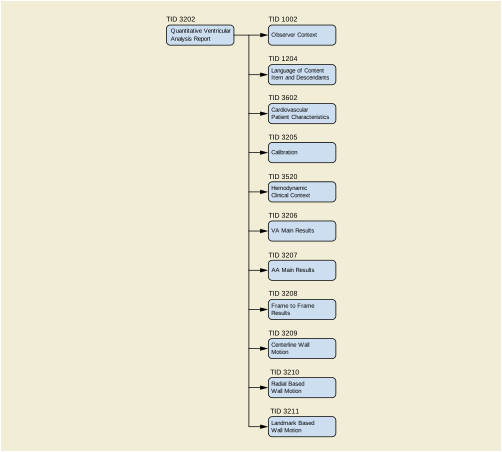
The Quantitative Ventricular Analysis Report Template provides a CONTAINER with a structure for reporting the result of the ventricular analysis.
Table TID 3202. Quantitative Ventricular Analysis Report
|
$CalibrationPlane = DCID 3466 “Plane Identification” |
||||||||
The Calibration Template consists of a CONTAINER, with a structure for reporting of the calibration of images used in the analysis.
Table TID 3205. Calibration
|
IF different from Analysis program specified in the invoking Template |
||||||||
|
IF different from Analysis program specified in the invoking Template |
||||||||
|
IF different from Analysis program specified in the invoking Template |
||||||||
|
$Measurement = EV (111026, DCM, "Horizontal Pixel Spacing") $Units = DT (mm/{pixel}, UCUM, "mm/pixel") $ImagePurpose = EV (121112, DCM, "Source of Measurement") |
||||||||
|
$Measurement = EV (111066, DCM, "Vertical Pixel Spacing") $Units = DT (mm/{pixel}, UCUM, "mm/pixel") $ImagePurpose = EV (121112, DCM, "Source of Measurement") |
||||||||
|
Besides a Sphere and a Catheter, a Distance can be identified as a Calibration Object. In this case a distance measurement of a known dimension of the object is used to calculate the pixel size. |
|
|
The catheter size units is also used to specify the size of other calibration objects (e.g., sphere) |
|
|
Spacing in the patient body. Point to a single frame containing the image used for calibration if applicable, the actual measurements may be indicated by a SCOORD (see TID 320 “Image or Spatial Coordinates”, Row 3) |
|
|
Secondary Capture image with calibration position. No purpose of reference is specified. |
The VA Main Results Template consists of a CONTAINER with a structure for reporting the main ventricular analysis measurements.
Table TID 3206. VA Main Results
The AA Main Results Template consists of a CONTAINER with a structure for reporting the main atrial analysis measurements.
Table TID 3207. AA Main Results
|
$Measurement = DCID 3468 “ED Volume” |
||||||||
|
$Measurement = DCID 3469 “ES Volume” |
||||||||
The Frame-to-Frame Result Template consists of a CONTAINER providing measurements derived from the angiographic images on frame-by-frame basis.
Table TID 3208. Frame-To-Frame Result
|
$Measurement = DCID 3471 “Estimated Volume” $TargetSite = DCID 3462 “Chamber Identification” |
||||||||
|
$Measurement = EV (122445, DCM, "Wall Thickness") |
||||||||
The Centerline Wall Motion Template consists of a CONTAINER providing measurements of the centerline wall motion.
Table TID 3209. Centerline Wall Motion
|
$Measurement = EV (122450, DCM, "Normalized Chord Length") |
||||||||
|
$Measurement = EV (122459, DCM, "Territory Region Severity") $ModType = EV (60797005, SCT, "Cardiac Wall Motion") $ModValue = DCID 3703 “Wall Motion” |
||||||||
|
$Measurement = EV (122461, DCM, "Opposite Region Severity") $ModType = EV (60797005, SCT, "Cardiac Wall Motion") $ModValue = DCID 3703 “Wall Motion” |
||||||||
The Radial Based Wall Motion Template consists of a CONTAINER providing measurements of the radial based wall motion.
Table TID 3210. Radial Based Wall Motion
|
$Measurement = EV (122495, DCM, "Regional Contribution to Ejection Fraction") |
||||||||
|
$Measurement = EV (122496, DCM, "Radial Shortening") |
||||||||
The Landmark Based Wall Motion Template consists of a CONTAINER providing measurements of the landmark based wall motion.
Table TID 3211. Landmark Based Wall Motion
|
$Measurement = EV (122498, DCM, "Slice Contribution to Ejection Fraction") |
||||||||
|
$Measurement = EV (122495, DCM, "Regional Contribution to Ejection Fraction") |
||||||||
The Templates that comprise the Quantitative Arterial Analysis SR are interconnected as in Figure A-4:
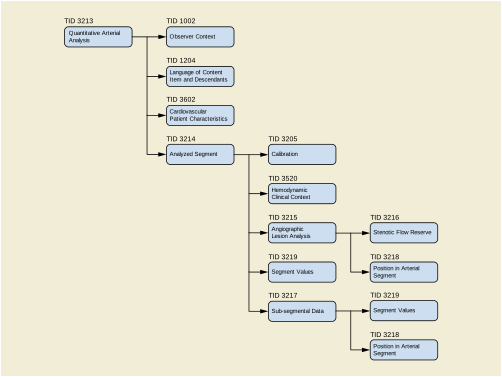
The Quantitative Arterial Analysis Template consists of a CONTAINER with a structure for reporting the result of the quantitative arterial analysis process.
The Analyzed Segment Template consists of a CONTAINER providing quantitative arterial analysis measurements derived from the angiographic images.
Table TID 3214. Analyzed Segment
|
$Measurement = EV (397413000, SCT, "Vessel Luminal Diameter") $Derivation = EV (255605001, SCT, "Minimum") |
||||||||
|
$Measurement = EV (397413000, SCT, "Vessel Luminal Diameter") $Derivation = EV (56851009, SCT, "Maximum") |
||||||||
|
$Measurement = EV (397413000, SCT, "Vessel Luminal Diameter") |
||||||||
Definition of Left and Right defined by the direction of the blood flow as in Figure A-4b:
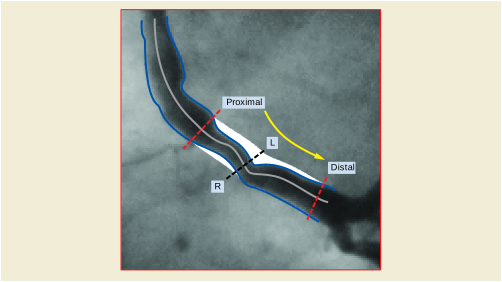
The Angiographic Lesion Analysis Template consists of a CONTAINER providing quantitative arterial analysis measurements derived for an obstruction in a total analyzed segment.
Table TID 3215. Angiographic Lesion Analysis
|
Set of user defined reference position for method that requires local reference position. |
|
|
Distance of local reference position from an arbitrary landmark. |
|
|
The reference diameter for the arterial lesion calculated with the applicable reference method |
|
|
The reference area for the arterial lesion calculated with the applicable reference method |
|
|
The diameter measurement at the start of the reconstruction line in the diameter graph (TID 3214 “Analyzed Segment” Row 14) |
|
|
The diameter measurement at the end of the reconstruction line in the diameter graph (TID 3214 “Analyzed Segment” Row 14) |
|
|
The graph with the calculated cross sectional area results based on the densitometric method |
|
|
The cross sectional area measurements calculated based on the densitometric method |
|
|
The cross sectional area measurement at the start of the reconstruction line in the area graph |
|
|
The cross sectional area measurement at the end of the reconstruction line in the area graph |
|
|
The diameter stenosis is calculated as follows: (Reference Luminal Diameter - Minimum Luminal Diameter / Reference Luminal Diameter) * 100% |
|
|
The circular and the densitometric area stenosis are calculated respectively as: (Reference Vessel Lumen Cross-Sectional Area - Minimum Luminal Circular Area / Reference Vessel Lumen Cross-Sectional Area) * 100%(Reference Vessel Lumen Cross-Sectional Area - Minimum Luminal Densitometric Area / Reference Vessel Lumen Cross-Sectional Area) * 100% |
|
|
Estimated lumen volume between proximal border and distal border of lesion (TID 3218 “Position in Arterial Segment”, Row 1 and Row 2) |
|
|
Secondary Capture image with obstruction analysis contour. No purpose of reference is specified. |
The Stenotic Flow Reserve Template consists of a CONTAINER providing quantitative arterial analysis measurements derived for an obstruction in a total analyzed segment.
Table TID 3216. Stenotic Flow Reserve
|
$Measurement = EV (122548, DCM, "Stenotic Flow Reserve") |
||||||||
|
$Measurement = EV (122549, DCM, "Poiseuille Resistance") |
||||||||
|
$Measurement = EV (122550, DCM, "Turbulence Resistance") |
||||||||
|
$Measurement = EV (122555, DCM, "Estimated Normal Flow") |
||||||||
|
$Measurement = EV (122551, DCM, "Pressure Drop at SFR") |
||||||||
The Sub-segmental Data Template consists of a CONTAINER providing quantitative arterial analysis measurements derived for a sub-segment in a total analyzed segment.
The Position in Arterial Segment Template consists of the position Content Items common for the Angiographic Lesion Analysis and Sub-Segmental Data.
Table TID 3218. Position in Arterial Segment
|
$Measurement = EV (122528, DCM, "Position of Proximal Border") |
||||||||
|
$Measurement = EV (122529, DCM, "Position of Distal Border") |
||||||||
|
$Measurement = EV (122382, DCM, "Site of Luminal Minimum") |
||||||||
|
$Measurement = EV (122516, DCM, "Site of Luminal Maximum") |
||||||||
|
IFF TID 3214 “Analyzed Segment” Row 14 is present |
||||||||
|
IFF TID 3214 “Analyzed Segment” Row 14 is present |
||||||||
|
IFF TID 3214 “Analyzed Segment” Row 14 is present |
||||||||
|
IFF TID 3214 “Analyzed Segment” Row 14 is present |
|
Positions are relative to the midpoint of the first left and right contour points and measured along the midline of the left and right contour |
|
|
The positions are relative to the measurement locations of the Diameter Graph of TID 3214 “Analyzed Segment” Row 14. |
The Segment Values Template consists of Content Items providing quantitative arterial analysis measurements for a total analyzed segment or sub segment.
Table TID 3219. Segment Values
|
$Measurement = EV (122510, DCM, "Length Luminal Segment") |
||||||||
|
$Measurement = EV (397413000, SCT, "Vessel Luminal Diameter") $Derivation = EV (255605001, SCT, "Minimum") |
||||||||
|
$Measurement = EV (397413000, SCT, "Vessel Luminal Diameter") $Derivation = EV (56851009, SCT, "Maximum") |
||||||||
|
$Measurement = EV (397413000, SCT, "Vessel Luminal Diameter") $Derivation = EV (373098007, SCT, "Mean") |
||||||||
|
$Measurement = EV (397413000, SCT, "Vessel Luminal Diameter") $Derivation = EV (386136009, SCT, "Standard Deviation") |
The Templates that comprise the IVUS Report within the Evidence Report IOD are interconnected as shown in Figure A-5.
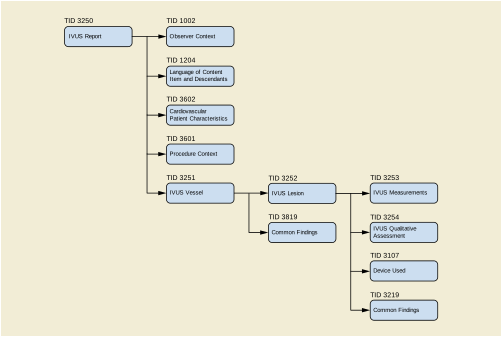
The IVUS Report Template is the root structure for the representation of IVUS measurements acquired during a catheterization procedure.
The IVUS Vessel Template provides a structure for grouping one or more lesions analyzed and/or treated during a single phase of a catheterization procedure, according to vessel (or arterial location).
The IVUS Lesion Template provides a structure for grouping measurements and observations made on a single lesion during an Intravascular Ultrasound Procedure.
The IVUS measurements Template groups together simple distance, area and angle measurements, along with derived measurements that made during an IVUS procedure. Refer to the " ACC Clinical Expert Consensus Document on Standards for Acquisition, measurement and Reporting of Intravascular Ultrasound Studies (IVUS) "for more information.
Table TID 3253. IVUS Measurements
|
$Measurement = DCID 3481 “IVUS Distance Measurement” $Derivation = DCID 3488 “Min/Max/Mean” $TargetSite = BCID 3486 “Vascular Measurement Site” |
||||||||
|
$Measurement = DCID 3482 “IVUS Area Measurement” $Units = EV (mm2, UCUM, "mm2") $Derivation = DCID 3488 “Min/Max/Mean” $TargetSite = BCID 3486 “Vascular Measurement Site” |
||||||||
|
$Measurement = DCID 3483 “IVUS Longitudinal Measurement” |
||||||||
|
$Measurement = EV (122355, DCM, "Arc of Calcium") $Units = EV (deg, UCUM, "degrees") $TargetSite = BCID 3486 “Vascular Measurement Site” |
||||||||
|
$Measurement = EV (408714007, SCT, "Lumen Area Stenosis") |
||||||||
|
$Measurement = EV (122354, DCM, "Plaque Burden") $TargetSite = BCID 3486 “Vascular Measurement Site” |
||||||||
|
$Measurement = DCID 3484 “IVUS Index/Ratio” $Units = EV ({ratio}, UCUM, "ratio") $TargetSite = BCID 3486 “Vascular Measurement Site” |
||||||||
|
$Measurement = EV (122339, DCM, "Stent Volume Obstruction") |
The IVUS Qualitative Assessments Template groups together the qualitative properties of a lesion that are observed during an IVUS procedure. Refer to the "ACC Clinical Expert Consensus Document on Standards for Acquisition, measurement and Reporting of Intravascular Ultrasound Studies (IVUS) " for more information.
The IVUS Volume Measurement Template contains information describing an IVUS Volumetric measurement
Table TID 3255. IVUS Volume Measurement
|
$Measurement = DCID 3485 “IVUS Volume Measurement” $Units = EV (mm3, UCUM, "mm3") $TargetSite = BCID 3487 “Intravascular Volumetric Region” |
||||||||
The Stress Testing Report Template is the root structure for the representation of measurements and findings of a stress testing procedure.
The Stress Test Phase Data Template provides a structure for measurements acquired during a single procedure phase.
Each instance of the Stress Test Measurement Group represents a group of data elements acquired at approximately the same instant, and conventionally rendered as row in a tabular presentation. It is typically generated during the Stress study whenever a time interval elapses (for example, every minute of the phase), when a technician observes data worth capturing, or when measurements exceed a given range.
Table TID 3304. Stress Test Measurement Group
|
UNITS = DCID 3212 “Treadmill Speed” |
||||||||
|
$Measurement = DT (122706, DCM, "Rating of Perceived Exertion") $Method = BCID 3239 “Perceived Exertion Scale” |
||||||||
|
UNITS = DCID 3500 “Pressure Unit” |
||||||||
|
UNITS = DCID 3500 “Pressure Unit” |
||||||||
|
$Measurement = DT (164931005, SCT, "ST Elevation") $TargetSite = DCID 3001 “ECG Lead” |
||||||||
|
$Measurement = DT (429622005, SCT, "ST Depression") $TargetSite = DCID 3001 “ECG Lead” |
||||||||
|
$Measurement = DCID 3228 “ECG Timing Measurement” $TargetSite = DCID 3001 “ECG Lead” |
||||||||
|
$Measurement = DCID 3227 “QTc Measurement” $TargetSite = DCID 3001 “ECG Lead” $Equation = DCID 3678 “QT Correction Algorithm” |
||||||||
|
$Measurement = DCID 3229 “ECG Axis Measurement” |
||||||||
|
$Measurement = DCID 3526 “Blood Gas Saturation” |
||||||||
|
The Container shall have a specific Content Item Observation DateTime (0040,A032) Attribute to indicate the time at which the measurements were made. |
|
|
Included TID 3106 “Drugs/Contrast Administered” allows the recording of test medications other than the Pharmacological Stress Agent identified in TID 3301 “Stress Test Procedure Description”. |
|
|
ECG ST elevation/depression is measured in units of mV, but is conventionally reported in units of mm, based on strip recordings with scaling of 100 uV/mm. The display application should render these measurements in units meaningful to the user. |
|
|
Note that the MDC codes for "per lead" measurements specified in CID 3228 “ECG Timing Measurement” are base codes for post-coordination with lead identifiers conveyed in the Target Site modifier in TID 300 “Measurement”. MDC also defines pre-coordinated codes that include both the measurement and the lead, which may be used in this row. |
|
|
Note that the MDC code for "QTc interval per lead" specified in CID 3227 “QTc Measurement” is a base code for post-coordination with lead identifiers conveyed in the Target Site modifier in TID 300 “Measurement”. MDC also defines pre-coordinated codes that include both the measurement and the lead, which may be used in this row. Note that TID 300 “Measurement” enables the encoding of a non-standard correction algorithm, either as a local code, or as a TEXT Method Citation (see TID 300 “Measurement” Row 12). |
|
|
Recommended range for ECG axis measurements is -90° to +270° |
Table TID 3307. NM/PET Perfusion Measurement Group
|
DT (122711, DCM, "Exercise duration after stress agent injection") |
||||||||
|
$Measurement = EV (10230-1, LN, "LV Ejection Fraction") $Derivation = DT (258090004, SCT, "Calculated") |
||||||||
|
$Measurement = EV (8821-1, LN, "Left Ventricular ED Volume") |
||||||||
|
$Measurement = EV (8823-7, LN, "Left Ventricular ES Volume") |
||||||||
|
$Procedure = DCID 3108 “NM/PET Procedure” |
Table TID 3309. Stress Echo Measurement Group
|
$Measurement = DCID 12200 “Echocardiography Left Ventricle Measurement” |
||||||||
|
IF Row 3 measurement concept is in CID 12222 “Orifice Flow Property” |
||||||||
|
$Measurement = DCID 12211 “Echocardiography Aortic Valve Measurement” |
||||||||
|
IF Row 5 measurement concept is in CID 12222 “Orifice Flow Property” |
||||||||
|
$Measurement = DCID 12207 “Echocardiography Mitral Valve Measurement” |
||||||||
|
IF Row 7 measurement concept is in CID 12222 “Orifice Flow Property” |
||||||||
|
$Measurement = DCID 12208 “Echocardiography Tricuspid Valve Measurement” |
||||||||
|
IF Row 9 measurement concept is in CID 12222 “Orifice Flow Property” |
||||||||
|
$Procedure = DT (35757004, SCT, "Echocardiography for Determining Ventricular Contraction") |
|
These invocations of TID 5203 “Echo Measurement” do not include an inherited Findings Site concept, for example as in the invocations of TID 5203 “Echo Measurement” from TID 5202 “Echo Section”. Echo measurements that do not have the associated Finding Site pre-coordinated in the measurement concept (i.e., the orifice flow measurements of CID 12222 “Orifice Flow Property”), shall have the Finding Site explicitly post-coordinated with a Concept Modifier (Rows 4, 6, 8, and 10). This Template does not include the concept of an Image Library, for example as used in TID 5200 “Echocardiography Procedure Report”. Image Content Items in the Echo Measurement Template shall be included with by-value relationships, not with by-reference relationships. |
|
These rows allow an explicit finding of presence or absence of exercise-induced angina through the TID 1350 “Negation Modifier, Presence of Finding” Concept Modifier "Presence of property" |
Table TID 3312. Physiological Summary
|
UNITS = DCID 3500 “Pressure Unit” |
||||||||
|
UNITS = DCID 3500 “Pressure Unit” |
||||||||
|
UNITS = DCID 3500 “Pressure Unit” |
||||||||
|
UNITS = DCID 3500 “Pressure Unit” |
||||||||
|
$Measurement = DT (429160000, SCT, "Functional capacity") |
||||||||
|
$Measurement = EV (122760, DCM, "Stress test score") $Method = BCID 3238 “Stress Scoring Scale” |
||||||||
|
Numerical scoring of a patient's functional capacity shall include the range of the scoring system in the Measurement Unit (see Section 7.2.2), and may include a coded identifier for the scoring system in the Method concept modifier of TID 300 “Measurement”. |
Table TID 3313. Stress ECG Summary
|
$Measurement = EV (164931005, SCT, "ST Elevation") $Derivation = EV (56851009, SCT, "Maximum") $TargetSite = DCID 3001 “ECG Lead” |
||||||||
|
$Measurement = EV (429622005, SCT, "ST Depression") $Derivation = EV (56851009, SCT, "Maximum") $TargetSite = DCID 3001 “ECG Lead” |
||||||||
|
$Measurement = EV (428550008, SCT, "T wave alternans") $Derivation = EV (56851009, SCT, "Maximum") $TargetSite = DCID 3001 “ECG Lead” |
||||||||
Table TID 3317. Stress Imaging Summary
|
$Measurement = DT (427751006, SCT, "Perfusion defect extent") $ModType = EV (109054, DCM, "Patient State") $ModValue = DCID 3102 “Rest/Stress State” |
||||||||
|
$Measurement = DT (429162008, SCT, "Stress ischemia extent") |
||||||||
|
$Measurement = DT (122762, DCM, "Number of diseased vessel territories") |
||||||||
|
$Measurement = DT (428832008, SCT, "Transient cavitary dilatation ratio") |
||||||||
|
$Measurement = EV (10230-1, LN, "LV Ejection Fraction") $ModType = EV (109054, DCM, "Patient State") $ModValue = DCID 3102 “Rest/Stress State” |
|
This row may be instantiated twice, once for resting state measurements, once for stress. |
|
|
The LVEF code specified in this row is defined in LOINC with method "imaging". LVEF measurement by ultrasound may also be encoded elsewhere in the Content Tree (e.g., in TID 3309 “Stress Echo Measurement Group”) with LOINC code 18043-0, which has method "ultrasound". It is recommended that such findings from the per-phase measurements be summarized here with the generic "LVEF by Imaging" concept code. |
This Template describes changes in findings from a prior stress study. Comparison is to only one prior study, even though the generic concept name for the Template uses the plural "studies".
The Templates that comprise the Hemodynamic Report are interconnected as shown in Figure A-6.
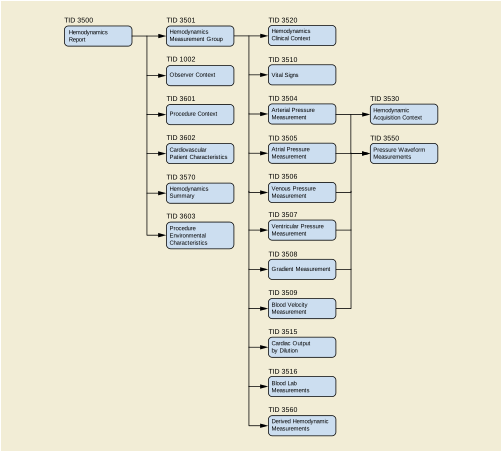
Figure A-6 shows only the use of Templates specific to the Hemodynamic Report; it does not show common structural Templates such as TID 300 “Measurement”.
Note
Figure A-6 shows the relationship of Templates; it does not show the structural hierarchy of Content Items in the IOD. See Figure L-1 “Hemodynamics Report Structure” in PS3.17 .
The Hemodynamic Report Template is the root structure for the representation of measurements acquired during a procedure in a cardiac catheterization lab.
The Hemodynamic Measurement Group Template provides a structure for measurements acquired during a single procedure phase in a cardiac catheterization lab.
Table TID 3501. Hemodynamics Measurement Group
|
Procedure Action ID allows linkage between the hemodynamic measurements recorded in this Template and a procedure step or phase recorded in the Procedure Log, e.g., using TID 3100 “Procedure Action”. |
The Arterial Pressure Measurement Template consists of a CONTAINER, with an acquisition context of the measurement anatomic site, and containing systolic, diastolic, and mean measurements. This implies that the name of the measurement is effectively post-coordinated from the measurement name, the Hemodynamic Measurement Group container (procedure phase) name, and the acquisition context (finding site) value.
Table TID 3504. Arterial Pressure Measurement
|
$LocationName = EV (363698007, SCT, "Finding Site") $LocationValue = DCID 3606 “Arterial Source Location” |
||||||||
|
$Measurement = EV (8480-6, LN, "Intravascular arterial Systolic pressure") $Units = DCID 3500 “Pressure Unit” |
||||||||
|
$Measurement = EV (8462-4, LN, "Intravascular arterial Diastolic pressure") $Units = DCID 3500 “Pressure Unit” |
||||||||
|
$Measurement = EV (8478-0, LN, "Intravascular arterial mean pressure") $Units = DCID 3500 “Pressure Unit” |
||||||||
The Atrial Pressure Measurement Template consists of a CONTAINER, with an acquisition context of the measurement anatomic site, and containing a-wave, v-wave, and mean measurements. This implies that the name of the measurement is effectively post-coordinated from the measurement name, the Hemodynamic Measurement Group container (procedure phase) name, and the acquisition context (finding site) value.
Table TID 3505. Atrial Pressure Measurement
|
$LocationName = EV (363698007, SCT, "Finding Site") $LocationValue = DCID 3608 “Atrial Source Location” |
||||||||
|
$Measurement = EV (109016, DCM, "A-wave peak pressure") $Units = DCID 3500 “Pressure Unit” |
||||||||
|
$Measurement = EV (109034, DCM, "V-wave peak pressure") $Units = DCID 3500 “Pressure Unit” |
||||||||
|
$Measurement = EV (6797001, SCT, "Mean blood pressure") $Units = DCID 3500 “Pressure Unit” |
||||||||
The Venous Pressure Measurement Template consists of a CONTAINER, with an acquisition context of the measurement anatomic site, and containing a mean measurement. This implies that the name of the measurement is effectively post-coordinated from the measurement name, the Hemodynamic Measurement Group container (procedure phase) name, and the acquisition context (finding site) value.
Table TID 3506. Venous Pressure Measurement
|
$LocationName = EV (363698007, SCT, "Finding Site") $LocationValue = DCID 3607 “Venous Source Location” |
||||||||
|
$Measurement = EV (6797001, SCT, "Mean blood pressure") $Units = DCID 3500 “Pressure Unit” |
||||||||
The Ventricular Pressure Measurement Template consists of a CONTAINER, with an acquisition context of the measurement anatomic site, and containing systolic and end-diastolic measurements. This implies that the name of the measurement is effectively post-coordinated from the measurement name, the Hemodynamic Measurement Group container (procedure phase) name, and the acquisition context (finding site) value.
Table TID 3507. Ventricular Pressure Measurement
The Gradient Measurement Template consists of a CONTAINER, with an acquisition context of the measurement anatomic site, and containing the gradient measurement. This implies that the name of the measurement is effectively post-coordinated from the measurement name, the Hemodynamic Measurement Group container (procedure phase) name, and the acquisition context (finding site) value.
Table TID 3508. Gradient Measurement
|
$LocationName = EV (363698007, SCT, "Finding Site") $LocationValue = DCID 3610 “Gradient Source Location” |
||||||||
|
$LocationName = EV (121116, DCM, "Proximal Finding Site") $LocationValue = DCID 3630 “Cardiovascular Anatomic Location” |
||||||||
|
$LocationName = EV (121117, DCM, "Distal Finding Site") $LocationValue = DCID 3630 “Cardiovascular Anatomic Location” |
||||||||
|
$Measurement = EV (251081004, SCT, "Pressure Gradient") $Units = DCID 3500 “Pressure Unit” $Derivation = DCID 3627 “Measurement Type” |
||||||||
|
Is used to encode the gradient measurements. Uses TID 300 “Measurement” for the Content Item structure of the measurements. That Template allows an INFERRED FROM relationship to other numeric measurements used in the computation or derivation of the current measurement. In the case of a gradient measurement, the pressure measurements at the distal and proximal locations may thus be explicitly conveyed. |
The Blood Velocity Measurement Template consists of a CONTAINER, with an acquisition context of the measurement anatomic site, and containing primary (not derived) velocity measurements, e.g., from a Doppler catheter. Derived velocity measurements may be recorded using TID 3560 “Derived Hemodynamic Measurements”.
Table TID 3509. Blood Velocity Measurement
|
$LocationName = EV (363704007, SCT, "Procedure site") $LocationValue = BCID 3606 “Arterial Source Location” |
||||||||
|
$Measurement = DCID 3612 “Blood Velocity Measurement” |
||||||||
The Vital Signs Template consists of a CONTAINER containing the various vital signs measurements. These measurements may be acquired automatically from patient monitoring equipment, or may be entered based on manual measurements.
Table TID 3510. Vital Signs
|
$Measurement = EV (271649006, SCT, "Systolic blood pressure") $Units = DCID 3500 “Pressure Unit” $Method = BCID 3560 “Blood Pressure Method” |
||||||||
|
$Measurement = EV (271650006, SCT, "Diastolic blood pressure") $Units = DCID 3500 “Pressure Unit” |
||||||||
|
$Measurement = EV (8867-4, LN, "Heart rate") |
||||||||
|
$Measurement = EV (8310-5, LN, "Body temperature") |
||||||||
|
$Measurement = DCID 3526 “Blood Gas Saturation” |
||||||||
|
$Measurement = EV (86290005, SCT, "Respiration rate") |
||||||||
|
$Measurement = EV (122195, DCM, "Pulse Strength") |
||||||||
|
$Measurement = EV (225908003, SCT, "Pain Score") |
||||||||
The Cardiac Output Measurement by Indicator Dilution Template consists of a CONTAINER containing the measurement and significant parameters of the technical method. If the measurement is based on a DICOM Hemodynamic Waveform SOP Instance, that object may also be referenced.
Note
Fick Cardiac Output is encoded in TID 3560 “Derived Hemodynamic Measurements”.
Table TID 3515. Cardiac Output Measurement By Indicator Dilution
|
$Measurement = EV (8737-9, LN, "Cardiac Output by Indicator Dilution") $Units = EV (l/min, UCUM, "l/min") $Method = DCID 3628 “Cardiac Output Method” $WavePurpose = DT (121112, DCM, "Source of Measurement") |
||||||||
|
UNITS = DCID 3510 “Catheter Size Unit” |
||||||||
The Blood Lab Measurements Template provides for the recording of measurements made on blood samples obtained during a catheterization procedure. The type and anatomic source of the blood is recorded as acquisition context. The results from the blood chemistry measurement system are quoted; the measurement names may be pre-coordinated with the type or source of the blood, or generic measurement names may be reported. In the latter case, the full measurement concept name may be effectively post-coordinated using the recorded acquisition context.
Table TID 3516. Blood Lab Measurements
|
$Measurement = EV (718-7, LN, "Hemoglobin") |
||||||||
|
$Measurement = DCID 3524 “Blood Gas Pressure” $Units = DCID 3500 “Pressure Unit” |
||||||||
|
$Measurement = DCID 3525 “Blood Gas Content” |
||||||||
|
$Measurement = DCID 3528 “Blood pH” |
||||||||
|
$Measurement = DCID 3526 “Blood Gas Saturation” |
||||||||
|
$Measurement = DCID 3527 “Blood Base Excess” |
||||||||
|
$Measurement = EV (122183, DCM, "Blood temperature") |
The Clinical Context Template allows the recording of information about the patient's clinical state that may affect interpretation of the hemodynamic measurements. This Template includes several coded conditions (e.g., complications, drugs, physiological challenges, etc.), each of which may have a Concept Modifier of "Relative Time". This Modifier indicates the temporal relationship of the hemodynamic measurements to the conditions recorded in this Template. E.g., the Content Item structure:
>HAS ACQ CONTEXT "Cath Procedure Phase" "Post-intervention phase"
>HAS ACQ CONTEXT [CONTAINER] "Clinical Context"
>>CONTAINS [CODE] "Complication" "Arrhythmia"
>>>HAS CONCEPT MOD [CODE] "Relative Time" "After"
>CONTAINS [CONTAINER] "Arterial Measurements"…
conveys the semantics that this group of measurements for the post-intervention phase of a cath procedure was made after an occurrence of arrhythmia in the patient.
In the absence of a Relative Time modifier, the acquisition context is during the identified event or state.
Table TID 3520. Hemodynamic Clinical Context
|
$ConditionName = EV (116224001, SCT, "Complication of Procedure") $ConditionValue = DCID 3413 “Adverse Outcome” |
||||||||
|
$ConditionName = EV (122086, DCM, "Contrast administered") $ConditionValue = BCID 12 “Imaging Contrast Agent” |
||||||||
|
$ConditionName = EV (122083, DCM, "Drug administered") $ConditionValue = BCID 10 “Interventional Drug” |
||||||||
|
$ConditionName = EV (109059, DCM, "Physiological challenges") $ConditionValue = BCID 3271 “Hemodynamic Physiological Challenge” |
||||||||
|
$ConditionName = EV (122138, DCM, "Circulatory Support") $ConditionValue = DCID 3553 “Circulatory Support” |
||||||||
|
$ConditionName = EV (266700009, SCT, "Ventilation assistance") $ConditionValue = DCID 3554 “Ventilation” |
||||||||
|
$ConditionName = EV (18590009, SCT, "Cardiac Pacing") $ConditionValue = BCID 3555 “Pacing” |
||||||||
|
$ConditionName = EV (71388002, SCT, "Procedure") $ConditionValue = BCID 3405 “Procedure Action Value” |
The Relative Time Template is invoked by 3520 Hemodynamic Acquisition Context Template. It specifies an applicable clinical context condition and the time of the current measurements relative to that condition.
The Hemodynamic Acquisition Context Template is invoked by the various hemodynamic measurement Templates.
The Pressure Waveform Measurements Template is invoked by the various hemodynamic measurement Templates for recording general measurements made in conjunction with the specific required measurements for that anatomic location.
Table TID 3550. Pressure Waveform Measurements
|
$Measurement = DCID 3611 “Pressure Measurement” $Units = DCID 3500 “Pressure Unit” |
||||||||
|
$Measurement = DCID 3612 “Blood Velocity Measurement” |
||||||||
|
$Measurement = DCID 3613 “Hemodynamic Time Measurement” |
||||||||
|
$Measurement = EV (82799009, SCT, "Cardiac Output") |
||||||||
|
$Measurement = EV (90096001, SCT, "Stroke Volume") |
||||||||
|
$Measurement = EV (10230-1, LN, "LV Ejection Fraction") |
||||||||
|
$Measurement = EV (8867-4, LN, "Heart rate") |
||||||||
|
$Measurement = EV (86290005, SCT, "Respiration rate") |
||||||||
|
$Measurement = EV (109025, DCM, "Max dp/dt") |
||||||||
|
$Measurement = EV (109026, DCM, "Max neg dp/dt") |
||||||||
|
$Measurement = EV (122190, DCM, "Max dp/dt/P") |
||||||||
|
$Measurement = EV (122192, DCM, "Indicator appearance time") |
||||||||
|
$Measurement = EV (122193, DCM, "Maximum pressure acceleration") |
||||||||
|
$Measurement = DCID 3617 “Valve Flow” |
The Derived Hemodynamic Measurements Template consists of a CONTAINER containing measurements derived from one or more other measurements. These measurements are associated with a particular procedure phase, but not necessarily with a particular anatomic location.
Table TID 3560. Derived Hemodynamic Measurements
This Template allows the recording of any significant numeric measurements or findings.
The Procedure Context Template describes acquisition context for measurements made or events recorded in a procedure.
Table TID 3601. Procedure Context
|
Defaults to Value of Study Description (0008,1030) of the General Study Module |
||||||||
|
Defaults to Value of Procedure Code Sequence (0008,1032) of the General Study Module |
This Template describes the characteristics of the patient that are specific to the current clinical presentation (visit). Patient Characteristic concepts in this Template, which may replicate Attributes in the Patient Study Module, are included here as possible targets of by-reference relationships from other Content Items in the SR tree.
Note
Several of the concepts in this Template duplicate concepts in TID 1007 “Subject Context, Patient”. The difference in use is that this Template has those concepts as primary observations of the patient, while in TID 1007 “Subject Context, Patient” the concepts are used to set (or reset) the context for other observations.
Table TID 3602. Cardiovascular Patient Characteristics
|
UNITS = DCID 7456 “Age Unit” |
||||||||
|
UNITS = DCID 3500 “Pressure Unit” |
||||||||
|
UNITS = DCID 3500 “Pressure Unit” |
||||||||
The ECG Report Template is the root structure for the representation of analysis of an ECG waveform, potentially in comparison to a prior ECG waveform analysis. The analyzed waveform may or may not be stored as a DICOM SOP Instance.
Table TID 3704. Patient Characteristics for ECG
|
UNITS = DCID 7456 “Age Unit” |
||||||||
|
UNITS = DCID 3500 “Pressure Unit” |
||||||||
|
UNITS = DCID 3500 “Pressure Unit” |
||||||||
The ECG Waveform Information Template provides reference to, and important parameters of, the analyzed waveform.
The ECG Global Measurements Template provides a structure for measurements calculated across the ECG waveform as a whole (multiple leads).
As an Extensible Template, applications may include any ECG global measurements, such as angles of the electrical vector of various ECG waves. The recommended vocabulary for such concepts is ISO/IEEE 11073-10102.
The ECG Lead Measurements Template provides a structure for measurements calculated on individual ECG leads.
As an Extensible Template, applications may include any ECG per lead measurements, such as integrals over time of various ECG wave voltages. The recommended vocabulary for such concepts is ISO/IEEE 11073-10102.
The ECG Measurement Source Template provides a structure for identifying the particular cardiac cycle, or beat, in an analyzed ECG waveform used for the measurement group for which this Template provides Observation Context. The cardiac cycle is identified by beat number, and optionally by specific temporal coordinates within a DICOM ECG Waveform SOP Instance.
The ECG Qualitative Analysis Template allows a free text qualitative interpretation of the analyzed ECG, as well as a structure for a coded analysis.
This Template is retired. See PS3.16-2009.
This Root Template encodes a list of annotations for waveform data consisting of measurements or observations added at recording time or later provided either by a human reviewer (such as a cardiologist, neurologist, or technologist) or by an automated analysis algorithm.
Table TID 3750. Waveform Annotations
|
A coded descriptor of the sort of procedure the annotations apply to. |
|
|
Indicates the point in time when the annotations have been made relative to the waveform recording procedure. |
|
|
The Waveform Library provides potentially relevant characteristics of the waveform objects associated with the annotations. There is no requirement to include all, or any, of the waveform objects referenced in the annotations and measurements elsewhere in this template. The template may also include waveform objects that are associated with, but not directly referenced in, the annotations and measurements. The Waveform Library is not replicating the content of the SOP Instance Reference Macro. |
|
|
Defines an identifier for a group of annotations analogously to Annotation Group Number (0040,A180) in Section C.10.10.1.4 in PS3.3 , which may be used, for example, for display purposes. The number itself is not semantically significant, no ordering is required. |
|
|
A descriptive label for a group of annotations, e.g., to be used for display purpose. |
This Template encodes a Waveform Annotation represented by a coded concept.
This Template encodes a Waveform Annotation expressing a measurement.
This Template defines a Waveform Annotation in the form of a text note.
The Waveform Library contains references to waveform objects and selected attributes describing them that facilitate analysis without having to retrieve the entire set of referenced objects.
Each instance of the Waveform Library Entry Template contains the SOP Class and Instance UIDs, and selected attributes for a waveform that facilitate analysis without having to retrieve the entire set of referenced waveforms.
|
These Waveform Library Entry Descriptors apply to the WAVEFORM in Row 1 and override descriptors in Row 3 of TID 3754 in case of conflict. |
This Template contains selected attributes for a waveform or a group of waveforms. The descriptive information may be copied from the waveforms or derived.
Table TID 3756. Waveform Library Entry Descriptors
This Template contains selected attributes for a waveform multiplex group within a waveform object or a group of waveform objects. The descriptive information may be copied from the waveform objects or derived.
Table TID 3757. Waveform Library Entry Multiplex Group Descriptors
The Templates that comprise the Cardiac Catheterization Report are interconnected as shown in Figure A-7.
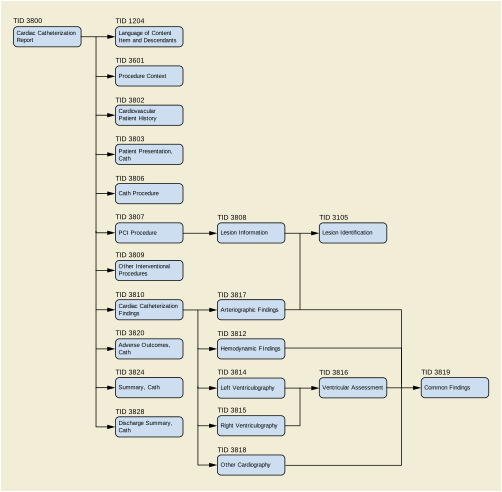
Note
Figure A-7 shows the relationship of Templates; it does not show the structural hierarchy of Content Items in the IOD.
The Cardiac Catheterization Report provides the overall clinical results of the catheterization procedure and interventions. In many cases, more detailed information is optionally available in other reports (Hemodynamic Measurements, Procedure Log, etc.). That information is collected and summarized here (and referenced when available).
When a Discharge Summary section (Row 12) is included, this report Template covers the full set of information required for submission to the ACC NCDR™ (version 2.0) registry.
Note
-
The information required for such a submission must sometimes be reformatted from a single concept in these Templates to two data elements for the registry, or vice versa.
-
This Template is expected to be used with the Basic Text SR or Enhanced SR IOD.
-
This Cardiac Catheterization Report Template is a baseline Template within these SOP Classes that may be replaced; it is therefore in no sense binding for exchange of this type of report. It is solely an example of a possible encoding of the Cardiac Catheterization Report.
This Template contains information about a cardiovascular patient's past medical history that is relevant for the interpretation of the SR document of which it is part. This information is considered to have some degree of "persistence" across different episodes of care.
Table TID 3802. Cardiovascular Patient History
This Template describes the aspects of the patient that are specific to this clinical presentation (admission).
Table TID 3803. Patient Presentation, Cath
|
EV (46, NCDR [2.0b], "Congestive Heart Failure Prior to Procedure") |
||||||||
|
$Findings = DCID 3727 “Catheterization Indication” |
||||||||
This Template describes the patient-related information about this specific clinical encounter (catheterization).
This Template describes the various aspects of a coronary intervention.
Table TID 3807. Percutaneous Coronary Intervention Procedure
The Cardiac Catheterization Findings Template provides the structure for the diagnostic findings of the cath procedure, organized into sub-sections based on type of sub-procedure. It also provides for top-level summary findings and diagnoses.
|
(Through TID 3819 “Common Findings”) may be used to encode any significant hemodynamic numeric measurements. For reference, see TID 3550 “Pressure Waveform Measurements” and TID 3560 “Derived Hemodynamic Measurements”. |
The information contained here about the left ventricle is relatively qualitative in nature. It is a high-level summary of the more detailed information that may be contained in an optional Quantitative Ventricular Analysis report. This Template addresses findings about any ventricular septal defect (Row 7), the myocardial wall (Row 11), and about the aortic root (Row 16).
Table TID 3814. Left Ventriculography Findings
|
$Measurement = EV (10230-1, LN, "LV Ejection Fraction") $Method = DCID 3748 “Angiographic EF Testing Method” $Derivation = DCID 3745 “Calculation Method” |
||||||||
The information contained here about right ventricle is relatively qualitative in nature. It is a high-level summary of the more detailed information that may be contained in an optional Quantitative Ventricular Analysis report.
Table TID 3815. Right Ventriculography Findings
|
$Measurement = EV (10231-9, LN, "RV Ejection Fraction") $Method = DCID 3748 “Angiographic EF Testing Method” $Derivation = DCID 3745 “Calculation Method” |
||||||||
Table TID 3816. Ventricular Assessment
The information contained here about with regards to coronary artery lesions is relatively qualitative in nature. It is a high-level summary of the more detailed information that may be contained in an optional Quantitative Coronary Arteriography report. This Template addresses findings about the individual arteries (Row 4), and about individual lesions (Row 9).
Table TID 3817. Coronary Arteriography Findings
|
$Report = DT (122291, DCM, "Quantitative Arteriography Report") |
|
May be used to encode any significant image- or waveform-based numeric measurements, with post-coordination of the Concept Name using child Content Items (with relationship HAS CONCEPT MOD), as permitted by Section 6.2.4. The source of the measurement may be noted using the Quotation Template in Row 4. |
Table TID 3820. Adverse Outcomes, Cath
Table TID 3828. Discharge Summary, Cath
|
The Concept Name was previously defined as (111526, DCM, "DateTime Started"). |
Root Template of the Non-invasive Computed Tomography and Magnetic Resonance Cardiovascular Analysis Report.
This Template contains the top level structure and includes subordinate Templates for the various analyses.
Table TID 3900. CT/MR Cardiovascular Analysis Report
|
$AnalysisPerformed = EV (122605, DCM, "Vascular Morphological Analysis") |
||||||||
|
$AnalysisPerformed = EV (122606, DCM, "Vascular Functional Analysis") |
||||||||
Contains either morphological or functional vascular measurement results of an analysis
Table TID 3902. Vascular Analysis
Contains the calcium scoring results related to plaque findings, vessels or the whole body.
Table TID 3905. Calcium Scoring Results
|
$Measurement = EV (450360000, SCT, "Coronary artery calcium score") $Method = EV (112055, DCM, "Agatston Scoring Method") |
||||||||
|
Previously, the relationship was specified as CONTAINS rather than HAS CONCEPT MOD, which was inconsistent with other uses in the family of cardiovascular analysis results and similar uses in other families of templates. The usage of CONTAINS for this Row has been retired. See PS3.16-2025c. |
Sections of vascular measurements are section containers of an anatomical region consisting of measurement group containers containing the measurements.
Table TID 3906. Parameters
Table TID 3906. Vascular Section Measurements
|
IF the value of $AnalysisPerformed equals (122605, DCM, "Vascular Morphological Analysis") |
||||||||
|
IF concept value of Row 4 is not equal to (41801008, SCT, "Coronary Artery Structure") |
||||||||
|
IF concept value of Row 4 is not equal to (41801008, SCT, "Coronary Artery Structure") |
||||||||
|
IF concept value of Row 4 = (41801008, SCT, "Coronary Artery Structure") |
||||||||
|
IF the value of $AnalysisPerformed equals (122605, DCM, "Vascular Morphological Analysis") |
||||||||
|
IF the value of $AnalysisPerformed equals (122606, DCM, "Vascular Functional Analysis") |
Contains measurements made on vessel level.
Table TID 3907. Vessel Measurements
Specifies properties and the features of a vascular lesion detected during the analysis. In addition it is possible to reference or include growing of lesions over time by adding references to previous reports or by adding previous examination results.
Table TID 3908. Vascular Lesion
|
$Measurement = EV (397413000, SCT, "Vessel Lumen Diameter") $Derivation = DCID 3838 “Diameter Derivation” $FindingSite = DCID 3486 “Vascular Measurement Site” |
||||||||
|
$Measurement = EV (397415007, SCT, "Vessel Lumen Cross-Sectional Area") $Derivation = DCID 3838 “Diameter Derivation” $FindingSite = DCID 3486 “Vascular Measurement Site” |
||||||||
|
IFF value of Row 9 = (1522000, SCT, "Plaque") |
||||||||
|
IFF value of Row 9 = (415582006, SCT, "Stenosis") |
||||||||
|
IFF value of Row 9 = (85659009, SCT, "Aneurysm") |
||||||||
|
IFF value of Row 9 = (710864009, SCT, "Arterial Dissection") |
||||||||
|
IFF value of Row 9 = (107671003, SCT, "Vascular Sclerosis") |
||||||||
|
IFF value of Row 9 = (26036001, SCT, "Occlusion") |
||||||||
|
IFF value of Row 9 = (65818007, SCT, "Stent") |
Specification of images, waveforms, spatial and temporal coordinates used to illustrate findings.
Contains the flow quantification measurement results
Table TID 3910. Flow Quantification
|
$MeasurementGraph = EV (122667, DCM, "Blood velocity vs. time of cardiac cycle") $X-Concept = EV (122666, DCM, "Time relative to R-wave peak") $Y-Concept = EV (252064005, SCT, "Arterial Velocity") |
||||||||
|
$Measurement = EV (122207, DCM, "Blood velocity, peak") |
||||||||
|
$Measurement = EV (122205, DCM, "Blood velocity, mean") |
||||||||
|
$Measurement = EV (58190003, SCT, "Blood Flow") $Derivation = EV (373098007, SCT, "Mean") |
||||||||
|
$Measurement = EV (58190003, SCT, "Blood Flow") $ModType = EV (260674002, SCT, "Direction of flow") $ModValue = DCID 12221 “Flow Direction” |
||||||||
|
$Measurement = EV (122645, DCM, "Net Forward Volume") |
||||||||
|
$Measurement = EV (122645, DCM, "Net Forward Volume") $ModType = EV (121425, DCM, "Index") $ModValue = DT (8277-6, LN, "BSA") |
||||||||
|
$Measurement = EV (397415007, SCT, "Vessel Lumen Cross-Sectional Area") $Derivation = DCID 3488 “Min/Max/Mean” |
Properties of a stenosis finding
Table TID 3912. Stenosis Properties
|
$Measurement = EV (397413000, SCT, "Vessel Lumen Diameter") $Derivation = DCID 3488 “Min/Max/Mean” |
||||||||
|
$Measurement = EV (397415007, SCT, "Vessel Lumen Cross-Sectional Area") $Derivation = DCID 3488 “Min/Max/Mean” |
||||||||
|
$Measurement = EV (408714007, SCT, "Lumen Area Stenosis") $Derivation = DCID 3488 “Min/Max/Mean” |
||||||||
|
$Measurement = EV (408715008, SCT, "Lumen Diameter stenosis") $Derivation = DCID 3488 “Min/Max/Mean” |
||||||||
Properties of an aneurysm finding
|
When this row contains a (85726003, SCT, "Mixed Aneurysm") value, additional repetitions of this row may be present to describe the types of aneurysm that are mixed. |
Properties of a arterial dissection finding
Table TID 3914. Arterial Dissection Properties
Properties of vascular occlusion finding
Table TID 3915. Vascular Occlusion Properties
|
$Measurement = EV (408716009, SCT, "Stenotic Lesion Length") $Method = DCID 3804 “Stenosis Measurement Method” |
Measurements of aneurysms. TID 300 “Measurement” invoked from this Template allows the measurement to reference an image used as the source of the measurement.
Table TID 3917. Aneurysm Measurements
|
$Measurement = EV (410668003, SCT, "Length") $ModType = EV (260858005, SCT, "Extent") $ModValue = DT (38717003, SCT, "Longitudinal") |
||||||||
|
$Measurement = EV (118565006, SCT, "Volume") $Method = DCID 3807 “Volume Measurement Method” |
||||||||
|
$Measurement = EV (415816005, SCT, "Vessel Lumen Cross-Sectional Area Increase") |
||||||||
|
$Measurement = EV (415816005, SCT, "Vessel Lumen Cross-Sectional Area Increase") |
||||||||
|
$Measurement = EV (415817001, SCT, "Vessel Lumen Cross-Sectional Diameter Increase") |
||||||||
|
$Measurement = EV (415817001, SCT, "Vessel Lumen Cross-Sectional Diameter Increase") |
Contains the ventricular functional measurement results.
Table TID 3920. Ventricular Analysis Result
|
$Ventricle = EV (87878005, SCT, "Left Ventricle") |
||||||||
|
$Ventricle = EV (53085002, SCT, "Right Ventricle") |
||||||||
Ventricular measurement results related to the volume of a ventricle.
Ventricular measurement results related to the absolute volume of a ventricle.
Table TID 3922. Absolute Values of Ventricular Measurements
|
EV (122608, DCM, "Absolute Values Of Ventricular Measurements") |
||||||||
|
$Measurement = DCID 3833 “Cardiac Ejection Fraction” $ModType = DT (122670, DCM, "Papillary Muscle Included/Excluded") $ModValue = DCID 3821 “Papillary Muscle Included/Excluded” $Method = DCID 3807 “Volume Measurement Method” |
||||||||
|
$Measurement = DCID 3835 “Cardiac Volume Measurement” $ModType = DT (122670, DCM, "Papillary Muscle Included/Excluded") $ModValue = DCID 3821 “Papillary Muscle Included/Excluded” |
||||||||
|
$Measurement = EV (82799009, SCT, "Cardiac Output") $ModType = DT (122670, DCM, "Papillary Muscle Included/Excluded") $ModValue = DCID 3821 “Papillary Muscle Included/Excluded” |
||||||||
|
$Measurement = EV (122447, DCM, "Wall Mass") $ModType = DT (122670, DCM, "Papillary Muscle Included/Excluded") $ModValue = DCID 3821 “Papillary Muscle Included/Excluded” |
||||||||
|
$Measurement = EV (122616, DCM, "Peak Ejection Rate") |
||||||||
|
$Measurement = EV (122618, DCM, "Peak Filling Rate") |
||||||||
Ventricular measurement results normalized based on the Body Surface Area
Table TID 3923. BSA-Normalized Ventricular Measurements
|
EV (122609, DCM, "Normalized values of ventricular measurements") |
||||||||
|
$Measurement = EV (8277-6, LN, "Body Surface Area") |
||||||||
|
$Measurement = DCID 3835 “Cardiac Volume Measurement” $ModType = EV (121425, DCM, "Index") $ModValue = DT (8277-6, LN, "Body Surface Area") |
||||||||
|
$Measurement = EV (54993008, SCT, "Cardiac Index") |
||||||||
|
$Measurement = EV (122447, DCM, "Wall Mass") $ModType = EV (121425, DCM, "Index") $ModValue = DT (8277-6, LN, "Body Surface Area") |
||||||||
|
$Measurement = EV (122618, DCM, "Peak Filling Rate") $ModType = EV (121425, DCM, "Index") $ModValue = DT (8277-6, LN, "Body Surface Area") |
||||||||
|
$Measurement = EV (70822001, SCT, "Peak Cardiac Ejection Fraction") $ModType = EV (121425, DCM, "Index") $ModValue = DT (8277-6, LN, "Body Surface Area") |
Ventricular measurement results normalized based on the Heart Rate
Table TID 3924. Heart Rate-Normalized Ventricular Measurements
|
EV (122609, DCM, "Normalized values of ventricular measurements") |
||||||||
|
$Measurement = DCID 3835 “Cardiac Volume Measurement” $ModType = EV (121425, DCM, "Index") $ModValue = DT (8867-4, LN, "Heart Rate") |
||||||||
|
$Measurement = EV (82799009, SCT, "Cardiac Output") $ModType = EV (121425, DCM, "Index") $ModValue = DT (8867-4, LN, "Heart Rate") |
||||||||
|
$Measurement = EV (122618, DCM, "Peak Filling Rate") $ModType = EV (121425, DCM, "Index") $ModValue = DT (8867-4, LN, "Heart Rate") |
||||||||
|
$Measurement = EV (70822001, SCT, "Peak Cardiac Ejection Fraction") $ModType = EV (121425, DCM, "Index") $ModValue = DT (8867-4, LN, "Heart Rate") |
Data of a ventricular wall thickening analysis
Table TID 3925. Thickening Analysis
|
$Measurement = EV (122445, DCM, "Wall Thickness") $ModType = EV (272518008, SCT, "Cardiac Cycle Point") $ModValue = DT (416190007, SCT, "End-Diastolic") |
||||||||
|
$Measurement = EV (122445, DCM, "Wall Thickness") $ModType = EV (272518008, SCT, "Cardiac Cycle Point") $ModValue = DT (109070, DCM, "End-Systolic") |
||||||||
|
$Measurement = EV (122624, DCM, "Wall Thickness Ratio end-systolic to end-diastolic") |
||||||||
|
Previously, the relationship was specified as CONTAINS rather than HAS CONCEPT MOD, which was inconsistent with other uses in the family of cardiovascular analysis results and similar uses in other families of templates. The usage of CONTAINS for this Row has been retired. See PS3.16-2025c. |
Myocardial perfusion analysis results.
Perfusion measurements may be performed either for one or more ventricular segments (Row 4) or for substructures inside ventricular segments (Row 14)
Table TID 3926. Myocardial Perfusion Analysis
|
Image Interval is appropriate only for equally time-spaced images |
|
|
Previously, the relationship was specified as HAS ACQ CONTEXT rather than HAS PROPERTIES, which is not permitted by the Enhanced or Comprehensive SR IOD Relationship Constraints. The usage of HAS ACQ CONTEXT for these Rows has been retired. See PS3.16-2025c. |
Contains summary elements based on the findings of the report
Table TID 3927. Report Summary
Defines the observation context for cardiovascular Functional Analysis
The Templates that comprise the Mammography CAD SR IOD are interconnected as in Figure A-8:
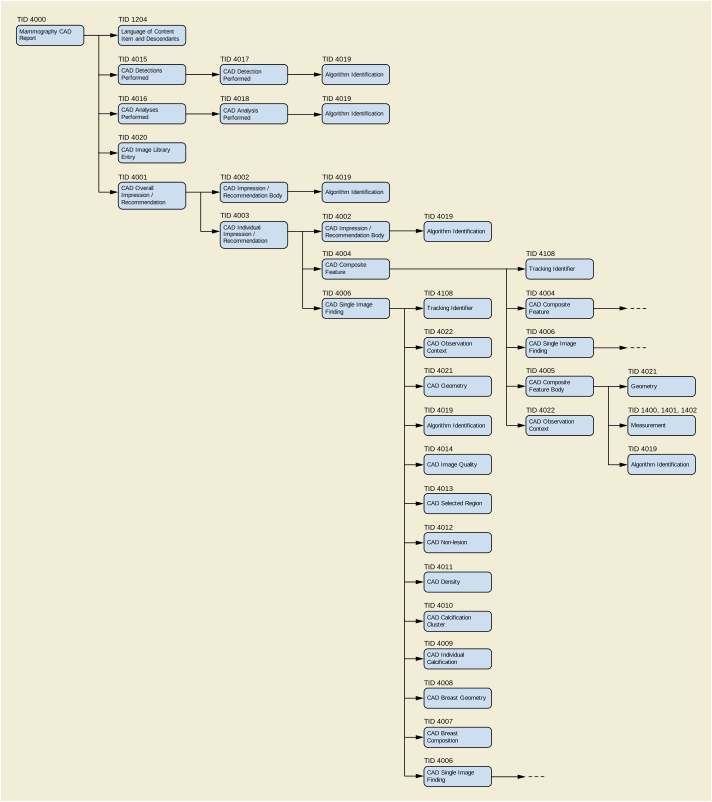
In Figure A-8, '···' indicates possible recursive application of subordinate Templates.
This Template forms the top of a Content Tree that allows a mammography CAD device to describe the results of detection and analysis of Mammographic evidence. This Template, together with its subordinate Templates, describes both the results for presentation to radiologists and partial product results for consumption by mammography CAD devices in subsequent mammography CAD reports.
This Template defines a Container that contains an Image Library, the mammography CAD results, and summaries of the detection and analysis algorithms performed. The Image Library contains the Image SOP Class and Instance UIDs, and selected attributes for each image referenced in either the algorithm summaries or mammography CAD results.
The Summary of Detections and Summary of Analyses sub-trees gather lists of algorithms attempted, grouped by success/failure status. Algorithms not attempted are not mentioned in these sub-trees. This information forms the basis for understanding why a mammography CAD report may produce no (or fewer than anticipated) results. Mammography CAD results are constructed bottom-up, starting from Single Image Findings (see TID 4006 “Mammography CAD Single Image Finding”), associated as Composite Features (see TID 4004 “Mammography CAD Composite Feature”), and from which Individual and Overall Impressions are formed.
See Figure E.1-1 “Top Levels of Mammography CAD SR Content Tree” in PS3.17 .
Table TID 4000. Mammography CAD Report
|
$ImageLaterality = DCID 6022 “Side” $ImageView = DCID 4014 “View for Mammography” $ImageViewMod = DCID 4015 “View Modifier for Mammography” |
||||||||
|
DTID 4001 “Mammography CAD Overall Impression/Recommendation” |
||||||||
|
Shall be present unless the value of (111064, DCM, "Summary of Detections") is (111225, DCM, "Not Attempted") |
$DetectionCode = DCID 6014 “Mammography Single Image Finding” |
|||||||
|
Shall be present unless the value of (111065, DCM, "Summary of Analyses") is (111225, DCM, "Not Attempted") |
$AnalysisCode = DCID 6043 “Mammography CAD Analysis Type” |
|
The "Image Library" section of the Content Tree (TID 4000 “Mammography CAD Report”, Row 3) shall include all Image SOP Instances from the Current Requested Procedure Evidence Sequence (0040,A375) Attribute of the SR Document General Module. If a portion of another instance of a Mammography CAD SR IOD is duplicated in the "Overall Impression/ Recommendation" section of the Content Tree, the "Image Library" shall also include all Image Library Entries referenced from the duplicated portions of the Mammography CAD SR. |
|
|
The "Detections Performed" and "Analyses Performed" sections of the Content Tree together shall reference all Image SOP Instances included in the Current Requested Procedure Evidence Sequence (0040,A375) Attribute of the SR Document General Module. |
This Template forms the top of the mammography CAD results sub-tree. The contents of this Template describe the overall impression the mammography CAD device had for the mammographic evidence presented and any recommendations that the mammography CAD device made. The details of the overall impression and recommendation are expressed in this instance of the Mammography CAD Impression/Recommendation Body (see TID 4002 “Mammography CAD Impression/Recommendation Body”). The data from which the details are inferred, are expressed in the Mammography CAD Individual Impression/Recommendations (see TID 4003 “Mammography CAD Individual Impression/Recommendation”), of which there may be several.
Table TID 4001. Mammography CAD Overall Impression/Recommendation
|
DTID 4003 “Mammography CAD Individual Impression/Recommendation” |
Shall be present if 1 or more (111059, DCM, "Single Image Finding") or (111015, DCM, "Composite Feature") Content Items are reported. |
|
This Code Value is used to express if and why the Overall Impression/Recommendation sub-tree is empty. The Summary of Detections and Summary of Analyses sub-trees of the Document Root node contain detail about which (if any) algorithms succeeded or failed. If the Code Value indicates that there were no findings, then the Code Value can be used to determine whether mammography CAD processing occurred successfully, without parsing the Summary of Detections and Summary of Analyses sub-trees. |
|
|
There are no constraints regarding the 1-n multiplicity of the inclusion of TID 4003 “Mammography CAD Individual Impression/Recommendation” or its underlying structure, other than the TID 4001 “Mammography CAD Overall Impression/Recommendation” and TID 4003 “Mammography CAD Individual Impression/Recommendation” requirements. Individual Impression/Recommendation containers may be organized, for example per image, per finding or composite feature, or some combination thereof. |
The details of an impression and recommendation are expressed in this Template. It is applied to both Mammography CAD Overall Impression/Recommendation (TID 4001 “Mammography CAD Overall Impression/Recommendation”) and Mammography CAD Individual Impression/Recommendation (TID 4003 “Mammography CAD Individual Impression/Recommendation”).
Table TID 4002. Mammography CAD Impression/Recommendation Body
|
At least one of Rows 1, 3, 5, 6, 8, 9 shall be present. May be present only if (111054, DCM, "Recommended Follow-up Date") is not present. |
UNITS = DCID 6046 “Follow-up Interval Unit” |
|||||||
|
At least one of Rows 1, 3, 5, 6, 8, 9 shall be present. May be present only if (111055, DCM, "Recommended Follow-up Interval") is not present. |
||||||||
|
May be present only if (111005, DCM, "Assessment Category"), (111023, DCM, "Differential Diagnosis/Impression") or (111033, DCM, "Impression Description") is present. |
||||||||
This Template collects an individual impression the mammography CAD device had for a lesion, non-lesion object, or correlation of related objects. The details of the impression and recommendation are expressed in the Mammography CAD Impression/Recommendation Body (see TID 4002 “Mammography CAD Impression/Recommendation Body”). The data from which the details are inferred are expressed in the Composite Features (see TID 4004 “Mammography CAD Composite Feature”) and/or Single Image Findings (see TID 4006 “Mammography CAD Single Image Finding”) of which there may be several.
The sub-tree headed by this Template is illustrated in Figure E.1-3 “Example of Individual Impression/Recommendation Levels of Mammography CAD SR Content Tree” in PS3.17 .
|
This Content Item constrains the SCP receiving the Mammography CAD SR IOD in its use of the contents of this Template and its Target Content Items. Mammography CAD devices may opt to use data marked "Not for Presentation" or "Presentation Optional" as input to subsequent mammography CAD processing steps. Refer to Section O.2 “Structured Reporting Storage SOP Class SCU and SCP Behavior” in PS3.4 . |
This Template collects a composite feature for a lesion, non-lesion object, or correlation of related objects. The details of the composition are expressed in the Mammography CAD Composite Feature Body (see TID 4005 “Mammography CAD Composite Feature Body”). The data from which the details are inferred, are expressed in the Composite Features (see TID 4004 “Mammography CAD Composite Feature”) and/or Single Image Findings (see TID 4006 “Mammography CAD Single Image Finding”), of which there may be several.
A Composite Feature shall be INFERRED FROM any combination of two or more Composite Features or Single Image Findings or mixture thereof.
Table TID 4004. Mammography CAD Composite Feature
|
This Content Item constrains the SCP receiving the Mammography CAD SR IOD in its use of the contents of this Template and its Target Content Items. Mammography CAD devices may opt to use data marked "Not for Presentation" or "Presentation Optional" as input to subsequent mammography CAD processing steps. Refer to Section O.2 “Structured Reporting Storage SOP Class SCU and SCP Behavior” in PS3.4 . |
The details of a composite feature are expressed in this Template. It is applied to Mammography CAD Composite Feature (TID 4004 “Mammography CAD Composite Feature”).
Table TID 4005. Mammography CAD Composite Feature Body
|
The likelihood that the feature analyzed, and classified by the CODE specified in the Composite Feature parent Template, is in fact that type of feature. |
|
|
If dimensions for a volume are to be stated in terms of length, width, and depth, then one shall use 3 instances of TID 1400 “Linear Measurement”. |
|
|
Values ≤ 0 are allowed. The two referenced numeric values are Target Content Items of the first generation Composite Feature or Single Image Finding children of this composite feature. Given the equation, A - B, the value representing A shall be referenced first. |
|
|
The two referenced Code Values are Target Content Items of the first generation Composite Feature or Single Image Finding children of this composite feature. |
|
|
In previous releases of the Standard, (111037, DCM, "Margins") was used instead of (112233002, SCT, "Margin"). See PS3.3-2025c. |
This Template describes a single image finding for a lesion or other object. The details of the finding are expressed in this Template and/or more specific Templates. The details from which a single image Calcification Cluster is inferred may be expressed in a number of Single Image Findings (see TID 4006 “Mammography CAD Single Image Finding”) of type Individual Calcification.
A Single Image Finding of type Breast Composition may be INFERRED FROM by-reference to a Single Image Finding of type Breast Geometry.
Table TID 4006. Mammography CAD Single Image Finding
|
IFF value of Row 2 = (111151, DCM, "Presentation Optional") and Row 9 of TID 4017 “CAD Detection Performed” is present |
UNITS = DT ({1:n}, UCUM, "range: 1:n"), where n is the maximum specified in Row 9 of TID 4017 “CAD Detection Performed”. Value is restricted to being an integer |
|||||||
|
May be present unless value of parent is (129715009, SCT, "Breast composition"), (111100, DCM, "Breast geometry"), (24142002, SCT, "Nipple"), (111099, DCM, "Selected region"), (111101, DCM, "Image quality") or (111102, DCM, "Non-lesion") |
||||||||
|
Shall be present unless value of parent is (129715009, SCT, "Breast composition"), (111100, DCM, "Breast geometry") or (111101, DCM, "Image quality") |
||||||||
|
Shall be present only if value of parent is (129715009, SCT, "Breast composition") |
||||||||
|
May be present only if value of parent is (129715009, SCT, "Breast composition") |
Shall reference a (111059, DCM, "Single Image Finding") of value: EV (111100, DCM, "Breast geometry") |
|||||||
|
Shall be present only if value of parent is (111100, DCM, "Breast geometry") |
||||||||
|
May be present only if value of parent is (129770007, SCT, "Individual Calcification") |
||||||||
|
May be present only if value of parent is (129769006, SCT, "Calcification Cluster") |
||||||||
|
May be present only if value of parent is (129793001, SCT, "Mammography breast density") |
||||||||
|
May be present only if value of parent is (24142002, SCT, "Nipple") |
||||||||
|
Shall be present only if value of parent is (111102, DCM, "Non-lesion") |
||||||||
|
Shall be present only if value of parent is (111099, DCM, "Selected Region") |
||||||||
|
IF value of parent is (111101, DCM, "Image quality") and IFF Row 19 is not present |
Shall reference an IMAGE Content Item in the (111028, DCM, "Image Library") |
|||||||
|
IF value of parent is (111101, DCM, "Image quality") and IFF Row 18 is not present |
||||||||
|
All the (111030, DCM, "Image Region") Content Items in a single invocation of this Template shall reference the same IMAGE Content Item in the (111028, DCM, "Image Library") |
||||||||
|
Shall be present only if value of parent is (111101, DCM, "Image quality") |
$QualityFinding = DCID 6041 “Mammography Image Quality Finding” $QualityStandard = DCID 6045 “Mammography Quality Control Standard Type” |
|||||||
|
May be present only if value of parent is (129769006, SCT, "Calcification Cluster") |
||||||||
|
Shall be present only if this finding is incorporated from a different report than its parent. |
|
This Content Item constrains the SCP receiving the Mammography CAD SR IOD in its use of the contents of this Template and its Target Content Items. Mammography CAD devices may opt to use data marked "Not for Presentation" or "Presentation Optional" as input to subsequent mammography CAD processing steps. Refer to Section O.2 “Structured Reporting Storage SOP Class SCU and SCP Behavior” in PS3.4 . |
|
|
Additional information to use when Rendering Intent is "Presentation Optional". A CAD Operating Point of zero is not sent, and is encoded as a Rendering Intent of "Presentation Required". See Section O.2 “Structured Reporting Storage SOP Class SCU and SCP Behavior” in PS3.4 and Section E.4 “CAD Operating Point” in PS3.17 . |
|
|
The likelihood that the finding detected, and classified by the CODE specified in the Single Image Finding parent Template, is in fact that type of finding. |
|
|
A Single Image Finding (whose parent is a Single Image Finding of type Calcification Cluster) allows one level of nesting for the definition of individual calcifications within the cluster. To use this Template recursively, this Single Image Finding Code Value shall be "Individual Calcification". |
Table TID 4008. Mammography CAD Breast Geometry
|
EV (111007, DCM, "Breast Outline Including Pectoral Muscle Tissue") |
||||||||
|
Shall reference an IMAGE Content Item in the (111028, DCM, "Image Library") |
||||||||
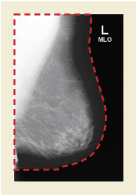
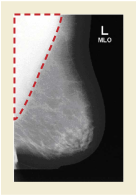
This Template provides the detail specific to an individual calcification.
Table TID 4009. Mammography CAD Individual Calcification
|
If the measured path is encoded, the SCOORD and its by-reference relationship to the IMAGE in TID 1400 “Linear Measurement” shall be used. |
||||||||
|
If the measured path is encoded, the SCOORD and its by-reference relationship to the IMAGE in TID 1401 “Area Measurement” shall be used. |
||||||||
|
If the measured path is encoded, the SCOORD and its by-reference relationship to the IMAGE in TID 1402 “Volume Measurement” shall be used. |
This Template provides the detail specific to a calcification cluster.
Table TID 4010. Mammography CAD Calcification Cluster
|
If the measured path is encoded, the SCOORD and its by-reference relationship to the IMAGE in TID 1400 “Linear Measurement” shall be used. |
||||||||
|
If the measured path is encoded, the SCOORD and its by-reference relationship to the IMAGE in TID 1401 “Area Measurement” shall be used. |
||||||||
|
If the measured path is encoded, the SCOORD and its by-reference relationship to the IMAGE in TID 1402 “Volume Measurement” shall be used. |
This Template provides the detail specific to a density.
Table TID 4011. Mammography CAD Density
|
If the measured path is encoded, the SCOORD and its by-reference relationship to the IMAGE in TID 1400 “Linear Measurement” shall be used. |
||||||||
|
If the measured path is encoded, the SCOORD and its by-reference relationship to the IMAGE in TID 1401 “Area Measurement” shall be used. |
||||||||
|
If the measured path is encoded, the SCOORD and its by-reference relationship to the IMAGE in TID 1402 “Volume Measurement” shall be used. |
|
In previous releases of the Standard, (111037, DCM, "Margins") was used instead of (112233002, SCT, "Margin"). See PS3.16-2025c. |
This Template provides the detail specific to a finding other than a lesion (see CID 6040 “Non-lesion Object Type”).
Table TID 4012. Mammography CAD Non-lesion
|
If the measured path is encoded, the SCOORD and its by-reference relationship to the IMAGE in TID 1400 “Linear Measurement” shall be used. |
||||||||
|
If the measured path is encoded, the SCOORD and its by-reference relationship to the IMAGE in TID 1401 “Area Measurement” shall be used. |
||||||||
|
If the measured path is encoded, the SCOORD and its by-reference relationship to the IMAGE in TID 1402 “Volume Measurement” shall be used. |
This Template provides the detail specific to a selected region. A selected region is any mammography CAD derived arbitrary region of the image, whether within the breast outline or not. This can be use to delineate regions such as the intramammary fold.
Table TID 4013. Mammography CAD Selected Region
|
If the measured path is encoded, the SCOORD and its by-reference relationship to the IMAGE in TID 1400 “Linear Measurement” shall be used. |
||||||||
|
If the measured path is encoded, the SCOORD and its by-reference relationship to the IMAGE in TID 1401 “Area Measurement” shall be used. |
||||||||
|
If the measured path is encoded, the SCOORD and its by-reference relationship to the IMAGE in TID 1402 “Volume Measurement” shall be used. |
This Template provides the detail specific to image quality. It allows the encoding of descriptors of image quality (e.g., CID 6041 “Mammography Image Quality Finding”) for a given image or region of an image. For instance, images with partial motion blur can be identified with the region noted.
This Template gathers two lists of detection algorithms attempted, grouped by success/failure status. Algorithms not attempted are not mentioned in this sub-tree of the Document Root (e.g., TID 4000 “Mammography CAD Report”). This information forms the basis for understanding why a CAD report may produce no (or fewer than anticipated) detection results.
The sub-tree formed by this Template is illustrated in Figure E.1-2 “Summary of Detections and Analyses Levels of Mammography CAD SR Content Tree” in PS3.17 .
Table TID 4015. CAD Detections Performed
|
Shall be present only if value of parent is (111222, DCM, "Succeeded") or (111223, DCM, "Partially Succeeded") |
||||||||
|
Shall be present only if value of parent is (111224, DCM, "Failed") or (111223, DCM, "Partially Succeeded") |
||||||||
This Template gathers two lists of analysis algorithms attempted, grouped by success/failure status. Algorithms not attempted are not mentioned in this sub-tree of the Document Root (e.g., TID 4000 “Mammography CAD Report”). This information forms the basis for understanding why a CAD report may produce no (or fewer than anticipated) analysis results.
The sub-tree formed by this Template is illustrated in Figure E.1-2 “Summary of Detections and Analyses Levels of Mammography CAD SR Content Tree” in PS3.17 .
Table TID 4016. CAD Analyses Performed
|
Shall be present only if value of parent is (111222, DCM, "Succeeded") or (111223, DCM, "Partially Succeeded") |
||||||||
|
Shall be present only if value of parent is (111224, DCM, "Failed") or (111223, DCM, "Partially Succeeded") |
||||||||
This Template fully identifies a detection algorithm and the images and/or image regions on which it operated (see TID 4015 “CAD Detections Performed”).
Table TID 4017. CAD Detection Performed
|
Shall reference IMAGE Content Item(s) in the (111028, DCM, "Image Library") |
||||||||
|
Shall reference an IMAGE Content Item in the (111028, DCM, "Image Library") |
||||||||
|
If more than one detection algorithm has the same "Detection Performed" Code Value (e.g., CID 6014 “Mammography Single Image Finding”) then the "CAD Algorithm Identification" shall unambiguously distinguish between algorithms. |
|
|
Mammography CAD SR: When this Template is invoked for the Mammography CAD SR, the Image Library is mandatory, thus only Row 8 shall be present. Chest CAD SR: When this Template is invoked for the Chest CAD SR, the Image Library is optional, thus Row 7 or 8 may be present. Colon CAD SR: When this Template is invoked for the Colon CAD SR, the Image Library does not exist, thus only Row 7 may be present. |
This Template fully identifies an analysis algorithm and the images and/or image regions on which it operated (see TID 4016 “CAD Analyses Performed”).
Table TID 4018. CAD Analysis Performed
|
Shall reference IMAGE Content Item(s) in the (111028, DCM, "Image Library") |
||||||||
|
Shall reference an IMAGE Content Item in the (111028, DCM, "Image Library") |
||||||||
|
If more than one analysis algorithm has the same "Analysis Performed" Code Value (e.g., CID 6043 “Mammography CAD Analysis Type”) then the "CAD Algorithm Identification" shall unambiguously distinguish between algorithms. |
|
|
Mammography CAD SR: When this Template is invoked for the Mammography CAD SR, the Image Library is mandatory, thus only Row 8 shall be present. Chest CAD SR: When this Template is invoked for the Chest CAD SR, the Image Library is optional, thus Row 7 or 8 may be present. Colon CAD SR: When this Template is invoked for the Colon CAD SR, the Image Library does not exist, thus only Row 7 may be present. |
This Template details the algorithm unambiguously. Re-state the software identification from the General Equipment Module of the SR IOD if all algorithms are unambiguously defined by that Module.
|
May be the same as the Manufacturer's Model Name (0008,1090) of the General Equipment Module, if the Algorithm is not distinguishable from the body of software that makes up the Equipment. |
|
|
May be the same as Software Versions (0018,1020) of the General Equipment Module, if the latter is a single Value, or its multiple Values are combined into a single TEXT Content Item Value. |
|
|
May be the same as the Manufacturer (0008,0070) of the General Equipment Module. |
Each instance of the Image Library Entry Template contains the Image SOP Class and Instance UIDs, and selected attributes for an image that facilitate spatial analysis without having to retrieve the entire set of referenced images. If values for the attributes are not present in the Image SOP Instance, then as many of the attributes as possible should be derived.
Table TID 4020. CAD Image Library Entry
|
First (row) and second (column) components of Patient Orientation (0020,0020) in the Image IOD. See Section C.7.6.1.1.1 in PS3.3 . |
|
|
The second component of Imager Pixel Spacing (0018,1164) in the Image IOD. See Section C.8.11.4 in PS3.3 . |
|
|
The first component of Imager Pixel Spacing (0018,1164) in the Image IOD. See Section C.8.11.4 in PS3.3 . |
All geometry Template invocations require specification of the location of the center of the object. Outline is optional.
Table TID 4021. Mammography CAD Geometry
|
Shall reference an IMAGE Content Item in the (111028, DCM, "Image Library") |
||||||||
This Template is invoked when a Content Item, which may be the "root" of a sub-tree, is paraphrased from a prior SR document.
This Template describes CAD operating points. The description is deliberately left flexible and optional to allow implementation at differing levels of complexity.
Table TID 4023. CAD Operating Points
The Templates that comprise the Chest CAD SR IOD are interconnected as in Figure A-9.
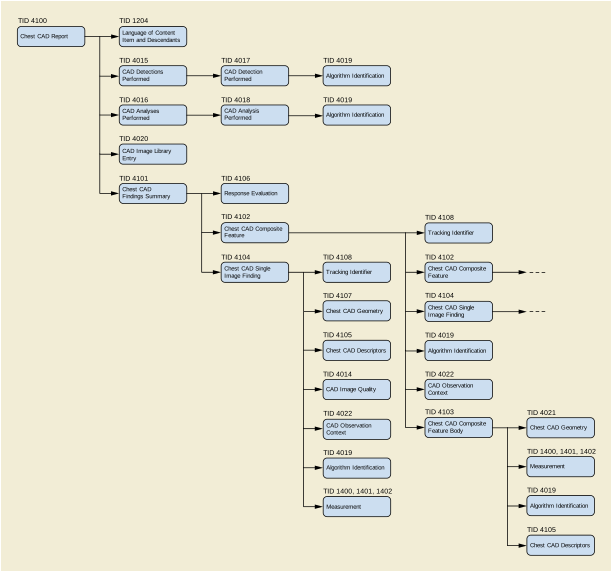
In Figure A-9, '···' indicates possible recursive application of subordinate Templates.
This Template forms the top of a Content Tree that allows a chest CAD device to describe the results of detection and analysis of chest evidence. This Template, together with its subordinate Templates, describes both the results for presentation to radiologists and partial product results for consumption by chest CAD devices in subsequent chest CAD reports.
This Template defines a Container that contains an Image Library, the CAD results, and summaries of the detection and analysis algorithms performed. The Image Library contains the Image SOP Class and Instance UIDs, and selected attributes for each image referenced in either the algorithm summaries or chest CAD results.
The atomic CAD results of Single Image Findings and Composite Features are described in the Chest CAD Findings Summary sub-tree.
The Summary of Detections and Summary of Analyses sub-trees gather lists of algorithms attempted, grouped by success/failure status. Algorithms not attempted are not mentioned in these sub-trees. This information forms the basis for understanding why a chest CAD report may produce no (or fewer than anticipated) results. Chest CAD results are constructed bottom-up, starting from Single Image Findings (see TID 4104 “Chest CAD Single Image Finding”), associated as Composite Features (see TID 4102 “Chest CAD Composite Feature”).
See Figure F.1-1 “Top Levels of Chest CAD SR Content Tree” in PS3.17 .
Table TID 4100. Chest CAD Report
|
$ImageLaterality = DCID 244 “Laterality” $ImageView = DCID 4010 “DX View” $ImageViewMod = DCID 4011 “DX View Modifier” |
||||||||
|
Shall be present unless the value of Row 6 = (111225, DCM, "Not Attempted") |
$DetectionCode = DCID 6101 “Chest Finding or Feature”, DCID 6102 “Chest Finding or Feature Modifier” |
|||||||
|
Shall be present unless the value of Row 8 = (111225, DCM, "Not Attempted") |
$AnalysisCode = DCID 6137 “CAD Analysis Type” |
|
The "Image Library" section of the Content Tree (TID 4100 “Chest CAD Report”, Row 3) may include all Image SOP Instances from the Current Requested Procedure Evidence Sequence (0040,A375) Attribute of the SR Document General Module. If a portion of another instance of a Chest CAD SR IOD is duplicated in the "Chest CAD Findings Summary" section of the Content Tree, the "Image Library" may also include all Image Library Entries referenced from the duplicated portions of the Chest CAD SR. The Image Library is intended to be used in cases where the acquisition context Content Items differ from image to image, such as different views and/or laterality in projection X-Ray. |
|
|
The "Detections Performed" and "Analyses Performed" sections of the Content Tree (TID 4100 “Chest CAD Report”, Rows 7 and 9) together shall reference all Image SOP Instances included in the Current Requested Procedure Evidence Sequence (0040,A375) Attribute of the SR Document General Module. |
The contents of this Template describe the findings and aggregate features that the chest CAD device detected for the chest evidence presented. This Template forms the chest CAD results sub-tree of the Chest CAD Document Root (TID 4100 “Chest CAD Report”). The data from which the details are inferred are expressed in the Composite Features (see TID 4102 “Chest CAD Composite Feature”) and/or Single Image Findings (see TID 4104 “Chest CAD Single Image Finding”), of which there may be several.
The sub-tree headed by this Template is illustrated in Figure F.1-2 “Example of CAD Processing and Findings Summary Sub-Tree of Chest CAD SR Content Tree” in PS3.17 .
This Template collects a composite feature for a lesion, anatomy, non-lesion object, or correlation of related objects (see TID 4101 “Chest CAD Findings Summary”). The details of the composition are expressed in the Chest CAD Composite Feature Body (see TID 4103 “Chest CAD Composite Feature Body”). The data from which the details are inferred, are expressed in the Composite Features (see TID 4102 “Chest CAD Composite Feature”) and/or Single Image Findings (see TID 4104 “Chest CAD Single Image Finding”), of which there may be several.
A Composite Feature shall be INFERRED FROM any combination of two or more Composite Features or Single Image Findings or mixture thereof.
Table TID 4102. Chest CAD Composite Feature
|
Shall be present IFF value of Row 1 = (112005, DCM, "Radiographic anatomy") |
||||||||
|
May be present IFF value of Row 1 = (111102, DCM, "Non-lesion") |
||||||||
|
May be present IFF value of Row 2 is from DCID 6114 “Osseous Anatomy Finding or Feature” |
||||||||
|
Shall be present IFF this feature is duplicated from a different report than its parent. |
||||||||
|
At least two items shall be present: two of Row 13, two of Row 14, or one of each. |
||||||||
|
At least two items shall be present: two of Row 13, two of Row 14, or one of each. |
|
An identifier of an anatomic feature when a multiplicity of features of that type may be present, such as "Rib 1", "Rib 2" or thoracic vertebrae "T1" or "T2". |
|
|
This Content Item constrains the SCP receiving the Chest CAD SR IOD in its use of the contents of this Template and its Target Content Items. Chest CAD devices may opt to use data marked "Not for Presentation" or "Presentation Optional" as input to subsequent chest CAD processing steps. Refer to Section O.2 “Structured Reporting Storage SOP Class SCU and SCP Behavior” in PS3.4 . |
The details of a composite feature are expressed in this Template. It is applied to Chest CAD Composite Feature (TID 4102 “Chest CAD Composite Feature”).
Table TID 4103. Chest CAD Composite Feature Body
|
May be present IFF the value of Row 1 = (111153, DCM, "Target Content Items are related temporally") |
||||||||
|
The referenced numeric values shall have the same Concept Name. Their UNITS shall be the same as Row 9 |
||||||||
|
May be present only if the value of Row 1 = (111153, DCM, "Target Content Items are related temporally") |
||||||||
|
The referenced Content Items shall have the same Concept Name and their Code Values shall be from the same Context Group. |
|
The certainty of the CAD device that the feature analyzed and classified by the CODE, as specified in the Composite Feature parent Template, is in fact that type of feature. |
|
|
If dimensions for a volume are to be stated in terms of length, width, and depth, then one shall use 3 instances of TID 1400 “Linear Measurement”. |
|
|
Values ≤ 0 are allowed. The two referenced numeric values are Target Content Items of the first generation Composite Feature or Single Image Finding children of this composite feature. Given the equation, A - B, the value representing A shall be referenced first. |
|
| Row 11 |
The two referenced Code Values are Target Content Items of the first generation Composite Feature or Single Image Finding children of this composite feature. |
This Template describes a single image finding for a lesion or other object. The details of the finding are expressed in this Template and/or more specific Templates.
Table TID 4104. Chest CAD Single Image Finding
|
Shall be present IFF value of Row 1 = (112005, DCM, "Radiographic anatomy") |
||||||||
|
May be present IFF value of Row 1 = (111102, DCM, "Non-lesion") |
||||||||
|
IFF value of Row 6 = (111151, DCM, "Presentation Optional") and Row 1 of TID 4023 “CAD Operating Points” is present for the finding identified in Row 1 |
UNITS = DT ({1:n}, UCUM, "range: 1:n"), where n is the maximum specified in Row 1 of TID 4023 “CAD Operating Points” for the finding identified in Row 1. Value is restricted to being an integer |
|||||||
|
Shall be present IFF this finding is duplicated from a different report than its parent. |
||||||||
|
Shall be present IFF value of Row 1 = (111099, DCM, "Selected region") |
||||||||
|
Shall be present unless value of Row 1 = (111101, DCM, "Image quality") |
||||||||
|
Shall be present IFF value of Row 1 = (111101, DCM, "Image quality") and Rows 20 and 21 are not present |
||||||||
|
Shall be present IFF value of Row 1 = (111101, DCM, "Image quality") and Rows 19 and 21 are not present |
Shall reference an IMAGE Content Item in the (111028, DCM, "Image Library") |
|||||||
|
Shall be present IFF value of Row 1 = (111101, DCM, "Image quality") and Rows 19 and 20 are not present |
||||||||
|
All the Row 21 Content Items in a single invocation of this Template shall reference the same IMAGE |
||||||||
|
All the Row 21 Content Items in a single invocation of this Template shall reference the same IMAGE Content Item in the (111028, DCM, "Image Library") |
||||||||
|
Shall be present IFF value of Row 1 = (111101, DCM, "Image quality") |
$QualityFinding = DCID 6135 “Image Quality Finding” $QualityStandard = DCID 6136 “Chest Types of Quality Control Standard” |
| Row 3 |
An identifier of an anatomic feature when a multiplicity of features of that type may be present, such as "Rib 1", "Rib 2" or thoracic vertebrae "T1" or "T2". |
| Row 6 |
This Content Item constrains the SCP receiving the Chest CAD SR IOD in its use of the contents of this Template and its Target Content Items. Chest CAD devices may opt to use data marked "Not for Presentation" or "Presentation Optional" as input to subsequent chest CAD processing steps. Refer to Section O.2 “Structured Reporting Storage SOP Class SCU and SCP Behavior” in PS3.4 . |
| Row 7 |
Additional information to use when Rendering Intent is "Presentation Optional". A CAD Operating Point of zero is not sent, and is encoded as a Rendering Intent of "Presentation Required". See Section O.2 “Structured Reporting Storage SOP Class SCU and SCP Behavior” in PS3.4 and Section E.4 “CAD Operating Point” in PS3.17 . |
|
The certainty of the CAD device that the finding detected and classified by the Single Image Finding CODE specified is in fact that type of finding. |
This Template provides qualitative detail for a Single Image Finding or Composite Feature. It is applied to Chest CAD Composite Feature (TID 4102 “Chest CAD Composite Feature”) and Chest CAD Single Image Finding (TID 4104 “Chest CAD Single Image Finding”).
Table TID 4105. Chest CAD Descriptors
This Template provides a means to report response evaluation to cancer treatment, based on a method such as RECIST or WHO.
All geometry Template invocations require specification of either the location of the center of the object, the outline, or both. Geometry is a property of single image findings (see TID 4104 “Chest CAD Single Image Finding”) and composite features (see TID 4103 “Chest CAD Composite Feature Body”).
Table TID 4107. Chest CAD Geometry
|
Shall reference an IMAGE Content Item in the (111028, DCM, "Image Library") |
||||||||
This Template provides a means to identify an object for longitudinal tracking, potentially across multiple Structured Reports, over time.
Table TID 4108. Tracking Identifier
The Templates that comprise the Colon CAD SR IOD are interconnected as in Figure A-9b. In Figure A-9b, '···' indicates possible recursive application of subordinate Templates.
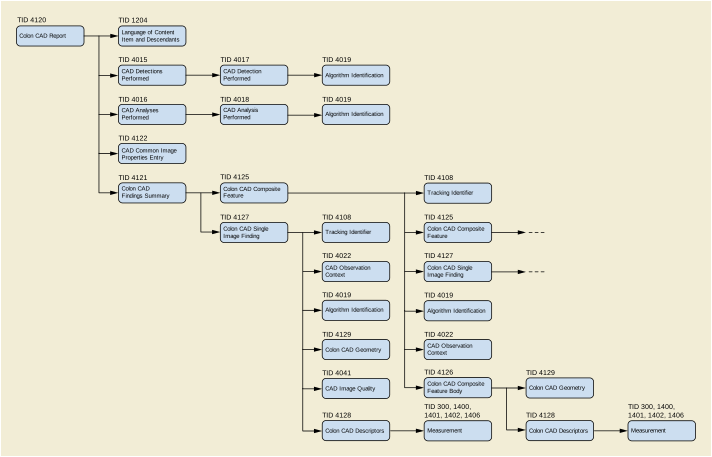
This Template forms the top of a Content Tree that allows a colon CAD device to describe the results of detection and analysis of colon evidence. This Template, together with its subordinate Templates, describes both the results for presentation to radiologists and partial product results for consumption by colon CAD devices in subsequent colon CAD reports.
This Template defines a Container that contains the CAD results and summaries of the detection and analysis algorithms performed.
The atomic CAD results of Single Image Findings and Composite Features are described in the Colon CAD Findings Summary sub-tree.
The Summary of Detections and Summary of Analyses sub-trees gather lists of algorithms attempted, grouped by success/failure status. Algorithms not attempted are not mentioned in these sub-trees. This information forms the basis for understanding why a colon CAD report may produce no (or fewer than anticipated) results. Colon CAD results are constructed bottom-up, starting from Single Image Findings (see TID 4127 “Colon CAD Single Image Finding”), associated as Composite Features (see TID 4125 “Colon CAD Composite Feature”).
See Figure SS.1-1 “Top Levels of Colon CAD SR Content Tree” in PS3.17 .
Table TID 4120. Colon CAD Report
|
Shall be present unless the value of Row 5 = (111225, DCM, "Not Attempted") |
$DetectionCode = DCID 6201 “Colon Finding or Feature” |
|||||||
|
Shall be present unless the value of Row 7 = (111225, DCM, "Not Attempted") |
$AnalysisCode = DCID 6137 “CAD Analysis Type” |
|
The "Detections Performed" and "Analyses Performed" sections of the Content Tree (TID 4120 “Colon CAD Report”, Rows 6 and 8) together shall reference all Image SOP Instances included in the Current Requested Procedure Evidence Sequence (0040,A375) Attribute of the SR Document General Module. |
|
The contents of this Template describe the findings and aggregate features that the colon CAD device detected for the colon evidence presented. This Template forms the colon CAD results sub-tree of the Colon CAD Document Root (TID 4120 “Colon CAD Report”). The data from which the details are inferred are expressed in the Composite Features (see TID 4125 “Colon CAD Composite Feature”) and/or Single Image Findings (see TID 4127 “Colon CAD Single Image Finding”), of which there may be several.
The sub-tree headed by this Template is illustrated in Figure F.1-2 “Example of CAD Processing and Findings Summary Sub-Tree of Chest CAD SR Content Tree” in PS3.17 .
Each instance of the CAD Common Image Properties Entry Template contains selected attributes for a set of parallel contiguous equally spaced slices (with identical properties) from which CAD findings are derived.
Table TID 4122. CAD Common Image Properties Entry
|
Shall be taken from Study Date (0008,0020) in the Image Instances. |
||||||||
|
Shall be taken from Study Time (0008,0030) in the Image Instances. |
||||||||
|
Shall be taken from Modality (0008,0060) in the Image Instances. |
||||||||
|
Shall be taken from value 2 of Pixel Spacing (0028,0030) in the Image Instances. |
||||||||
|
Shall be taken from value 1 of Pixel Spacing (0028,0030) in the Image Instances. |
||||||||
|
Shall be taken from Slice Thickness (0018,0050) in the Image Instances. |
||||||||
|
Shall be computed from the Image Position (Patient) (0020,0032) projected onto the normal to the Image Orientation (Patient) (0020,0037); may or may not be the same as the Spacing Between Slices (0018,0088) if present. |
||||||||
|
EV (112228, DCM, "Recumbent Patient Position with respect to gravity") |
Required if Patient Position (0018,5100) is present in the image instances and has a value. |
Shall be derived from Patient Position (0018,5100) in the Image Instances. |
This Template collects a composite feature for a lesion, non-lesion object, or correlation of related objects (see TID 4121 “Colon CAD Findings Summary”). The details of the composition are expressed in the Colon CAD Composite Feature Body (see TID 4126 “Colon CAD Composite Feature Body”). The data from which the details are inferred, are expressed in the Composite Features (see TID 4125 “Colon CAD Composite Feature”) and/or Single Image Findings (see TID 4127 “Colon CAD Single Image Finding”), of which there may be several.
Table TID 4125. Colon CAD Composite Feature
|
IFF value of Row 3 = (111151, DCM, "Presentation Optional") and Row 1 of TID 4023 “CAD Operating Points” is present for the feature identified in Row 1. |
UNITS = DT ({1:n}, UCUM, "range: 1:n"), where n is the maximum specified in Row 1 of TID 4023 “CAD Operating Points” for the feature identified in Row 1. Value is restricted to being an integer. |
|||||||
|
Shall be present IFF this feature is duplicated from a different report than its parent. |
||||||||
|
This Content Item constrains the SCP receiving the Colon CAD SR IOD in its use of the contents of this Template and its Target Content Items. Colon CAD devices may opt to use data marked "Not for Presentation" or "Presentation Optional" as input to subsequent colon CAD processing steps. Refer to Section O.2 “Structured Reporting Storage SOP Class SCU and SCP Behavior” in PS3.4 . |
The details of a composite feature are expressed in this Template. It is applied to Colon CAD Composite Feature (TID 4125 “Colon CAD Composite Feature”).
Table TID 4126. Colon CAD Composite Feature Body
|
May be present IFF the value of Row 1 = (111153, DCM, "Target Content Items are related temporally") |
||||||||
|
The referenced numeric values shall have the same Concept Name. Their UNITS shall be the same as Row 6 |
||||||||
|
May be present only if the value of Row 1 = (111153, DCM, "Target Content Items are related temporally") |
||||||||
|
The referenced Content Items shall have the same Concept Name and their Code Values shall be from the same Context Group. |
This Template describes a single image finding for a lesion or other object. The details of the finding are expressed in this Template and/or more specific Templates.
Table TID 4127. Colon CAD Single Image Finding
|
IFF value of Row 3 = (111151, DCM, "Presentation Optional") and Row 1 of TID 4023 “CAD Operating Points” is present for the finding identified in Row 1 |
UNITS = DT ({1:n}, UCUM, "range: 1:n"), where n is the maximum specified in Row 1 of TID 4023 “CAD Operating Points” for the finding identified in Row 1. Value is restricted to being an integer. |
|||||||
|
Shall be present IFF this finding is duplicated from a different report than its parent. |
||||||||
|
Shall be present IFF value of Row 1 = (111099, DCM, "Selected region") |
||||||||
|
Shall be present unless value of Row 1 = (111101, DCM, "Image quality") |
||||||||
|
Shall be present IFF value of Row 1 = (111101, DCM, "Image quality") and Row 13 is not present |
||||||||
|
Shall be present IFF value of Row 1 = (111101, DCM, "Image quality") and Row 12 is not present |
||||||||
|
All the Row 13 Content Items in a single invocation of this Template shall reference the same IMAGE |
||||||||
|
Shall be present IFF value of Row 1 = (111101, DCM, "Image quality") |
$QualityFinding = DCID 6135 “Image Quality Finding” $QualityStandard = DCID 6208 “Colon Types of Quality Control Standard” |
|
This Content Item constrains the SCP receiving the Colon CAD SR IOD in its use of the contents of this Template and its Target Content Items. Colon CAD devices may opt to use data marked "Not for Presentation" or "Presentation Optional" as input to subsequent colon CAD processing steps. Refer to Section O.2 “Structured Reporting Storage SOP Class SCU and SCP Behavior” in PS3.4 . |
|
|
Additional information to use when Rendering Intent is "Presentational Optional". A CAD Operating Point of zero is not sent, and is encoded as a Rendering Intent of "Presentation Required". See Section O.2 “Structured Reporting Storage SOP Class SCU and SCP Behavior” in PS3.4 and Section E.4 “CAD Operating Point” in PS3.17 . |
|
|
The certainty of the CAD device that the finding detected and classified by the Single Image Finding CODE specified is in fact that type of finding. |
This Template provides qualitative detail for a Single Image Finding or Composite Feature. It is applied to Colon CAD Composite Feature (TID 4125 “Colon CAD Composite Feature”) and Colon CAD Single Image Finding (TID 4127 “Colon CAD Single Image Finding”).
Table TID 4128. Colon CAD Descriptors
|
$Measurement = DCID 6212 “Calculated Value for Colon Finding” $Derivation = DCID 6140 “Calculation Method” $DerivationParameter = EV (112032, DCM, "Threshold Attenuation Coefficient") $DerivationParameterUnits = EV ([hnsf'U], UCUM, "Hounsfield unit") |
||||||||
All geometry Template invocations require specification of either the location of the center of the object, the outline, or both. Geometry is a property of single image findings (see TID 4127 “Colon CAD Single Image Finding”) and composite features (see TID 4125 “Colon CAD Composite Feature”).
Table TID 4129. Colon CAD Geometry
The Templates that comprise the Breast Imaging Report are interconnected as in Figure A-10.
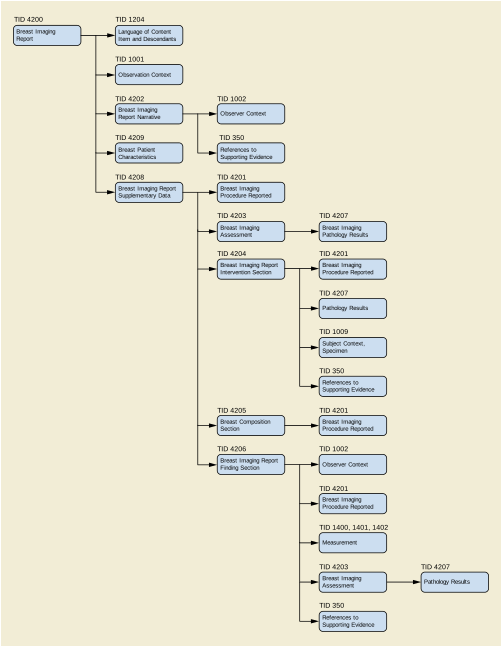
This Template forms the Content Tree that allows a Breast Imaging Report device to describe the results of a radiologist's diagnostic interpretation of Breast Imaging (e.g., X-Ray mammography or breast ultrasound) evidence. This Template, together with its subordinate Templates, describes the results for presentation to clinicians, or for consumption by Breast Imaging Report devices for subsequent Breast Imaging Reports.
This Template shall be instantiated at the Root node only.
See Figure Q.1-1 “Top Level of Breast Imaging Report Content Tree” in PS3.17 .
A procedure that is reported in a Breast Imaging Report is expressed in this Template. The results of more than one procedure may be included in a single report instance (see TID 4208 “Breast Imaging Report Supplementary Data”).
See Figure Q.1-2 “Breast Imaging Procedure Reported Content Tree” in PS3.17 .
Table TID 4201. Breast Imaging Procedure Reported
This Template contains the narrative text sub-tree of the Content Tree of a Breast Imaging Report. The narrative summary may be subdivided into sections with section headings.
See Figure Q.1-3 “Breast Imaging Report Narrative Content Tree” in PS3.17 .
This Template provides the content of a Breast Imaging Assessment, for an overall assessment section for the entire report (see TID 4208 “Breast Imaging Report Supplementary Data”) or an assessment of a particular finding (see TID 4206 “Breast Imaging Report Finding Section”). This Template defines a code-based assessment of the interpretation results.
See Figure Q.1-5 “Breast Imaging Assessment Content Tree” in PS3.17 .
This Template defines a supplementary data section for an Intervention of the breast, for the Breast Imaging Report. It is included from TID 4208 “Breast Imaging Report Supplementary Data”.
This Template defines a Breast Composition section for the supplementary data sub-tree of the Breast Imaging Report. It is included from TID 4208 “Breast Imaging Report Supplementary Data”.
This Template defines a supplementary data section for the Findings of the Breast Imaging Report. It is included from TID 4208 “Breast Imaging Report Supplementary Data”.
Table TID 4206. Breast Imaging Report Finding Section
|
May be present if value of Row 4 = (40388003, SCT, "Implant") |
||||||||
|
EV (111371, DCM, "Identifiable effect on surrounding tissues") |
||||||||
|
The laterality of the finding may be different from the laterality of the procedure specified in Row 3, if the latter is undefined or bilateral. If this Content Item is absent, the laterality of the procedure is assumed to apply. The laterality of the finding may be bilateral. |
|
|
In previous releases of the Standard, (111037, DCM, "Margins") was used instead of (112233002, SCT, "Margin"). See PS3.16-2025c. |
This Template defines the pathology results for a procedure. It may be applied to a Breast Imaging Assessment (see TID 4203 “Breast Imaging Assessment”), or a Breast Imaging Intervention (see TID 4204 “Breast Imaging Report Intervention Section”).
Table TID 4207. Breast Imaging Pathology Results
This Template forms a supplementary data sub-tree of the Content Tree of a Breast Imaging Report. Each subsection provides a specific type of supporting evidence to the narrative text sub-tree, for example, as coded and numeric data.
See Figure Q.1-4 “Breast Imaging Report Supplementary Data Content Tree” in PS3.17 .
Section TID 4300 “Prostate Multiparametric MR Imaging Report” is the top-level report that includes all subordinate templates. Specific components related to prostate imaging are organized in the following subordinate templates:
-
Section TID 9007 “General Relevant Patient Information” can be used to describe relevant clinical history, tests and procedures (e.g., Prostate Specific Antigen Tests and biopsy results);
-
Section TID 1600 “Image Library” can be used to code individual MR series into defined types;
-
Section TID 3106 “Drugs/Contrast Administered” can be used to describe details related to contrast administration during Dynamic Contrast-Enhanced MR acquisition, which is often used for prostate evaluation;
-
Section TID 1701 “Imaging Study Quality” can be used to describe quality of the study and individual series in the study;
-
Section TID 4302 “Prostate Imaging Findings” are intended for describing three groups of findings:
-
overall prostate findings in Section TID 4303,
-
localized findings within the prostate in Section TID 4304 “Localized Prostate Finding”,
-
and extra-prostatic findings in Section TID 4305 “Extra-prostatic Finding”.
Each of these three templates follows a similar structure allowing for annotating the finding either volumetrically or planimetrically, and assigning attributes to those annotations.
-
The overall templates that comprise the Prostate Imaging Report are interconnected as in Figure A.4300-1.

The templates comprising Section TID 4302 “Prostate Imaging Findings” are shown in Figure A.4300-2.
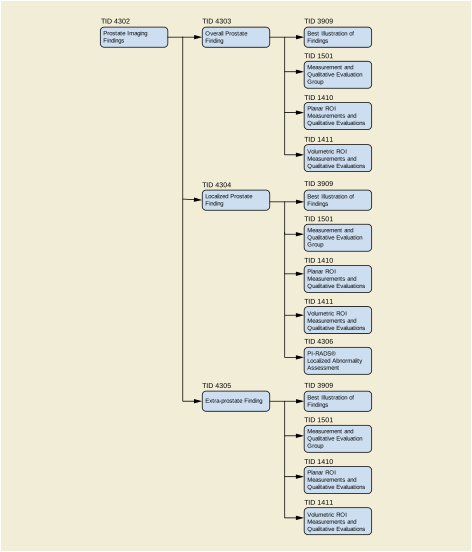
This Root Template forms the Content Tree that allows a Prostate Imaging Report device to describe the results of a radiologist's diagnostic interpretation of Prostate Imaging (e.g., multiparametric MRI) evidence. This Template, together with its subordinate Templates, describes the results for presentation to clinicians, or for consumption by Prostate Imaging Report devices for subsequent Prostate Imaging Reports.
The initial primary application of the template is to support reporting of Prostate Imaging Reporting and Data System version (PI-RADS) based interpretation of multiparametric MRI of the prostate, and specifically PI-RADS v2 reporting [PI-RADS]. PI-RADS guidelines were formulated based on the consensus of the analysis of published evidence and expert observations and opinions. The goal of PI-RADS is "to improve detection, localization, characterization, and risk stratification in patients with suspected cancer in treatment-naive prostate glands".
Table TID 4300. Prostate Multiparametric MR Imaging Report
|
EV (719178004, SCT, "Multiparametric magnetic resonance imaging of prostate") |
||||||||
|
$ProblemList = BCID 6327 “Prostate Imaging Indication” |
||||||||
|
EV (130552, DCM, "Prostate MRI relevant procedure information") |
||||||||
|
$ImageQualityControlStandard = BCID 6353 “Prostate Imaging Types of Quality Control Standard” $StudyQualityFindings = BCID 6314 “Prostate MRI Study Quality Finding” $SeriesQualityFindings = BCID 6315 “Prostate MRI Series Quality Finding” |
||||||||
This disease-specific template collects the details of a patient's genitourinary system history, such as those relevant in the context of prostate cancer screening, including abdominal surgeries, history of androgen deprivation therapy, digital rectal examination, and relevant labs.
Table TID 4301. Genitourinary Patient History
|
$Problem = DCID 6313 “History of Prostate Disease” $Therapy = DCID 6323 “Prostate Cancer Therapy” |
||||||||
|
$ProcType = DCID 6319 “Abdominal Intervention Type” $Procedure = DCID 6320 “Abdominopelvic Intervention” |
||||||||
|
DT (30954-2, LN, "Relevant Diagnostic Tests and/or Laboratory Data") |
||||||||
|
$Measurement = DCID 6352 “Prostate Cancer Diagnostic Blood Lab Measurement” |
||||||||
|
$ProcType = DT (261004008, SCT, "Diagnostic intent") $Procedure = DCID 6321 “Prostate Cancer Diagnostic Procedure” ProcedureResult = DCID 242 “Normal-Abnormal” |
||||||||
Summary of the findings identified in the process of review of prostate imaging study. The container shall include measurement of the prostate gland and at least one localized finding.
Table TID 4302. Prostate Imaging Findings
Summary of the overall assessment of the prostate gland, peripheral and transitional zone in separate container instantiations. Prostate gland assessment must include size measurements.
Table TID 4303. Overall Prostate Finding
|
DTID 1410 “Planar ROI Measurements and Qualitative Evaluations” |
$Measurement = BCID 218 “Quantitative Image Feature” $Units = BCID 7181 “Abstract Multi-dimensional Image Model Component Unit” $Derivation = BCID 7464 “General Region of Interest Measurement Modifier” $Method = BCID 6147 “Response Criteria” $QualType = BCID 6333 “mpMRI Assessment Type” $QualValue = BCID 6335 “mpMRI Assessment Value” |
|||||||
|
DTID 1411 “Volumetric ROI Measurements and Qualitative Evaluations” |
$Measurement = DT (118565006, SCT, "Volume") $Units = BCID 7462 “Volume Measurement Unit” $QualType = BCID 6333 “mpMRI Assessment Type” $QualValue = BCID 6335 “mpMRI Assessment Value” |
|||||||
|
$Measurement = BCID 218 “Quantitative Image Feature” $Units = BCID 7181 “Abstract Multi-dimensional Image Model Component Unit” $QualType = BCID 6333 “mpMRI Assessment Type” $QualValue = BCID 6335 “mpMRI Assessment Value” $ImagePurpose = EV (260753009, SCT, "Source") |
||||||||
A single finding within the prostate gland. A single instantiation of this container allows to include annotations of the lesion in various series, and includes the optional characterization of the lesion following PI-RADS® guidelines.
Table TID 4304. Localized Prostate Finding
This template can be used to report abnormal lymph nodes and skeletal metastases as part of prostate MRI report. At least bi-dimensional measurement of suspicious lymph nodes is recommended. Organization of the sub-parts of the template corresponding to lymph nodes and skeletal metastases is similar, with the exception that lymph nodes section is parameterized with CID 7600 “Lymph Node Anatomic Site” for $TargetSite.
Table TID 4305. Extra-prostatic Finding
This template stores PI-RADS® assessment for all analyzed modalities, with the references to the annotations in the individual modalities. Assessment is not specific to lesions, since it can also be used to assess additional findings, including definitely benign findings.
When lesions are identified, only one lesion shall be designated as "Index lesion".
Table TID 4306. PI-RADS® Localized Abnormality Assessment
This is the Template for the root of the Content Tree for the OB-GYN ultrasound procedure report.
Table TID 5000. OB-GYN Ultrasound Procedure Report
|
$Laterality = EV (7771000, SCT, "Left") $NumberConcept = EV (11879-4, LN, "Number of follicles in left ovary") |
||||||||
|
$Laterality = EV (24028007, SCT, "Right") $NumberConcept = EV (11880-2, LN, "Number of follicles in right ovary") |
||||||||
|
DTID 5025 “OB-GYN Fetal Vascular Ultrasound Measurement Group” |
$AnatomyGroup = DCID 12141 “Fetal Vasculature Anatomical Location” |
|||||||
|
DTID 5026 “OB-GYN Pelvic Vascular Ultrasound Measurement Group” |
$AnatomyGroup = DCID 12140 “Pelvic Vasculature Anatomical Location” |
Patient Characteristic concepts in this Template, which may replicate Attributes in the Patient Study Module, are included here as possible targets of by-reference relationships from other Content Items in the SR tree.
Note
Several of the concepts in this Template duplicate concepts in TID 1007 “Subject Context, Patient”. The difference in use is that this Template has those concepts as primary observations of the patient, while in TID 1007 “Subject Context, Patient” the concepts are used to set (or reset) the context for other observations.
Observations of the procedure of immediate clinical interest.
The Fetus Summary Template is a container for summary data of a fetus.
Table TID 5003. OB-GYN Procedure Fetus Summary
|
IF this Template is invoked more than once to describe more than one fetus |
||||||||
|
$Measurement = DCID 12019 “OB-GYN Fetus Summary” $Equation = DCID 12012 “OB Equation/Table” |
||||||||
|
$Measurement = EV (11778-8, LN, "EDD") Derivation = DCID 12026 “Estimated Delivery Date Method” |
The Fetal Biometry Section Ratio Template is a container for common biometric ratios.
Table TID 5004. Fetal Biometry Ratio Section
The Fetal Biometry Section Template is a container for common biometric groups.
Table TID 5005. Fetal Biometry Section
|
IF this Template is invoked more than once to describe more than one fetus |
||||||||
|
$BiometryType = MemberOf {DCID 12005 “Fetal Biometry Measurement” $TargetSite = DCID 12020 “Fetal Biometry Anatomic Site” |
The Long Bones Template is a container for biometric data of long bones.
Table TID 5006. Fetal Long Bones Section
|
IF this Template is invoked more than once to describe more than one fetus |
||||||||
|
$BiometryType = MemberOf {DCID 12006 “Fetal Long Bones Biometry Measurement” $TargetSite = DCID 12021 “Fetal Long Bone Anatomic Site” |
The Fetal Cranium Template is a container for groups of biometric data of the fetal cranium.
Table TID 5007. Fetal Cranium Section
|
IF this Template is invoked more than once to describe more than one fetus |
||||||||
|
$BiometryType = MemberOf {DCID 12007 “Fetal Cranium Measurement” $TargetSite = DCID 12022 “Fetal Cranium Anatomic Site” |
The Biometry Group Template is container for a biometric value and its associated growth metrics.
|
The discrete measurements of the biometry type including derived measurements such as mean. One of the measurements may be flagged as selected for derived measurements. The anatomic location may be precoordinated in the measurement type, but may also be explicitly conveyed in the $TargetSite parameter, which then also allows laterality to be encoded within TID 300 “Measurement”. |
|
|
The estimated gestational age derived from an equation or table based on the explicitly referenced R-INFERRED FROM Content Item, selected measurement or mean, in that order of preference. |
|
|
The reference that defines the equation or table of GA derivation |
|
|
Expresses the rank of the selected or mean measurement of Row 2 relative to the distribution specified in Row 8. |
|
|
This row specifies the CODE reference used to compute the percentile or Z-score. |
This Template encodes scoring observations for fetal well-being evaluation as described by Manning, Antepartum Fetal Evaluation: Development of a Fetal Biophysical Profile Score, Am. J Obsetet Gynecol, 1980;136:787.
Table TID 5009. Fetal Biophysical Profile Section
This Template specifies a container for amniotic sac quadrant diameters and a derived index.
Table TID 5010. Amniotic Sac Section
|
$Measurement = DT (11627-7, LN, "Amniotic Fluid Index") |
||||||||
|
$Measurement = DCID 12008 “OB-GYN Amniotic Sac Measurement” |
The Early Gestation Section Template is a container for common, first trimester biometric groups.
Table TID 5011. Early Gestation Section
|
IF this Template is invoked more than once to describe more than one fetus |
||||||||
|
$BiometryType = Member of {DCID 12009 “Early Gestation Biometry Measurement”} |
This Template contains metrics of ovary size.
Table TID 5012. Ovaries Section
|
$GroupName = EV (15497006, SCT, "Ovary") $Width = EV (11829-9, LN, "Left Ovary Width") $Length = EV (11840-6, LN, "Left Ovary Length") $Height = EV (11857-0, LN, "Left Ovary Height") $Volume = EV (12164-0, LN, "Left Ovary Volume") |
||||||||
|
$GroupName = EV (15497006, SCT, "Ovary") $Width = EV (11830-7, LN, "Right Ovary Width") $Length = EV (11841-4, LN, "Right Ovary Length") $Height = EV (11858-8, LN, "Right Ovary Height") $Volume = EV (12165-7, LN, "Right Ovary Volume") |
This Template contains follicle metrics for left or right ovarian follicles.
Table TID 5013. Follicles Section
|
$GroupName = EV (24162005, SCT, "Ovarian Follicle") $Width = EV (103355008, SCT, "Width") $Length = EV (410668003, SCT, "Length") $Height = EV (121207, DCM, "Height") $Volume = EV (121221, DCM, "Volume of ellipsoid") $Method = DCID 7230 “Automation of Measurement” $Method = DCID 12025 “OB-GYN Ultrasound Beam Path” |
||||||||
This Template contains metrics for one ovarian follicle.
Table TID 5014. Follicle Measurement Group
|
$Measurement = EV (118565006, SCT, "Volume") $Method = DCID 7230 “Automation of Measurement” $Method = DCID 12025 “OB-GYN Ultrasound Beam Path” |
||||||||
|
$Measurement = EV (11793-7, LN, "Follicle Diameter") $Method = DCID 7230 “Automation of Measurement” $Method = DCID 12025 “OB-GYN Ultrasound Beam Path” $Derivation = DCID 3627 “Measurement Type” |
||||||||
|
The value shall correspond to the value of TID 5017 “Follicle Count Group” Row 2 for the Count Group in which this measured follicle is included. |
|
A follicle measured here might not be included in any Follicle Count Groups. Also, some follicles counted in TID 5017 “Follicle Count Group” might not be formally measured. |
This Template contains general measurements in the pelvis and uterus.
Table TID 5015. Pelvis and Uterus Section
|
$GroupName = EV (35039007, SCT, "Uterus") $Width = EV (11865-3, LN, "Uterus Width") $Length = EV (11842-2, LN, "Uterus Length") $Height = EV (11859-6, LN, "Uterus Height") $Volume = EV (33192-6, LN, "Uterus Volume") |
||||||||
|
$GroupName = EV (95315005, SCT, "Uterine fibroid") $Width = EV (103355008, SCT, "Width") $Length = EV (410668003, SCT, "Length") $Height = EV (121207, DCM, "Height") $Volume = EV (121221, DCM, "Volume of ellipsoid") |
||||||||
|
$Measurement = DCID 12011 “Ultrasound Pelvis and Uterus Measurement” $TargetSite = DCID 12023 “Pelvis and Uterus Anatomic Site” $Derivation = DCID 3627 “Measurement Type” |
This Template is a container for a group of measurements that assess the size of an anatomical structure using a volume derived from perpendicular diameters.
Table TID 5016. Parameters
Table TID 5016. LWH Volume Group
|
$Derivation = DCID 3627 “Measurement Type” |
||||||||
|
$Derivation = DCID 3627 “Measurement Type” |
||||||||
|
$Derivation = DCID 3627 “Measurement Type” |
||||||||
|
EV (130324, DCM, "Functional condition present during acquisition") |
||||||||
This Template records a count of ovarian follicles of a given type and size range.
This Template is an anatomy specific container of OB-GYN fetal vascular measurements.
Table TID 5025. OB-GYN Fetal Vascular Ultrasound Measurement Group
|
IF this Template is invoked more than once to describe more than one fetus |
||||||||
|
$MeasType = DCID 12119 “Vascular Ultrasound Property” $Derivation = DCID 3627 “Measurement Type” |
This Template is an anatomy specific container of OB-GYN pelvic vascular measurements.
Table TID 5026. OB-GYN Pelvic Vascular Ultrasound Measurement Group
|
$Derivation = DCID 3627 “Measurement Type” |
||||||||
This Template contains assessments of fetal anatomy.
Table TID 5030. Fetal Anatomy Survey Section
|
References to guidance documents applied during the assessments in this section. Consistent assessment criteria are important for reproducible assessments. Guidance documents may provide assessment criteria such as a normal cardiac size means the heart fills roughly 1/3 of the thoracic space. |
|
|
The code (371934000, SCT, "Normality Undetermined") from CID 242 “Normal-Abnormal” can be used to represent concepts like "Not Visualized" or "Equivocal". The comment in Row 7 can be used to elaborate further. |
|
|
For paired anatomy with the same assessment value (e.g., Normal), can be encoded with two entries: one with Laterality of Left, and one with Laterality of Right. Alternatively, it can be encoded with a single entry with Laterality of Both. |
|
|
Descriptive text about the assessment in Row 5. E.g., further details about an abnormal finding, or assessment criteria relevant to a normal or abnormal assessment, or reasons the normality was undetermined. |
This is the Template for the root of the Content Tree for the vascular ultrasound procedure report.
Table TID 5100. Vascular Ultrasound Report
|
Previously, an Enumerated Value of (125100, DCM, "Vascular Ultrasound Procedure Report") was specified for the Concept Name. This code has been retired in favor of codes from external schemes, as well as permitting alternative codes to be used for more specific reports, e.g., for a Carotid Artery report. See PS3.16 2020a. |
|
Patient Characteristic concepts in this Template, which may replicate Attributes in the Patient Study Module, are included here as possible targets of by-reference relationships from other Content Items in the SR tree.
Note
Several of the concepts in this Template duplicate concepts in TID 1007 “Subject Context, Patient”. The difference in use is that this Template has those concepts as primary observations of the patient, while in TID 1007 “Subject Context, Patient” the concepts are used to set (or reset) the context for other observations.
Comments and observations of the procedure of immediate clinical interest.
Sections of a vascular ultrasound report are section containers of an anatomic region consisting of measurement group containers that contain the measurements.
This Template is an anatomy specific container of measurements.
This Template is a container of measurements on a vascular graft.
This Template forms the top of a Content Tree that allows an ultrasound device to describe the results of an adult echocardiography imaging procedure. It is instantiated at the root node. It can also be included in other Templates that need to incorporate echocardiography findings into another report as quoted evidence.
Table TID 5200. Echocardiography Procedure Report
Patient Characteristic concepts in this Template, which may replicate Attributes in the Patient Study Module, are included here as possible targets of by-reference relationships from other Content Items in the SR tree.
Note
Several of the concepts in this Template duplicate concepts in TID 1007 “Subject Context, Patient”. The difference in use is that this Template has those concepts as primary observations of the patient, while in TID 1007 “Subject Context, Patient” the concepts are used to set (or reset) the context for other observations.
This is a generic section heading Template for any of the anatomical headings. Measurements within a section heading appear as groups (by image mode, acquisition protocol, and/or protocol stage).
Table TID 5203. Echo Measurement
|
$TargetSite = BCID 12236 “Echocardiography Anatomic Site” $TargetSiteMod = BCID 12237 “Echocardiography Anatomic Site Modifier” |
||||||||
|
TID 300 specifies an "Equivalent Meaning of Concept Name" that allows the creating application to specify the preferred composed concept name representing the measurement and the associated post-coordination Concept Modifiers (e.g., the ASE terminology described in Section N.3 “Illustrative Mapping to ASE Concepts” in PS3.17 ). |
The Wall Motion Analysis Template is used to document wall motion scoring for any imaging modality.
Table TID 5204. Wall Motion Analysis
|
The stage of the protocol at which these findings were scored. This row may be absent if this is a generic, non-staged scoring. |
|
|
Image that graphically depicts the segments and their scores. |
|
|
The composite score computed from the average of the scored segments |
|
|
A container of all of the individual segment findings for this stage. The container shall be present if the observer makes an assessment, including the assessment of Not Visualized. It shall not be present if no evaluation was made. |
|
|
Scar/thinning (in Row 12) may accompany akinesis and dyskinesis (in Row 11). |
|
|
A numeric designation for the score. Score ranges vary, typically 0-4 or 0-5. Numeric scores may depend on wall motion findings as well as morphology findings. See Table 5204-1 for conventional numeric assignment schemes. The UCUM annotation code enables specifying the numeric range, ({L:N}, UCUM, "scale L:N"), where L and N are the lower and upper ends of the range. |
A description of the scoring schemes described in Table 5204-1 is available in Recommendations for Quantitation of the Left Ventricle by Two-Dimensional Echocardiography, Journal of the American Society of Echocardiography, Vol 2, No 5 358-367, Oct 1989.
Table 5204-1. Numeric Score Assignment for Segmental Findings
This Template forms the top of a Content Tree that allows an ultrasound application to describe the results of a Cardiac Ultrasound imaging procedure. It is instantiated at the root node.
Table TID 5220. Pediatric, Fetal and Congenital Cardiac Ultrasound Reports
|
For Fetal Report, this row establishes the subject context of the mother. |
|
|
For Fetal Report, this row will be the patient history of the mother. |
|
|
For Fetal Report, this row will be the Patient Characteristics for the mother. |
|
|
For Fetal Report, this row will be the Summary Section for the mother. |
|
|
This inclusion of TID 5221 is for pediatric usage. For fetal usage, see Row 9 of TID 5228 where TID 5221 is included and is associated with a specific Fetus Context. |
Table TID 5221. Cardiac Ultrasound Pediatric Echo Measurement Section
This is a generic section heading Template for any of the anatomical headings. Measurements within a section heading appear as groups (by image mode or acquisition protocol).
Table TID 5222. Pediatric, Fetal and Congenital Cardiac Ultrasound Section
This Template provides for the post-coordination of a measurement with a variety of concept modifiers and acquisition context observations. When invoked from TID 5222 “Pediatric, Fetal and Congenital Cardiac Ultrasound Section”, the measurement concept is implicitly post-coordinated with the concept modifiers of the Measurement Group (TID 5222 “Pediatric, Fetal and Congenital Cardiac Ultrasound Section” Rows 5 and 6), and with the Finding Site of the report section (TID 5222 “Pediatric, Fetal and Congenital Cardiac Ultrasound Section” Row 2). The finding site may be further specified within this Template by the Target Site and Target Site Modifiers (CID 12280 “Cardiac Ultrasound Target Site” and CID 12281 “Cardiac Ultrasound Target Site Modifier”).
The implicit finding site inherited from TID 5222 “Pediatric, Fetal and Congenital Cardiac Ultrasound Section” can be made explicit by using the same finding site concept in the Target Site (the measurement concept modifier), rather than a term from CID 12280 “Cardiac Ultrasound Target Site”. This explicit post-coordination allows the use of one of the modifiers of CID 12281 “Cardiac Ultrasound Target Site Modifier” to that finding site, as the Target Site Modifier requires an explicit Target Site in the measurement structure (TID 300 “Measurement” Rows 5 and 7). In fact, any child concept of the finding site in the SNOMED hierarchy may be used as the measurement Target Site.
The finding or target site may be identified by a concept from the SNOMED "clinical finding" or "morphological anomaly" hierarchies (e.g., (70142008, SCT, "Atrial Septal defect"), or (41699000, SCT, "Effusion"), rather than the "anatomical structure" hierarchy. In this case, the meaning is inferred as "the anatomic location of the clinical finding or morphological anomaly, within the constraints of other implicit or explicit post-coordinated finding site concepts."
Note
Thus when TID 5221 “Cardiac Ultrasound Pediatric Echo Measurement Section” Row 14 invokes TID 5222 “Pediatric, Fetal and Congenital Cardiac Ultrasound Section” with the section finding site concept (76848001, SCT, "Pericardium"), and TID 5223 “Pediatric, Fetal and Congenital Cardiac Ultrasound Measurement” Row 1 applies the target site (41699000, SCT, "Effusion"), the effective finding site is "pericardial effusion".
Table TID 5223. Pediatric, Fetal and Congenital Cardiac Ultrasound Measurement
|
$TargetSite = BCID 12280 “Cardiac Ultrasound Target Site” $TargetSiteMod = BCID 12281 “Cardiac Ultrasound Target Site Modifier” $Derivation = DCID 3838 “Diameter Derivation” $PopulationIndex = DCID 12027 “Ultrasound Z-Score Population Index” $RefAuthority = BCID 12028 “Fetal Ultrasound Z-Score Reference Authority” |
||||||||
Contains a list of Fetus Specific characteristics.
Table TID 5225. Cardiac Ultrasound Fetal Characteristics
|
IF this Template is invoked more than once to describe more than one fetus. |
||||||||
|
UNITS = DCID 7456 “Age Unit” |
||||||||
Comments and observations of the procedure of immediate clinical interest.
Table TID 5226. Cardiac Ultrasound Summary Section
Comments and observations of the procedure of immediate clinical interest.
Table TID 5227. Cardiac Ultrasound Fetal Summary Section
|
IF this Template is invoked more than once to describe more than one fetus |
||||||||
|
BCID 12247 “Pediatric, Fetal and Congenital Cardiac Surgical Intervention” |
Table TID 5228. Cardiac Ultrasound Fetal Measurement Section
|
This inclusion of TID 5222 facilitates reporting the PLAS Index (Post-Left Arterial Space) which is based in part on measurements of the descending thoracic aorta. |
|
|
This inclusion of TID 5221 facilitates the use of any pediatric echo measurement(s) appropriate for fetal assessment. Some measurements might only be appropriate for late stage fetal assessment. None of the TID 5221 content is inherently pediatric-specific. |
|
|
This row permits inclusion of section containers with one or more fully post-coordinated echo measurements. |
|
Each inclusion of this row is one fully post-coordinated echo measurement. See Table DDDDD-1 “Examples of Post-Coordination of Fetal Cardiac Ultrasound Measurements” in PS3.17 for a list of common fetal cardiac measurements and the corresponding values of post-coordinated elements of TID 5302. The use of TID 5302 is not limited to the examples in Table DDDDD-1. The examples are intended to show how some common measurements are constructed and to understand common patterns. |
This Template encodes scoring observations for fetal cardiovascular well-being evaluation and a summary Cardiovascular Profile Score (CVPS) as described by Makikallio et al, Human fetal cardiovascular profile score and neonatal outcome in intrauterine growth restriction. Ultrasound Obstet Gynecol 2008; 31: 48‒54 (doi:10.1002/uog.5210)
Table TID 5230. Fetal Cardiovascular Profile Section
This Template is used to document strain measurements in the myocardium.
Table TID 5240. Myocardial Strain Analysis
|
$Measurement = DCID 12309 “Core Echo Strain Measurement” $Preferred = DCID 12301 “Measurement Selection Reason” |
||||||||
|
$AnatomicSite = DCID 12305 “Basic Echo Anatomic Site” $Preferred = DCID 12301 “Measurement Selection Reason” $Property = DCID 12311 “Echo Measured Strain Property” |
The templates that comprise the Simplified Adult Echocardiography Report are interconnected as in Figure A-10b.
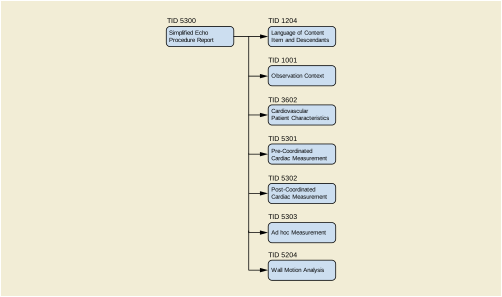
This template forms the top of a Content Tree that allows an ultrasound device to describe the results of an adult echocardiography imaging procedure.
The template is instantiated at the root node. It can also be included in other templates that need to incorporate echocardiography findings into another report as quoted evidence.
This template does not include an Image Library. Image Content Items in the Echo Measurement templates (for example to indicate Source of Measurement) shall be included with by-value relationships, not with by-reference relationships.
Measurements in this template (except for the Wall Motion Analysis) are collected into one of three containers, each with a specific sub-template and constraints appropriate to the purpose of the container.
-
-
Are fully standardized measurements (many taken from the ASE practice guidelines).
-
Each has a single pre-coordinated standard code that fully captures the semantics of the measurement.
-
The only modifiers permitted are to indicate coordinates where the measurement was taken, provide a brief display label, and indicate which of a set of repeated measurements is the preferred value. Other modifiers are not permitted.
-
-
-
Are non-standardized measurements that are performed with enough regularity to merit the control and configuration to capture the full semantics of the measurement. For example these measurements may include those configured on the cart by the vendor or user site. Some of these may be variants of the Pre-coordinated Measurements.
-
A set of mandatory and conditional modifiers with controlled vocabularies capture the essential semantics in a uniform way.
-
A single pre-coordinated code is also provided so that when the same type of measurement is encountered in the future, it is not necessary to parse and evaluate the full constellation of modifer values. Since this measurement has not been fully standardized, the pre-coordinated code may use a private Coding Scheme (e.g., from the vendor or user site).
-
-
-
Are non-standardized measurements that do not merit the effort to track or configure all the details necessary to populate the set of modifiers required for a post-coordinated measurement.
-
The measurement code describes the elementary property measured.
-
Modifiers provide a brief display label and indicate coordinates where the measurement was taken. Other modifiers are not permitted.
-
For an example of this encoding and a discussion of the benefits and use cases, see Annex CCCC Populating The Simplified Echo Procedure Report Template (Informative) in PS3.17.
Table TID 5300. Simplified Echo Procedure Report
|
$Findings = DCID 12246 “Cardiac Ultrasound Indication for Study” |
||||||||
|
$Measurement = DCID 12300 “Core Echo Measurement” $Preferred = DCID 12301 “Measurement Selection Reason” |
||||||||
|
$AnatomicSite = DCID 12305 “Basic Echo Anatomic Site” $Preferred = DCID 12301 “Measurement Selection Reason” |
||||||||
|
$Property =DCID 12304 “Cardiovascular Measured Property” |
||||||||
|
$Procedure = DT (35757004, SCT, "Echocardiography for Determining Ventricular Contraction") |
||||||||
|
$Measurement = DCID 12300 “Core Echo Measurement” $Preferred = DCID 12301 “Measurement Selection Reason” |
||||||||
|
$AnatomicSite = DCID 12305 “Basic Echo Anatomic Site” $Preferred = DCID 12301 “Measurement Selection Reason” |
||||||||
|
$Property =DCID 12304 “Cardiovascular Measured Property” |
|
A text string containing one or more sentences describing one or more indications, possibly with additional comments from the physician or tech, may be included in the TEXT Content Item of the invoked Template. |
|
|
These are measurements from a standardized list of pre-coordinated codes. See CID 12300 “Core Echo Measurement”. Measurements which do not correspond to the full semantics of one of the pre-coordinated codes in CID 12300 can likely be encoded in Row 13 instead. Multiple instances of the same measurement code may be present in the container. Each instance represents a different sample or derivation. This template makes no requirement that any or all samples be sent. For example, a mean value of all the samples of a given measurement could be sent without sending all or any of the samples from which the mean was calculated. Device configuration and/or operator interactions determine what measurements are sent. |
|
|
These are measurements that can be encoded using a standardized structure of post-coordinated codes. Measurements which correspond to the full semantics of one of the pre-coordinated codes in CID 12300 “Core Echo Measurement” should be encoded in Row 11 instead. $Measurement shall be provided, but is not constrained to a CID. Multiple instances of the same measurement code may be present in the container. Each instance represents a different sample or derivation. CID 12305 “Basic Echo Anatomic Site” contains concepts that are sufficient for mapping the full set of ASE standard measurements. It is recommended that these locations be used unless a more detailed location is necessary. This template makes no requirement that any or all samples be sent. For example, a mean value of all the samples of a given measurement could be sent without sending all or any of the samples from which the mean was calculated. Device configuration and/or operator interactions determine what measurements are sent. |
|
|
These are adhoc measurements encoded with minimal semantics. Row 13 can be used to encode measurements with more complete semantics. $Units shall be provided, but is not constrained to a CID. Device configuration and/or operator interactions determine what measurements are sent. |
|
|
When present, these rows contain measurements and associate them with a specific stage of a staged procedure. |
This template codes numeric cardiac measurements where most of the details about the nature of the measurement have been pre-coordinated in the measurement code. In contrast, see TID 5302 “Post-coordinated Cardiac Measurement”.
The pre-coordinated measurement code is provided when this Template is included from a parent Template.
Table TID 5301. Pre-coordinated Cardiac Measurement
|
IFF this measurement has been selected as the single preferred value for the measured concept. |
$Preferred = MemberOf {DCID 12301 “Measurement Selection Reason”} |
|||||||
|
$Purpose = EV (121112, DCM, "Source of measurement") |
||||||||
|
$Purpose = EV (121112, DCM, "Source of measurement") |
||||||||
|
The reason that this value was selected as the preferred value for the measured concept. The parent template may allow TID 5301 “Pre-coordinated Cardiac Measurement” to be included multiple times with the same Measurement Concept Name, for example to allow multiple samples of the measurement. A given Measurement Concept Name might appear only once in the instance, in which case this this row may or may not be present. A given Measurement Concept Name may appear multiple times, however this row shall not be present for more than one value of the given Measurement Concept Name. E.g. multiple measurements of (11706-9, LN, "Aortic Valve Peak Systolic Flow") may be present, but only one may be selected as preferred. |
|
|
The method used to derive this measurement value from multiple samples of the Measurement Concept Name. If Row 3 is not present, then this measurement value is simply a single sample of the Measurement Concept Name. |
|
|
This may be used to label the measurement value when space is limited on the screen or report page. E.g. a Short Label of "LVIDD" might be provided for a measurement of the left ventricle internal diameter at end diastole. |
This template codes numeric cardiac measurements where most of the details about the nature of the measurement have been post-coordinated in modifiers and acquisition context. In contrast, see TID 5301 “Pre-coordinated Cardiac Measurement” .
This template is intended to be used for User-defined and Vendor-defined Echo Measurements.
Several modifier rows are conditional and are omitted when the modifier concept is not significant for the measurement encoded in the item. When these modifiers are included by the sender, it indicates that the modifier concept is significant and receivers will generally treat the measurements differently than similar measurements sent that omit that modifier.
Note
-
The codes in the CIDs referenced below were sufficient to accurately encode all the best practice cardiac measurements recommended by the ASE. If, however, a new code is needed to record a specific User-defined or Vendor-defined measurement, most of the CIDs are extensible. It is not unreasonable to expect that measurements might be made at other Finding Sites than those listed in CID 12305 “Basic Echo Anatomic Site” , or using Measurement Methods beyond those listed in CID 12227 “Echocardiography Measurement Method” .
-
This template can be used for cardiac measurements performed by a variety of modalities such as Ultrasound, CT and MR.
The concept modifiers in the template below were sufficient to accurately encode all the best practice cardiac measurements recommended by the ASE. Although TID 5302 “Post-coordinated Cardiac Measurement” is extensible and adding new modifiers is not prohibited, the meaning and significance of such new modifiers will generally not be understood by receiving systems, delaying or preventing import of such measurements. Further, adding modifiers that replicate the meaning of an existing modifier is prohibited.
If such measurements cannot be encoded with the following structure, an implementation may choose to code the measurement in TID 5303 “Adhoc Measurement”, or to use TID 5200 “Echocardiography Procedure Report” instead of TID 5300 “Simplified Echo Procedure Report” .
Table TID 5302. Parameters
Table TID 5302. Post-coordinated Cardiac Measurement
|
IFF this measurement has been selected as the single preferred value for the measured concept. |
$Preferred =MemberOf {DCID 12301 “Measurement Selection Reason”} |
|||||||
|
$Purpose =EV (121112, DCM, "Source of measurement") |
||||||||
|
$Purpose = EV (121112, DCM, "Source of measurement") |
||||||||
|
Defaults to DCID 12304 “Cardiovascular Measured Property” |
||||||||
|
IFF value of Row 9 = (44324008, SCT, "Hemodynamic Measurements") and the Flow Direction is significant for this measurement. |
||||||||
|
IFF the Measurement Method is significant for this measurement. |
||||||||
|
IFF the Cardiac Cycle Point is significant for this measurement. |
||||||||
|
IFF the Respiratory Cycle Point is significant for this measurement. |
||||||||
|
IFF the value of Row 7 = (125313, DCM, "Indexed") or (118586006, SCT, "Ratio") or (125314, DCM, "Fractional Change") |
||||||||
|
A fully pre-coordinated code that incorporates all the semantics of Rows 7, 8, 9, 10, 11, 12, 13, 14, 15, 16, 17 for this measurement. The code is intended to allow parsers to recognize post-coordinated measurements that have been previously encountered, thus facilitating incorporation of the measurement into databases, report templates, registries, etc. Typically these codes will be from a vendor or site specific Coding Scheme, e.g., 99ACME. Sending the same code consistently in different reports will depend on the recording system maintaining a stable list of these pre-coordinated codes. Such a list might be configured or internally generated and managed. This shall be populated by the recording system. If the recording system does not have a method to ensure that all occurrences of the same post-coordinated measurement use the same code, it shall use the code (125304, DCM, "Untrackable Measurement"). Note
|
|
|
One or more additional fully pre-coordinated codes which are semantically equivalent to the code in Row 1. This may be used to communicate known mappings, such as to national registry codes or other vendors' codes. |
|
|
The reason that this value was selected as the preferred value for the measured concept. The parent template may allow TID 5301 “Pre-coordinated Cardiac Measurement” to be included multiple times with the same Measurement Concept Name, for example to allow multiple samples of the measurement. A given Measurement Concept Name might appear only once in the instance, in which case this this row may or may not be present. A given Measurement Concept Name may appear multiple times, however this row shall not be present for more than one value of a given measured concept. E.g. multiple measurements of (11706-9, LN, "Aortic Valve Peak Systolic Flow") may be present, but only one may be selected as preferred. |
|
|
The method used to derive this measurement value from multiple samples of the Measurement Concept Name. If Row 3 is not present, then this measurement value is simply a single sample of the Measurement Concept Name. Note
|
|
|
The finding site reflects the anatomical location where the measurement is taken. |
|
|
The finding observation type indicates the type of observation made at the finding site to produce the measurement. In many cases, for example Aortic Root Diameter, the structure of the finding site is being observed. In other cases, for example Mitral Valve Regurgitant Flow Peak Velocity, the finding site is the mitral valve, the hemodynamic flow (not the valve structure) is being observed, the measured property is the peak velocity, and the flow direction is retrograde. |
|
|
The pre-coordinated code for the measurement that has been used as the denominator of this measurement. Only applies to measurements of type Indexed, Ratio or Fractional Change. The measurement referenced as the Measurement Divisor shall be present in the instance in which it is used. When Row 17 is present, any values in Rows 5, 6, 8-16 shall reflect the numerator of the measurement rather than the Index, Ratio or Fractional Change as a whole. The rest of the rows, including the pre-coordinated measurement value, the pre-coordinated measurement code, the units and the short label, reflect the Index, Ratio or Fractional Change as a whole. E.g. in the case of an Indexed measurement, the value recorded in Row 1 has already been divided by the Index referenced in Row 17, and the Units in Row 1 match the indexed value, not the numerator Property described in Row 10. For a measurement of type Indexed, the numerator is divided by the Measurement Divisor. For a measurement of type Ratio, the numerator is divided by the Measurement Divisor and is unitless. For a measurement of type Fractional Change, the numerator is first subtracted from the Measurement Divisor and the result divided by the Measurement Divisor (i.e., (Divisor - Numerator) / Divisor ). |
|
|
This may be used to label the measurement value when space is limited on the screen or report page. E.g. a Short Label of "LVIDD" might be provided for a measurement of the left ventricle internal diameter at end diastole. |
This Template codes numeric echo measurements where most of the details about the nature of the measurement are not communicated. The measurement is identified in terms of the property measured, such as Length, Diameter, Area, Velocity etc. and some measurement context may established by reference to spatial coordinates on an image or a waveform. A displayable label is included but there is no managed code identifying the measurement.
The template is intended to be used to include adhoc, one-time measurements whose need is determined during imaging study or reviewing session.
Measurements that are taken in an adhoc fashion but are selected from the set of pre-coordinated or post-coordinated measurements that are configured on the Ultrasound System should be coded using TID 5301 “Pre-coordinated Cardiac Measurement” or TID 5302 “Post-coordinated Cardiac Measurement”.
Table TID 5303. Adhoc Measurement
|
$Purpose = EV (121112, DCM, "Source of measurement") |
||||||||
|
$Purpose = EV (121112, DCM, "Source of measurement") |
||||||||
The templates that comprise the Structural Heart Procedure Templates Report are interconnected as in Figure A-10c.

This template forms the top of a content tree that allows a device to describe the results of periprocedural imaging associated with minimally invasive structural heart procedures. It may be used during pre-operative assessment, intraprocedural assessment, or follow-up. While it mirrors the Simplified Echo Procedure Report, it is designed for measurements taken in one of several modalities, i.e., Echo, CT and MR.
This template does not include an Image Library. Image Content Items in the Echo Measurement templates (for example to indicate Source of Measurement) shall be included with by-value relationships, not with by-reference relationships.
Measurements in this template (except for the Wall Motion Analysis) are collected into one of three containers, each with a specific sub-template and constraints appropriate to the purpose of the container.
Table TID 5320. Structural Heart Measurement Report
|
DCID 12344 “Structural Heart Measurement Report Document Title” |
||||||||
|
Shall be a code derived from the Value of Modality (0008,0060) in the Image Instances. |
||||||||
|
$DrugAdministered = BCID 12342 “Bradycardiac Agent” |
||||||||
|
$Device = BCID 12332 “Structural Heart Device” |
||||||||
|
$Measurement = DCID 12333 “Structural Heart Measurement” $Preferred = DCID 12301 “Measurement Selection Reason” |
||||||||
|
$AnatomicSite = DCID 12339 “Structural Heart Procedure Anatomic Site” $Preferred = DCID 12301 “Measurement Selection Reason” |
||||||||
|
$Property = DCID 12304 “Cardiovascular Measured Property” |
||||||||
|
BCID 12345 “Cardiac Structure Calcification Qualitative Evaluation” |
|
This container describes the periprocedural imaging during which the measurements were taken. |
|
|
User-defined type of clinical acquisition protocol for creating images or image-derived measurements. May be taken from Protocol Name (0018,1030) or from Performed Procedure Step Description (0040,0254). |
|
|
Bradycardic medications administered to lower the heart rate during the imaging study. |
|
|
The nominal heart rate immediately prior to the start of image acquisition. If a bradycardic agent is administered, this is measured after its administration. |
|
|
This container provides details regarding the structural heart surgical procedure that is supported by the periprocedural imaging procedure described in Row 4. |
|
|
A text string containing one or more sentences describing one or more indications, possibly with additional comments from the physician or technologist. |
|
|
These are measurements from a standardized list of pre-coordinated codes. Measurements that do not correspond to the full semantics of one of the pre-coordinated codes in the Value Set Constraint can likely be encoded in Row 18 instead. Multiple instances of the same measurement code may be present in the container. Each instance represents a different sample or derivation. This template makes no requirement that any or all samples be sent. For example, a mean value of all the samples of a given measurement could be sent without sending all or any of the samples from which the mean was calculated. Device configuration and/or operator interactions determine what measurements are sent. |
|
|
These are measurements that can be encoded using a standardized structure of post-coordinated codes. Measurements that correspond to the full semantics of one of the pre-coordinated codes in Row 16 instead. $Measurement shall be provided, but is not constrained to a CID. Multiple instances of the same measurement code may be present in the container. Each instance represents a different sample or derivation. CID 12339 “Structural Heart Procedure Anatomic Site” contains concepts appropriate for mapping STS/ACC TVT Registry measurements. It is recommended that these locations be used unless a more detailed location is necessary. This template makes no requirement that any or all samples be sent. For example, a mean value of all the samples of a given measurement could be sent without sending all or any of the samples from which the mean was calculated. Device configuration and/or operator interactions determine what measurements are sent. |
|
|
These are adhoc measurements encoded with minimal semantics. Row 18 can be used to encode measurements with more complete semantics. $Units shall be provided, but is not constrained to a CID. Device configuration and/or operator interactions determine what measurements are sent. |
|
|
These are name-value pairs to encode qualitative assessments of cardiac structure calcification severity. |
This section template incorporates a set of measurements for assessing tissue elasticity characteristics based on shear wave speed.
Table TID 5401. Ultrasound Shear Wave Elastography Section
A shear wave elastography measurement, and related values, associated with a point or region in an ultrasound image.
Table TID 5402. Shear Wave Elastography Measurement
The Templates that comprise the Implantation Plan SR Document IOD are interconnected as in Figure A-11.
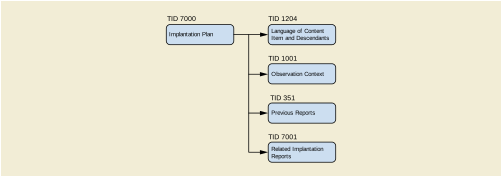
This Template contains all the necessary information to position an Implant Assembly and its Components in a patient. Therefore, all the Components that comprise an Implant Assembly are listed. If the Implant Assembly consists of more than one Component, the relation between the Components will be described as well. It is also possible to describe the registration between the Components and the patient and between the Components themselves.
To reference the Components within this document the Implantation Plan Component ID is used.
The Component Connection links two Implantation Plan Components in a commutative way. This means that for each link between A and B only one Component Connection has to be defined and not two for A-B and B-A.
The terminology used is defined by illustration using the example in Figure A-12.
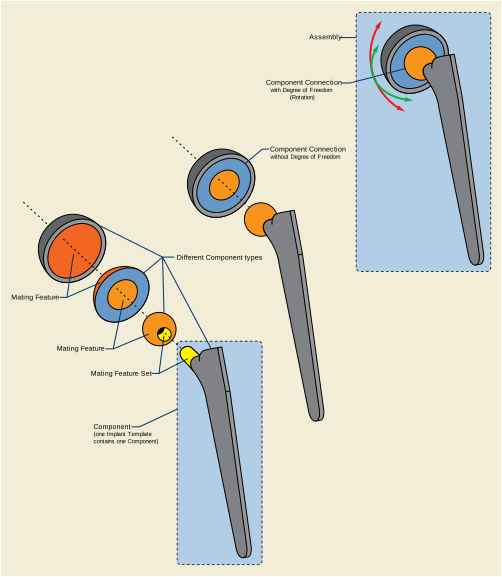
Table TID 7000. Implantation Plan
|
IFF related Implantation Plan Documents exist that are not referenced by Row 4 |
||||||||
|
Only one Component Connection per Mating Feature Set is allowed |
||||||||
|
EV (112376, DCM, "Degree of Freedom Exact Translational Value") |
||||||||
|
EV (112377, DCM, "Degree of Freedom Minimum Translational Value") |
||||||||
|
EV (112378, DCM, "Degree of Freedom Maximum Translational Value") |
||||||||
|
EV (112379, DCM, "Degree of Freedom Exact Rotational Value") |
||||||||
|
EV (112380, DCM, "Degree of Freedom Minimum Rotational Value") |
||||||||
|
EV (112381, DCM, "Degree of Freedom Maximum Rotational Value") |
||||||||
|
EV (112367, DCM, "Planning Information for Intraoperative Usage") |
||||||||
|
References Spatial Registration SOP Instances and Deformable Spatial Registration SOP Instances |
||||||||
|
References SOP Instances except Images and Spatial Registrations |
||||||||
|
EV (112364, DCM, "Related Patient Data Not Used During Planning") |
|
If an Implant Assembly Template was used for the planning, it should be referenced here. |
|
|
ID given to this Implant Component. Used to reference this specific Component within the Implantation Plan. |
|
|
See description of Component Type Code Sequence (0076,0034) Attribute in Section C.29.2.1 “Implant Assembly Template Module” in PS3.3 |
|
|
Reference to the Template that describes that component. May be the same Implant Template as referenced in Row 13. The target of the reference may not be needed or available during implantation. e.g., if the plan is opened in another hospital where those implant templates are not used. No purpose of reference is specified. |
|
|
This Frame of Reference is the Frame of Reference of the Implant Component (Frame of Reference UID (0020,0052) Attribute in the “Generic Implant Template Description Module” in PS3.3 ). This may help to find the right registration information (Row 43). |
|
|
References the Original Template that was the basis for the Derived Template. May be the same Implant Template as referenced in Row 11. The target of the reference may not be needed or available during implantation, e.g., if the plan is opened in another hospital where those implant templates are not used. |
|
|
If there is no Component Connection between sets of Implant Components, one Assembly must be used for each set. |
|
|
The ID of a planned Component that is defined in this document and that is part of this Relation. |
|
|
See description of Mating Feature Set ID (0068,63C0) Attribute in the “Generic Implant Template Mating Features Module” in PS3.3 |
|
|
See description of Mating Feature ID (0068,63F0) Attribute in the “Generic Implant Template Mating Features Module” in PS3.3 |
|
|
See description of Degree of Freedom ID (0068,6410) Attribute in the “Generic Implant Template Mating Features Module” in PS3.3 |
|
|
Defines the range or exact value that was selected or calculated by the planning application. |
|
|
Defines the calibrated Horizontal Pixel Spacing that was used by the planning application, which may be different from the spacing encoded in the referenced Image SOP Instance. |
|
|
Defines the calibrated Vertical Pixel Spacing that was used by the planning application, which may be different from the spacing encoded in the referenced Image SOP Instance. |
|
|
Any patient data other than Image IEs used for the planning, e.g., Surface Segmentations. |
|
|
Fiducials selected by the user for registration of implant components referenced in the parent Content Item. |
|
|
User comment about the Fiducial. This may be the reason it was selected, the intended use, the anatomical or non-anatomical structure that the Fiducial represents, or any other intent. |
|
|
All kinds of information in PDF form that are created by a planning application may be referenced here, e.g., drawings. |
|
|
All kinds of images that are created by a planning application should be referenced here, e.g., images that show patient images overlaid with contour information of the Implant Component, or images that show how several implant components may be composed, or merged patient images. |
|
|
References registration objects that contain registration data that is relevant for this Implantation Plan, e.g., registration of Implant Components. |
|
|
Identifies one or more items within the sequence of referenced Frames of Reference (Registration Sequence (0070,0308) in the Spatial Registration Module or Deformable Registration Sequence (0064,0002) in the “Deformable Spatial Registration Module” in PS3.3 ) that are relevant for this Implantation Plan. See Figure A-13. |
|
|
Any patient data created during the planning process that is not referenced in Row 39 and Row 40, e.g., Surface Segmentation Instances created by the planning application. |
|
|
These Fiducials are derived from the Fiducials identified in Row 34. |
|
|
References to any relevant patient data containing IOD instances that were not used in planning or derived from it but belong to the patient model. Might be reports, images, surface segmentations, or other. |
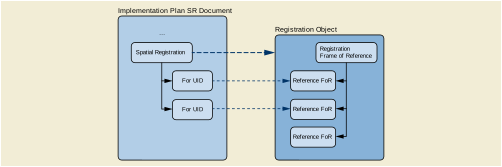
The Templates that comprise the Acquisition Context SR are interconnected as follows:
This Root Template encodes a description of the conditions present during and related to data acquisition for a single imaging procedure.
Note
-
It is not expected that a single instance be used to describe the entire life of an animal, unless it is sacrificed after a single procedure. Rather, separate instances will be used for separate procedures, though there may be some duplication of common information, such as about the home cage environment.
-
It is expected that an SR instance encoded using this template will be contained in the same Study as other instances created during the procedure, e.g., with a common Study Instance UID. If this is not practical, e.g., due to recording on a separate device without use of a shared Modality Worklist, then commonality of other Study level Attributes may be necessary to link procedures (and possibly coerce the Study Instance UID to a common value).
Table TID 8101. Preclinical Small Animal Image Acquisition Context
|
EV (127001, DCM, "Preclinical Small Animal Imaging Acquisition Context") |
||||||||
|
DTID 8170 “Physiological Monitoring Performed During Procedure” |
||||||||
|
$ContainerConcept = EV (10160-0, LN, "History Of Medication Use") $CodeConcept = EV (111516, DCM, "Medication Type") $Route = DCID 11 “Administration Route” |
||||||||
|
$ContainerConcept = EV (127400, DCM, "Exogenous substance") $CodeConcept = DCID 637 “Exogenous Substance Type” $CodeValue = DCID 638 “Exogenous Substance” $Route = DCID 11 “Administration Route” $Site = DCID 644 $TissueOfOrigin = DCID 645 $TaxonomicRankOfOrigin = DCID 7454 “Animal Taxonomic Rank Value” |
|
A single pre-coordinated code describing the general type of imaging procedure can be described using TID 1005 Row 9 Procedure Code (included in TID 1001). For small animal (as opposed to human) imaging, this will likely describe a whole body acquisition in a modality-specific manner and the use of contrast and/or radiopharmaceutical. E.g., whole body FDG PET, or whole body DCE-MRI. May be redundant with (or default to) the value present in the top level Data Set in Procedure Code Sequence (0008,1032) of the General Study Module. Species and strain identification is not described in TID 1001; rather it is encoded in DICOM Attributes in the top level Data Set. |
|
|
The biosafety conditions are expected to be consistent across all phases of handling, so are not described separately per-phase. |
|
|
The period of time during which the phase is defined, i.e., during which the animal was managed in the specified conditions. This may be more important for interpretation for some phases (e.g., transport) than others (e.g., at rest in the home cage), and hence is optional. |
|
|
The outline of subordinate templates follows the pattern of categories of Animal Housing, Care, and Physiologic Monitoring information described in [Stout et al 2013]. |
|
|
Animal feeding is 1-n to allow encoding of dietary supplements and treats in addition to the regular diet. |
|
|
A single anesthesia event is normally assumed for a single procedure, though the template included can include multiple pre-, intra- and post-procedure descriptions. |
|
|
Used to describe pharmaceuticals administered that are not described elsewhere, in particular, those that are not described as anesthesia medications, and those that are not described in the images (e.g., contrast, radiopharmaceuticals). This includes therapy (such as chemotherapy, immunotherapy) and similar interventions that may be the subject of the research. The value set of $CodeValue is not defined, given the vast range of possible codes and Coding Schemes for drugs or medicaments that might be used. Nor are value sets for $Classification or $Site defined. |
|
|
Used to describe non-pharmaceutical exogenous substances administered, such as cells or other tumor graft, fibrils, viruses, cytokines and toxins that describe the "model" upon which the research is being performed, as distinct from the "therapeutic intervention" (Row 16) that may be the purpose of the research. The Classification parameter is not constrained by any value set. |
This template encodes a description of the biosafety conditions applicable to research small animals.
This template encodes a description of housing of animals, e.g., in home cages, holders for imaging, etc., over an interval during which environmental and handling conditions are relatively homogenous.
Note
-
Only "static" parameters of the design and setup are recorded, and "nominal" values for environmental conditions such as humidity and temperature, but not "dynamic" parameters that might vary during one housing interval, and potentially be monitored, such as oxygen or ammonia levels, temperature, humidity, urine or fecal corticosterone levels, etc.
-
Values for product names and codes are expected to be accurate at the time the information is recorded, recognizing that products may evolve over time.
Table TID 8121. Animal Housing
|
UNITS = EV ({housing units}, UCUM, "housing units") or EV ({cages}, UCUM, "cages") |
||||||||
|
EV (127143, DCM, "Number of animals within same housing unit") |
||||||||
|
EV (121106, DCM,"Comment") |
|
The type and identifier of the entire room in which, for example, one or more racks of housing units is located, not the housing unit itself. |
|
|
The manufacturer is expected to be the same for all housing unit components, rack, bottom and lid. |
|
|
The position in the rack is encoded as text since it may be an "identifier" or a description. It is not a set of numeric (e.g., row, column) or coded (e.g., top, bottom or middle) values, since there are too many possible arrangements. |
|
|
The number of animals usually applies to a single housing unit, but may also be used to describe the number of animals imaged simultaneously in a multi-animal imaging carrier or support device ("chamber", "holder", etc.). |
|
|
These may be internal or external dimensions, and are intended to provide an approximation of the living space and shape available. |
|
|
Description of measured or monitored or nominal values of temperature and humidity. The means of maintaining these conditions, if relevant, is described elsewhere (e.g., in the case of peri-procedural temperature control, in TID 8140 “Heating Conditions”). |
|
|
The bedding material may be described as a code or text, or both. The codes do not distinguish between methods of sterilization of the bedding material (e.g., irradiation, autoclaving or other heat treatment), since that is not a relevant factor for image interpretation. The definition of the NCIt concept is "that which comprises the place where a subject sleeps". |
|
|
The definition of the NCIt concept is "a replacement of the existing materials that make up the sleeping area of a subject", and is used here to specify the interval between bedding changes. |
|
|
The presence or absence of enrichment material is coded, but the type is not, and may be described as text, e.g., "facial tissue", "cotton (nesting material)". |
|
|
The presence or absence of an exercise device is coded, but the type is not, and may be described as text. |
This template encodes a description of feeding and watering of animals, over an interval during which conditions are relatively homogenous.
Note
This template encodes a description of the anesthesia applied during a procedure (e.g., imaging of research small animals).
Note
This template combines selected concepts from the [AQI Schema] elements, their complex types, and their children:
-
AnesthesiaMethodSet (type AnesthesiaMethodSetType). See http://www.aqihq.org/qcdrDataSample/prodFiles/2018%20Files/AQISchDoc/AnesthesiaMethodSet.html and http://www.aqihq.org/qcdrDataSample/prodFiles/2018%20Files/AQISchDoc/AnesthesiaMethodSetType.html.
-
AirwayManagementSet (type AirwayManagementSetType). See http://www.aqihq.org/qcdrDataSample/prodFiles/2018%20Files/AQISchDoc/AirwayManagementSet.html and http://www.aqihq.org/qcdrDataSample/prodFiles/2018%20Files/AQISchDoc/AirwayManagementSetType.html.
-
MedicationsSet (type MedicationsSetType). See http://www.aqihq.org/qcdrDataSample/prodFiles/2018%20Files/AQISchDoc/MedicationsSet.html and http://www.aqihq.org/qcdrDataSample/prodFiles/2018%20Files/AQISchDoc/MedicationsSetType.html.
Table TID 8130. Anesthesia
|
If this template is used, at least one description of anesthesia method is required. Note that the specific agents used are described separately, as intra-operative medications, per the [AQI Schema]. |
|
|
These correspond to AQI elements that are named "Time" rather than "DateTime", though their value is a DateTime; the DICOM naming convention is used here. |
|
|
Only inhalational methods of maintenance are included in this row. Absence of this row implies that the (non-inhalational) induction method is used for maintenance. |
|
|
At least one description of airway management is required. The airway management method also serves as the description of the method of inhalational anesthesia delivery, even if it does not involve "management" of the "airway" per se (e.g., delivery via nose cone). |
|
|
In the AQI model, a single AQI MedicationsSet is used in the AQI IntraOp element to describe intra-operative medications. This template allows a more general usage, with one or more Medications Set containers, each of which may be qualified by the phase of the procedure (pre-operative, intra-operative or post-operative). The purpose of the medication (e.g., general anesthetic) is described in the (111516, DCM, "Medication Type") of the included TID 8131 “Medications and Mixture Medications”. |
This template encodes a description of medications (including but not limited to anesthetic agents) used during a procedure (e.g., pre-medication drugs for an imaging procedure on humans, or anesthesia for imaging of research small animals).
Note
This template combines selected concepts from the [AQI Schema] elements, their complex types, and their children:
-
Medication (type MedicationType). See http://www.aqihq.org/qcdrDataSample/prodFiles/2018%20Files/AQISchDoc/Medication.html and http://www.aqihq.org/qcdrDataSample/prodFiles/2018%20Files/AQISchDoc/MedicationType.html.
-
MixtureMedications (type MixtureMedicationType). See http://www.aqihq.org/qcdrDataSample/prodFiles/2018%20Files/AQISchDoc/MixtureMedications.html and http://www.aqihq.org/qcdrDataSample/prodFiles/2018%20Files/AQISchDoc/MixtureMedicationType.html.
Table TID 8131. Medications and Mixture Medications
|
AQI Medication type and element correspond to (182833002, SCT, "Medication given") (situation). (See TID 3806 Cath Procedure). |
|
|
AQI DoseStart and DoseEnd elements correspond to (111526, DCM, "DateTime Started") and (111527, DCM, "DateTime Ended") respectively. If the medication is delivered as a bolus, the end time is omitted. |
|
|
AQI MedicationRoute corresponds to (410675002, SCT, "Route of administration"). The existing CID 11 “Administration Route” contains a relevant subset of concepts for the enumerated values of AQI MedicationRouteCodeType. |
|
|
The AQI schema allows the Medication type not only to describe medications with a single component, but also to add MixtureMedications children, each of which is encoded following a similar pattern to the contents of Medication, though the start and end time and route of administration are shared. This had been modeled by allowing every medication to have one or more mixture children. For medications that are not a mixture, a single instance of this row defines the medication (even though the mixture container is still used). |
|
|
AQI MedicationName and MixtureMedicationName elements correspond to (122083, DCM, "Drug administered"). (See TID 3806 Cath Procedure). The medication (e.g., anesthesia agent) can be described with a code or text, e.g., (387368002, SCT, "Isoflurane") or "isoflurane". |
|
|
Both AQI MedDose (or MixtureMedDose) and DoseUnits (or MixtureDoseUnits) elements are combined in one Content Item. Units are required to be encoded as UCUM but are not otherwise constrained. |
|
|
Both AQI MedConcentration (or MixtureMedConcentration) and MedConcentrationUnit (or MixtureMedConcentrationUnit) elements are combined in one Content Item. Units are required to be encoded as UCUM but are not otherwise constrained. |
|
|
Registered drug establishment code for the product. Equivalent codes can be encoded in this item using the Equivalent Code Sequence (0008,0121). See Section 8.9 “Equivalent Code Sequence” in PS3.3 . |
This template encodes a description of the heating conditions applied prior to, during or after data acquisition (e.g., during imaging of research small animals).
Table TID 8140. Heating Conditions
|
Phase during which the conditions are applicable may be implicit in the context of invocation of this template (e.g., TID 8101 “Preclinical Small Animal Image Acquisition Context” Row 7), or explicitly specified. |
|
|
The definition (from MESH) is "The application of heat to raise the temperature of the environment, ambient or local, or systems for accomplishing this effect". |
|
|
This is the nominal temperature of the heating device (e.g., heating pad) and/or the set point of the feedback regulation device. |
This template encodes a description of the Circadian effects relevant during data acquisition (e.g., during imaging of research small animals).
This template encodes a description of the physiological monitoring performed during a period of time during or related to a data acquisition procedure (e.g., imaging of research small animals).
|
There is no non-surgical procedure non-specific variant of (91096005, SCT, "Monitoring of electrocardiogram at surgery"). (266706003, SCT, "Continuous electrocardiogram monitoring") is intended for non-procedural (e.g., 24-hour) monitoring. So a more generic code for any kind of monitoring is used. |
This template provides detailed information on a research subject's exposure to exogenous substances. It is a specialization of the more general template TID 9002 “Medication, Substance, Environmental Exposure”.
Table TID 8182. Parameters
Table TID 8182. Exogenous Substance Administration
| Classification is inherited from the more general template TID 9002 “Medication, Substance, Environmental Exposure”, and may be supplied as a parameter, but is entirely generic and is not used as an alternative to the more specific information provided in other rows, for example, Rows 19 and 20, tissue and taxonomic rank of origin. | |
|
Brand name may be used for any type of descriptor or identifier. E.g., a particular cell line might have a designated name, such as "MDA-MB-468", which designates a particular human breast cancer cell line. |
|
| These rows describe the strain and genetic modifications of the source of the graft using Content Items that correspond to the Attributes described in Section C.7.1.1.1.4 “Patient Strain and Genetic Modifications” in PS3.3 . The strain and genetic characteristics of the animal into which the exogenous substance is grafted are described in the Patient Module; see Section C.7.1.1.1.4 “Patient Strain and Genetic Modifications” in PS3.3 . |
This Template collects a patient's relevant information as it relates to breast imaging. This Template, together with its subordinate Templates, describes the history of a patient's reproductive system, hormone medications, past procedures, risk factors, and indicated problems as they relate to breast health.
Table TID 9000. Relevant Patient Information for Breast Imaging
|
EV (111511, DCM, "Relevant Patient Information for Breast Imaging") |
||||||||
|
$ContainerConcept = EV (10160-0, LN, "History Of Medication Use") $CodeConcept = EV (111516, DCM, "Medication Type") $CodeValue = DCID 6080 “Gynecological Hormone” |
||||||||
|
$ProcedureList = DCID 6083 “Procedures for Breast” $ProcedureModifier = DCID 6058 “Procedure Modifiers for Breast” $NumConceptName = DCID 6095 “Procedure Numeric Property” $LateralityValue = DCID 6022 “Side” $ProcedureResult = DCID 6063 “Interventional Procedure Result” $ComplicationValue = DCID 6062 “Interventional Procedure Complication” |
||||||||
|
$ProblemList = DCID 6055 “Breast Clinical Finding or Indicated Problem” $LateralityValue = DCID 6022 “Side” $LocationValue = DCID 6018 “Clockface Location or Region”, DCID 6020 “Quadrant Location” |
||||||||
|
$RiskList = DCID 6081 “Breast Cancer Risk Factor” $FamilyList = DCID 7451 “Family Member” |
This general Template collects the details of a patient's reproductive system history, such as number of births, and gynecological surgery history.
Table TID 9001. Gynecological History
This general Template provides detailed information on a patient's medication or substance use, or exposure to environmental factors, including type and duration of use or exposure.
Table TID 9002. Parameters
Table TID 9002. Medication, Substance, Environmental Exposure
|
UNITS = DCID 6046 “Follow-up Interval Unit” |
||||||||
|
Classification is mapped in UMLS to (C0008902, UMLS, "Classification"). Its definition is completely generic; i.e., it does not refer to any particular type of classification. |
|
|
If both of these Content Items are instantiated, the concept names selected for each should match. For example, use "Relative dose amount" as the concept name for Row 13 with "Relative dose frequency" as the concept name for Row 14. |
|
|
Even though the concept name is route of administration, it is also used for route of exposure in the case of environmental exposure. |
|
|
This pattern of route with a site and laterality modifier follows that used in TID 10022 “Radiopharmaceutical Administration Event Data”. |
This general Template provides detailed information on a patient's previous procedure, surgery, or treatment.
Table TID 9003. Parameters
This general Template provides information about indicated problems presented by a patient. For example, indicated breast problems relating to the purpose for a mammographic examination.
This general Template provides detailed information on the risk factors for a patient, related to medical history for themselves and family members.
Table TID 9005. Risk Factor
|
IFF value of Row 2 = (161765003, SCT, "History of - premature delivery") |
||||||||
|
UNITS = DCID 6046 “Follow-up Interval Unit” |
||||||||
This general Template collects the details of a patient's obstetric history for a current pregnancy. Information regarding previous pregnancies is conveyed using the Gynecological History Template.
This Template collects a patient's relevant information for general purpose use. This Template, together with its subordinate Templates, describes the history of a patient's reproductive system, medications, substance use, environmental exposure, past procedures, risk factors, and indicated problems.
Table TID 9007. General Relevant Patient Information
|
IFF TID 9007 is the Root Template for the Relevant Patient Information Query Service Class |
||||||||
|
$ContainerConcept = EV (10160-0, LN, "History Of Medication Use") $CodeConcept = EV (111516, DCM, "Medication Type") |
||||||||
|
$ContainerConcept = EV (111545, DCM, "Substance Use History") $CodeConcept = EV (111546, DCM, "Used Substance Type") $CodeValue = BCID 6089 “Substance” |
||||||||
|
$ContainerConcept = EV (111547, DCM, "Environmental Exposure History") $CodeConcept = EV (111548, DCM, "Environmental Factor") |
||||||||
|
$LateralityValue = BCID 244 “Laterality” |
||||||||
|
$LateralityValue = BCID 244 “Laterality” |
||||||||
|
Defaults to BCID 6087 “General Risk Factor” $FamilyList = DCID 7451 “Family Member” |
||||||||
|
See Annex K. |
|
|
Genitourinary history is used to report findings such as those associated with the examinations that are suspicious for the presence of prostate cancer (i.e., Digital Rectal Examination, blood test results). |
The Templates that comprise the X-Ray Radiation Dose SR are interconnected as in Figure A-14.
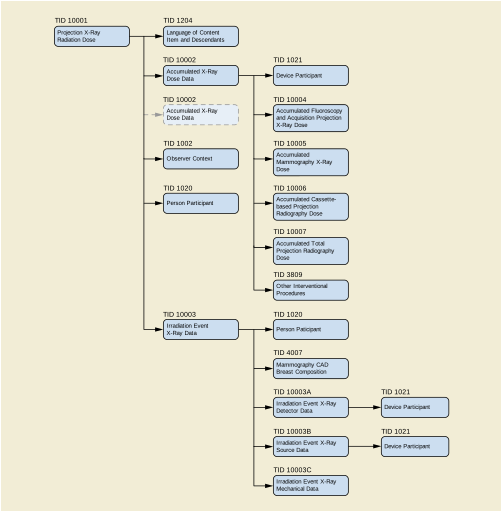
This Template defines a container (the root) with subsidiary Content Items, each of which represents a single projection X-Ray irradiation event entry or plane-specific dose accumulations. There is a defined recording observer (the system or person responsible for recording the log, generally the system). A Biplane irradiation event will be recorded as two individual events, one for each plane. Accumulated values will be kept separate for each plane.
Table TID 10001. Projection X-Ray Radiation Dose
|
$Plane = EV (113622, DCM, "Single Plane") |
||||||||
|
$Plane = EV (113620, DCM, "Plane A") |
||||||||
|
$Plane = EV (113621, DCM, "Plane B") |
||||||||
|
IF any of the values of TID (10001) Row 18 are not (113858, DCM, "MPPS Content"), (113866, DCM, "Copied From Image Attributes") or (113867, DCM, "Computed From Image Attributes") |
||||||||
|
$PersonProcedureRole = EV (113850, DCM, "Irradiation Authorizing") |
||||||||
|
"Projection X-Ray" refers to procedures performed on either integrated equipment (where information is passed between the X-Ray source (generator and tube), detector, and mechanical systems), or non-integrated equipment (where data might not be available for one or more components such as cassette-based systems). The data availability can be described in Rows 8, 9 and 10. The specific type of equipment can be described in Row 4. The coded term for "Mammography" is intended to encompass all types of projection X-Ray imaging of the breast. NoteMammography studies are distinguished by a different value in this Content Item, Angiography studies are distinguished by the Irradiation Event Type Content Item = Fluoroscopy, CR/DR studies are distinguished by one or more of the Data Availability Flags = No, and CT studies are distinguished by the use of a different Template. |
|
|
The observer context may include both a Person Observer identification, as well as the identity of the equipment providing the values for the irradiation event (Device Observer identification), if not inherited. |
|
|
A value of "No" indicates that details associated with the X-Ray Detector are not available to the device generating this report. For example, an X-Ray Source system might lack any communication with the associated cassette-based X-Ray detector or any method of entering such information. A value of "Yes" or the absence of this row means that the details are available. |
|
|
A value of "No" indicates that details associated with the X-Ray Source are not available to the device generating this report. For example, a cassette-based X-Ray detector might lack any communication with the associated X-Ray Source or any method of entering such information. A value of "Yes" or the absence of this row means that the details are available. |
|
|
A value of "No" indicates that details associated with the Gantry and/or Table are not available to the device generating this report. For example, a cassette-based X-Ray detector might lack any communication with the associated gantry/table or any method of entering such information. A value of "Yes" or the absence of this row means that the details are available. |
|
|
Cassette-based X-Ray systems should consider themselves to be Single Plane systems. |
|
|
Details of the underlying irradiation events. If Row 18 has a value of "MPPS Content" then a TID 10003 “Irradiation Event X-Ray Data” item may be generated for each item in the MPPS Exposure Dose Sequence (0040,030E), but since this is an optional element in MPPS, if it is absent, empty or incomplete, there may be no irradiation event level information available. Alternatively, the information may be copied or computed from the images. |
|
|
The Dose Image references a graphic representation of the radiation dose distribution. This may be a Secondary Capture scan of a dosimetry film. |
|
|
The physician responsible for determining that the irradiating procedure was appropriate for the indications. The value may come from Requesting Physician (0032,1032), Requesting Physician Identification Sequence (0032,1031) or somewhere else based on hospital policies. |
|
|
The primary source of information from which this dose object was constructed. The Source of Dose Information (Row 18) is independent of the Scope Of Accumulation (Row 6); e.g., it would be typical to have a scope of (113016, DCM, "Performed Procedure Step"), but a source of (113856, DCM, "Automated Data Collection") rather than (113858, DCM, "MPPS Content"). |
This general Template provides detailed information on projection X-Ray dose value accumulations over several irradiation events from the same equipment (typically a study or a performed procedure step).
Table TID 10002. Accumulated X-Ray Dose
|
Details for each calibration stored on the system. If separate calibrations stored for different dosimetric values exist, they may be included by using multiple instances of this container. In such a case, Row 9a may be used to inform the interpreter of the RDSR how to appropriately use each calibration factor and Row 9b is used in the case of different acquisition protocols. |
|
|
Date that the calibration of the equipment's dose indicators was performed |
|
|
Typically a value provided by the medical physicist. The recorded dose or dose area product values in this report can be multiplied by this factor to obtain estimated real-world values. |
|
|
Value range from 0 to 100 percent. Uncertainty of the 'actual' value expressed as+/- of the mean. |
|
|
Identifies Individual or organization responsible for calibration |
|
|
Describes calibration protocol according to equipment standards or local guidelines. |
|
|
Users of the RDSR can use this value to determine the applicability of the calibration for the RDSR. |
|
|
Users of the RDSR can use this value to determine the applicability of the calibration for the RDSR. May be related to TID 10003 Row 8 EV (125203, DCM, "Acquisition Protocol"). |
|
|
The device that produced the irradiation accumulated in this Template. I.e., the X-Ray source. This is not required to be present if the information is the same as that already recorded in TID 1004 “Device Observer Identifying Attributes” encoded via the inclusion of TID 1002 “Observer Context” in TID 10001 “Projection X-Ray Radiation Dose” Row 5, which in turn may be absent if identical to the content in the Enhanced General Equipment Module, or if more than one device produced the accumulated irradiation. |
|
|
These coordinates relate a visible landmark on the X-Ray table to the Table Reference Point that is arbitrarily defined by the manufacturer and not necessarily visible to the operator. The Equipment Landmark Y Position is not recorded since it is, by definition, in the plane of the table as is the origin of the Table Coordinate System so the value would always be zero. |
|
|
Contains Patient Location Fiducial(s), which serve as spatial references to establish the patient’s location within the Table Reference System. Multiple fiducials may be included in this container to provide a more comprehensive description of the patient’s body size and positioning. |
|
|
In many instances, the values will be either of the form:
When multiple Patient Location Fiducial containers are present, each reference location shall be unique. |
|
|
This distance (likely recorded by the operator) locates the patient with respect to an X-Ray table landmark. The patient is assumed to be centered in the left-right axis of the X-Ray table. |
This Template conveys the dose and equipment parameters of a single irradiation event.
The Template and requirements are structured to consider equipment with various levels of integration between the components (X-Ray Source, Plate or Detector, and Gantry/Table) of the equipment.
An irradiation event is the loading of X-Ray equipment caused by a single continuous actuation of the equipment's irradiation switch, from the start of the loading time of the first pulse until the loading time trailing edge of the final pulse. The irradiation event is the "smallest" information entity to be recorded in the realm of Radiation Dose reporting. Individual Irradiation Events are described by a set of accompanying physical parameters that are sufficient to understand the "quality" of irradiation that is being applied. This set of parameters may be different for the various types of equipment that are able to create irradiation events. Any automatic on-off switching of the irradiation source during the event shall not be treated as separate events, rather the event includes the time between start and stop of irradiation as triggered by the user. E.g., a pulsed fluoro X-Ray acquisition shall be treated as a single irradiation event.
As described in Section 6.2.4, measurement concepts may be post-coordinated, even though not explicitly specified in the Template. In particular, post-coordination using modifier concept (121401, DCM, "Derivation"), with modifier values drawn from CID 10009 “Measured/Calculated” would be appropriate to encode indications of measured or of calculated values.
Table TID 10003. Irradiation Event X-Ray Data
|
IF the value of Row 4 is the value of an Attribute in the images. |
||||||||
|
IFF value of Row 5d = (373066001, SCT, "Yes") |
||||||||
|
IFF TID 10001 Row 2 = (113704, DCM, "Projection X-Ray") |
||||||||
|
IFF (TID 10001 Row 2 = (71651007, SCT, "Mammography")) AND IF ( (TID 10001 Row 9 is absent or value is (373066001, SCT, "Yes")) AND (TID 10001 Row 10 is absent or value is (373066001, SCT, "Yes")) ) |
||||||||
|
$PersonProcedureRole = EV (113851, DCM, "Irradiation Administering") |
||||||||
|
IFF TID 10001 Row 8 is absent or has a value of (373066001, SCT, "Yes") |
||||||||
|
IFF TID 10001 Row 9 is absent or has a value of (373066001, SCT, "Yes") |
||||||||
|
IFF TID 10001 Row 10 is absent or has a value of (373066001, SCT, "Yes") |
|
If the image generating entity does not assign a DICOM UID to the irradiation event (e.g., for non-digital imaging equipment), the application generating this report shall assign a UID. In the case of non-integrated cassette-based equipment, a standalone Detector will generate UIDs for the Events it observes. If the X-Ray Source component of the equipment also reports information, it too will generate UIDs for the Events it creates. A downstream system (e.g., a workstation or the Dose Information Reporter itself) may combine the two reports into a composite report, and match up the events based on details such as the time information, and use the UIDs of the X-Ray Source. |
|
|
If an acquisition is a repeat because an earlier acquisition was unsatisfactory, this may be recorded along with a coded reason and the earlier acquisition's irradiation event UID. This is intended to help with subsequent analysis by providing a priori information about why the study might be flagged as an outlier with higher dose exposure values than usual for the type of study. |
|
|
If an acquisition is a rejected because it was unsatisfactory, this may be recorded along with a coded reason. This is intended to help with subsequent analysis by providing a priori information about why the study might be flagged as an outlier with higher dose exposure values than usual for the type of study. |
|
|
The DateTime that the application of X-Rays started for this irradiation event. This shall correspond to the start of the first irradiation in the Irradiation Event, which defines the starting point for the calculation of TID 10003B “Irradiation Event X-Ray Source Data” Row 10 "Irradiation Duration". |
|
|
Previously, a CODE Content Item (91723000, SCT, "Anatomical structure") along with CODE concept modifier (272741003, SCT, "Laterality") were used to identify bilateral anatomy. This duplicated the function of Row 17 and was retired. See PS3.16 2017c. |
|
|
A text definition of the Reference Point (RP) used for RP-related dose values. |
|
|
A coded definition of the Reference Point (RP) used for RP-related dose values |
|
|
People responsible for the administration of the radiation reported in the irradiation event. May include values that would appear in Performing Physicians' Name (0008,1050), Performing Physician Identification Sequence (0008,1052), Operators' Name (0008,1070) and/or Operator Identification Sequence (0008,1072). |
This Template contains data that is expected to be available to the X-Ray detector or plate reader component of the equipment.
Table TID 10003A. Irradiation Event X-Ray Detector Data
|
$DeviceProcedureRole = EV (113942, DCM, "X-Ray Reading Device") |
||||||||
This Template contains data that is expected to be available to the X-Ray source component of the equipment.
Table TID 10003B. Irradiation Event X-Ray Source Data
|
IFF (TID 10001 Row 2 = (113704, DCM, "Projection X-Ray")) AND IF any of the values of TID 10001 Row 18 are not (113858, DCM, "MPPS Content") |
||||||||
|
IFF TID 10001 Row 2 = (71651007, SCT, "Mammography") |
||||||||
|
IFF TID 10003 Row 7 value = (44491008, SCT, "Fluoroscopy") |
||||||||
|
IFF Row 5 value = (113631, DCM, "Pulsed") |
||||||||
|
IFF Row 5 is not present or Row 5 is present and equals (113631, DCM, "Pulsed") |
||||||||
|
Required if the irradiating device is not the recording device. |
$DeviceProcedureRole = EV (113859, DCM, "Irradiating Device") |
|
Dose applied by this irradiation event, relative to defined reference point. |
|
|
If a precise count of pulses is not available, an estimated number shall be provided, and the Row 8 Concept Modifier shall indicate "Estimated" |
|
|
Pulse width as measured/recorded by the system, either as a single total value, or as multiple values. If multiple values are provided, their number shall match the value in Row 7 "Number of Pulses". |
|
|
KVP value as measured/recorded by system, either as a single mean value, or as multiple values. If multiple values are provided, their number shall match the value in Row 7 "Number of Pulses". |
|
|
Tube current as measured/recorded by system, either as a single mean value, or as multiple values. If multiple values are provided, their number shall match the value in Row 7 "Number of Pulses". |
|
|
Exposure as measured/recorded by system, either as a single total value, or as multiple values. If multiple values are provided, their number shall match the value in Row 7 "Number of Pulses". The Exposure will be affected by the shape of the pulse and other factors, and may not be a simple multiplication of tube current and exposure time. |
|
|
If one or more Filter(s) were applied during this irradiation event |
|
|
The device that produced the irradiation in this Irradiation Event. I.e., the X-Ray source. This is not required to be present if the information is the same as that already recorded in TID 1004 “Device Observer Identifying Attributes” encoded via the inclusion of TID 1002 “Observer Context” in TID 10001 “Projection X-Ray Radiation Dose” Row 5, which in turn may be absent if identical to the content in the Enhanced General Equipment Module. |
This Template contains data that is expected to be available to the gantry or mechanical component of the equipment.
Table TID 10003C. Irradiation Event X-Ray Mechanical Data
|
Angle in patient's "equatorial" plane (LAO to RAO). For dynamically changing angle during the event, the start value shall be provided. Equivalent to (0018,1510) in an image instance. |
|
|
Angle in patient's "sagittal" plane (CRAN to CAUD). For dynamically changing angle during the event, the start value shall be provided. Equivalent to (0018,1511) in an image instance. |
|
|
In case of motion during irradiation event, Positioner Primary ending angle |
|
|
In case of motion during irradiation event., Positioner Secondary ending angle |
|
|
Refer to the definitions of the X-Ray Isocenter Reference System (“X-Ray Isocenter Reference System Macro” in PS3.3 ). |
This general Template provides detailed information on projection X-Ray dose value accumulations over several irradiation events from the same equipment (typically a study or a performed procedure step).
Table TID 10004. Accumulated Fluoroscopy and Acquisition Projection X-Ray Dose
|
IFF TID 10003 Row 7 value = (44491008, SCT, "Fluoroscopy") for at least one irradiation event |
||||||||
|
IFF TID 10003 Row 7 value = (44491008, SCT, "Fluoroscopy") for at least one irradiation event AND any of the values of TID (10001) Row 18 are not (113858, DCM, "MPPS Content"). |
||||||||
|
IFF TID 10003 Row 7 value = (44491008, SCT, "Fluoroscopy") for at least one irradiation event. |
||||||||
|
IF any of the values of TID (10001) Row 18 are not (113858, DCM, "MPPS Content"). |
||||||||
|
IF any of the values of TID (10001) Row 18 are not (113858, DCM, "MPPS Content"). |
||||||||
|
IF any of the values of TID (10001) Row 18 are not (113858, DCM, "MPPS Content"). |
This modality specific Template provides detailed information on breast imaging projection X-Ray dose value accumulations over several irradiation events from the same equipment (typically a study or a performed procedure step).
This Template provides information on Projection Radiography dose values accumulated on Cassette-based systems over one or more irradiation events (typically a study or a performed procedure step) from the same equipment.
Table TID 10006. Accumulated Cassette-Based Projection Radiography Dose
|
IF TID 10001 Row 8 is absent or value is (373066001, SCT, "Yes") |
||||||||
|
IF TID 10001 Row 8 is absent or value is (373066001, SCT, "Yes") |
||||||||
This Template provides information on total Projection Radiography dose values accumulated on integrated or combined fluoroscopy/acquisition systems over one or more irradiation events (typically a study or a performed procedure step) from the same equipment.
Table TID 10007. Accumulated Total Projection Radiography Dose
|
IF TID 10001 Row 4 = (113958, DCM, "Integrated Projection Radiography System") or any of the values of TID (10001) Row 18 are not (113858, DCM, "MPPS Content"). |
||||||||
|
IFF the distance is constant for all irradiation events within the scope of accumulation. |
||||||||
|
XOR Row 6 AND IFF (Row 2 is present OR TID 10004 Row 2 is present OR TID 10004 Row 5 is present) |
||||||||
|
XOR Row 5 AND IFF (Row 2 is present OR TID 10004 Row 2 is present OR TID 10004 Row 5 is present) |
|
A single value for Radiography systems calculating reference point dose based on a constant distance. If this distance changes, it may only be populated in Row 11 of Section TID 10003C “Irradiation Event X-Ray Mechanical Data” on an irradiation event basis. |
|
|
A coded definition of the Reference Point (RP) used for RP-related dose values. Value shall match the definitions provided at Irradiation Event level (in Section TID 10003 “Irradiation Event X-Ray Data” or Section TID 10003B “Irradiation Event X-Ray Source Data”). |
|
|
A text definition of the Reference Point (RP) used for RP-related dose values. Value shall match the definitions provided at Irradiation Event level (in Section TID 10003 “Irradiation Event X-Ray Data” or Section TID 10003B “Irradiation Event X-Ray Source Data”). |
The Templates that comprise the CT Radiation Dose SR are interconnected as in Figure A-15.
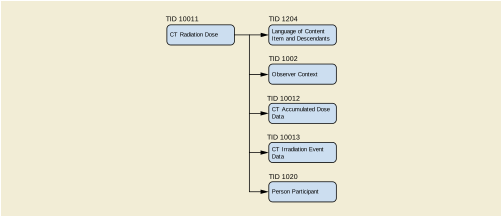
This Template defines a container (the root) with subsidiary Content Items, each of which corresponds to a single CT X-Ray irradiation event entry. There is a defined recording observer (the system or person responsible for recording the log, generally the system). Accumulated values shall be kept for a whole Study or at least a part of a Study, if the Study is divided in the workflow of the examination, or a performed procedure step. Multiple CT Radiation Dose objects may be created for one Study.
Table TID 10011. CT Radiation Dose
|
$PersonProcedureRole = EV (113850, DCM, "Irradiation Authorizing") |
This general Template provides detailed information on CT X-Ray dose value accumulations over several irradiation events from the same equipment and over the scope of accumulation specified for the report (typically a Study or a Performed Procedure Step).
Table TID 10012. CT Accumulated Dose Data
|
IFF irradiation events within the scope of accumulation use different phantoms for estimating the recorded per-event DLP (i.e., the values of TID 10013 “CT Irradiation Event Data” Row 23 are not all the same). |
||||||||
|
IF the value of Row 7 = (113800, DCM, "DLP to E conversion via MC computation") or equals (113801, DCM, "CTDIfreeair to E conversion via MC computation") |
||||||||
|
IF the value of Row 7 = (113802, DCM, "DLP to E conversion via measurement") or equals (113803, DCM, "CTDIfreeair to E conversion via measurement") |
||||||||
|
Required if the irradiating device is not the recording device and the dose was accumulated on a single device. |
$DeviceProcedureRole = EV (113859, DCM, "Irradiating Device") |
|
Total Number of CT irradiation events. A CT irradiation event is one continuous irradiation procedure and is defined through consistent acquisition parameters. In the case of dose modulation the calculations are based on the effective parameters (e.g., the effective mA recorded in the Mean X-Ray Tube Current), and these acquisition parameters are consistent. |
|
|
The Dose Length Product (DLP) is calculated for every irradiation event. The Dose Length Product Total is the sum of the DLP values. The calculation is based on the CTDIvol result of each irradiation event. If the individual DLP values are calculated using different phantoms, the separate per-phantom sub-totals may be encoded in Row 3a. |
|
|
The sum of the per-event DLP values with the specified phantom. |
|
|
The phantom used for the phantom-specific sub-total DLP estimate; shall be that specified at the irradiation event level in TID 10013 “CT Irradiation Event Data” Row 23 for the events included in the sub-total. |
|
|
Effective dose (E, in units of mSv) evaluated as a total over the scope is defined in Row 6 of TID 10011 “CT Radiation Dose”. Effective dose is defined by the reference in Rows 5 or 6 of this Template. It may be calculated from a product of DLP and an 'Effective Dose Conversion Factor' (E/DLP). Or it may be calculated from a product of the Mean CTDIfreeair and the ratio E/CTDIfreeair. The ratios E/DLP or E/CTDIfreeair may be evaluated either from computer simulations applying Monte Carlo (MC) sampling techniques or from dosimetric measurements in an anthropomorphic phantom, e.g., the Alderson-Rando phantom.. The specific method used is identified in Rows 7 through 11. |
|
|
Reference of the base publication defining the Effective Dose, either as a coded value, or a textual bibliographic reference. ICRP Publications shall be referenced using their assigned coded values. |
|
|
Description of the method used for Effective Dose evaluations. |
|
|
Description of the reference-patient mathematical or computational model used when Effective Dose is derived via Monte Carlo simulations of radiation transport in such models. Examples of publications that specify particular reference patient models are NUREG/CR-1159, ORNL/NUREG/TM-367 (1980); NRPB-R186 (1985); GSF-Bericht S-885 (1986); Fill et al., Health Physics Vol. 86 (3): 253-272 (2004). |
|
|
Type of dosimeter used, e.g., TLD (Thermo Luminescence Dosimeter) |
|
|
The device that produced the irradiation accumulated in this Template. I.e., the CT Scanner. This is not required to be present if the information is the same as that already recorded in TID 1004 “Device Observer Identifying Attributes” encoded via the inclusion of TID 1002 “Observer Context” in TID 10011 “CT Radiation Dose” Row 4, which in turn may be absent if identical to the content in the Enhanced General Equipment Module, or if more than one device produced the accumulated irradiation. |
This Template conveys the dose and equipment parameters of a single irradiation event.
A CT irradiation event is the loading of X-Ray equipment caused by a single continuous actuation of the equipment's irradiation switch, from the start of the loading time of the first pulse until the loading time trailing edge of the final pulse. Any on-off switching of the radiation source during the event shall not be treated as separate events; rather the event includes the time between start and stop of radiation as triggered by the user, e.g., a single sequence of scanning comprised of multiple slices acquired with successive tube rotations and table increments shall be treated as a single irradiation event. Depending on the examination workflow and the anatomical target region the CT irradiation event data may split into multiple instances of this Template for better dose estimation. The irradiation event is the "smallest" information entity to be recorded in the realm of Radiation Dose reporting. Individual Irradiation Events are described by a set of accompanying physical parameters that are sufficient to understand the "quality" of irradiation that is being applied. This set of parameters may be different for the various types of equipment that are able to create irradiation events.
Table TID 10013. CT Irradiation Event Data
|
User-defined type of clinical acquisition protocol for creating images or image-derived measurements. May be taken from Protocol Name (0018,1030) or from Performed Procedure Step Description (0040,0254). |
|
|
Description of the method used during acquisition of this CT irradiation event, may be derived from Acquisition Type (0018,9302). |
|
|
Though not a characteristic of the acquisition per se, the type of reconstruction intended has a bearing on the technique used. If multiple types of reconstruction are performed, multiple values can be listed. These values should correspond to the values of Reconstruction Algorithm (0018,9315) in the reconstructed images. |
|
|
The acquisition was performed with or without contrast medium application. |
|
|
If an acquisition is a repeat because an earlier acquisition was unsatisfactory, this may be recorded along with a coded reason and the earlier acquisition's irradiation event UID. This is intended to help with subsequent analysis by providing a priori information about why the study might be flagged as an outlier with higher dose exposure values than usual for the type of study. |
|
|
If an acquisition is a rejected because it was unsatisfactory, this may be recorded along with a coded reason. This is intended to help with subsequent analysis by providing a priori information about why the study might be flagged as an outlier with higher dose exposure values than usual for the type of study. |
|
|
The DateTime that the application of X-Rays started for this irradiation event. This shall correspond to the start of the first irradiation in the Irradiation Event, which defines the starting point for the calculation of the contents of the Row 21 "CT Dose" CONTAINER. |
|
|
Total time the patient has received X-Ray exposure during the irradiation event. |
|
|
The value of the nominal width (referenced to the location of the isocenter along the z axis) of a single collimated slice in mm. |
|
|
The value of the nominal width (referenced to the location of the isocenter along the z axis) of the nominal total collimation in mm over the area of active X-Ray detection (z-coverage). |
|
|
Pitch Factor: For Spiral Acquisition, the Pitch Factor is the ratio of the Table Feed per Rotation to the Nominal Total Collimation Width. For Sequenced Acquisition, the Pitch Factor is the ratio of the Table Feed per single sequenced scan to the Nominal Total Collimation Width. |
|
|
CT X-Ray source parameters related to the acquisition. For each X-Ray source an item must be present. For multi-energy acquisitions, multiple items may be present for each X-Ray source, each item describing one energy level. |
|
|
Identification of the X-Ray source. Identifies the particular X-Ray source (in a multi-source CT system) for which the set of X-Ray source parameter values is reported. |
|
|
Exposure time as measured/recorded by the system per rotation. |
|
|
Thickness of an equivalent filter constructed from aluminum, in case of multi-source CT systems AND if Row 4 is not present |
|
|
"Mean CTDIvol" refers to the average value of the CTDIvol applied within this acquisition. CTDIvol is the volume CTDIw, where CTDIw is the weighted computed tomography dose index 100 as defined according to the principles described in [IEC 60601-2-44]. For Sequenced and Spiral scanning, CTDIvol = CTDIw / Pitch Factor. For Stationary and Free scanning, CTDIvol = CTDIw ✕ Number of Rotations. For Shuttle Mode scanning, CTDIvol = CTDIw ✕ Number of Rotations for Entire Scan Series ✕ Nominal Total Collimation Width / (Nominal Total Collimation Width + Distance Between the Two Scan Positions). According to [IEC 60601-2-44] Ed 3 for Constant Angle Acquisition may be calculated as CTDIvol = (CTDIw / Current Time Product (mAs)) ✕ X-Ray Tube Current (mA) x (Nominal Total Collimation Width (mm) / Table Speed (mm/s)). NoteThe ratio CTDIw / Current Time Product is evaluated independently of the Constant Angle Acquisition but with the same settings of tube voltage and Total Collimation Width as those of the Constant Angle Acquisition. See also CTDIvol (0018,9345) and Spiral Pitch Factor (0018,9311) in the “Enhanced CT Image IODs” in PS3.3 . |
|
|
The type of phantom used for CTDI measurement (e.g., Head 16 cm diameter PMMA, Body 32 cm diameter PMMA, etc.). |
|
|
The CTDIfree air Calculation Factor is the CTDIfree air per mAs, expressed in units of mGy/mAs. The CTDIfree air Calculation Factor may be used in one method calculating Dose. For example, for this acquisition, Effective Dose = Mean X-Ray Tube Current ✕ Cumulative Exposure Time ✕ CTDIfree air Calculation Factor ✕ (Effective Dose/ CTDIfree air). |
|
|
MeanCTDIfree air is the mean CTDI for this acquisition, evaluated free-in-air according to [IEC 60601-2-44]. MeanCTDIfree air = Mean X-Ray Tube Current ✕ Cumulative Exposure Time ✕ CTDIfree air Calculation Factor. The CTDIfree air may be used in one method of calculating Effective Dose. |
|
|
For Spiral scanning, DLP = CTDIvol ✕ Scanning Length. For Sequenced scanning, DLP = CTDIvol ✕ Table Travel Between Consecutive Scans ✕ Number of Scans. For Stationary and Free scanning, DLP = CTDIvol ✕ Nominal Total Collimation Width. For Shuttle Mode scanning, DLP = CTDIvol ✕ (Nominal Total Collimation Width + Distance Between the Two Scan Positions) (according to [IEC 60601-2-44]). |
|
|
Effective Dose in mSv of the single continuous time-frame of the irradiation computed as described in TID 10012 “CT Accumulated Dose Data”. |
|
|
The Effective Dose Conversion Factor is the ratio of the Effective Dose to the DLP, expressed in units of mSv/mGy.cm, and it is used as a factor in one method of estimating Effective Dose. Monte Carlo Simulations (or dosimetric measurements in an anthropomorphic phantom, e.g., the Alderson-Rando phantom) may be used as a basis for the evaluation of Effective Dose Conversion Factors. This is different from the Conversion Factor to compute a Size Specific Dose Estimate from a Water Equivalent Diameter. |
|
|
This value represents a Size Specific Dose Estimate (SSDE) for this irradiation event as a whole. More than one Size Specific Dose Estimate may be included, for example if different computation methods are used. If SSDE is estimated for multiple Z positions within a single irradiation event, that is found in Row 34f. |
|
|
Methods including [AAPM Report 204] and [IEC 62985] are listed in CID 10023 “Size Specific Dose Estimation Method for CT”; other methods may be used. The phantom size (16cm or 32cm) used for the calculation is available from the phantom type defined in Row 23. |
|
|
The condition specifies inclusion of the Measured Lateral Dimension if it was used in the calculation. |
|
|
The condition specifies inclusion of the Measured AP Dimension if it was used in the calculation. |
|
|
The Derived Effective Diameter is conditionally included, whether it was derived from measurements or estimated from age, but may not be used for other (non-AAPM Report 204) methods. |
|
|
The conversion factor described by the coefficients is used both for the SSDE(z) values in Row 34f and, if Row 31 is (113988, DCM, "Estimated from Water Equivalent Diameter"), for the SSDE value in Row 30. |
|
|
If the Water Equivalent Diameter was computed from raw views rather than reconstructed images, then the Raw Data may be referenced. |
|
|
A single value for Water Equivalent Diameter is encoded. If Row 31 is (113988, DCM, "Estimated from Water Equivalent Diameter"), this value is used to generate Row 30. If Row 31 is (113989, DCM, "Arithmetic Average of SSDE(z)"), this value is not used directly to generate Row 30, but is still present and represents Dw, the Arithmetic Average of the Dw(z) values in Row 34h as described in [IEC 62985]. |
|
|
This z position is patient (not table or gantry) relative, to allow it to be defined in the Patient Coordinate System and hence related to the Image Position (Patient) in the reconstructed images (see TID 10014 “Scanning Length”, included at Row 9). It is required if the method uses a representative slice, but may also be present if the method used a Localizer or Raw Data at a single location rather than the entire scan range. |
|
|
A set of Size Specific Dose Estimates at particular z positions along the scan axis. These values correspond to the SSDE(z) values identified in [IEC 62985]. |
|
|
The z position at which the SSDE in Row 34f was calculated. As with Row 34e, the value is patient relative. |
|
|
The Water Equivalent Diameter used to calculate the SSDE in Row 34f using the conversion factor described in Row 34a. This value, along with the Row 34h values for the other SSDEs in Row 34f, corresponds to the set of Dw(z) values identified in [IEC 62985]. |
|
|
Record of details associated with using the NEMA Dose Check Standard [NEMA XR 25-2019]. |
|
|
The type of exposure modulation. May use the value of Exposure Modulation Type (0018,9323) from the CT Exposure Macro or from the CT Image Module. |
|
|
If present, shall be the code corresponding to the value of Exposure Modulation Type (0018,9323) from the CT Exposure Macro or from the CT Image Module. |
|
|
People responsible for the administration of the radiation reported in the irradiation event. May include values that would appear in Performing Physicians' Name (0008,1050), Performing Physician Identification Sequence (0008,1052), Operators' Name (0008,1070) and/or Operator Identification Sequence (0008,1072). |
|
|
The device that produced the irradiation in this Irradiation Event. I.e., the CT scanner. This is not required to be present if the information is the same as that already recorded in the TID 1004 “Device Observer Identifying Attributes” encoded via the inclusion of TID 1002 “Observer Context” in TID 10011 “CT Radiation Dose” Row 4, which in turn may be absent if identical to the content in the Enhanced General Equipment Module. |
Table TID 10014. Scanning Length
|
IFF TID 10013 “CT Irradiation Event Data” Row 4 CT Acquisition Type equals (116152004, SCT, "Spiral Acquisition") |
||||||||
|
EV (113895, DCM, "Top Z Location of Reconstructable Volume") |
||||||||
|
EV (113896, DCM, "Bottom Z Location of Reconstructable Volume") |
||||||||
|
IF any of Rows 4 through 7 or Row 34e of TID 10013 are present. |
If present, shall be the same UID as in the images reconstructed from this irradiation event. |
|
For Spiral scanning, the Scanning Length is the table travel in mm during the tube loading, adjusted for dynamic collimation if applicable (see Figure A-16). In the case of Spiral scanning with dynamic collimation, one may approximate the Scanning Length as the FWHM along a line perpendicular to the tomographic plane at isocenter of the free-in-air dose profile for the entire scan. Note[IEC 60601-2-44] (Ed 3.2 2016-03) includes an adjustment for dynamic collimation when determining Scanning Length for DLP calculation in Spiral scanning. Previous versions of this IEC standard do not include this adjustment. For those scanners using dynamic collimation that used previous versions of the IEC standard, the encoded Scanning Length might not have been adjusted for dynamic collimation. For Sequenced scanning, the Scanning Length is the table travel between consecutive scans times the number of scans. For Stationary and Free scanning, the Scanning Length is the nominal width of the total collimation. For Shuttle Mode scanning, the Scanning Length is the nominal width of the total collimation plus the distance between the two scan positions. |
|
|
The length of the reconstructable volume is the maximum z-range between the outermost edges of the top and bottom slices that can be reconstructed from the acquisition. For Spiral scanning, the length of reconstructable volume is the z-range between the outermost beginning of the first reconstructable slice and the outermost end of the last reconstructable slice (see Figure A-16). For Sequenced scanning, the length of reconstructable volume is the z-range between the outermost beginning of the first slice and the outermost end of the last slice (i.e., including any skip). For Stationary and Free scanning, the length of reconstructable volume is the z-range between the outermost beginning of the first reconstructable slice and the outermost end of the last reconstructable slice. |
|
|
For Spiral scanning, the exposed range is as defined in [IEC 60601-2-44] (Ed. 3) 203.115(b) (see Figure A-16). |
|
|
The Top and Bottom Z Locations of the Reconstructable Volume are independent of the slice width of any actual reconstructed slices. They are measured from the edges of the volume, and hence are not equal to the Z locations encoded in the images of any actual reconstructed slices, which are recorded as the center of the slice. |
|
|
These locations are patient (not table or gantry) relative, to allow them to be defined in the Patient Coordinate System and hence related to the Image Position (Patient) in the reconstructed images. They are also defined in terms of the top (towards the patient's head), and bottom (towards the patient's feet) of the corresponding ranges, in order to make them independent of whether the scan starts at the top or the bottom or shuttles back and forth in between (see Figure A-16). |
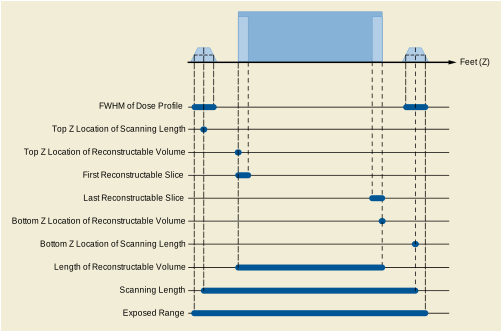
This Template records details related to the use of the NEMA Dose Check Standard [NEMA XR 25-2019].
Table TID 10015. CT Dose Check Details
|
IFF value of Row 2 = (373066001, SCT, "Yes") |
||||||||
|
IFF value of Row 3 = (373066001, SCT, "Yes") |
||||||||
|
IF Accumulated DLP Forward Estimate (Row 6) exceeds DLP Alert Value (Row 4) |
||||||||
|
IF Accumulated CTDIvol Forward Estimate (Row 7) exceeds CTDIvol Alert Value (Row 5) |
||||||||
|
IFF Accumulated DLP Forward Estimate (Row 6) exceeds DLP Alert Value (Row 4) or Accumulated CTDIvol Forward Estimate (Row 7) exceeds CTDIvol Alert Value (Row 5) |
||||||||
|
IF Accumulated DLP Forward Estimate (Row 6) exceeds DLP Alert Value (Row 4) or Accumulated CTDIvol Forward Estimate (Row 7) exceeds CTDIvol Alert Value (Row 5) |
$PersonProcedureRole = EV (113850, DCM, "Irradiation Authorizing") |
|||||||
|
IFF value of Row 11 = (373066001, SCT, "Yes") |
||||||||
|
IFF value of Row 12 = (373066001, SCT, "Yes") |
||||||||
|
IF DLP Forward Estimate (Row 15) exceeds DLP Notification Value (Row 13) |
||||||||
|
IF CTDIvol Forward Estimate (Row 16) exceeds CTDIvol Notification Value (Row 14) |
||||||||
|
IFF DLP Forward Estimate (Row 15) exceeds DLP Notification Value (Row 13) or CTDIvol Forward Estimate (Row 16) exceeds CTDIvol Notification Value (Row 14) |
||||||||
|
IFF DLP Forward Estimate (Row 15) exceeds DLP Notification Value (Row 13) or CTDIvol Forward Estimate (Row 16) exceeds CTDIvol Notification Value (Row 14) |
$PersonProcedureRole = EV (113850, DCM, "Irradiation Authorizing") |
|
Indicates whether a DLP Alert Value was configured (e.g., by the institution) for the study to which this irradiation event belongs. |
|
|
Indicates whether a CTDIvol Alert Value was configured (e.g., by the institution) for the study to which this irradiation event belongs. |
|
|
The configured value applicable to the current study that would trigger an alert if the accumulated DLP were projected to exceed it. |
|
|
The configured value applicable to the current study that would trigger an alert if the Accumulated CTDIvol at any given location were projected to exceed it. |
|
|
The value estimated prior to performing this irradiation event of the projected DLP accumulated during this study, including this irradiation event. The estimate may include assumptions such as those described in the NEMA Dose Check Standard [NEMA XR 25-2019]. |
|
|
The value estimated prior to performing this irradiation event of the projected CTDIvol accumulated during this study, including this irradiation event. The value is for the location with the highest estimated accumulation. The actual location is not recorded. The estimate may include assumptions such as those described in the NEMA Dose Check Standard [NEMA XR 25-2019]. |
|
|
The reason provided by the operator for proceeding with an irradiation event projected to exceed an alert value. |
|
|
Person responsible for authorizing irradiation projected to exceed an alert value. |
|
|
Indicates whether a DLP Notification Value was configured (e.g., by the institution) for the Protocol Element Group to which this irradiation event corresponds. |
|
|
Indicates whether a CTDIvol Notification Value was configured (e.g., by the institution) for the Protocol Element Group to which this irradiation event corresponds. |
|
|
The configured value applicable to the current irradiation event that would trigger a notification if the DLP were projected to exceed it. |
|
|
The configured value applicable to the current irradiation event that would trigger a notification if the CTDIvol were projected to exceed it. |
|
|
The value estimated prior to performing this irradiation event of the DLP for this irradiation event. The estimate may include assumptions such as those described in the NEMA Dose Check Standard [NEMA XR 25-2019]. |
|
|
The value estimated prior to performing this irradiation event of the CTDIvol for this irradiation event. The value is for the location with the highest estimated value. The actual location is not recorded. The estimate may include assumptions such as those described in the NEMA Dose Check Standard [NEMA XR 25-2019]. |
|
|
The reason provided by the operator for proceeding with an irradiation event projected to exceed a notification value. |
|
|
Person responsible for authorizing irradiation projected to exceed a notification value. |
The Templates that comprise the Radiopharmaceutical Radiation Dose SR are interconnected as in Figure A-17.
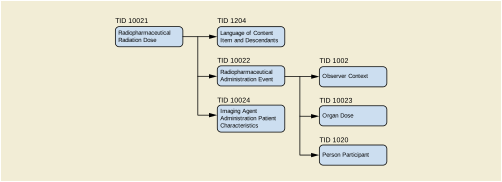
This Template defines a container (the root) with subsidiary Content Items, each of which corresponds to a single Radiopharmaceutical Administration Dose event entry. There is a defined recording observer (the system and/or person responsible for recording the assay of the radiopharmaceutical, and the person administered the radiopharmaceutical). Multiple Radiopharmaceutical Radiation Dose objects may be created for one study. Radiopharmaceutical Start DateTime in TID 10022 “Radiopharmaceutical Administration Event Data” will convey the order of administrations.
Table TID 10021. Radiopharmaceutical Radiation Dose
The Radiopharmaceutical Administration Event conveys the dose and assay and time information of a single radiopharmaceutical event. A Radiopharmaceutical Administration event is one radioactive pharmaceutical administered to a patient.
Table TID 10022. Radiopharmaceutical Administration Event Data
|
EV (113503, DCM, "Radiopharmaceutical Administration Event UID") |
||||||||
|
IF value of Row 20 = (47625008, SCT, "Intravenous route") or (78421000, SCT, "Intramuscular route") |
||||||||
|
$PersonProcedureRole = EV (113851, DCM, "Irradiation Administering") |
||||||||
|
EV (113511, DCM, "Radiopharmaceutical Dispense Unit Identifier") |
||||||||
|
The value of Half-life that was used for computing the decay of the administered radiopharmaceutical. It is not intended for use by the receiver for any further computation. |
|
|
Activity per unit mass of the radiopharmaceutical at Radiopharmaceutical Start Time |
|
|
Unique identification of a single radiopharmaceutical administration event. |
|
|
The estimated percentage of administered activity lost at the injection site. The estimation includes extravasation, paravenous administration and leakage at the injection site. |
|
|
The time the radiopharmaceutical was administered to the patient for imaging purposes. |
|
|
Total amount of radioactivity administered to the patient at Radiopharmaceutical Start Time. It is a computed field from the TID 10022 Pre-Administration Measured Activity Row 13, TID 10022 Post-Administration Measured Activity Row 17, Radionuclide Half Life Row 4 and Radiopharmaceutical Start Time Row 9. |
|
|
Observation DateTime (0040,A032) shall be used to record when the measurement was taken. |
|
|
The billing codes for the preparation and administration of the radiopharmaceutical. It does not include performance and interpretation of the imaging. |
|
|
Registered drug establishment code for the product. A Coding Scheme example is NDC, WHO-DDE or RxNorm. Multiple entries can be used for equivalent drug product codes. |
|
|
The human readable identification of the specific radiopharmaceutical quantity (dose) administered to the patient. |
|
|
Identifies the vial, batch or lot number from which the individual radiopharmaceutical quantity (dose) was produced. Row 27 the Radiopharmaceutical Identifier records the identification for each individual dose. |
|
|
Identifies the lot or unit serial number for the reagent component for the radiopharmaceutical identified in Row 27. |
|
|
Identifies the lot or unit serial number for the radionuclide component for the radiopharmaceutical identified in Row 27. |
This Template conveys the information about the dose to a single organ.
|
For paired organs, use (51440002, SCT, "Bilateral") to report the estimated absorbed dose for both organs. |
|
|
The estimated mass of organ in grams used when calculating the organ dose. |
|
|
Method used to obtain the estimate. This could include a method that does not involve performing a measurement (e.g., Standard Organ Mass Tables). |
|
This Template describes the characteristics of the patient that are specific to the current clinical presentation (visit). In the case of radiopharmaceuticals, the characteristics noted may affect the activity received, and how dose is calculated for the patient. Patient Characteristic concepts in this Template, which may replicate Attributes in the Patient Study Module, are included here as possible targets of by-reference relationships from other Content Items in the SR tree.
Table TID 10024. Imaging Agent Administration Patient Characteristics
|
Defaults to Value equivalent to Value of Patient's Age (0010,1010) of the Patient Study Module UNITS = DCID 7456 “Age Unit” |
||||||||
|
Defaults to a code equivalent to Value of Patient's Sex (0010,0040) of the Patient Module |
||||||||
|
Patient height may differ from Patient's Size (0010,1020). Row 4 is the height value used for any height based protocols. Observation DateTime (0040,A032) may be used to record when the measurement was taken. |
|
|
Patient weight may differ from Patient's Weight (0010,1030). Row 5 is the weight value used for any weight based protocols. Observation DateTime (0040,A032) shall be used to record when the measurement was taken. |
|
|
Patient's Blood Glucose level. Observation DateTime (0040,A032) shall be used to record when the measurement was taken. |
|
|
Observation DateTime (0040,A032) shall be used to record when the measurement was taken. |
|
|
Glomerular Filtration Rate Observation DateTime (0040,A032) shall be used to record when the measurement was taken. The formatting of the UCUM units is aligned with LOINC. See http://unitsofmeasure.org/trac/ticket/98 |
The Templates that comprise the Patient Radiation Dose SR are interconnected as in Figure A-18.
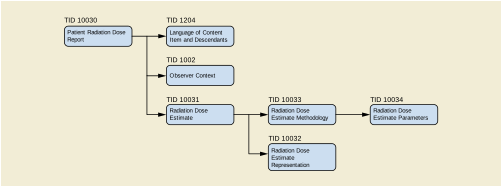
This template defines a container (the root) with subsidiary Content Items for determining an estimated radiation dose to a patient.
The dose estimate is used to record the results from one analysis method from one or more radiation sources. Organ dose estimates are calculated from one or more irradiation events to a patient. The output from one or more sources of radiation can be used separately or combined to estimate the dose to a patient or individual organs.
Table TID 10031. Radiation Dose Estimate
Different representations (e.g., images) of the distribution of absorbed energy allow a better understanding of how this energy may affect tissue.
Table TID 10032. Radiation Dose Estimate Representation
|
Reference to an Instance that contains the dose representation, e.g., surface segmentation, mesh, parametric map, RT dose, Secondary Capture, etc. |
|
|
The organs in the representation. The organs in this Row shall be present in Row 7 of TID 10031 “Radiation Dose Estimate”. |
This template includes the information specific to the organ dose calculation methodology used when estimating dose to individual organs, entire body or a phantom from imaging studies that use ionizing radiation.
Table TID 10033. Radiation Dose Estimate Methodology
|
IFF some Events in the Structured Report were not used in calculating the dose. |
||||||||
|
IF spatial information used from Radiation Dose SR or Patient Radiation Dose Model |
||||||||
|
IFF Rows 8, 9 or 10 are present and Frame of Reference is defined |
||||||||
|
EV (128475, DCM, "X-Ray Beam Attenuator Model Registration") |
||||||||
|
IFF Rows 33, 34 or 35 are present and Frame of Reference is defined |
||||||||
|
EV (128482, DCM, "Radiation Dose Estimate Method Reference") |
This template includes the parameters that are specific to the Radiation Dose Estimate Method used in the algorithms when estimating dose to individual organs, phantoms, or the entire body from imaging studies that use ionizing radiation.
|
These are the parameters of the method specified in Row 43 of TID 10033 “Radiation Dose Estimate Methodology”. The code meanings should correlate directly with the names of the parameters used in the methodology documentation. |
|
|
References to Parametric Map Image, Mesh, encapsulated pdf, or other similar IOD. |
|
The Templates that comprise the Enhanced X-Ray Radiation Dose SR are interconnected as in Figure A-18b.
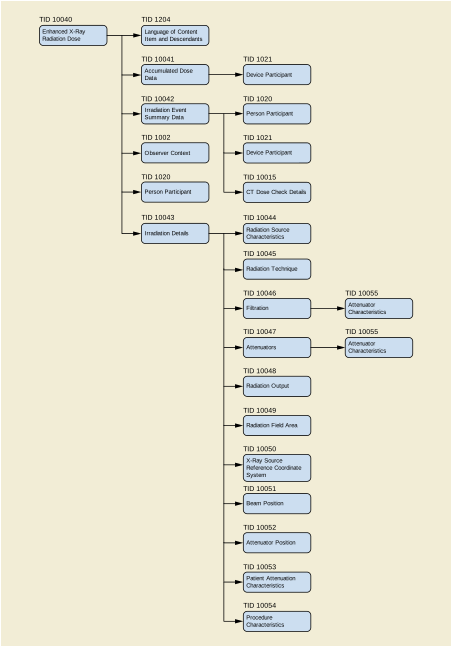
This template defines a container (the root) with subsidiary Content Items for documenting the radiation output for an ionizing radiation imaging device. This template supports cone-beam CT, in addition to other modalities.
Table TID 10040. Enhanced X-Ray Radiation Dose
|
$PersonProcedureRole = EV (113850, DCM, "Irradiation Authorizing") |
||||||||
|
This row describes the general type of radiation-producing procedure from which the content of the RDSR is generated. More specific procedure codes, such as those used for ordering or scheduling, which may affect subsequent processing, may be recorded in the top level Data Set in Procedure Code Sequence (0008,1032) of the General Study Module. |
|
|
TID 10041 may be included once for each source. Summary-level values that may include multiple sources, e.g., Dose Area Product Total from planes A and B of a biplane system,could be described by an instance of TID 10041 where the Identification of X-Ray Source indicates multiple sources, e.g., "A and B". |
|
|
TID 10042 shall be included once for each irradiation event. Irradiation event values that may include multiple sources, e.g., CTDI for a dual-source CT scanner,could be described by an instance of TID 10042 where the Identification of X-Ray Source indicates multiple sources, e.g., "1 and 2". |
This template documents scope of accumulation summary data for a single radiation source. Some rows are modality-specific and may not apply to all uses.
Table TID 10041. Accumulated Dose Data
|
EV (131331, DCM, "Calibration Intended Acquisition Protocol") |
||||||||
|
Required if the irradiating device is not the recording device and the dose was accumulated on a single device. |
$DeviceProcedureRole = EV (113859, DCM, "Irradiating Device") |
|||||||
|
IFF the distance is constant for all irradiation events within the scope of accumulation. |
||||||||
|
Identification the X-Ray source. This designation shall not change for a given source throughout the entire RDSR. Summary-level values that may traditionally include multiple sources, e.g., Dose Area Product Total from planes A and B of a biplane system, could be described by an instance of this template where the Identification of X-Ray Source indicates multiple sources, e.g., "A and B." Summary-level values that are not traditionally described across multiple sources, e.g., Dose (RP) Total on a biplane system, should not accumulate these values across both sources. |
|
|
Details for each calibration stored on the system. If separate calibrations stored for different dosimetric values exist, they may be included by using multiple instances of this container. In such a case, Row 9a may be used to inform the interpreter of the RDSR how to appropriately use each calibration factor and Row 9b is used in the case of different acquisition protocols. |
|
|
Date that the calibration of the equipment's dose indicators was performed. |
|
|
Typically, a value provided by the medical physicist. The recorded dose or dose area product values in this report can be multiplied by this factor to obtain estimated real-world values. |
|
|
Value range from 0 to 100 percent. Uncertainty of the 'actual' value expressed as +/- of the mean. |
|
|
Identifies Individual or organization responsible for calibration. |
|
|
Describes calibration protocol according to equipment standards or local guidelines. |
|
|
Users of the RDSR can use this value to determine the applicability of the calibration for the RDSR. |
|
|
Users of the RDSR can use this value to determine the applicability of the calibration for the RDSR. May be related to TID 10054 Row 5 EV (125203, DCM, "Acquisition Protocol"). |
|
|
The device that produced the irradiation accumulated in this template, i.e., the X-Ray source. This is not required to be present if the information is the same as that already recorded in TID 1004 “Device Observer Identifying Attributes” encoded via the inclusion of TID 1002 “Observer Context” in TID 10040 Row 5. |
|
|
The total Dose Area Product for all fluoroscopy and acquisition events for a given X-Ray radiation source. |
|
|
Total clock time of Fluoroscopy accumulated over the defined scope of accumulation (i.e., the sum of the Irradiation Duration values for accumulated fluoroscopy irradiation events). |
|
|
Total clock time of acquisitions accumulated over the defined scope of accumulation (i.e., the sum of the Irradiation Duration values for accumulated acquisition irradiation events). |
|
|
A text definition of the Reference Point (RP) used for RP-related dose values. |
|
|
A coded definition of the Reference Point (RP) used for RP-related dose values. |
|
|
The fluoroscopic component of the accumulated dose relative to reference point. |
|
|
The acquisition component of the accumulated dose relative to reference point. |
|
|
A single value for calculating reference point dose based on a constant distance. If this distance changes, it may only be populated in Row 13 of TID 10054 “Procedure Characteristics” on an irradiation event basis. |
|
|
The Dose Length Product (DLP) is calculated for every irradiation event. The Dose Length Product Sub-Total is the sum of the DLP values for all events within the scope of accumulation that use the same phantom. |
|
|
The phantom used for the phantom-specific sub-total DLP estimate; shall be that specified at the irradiation event level in TID 10042 “Irradiation Event Summary Data” Row 29 for the events included in the sub-total. |
|
This template documents irradiation event-level summary data.
Table TID 10042. Irradiation Event Summary Data
|
This shall correspond to the start of the first irradiation in the Irradiation Event. |
|
|
This shall correspond to the end of the last irradiation in the Irradiation Event. |
|
|
Identification the X-Ray source. This designation shall not change for a given source throughout the entire RDSR. Irradiation event values that apply to multiple sources, e.g., CTDI on a dual-source CT scanner, could be described by an instance of this template where the Identification of X-Ray Source indicates multiple sources, e.g., "1 and 2." Irradiation event valuesthat are not traditionally described across multiple sources, e.g., Dose (RP) on a biplane system, should not accumulate these values across both sources. |
|
|
Cone-beam CT is expected to use (113613, DCM, "Rotational Acquisition"). |
|
|
Reference to Image instances created during this event, if any. The UID reference(s) provided here shall be the values at the time the images were initially created. (Note that image UIDs may be changed as the images are managed over a long term). |
|
|
Dose applied by this irradiation event, relative to defined reference point. This value may be provided at the Irradiation Event level, but is redundant if the Output Measurement Position is at the same position as the Reference Point defined in TID 10041. |
|
|
If an acquisition is a repeat because an earlier acquisition was unsatisfactory, this may be recorded along with a coded reason and the earlier acquisition's irradiation event UID. This is intended to help with subsequent analysis by providing a priori information about why the study might be flagged as an outlier with higher dose exposure values than usual for the type of study. |
|
|
If an acquisition is a rejected because it was unsatisfactory, this may be recorded along with a coded reason. This is intended to help with subsequent analysis by providing a priori information about why the study might be flagged as an outlier with higher dose exposure values than usual for the type of study. |
|
|
If a precise count of pulses is not available, an estimated number shall be provided, and the Row 24 Concept Modifier shall indicate "Estimated". |
|
|
Description of the method used during acquisition of the CT irradiation event. |
|
|
DICOM Attributes exist for both Exposure Time in Seconds and Exposure Time in ms. This row uses milliseconds (ms). |
|
|
"Mean CTDIvol" refers to the average value of the CTDIvol applied within this acquisition. CTDIvol is the volume CTDIw, where CTDIw is the weighted computed tomography dose index 100 as defined according to the principles described in [IEC 60601-2-44]. For Sequenced and Spiral scanning, CTDIvol = CTDIw / Pitch Factor. For Stationary and Free scanning, CTDIvol = CTDIw ✕ Number of Rotations. For Shuttle Mode scanning, CTDIvol = CTDIw ✕ Number of Rotations for Entire Scan Series ✕ Nominal Total Collimation Width / (Nominal Total Collimation Width + Distance Between the Two Scan Positions). According to [IEC 60601-2-44] Ed 3 for Constant Angle Acquisition may be calculated as CTDIvol = (CTDIw / Current Time Product (mAs)) ✕ X-Ray Tube Current (mA) x (Nominal Total Collimation Width (mm) / Table Speed (mm/s)). NoteThe ratio CTDIw / Current Time Product is evaluated independently of the Constant Angle Acquisition but with the same settings of tube voltage and Total Collimation Width as those of the Constant Angle Acquisition. See also CTDIvol (0018,9345) and Spiral Pitch Factor (0018,9311) in the “Enhanced CT Image IODs” in PS3.3 . |
|
|
The type of phantom used for CTDI measurement (e.g., Head 16 cm diameter PMMA, Body 32 cm diameter PMMA, etc.). |
|
|
The CTDI freeair Calculation Factor is the CTDI freeair per mAs, expressed in units of mGy/mAs. The CTDI freeair Calculation Factor may be used in one method calculating Dose. For example, for this acquisition, Effective Dose = Mean X-Ray Tube Current ✕ Cumulative Exposure Time ✕ CTDI freeair Calculation Factor ✕ (Effective Dose/ CTDI freeair). |
|
|
MeanCTDI freeair is the mean CTDI for this acquisition, evaluated free-in-air according to [IEC 60601-2-44]. MeanCTDI freeair = Mean X-Ray Tube Current ✕ Cumulative Exposure Time ✕ CTDI freeair Calculation Factor. The CTDI freeair may be used in one method of calculating Effective Dose. |
|
|
For Spiral scanning, DLP = CTDI vol ✕ Scanning Length. For Sequenced scanning, DLP = CTDIvol ✕ Table Travel Between Consecutive Scans ✕ Number of Scans. For Stationary and Free scanning, DLP = CTDIvol ✕ Nominal Total Collimation Width For Shuttle Mode scanning, DLP = CTDIvol ✕ (Nominal Total Collimation Width + Distance Between the Two Scan Positions) (according to [IEC 60601-2-44]). |
|
|
More than one Size Specific Dose Estimate may be included, for example if different computation methods are used. |
|
|
The methods of [AAPM Report 204] are listed in CID 10023 “Size Specific Dose Estimation Method for CT”; other methods may be used. The phantom size used for the calculation is available from the phantom type defined in Row 29. |
|
|
The condition specifies inclusion of the Measured Lateral Dimension if it was used in the calculation. |
|
|
The condition specifies inclusion of the Measured AP Dimension if it was used in the calculation. |
|
|
The Derived Effective Diameter is conditionally included, whether it was derived from measurements or estimated from age, but may not be used for other (non-AAPM Report 204) methods. |
|
|
A single value for Water Equivalent Diameter is encoded in Row 38 if the method uses a single value. It is required if the method uses a representative slice, but may also be present if the method used a Localizer or Raw Data at a single location rather than the entire scan range. |
|
|
The modifier is intended to specify the family of methods and not the specific technique (e.g., for AAPM 220 (113987, DCM, "AAPM 220") is used, not (113981, DCM, "Water Equivalent Diameter Representative Value"), etc.). |
|
|
If the method uses multiple slices across the scan range, the reconstructed image Series or (list of) Instances used is referenced; the values for Water Equivalent Diameter may or may not be recorded in the CT Image Module or the CT Exposure Macro of those images. More than one Series may be referenced if the reconstructed images for this acquisition used for Water Equivalent Diameter estimation span multiple series. If the Water Equivalent Diameter was computed from raw views rather than reconstructed images, then the Raw Data is referenced, if it was encoded in DICOM (it is not required to be). |
|
|
This location is patient (not table or gantry) relative, to allow it to be defined in the Patient Coordinate System and hence related to the Image Position (Patient) in the reconstructed images. It is required if the method uses a representative slice, but may also be present if the method used a Localizer or Raw Data at a single location rather than the entire scan range. |
|
|
Record of details associated with using the NEMA Dose Check Standard [NEMA XR 25-2019]. |
|
|
The type of exposure modulation. May use the value of Exposure Modulation Type (0018,9323) from the CT Exposure Macro or from the CT Image Module. |
|
|
If present, shall be the code corresponding to the value of Exposure Modulation Type (0018,9323) from the CT Exposure Macro or from the CT Image Module. |
|
|
People responsible for the administration of the radiation reported in the irradiation event. May include values that would appear in Performing Physicians' Name (0008,1050), Performing Physician Identification Sequence (0008,1052), Operators' Name (0008,1070) and/or Operator Identification Sequence (0008,1072). |
|
|
The device that produced the irradiation in this irradiation event. This is not required to be present if the information is the same as that already recorded in TID 1004 “Device Observer Identifying Attributes” encoded via the inclusion of TID 1002 “Observer Context” in TID 10040 Row 5. |
This template describes the radiation dose characteristics independent of an irradiation event. The complete time period over the scope of accumulation and frame of reference are defined in this template.
This template describes a radiation source (e.g., focal spot size, anode material, etc.).
Table TID 10044. Radiation Source Characteristics
|
COLUMN 1 = EV (111526, DCM, "DateTime Started") COLUMN 2 = EV (113766, DCM, "Focal Spot Size") |
||||||||
|
COLUMN 1 = EV (111526, DCM, "DateTime Started") COLUMN 2 = EV (111632, DCM, "Anode Target Material") COLUMN 2 VALUES = DCID 10016 “Anode Target Material” |
||||||||
This template describes the technique parameters (e.g., X-Ray tube potential, X-Ray tube current, pulse rate, etc.) of the radiation exposure during a period of time.
Table TID 10045. Radiation Technique
|
COLUMN 1 = EV (111526, DCM, "DateTime Started") COLUMN 2 = EV (111634, DCM, "Half Value Layer") |
||||||||
|
COLUMN 1 = EV (111526, DCM, "DateTime Started") COLUMN 2 = EV (113733, DCM, "KVP") |
||||||||
|
COLUMN 1 = EV (111526, DCM, "DateTime Started") COLUMN 2 = EV (113734, DCM, "X-Ray Tube Current") |
||||||||
|
COLUMN 1 = EV (111526, DCM, "DateTime Started") COLUMN 2 = EV (113791, DCM, "Pulse Rate") |
||||||||
|
COLUMN 1 = EV (111526, DCM, "DateTime Started") COLUMN 2 = EV (113793, DCM, "Pulse Width") |
||||||||
This template describes the filtration applied to a radiation beam after it has exited the X-Ray tube. It does not include inherent filtration associated with the X-Ray tube itself.
Filters move with the associated X-Ray source (within an X-Ray tube). Attenuating material that does not move with an X-Ray source is referred to as an Attenuator and is described in TID 10047.
This template describes the attenuators present during a study. The attenuators are different from the filters in that filters are intended to modify the radiation (e.g., bowtie filters, spectral filters, etc.) while attenuators may modify the radiation, but this is not the intended function (e.g., patient support, table pad, etc.).
Attenuators do not move with the associated X-Ray source (within an X-Ray tube). Attenuating material that moves with an X-Ray source is referred to as a Filter and is described in TID 10046.
The description of the radiation output at the output measurement point.
Table TID 10048. Radiation Output
|
COLUMN 1 = EV (111527, DCM, "DateTime Ended") COLUMN 2 = EV (130515, DCM, "Air Kerma at Output Measurement Point") |
|
The DateTime of the start and end of the radiation output measurement or calculation. This period of time shall not overlap with the period of time of any other instance of this template within the same RDSR. This period of time shall not span a period during which the value of output measurement point position (TID 10051 Row 5), or the X-Ray source transformation matrix (TID 10050 Row 5), or the corresponding X-Ray source rotation angle (TID 10050 Row 8) change for the same X-Ray source (as identified by the value of Row 4 in each of those templates). |
|
|
Identification the X-Ray source. This designation shall not change for a given source throughout the entire RDSR. For systems with multiple X-Ray sources, each source shall be described with a separate instance of this template. |
|
|
The accumulated air kerma over the period of time specified by Row 2 and Row 3. If this row is present, the period of time specified by Row 2 and Row 3 shall not span a period during which the value of output measurement point position (TID 10051 Row 5), or the X-Ray source transformation matrix (TID 10050 Row 5), or the corresponding X-Ray source rotation angle (TID 10050 Row 8) change for the same X-Ray source (as identified by the value of Row 4 in each of those templates). |
|
|
The table is encoded as a two-column table, consisting of multiple rows describing corresponding values of DateTime and accumulated air kerma over the period of time specified by Row 2 and Row 3. The number of rows in the table is not constrained. In the first table row, the value in COLUMN 1 shall not be less than the value of Row 2 of this TID. In the last table row, the value of COLUMN 1 shall not exceed the value of Row 3 of this TID. For the first table row, the air kerma value in COLUMN 2 shall indicate the accumulated air kerma between the DateTime in Row 2 of this TID and the DateTime of COLUMN 1 of the first table row. Each subsequent table row describes the accumulated air kerma between the DateTime of the previous table row and the current table row. For each table row, the defined period of time shall not span a period during which the value of output measurement point position (TID 10051 Row 5), or the X-Ray source transformation matrix (TID 10050 Row 5), or the corresponding X-Ray source rotation angle (TID 10050 Row 8) change for the same X-Ray source (as identified by the value of Row 4 in each of those templates). |
This template contains a description of the radiation field area for a given X-Ray source, which accounts for collimation.
This template describes the transformation between the X-Ray-source-related coordinate positions and the RDSR reference coordinate system.
Table TID 10050. X-Ray Source Reference Coordinate System
|
EV (130519, DCM, "X-Ray Source Reference Coordinate System") |
||||||||
|
COLUMN 1 = EV (111526, DCM, "DateTime Started") COLUMN 2 = EV (130523, DCM, "Rotation Angle") |
|
The DateTime of the beginning of the time period over which the Content Items are applicable. |
|
|
The DateTime of the end of the time period over which the Content Items are applicable. |
|
|
Identification the X-Ray source. This designation shall not change for a given source throughout the entire RDSR. For systems with multiple X-Ray sources, each source shall be described with a separate instance of this template. |
|
|
A 4-by-4 matrix of dimensionless numbers of the form defined in Section C.20.2.1.1 “Frame of Reference Transformation Matrix” in PS3.3 . The matrix describes the rigid transformation matrix (including translation and rotation) that transforms the X-Ray source reference coordinate system to the RDSR reference coordinate system. The translation described by this matrix indicates the position and orientation of the X-Ray source within the RDSR reference coordinate system. Like the RDSR RCS, the X-Ray source reference coordinate system shall be a right-handed Cartesian coordinate system. In the specific case of a source rotating about a fixed point within a plane, Rows 6, 7, 8 may be specified to describe the rotation of a moving source without the need to encode multiple transformation matrices. For an RDSR that describes only a rotating source in a single plane, the source transformation matrix may be described only once, with all subsequent movements described by the values in Rows 6, 7, 8. If Rows 6, 7, 8 are used, the transformation matrix described in Row 5 corresponds to the position and orientation of the source at the beginning of the rotation. |
|
|
Position of the center of rotation of the X-Ray source in the X-Ray source reference coordinate system. Since the X-Ray source RCS uses the source as the origin, this value defines the vector from the source to the center of rotation. Its value shall be assumed to be the position at the initial angle of rotation. Zero degrees in Row 8 is the angle of the source about the center of rotation at its initial position. |
|
|
Row 6 is combined with Row 7 to define the normal vector to the rotational plane. The Center of Rotation SCOORD3D value from Row 6 defines the origin of the vector. Row 7 defines the distal end of the vector. The orientation of the vector assumes the same x, y, and z axis orientations as the X-Ray source reference coordinate system. The positive rotation angle is clockwise as viewed from the center of rotation along this normal vector. This vector may or may not be a unit vector. |
|
|
Two-column table specifying DateTime values and X-Ray source rotation angles. This table shall only be populated in the specific case when the X-Ray source is rotating about a fixed center of rotation within a plane. It allows encoding of a single value, i.e., angle, of a source in a specific motion (rotating around a fixed point), along with an accompanying DateTime value. The position of the source at the beginning of the rotation is defined as zero degrees. The first DateTime value shall not be before the start DateTime value in Row 2 of the template, and the final DateTime value shall not be after the end DateTime value specified in Row 3. |
This template describes the positions of objects and locations that are defined in the X-Ray source reference coordinate system (e.g., output measurement point, filter position, etc.).
Table TID 10051. Beam Position
|
The DateTime of the beginning of the time period over which the Content Items are applicable. |
|
|
The DateTime of the end of the time period over which the Content Items are applicable. |
|
|
Identification the X-Ray source. This designation shall not change for a given source throughout the entire RDSR. For systems with multiple X-Ray sources, each source shall be described with a separate instance of this template. |
|
|
The Output Measurement Point Position describes the position where the measure or machine estimate of radiation output occurs. It is described in the X-Ray source reference coordinate system. It may be the same position as the reference point position (the reference point may be defined in TID 10041). |
|
|
If a reference point is defined in TID 10041, its position in the X-Ray source reference coordinate system shall be described here. |
|
|
Provide the model and position of each X-Ray filter described in TID 10046, if known. |
|
|
Each X-Ray filter model and position description includes the identification of the X-Ray filter, which shall match the identification used in TID 10046. |
|
|
A 4-by-4 matrix of dimensionless numbers of the form defined in Section C.20.2.1.1 “Frame of Reference Transformation Matrix” in PS3.3 . The matrix describes the rigid transformation matrix (including translation and rotation) that transforms the reference coordinate system for the X-Ray filter to the X-Ray source reference coordinate system. The translation described by this matrix indicates the position and orientation of the X-Ray filter within the X-Ray source reference coordinate system. The RCS for the X-Ray filter shall be a right-handed Cartesian coordinate system. If the model data in Rows 11, 12, or 13 was not originally in a right-handed Cartesian coordinate system, it must transformed prior to inclusion in this template. |
This template describes the details of the attenuator positions.
Table TID 10052. Attenuator Position
|
IF an X-Ray Attenuator is described in TID 10047 AND the position is known |
||||||||
|
The DateTime of the beginning of the time period over which the Content Items are applicable. |
|
|
The DateTime of the end of the time period over which the Content Items are applicable. |
|
|
Provide the model and position of each X-Ray attenuator described in TID 10047, if known. |
|
|
Each X-Ray attenuator model and position description includes the identification of the X-Ray attenuator, which shall match the identification used in TID 10047. |
|
|
Reference to a three-dimensional model of the X-Ray attenuator |
|
|
A 4-by-4 matrix of dimensionless numbers of the form defined in Section C.20.2.1.1 “Frame of Reference Transformation Matrix” in PS3.3 . The matrix describes the rigid transformation matrix (including translation and rotation) that transforms the reference coordinate system for the X-Ray attenuator to the RDSR reference coordinate system. The translation described by this matrix indicates the position and orientation of the X-Ray attenuator within the RDSR reference coordinate system. The RCS for the X-Ray attenuator shall be a right-handed Cartesian coordinate system. If the model data in Rows 6, 7, 8 was not originally in a right-handed Cartesian coordinate system, it must transformed prior to inclusion in this template. |
This template describes the details of the patient attenuation characteristics that may be determined/used by the system (e.g., patient equivalent thickness, water equivalent diameter, etc.).
Table TID 10053. Patient Attenuation Characteristics
|
COLUMN 1 = EV (111526, DCM, "DateTime Started") COLUMN 2 = EV (111638, DCM, "Patient Equivalent Thickness") |
||||||||
|
COLUMN 1 = EV (111526, DCM, "DateTime Started") COLUMN 2 = EV (113980, DCM, "Water Equivalent Diameter") |
||||||||
|
COLUMN 1 = EV (111526, DCM, "DateTime Started") COLUMN 2 = EV (113931, DCM, "Measured Lateral Dimension") |
||||||||
|
COLUMN 1 = EV (111526, DCM, "DateTime Started") COLUMN 2 = EV (113932, DCM, "Measured AP Dimension") |
||||||||
|
COLUMN 1 = EV (111526, DCM, "DateTime Started") COLUMN 2 = EV (113933, DCM, "Derived Effective Diameter") |
||||||||
|
COLUMN 1 = EV (111526, DCM, "DateTime Started") COLUMN 2 = EV (129715009, SCT, "Breast composition") COLUMN 2 VALUES = DCID 6000 “Overall Breast Composition” |
This template describes the details of the procedure characteristics (e.g., patient orientation, SID, etc.).
Table TID 10054. Procedure Characteristics
This template describes an attenuator's characteristics (e.g., material, thickness, shape, etc.). An attenuator may be either an X-Ray filter (e.g., a device used to modify the spectral or geometric characteristics of the X-Ray beam) or a piece of equipment (e.g., a patient support)
The templates that comprise the Planned Imaging Agent Administration are interconnected as in Figure A-19.
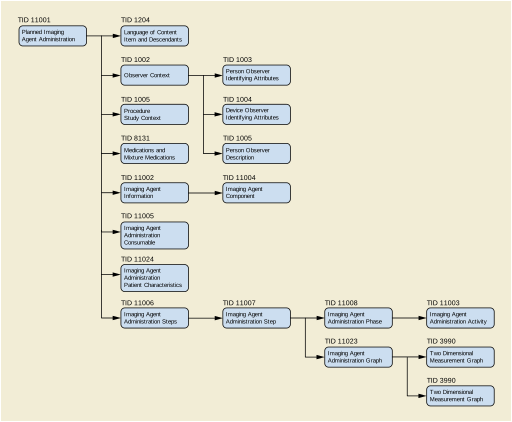
This template describes single administration plan.
This template defines a container (the root) with subsidiary Content Items, each of which corresponds to a single Imaging Agent Administration that is planned.
Note
If a planned SR is a modification of a previous planned SR, it can reference the previous plan using the Predecessor Documents Sequence (0040,A360).
Table TID 11001. Planned Imaging Agent Administration
This template describes an Imaging Agent which may be a single component or a mix of multiple components used in a single administration.
Table TID 11002. Imaging Agent Information
|
IFF root Concept Name Code Sequence (130226, DCM, "Planned Imaging Agent Administration") |
This template describes a single activity as part of the single imaging administration phase. A phase activity is the lowest level of the Imaging Agent delivery model.
Table TID 11003. Imaging Agent Administration Activity
This template describes the Imaging Agent component. The brand and packaging information can be referenced under Section TID 11005 Imaging Agent Administration Consumable.
Table TID 11004. Imaging Agent Component
|
DCID 68 “Imaging Agent Administration Pharmaceutical Presentation Unit” |
||||||||
|
EV (130221, DCM, "Imaging Agent Volume Per Unit of Presentation") |
||||||||
|
IFF root Concept Name Code Sequence = (130226, DCM, "Planned Imaging Agent Administration") |
||||||||
|
IFF root Concept Name Code Sequence = (130227, DCM, "Performed Imaging Agent Administration") |
||||||||
This template describes a material or supply used in the course of an Imaging Agent administration procedure, other than the Imaging Agents themselves and the unit of presentation of the Imaging Agents if pre-filled. This includes such supplies as needles, tubing, cannulas, catheters, empty syringes. This template may describe reusable or disposable materials.
For the planned administration, these are the expected consumables. For the performed administration, this template describes what was actually used.
Table TID 11005. Imaging Agent Administration Consumable
|
EV (130223, DCM, "Imaging Agent Administration Consumable Type") |
||||||||
|
IF value of Row 2 = (19923001, SCT, "Catheter") |
||||||||
|
IF value of Row 2 = (19923001, SCT, "Catheter") If Row 10 = (82449006, SCT, "Peripheral intravenous catheter") |
UNITS = DCID 3510 “Catheter Size Unit” |
|||||||
|
IF value of Row 2 = (19923001, SCT, "Catheter") |
DCID 74 “Imaging Agent Administration Consumable Catheter Type” |
|||||||
|
IFF root Concept Name Code Sequence = (130226, DCM, "Planned Imaging Agent Administration") |
||||||||
|
IFF root Concept Name Code Sequence = (130227, DCM, "Performed Imaging Agent Administration") |
||||||||
|
Quantity of the Imaging Agent consumed or quantity of accessories or other consumables used. |
|
|
When included in TID 11020 “Performed Imaging Agent Administration”, this value indicates whether the consumable was changed (i.e., newly installed) during preparation for this administration. When included in TID 11001 “Planned Imaging Agent Administration”, this value indicates whether the consumable must be changed during preparation for this administration or whether it need not be. |
|
|
The billing codes for material used for Imaging Agent administration procedure. It does not include performance and interpretation of the imaging. |
|
|
The number from the barcode associated with the unit of presentation e.g., the individual blister package. Some examples for type of codes are UPC, EAN, GTIN. Multiple items are permitted for planned Imaging Agent administration since multiple container sizes may be allowed. |
This template provides detailed information on Imaging Agent Administration Steps. It consists of multiple administration steps; a step in turn consists of multiple administration phases.
Table TID 11006. Imaging Agent Administration Steps
This template provides detailed information on an Imaging Agent Administration step. A step is part of a plan. Steps are usually distinguished from other steps because an operator's intervention is required between steps. Steps are also distinguished when they have different routes of administration. A step may consist of multiple phases.
Table TID 11007. Imaging Agent Administration Step
This template provides detailed information on Imaging Agent Administration Phase. A phase is part of the administration step and is not interrupted except under abnormal conditions.
Table TID 11008. Imaging Agent Administration Phase
|
Imaging Agent Administration Phase Identifier is specified as numeric text string, and shall be treated as the ordinal of the recorded administration phase within an administration step (i.e., "1" for the first phase, "2" for the second, etc.). |
|
|
Indicates any occurrence of a manual suspend/resume of administration during the phase as it is understood by the CiA 425 CANopen standard [CiA 425 CANopen]. Exact timing of suspend/resume events can be documented in TID 11022 Imaging Agent Administration Injector Events. |
|
|
There will be one item for each activity that is administering an agent during this phase. The value multiplicity of Row 5 shall be the same between the phases of a multiphase administration and shall not exceed the value of TID 11007 (Imaging Agent Administration Step) Row 15 (EV (130219, DCM, "Number of Injector Heads")), if present. |
|
|
Datetime that the earliest syringe/pump starts administering. |
|
|
Total duration of this phase starting from where the earliest syringe/pump starts administering until the last syringe/pump ends administering. |
|
|
Imaging Agent Administration Injector Phase Identifier is the injector phase identifier presented to the user during administration. There are no definitions/restrictions made for being ordinal numberings, but it may be "1" for the first phase, etc. |
The templates that comprise the Performed Imaging Agent Administration are interconnected as in Figure A-20.
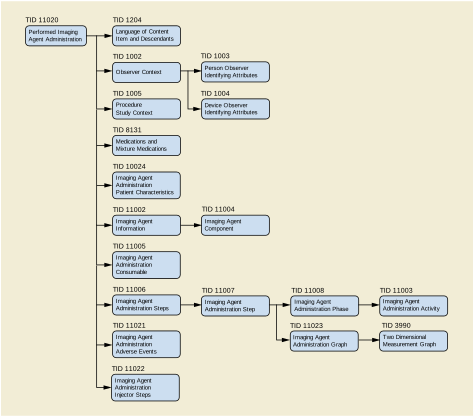
This template defines a container (the root) with subsidiary Content Items, each of which corresponds to a single Imaging Agent Administration delivered. There is a defined recording observer (the system or person responsible for performing the plan).
Note
A performed SR may document a whole planned SR or only a single part of it. A planned SR can be documented by several performed SRs. It is allowed to aggregate several performed SRs of different performing devices on one patient with the same Study Instance UID for a total description of the administration. The aggregated performed SR should reference the previous Performed Imaging Agent Administrations using the Predecessor Documents Sequence (0040,A360). The individual Performed Administrations can be identified by the (130246, DCM, "Imaging Agent Administration Performed Step UID") of TID 11007 “Imaging Agent Administration Step”.
Table TID 11020. Performed Imaging Agent Administration
|
$DrugAdministered = DCID 65 “Imaging Agent Administration Premedication” |
||||||||
|
DTID 10024 “Imaging Agent Administration Patient Characteristics” |
||||||||
|
EV (130236, DCM, "Planned Imaging Agent Administration SOP Instance") |
IFF this administration was based on a Planned Imaging Agent Administration SOP Instance. |
|||||||
|
EV (130211, DCM, "Imaging Agent Administration Completion Status") |
||||||||
|
EV (130165, DCM, "Total Keep Vein Open Volume Administered") |
This template provides information on adverse events occurring to a patient as a result of administration of an Imaging Agent.
Table TID 11021. Imaging Agent Administration Adverse Events
|
Indicates whether the administration is discontinued due to the adverse event. There is no indication of which adverse event if any contributed to the decision to discontinue the administration. |
|
|
Note that presence of this row means the injector was informed about the adverse event by the operating clinician. |
|
|
Date and time when the adverse event was noted by the observer. |
|
|
UID of the performed step (as recorded in Row 3 of TID 11007) in which the adverse event occurred. |
|
|
UID of the performed phase (as recorded in Row 3 of TID 11008) in which the adverse event occurred. |
This template describes events occurring during the administration that are detected by an automated power injector.
Table TID 11022. Imaging Agent Administration Injector Events
|
EV (130233, DCM, "Imaging Agent Administration Injector Events") |
||||||||
|
EV (130234, DCM, "Imaging Agent Administration Injector Event Type") |
||||||||
|
EV (130216, DCM, "Referenced Imaging Agent Administration Step UID") |
||||||||
|
EV (130262, DCM, "Referenced Imaging Agent Administration Phase UID") |
||||||||
|
IFF there is more than one syringe and the syringe/pump can be identified. |
Shall be as defined in (130254, DCM, "Imaging Agent Identifier") Row 2 of TID 11002 “Imaging Agent Information” |
This template describes two-dimensional graph data for a syringe or pump.
Table TID 11023. Imaging Agent Administration Graph
|
Shall be as defined in (130254, DCM, "Imaging Agent Identifier") Row 2 of TID 11002 “Imaging Agent Information”. |
||||||||
|
$MeasurementGraph = EV (130229, DCM, "Flow Rate vs time") $X-Concept = EV (130194, DCM, "Time after the start of injection") $Y-Concept = EV (122094, DCM, "Rate of administration") |
||||||||
|
$MeasurementGraph = EV (130230, DCM, "Pressure vs Time") $X-Concept = EV (130194, DCM, "Time after the start of injection") $Y-Concept = EV (279046003, SCT, "Pressure") |
This is the Template for the root of the Content Tree for a general ultrasound procedure report.
Table TID 12000. General Ultrasound Report
|
$Findings = BCID 6051 “Breast Procedure Reason” $Findings = BCID 12246 “Cardiac Ultrasound Indication for Study” $Findings = BCID 12325 “Liver Ultrasound Study Indication” |
||||||||
This section template incorporates a set of measurements for assessing attenuation coefficients.
Table TID 12002. Ultrasound Attenuation Coefficient Section
This Annex specifies the content of Context Groups required by DICOM IODs.
Note
Section 7.1 of this Part defines the fields of Context Group tables.
- Resources:
-
HTML | FHIR JSON | FHIR XML | IHE SVS XML
- Keyword:
- FHIR Keyword:
- Type:
- Version:
- UID:
- Resources:
-
HTML | FHIR JSON | FHIR XML | IHE SVS XML
- Keyword:
- FHIR Keyword:
- Type:
- Version:
- UID:
- Resources:
-
HTML | FHIR JSON | FHIR XML | IHE SVS XML
- Keyword:
- FHIR Keyword:
- Type:
- Version:
- UID:
Note
In a prior version of this Context Group, the codes G-A11A, G-A11B, G-A12A, G-A16A, G-A16B, G-A16C, and G-A16D were specified for various concepts. The use of some of those codes conflicts with their assignment to other concepts in SNOMED, and their use in this context is deprecated. Although there is minimal possibility of misinterpretation with SOP Instances that may include the deprecated use, receiving applications should be aware of this change; see Annex J.
- Resources:
-
HTML | FHIR JSON | FHIR XML | IHE SVS XML
- Keyword:
- FHIR Keyword:
- Type:
- Version:
- UID:
Note
-
In a prior version of this table, the code G-A11B was specified for the concept Parasagittal. The use of this code conflicts with its assignment to another concept in SNOMED, and its use in this context is deprecated. Although there is minimal possibility of misinterpretation with SOP Instances that may include the deprecated use, receiving applications should be aware of this change; see Annex J.
-
In a prior version of this table, the code G-A13B was specified for the concept of "Off axis", whereas that code actually means "Unilateral left (qualifier value)".
- Resources:
-
HTML | FHIR JSON | FHIR XML | IHE SVS XML
- Keyword:
- FHIR Keyword:
- Type:
- Version:
- UID:
- Resources:
-
HTML | FHIR JSON | FHIR XML | IHE SVS XML
- Keyword:
- FHIR Keyword:
- Type:
- Version:
- UID:
- Resources:
-
HTML | FHIR JSON | FHIR XML | IHE SVS XML
- Keyword:
- FHIR Keyword:
- Type:
- Version:
- UID:
- Resources:
-
HTML | FHIR JSON | FHIR XML | IHE SVS XML
- Keyword:
- FHIR Keyword:
- Type:
- Version:
- UID:
- Resources:
-
HTML | FHIR JSON | FHIR XML | IHE SVS XML
- Keyword:
- FHIR Keyword:
- Type:
- Version:
- UID:
- Resources:
-
HTML | FHIR JSON | FHIR XML | IHE SVS XML
- Keyword:
- FHIR Keyword:
- Type:
- Version:
- UID:
Table CID 12. Imaging Contrast Agent
Note
-
The codes drawn from SNOMED are recommended to be those from the concept hierarchy of "pharmaceutical/biological product", and secondarily from the hierarchy "substance".
-
Trade names are from http://www.accessdata.fda.gov/scripts/cder/drugsatfda/index.cfm.
- Resources:
-
HTML | FHIR JSON | FHIR XML | IHE SVS XML
- Keyword:
- FHIR Keyword:
- Type:
- Version:
- UID:
- Resources:
-
HTML | FHIR JSON | FHIR XML | IHE SVS XML
- Keyword:
- FHIR Keyword:
- Type:
- Version:
- UID:
- Resources:
-
HTML | FHIR JSON | FHIR XML | IHE SVS XML
- Keyword:
- FHIR Keyword:
- Type:
- Version:
- UID:
In a prior version of this Context Group (102537008, SCT, "Upright body position (finding)") was specified for the concept "erect" but has been inactivated as being ambiguous, with no suitable replacement. Accordingly the NCIt concept of "upright" defined as "in a vertical position or posture" is used as a replacement.
- Resources:
-
HTML | FHIR JSON | FHIR XML | IHE SVS XML
- Keyword:
- FHIR Keyword:
- Type:
- Version:
- UID:
- Resources:
-
HTML | FHIR JSON | FHIR XML | IHE SVS XML
- Keyword:
- FHIR Keyword:
- Type:
- Version:
- UID:
Note
-
In a prior version of this Context Group, the codes G-5190 and G-5191 were specified for the concepts "headfirst" and "feet-first". The use of these codes is deprecated as they are not actually in SNOMED. Although there is minimal possibility of misinterpretation with SOP Instances that may include the deprecated use, receiving applications should be aware of this change; see Annex J.
-
For devices that do not have a conventional gantry geometry, the vendor of that device may describe in the Conformance Statement how the codes are interpreted with respect to the device geometry.
-
(126830, DCM, "left first"), (126831, DCM, "right first), (126832, DCM, "posterior first) and (126833, DCM, "anterior first) are more specific than (399220000, SCT, "transverse") in that they specify which side of the patient is towards the front of the equipment.
-
For quadrupeds, separate concepts for ventral and dorsal are not introduced, rather it is expected that anterior and posterior will be considered synonymous as they are when applied to the trunk.
- Resources:
-
HTML | FHIR JSON | FHIR XML | IHE SVS XML
- Keyword:
- FHIR Keyword:
- Type:
- Version:
- UID:
- Resources:
-
HTML | FHIR JSON | FHIR XML | IHE SVS XML
- Keyword:
- FHIR Keyword:
- Type:
- Version:
- UID:
Table CID 25. Radiopharmaceutical
- Resources:
-
HTML | FHIR JSON | FHIR XML | IHE SVS XML
- Keyword:
- FHIR Keyword:
- Type:
- Version:
- UID:
Note
-
In a prior version of this table, the code G-A117 was specified for the concept Transaxial, and R-11300 was specified for the concept Transverse. Since these concepts are synonymous in nuclear projections, and since SNOMED assigns G-A117 to the concept Transverse, the use of R-11300 is deprecated. Although there is minimal possibility of misinterpretation with SOP Instances that may include the deprecated use, receiving applications should be aware of this change; see Annex J.
-
The following Code Values were formerly included in CID 26 “Nuclear Medicine Projection” and are retired:
- Resources:
-
HTML | FHIR JSON | FHIR XML | IHE SVS XML
- Keyword:
- FHIR Keyword:
- Type:
- Version:
- UID:
This Context Group includes codes that may be used to identify the type of diagnostic equipment, or function or technique of that equipment, that originally acquired, through interaction with a patient or specimen, the data used to create the instance. These codes are used in Modality (0008,0060) of a Modality Worklist Scheduled Procedure Step or a Composite SOP Instance (see PS3.3). It generally corresponds to a class of diagnostic equipment, or to a specific acquisition function or technique in a device. This Context Group may be used as the value set for HL7 v2 Table 0259 (see HL7 v2.6 Chapter 8 Section 8.8.8.47).
Note
This Context Group is not the complete set of codes that may appear in Modality (0008,0060); these are only the codes associated with orderable acquisition processes (not pre-acquisition activities or post-processing).
- Resources:
-
HTML | FHIR JSON | FHIR XML | IHE SVS XML
- Keyword:
- FHIR Keyword:
- Type:
- Version:
- UID:
This Context Group includes codes that may be used to identify a class of equipment that uses DICOM.
- Resources:
-
HTML | FHIR JSON | FHIR XML | IHE SVS XML
- Keyword:
- FHIR Keyword:
- Type:
- Version:
- UID:
This Context Group includes codes that may be used to identify imaging procedures that may be referred to as priors for the purpose of image set selection in Hanging Protocols.
- Resources:
-
HTML | FHIR JSON | FHIR XML | IHE SVS XML
- Keyword:
- FHIR Keyword:
- Type:
- Version:
- UID:
This Context Group includes codes that may be used to identify the type of equipment, or function or technique of that equipment, that created the data used to create an instance, other than by means of acquisition through interaction with a patient or specimen.
Note
Many Composite SOP Instances with Modality (0008,0060) Values corresponding to Code Values from this Context Group are the result of post-processing, and are not directly associated with an orderable acquisition process.
- Resources:
-
HTML | FHIR JSON | FHIR XML | IHE SVS XML
- Keyword:
- FHIR Keyword:
- Type:
- Version:
- UID:
This Context Group includes codes that may be used to identify the type of equipment, or function or technique of that equipment, that created the data used to create an instance.
Note
This Context Group contains the complete set of defined codes that correspond to Values that may appear in Modality (0008,0060).
- Resources:
-
HTML | FHIR JSON | FHIR XML | IHE SVS XML
- Keyword:
- FHIR Keyword:
- Type:
- Version:
- UID:
- Resources:
-
HTML | FHIR JSON | FHIR XML | IHE SVS XML
- Keyword:
- FHIR Keyword:
- Type:
- Version:
- UID:
- Resources:
-
HTML | FHIR JSON | FHIR XML | IHE SVS XML
- Keyword:
- FHIR Keyword:
- Type:
- Version:
- UID:
- Resources:
-
HTML | FHIR JSON | FHIR XML | IHE SVS XML
- Keyword:
- FHIR Keyword:
- Type:
- Version:
- UID:
- Resources:
-
HTML | FHIR JSON | FHIR XML | IHE SVS XML
- Keyword:
- FHIR Keyword:
- Type:
- Version:
- UID:
- Resources:
-
HTML | FHIR JSON | FHIR XML | IHE SVS XML
- Keyword:
- FHIR Keyword:
- Type:
- Version:
- UID:
This Context Group includes contrast reactions listed in the ACR Manual of Contrast Media.
- Resources:
-
HTML | FHIR JSON | FHIR XML | IHE SVS XML
- Keyword:
- FHIR Keyword:
- Type:
- Version:
- UID:
This Context Group was a duplicate of CID 12102 “Temporal Period Relating to Procedure or Therapy”, and is retired. See PS3.16-2024b.
- Resources:
-
HTML | FHIR JSON | FHIR XML | IHE SVS XML
- Keyword:
- FHIR Keyword:
- Type:
- Version:
- UID:
Note
In a prior version of this Context Group a code (130170, DCM, "Automatic with Manual Hold Phase") was specified. See PS3.16 2020a. This concept has been inactivated as being ambiguous. According to the CiA 425 CANopen Standard [CiA 425 CANopen] the new concept (130263, DCM, "Automatic Programmed Wait Phase") is introduced. With the exception of (130171, DCM, "Automated Manual Injection Phase"), which is dedicated to cardiac injections, CID 62 codes comply with the CANopen definitions given in section 4.4 of the CANopen standard [CiA 425 CANopen].
- Resources:
-
HTML | FHIR JSON | FHIR XML | IHE SVS XML
- Keyword:
- FHIR Keyword:
- Type:
- Version:
- UID:
- Resources:
-
HTML | FHIR JSON | FHIR XML | IHE SVS XML
- Keyword:
- FHIR Keyword:
- Type:
- Version:
- UID:
The following list of pre-medication agents was obtained from the ACR Manual of Contrast Media.
- Resources:
-
HTML | FHIR JSON | FHIR XML | IHE SVS XML
- Keyword:
- FHIR Keyword:
- Type:
- Version:
- UID:
- Resources:
-
HTML | FHIR JSON | FHIR XML | IHE SVS XML
- Keyword:
- FHIR Keyword:
- Type:
- Version:
- UID:
- Resources:
-
HTML | FHIR JSON | FHIR XML | IHE SVS XML
- Keyword:
- FHIR Keyword:
- Type:
- Version:
- UID:
- Resources:
-
HTML | FHIR JSON | FHIR XML | IHE SVS XML
- Keyword:
- FHIR Keyword:
-
dicom-cid-68-ImagingAgentAdministrationPharmaceuticalPresentationUnit
- Type:
- Version:
- UID:
Note
The concept for syringe (unit of presentation) is used in this Context Group as distinct from syringe (physical object), which is used in CID 69. This is intended for pre-filled syringes.
- Resources:
-
HTML | FHIR JSON | FHIR XML | IHE SVS XML
- Keyword:
- FHIR Keyword:
- Type:
- Version:
- UID:
Note
The concept for syringe (physical object) is used in this Context Group as distinct from syringe (unit of presentation), which is used in CID 68. The concept for bottle is used in the context of consumable used during an oral administration of contrast.
- Resources:
-
HTML | FHIR JSON | FHIR XML | IHE SVS XML
- Keyword:
- FHIR Keyword:
- Type:
- Version:
- UID:
- Resources:
-
HTML | FHIR JSON | FHIR XML | IHE SVS XML
- Keyword:
- FHIR Keyword:
- Type:
- Version:
- UID:
- Resources:
-
HTML | FHIR JSON | FHIR XML | IHE SVS XML
- Keyword:
- FHIR Keyword:
- Type:
- Version:
- UID:
- Resources:
-
HTML | FHIR JSON | FHIR XML | IHE SVS XML
- Keyword:
- FHIR Keyword:
- Type:
- Version:
- UID:
- Resources:
-
HTML | FHIR JSON | FHIR XML | IHE SVS XML
- Keyword:
- FHIR Keyword:
-
dicom-cid-74-ImagingAgentAdministrationConsumableCatheterType
- Type:
- Version:
- UID:
- Resources:
-
HTML | FHIR JSON | FHIR XML | IHE SVS XML
- Keyword:
- FHIR Keyword:
- Type:
- Version:
- UID:
- Resources:
-
HTML | FHIR JSON | FHIR XML | IHE SVS XML
- Keyword:
- FHIR Keyword:
- Type:
- Version:
- UID:
Context Group ID 82 comprises the case-sensitive codes of UCUM. See Section 7.2.2.
- Resources:
-
HTML | FHIR JSON | FHIR XML | IHE SVS XML
- Keyword:
- FHIR Keyword:
- Type:
- Version:
- UID:
- Resources:
-
HTML | FHIR JSON | FHIR XML | IHE SVS XML
- Keyword:
- FHIR Keyword:
- Type:
- Version:
- UID:
- Resources:
-
HTML | FHIR JSON | FHIR XML | IHE SVS XML
- Keyword:
- FHIR Keyword:
- Type:
- Version:
- UID:
Note
The formulas for the determination of SUVbw, SUVbsa, SUVlbm (James) and SUVibw are defined in Sugawara et al. Reevaluation of the Standardized Uptake Value for FDG: Variations with Body Weight and Methods for Correction.Radiology, 1999 at http://radiology.rsna.org/content/213/2/521.
Unfortunately, Sugawara used a parameter of 120 rather than 128 for males, propagating an error in Morgan DJ, Bray KM. Lean Body Mass as a Predictor of Drug Dosage: Implications for Drug Therapy. Clinical Pharmacokinetics. 1994;26(4):292-307, which misquoted the original LBM definition that used 128 in James WPT, Waterlow JC. Research on Obesity: A Report of the DHSS/MRC Group. London: Her Majesty’s Stationery Office; 1976. Implementations differ in whether they have used 120 or 128 for ({SUVlbm}g/ml{SUVlbm}, UCUM, "Standardized Uptake Value lean body mass (James)"). See Kelly M. SUV: Advancing Comparability and Accuracy. Siemens; 2009. Available from: http://www.mpcphysics.com/documents/SUV_Whitepaper_Final_11.17.09_59807428_2.pdf.
The Janmahasatian LBM formula is defined in Janmahasatian et al. Quantification of Lean Bodyweight. Clin Pharmacokinet. 2005 Oct 1;44(10):1051-65. at http://dx.doi.org/10.2165/00003088-200544100-00004 and its role in SUVlbm(Janma) calculation is discussed in Tahari et al. Optimum Lean Body Formulation for Correction of Standardized Uptake Value in PET Imaging. Journal of Nuclear Medicine. 2014 Sep 1;55(9):1481-4. at http://jnm.snmjournals.org/content/55/9/1481. The patient size correction factors are summarized here, where weight is in kg and height is in cm:
SUVbw: males & females: weight
SUVlbm (James): males : 1.10 * weight - 120 * (weight/height) ^2
SUVlbm (James): females: 1.07 * weight - 148 * (weight/height) ^2
SUVlbm(Janma): males: 9.27E3 * weight / (6.68E3 + 216 * weight / (height^2))
SUVlbm(Janma): females: 9.27E3 * weight / (8.78E3 + 244 * weight / (height^2))
SUVbsa: males & females: weight^ 0.425 * height^0.725 * 0.007184
- Resources:
-
HTML | FHIR JSON | FHIR XML | IHE SVS XML
- Keyword:
- FHIR Keyword:
- Type:
- Version:
- UID:
- Resources:
-
HTML | FHIR JSON | FHIR XML | IHE SVS XML
- Keyword:
- FHIR Keyword:
- Type:
- Version:
- UID:
- Resources:
-
HTML | FHIR JSON | FHIR XML | IHE SVS XML
- Keyword:
- FHIR Keyword:
- Type:
- Version:
- UID:
- Resources:
-
HTML | FHIR JSON | FHIR XML | IHE SVS XML
- Keyword:
- FHIR Keyword:
- Type:
- Version:
- UID:
- Resources:
-
HTML | FHIR JSON | FHIR XML | IHE SVS XML
- Keyword:
- FHIR Keyword:
- Type:
- Version:
- UID:
Table CID 101. Imaging Procedure
Context Group ID 102 comprises the codes of the LOINC-RSNA Radiology Playbook.
Coding Scheme Designator is specified as "LN".
Note
-
Equivalent to the LOINC Value Set "LOINC/RSNA Playbook" 1.3.6.1.4.1.12009.10.2.5.1.
-
The LOINC-RSNA Radiology Playbook is available at http://loinc.org/download/loincrsna-radiology-playbook-file/ , or in FHIR ValueSet format through the LOINC FHIR server at http://fhir.loinc.org/ValueSet/loinc-rsna-radiology-playbook/ .
-
Users may prefer to use the LOINC-RSNA Radiology Playbook Core subset, which may be a more tractable starting point for use of the LOINC/RSNA Radiology Playbook terms. The Core value set UID is 1.3.6.1.4.1.12009.10.2.5.1.1. It is available in FHIR ValueSet format through the LOINC FHIR server at http://fhir.loinc.org/ValueSet/loinc-rsna-radiology-playbook-core/ .
Context Group ID 103 comprises the Short Codes of the UK National Health Service National Interim Codes for Imaging Procedures.
Context Group ID 104 comprises the SNOMED CT Concept-ID codes of the UK National Health Service National Interim Codes for Imaging Procedures.
Coding Scheme Designator is specified as "SCT".
Note
The NICIP SNOMED Subset of Imaging Procedures is not included in the licensing agreement described in Section 2.19 between NEMA and SNOMED International that allows the use within DICOM conformant applications without further license or payment of fee.
Context Group ID 106 comprises the ICD-10-PCS Nuclear Medicine section codes (codes beginning with "C").
Context Group ID 107 comprises the ICD-10-PCS Radiation Therapy section codes (codes beginning with "D").
- Resources:
-
HTML | FHIR JSON | FHIR XML | IHE SVS XML
- Keyword:
- FHIR Keyword:
- Type:
- Version:
- UID:
- Resources:
-
HTML | FHIR JSON | FHIR XML | IHE SVS XML
- Keyword:
- FHIR Keyword:
- Type:
- Version:
- UID:
- Resources:
-
HTML | FHIR JSON | FHIR XML | IHE SVS XML
- Keyword:
- FHIR Keyword:
- Type:
- Version:
- UID:
- Resources:
-
HTML | FHIR JSON | FHIR XML | IHE SVS XML
- Keyword:
- FHIR Keyword:
- Type:
- Version:
- UID:
- Resources:
-
HTML | FHIR JSON | FHIR XML | IHE SVS XML
- Keyword:
- FHIR Keyword:
- Type:
- Version:
- UID:
- Resources:
-
HTML | FHIR JSON | FHIR XML | IHE SVS XML
- Keyword:
- FHIR Keyword:
- Type:
- Version:
- UID:
- Resources:
-
HTML | FHIR JSON | FHIR XML | IHE SVS XML
- Keyword:
- FHIR Keyword:
- Type:
- Version:
- UID:
Table CID 218. Quantitative Image Feature
|
Include CID 7468 “Texture Measurement” |
||
|
Include CID 7550 “Angle Measurement” |
||
- Resources:
-
HTML | FHIR JSON | FHIR XML | IHE SVS XML
- Keyword:
- FHIR Keyword:
- Type:
- Version:
- UID:
- Resources:
-
HTML | FHIR JSON | FHIR XML | IHE SVS XML
- Keyword:
- FHIR Keyword:
- Type:
- Version:
- UID:
- Resources:
-
HTML | FHIR JSON | FHIR XML | IHE SVS XML
- Keyword:
- FHIR Keyword:
- Type:
- Version:
- UID:
- Resources:
-
HTML | FHIR JSON | FHIR XML | IHE SVS XML
- Keyword:
- FHIR Keyword:
- Type:
- Version:
- UID:
- Resources:
-
HTML | FHIR JSON | FHIR XML | IHE SVS XML
- Keyword:
- FHIR Keyword:
- Type:
- Version:
- UID:
- Resources:
-
HTML | FHIR JSON | FHIR XML | IHE SVS XML
- Keyword:
- FHIR Keyword:
- Type:
- Version:
- UID:
- Resources:
-
HTML | FHIR JSON | FHIR XML | IHE SVS XML
- Keyword:
- FHIR Keyword:
- Type:
- Version:
- UID:
- Resources:
-
HTML | FHIR JSON | FHIR XML | IHE SVS XML
- Keyword:
- FHIR Keyword:
- Type:
- Version:
- UID:
- Resources:
-
HTML | FHIR JSON | FHIR XML | IHE SVS XML
- Keyword:
- FHIR Keyword:
- Type:
- Version:
- UID:
- Resources:
-
HTML | FHIR JSON | FHIR XML | IHE SVS XML
- Keyword:
- FHIR Keyword:
- Type:
- Version:
- UID:
- Resources:
-
HTML | FHIR JSON | FHIR XML | IHE SVS XML
- Keyword:
- FHIR Keyword:
- Type:
- Version:
- UID:
- Resources:
-
HTML | FHIR JSON | FHIR XML | IHE SVS XML
- Keyword:
- FHIR Keyword:
- Type:
- Version:
- UID:
Note
This Context Group is intended for use rather than CID 230 "Yes-No" when the value (373068000, SCT, "Undetermined") is not permissible.
- Resources:
-
HTML | FHIR JSON | FHIR XML | IHE SVS XML
- Keyword:
- FHIR Keyword:
- Type:
- Version:
- UID:
Note
In a previous version of this Context Group (260245000, SCT, "Findings values") was used incorrectly to mean "Presence Undetermined"; there is no SNOMED CT concept that specifically means that the "presence" (of a finding) is undetermined, so the more general "undetermined" concept is used.
- Resources:
-
HTML | FHIR JSON | FHIR XML | IHE SVS XML
- Keyword:
- FHIR Keyword:
- Type:
- Version:
- UID:
Note
This Context Group is intended for use rather than CID 240 "Normal-Abnormal" when the value (373068000, SCT, "Undetermined") is not permissible.
This Context Group is a subset of CID 222 “Normality”.
- Resources:
-
HTML | FHIR JSON | FHIR XML | IHE SVS XML
- Type:
- Keyword:
- FHIR Keyword:
- Version:
- UID:
- Resources:
-
HTML | FHIR JSON | FHIR XML | IHE SVS XML
- Keyword:
- FHIR Keyword:
- Type:
- Version:
- UID:
- Resources:
-
HTML | FHIR JSON | FHIR XML | IHE SVS XML
- Keyword:
- FHIR Keyword:
- Type:
- Version:
- UID:
- Resources:
-
HTML | FHIR JSON | FHIR XML | IHE SVS XML
- Keyword:
- FHIR Keyword:
- Type:
- Version:
- UID:
- Resources:
-
HTML | FHIR JSON | FHIR XML | IHE SVS XML
- Keyword:
- FHIR Keyword:
- Type:
- Version:
- UID:
- Resources:
-
HTML | FHIR JSON | FHIR XML | IHE SVS XML
- Keyword:
- FHIR Keyword:
- Type:
- Version:
- UID:
- Resources:
-
HTML | FHIR JSON | FHIR XML | IHE SVS XML
- Keyword:
- FHIR Keyword:
- Type:
- Version:
- UID:
CID 6118 “Size Descriptor” is a superset of this Context Group.
- Resources:
-
HTML | FHIR JSON | FHIR XML | IHE SVS XML
- Keyword:
- FHIR Keyword:
- Type:
- Version:
- UID:
- Resources:
-
HTML | FHIR JSON | FHIR XML | IHE SVS XML
- Keyword:
- FHIR Keyword:
- Type:
- Version:
- UID:
- Resources:
-
HTML | FHIR JSON | FHIR XML | IHE SVS XML
- Keyword:
- FHIR Keyword:
- Type:
- Version:
- UID:
- Resources:
-
HTML | FHIR JSON | FHIR XML | IHE SVS XML
- Keyword:
- FHIR Keyword:
- Type:
- Version:
- UID:
- Resources:
-
HTML | FHIR JSON | FHIR XML | IHE SVS XML
- Keyword:
- FHIR Keyword:
- Type:
- Version:
- UID:
- Resources:
-
HTML | FHIR JSON | FHIR XML | IHE SVS XML
- Keyword:
- FHIR Keyword:
- Type:
- Version:
- UID:
Concepts for materials relevant to Multi-energy Imaging.
- Resources:
-
HTML | FHIR JSON | FHIR XML | IHE SVS XML
- Keyword:
- FHIR Keyword:
- Type:
- Version:
- UID:
- Resources:
-
HTML | FHIR JSON | FHIR XML | IHE SVS XML
- Keyword:
- FHIR Keyword:
- Type:
- Version:
- UID:
- Resources:
-
HTML | FHIR JSON | FHIR XML | IHE SVS XML
- Keyword:
- FHIR Keyword:
- Type:
- Version:
- UID:
- Resources:
-
HTML | FHIR JSON | FHIR XML | IHE SVS XML
- Keyword:
- FHIR Keyword:
- Type:
- Version:
- UID:
- Resources:
-
HTML | FHIR JSON | FHIR XML | IHE SVS XML
- Keyword:
- FHIR Keyword:
- Type:
- Version:
- UID:
- Resources:
-
HTML | FHIR JSON | FHIR XML | IHE SVS XML
- Keyword:
- FHIR Keyword:
- Type:
- Version:
- UID:
- Resources:
-
HTML | FHIR JSON | FHIR XML | IHE SVS XML
- Keyword:
- FHIR Keyword:
- Type:
- Version:
- UID:
- Resources:
-
HTML | FHIR JSON | FHIR XML | IHE SVS XML
- Keyword:
- FHIR Keyword:
- Type:
- Version:
- UID:
- Resources:
-
HTML | FHIR JSON | FHIR XML | IHE SVS XML
- Keyword:
- FHIR Keyword:
- Type:
- Version:
- UID:
- Resources:
-
HTML | FHIR JSON | FHIR XML | IHE SVS XML
- Keyword:
- FHIR Keyword:
- Type:
- Version:
- UID:
Table CID 501. Volumetric View Description
|
Include CID 6 “Transducer Orientation” |
||||
|
Include CID 4010 “DX View” |
||||
- Resources:
-
HTML | FHIR JSON | FHIR XML | IHE SVS XML
- Keyword:
- FHIR Keyword:
- Type:
- Version:
- UID:
Table CID 502. Volumetric View Modifier
|
Include CID 6 “Transducer Orientation” |
||||
|
Include CID 4011 “DX View Modifier” |
||||
- Resources:
-
HTML | FHIR JSON | FHIR XML | IHE SVS XML
- Keyword:
- FHIR Keyword:
- Type:
- Version:
- UID:
- Resources:
-
HTML | FHIR JSON | FHIR XML | IHE SVS XML
- Keyword:
- FHIR Keyword:
- Type:
- Version:
- UID:
- Resources:
-
HTML | FHIR JSON | FHIR XML | IHE SVS XML
- Keyword:
- FHIR Keyword:
- Type:
- Version:
- UID:
Note
-
Only rooms appropriate for animals in the context of in vivo imaging are described (e.g., not necropsy rooms, etc.)
-
(398161000, SCT, "Recovery room" (synonym of "postoperative anesthesia care unit") is reused here even though its parent is "Location within hospital premises (environment)", which is arguably specifically human. The same is true for (414485004, SCT, "Induction room") and (409688003, SCT, "Isolation room").
- Resources:
-
HTML | FHIR JSON | FHIR XML | IHE SVS XML
- Keyword:
- FHIR Keyword:
- Type:
- Version:
- UID:
- Resources:
-
HTML | FHIR JSON | FHIR XML | IHE SVS XML
- Keyword:
- FHIR Keyword:
- Type:
- Version:
- UID:
- Resources:
-
HTML | FHIR JSON | FHIR XML | IHE SVS XML
- Keyword:
- FHIR Keyword:
- Type:
- Version:
- UID:
- Resources:
-
HTML | FHIR JSON | FHIR XML | IHE SVS XML
- Keyword:
- FHIR Keyword:
- Type:
- Version:
- UID:
Note
This Context Group includes the open source diets described in Barnard DE et al. Open- and Closed-Formula Laboratory Animal Diets and Their Importance to Research. Journal of the American Association for Laboratory Animal Science : JAALAS (2009), 48(6), 709-713. http://www.ncbi.nlm.nih.gov/pmc/articles/PMC2786923/.
A more extensive list of NIH-specified diets for small animals (not just mice and rats) can be found at http://web.archive.org/web/20100527090853/http://dvrnet.ors.od.nih.gov/diets_info.asp.
- Resources:
-
HTML | FHIR JSON | FHIR XML | IHE SVS XML
- Keyword:
- FHIR Keyword:
- Type:
- Version:
- UID:
Note
(C1547887, UMLS, "Commercial product") originates from the HL7 V2.5 Chapter 04 blood products description as an attribute name rather than a value, but in UMLS is not expressly constrained and has as a parent generic semantic type of "Manufactured Object".
- Resources:
-
HTML | FHIR JSON | FHIR XML | IHE SVS XML
- Keyword:
- FHIR Keyword:
- Type:
- Version:
- UID:
Note
(C0425422, UMLS, "Restricted diet") corresponds to the inactive SNOMED concept of "Dietary restriction NOS"; SNOMED currently does not seem to have an active generic concept of a restricted diet, as opposed to many specific types of restricted diet. In this context, the intent is to convey that the diet is controlled and restricted to finite quantities (e.g., as opposed to ad libitum) without requiring a detailed classification of what components are restricted.
- Resources:
-
HTML | FHIR JSON | FHIR XML | IHE SVS XML
- Keyword:
- FHIR Keyword:
- Type:
- Version:
- UID:
- Resources:
-
HTML | FHIR JSON | FHIR XML | IHE SVS XML
- Keyword:
- FHIR Keyword:
-
dicom-cid-611-AnesthesiaCategoryCodeTypeForSmallAnimalAnesthesia
- Type:
- Version:
- UID:
Table CID 611. Anesthesia Category Code Type for Small Animal Anesthesia
- Resources:
-
HTML | FHIR JSON | FHIR XML | IHE SVS XML
- Keyword:
- FHIR Keyword:
-
dicom-cid-612-AnesthesiaCategoryCodeTypeFromAnesthesiaQualityInitiative
- Type:
- Version:
- UID:
Note
This Context Group contains SNOMED procedure code equivalents of enumerated string concepts for the [AQI Schema] element AnesthesiaCategoryCodeType. See http://www.aqihq.org/qcdrDataSample/prodFiles/2018%20Files/AQISchDoc/AnesthesiaCategoryCodeType.html.
- Resources:
-
HTML | FHIR JSON | FHIR XML | IHE SVS XML
- Keyword:
- FHIR Keyword:
-
dicom-cid-613-AnesthesiaInductionCodeTypeForSmallAnimalAnesthesia
- Type:
- Version:
- UID:
Table CID 613. Anesthesia Induction Code Type for Small Animal Anesthesia
- Resources:
-
HTML | FHIR JSON | FHIR XML | IHE SVS XML
- Keyword:
- FHIR Keyword:
-
dicom-cid-614-AnesthesiaInductionCodeTypeFromAnesthesiaQualityInitiative
- Type:
- Version:
- UID:
Note
This Context Group contains SNOMED administration route code equivalents of enumerated string concepts for the [AQI Schema] element AnesthesiaInductionCodeType. See http://www.aqihq.org/qcdrDataSample/prodFiles/2018%20Files/AQISchDoc/AnesthesiaInductionCodeType.html.
- Resources:
-
HTML | FHIR JSON | FHIR XML | IHE SVS XML
- Keyword:
- FHIR Keyword:
-
dicom-cid-615-AnesthesiaMaintenanceCodeTypeForSmallAnimalAnesthesia
- Type:
- Version:
- UID:
Table CID 615. Anesthesia Maintenance Code Type for Small Animal Anesthesia
- Resources:
-
HTML | FHIR JSON | FHIR XML | IHE SVS XML
- Keyword:
-
AnesthesiaMaintenanceCodeTypeFromAnesthesiaQualityInitiative
- FHIR Keyword:
-
dicom-cid-616-AnesthesiaMaintenanceCodeTypeFromAnesthesiaQualityInitiative
- Type:
- Version:
- UID:
Note
This Context Group contains SNOMED procedure code equivalents of enumerated string concepts for the [AQI Schema] element AnesthesiaMaintenanceCodeType. See http://www.aqihq.org/qcdrDataSample/prodFiles/2018%20Files/AQISchDoc/AnesthesiaMaintenanceCodeType.html.
The AQI value "circle system" corresponds to (112987001, SCT, "Inhalation anesthesia system closed rebreathing primary agent"). The SNOMED code meaning has been abbreviated to fit within the allowed DICOM Value Representation.
The AQI value "non-rebreathing" corresponds to (44812007, SCT, "Inhalation anesthesia system closed no rebreathing primary agent"). The SNOMED code meaning has been abbreviated to fit within the allowed DICOM Value Representation.
- Resources:
-
HTML | FHIR JSON | FHIR XML | IHE SVS XML
- Keyword:
- FHIR Keyword:
-
dicom-cid-617-AirwayManagementMethodCodeTypeForSmallAnimalAnesthesia
- Type:
- Version:
- UID:
Table CID 617. Airway Management Method Code Type for Small Animal Anesthesia
- Resources:
-
HTML | FHIR JSON | FHIR XML | IHE SVS XML
- Keyword:
-
AirwayManagementMethodCodeTypeFromAnesthesiaQualityInitiative
- FHIR Keyword:
-
dicom-cid-618-AirwayManagementMethodCodeTypeFromAnesthesiaQualityInitiative
- Type:
- Version:
- UID:
Note
This Context Group contains SNOMED procedure or physical object or qualifier value code equivalents of enumerated string concepts for the [AQI Schema] element AirwayManagementMethodCodeType. See http://www.aqihq.org/qcdrDataSample/prodFiles/2018%20Files/AQISchDoc/AirwayManagementMethodCodeType.html. Used by permission of the Anesthesia Quality Institute (AQI) (http://aqihq.org/).
- Resources:
-
HTML | FHIR JSON | FHIR XML | IHE SVS XML
- Keyword:
- FHIR Keyword:
-
dicom-cid-619-AirwayManagementSubMethodCodeTypeForSmallAnimalAnesthesia
- Type:
- Version:
- UID:
Table CID 619. Airway Management Sub-Method Code Type for Small Animal Anesthesia
- Resources:
-
HTML | FHIR JSON | FHIR XML | IHE SVS XML
- Keyword:
-
AirwayManagementSubMethodCodeTypeFromAnesthesiaQualityInitiative
- FHIR Keyword:
-
dicom-cid-620-AirwayManagementSubMethodCodeTypeFromAnesthesiaQualityInitiative
- Type:
- Version:
- UID:
Note
This Context Group contains SNOMED procedure code equivalents of enumerated string concepts for the [AQI Schema] element AirwayManagementSubMethodCodeType. See http://www.aqihq.org/qcdrDataSample/prodFiles/2018%20Files/AQISchDoc/AirwayManagementSubMethodCodeType.html.
- Resources:
-
HTML | FHIR JSON | FHIR XML | IHE SVS XML
- Keyword:
- FHIR Keyword:
- Type:
- Version:
- UID:
Table CID 621. Medication Type for Small Animal Anesthesia
- Resources:
-
HTML | FHIR JSON | FHIR XML | IHE SVS XML
- Keyword:
- FHIR Keyword:
-
dicom-cid-622-MedicationTypeCodeTypeFromAnesthesiaQualityInitiative
- Type:
- Version:
- UID:
Note
This Context Group contains SNOMED substance or product code equivalents of enumerated string concepts for the [AQI Schema] element MedicationTypeCodeType. See http://www.aqihq.org/qcdrDataSample/prodFiles/2018%20Files/AQISchDoc/MedicationTypeCodeType.html and http://www.aqihq.org/qcdrDataSample/prodFiles/2018%20Files/AQISchDoc/MedicationTypeCodeTypeExampleList.html.
The AQI value "ABX-Miscellaneous" corresponds to (419241000, SCT, "Antibiotic").
No equivalent concepts are included for MedicationTypeCodeType values of NonFormulary antibiotic, Dye, Indigo Carmine Red, and Non-Formulary.
- Resources:
-
HTML | FHIR JSON | FHIR XML | IHE SVS XML
- Keyword:
- FHIR Keyword:
- Type:
- Version:
- UID:
Table CID 623. Medication for Small Animal Anesthesia
- Resources:
-
HTML | FHIR JSON | FHIR XML | IHE SVS XML
- Keyword:
- FHIR Keyword:
-
dicom-cid-624-InhalationalAnesthesiaAgentForSmallAnimalAnesthesia
- Type:
- Version:
- UID:
Note
In this Context Group, SNOMED substance codes are used in preference to product codes, since there is no need to refer to specific products or preparations. SNOMED codes are used in preference to other potential sources of pharmaceutical related codes, such as from the National Drug Code (NDC) directory.
- Resources:
-
HTML | FHIR JSON | FHIR XML | IHE SVS XML
- Keyword:
- FHIR Keyword:
-
dicom-cid-625-InjectableAnesthesiaAgentForSmallAnimalAnesthesia
- Type:
- Version:
- UID:
Note
In this Context Group, SNOMED substance codes are used in preference to product codes, since there is no need to refer to specific products or preparations. SNOMED codes are used in preference to other potential sources of pharmaceutical related codes, such as from the National Drug Code (NDC) directory.
- Resources:
-
HTML | FHIR JSON | FHIR XML | IHE SVS XML
- Keyword:
- FHIR Keyword:
- Type:
- Version:
- UID:
- Resources:
-
HTML | FHIR JSON | FHIR XML | IHE SVS XML
- Keyword:
- FHIR Keyword:
-
dicom-cid-627-NeuromuscularBlockingAgentForSmallAnimalAnesthesia
- Type:
- Version:
- UID:
Note
In this Context Group, SNOMED substance codes are used in preference to product codes, since there is no need to refer to specific products or preparations. SNOMED codes are used in preference to other potential sources of pharmaceutical related codes, such as from the National Drug Code (NDC) directory.
- Resources:
-
HTML | FHIR JSON | FHIR XML | IHE SVS XML
- Keyword:
- FHIR Keyword:
- Type:
- Version:
- UID:
- Resources:
-
HTML | FHIR JSON | FHIR XML | IHE SVS XML
- Keyword:
- FHIR Keyword:
- Type:
- Version:
- UID:
Note
In this Context Group, though SNOMED substance codes are normally used in preference to product codes, in the case of (320917000, SCT, "Oxygen gas") there is no corresponding substance that is specifically the gaseous form of oxygen.
- Resources:
-
HTML | FHIR JSON | FHIR XML | IHE SVS XML
- Keyword:
- FHIR Keyword:
- Type:
- Version:
- UID:
Note
-
In this Context Group, SNOMED substance codes are used in preference to product codes, since there is no need to refer to specific products or preparations. SNOMED codes are used in preference to other potential sources of pharmaceutical related codes, such as from the National Drug Code (NDC) directory.
-
For Lidocaine + Prilocaine, since it is a mixture of two substances, the code for the product concept is used. The code for a mixture of unspecified type is used, rather than a more specific code, e.g., for the so-called "Eutectic Mixture of Local Anesthetics (EMLA)", which consists of Lidocaine + Prilocaine. UMLS contains three distinct concepts, (C0059079, UMLS, "EMLA"), (C0617623, UMLS, "Lidocaine/Prilocaine") and (C0950567, UMLS, "Eutectic Lidocaine-Prilocaine").
- Resources:
-
HTML | FHIR JSON | FHIR XML | IHE SVS XML
- Keyword:
- FHIR Keyword:
- Type:
- Version:
- UID:
Table CID 631. Procedure Phase Requiring Anesthesia
- Resources:
-
HTML | FHIR JSON | FHIR XML | IHE SVS XML
- Keyword:
- FHIR Keyword:
- Type:
- Version:
- UID:
This Context Group was a duplicate of CID 12102 “Temporal Period Relating to Procedure or Therapy”, and is retired. See PS3.16-2024b.
- Resources:
-
HTML | FHIR JSON | FHIR XML | IHE SVS XML
- Keyword:
- FHIR Keyword:
- Type:
- Version:
- UID:
- Resources:
-
HTML | FHIR JSON | FHIR XML | IHE SVS XML
- Keyword:
- FHIR Keyword:
- Type:
- Version:
- UID:
- Resources:
-
HTML | FHIR JSON | FHIR XML | IHE SVS XML
- Keyword:
- FHIR Keyword:
-
dicom-cid-636-TemperatureSensorDeviceComponentTypeForSmallAnimalProcedure
- Type:
- Version:
- UID:
Note
(C0039810, UMLS, "Thermography") is a general concept that also encompasses diagnostic uses of thermography, in addition to simple temperature measurement; only the latter meaning is used here, as is implicit from the context of invocation.
- Resources:
-
HTML | FHIR JSON | FHIR XML | IHE SVS XML
- Keyword:
- FHIR Keyword:
- Type:
- Version:
- UID:
Note
The specific concept (C22490, NCIt, "Tumor Cell Graft") (UMLS:C1519674) is not used, since grafts may not be cell suspensions, but rather entire tumors, fragments of tumor tissue, etc. Whether the graft is a xenograft or homograft is not specified, and may be encoded elsewhere (e.g., by encoding the species of origin). The non-tumor specific concept (246345001, SCT, "Graft material") may be used when the graft is not a tumor (though strictly speaking, it is a SNOMED attribute rather than substance; UMLS:C0181074 does not make such a distinction).
- Resources:
-
HTML | FHIR JSON | FHIR XML | IHE SVS XML
- Keyword:
- FHIR Keyword:
- Type:
- Version:
- UID:
Table CID 638. Exogenous Substance
|
Include CID 640 “Fibril” |
||||
|
Include CID 641 “Virus” |
||||
|
Include CID 642 “Cytokine” |
||||
|
Include CID 643 “Toxin” |
||||
- Resources:
-
HTML | FHIR JSON | FHIR XML | IHE SVS XML
- Keyword:
- FHIR Keyword:
- Type:
- Version:
- UID:
- Resources:
-
HTML | FHIR JSON | FHIR XML | IHE SVS XML
- Keyword:
- FHIR Keyword:
- Type:
- Version:
- UID:
- Resources:
-
HTML | FHIR JSON | FHIR XML | IHE SVS XML
- Keyword:
- FHIR Keyword:
- Type:
- Version:
- UID:
- Resources:
-
HTML | FHIR JSON | FHIR XML | IHE SVS XML
- Keyword:
- FHIR Keyword:
- Type:
- Version:
- UID:
- Resources:
-
HTML | FHIR JSON | FHIR XML | IHE SVS XML
- Keyword:
- FHIR Keyword:
- Type:
- Version:
- UID:
- Resources:
-
HTML | FHIR JSON | FHIR XML | IHE SVS XML
- Keyword:
- FHIR Keyword:
- Type:
- Version:
- UID:
Note
Since this Context Group defines the sites, rather than routes of administration, if the exogenous substance is administered into a tumor, the code for the morphologic abnormality (108369006, SCT, "Tumor") is used, rather than the specific concept for the route (447122006, SCT, "Intratumor route") (which may also be present as the value for the separately encoded route of administration, if present).
- Resources:
-
HTML | FHIR JSON | FHIR XML | IHE SVS XML
- Keyword:
- FHIR Keyword:
- Type:
- Version:
- UID:
- Resources:
-
HTML | FHIR JSON | FHIR XML | IHE SVS XML
- Keyword:
- FHIR Keyword:
- Type:
- Version:
- UID:
Note
-
The inconsistent pattern of modality and anatomy in the code meaning is present in the source Coding Scheme (e.g., "Whole body CT" versus "PET whole body"), and not changed, except where necessary (e.g., (42175-0, LN, "Radionuclide scan of whole body") is actually just "scan of whole body" in the source scheme, which is insufficient, so "radionuclide" has been added).
-
The UMLS codes that map to the SNOMED concepts, when present, are shown, in the cases when UMLS is lacking a mapping between the LOINC and SNOMED codes. E.g., (44138-6, LN, "Brain PET") maps directly to (C1715408, UMLS, "Multisection:Find:Pt:Brain:Doc:Radnuc.PET"), but (764666002, SCT, "PET Brain Study") (which does not have an SRT code) maps to (C0412493, UMLS, "PET Brain Study"), which is used instead. In general, UMLS does not unify the mappings from LOINC and SNOMED, presumably due to the lexical dissimilarity of the terms (i.e., the LOINC mapping seems to be based on the fully-specified name rather than the long common name).
- Resources:
-
HTML | FHIR JSON | FHIR XML | IHE SVS XML
- Keyword:
- FHIR Keyword:
- Type:
- Version:
- UID:
- Resources:
-
HTML | FHIR JSON | FHIR XML | IHE SVS XML
- Keyword:
- FHIR Keyword:
- Type:
- Version:
- UID:
- Resources:
-
HTML | FHIR JSON | FHIR XML | IHE SVS XML
- Keyword:
- FHIR Keyword:
- Type:
- Version:
- UID:
- Resources:
-
HTML | FHIR JSON | FHIR XML | IHE SVS XML
- Keyword:
- FHIR Keyword:
- Type:
- Version:
- UID:
- Resources:
-
HTML | FHIR JSON | FHIR XML | IHE SVS XML
- Keyword:
- FHIR Keyword:
- Type:
- Version:
- UID:
- Resources:
-
HTML | FHIR JSON | FHIR XML | IHE SVS XML
- Keyword:
- FHIR Keyword:
- Type:
- Version:
- UID:
- Resources:
-
HTML | FHIR JSON | FHIR XML | IHE SVS XML
- Keyword:
- FHIR Keyword:
- Type:
- Version:
- UID:
Note
The selected concepts in this Context Group are representative and not exhaustive, and further, reflect a variable amount of overlapping detail. E.g., (312608009, SCT, “Laceration”) is a child of (125643001, SCT, “Open wound”).
The items in this Context Group provide the basis for defining transverse planes associated with the limits of CT acquisitions and reconstructions. It includes body structures, morphologic abnormalities and physical objects that may be the subject or serve as points of reference for imaging.
- Resources:
-
HTML | FHIR JSON | FHIR XML | IHE SVS XML
- Keyword:
- FHIR Keyword:
- Type:
- Version:
- UID:
The items in this Context Group are body structures commonly used as a reference basis for imaging.
- Resources:
-
HTML | FHIR JSON | FHIR XML | IHE SVS XML
- Keyword:
- FHIR Keyword:
- Type:
- Version:
- UID:
Table CID 1001. Anatomical Reference Basis
The items in this Context Group are body structures in the head commonly used as a reference basis for imaging.
- Resources:
-
HTML | FHIR JSON | FHIR XML | IHE SVS XML
- Keyword:
- FHIR Keyword:
- Type:
- Version:
- UID:
Note
-
(61671002, SCT, "Internal Auditory Meatus") is also known as the "Internal Auditory Canal".
-
(84301002, SCT, "External Auditory Meatus") is also known as the "External Auditory Canal".
-
(42575006, SCT, "Pituitary Fossa") is also known as the "Sella Turcica".
The items in this Context Group are body structures in the spine commonly used as a reference basis for imaging.
- Resources:
-
HTML | FHIR JSON | FHIR XML | IHE SVS XML
- Keyword:
- FHIR Keyword:
- Type:
- Version:
- UID:
The items in this Context Group are body structures in the chest commonly used as a reference basis for imaging.
- Resources:
-
HTML | FHIR JSON | FHIR XML | IHE SVS XML
- Keyword:
- FHIR Keyword:
- Type:
- Version:
- UID:
Note
(26493002, SCT, "Suprasternal Notch") is also known as the "Jugular Notch (of Sternum) " and the "Sternal Notch".
The items in this Context Group are body structures in the abdomen and pelvis commonly used as a reference basis for imaging.
- Resources:
-
HTML | FHIR JSON | FHIR XML | IHE SVS XML
- Keyword:
- FHIR Keyword:
- Type:
- Version:
- UID:
Note
(82561000, SCT, "Symphysis pubis") is also known as the "Pubic Symphysis".
The items in this Context Group are body structures in the extremities commonly used as a reference basis for imaging.
- Resources:
-
HTML | FHIR JSON | FHIR XML | IHE SVS XML
- Keyword:
- FHIR Keyword:
- Type:
- Version:
- UID:
Note
(30518006, SCT, "Scaphoid") is also known as the "Radial Carpal".
The items in this Context Group identify a specific plane associated with a reference basis (see CID 1000 “CT Transverse Plane Reference Basis”). The plane is defined by the intersection of the scan plane with the specified extent of the reference basis.
- Resources:
-
HTML | FHIR JSON | FHIR XML | IHE SVS XML
- Keyword:
- FHIR Keyword:
- Type:
- Version:
- UID:
The items in this Context Group identify a specific point associated with a reference basis (see CID 1000 “CT Transverse Plane Reference Basis”).
- Resources:
-
HTML | FHIR JSON | FHIR XML | IHE SVS XML
- Keyword:
- FHIR Keyword:
- Type:
- Version:
- UID:
The items in this Context Group identify methods for aligning a patient (or other imaging subject) in a scanner.
- Resources:
-
HTML | FHIR JSON | FHIR XML | IHE SVS XML
- Keyword:
- FHIR Keyword:
- Type:
- Version:
- UID:
The items in this Context Group identify possible contraindications for specific CT imaging protocols. Contraindications for CT imaging in general, irrespective of the Protocol used, are not included here.
- Resources:
-
HTML | FHIR JSON | FHIR XML | IHE SVS XML
- Keyword:
- FHIR Keyword:
- Type:
- Version:
- UID:
The items in this Context Group identify possible contraindications for specific XA imaging protocols. Contraindications for XA imaging in general, irrespective of the Protocol used, are not included here.
- Resources:
-
HTML | FHIR JSON | FHIR XML | IHE SVS XML
- Keyword:
- FHIR Keyword:
- Type:
- Version:
- UID:
- Resources:
-
HTML | FHIR JSON | FHIR XML | IHE SVS XML
- Keyword:
- FHIR Keyword:
- Type:
- Version:
- UID:
This Context Group comprises the ECG lead identifiers of ISO/IEEE 11073-10101, including human and canine leads. The terms included in the table below may not constitute the complete list; see the ISO/IEEE Standard.
Note
Codes reprinted by permission of IEEE, Copyright 2004 by IEEE. ISO/IEEE 11073-10101 available through http://standards.ieee.org.
- Resources:
-
HTML | FHIR JSON | FHIR XML | IHE SVS XML
- Keyword:
- FHIR Keyword:
- Type:
- Version:
- UID:
Table CID 3001. ECG Lead
- Resources:
-
HTML | FHIR JSON | FHIR XML | IHE SVS XML
- Keyword:
- FHIR Keyword:
- Type:
- Version:
- UID:
- Resources:
-
HTML | FHIR JSON | FHIR XML | IHE SVS XML
- Keyword:
- FHIR Keyword:
- Type:
- Version:
- UID:
- Resources:
-
HTML | FHIR JSON | FHIR XML | IHE SVS XML
- Keyword:
- FHIR Keyword:
- Type:
- Version:
- UID:
- Resources:
-
HTML | FHIR JSON | FHIR XML | IHE SVS XML
- Keyword:
- FHIR Keyword:
- Type:
- Version:
- UID:
- Resources:
-
HTML | FHIR JSON | FHIR XML | IHE SVS XML
- Keyword:
- FHIR Keyword:
- Type:
- Version:
- UID:
Table CID 3011. Electrophysiology Anatomic Location
Note
In a prior version of this Context Group the code (T-48500, SRT, "Entire pulmonary vein") rather than (122972007, SCT, "Pulmonary Vein") was defined for the concept Pulmonary Vein; this was inconsistent with the DICOM approach of selecting the "structure of" rather than "entire" concept. Although there is minimal possibility of misinterpretation with SOP Instances that may include the deprecated use, receiving applications should be aware of this change; see Annex J.
- Resources:
-
HTML | FHIR JSON | FHIR XML | IHE SVS XML
- Keyword:
- FHIR Keyword:
- Type:
- Version:
- UID:
- Resources:
-
HTML | FHIR JSON | FHIR XML | IHE SVS XML
- Keyword:
- FHIR Keyword:
- Type:
- Version:
- UID:
- Resources:
-
HTML | FHIR JSON | FHIR XML | IHE SVS XML
- Keyword:
- FHIR Keyword:
- Type:
- Version:
- UID:
- Resources:
-
HTML | FHIR JSON | FHIR XML | IHE SVS XML
- Keyword:
- FHIR Keyword:
- Type:
- Version:
- UID:
- Resources:
-
HTML | FHIR JSON | FHIR XML | IHE SVS XML
- Keyword:
- FHIR Keyword:
- Type:
- Version:
- UID:
- Resources:
-
HTML | FHIR JSON | FHIR XML | IHE SVS XML
- Keyword:
- FHIR Keyword:
- Type:
- Version:
- UID:
- Resources:
-
HTML | FHIR JSON | FHIR XML | IHE SVS XML
- Keyword:
- FHIR Keyword:
- Type:
- Version:
- UID:
This Context Group comprises the EEG lead identifiers of ISO/IEEE 11073-10101. The terms included in the table below may not constitute the complete list; see the ISO/IEEE Standard.
Note
-
Codes reprinted by permission of IEEE, Copyright 2004 by IEEE. ISO/IEEE 11073-10102 available through http://standards.ieee.org/.
-
The Code Meaning is taken from the ISO/IEEE 11073 Acronym column.
- Resources:
-
HTML | FHIR JSON | FHIR XML | IHE SVS XML
- Keyword:
- FHIR Keyword:
- Type:
- Version:
- UID:
This Context Group comprises the EMG lead identifiers of ISO/IEEE 11073-10101. The terms included in the table below may not constitute the complete list; see the ISO/IEEE Standard.
Note
Codes reprinted by permission of IEEE, Copyright 2004 by IEEE. ISO/IEEE 11073-10102 available through http://standards.ieee.org/.
- Resources:
-
HTML | FHIR JSON | FHIR XML | IHE SVS XML
- Keyword:
- FHIR Keyword:
- Type:
- Version:
- UID:
This Context Group comprises the lead identifiers of ISO/IEEE 11073-10101 for locations near peripheral nerves. The terms included in the table below may not constitute the complete list; see the ISO/IEEE Standard.
Note
Codes reprinted by permission of IEEE, Copyright 2004 by IEEE. ISO/IEEE 11073-10102 available through http://standards.ieee.org/.
- Resources:
-
HTML | FHIR JSON | FHIR XML | IHE SVS XML
- Keyword:
- FHIR Keyword:
- Type:
- Version:
- UID:
This Context Group comprises the EOG lead identifiers of ISO/IEEE 11073-10101. The terms included in the table below may not constitute the complete list; see the ISO/IEEE Standard.
Note
-
Codes reprinted by permission of IEEE, Copyright 2004 by IEEE. ISO/IEEE 11073-10102 available through http://standards.ieee.org/.
-
The Code Meaning is taken from the ISO/IEEE 11073 10101 Acronym column.
- Resources:
-
HTML | FHIR JSON | FHIR XML | IHE SVS XML
- Keyword:
- FHIR Keyword:
- Type:
- Version:
- UID:
- Resources:
-
HTML | FHIR JSON | FHIR XML | IHE SVS XML
- Keyword:
- FHIR Keyword:
- Type:
- Version:
- UID:
This Context Group comprises codes for Neurophysiologic Enumerations related to electroencephalography. MDC codes come from the corresponding table of ISO/IEEE 11073-10101. MDC terms included in the table below may not constitute the complete list; see the ISO/IEEE Standard.
Note
Codes reprinted by permission of IEEE, Copyright 2004 by IEEE. ISO/IEEE 11073-10102 available through http://standards.ieee.org/.
- Resources:
-
HTML | FHIR JSON | FHIR XML | IHE SVS XML
- Keyword:
- FHIR Keyword:
- Type:
- Version:
- UID:
This Context Group comprises the nomenclature and codes neurophysiologic enumerations of ISO/IEEE 11073-10101, which apply to electromyography. The terms included in the table below may not constitute the complete list; see the ISO/IEEE Standard.
Note
Codes reprinted by permission of IEEE, Copyright 2004 by IEEE. ISO/IEEE 11073-10102 available through http://standards.ieee.org/.
- Resources:
-
HTML | FHIR JSON | FHIR XML | IHE SVS XML
- Keyword:
- FHIR Keyword:
- Type:
- Version:
- UID:
This Context Group comprises the nomenclature and codes for neurophysiologic enumerations of ISO/IEEE 11073-10101, which apply to electrooculogram. The terms included in the table below may not constitute the complete list; see the ISO/IEEE Standard.
Note
Codes reprinted by permission of IEEE, Copyright 2004 by IEEE. ISO/IEEE 11073-10102 available through http://standards.ieee.org/.
- Resources:
-
HTML | FHIR JSON | FHIR XML | IHE SVS XML
- Keyword:
- FHIR Keyword:
- Type:
- Version:
- UID:
This Context Group comprises codes for patient-oriented events in physiologic monitoring.
MDC codes come from the corresponding table of ISO/IEEE 11073-10101. MDC terms included in the table below may not constitute the complete list; see the ISO/IEEE Standard.
Note
Codes reprinted by permission of IEEE, Copyright 2004 by IEEE. ISO/IEEE 11073-10102 available through http://standards.ieee.org/.
- Resources:
-
HTML | FHIR JSON | FHIR XML | IHE SVS XML
- Keyword:
- FHIR Keyword:
- Type:
- Version:
- UID:
This Context Group comprises the nomenclature and codes for device-related and environment-related events of ISO/IEEE 11073-10101. The terms included in the table below may not constitute the complete list; see the ISO/IEEE Standard.
Note
Codes reprinted by permission of IEEE, Copyright 2004 by IEEE. ISO/IEEE 11073-10102 available through http://standards.ieee.org/.
- Resources:
-
HTML | FHIR JSON | FHIR XML | IHE SVS XML
- Keyword:
- FHIR Keyword:
- Type:
- Version:
- UID:
This Context Group comprises the nomenclature and codes for neurological monitoring measurements of ISO/IEEE 11073-10101. The terms included in the table below may not constitute the complete list; see the ISO/IEEE Standard.
Note
Codes reprinted by permission of IEEE, Copyright 2004 by IEEE. ISO/IEEE 11073-10102 available through http://standards.ieee.org/.
- Resources:
-
HTML | FHIR JSON | FHIR XML | IHE SVS XML
- Keyword:
- FHIR Keyword:
-
dicom-cid-3040-EEGAnnotationNeurologicalMonitoringMeasurement
- Type:
- Version:
- UID:
TThis Context Group comprises the nomenclature and codes for neurophysiologic stimulation modes of ISO/IEEE 11073-10101. The terms included in the table below may not constitute the complete list; see the ISO/IEEE Standard.
Note
Codes reprinted by permission of IEEE, Copyright 2004 by IEEE. ISO/IEEE 11073-10102 available through http://standards.ieee.org/.
- Resources:
-
HTML | FHIR JSON | FHIR XML | IHE SVS XML
- Keyword:
- FHIR Keyword:
- Type:
- Version:
- UID:
- Resources:
-
HTML | FHIR JSON | FHIR XML | IHE SVS XML
- Keyword:
- FHIR Keyword:
- Type:
- Version:
- UID:
- Resources:
-
HTML | FHIR JSON | FHIR XML | IHE SVS XML
- Keyword:
- FHIR Keyword:
- Type:
- Version:
- UID:
- Resources:
-
HTML | FHIR JSON | FHIR XML | IHE SVS XML
- Keyword:
- FHIR Keyword:
- Type:
- Version:
- UID:
- Resources:
-
HTML | FHIR JSON | FHIR XML | IHE SVS XML
- Keyword:
- FHIR Keyword:
- Type:
- Version:
- UID:
This Context Group comprises codes to classify sleep stages. MDC codes come from table "EEG Annotations – Neurophysiologic Enumeration" of ISO/IEEE 11073-10101. MDC terms included in the table below may not constitute the complete list; see the ISO/IEEE Standard.
Note
Codes reprinted by permission of IEEE, Copyright 2004 by IEEE. ISO/IEEE 11073-10102 available through http://standards.ieee.org/.
- Resources:
-
HTML | FHIR JSON | FHIR XML | IHE SVS XML
- Keyword:
- FHIR Keyword:
- Type:
- Version:
- UID:
Note
CID 3035 defined four sleep stage codes, which may be mapped in the following way:
-
(MDC, 2:23696, "Sleep Stage I") maps to (DCM, 130834, "Sleep Stage N1")
(MDC, 2:23704, "Sleep Stage II") maps to (DCM, 130835, "Sleep Stage N2")
(MDC, 2:23712, "Sleep Stage III") maps to (DCM, 130836, "Sleep Stage N3")
(MDC, 2:23720, "Sleep Stage IV") maps to (DCM, 130836, "Sleep Stage N3")
This Context Group lists codes to classify Waveform Annotations.
- Resources:
-
HTML | FHIR JSON | FHIR XML | IHE SVS XML
- Keyword:
- FHIR Keyword:
- Type:
- Version:
- UID:
- Resources:
-
HTML | FHIR JSON | FHIR XML | IHE SVS XML
- Keyword:
- FHIR Keyword:
- Type:
- Version:
- UID:
- Resources:
-
HTML | FHIR JSON | FHIR XML | IHE SVS XML
- Keyword:
- FHIR Keyword:
- Type:
- Version:
- UID:
- Resources:
-
HTML | FHIR JSON | FHIR XML | IHE SVS XML
- Keyword:
- FHIR Keyword:
- Type:
- Version:
- UID:
This Context Group was a subset of CID 82 “Measurement Unit”, and is retired. See PS3.16-2011.
- Resources:
-
HTML | FHIR JSON | FHIR XML | IHE SVS XML
- Keyword:
- FHIR Keyword:
- Type:
- Version:
- UID:
- Resources:
-
HTML | FHIR JSON | FHIR XML | IHE SVS XML
- Keyword:
- FHIR Keyword:
- Type:
- Version:
- UID:
- Resources:
-
HTML | FHIR JSON | FHIR XML | IHE SVS XML
- Keyword:
- FHIR Keyword:
- Type:
- Version:
- UID:
- Resources:
-
HTML | FHIR JSON | FHIR XML | IHE SVS XML
- Keyword:
- FHIR Keyword:
- Type:
- Version:
- UID:
This Context Group corresponds to the Enumerated Values of Cardiac Synchronization Technique (0018,9037) (see PS3.3).
- Resources:
-
HTML | FHIR JSON | FHIR XML | IHE SVS XML
- Keyword:
- FHIR Keyword:
- Type:
- Version:
- UID:
- Resources:
-
HTML | FHIR JSON | FHIR XML | IHE SVS XML
- Keyword:
- FHIR Keyword:
- Type:
- Version:
- UID:
- Resources:
-
HTML | FHIR JSON | FHIR XML | IHE SVS XML
- Keyword:
- FHIR Keyword:
- Type:
- Version:
- UID:
- Resources:
-
HTML | FHIR JSON | FHIR XML | IHE SVS XML
- Keyword:
- FHIR Keyword:
- Type:
- Version:
- UID:
- Resources:
-
HTML | FHIR JSON | FHIR XML | IHE SVS XML
- Keyword:
- FHIR Keyword:
- Type:
- Version:
- UID:
- Resources:
-
HTML | FHIR JSON | FHIR XML | IHE SVS XML
- Keyword:
- FHIR Keyword:
- Type:
- Version:
- UID:
- Resources:
-
HTML | FHIR JSON | FHIR XML | IHE SVS XML
- Keyword:
- FHIR Keyword:
- Type:
- Version:
- UID:
- Resources:
-
HTML | FHIR JSON | FHIR XML | IHE SVS XML
- Keyword:
- FHIR Keyword:
- Type:
- Version:
- UID:
- Resources:
-
HTML | FHIR JSON | FHIR XML | IHE SVS XML
- Keyword:
- FHIR Keyword:
- Type:
- Version:
- UID:
- Resources:
-
HTML | FHIR JSON | FHIR XML | IHE SVS XML
- Keyword:
- FHIR Keyword:
- Type:
- Version:
- UID:
- Resources:
-
HTML | FHIR JSON | FHIR XML | IHE SVS XML
- Keyword:
- FHIR Keyword:
- Type:
- Version:
- UID:
- Resources:
-
HTML | FHIR JSON | FHIR XML | IHE SVS XML
- Keyword:
- FHIR Keyword:
- Type:
- Version:
- UID:
- Resources:
-
HTML | FHIR JSON | FHIR XML | IHE SVS XML
- Keyword:
- FHIR Keyword:
- Type:
- Version:
- UID:
- Resources:
-
HTML | FHIR JSON | FHIR XML | IHE SVS XML
- Keyword:
- FHIR Keyword:
- Type:
- Version:
- UID:
- Resources:
-
HTML | FHIR JSON | FHIR XML | IHE SVS XML
- Keyword:
- FHIR Keyword:
- Type:
- Version:
- UID:
- Resources:
-
HTML | FHIR JSON | FHIR XML | IHE SVS XML
- Keyword:
- FHIR Keyword:
- Type:
- Version:
- UID:
- Resources:
-
HTML | FHIR JSON | FHIR XML | IHE SVS XML
- Keyword:
- FHIR Keyword:
- Type:
- Version:
- UID:
- Resources:
-
HTML | FHIR JSON | FHIR XML | IHE SVS XML
- Keyword:
- FHIR Keyword:
- Type:
- Version:
- UID:
- Resources:
-
HTML | FHIR JSON | FHIR XML | IHE SVS XML
- Keyword:
- FHIR Keyword:
- Type:
- Version:
- UID:
- Resources:
-
HTML | FHIR JSON | FHIR XML | IHE SVS XML
- Keyword:
- FHIR Keyword:
- Type:
- Version:
- UID:
- Resources:
-
HTML | FHIR JSON | FHIR XML | IHE SVS XML
- Keyword:
- FHIR Keyword:
- Type:
- Version:
- UID:
- Resources:
-
HTML | FHIR JSON | FHIR XML | IHE SVS XML
- Keyword:
- FHIR Keyword:
- Type:
- Version:
- UID:
- Resources:
-
HTML | FHIR JSON | FHIR XML | IHE SVS XML
- Keyword:
- FHIR Keyword:
- Type:
- Version:
- UID:
- Resources:
-
HTML | FHIR JSON | FHIR XML | IHE SVS XML
- Keyword:
- FHIR Keyword:
- Type:
- Version:
- UID:
- Resources:
-
HTML | FHIR JSON | FHIR XML | IHE SVS XML
- Keyword:
- FHIR Keyword:
- Type:
- Version:
- UID:
- Resources:
-
HTML | FHIR JSON | FHIR XML | IHE SVS XML
- Keyword:
- FHIR Keyword:
- Type:
- Version:
- UID:
- Resources:
-
HTML | FHIR JSON | FHIR XML | IHE SVS XML
- Keyword:
- FHIR Keyword:
- Type:
- Version:
- UID:
- Resources:
-
HTML | FHIR JSON | FHIR XML | IHE SVS XML
- Keyword:
- FHIR Keyword:
- Type:
- Version:
- UID:
- Resources:
-
HTML | FHIR JSON | FHIR XML | IHE SVS XML
- Keyword:
- FHIR Keyword:
- Type:
- Version:
- UID:
- Resources:
-
HTML | FHIR JSON | FHIR XML | IHE SVS XML
- Keyword:
- FHIR Keyword:
- Type:
- Version:
- UID:
- Resources:
-
HTML | FHIR JSON | FHIR XML | IHE SVS XML
- Keyword:
- FHIR Keyword:
- Type:
- Version:
- UID:
- Resources:
-
HTML | FHIR JSON | FHIR XML | IHE SVS XML
- Keyword:
- FHIR Keyword:
- Type:
- Version:
- UID:
- Resources:
-
HTML | FHIR JSON | FHIR XML | IHE SVS XML
- Keyword:
- FHIR Keyword:
- Type:
- Version:
- UID:
- Resources:
-
HTML | FHIR JSON | FHIR XML | IHE SVS XML
- Keyword:
- FHIR Keyword:
- Type:
- Version:
- UID:
- Resources:
-
HTML | FHIR JSON | FHIR XML | IHE SVS XML
- Keyword:
- FHIR Keyword:
- Type:
- Version:
- UID:
This Context Group include both global and per lead corrected QT measurements specified in the ISO/IEEE 11073-10102 MDC nomenclature. Note that the MDC code for the per lead measurement is a base code for post-coordination with separately encoded lead identifiers. MDC also defines pre-coordinated codes that include both the measurement and the lead, which may be used in the same context as this Context Group; see the ISO/IEEE Standard.
While this Context Group includes distinct codes for the various QT correction algorithms, Templates using this Context Group may allow post-coordination using the QTc algorithm codes of CID 3678 “QT Correction Algorithm”.
Note
Codes reprinted by permission of IEEE, Copyright 2004 by IEEE. ISO/IEEE 11073-10102 available through http://standards.ieee.org/.
- Resources:
-
HTML | FHIR JSON | FHIR XML | IHE SVS XML
- Keyword:
- FHIR Keyword:
- Type:
- Version:
- UID:
This Context Group include both global and per lead ECG measurements specified in the ISO/IEEE 11073-10102 MDC nomenclature. Note that the MDC codes for "per lead" measurements are base codes for post-coordination with separately encoded lead identifiers. MDC also defines pre-coordinated codes that include both the measurement and the lead, which may be used in the same context as this Context Group; see the ISO/IEEE Standard.
Note
Codes reprinted by permission of IEEE, Copyright 2004 by IEEE. ISO/IEEE 11073-10102 available through http://standards.ieee.org/.
- Resources:
-
HTML | FHIR JSON | FHIR XML | IHE SVS XML
- Keyword:
- FHIR Keyword:
- Type:
- Version:
- UID:
This Context Group comprises the ECG axis measurements of ISO/IEEE 11073-10102. The terms included in the table below may not constitute the complete list; see the ISO/IEEE Standard.
Note
Codes reprinted by permission of IEEE, Copyright 2004 by IEEE. ISO/IEEE 11073-10102 available through http://standards.ieee.org/.
- Resources:
-
HTML | FHIR JSON | FHIR XML | IHE SVS XML
- Keyword:
- FHIR Keyword:
- Type:
- Version:
- UID:
Note
MDC Codes reprinted by permission of IEEE, Copyright 2004 by IEEE. ISO/IEEE 11073-10102 available through http://standards.ieee.org/.
- Resources:
-
HTML | FHIR JSON | FHIR XML | IHE SVS XML
- Keyword:
- FHIR Keyword:
- Type:
- Version:
- UID:
- Resources:
-
HTML | FHIR JSON | FHIR XML | IHE SVS XML
- Keyword:
- FHIR Keyword:
- Type:
- Version:
- UID:
- Resources:
-
HTML | FHIR JSON | FHIR XML | IHE SVS XML
- Keyword:
- FHIR Keyword:
- Type:
- Version:
- UID:
- Resources:
-
HTML | FHIR JSON | FHIR XML | IHE SVS XML
- Keyword:
- FHIR Keyword:
- Type:
- Version:
- UID:
- Resources:
-
HTML | FHIR JSON | FHIR XML | IHE SVS XML
- Keyword:
- FHIR Keyword:
- Type:
- Version:
- UID:
- Resources:
-
HTML | FHIR JSON | FHIR XML | IHE SVS XML
- Keyword:
- FHIR Keyword:
- Type:
- Version:
- UID:
- Resources:
-
HTML | FHIR JSON | FHIR XML | IHE SVS XML
- Keyword:
- FHIR Keyword:
- Type:
- Version:
- UID:
- Resources:
-
HTML | FHIR JSON | FHIR XML | IHE SVS XML
- Keyword:
- FHIR Keyword:
- Type:
- Version:
- UID:
- Resources:
-
HTML | FHIR JSON | FHIR XML | IHE SVS XML
- Keyword:
- FHIR Keyword:
- Type:
- Version:
- UID:
- Resources:
-
HTML | FHIR JSON | FHIR XML | IHE SVS XML
- Keyword:
- FHIR Keyword:
- Type:
- Version:
- UID:
- Resources:
-
HTML | FHIR JSON | FHIR XML | IHE SVS XML
- Keyword:
- FHIR Keyword:
-
dicom-cid-3240-ElectrophysiologyMeasurementFunctionAndTechnique
- Type:
- Version:
- UID:
- Resources:
-
HTML | FHIR JSON | FHIR XML | IHE SVS XML
- Keyword:
- FHIR Keyword:
- Type:
- Version:
- UID:
- Resources:
-
HTML | FHIR JSON | FHIR XML | IHE SVS XML
- Keyword:
- FHIR Keyword:
- Type:
- Version:
- UID:
- Resources:
-
HTML | FHIR JSON | FHIR XML | IHE SVS XML
- Keyword:
- FHIR Keyword:
- Type:
- Version:
- UID:
- Resources:
-
HTML | FHIR JSON | FHIR XML | IHE SVS XML
- Keyword:
- FHIR Keyword:
- Type:
- Version:
- UID:
- Resources:
-
HTML | FHIR JSON | FHIR XML | IHE SVS XML
- Keyword:
- FHIR Keyword:
- Type:
- Version:
- UID:
This Context Group comprises the ECG lead placement system identifiers of ISO/IEEE 11073-10102. The terms included in the table below may not constitute the complete list; see the ISO/IEEE Standard.
Note
Codes reprinted by permission of IEEE, Copyright 2004 by IEEE. ISO/IEEE 11073-10102 available through http://standards.ieee.org/.
- Resources:
-
HTML | FHIR JSON | FHIR XML | IHE SVS XML
- Keyword:
- FHIR Keyword:
- Type:
- Version:
- UID:
Table CID 3263. Electrode Placement Value
This Context Group is retired. See PS3.16-2009.
- Resources:
-
HTML | FHIR JSON | FHIR XML | IHE SVS XML
- Keyword:
- FHIR Keyword:
- Type:
- Version:
- UID:
This Context Group comprises the nomenclature of ISO/IEEE 11073-10102, limited to the hierarchies under Reference IDs MDC_ECG_WAVEC, MDC_ECG_WAVEP, MDC_ECG_BEAT, and MDC_ECG_NOISE.
The base terms from those hierarchies are included in the table below for reference. Note that these base terms are pre-coordinated with a variety of concept discriminators, and the Code Values for those pre-coordinated terms are arithmetically derived from the Code Values of the base terms. For the complete current list of terms and discriminator values, see the ISO/IEEE Standard. All pre-coordinated terms (annotation plus discriminators) within the identified hierarchies are part of this Context Group.
Note
-
This Context Group is used in the Concept Name Code Sequence of the Waveform Annotation Sequence (0040,B020). See PS3.3.
-
A prior version of this Context Group used codes from the SCP-ECG coding system.
-
Codes reprinted by permission of IEEE, Copyright 2004 by IEEE. ISO/IEEE 11073-10102 available through http://standards.ieee.org/.
- Resources:
-
HTML | FHIR JSON | FHIR XML | IHE SVS XML
- Keyword:
- FHIR Keyword:
- Type:
- Version:
- UID:
Table CID 3335. ECG Annotation
- Resources:
-
HTML | FHIR JSON | FHIR XML | IHE SVS XML
- Keyword:
- FHIR Keyword:
- Type:
- Version:
- UID:
- Resources:
-
HTML | FHIR JSON | FHIR XML | IHE SVS XML
- Keyword:
- FHIR Keyword:
- Type:
- Version:
- UID:
- Resources:
-
HTML | FHIR JSON | FHIR XML | IHE SVS XML
- Keyword:
- FHIR Keyword:
- Type:
- Version:
- UID:
- Resources:
-
HTML | FHIR JSON | FHIR XML | IHE SVS XML
- Keyword:
- FHIR Keyword:
- Type:
- Version:
- UID:
- Resources:
-
HTML | FHIR JSON | FHIR XML | IHE SVS XML
- Keyword:
- FHIR Keyword:
- Type:
- Version:
- UID:
- Resources:
-
HTML | FHIR JSON | FHIR XML | IHE SVS XML
- Keyword:
- FHIR Keyword:
- Type:
- Version:
- UID:
- Resources:
-
HTML | FHIR JSON | FHIR XML | IHE SVS XML
- Keyword:
- FHIR Keyword:
- Type:
- Version:
- UID:
- Resources:
-
HTML | FHIR JSON | FHIR XML | IHE SVS XML
- Keyword:
- FHIR Keyword:
- Type:
- Version:
- UID:
- Resources:
-
HTML | FHIR JSON | FHIR XML | IHE SVS XML
- Keyword:
- FHIR Keyword:
- Type:
- Version:
- UID:
- Resources:
-
HTML | FHIR JSON | FHIR XML | IHE SVS XML
- Keyword:
- FHIR Keyword:
- Type:
- Version:
- UID:
- Resources:
-
HTML | FHIR JSON | FHIR XML | IHE SVS XML
- Keyword:
- FHIR Keyword:
- Type:
- Version:
- UID:
- Resources:
-
HTML | FHIR JSON | FHIR XML | IHE SVS XML
- Keyword:
- FHIR Keyword:
- Type:
- Version:
- UID:
- Resources:
-
HTML | FHIR JSON | FHIR XML | IHE SVS XML
- Keyword:
- FHIR Keyword:
- Type:
- Version:
- UID:
- Resources:
-
HTML | FHIR JSON | FHIR XML | IHE SVS XML
- Keyword:
- FHIR Keyword:
- Type:
- Version:
- UID:
- Resources:
-
HTML | FHIR JSON | FHIR XML | IHE SVS XML
- Keyword:
- FHIR Keyword:
- Type:
- Version:
- UID:
- Resources:
-
HTML | FHIR JSON | FHIR XML | IHE SVS XML
- Keyword:
- FHIR Keyword:
- Type:
- Version:
- UID:
Table CID 3413. Adverse Outcome
|
Include CID 3754 “Vascular Complication” |
||
|
Include CID 3755 “Cath Complication” |
||
- Resources:
-
HTML | FHIR JSON | FHIR XML | IHE SVS XML
- Keyword:
- FHIR Keyword:
- Type:
- Version:
- UID:
This Context Group comprises the ECG rhythm annotations of ISO/IEEE 11073-10102. The terms included in the table below may not constitute the complete list; see the ISO/IEEE Standard.
Note
Codes reprinted by permission of IEEE, Copyright 2004 by IEEE. ISO/IEEE 11073-10102 available through http://standards.ieee.org/.
- Resources:
-
HTML | FHIR JSON | FHIR XML | IHE SVS XML
- Keyword:
- FHIR Keyword:
- Type:
- Version:
- UID:
- Resources:
-
HTML | FHIR JSON | FHIR XML | IHE SVS XML
- Keyword:
- FHIR Keyword:
- Type:
- Version:
- UID:
- Resources:
-
HTML | FHIR JSON | FHIR XML | IHE SVS XML
- Keyword:
- FHIR Keyword:
- Type:
- Version:
- UID:
- Resources:
-
HTML | FHIR JSON | FHIR XML | IHE SVS XML
- Keyword:
- FHIR Keyword:
- Type:
- Version:
- UID:
- Resources:
-
HTML | FHIR JSON | FHIR XML | IHE SVS XML
- Keyword:
- FHIR Keyword:
- Type:
- Version:
- UID:
- Resources:
-
HTML | FHIR JSON | FHIR XML | IHE SVS XML
- Keyword:
- FHIR Keyword:
- Type:
- Version:
- UID:
- Resources:
-
HTML | FHIR JSON | FHIR XML | IHE SVS XML
- Keyword:
- FHIR Keyword:
- Type:
- Version:
- UID:
- Resources:
-
HTML | FHIR JSON | FHIR XML | IHE SVS XML
- Keyword:
- FHIR Keyword:
- Type:
- Version:
- UID:
- Resources:
-
HTML | FHIR JSON | FHIR XML | IHE SVS XML
- Keyword:
- FHIR Keyword:
- Type:
- Version:
- UID:
- Resources:
-
HTML | FHIR JSON | FHIR XML | IHE SVS XML
- Keyword:
- FHIR Keyword:
- Type:
- Version:
- UID:
- Resources:
-
HTML | FHIR JSON | FHIR XML | IHE SVS XML
- Keyword:
- FHIR Keyword:
- Type:
- Version:
- UID:
Note
In a prior version of this Context Group, Transthoracic echocardiography was assigned the code P5-B3003 and Epicardial echocardiography was assigned the code P5-B3004; these codes conflict with other SNOMED code assignments. Receiving applications should be aware of this change, and the possibility of misinterpretation of SOP Instances that may include the deprecated codes; see Annex J.
- Resources:
-
HTML | FHIR JSON | FHIR XML | IHE SVS XML
- Keyword:
- FHIR Keyword:
- Type:
- Version:
- UID:
- Resources:
-
HTML | FHIR JSON | FHIR XML | IHE SVS XML
- Keyword:
- FHIR Keyword:
- Type:
- Version:
- UID:
- Resources:
-
HTML | FHIR JSON | FHIR XML | IHE SVS XML
- Keyword:
- FHIR Keyword:
- Type:
- Version:
- UID:
- Resources:
-
HTML | FHIR JSON | FHIR XML | IHE SVS XML
- Keyword:
- FHIR Keyword:
- Type:
- Version:
- UID:
- Resources:
-
HTML | FHIR JSON | FHIR XML | IHE SVS XML
- Keyword:
- FHIR Keyword:
- Type:
- Version:
- UID:
- Resources:
-
HTML | FHIR JSON | FHIR XML | IHE SVS XML
- Keyword:
- FHIR Keyword:
- Type:
- Version:
- UID:
- Resources:
-
HTML | FHIR JSON | FHIR XML | IHE SVS XML
- Keyword:
- FHIR Keyword:
- Type:
- Version:
- UID:
- Resources:
-
HTML | FHIR JSON | FHIR XML | IHE SVS XML
- Keyword:
- FHIR Keyword:
- Type:
- Version:
- UID:
- Resources:
-
HTML | FHIR JSON | FHIR XML | IHE SVS XML
- Keyword:
- FHIR Keyword:
- Type:
- Version:
- UID:
- Resources:
-
HTML | FHIR JSON | FHIR XML | IHE SVS XML
- Keyword:
- FHIR Keyword:
- Type:
- Version:
- UID:
- Resources:
-
HTML | FHIR JSON | FHIR XML | IHE SVS XML
- Keyword:
- FHIR Keyword:
- Type:
- Version:
- UID:
- Resources:
-
HTML | FHIR JSON | FHIR XML | IHE SVS XML
- Keyword:
- FHIR Keyword:
- Type:
- Version:
- UID:
- Resources:
-
HTML | FHIR JSON | FHIR XML | IHE SVS XML
- Keyword:
- FHIR Keyword:
- Type:
- Version:
- UID:
- Resources:
-
HTML | FHIR JSON | FHIR XML | IHE SVS XML
- Keyword:
- FHIR Keyword:
- Type:
- Version:
- UID:
- Resources:
-
HTML | FHIR JSON | FHIR XML | IHE SVS XML
- Keyword:
- FHIR Keyword:
- Type:
- Version:
- UID:
- Resources:
-
HTML | FHIR JSON | FHIR XML | IHE SVS XML
- Keyword:
- FHIR Keyword:
- Type:
- Version:
- UID:
- Resources:
-
HTML | FHIR JSON | FHIR XML | IHE SVS XML
- Keyword:
- FHIR Keyword:
- Type:
- Version:
- UID:
- Resources:
-
HTML | FHIR JSON | FHIR XML | IHE SVS XML
- Keyword:
- FHIR Keyword:
- Type:
- Version:
- UID:
- Resources:
-
HTML | FHIR JSON | FHIR XML | IHE SVS XML
- Keyword:
- FHIR Keyword:
- Type:
- Version:
- UID:
Note
In a prior version of this Context Group, "right anterior oblique" was assigned the code SRT: R-10218, which in SNOMED is actually "Indirect iris transillumination"; this code has been replaced with the correct code (399356000, SCT, "Right Anterior Oblique").
- Resources:
-
HTML | FHIR JSON | FHIR XML | IHE SVS XML
- Keyword:
- FHIR Keyword:
- Type:
- Version:
- UID:
- Resources:
-
HTML | FHIR JSON | FHIR XML | IHE SVS XML
- Keyword:
- FHIR Keyword:
- Type:
- Version:
- UID:
- Resources:
-
HTML | FHIR JSON | FHIR XML | IHE SVS XML
- Keyword:
- FHIR Keyword:
- Type:
- Version:
- UID:
- Resources:
-
HTML | FHIR JSON | FHIR XML | IHE SVS XML
- Keyword:
- FHIR Keyword:
-
dicom-cid-3470-VesselLumenCrossSectionalAreaCalculationMethod
- Type:
- Version:
- UID:
- Resources:
-
HTML | FHIR JSON | FHIR XML | IHE SVS XML
- Keyword:
- FHIR Keyword:
- Type:
- Version:
- UID:
- Resources:
-
HTML | FHIR JSON | FHIR XML | IHE SVS XML
- Keyword:
- FHIR Keyword:
- Type:
- Version:
- UID:
This Context Group outlines the phases of a catheterization procedure in which measurements are performed.
- Resources:
-
HTML | FHIR JSON | FHIR XML | IHE SVS XML
- Keyword:
- FHIR Keyword:
- Type:
- Version:
- UID:
This Context Group is the set of distance measurements made in an IVUS procedure.
- Resources:
-
HTML | FHIR JSON | FHIR XML | IHE SVS XML
- Keyword:
- FHIR Keyword:
- Type:
- Version:
- UID:
This Context Group is the set of cross-sectional area measurements made in an IVUS procedure.
- Resources:
-
HTML | FHIR JSON | FHIR XML | IHE SVS XML
- Keyword:
- FHIR Keyword:
- Type:
- Version:
- UID:
This Context Group is a set of measurements that are made on a longitudinal image. A longitudinal image is a perpendicular cut plane reconstructed from an IVUS pullback multi-frame image.
- Resources:
-
HTML | FHIR JSON | FHIR XML | IHE SVS XML
- Keyword:
- FHIR Keyword:
- Type:
- Version:
- UID:
This Context Group is the set of index and ratio calculations made in an IVUS procedure.
- Resources:
-
HTML | FHIR JSON | FHIR XML | IHE SVS XML
- Keyword:
- FHIR Keyword:
- Type:
- Version:
- UID:
This Context Group is the set of volume measurements made from an IVUS procedure.
- Resources:
-
HTML | FHIR JSON | FHIR XML | IHE SVS XML
- Keyword:
- FHIR Keyword:
- Type:
- Version:
- UID:
This Context Group is the set of sites where vascular measurements can be made.
- Resources:
-
HTML | FHIR JSON | FHIR XML | IHE SVS XML
- Keyword:
- FHIR Keyword:
- Type:
- Version:
- UID:
This Context Group is the set of regions where intravascular volumetric measurements can be made.
- Resources:
-
HTML | FHIR JSON | FHIR XML | IHE SVS XML
- Keyword:
- FHIR Keyword:
- Type:
- Version:
- UID:
Note
(49755003, SCT, "Morphologically Abnormal Structure") was previously described with a Code Meaning of "Lesion", but that synonym has been retired as "inappropriate" in SNOMED. The Code Meaning has been replaced with the preferred SNOMED term, and the separate concept (52988006, SCT, "Lesion") added.
This Context Group contains modifiers that indicate whether the measurement is a minimum, maximum or averaged value.
- Resources:
-
HTML | FHIR JSON | FHIR XML | IHE SVS XML
- Keyword:
- FHIR Keyword:
- Type:
- Version:
- UID:
This Context Group is a set of modifiers specifying the distribution of a calcium deposit in an arc of calcium measurement.
- Resources:
-
HTML | FHIR JSON | FHIR XML | IHE SVS XML
- Keyword:
- FHIR Keyword:
- Type:
- Version:
- UID:
This Context Group is a set of qualitative assessments for lesion morphology.
- Resources:
-
HTML | FHIR JSON | FHIR XML | IHE SVS XML
- Keyword:
- FHIR Keyword:
- Type:
- Version:
- UID:
This Context Group is a set of dissection classifications commonly detected with IVUS or CT/MR angiography.
- Resources:
-
HTML | FHIR JSON | FHIR XML | IHE SVS XML
- Keyword:
- FHIR Keyword:
- Type:
- Version:
- UID:
This Context Group is a set of stenosis severity classifications for multiple lesions within a segment. There will always be a worst stenosis (T-1), the stenosis with the smallest lumen size.
There can be multiple secondary stenoses (T-2, T-3, etc.), which are lesions meeting the definition of a stenosis, but with lumen sizes larger than the worst stenosis. Reference "American College of Cardiology Clinical Expert Consensus Document on Standards for Acquisition, Measurement and Reporting of Intravascular Ultrasound Studies (IVUS) ".
- Resources:
-
HTML | FHIR JSON | FHIR XML | IHE SVS XML
- Keyword:
- FHIR Keyword:
- Type:
- Version:
- UID:
- Resources:
-
HTML | FHIR JSON | FHIR XML | IHE SVS XML
- Keyword:
- FHIR Keyword:
- Type:
- Version:
- UID:
This Context Group is a set of qualitative assessments defining the composition of plaque.
- Resources:
-
HTML | FHIR JSON | FHIR XML | IHE SVS XML
- Keyword:
- FHIR Keyword:
- Type:
- Version:
- UID:
This Context Group is a set of fiducial points (anatomical markers). Fiducial points are used as identifiable axial landmarks in determining the location of a measurement in a vessel.
- Resources:
-
HTML | FHIR JSON | FHIR XML | IHE SVS XML
- Keyword:
- FHIR Keyword:
- Type:
- Version:
- UID:
- Resources:
-
HTML | FHIR JSON | FHIR XML | IHE SVS XML
- Keyword:
- FHIR Keyword:
- Type:
- Version:
- UID:
- Resources:
-
HTML | FHIR JSON | FHIR XML | IHE SVS XML
- Keyword:
- FHIR Keyword:
- Type:
- Version:
- UID:
- Resources:
-
HTML | FHIR JSON | FHIR XML | IHE SVS XML
- Keyword:
- FHIR Keyword:
- Type:
- Version:
- UID:
- Resources:
-
HTML | FHIR JSON | FHIR XML | IHE SVS XML
- Keyword:
- FHIR Keyword:
- Type:
- Version:
- UID:
- Resources:
-
HTML | FHIR JSON | FHIR XML | IHE SVS XML
- Keyword:
- FHIR Keyword:
- Type:
- Version:
- UID:
- Resources:
-
HTML | FHIR JSON | FHIR XML | IHE SVS XML
- Keyword:
- FHIR Keyword:
- Type:
- Version:
- UID:
- Resources:
-
HTML | FHIR JSON | FHIR XML | IHE SVS XML
- Keyword:
- FHIR Keyword:
- Type:
- Version:
- UID:
- Resources:
-
HTML | FHIR JSON | FHIR XML | IHE SVS XML
- Keyword:
- FHIR Keyword:
- Type:
- Version:
- UID:
- Resources:
-
HTML | FHIR JSON | FHIR XML | IHE SVS XML
- Keyword:
- FHIR Keyword:
- Type:
- Version:
- UID:
- Resources:
-
HTML | FHIR JSON | FHIR XML | IHE SVS XML
- Keyword:
- FHIR Keyword:
- Type:
- Version:
- UID:
- Resources:
-
HTML | FHIR JSON | FHIR XML | IHE SVS XML
- Keyword:
- FHIR Keyword:
- Type:
- Version:
- UID:
- Resources:
-
HTML | FHIR JSON | FHIR XML | IHE SVS XML
- Keyword:
- FHIR Keyword:
- Type:
- Version:
- UID:
- Resources:
-
HTML | FHIR JSON | FHIR XML | IHE SVS XML
- Keyword:
- FHIR Keyword:
- Type:
- Version:
- UID:
- Resources:
-
HTML | FHIR JSON | FHIR XML | IHE SVS XML
- Keyword:
- FHIR Keyword:
- Type:
- Version:
- UID:
- Resources:
-
HTML | FHIR JSON | FHIR XML | IHE SVS XML
- Keyword:
- FHIR Keyword:
- Type:
- Version:
- UID:
- Resources:
-
HTML | FHIR JSON | FHIR XML | IHE SVS XML
- Keyword:
- FHIR Keyword:
- Type:
- Version:
- UID:
- Resources:
-
HTML | FHIR JSON | FHIR XML | IHE SVS XML
- Keyword:
- FHIR Keyword:
- Type:
- Version:
- UID:
- Resources:
-
HTML | FHIR JSON | FHIR XML | IHE SVS XML
- Keyword:
- FHIR Keyword:
- Type:
- Version:
- UID:
- Resources:
-
HTML | FHIR JSON | FHIR XML | IHE SVS XML
- Keyword:
- FHIR Keyword:
- Type:
- Version:
- UID:
- Resources:
-
HTML | FHIR JSON | FHIR XML | IHE SVS XML
- Keyword:
- FHIR Keyword:
- Type:
- Version:
- UID:
- Resources:
-
HTML | FHIR JSON | FHIR XML | IHE SVS XML
- Keyword:
- FHIR Keyword:
- Type:
- Version:
- UID:
- Resources:
-
HTML | FHIR JSON | FHIR XML | IHE SVS XML
- Keyword:
- FHIR Keyword:
- Type:
- Version:
- UID:
- Resources:
-
HTML | FHIR JSON | FHIR XML | IHE SVS XML
- Keyword:
- FHIR Keyword:
- Type:
- Version:
- UID:
- Resources:
-
HTML | FHIR JSON | FHIR XML | IHE SVS XML
- Keyword:
- FHIR Keyword:
- Type:
- Version:
- UID:
- Resources:
-
HTML | FHIR JSON | FHIR XML | IHE SVS XML
- Keyword:
- FHIR Keyword:
- Type:
- Version:
- UID:
- Resources:
-
HTML | FHIR JSON | FHIR XML | IHE SVS XML
- Keyword:
- FHIR Keyword:
- Type:
- Version:
- UID:
- Resources:
-
HTML | FHIR JSON | FHIR XML | IHE SVS XML
- Keyword:
- FHIR Keyword:
- Type:
- Version:
- UID:
Note
In a prior version of this Context Group the code (T-48500, SRT, "Entire pulmonary vein") rather than (122972007, SCT, "Pulmonary Vein") was defined for the concept Pulmonary Vein; this was inconsistent with the DICOM approach of selecting the "structure of" rather than "entire" concept. Although there is minimal possibility of misinterpretation with SOP Instances that may include the deprecated use, receiving applications should be aware of this change; see Annex J.
- Resources:
-
HTML | FHIR JSON | FHIR XML | IHE SVS XML
- Keyword:
- FHIR Keyword:
- Type:
- Version:
- UID:
- Resources:
-
HTML | FHIR JSON | FHIR XML | IHE SVS XML
- Keyword:
- FHIR Keyword:
- Type:
- Version:
- UID:
- Resources:
-
HTML | FHIR JSON | FHIR XML | IHE SVS XML
- Keyword:
- FHIR Keyword:
- Type:
- Version:
- UID:
- Resources:
-
HTML | FHIR JSON | FHIR XML | IHE SVS XML
- Keyword:
- FHIR Keyword:
- Type:
- Version:
- UID:
- Resources:
-
HTML | FHIR JSON | FHIR XML | IHE SVS XML
- Keyword:
- FHIR Keyword:
- Type:
- Version:
- UID:
- Resources:
-
HTML | FHIR JSON | FHIR XML | IHE SVS XML
- Keyword:
- FHIR Keyword:
- Type:
- Version:
- UID:
- Resources:
-
HTML | FHIR JSON | FHIR XML | IHE SVS XML
- Keyword:
- FHIR Keyword:
- Type:
- Version:
- UID:
- Resources:
-
HTML | FHIR JSON | FHIR XML | IHE SVS XML
- Keyword:
- FHIR Keyword:
- Type:
- Version:
- UID:
- Resources:
-
HTML | FHIR JSON | FHIR XML | IHE SVS XML
- Keyword:
- FHIR Keyword:
- Type:
- Version:
- UID:
- Resources:
-
HTML | FHIR JSON | FHIR XML | IHE SVS XML
- Keyword:
- FHIR Keyword:
- Type:
- Version:
- UID:
- Resources:
-
HTML | FHIR JSON | FHIR XML | IHE SVS XML
- Keyword:
- FHIR Keyword:
- Type:
- Version:
- UID:
- Resources:
-
HTML | FHIR JSON | FHIR XML | IHE SVS XML
- Keyword:
- FHIR Keyword:
- Type:
- Version:
- UID:
- Resources:
-
HTML | FHIR JSON | FHIR XML | IHE SVS XML
- Keyword:
- FHIR Keyword:
- Type:
- Version:
- UID:
- Resources:
-
HTML | FHIR JSON | FHIR XML | IHE SVS XML
- Keyword:
- FHIR Keyword:
- Type:
- Version:
- UID:
- Resources:
-
HTML | FHIR JSON | FHIR XML | IHE SVS XML
- Keyword:
- FHIR Keyword:
- Type:
- Version:
- UID:
- Resources:
-
HTML | FHIR JSON | FHIR XML | IHE SVS XML
- Keyword:
- FHIR Keyword:
- Type:
- Version:
- UID:
This Context Group specifies the intent for a procedure or a procedure step, depending on the context of invocation. The intent for a procedure step may be different than that of the procedure in which it occurs.
Note
-
For example, a surgical biopsy procedure may have "Diagnostic Intent", while the imaging procedure step within that procedure may have "Guidance Intent".
-
Collection of specimens is generally "Diagnostic Intent"; "Forensic Intent" is typically used for autopsies; "Palliative Intent" and "Adjuvant Intent" may apply to certain radiotherapy procedures.
-
In SNOMED-CT, "Staging Intent" is a subsidiary concept (refinement) of "Diagnostic Intent". The following are subsidiary concepts of "Therapeutic Intent": Adjunct, Adjuvant, Curative, Neo-adjuvant, Prophylactic, and Supportive. Prophylactic is also a subsidiary concept of Preventive intent.
- Resources:
-
HTML | FHIR JSON | FHIR XML | IHE SVS XML
- Keyword:
- FHIR Keyword:
- Type:
- Version:
- UID:
- Resources:
-
HTML | FHIR JSON | FHIR XML | IHE SVS XML
- Keyword:
- FHIR Keyword:
- Type:
- Version:
- UID:
- Resources:
-
HTML | FHIR JSON | FHIR XML | IHE SVS XML
- Keyword:
- FHIR Keyword:
- Type:
- Version:
- UID:
- Resources:
-
HTML | FHIR JSON | FHIR XML | IHE SVS XML
- Keyword:
- FHIR Keyword:
- Type:
- Version:
- UID:
- Resources:
-
HTML | FHIR JSON | FHIR XML | IHE SVS XML
- Keyword:
- FHIR Keyword:
- Type:
- Version:
- UID:
This Context Group is a subset of CID 3250 “Catheterization Procedure Phase”.
- Resources:
-
HTML | FHIR JSON | FHIR XML | IHE SVS XML
- Keyword:
- FHIR Keyword:
- Type:
- Version:
- UID:
- Resources:
-
HTML | FHIR JSON | FHIR XML | IHE SVS XML
- Keyword:
- FHIR Keyword:
- Type:
- Version:
- UID:
- Resources:
-
HTML | FHIR JSON | FHIR XML | IHE SVS XML
- Keyword:
- FHIR Keyword:
- Type:
- Version:
- UID:
- Resources:
-
HTML | FHIR JSON | FHIR XML | IHE SVS XML
- Keyword:
- FHIR Keyword:
- Type:
- Version:
- UID:
- Resources:
-
HTML | FHIR JSON | FHIR XML | IHE SVS XML
- Keyword:
- FHIR Keyword:
- Type:
- Version:
- UID:
- Resources:
-
HTML | FHIR JSON | FHIR XML | IHE SVS XML
- Keyword:
- FHIR Keyword:
- Type:
- Version:
- UID:
- Resources:
-
HTML | FHIR JSON | FHIR XML | IHE SVS XML
- Keyword:
- FHIR Keyword:
- Type:
- Version:
- UID:
- Resources:
-
HTML | FHIR JSON | FHIR XML | IHE SVS XML
- Keyword:
- FHIR Keyword:
- Type:
- Version:
- UID:
This Context Group includes the full set of codes for types of pacemakers specified in the NASPE/BPEG Generic Pacemaker Code (NBG). The Coding Scheme Designator (0008,0102) shall be NBG.
Note
-
A prior version of this Context Group used codes from the SCP-ECG vocabulary.
-
Further information at http://www.hrsonline.org/Practice-Guidance/Clinical-Guidelines-Documents/2002-The-Revised-NASPE-BPEG-Generic-Code-for-Antibradycardia-AdaptiveRate-and-Multisite-Pacing. For reference, the scheme is reproduced here:
This Context Group is retired. See PS3.16-2009.
This Context Group is retired. See PS3.16-2009.
- Resources:
-
HTML | FHIR JSON | FHIR XML | IHE SVS XML
- Keyword:
- FHIR Keyword:
- Type:
- Version:
- UID:
- Resources:
-
HTML | FHIR JSON | FHIR XML | IHE SVS XML
- Keyword:
- FHIR Keyword:
- Type:
- Version:
- UID:
- Resources:
-
HTML | FHIR JSON | FHIR XML | IHE SVS XML
- Keyword:
- FHIR Keyword:
- Type:
- Version:
- UID:
This Context Group is retired. See PS3.16-2009.
This Context Group comprises the ECG noise annotations of ISO/IEEE 11073-10102. The terms included in the table below may not constitute the complete list; see the ISO/IEEE Standard.
Note
Codes reprinted by permission of IEEE, Copyright 2004 by IEEE. ISO/IEEE 11073-10102 available through http://standards.ieee.org/.
- Resources:
-
HTML | FHIR JSON | FHIR XML | IHE SVS XML
- Keyword:
- FHIR Keyword:
- Type:
- Version:
- UID:
A prior version of this Context Group used codes from the SCP-ECG vocabulary.
This Context Group is retired. See PS3.16-2009.
This Context Group is retired. See PS3.16-2009.
This Context Group is retired. See PS3.16-2009.
This Context Group is retired. See PS3.16-2009.
This Context Group is retired. See PS3.16-2009.
This Context Group is retired. See PS3.16-2009.
This Context Group consists of the per-lead terms under the hierarchy of Reference ID MDC_ECG_TIME_PD in the ISO/IEEE 11073-10102 nomenclature.
The base terms from that hierarchy are included in the table below for reference. The per-lead base terms are pre-coordinated with concept discriminators for specific leads, and the Code Values for those pre-coordinated terms are arithmetically derived from the Code Values of the base terms. For the complete current list of terms and discriminator values, see the ISO/IEEE Standard. All pre-coordinated terms (measurements plus discriminators) within the identified hierarchy are part of this Context Group.
Note
-
A prior version of this Context Group used codes from the SCP-ECG coding system.
-
Codes reprinted by permission of IEEE, Copyright 2004 by IEEE. ISO/IEEE 11073-10102 available through http://standards.ieee.org/.
- Resources:
-
HTML | FHIR JSON | FHIR XML | IHE SVS XML
- Keyword:
- FHIR Keyword:
- Type:
- Version:
- UID:
This Context Group consists of the codes of the hierarchies under Reference IDs MDC_ECG_ELEC_POTL and MDC_ECG_AMPL of the ISO/IEEE 11073-10102 nomenclature.
The base terms from those hierarchies are included in the table below for reference. The per lead base terms are pre-coordinated with concept discriminators for specific leads, and the Code Values for those pre-coordinated terms are arithmetically derived from the Code Values of the base terms. For the complete current list of terms and discriminator values, see the ISO/IEEE Standard. All pre-coordinated terms (measurements plus discriminators) within the identified hierarchies are part of this Context Group.
Note
-
A prior version of this Context Group used codes from the SCP-ECG coding system.
-
Codes reprinted by permission of IEEE, Copyright 2004 by IEEE. ISO/IEEE 11073-10102 available through http://standards.ieee.org/.
- Resources:
-
HTML | FHIR JSON | FHIR XML | IHE SVS XML
- Keyword:
- FHIR Keyword:
- Type:
- Version:
- UID:
This Context Group consists of the global terms under the hierarchy of Reference ID MDC_ECG_TIME_PD in the ISO/IEEE 11073-10102 nomenclature.
The base terms from that hierarchy are included in the table below for reference. The base terms may be pre-coordinated with concept discriminators, and the Code Values for those pre-coordinated terms are arithmetically derived from the Code Values of the base terms. For the complete current list of terms and discriminator values, see the ISO/IEEE Standard. All pre-coordinated terms (measurements plus discriminators) within the identified hierarchy are part of this Context Group.
Note
Codes reprinted by permission of IEEE, Copyright 2004 by IEEE. ISO/IEEE 11073-10102 available through http://standards.ieee.org/.
- Resources:
-
HTML | FHIR JSON | FHIR XML | IHE SVS XML
- Keyword:
- FHIR Keyword:
- Type:
- Version:
- UID:
This Context Group includes the ECG control variables specified in the ISO/IEEE 11073-10102 nomenclature that take numeric values. The terms are included in the table below for reference; these may not constitute the complete current list (see the ISO/IEEE Standard).
Note
Codes reprinted by permission of IEEE, Copyright 2004 by IEEE. ISO/IEEE 11073-10102 available through http://standards.ieee.org/.
- Resources:
-
HTML | FHIR JSON | FHIR XML | IHE SVS XML
- Keyword:
- FHIR Keyword:
- Type:
- Version:
- UID:
This Context Group includes the ECG control variables specified in the ISO/IEEE 11073-10102 nomenclature that take text or coded values. The terms are included in the table below for reference; these may not constitute the complete current list (see the ISO/IEEE Standard).
Note
Codes reprinted by permission of IEEE, Copyright 2004 by IEEE. ISO/IEEE 11073-10102 available through http://standards.ieee.org/.
- Resources:
-
HTML | FHIR JSON | FHIR XML | IHE SVS XML
- Keyword:
- FHIR Keyword:
- Type:
- Version:
- UID:
This Context Group includes the full set of codes for types of implanted cardioverter/defibrillators (ICDs) specified in the NASPE/BPEG Defibrillator Code (NBD). The Coding Scheme Designator (0008,0102) shall be NBD.
Note
Further information at http://www.hrsonline.org/News/ep-history/topics-in-depth/modecodehistory.cfm. For reference, the scheme is reproduced here:
- Resources:
-
HTML | FHIR JSON | FHIR XML | IHE SVS XML
- Keyword:
- FHIR Keyword:
- Type:
- Version:
- UID:
- Resources:
-
HTML | FHIR JSON | FHIR XML | IHE SVS XML
- Keyword:
- FHIR Keyword:
- Type:
- Version:
- UID:
- Resources:
-
HTML | FHIR JSON | FHIR XML | IHE SVS XML
- Keyword:
- FHIR Keyword:
- Type:
- Version:
- UID:
- Resources:
-
HTML | FHIR JSON | FHIR XML | IHE SVS XML
- Keyword:
- FHIR Keyword:
- Type:
- Version:
- UID:
- Resources:
-
HTML | FHIR JSON | FHIR XML | IHE SVS XML
- Keyword:
- FHIR Keyword:
- Type:
- Version:
- UID:
- Resources:
-
HTML | FHIR JSON | FHIR XML | IHE SVS XML
- Keyword:
- FHIR Keyword:
- Type:
- Version:
- UID:
- Resources:
-
HTML | FHIR JSON | FHIR XML | IHE SVS XML
- Keyword:
- FHIR Keyword:
- Type:
- Version:
- UID:
- Resources:
-
HTML | FHIR JSON | FHIR XML | IHE SVS XML
- Keyword:
- FHIR Keyword:
- Type:
- Version:
- UID:
- Resources:
-
HTML | FHIR JSON | FHIR XML | IHE SVS XML
- Keyword:
- FHIR Keyword:
- Type:
- Version:
- UID:
- Resources:
-
HTML | FHIR JSON | FHIR XML | IHE SVS XML
- Keyword:
- FHIR Keyword:
- Type:
- Version:
- UID:
- Resources:
-
HTML | FHIR JSON | FHIR XML | IHE SVS XML
- Keyword:
- FHIR Keyword:
- Type:
- Version:
- UID:
- Resources:
-
HTML | FHIR JSON | FHIR XML | IHE SVS XML
- Keyword:
- FHIR Keyword:
- Type:
- Version:
- UID:
- Resources:
-
HTML | FHIR JSON | FHIR XML | IHE SVS XML
- Keyword:
- FHIR Keyword:
- Type:
- Version:
- UID:
- Resources:
-
HTML | FHIR JSON | FHIR XML | IHE SVS XML
- Keyword:
- FHIR Keyword:
- Type:
- Version:
- UID:
- Resources:
-
HTML | FHIR JSON | FHIR XML | IHE SVS XML
- Keyword:
- FHIR Keyword:
- Type:
- Version:
- UID:
This 17-segment model of left ventricular myocardial wall segments uses the terminology specified in [Cerqueira 2002].
- Resources:
-
HTML | FHIR JSON | FHIR XML | IHE SVS XML
- Keyword:
- FHIR Keyword:
- Type:
- Version:
- UID:
This Context Group specifies the left ventricular myocardial wall segments as seen in typical right anterior oblique (RAO) and left anterior oblique (LAO) angiographic projections.
- Resources:
-
HTML | FHIR JSON | FHIR XML | IHE SVS XML
- Keyword:
- FHIR Keyword:
- Type:
- Version:
- UID:
- Resources:
-
HTML | FHIR JSON | FHIR XML | IHE SVS XML
- Keyword:
- FHIR Keyword:
- Type:
- Version:
- UID:
This Context Group is retired. See PS3.16-2007.
- Resources:
-
HTML | FHIR JSON | FHIR XML | IHE SVS XML
- Keyword:
- FHIR Keyword:
- Type:
- Version:
- UID:
- Resources:
-
HTML | FHIR JSON | FHIR XML | IHE SVS XML
- Keyword:
- FHIR Keyword:
- Type:
- Version:
- UID:
- Resources:
-
HTML | FHIR JSON | FHIR XML | IHE SVS XML
- Keyword:
- FHIR Keyword:
- Type:
- Version:
- UID:
- Resources:
-
HTML | FHIR JSON | FHIR XML | IHE SVS XML
- Keyword:
- FHIR Keyword:
- Type:
- Version:
- UID:
- Resources:
-
HTML | FHIR JSON | FHIR XML | IHE SVS XML
- Keyword:
- FHIR Keyword:
- Type:
- Version:
- UID:
- Resources:
-
HTML | FHIR JSON | FHIR XML | IHE SVS XML
- Keyword:
- FHIR Keyword:
- Type:
- Version:
- UID:
Note
-
(56265001, SCT, "heart disease") should be used only when a more specific characterization of the disease is not applicable.
-
In prior editions, this Context Group included NCDR 2.0b codes as the primary set. These have been replaced with equivalent SNOMED codes (see PS3.16-2011).
- Resources:
-
HTML | FHIR JSON | FHIR XML | IHE SVS XML
- Keyword:
- FHIR Keyword:
- Type:
- Version:
- UID:
Table CID 3728. Cath Finding
- Resources:
-
HTML | FHIR JSON | FHIR XML | IHE SVS XML
- Keyword:
- FHIR Keyword:
- Type:
- Version:
- UID:
- Resources:
-
HTML | FHIR JSON | FHIR XML | IHE SVS XML
- Keyword:
- FHIR Keyword:
- Type:
- Version:
- UID:
- Resources:
-
HTML | FHIR JSON | FHIR XML | IHE SVS XML
- Keyword:
- FHIR Keyword:
- Type:
- Version:
- UID:
- Resources:
-
HTML | FHIR JSON | FHIR XML | IHE SVS XML
- Keyword:
- FHIR Keyword:
- Type:
- Version:
- UID:
- Resources:
-
HTML | FHIR JSON | FHIR XML | IHE SVS XML
- Keyword:
- FHIR Keyword:
- Type:
- Version:
- UID:
- Resources:
-
HTML | FHIR JSON | FHIR XML | IHE SVS XML
- Keyword:
- FHIR Keyword:
- Type:
- Version:
- UID:
- Resources:
-
HTML | FHIR JSON | FHIR XML | IHE SVS XML
- Keyword:
- FHIR Keyword:
- Type:
- Version:
- UID:
Table CID 3738. Pre-Cath Angina Type
- Resources:
-
HTML | FHIR JSON | FHIR XML | IHE SVS XML
- Keyword:
- FHIR Keyword:
- Type:
- Version:
- UID:
- Resources:
-
HTML | FHIR JSON | FHIR XML | IHE SVS XML
- Keyword:
- FHIR Keyword:
- Type:
- Version:
- UID:
- Resources:
-
HTML | FHIR JSON | FHIR XML | IHE SVS XML
- Keyword:
- FHIR Keyword:
- Type:
- Version:
- UID:
- Resources:
-
HTML | FHIR JSON | FHIR XML | IHE SVS XML
- Keyword:
- FHIR Keyword:
- Type:
- Version:
- UID:
- Resources:
-
HTML | FHIR JSON | FHIR XML | IHE SVS XML
- Keyword:
- FHIR Keyword:
- Type:
- Version:
- UID:
- Resources:
-
HTML | FHIR JSON | FHIR XML | IHE SVS XML
- Keyword:
- FHIR Keyword:
- Type:
- Version:
- UID:
Note
Previously, a non-existent SNOMED code, (P5-B3081, SRT, "Adult echocardiography"), was used in this Context Group. It has been replaced with the more generic (40701008, SCT, "Echocardiography") (rather than replacement with (252418006, SCT, "Transthoracic echocardiography"); see Table J-1 SNOMED Codes Retired from DICOM Use.
- Resources:
-
HTML | FHIR JSON | FHIR XML | IHE SVS XML
- Keyword:
- FHIR Keyword:
- Type:
- Version:
- UID:
This Context Group includes concepts for Percutaneous entry that are the most relevant children of SNOMED concept 297211001 "transvascular approach". Other concepts from that hierarchy may be used as local extensions to this Context Group.
- Resources:
-
HTML | FHIR JSON | FHIR XML | IHE SVS XML
- Keyword:
- FHIR Keyword:
- Type:
- Version:
- UID:
- Resources:
-
HTML | FHIR JSON | FHIR XML | IHE SVS XML
- Keyword:
- FHIR Keyword:
- Type:
- Version:
- UID:
- Resources:
-
HTML | FHIR JSON | FHIR XML | IHE SVS XML
- Keyword:
- FHIR Keyword:
- Type:
- Version:
- UID:
- Resources:
-
HTML | FHIR JSON | FHIR XML | IHE SVS XML
- Keyword:
- FHIR Keyword:
- Type:
- Version:
- UID:
- Resources:
-
HTML | FHIR JSON | FHIR XML | IHE SVS XML
- Keyword:
- FHIR Keyword:
- Type:
- Version:
- UID:
- Resources:
-
HTML | FHIR JSON | FHIR XML | IHE SVS XML
- Keyword:
- FHIR Keyword:
- Type:
- Version:
- UID:
- Resources:
-
HTML | FHIR JSON | FHIR XML | IHE SVS XML
- Keyword:
- FHIR Keyword:
- Type:
- Version:
- UID:
- Resources:
-
HTML | FHIR JSON | FHIR XML | IHE SVS XML
- Keyword:
- FHIR Keyword:
- Type:
- Version:
- UID:
- Resources:
-
HTML | FHIR JSON | FHIR XML | IHE SVS XML
- Keyword:
- FHIR Keyword:
- Type:
- Version:
- UID:
- Resources:
-
HTML | FHIR JSON | FHIR XML | IHE SVS XML
- Keyword:
- FHIR Keyword:
- Type:
- Version:
- UID:
Note
In a prior version of this Context Group, the code P5-B3009 was specified for Exercise stress echocardiography. That code has been retired by SNOMED, and replaced by P5-B3050. Although there is minimal possibility of misinterpretation with SOP Instances that may include the retired code, receiving applications should be aware of this change; see Annex J.
- Resources:
-
HTML | FHIR JSON | FHIR XML | IHE SVS XML
- Keyword:
- FHIR Keyword:
- Type:
- Version:
- UID:
- Resources:
-
HTML | FHIR JSON | FHIR XML | IHE SVS XML
- Keyword:
- FHIR Keyword:
- Type:
- Version:
- UID:
- Resources:
-
HTML | FHIR JSON | FHIR XML | IHE SVS XML
- Keyword:
- FHIR Keyword:
- Type:
- Version:
- UID:
- Resources:
-
HTML | FHIR JSON | FHIR XML | IHE SVS XML
- Keyword:
- FHIR Keyword:
- Type:
- Version:
- UID:
- Resources:
-
HTML | FHIR JSON | FHIR XML | IHE SVS XML
- Keyword:
- FHIR Keyword:
- Type:
- Version:
- UID:
- Resources:
-
HTML | FHIR JSON | FHIR XML | IHE SVS XML
- Keyword:
- FHIR Keyword:
- Type:
- Version:
- UID:
- Resources:
-
HTML | FHIR JSON | FHIR XML | IHE SVS XML
- Keyword:
- FHIR Keyword:
- Type:
- Version:
- UID:
- Resources:
-
HTML | FHIR JSON | FHIR XML | IHE SVS XML
- Keyword:
- FHIR Keyword:
- Type:
- Version:
- UID:
- Resources:
-
HTML | FHIR JSON | FHIR XML | IHE SVS XML
- Keyword:
- FHIR Keyword:
- Type:
- Version:
- UID:
- Resources:
-
HTML | FHIR JSON | FHIR XML | IHE SVS XML
- Keyword:
- FHIR Keyword:
- Type:
- Version:
- UID:
- Resources:
-
HTML | FHIR JSON | FHIR XML | IHE SVS XML
- Keyword:
- FHIR Keyword:
- Type:
- Version:
- UID:
- Resources:
-
HTML | FHIR JSON | FHIR XML | IHE SVS XML
- Keyword:
- FHIR Keyword:
- Type:
- Version:
- UID:
- Resources:
-
HTML | FHIR JSON | FHIR XML | IHE SVS XML
- Keyword:
- FHIR Keyword:
- Type:
- Version:
- UID:
This Context Group is retired. See PS3.16-2023b.
This 18-segment model of left ventricular myocardial wall segments uses the terminology specified in [Voigt 2015].
- Resources:
-
HTML | FHIR JSON | FHIR XML | IHE SVS XML
- Keyword:
- FHIR Keyword:
- Type:
- Version:
- UID:
This 6-segment model of the basal left ventricular myocardial wall uses the terminology specified in [Cerqueira 2002] and is common to most LV models.
- Resources:
-
HTML | FHIR JSON | FHIR XML | IHE SVS XML
- Keyword:
- FHIR Keyword:
- Type:
- Version:
- UID:
This 6-segment model of the midlevel left ventricular myocardial wall uses the terminology specified in [Cerqueira 2002] and is common to most LV models.
- Resources:
-
HTML | FHIR JSON | FHIR XML | IHE SVS XML
- Keyword:
- FHIR Keyword:
- Type:
- Version:
- UID:
This 4-segment model of the apical left ventricular myocardial wall uses the terminology specified in [Cerqueira 2002].
- Resources:
-
HTML | FHIR JSON | FHIR XML | IHE SVS XML
- Keyword:
- FHIR Keyword:
- Type:
- Version:
- UID:
This 6-segment model of the apical left ventricular myocardial wall uses the terminology specified in [Voigt 2015].
- Resources:
-
HTML | FHIR JSON | FHIR XML | IHE SVS XML
- Keyword:
- FHIR Keyword:
- Type:
- Version:
- UID:
- Resources:
-
HTML | FHIR JSON | FHIR XML | IHE SVS XML
- Keyword:
- FHIR Keyword:
- Type:
- Version:
- UID:
- Resources:
-
HTML | FHIR JSON | FHIR XML | IHE SVS XML
- Keyword:
- FHIR Keyword:
- Type:
- Version:
- UID:
- Resources:
-
HTML | FHIR JSON | FHIR XML | IHE SVS XML
- Keyword:
- FHIR Keyword:
- Type:
- Version:
- UID:
- Resources:
-
HTML | FHIR JSON | FHIR XML | IHE SVS XML
- Keyword:
- FHIR Keyword:
- Type:
- Version:
- UID:
- Resources:
-
HTML | FHIR JSON | FHIR XML | IHE SVS XML
- Keyword:
- FHIR Keyword:
- Type:
- Version:
- UID:
- Resources:
-
HTML | FHIR JSON | FHIR XML | IHE SVS XML
- Keyword:
- FHIR Keyword:
- Type:
- Version:
- UID:
- Resources:
-
HTML | FHIR JSON | FHIR XML | IHE SVS XML
- Keyword:
- FHIR Keyword:
- Type:
- Version:
- UID:
- Resources:
-
HTML | FHIR JSON | FHIR XML | IHE SVS XML
- Keyword:
- FHIR Keyword:
- Type:
- Version:
- UID:
- Resources:
-
HTML | FHIR JSON | FHIR XML | IHE SVS XML
- Keyword:
- FHIR Keyword:
- Type:
- Version:
- UID:
- Resources:
-
HTML | FHIR JSON | FHIR XML | IHE SVS XML
- Keyword:
- FHIR Keyword:
- Type:
- Version:
- UID:
- Resources:
-
HTML | FHIR JSON | FHIR XML | IHE SVS XML
- Keyword:
- FHIR Keyword:
- Type:
- Version:
- UID:
- Resources:
-
HTML | FHIR JSON | FHIR XML | IHE SVS XML
- Keyword:
- FHIR Keyword:
- Type:
- Version:
- UID:
- Resources:
-
HTML | FHIR JSON | FHIR XML | IHE SVS XML
- Keyword:
- FHIR Keyword:
- Type:
- Version:
- UID:
- Resources:
-
HTML | FHIR JSON | FHIR XML | IHE SVS XML
- Keyword:
- FHIR Keyword:
- Type:
- Version:
- UID:
- Resources:
-
HTML | FHIR JSON | FHIR XML | IHE SVS XML
- Keyword:
- FHIR Keyword:
- Type:
- Version:
- UID:
- Resources:
-
HTML | FHIR JSON | FHIR XML | IHE SVS XML
- Keyword:
- FHIR Keyword:
- Type:
- Version:
- UID:
- Resources:
-
HTML | FHIR JSON | FHIR XML | IHE SVS XML
- Keyword:
- FHIR Keyword:
- Type:
- Version:
- UID:
Table CID 3827. Vessel Segment
|
Include CID 12106 “Intracranial Cerebral Vessel (Unilateral)” |
||
|
Include CID 12104 “Extracranial Artery” |
||
|
Include CID 12110 “Lower Extremity Vein” |
||
|
Include CID 12108 “Upper Extremity Vein” |
||
|
Include CID 12115 “Renal Vessel” |
||
|
Include CID 3015 “Coronary Artery” |
||
|
Include CID 3839 “Coronary Vein” |
||
|
Include CID 3840 “Pulmonary Vein” |
||
- Resources:
-
HTML | FHIR JSON | FHIR XML | IHE SVS XML
- Keyword:
- FHIR Keyword:
- Type:
- Version:
- UID:
Note
A previous version of this Context Group used terms with the SNOMED concept "entire" (see PS3.16-2011). The use of "structure" concepts rather than "entire" is described in Section 8.1.1.
- Resources:
-
HTML | FHIR JSON | FHIR XML | IHE SVS XML
- Keyword:
- FHIR Keyword:
- Type:
- Version:
- UID:
- Resources:
-
HTML | FHIR JSON | FHIR XML | IHE SVS XML
- Keyword:
- FHIR Keyword:
- Type:
- Version:
- UID:
- Resources:
-
HTML | FHIR JSON | FHIR XML | IHE SVS XML
- Keyword:
- FHIR Keyword:
- Type:
- Version:
- UID:
- Resources:
-
HTML | FHIR JSON | FHIR XML | IHE SVS XML
- Keyword:
- FHIR Keyword:
- Type:
- Version:
- UID:
Table CID 3835. Cardiac Volume Measurement
|
Include CID 3468 “ED Volume” |
|||||
|
Include CID 3469 “ES Volume” |
|||||
- Resources:
-
HTML | FHIR JSON | FHIR XML | IHE SVS XML
- Keyword:
- FHIR Keyword:
- Type:
- Version:
- UID:
- Resources:
-
HTML | FHIR JSON | FHIR XML | IHE SVS XML
- Keyword:
- FHIR Keyword:
- Type:
- Version:
- UID:
- Resources:
-
HTML | FHIR JSON | FHIR XML | IHE SVS XML
- Keyword:
- FHIR Keyword:
- Type:
- Version:
- UID:
- Resources:
-
HTML | FHIR JSON | FHIR XML | IHE SVS XML
- Keyword:
- FHIR Keyword:
- Type:
- Version:
- UID:
Note
A previous version of this Context Group used terms with the SNOMED concept "entire" (see PS3.16-2011). The use of "structure" concepts rather than "entire" is described in Section 8.1.1.
- Resources:
-
HTML | FHIR JSON | FHIR XML | IHE SVS XML
- Keyword:
- FHIR Keyword:
- Type:
- Version:
- UID:
Note
A previous version of this Context Group used terms with the SNOMED concept "entire" (see PS3.16-2011). The use of "structure" concepts rather than "entire" is described in Section 8.1.1.
- Resources:
-
HTML | FHIR JSON | FHIR XML | IHE SVS XML
- Keyword:
- FHIR Keyword:
- Type:
- Version:
- UID:
- Resources:
-
HTML | FHIR JSON | FHIR XML | IHE SVS XML
- Keyword:
- FHIR Keyword:
- Type:
- Version:
- UID:
Table CID 3850. Contrast Bolus Substance
|
Include CID 70 “Flush” |
||||
|
Include CID 12 “Imaging Contrast Agent” |
||||
- Resources:
-
HTML | FHIR JSON | FHIR XML | IHE SVS XML
- Keyword:
- FHIR Keyword:
- Type:
- Version:
- UID:
- Resources:
-
HTML | FHIR JSON | FHIR XML | IHE SVS XML
- Keyword:
- FHIR Keyword:
- Type:
- Version:
- UID:
- Resources:
-
HTML | FHIR JSON | FHIR XML | IHE SVS XML
- Keyword:
- FHIR Keyword:
- Type:
- Version:
- UID:
Note
-
In a prior version of this Context Group, Lateral Oblique was assigned the code R-10226, and Medial Oblique was assigned the code R-10230, as synonymous with Medio-Lateral Oblique and Latero-Medial Oblique, respectively. SNOMED currently distinguishes between LO and MLO, and between MO and LMO, although in most radiography contexts there is no practical distinction. Receiving applications should be aware that they may receive SOP Instances with the prior code assignments.
-
In a prior version of this Context Group, "right anterior oblique" was assigned the code R-10218, which in SNOMED is actually "Indirect iris transillumination"; this code has been replaced with the correct code R-40985.
-
In a prior version of this Context Group, a concept of "sagittal" was present with a code of R-10222, which in SNOMED is actually "Trypan blue"; this code has been replaced with the general SNOMED qualifier concept G-A145.
- Resources:
-
HTML | FHIR JSON | FHIR XML | IHE SVS XML
- Keyword:
- FHIR Keyword:
- Type:
- Version:
- UID:
Note
In a prior version of this Context Group, the codes R-102C9, R-102CA, R-102CB, R-102CC, and R-102CE were specified for various concepts. Those codes are not actually in SNOMED, and their use in this context is deprecated. Although there is minimal possibility of misinterpretation with SOP Instances that may include the deprecated use, receiving applications should be aware of this change; see Annex J.
- Resources:
-
HTML | FHIR JSON | FHIR XML | IHE SVS XML
- Keyword:
- FHIR Keyword:
- Type:
- Version:
- UID:
- Resources:
-
HTML | FHIR JSON | FHIR XML | IHE SVS XML
- Keyword:
- FHIR Keyword:
- Type:
- Version:
- UID:
- Resources:
-
HTML | FHIR JSON | FHIR XML | IHE SVS XML
- Keyword:
- FHIR Keyword:
- Type:
- Version:
- UID:
Note
-
In a prior version of this Context Group, Cranio-Caudal Exaggerated Laterally was assigned the code Y-X1770, and Cranio-Caudal Exaggerated Medially was assigned the code Y-X1771. Those codes are deprecated, as they are not valid SNOMED codes. Although there is minimal possibility of misinterpretation with SOP Instances that may include the deprecated codes, receiving applications should be aware of this change; see Annex J.
-
In a prior version of this Context Group, (399265009, SCT, "cranio-caudal exaggerated") was included. This is not a clinically applied view. Use of this term is deprecated, but receiving applications should be aware of its prior existence.
- Resources:
-
HTML | FHIR JSON | FHIR XML | IHE SVS XML
- Keyword:
- FHIR Keyword:
- Type:
- Version:
- UID:
Note
-
The View ACR MQCM 1999 Equivalent is defined in CID 4014 “View for Mammography”.
-
Some applications and View Modifier ACR MQCM 1999 equivalents have been extended by DICOM to incorporate additional known clinical use cases. The View Modifier ACR MQCM 1999 equivalent indicates its use as a prefix (shown by trailing "…") or suffix (shown by preceding "…") to the View ACR MQCM 1999 equivalent, or replacement for the View ACR MQCM 1999 equivalent.
- Resources:
-
HTML | FHIR JSON | FHIR XML | IHE SVS XML
- Keyword:
- FHIR Keyword:
- Type:
- Version:
- UID:
Note
In a prior version of this table, the code T-D1217 was specified for the concept "Maxilla and mandible". The use of this code conflicts with its assignment to another concept in SNOMED, and its use in this context is deprecated. Although there is minimal possibility of misinterpretation with SOP Instances that may include the deprecated use, receiving applications should be aware of this change; see Annex J.
- Resources:
-
HTML | FHIR JSON | FHIR XML | IHE SVS XML
- Keyword:
- FHIR Keyword:
-
dicom-cid-4017-AnatomicRegionModifierForIntraoralRadiography
- Type:
- Version:
- UID:
Note
In a prior version of this table, SNOMED codes T-51005 through T-5100C were specified for various concepts. The use of these codes conflicts with their assignment to other concepts in SNOMED, and the set of concepts has been replaced. Also, SNOMED code T-5100D was specified for an Occlusal view; this code does not exist in SNOMED, and the concept is more properly considered as a view rather than an anatomic region, hence has been moved to CID 4010, and assigned the correct SNOMED code R-40810. Although there is minimal possibility of misinterpretation with SOP Instances that may include the deprecated use, receiving applications should be aware of this change; the deprecated codes are included in Annex J.
- Resources:
-
HTML | FHIR JSON | FHIR XML | IHE SVS XML
- Keyword:
-
PrimaryAnatomicStructureForIntraoralRadiographyPermanentDentitionDesignationOfTeeth
- FHIR Keyword:
-
dicom-cid-4018-PrimaryAnatomicStructureForIntraoralRadiographyPermanentDentitionDesignationOfTeeth
- Type:
- Version:
- UID:
Table CID 4018. Primary Anatomic Structure for Intra-oral Radiography (Permanent Dentition - Designation of Teeth)
- Resources:
-
HTML | FHIR JSON | FHIR XML | IHE SVS XML
- Keyword:
-
PrimaryAnatomicStructureForIntraoralRadiographyDeciduousDentitionDesignationOfTeeth
- FHIR Keyword:
-
dicom-cid-4019-PrimaryAnatomicStructureForIntraoralRadiographyDeciduousDentitionDesignationOfTeeth
- Type:
- Version:
- UID:
Table CID 4019. Primary Anatomic Structure for Intra-oral Radiography (Deciduous Dentition - Designation of Teeth)
- Resources:
-
HTML | FHIR JSON | FHIR XML | IHE SVS XML
- Keyword:
- FHIR Keyword:
- Type:
- Version:
- UID:
- Resources:
-
HTML | FHIR JSON | FHIR XML | IHE SVS XML
- Keyword:
- FHIR Keyword:
- Type:
- Version:
- UID:
Table CID 4021. PET Radiopharmaceutical
|
3-amino-4-(2-dimethylaminomethylphenylsulfanyl)benzonitrile |
|||||
|
N-[N-[(S)-1,3-dicarboxypropyl]carbamoyl]-4-fluorobenzyl-l-cysteine F^18^ |
|||||
|
2-(3-(1-carboxy-5-[(6-fluoro-pyridine-3-carbonyl)-amino]-pentyl)-ureido)-pentanedioic acid F^18^, DCFPyL F^18^, Pylarify™, Pylclari™ |
|||||
|
(11C)1-(2-chlorophenyl)-N-methyl-N-(1-methylpropyl)-3-isoquinolinecarboxamide |
|||||
| C4279748 | |||||
- Resources:
-
HTML | FHIR JSON | FHIR XML | IHE SVS XML
- Keyword:
-
PrimaryAnatomicStructureForIntraoralRadiographySupernumeraryDentitionDesignationOfTeeth
- FHIR Keyword:
-
dicom-cid-4025-PrimaryAnatomicStructureForIntraoralRadiographySupernumeraryDentitionDesignationOfTeeth
- Type:
- Version:
- UID:
Table CID 4025. Primary Anatomic Structure for Intra-oral Radiography (Supernumerary Dentition - Designation of Teeth)
- Resources:
-
HTML | FHIR JSON | FHIR XML | IHE SVS XML
- Keyword:
-
PrimaryAnatomicStructureForIntraoralAndCraniofacialRadiographyTeeth
- FHIR Keyword:
-
dicom-cid-4026-PrimaryAnatomicStructureForIntraoralAndCraniofacialRadiographyTeeth
- Type:
- Version:
- UID:
Table CID 4026. Primary Anatomic Structure for Intra-oral and Craniofacial Radiography - Teeth
- Resources:
-
HTML | FHIR JSON | FHIR XML | IHE SVS XML
- Keyword:
- FHIR Keyword:
- Type:
- Version:
- UID:
- Resources:
-
HTML | FHIR JSON | FHIR XML | IHE SVS XML
- Keyword:
- FHIR Keyword:
- Type:
- Version:
- UID:
Note
-
It is desirable to use more general standard Coding Schemes such as SNOMED CT whenever possible, to support interoperability across specialist domains, yet the numeric codes from the NYU and Mayo systems are well known to dermatologists. Multiple codes may be encoded in the image by using the equivalent code mechansism. See 8.9 “Equivalent Code Sequence”. Standard Coding Scheme Designators (NYUMCCG and MAYOASRG) are defined.
-
SNOMED CT and FMA "skin of" or "mucosa of" specific concepts are used here when available, rather than the more generic underlying organ or part concepts; this sacrifices commonality with the anatomic regions used for more general applications, but is appropriate for dermatologic applications. E.g., (59112000, SCT, "Skin of anus") is used instead of (53505006, SCT, "Anal structure").
-
The DICOM convention is to use "structure of" concepts rather than "entire" concepts when both are defined, and that convention is followed here. E.g., (37671003, SCT, "Skin structure of lateral canthus") is used in preference to (368772009, SCT "Entire skin of lateral canthus").
-
The illustrations of the NYU anatomy identify two separately numbered structures associated with the female urethral orifice; it is not clear what separate structure is identified (perhaps Skene's Glands (71648, FMA, "Lesser vestibular glands") , but in the absence of further information, it is assumed that NYUMCCG:504 refers to the urethral orifice and NYUMCCG:517 is ignored (i.e., not included in this Context Group).
-
The illustrations of the NYU anatomy use female genitalia to show the genitocrural fold, but it is believed that the intent is to identify the region irrespective of sex, so (280387007, SCT, "Groin skin crease") is used rather than (87706001, SCT, "Skin of crurovulvar fold").
-
There is some uncertainty regarding the distinction between the antitragus and the intertragal incisure and whether the latter is represented at all in the NYU and Mayo drawings. The more recent mapping decision of [Kenneweg 2019] has been adopted here, even though the text meaning differs from that for the NYU and Mayo schemes.
-
There is some uncertainty regarding the distinction between the skin of the forehead and the frontal region of the scalp; (68698007, SCT, "Skin of forehead") is used rather than (699900002, SCT, "Skin of frontal region of scalp") , even though the later would be more consistent with the other scalp regions (parietal, temporal and occipital).
-
Laterality is pre-coordinated in most of the NYU and Mayo codes, but by convention is factored out and encoded seperately in DICOM. The appropriate modifiers are listed in CID 245 “Laterality with Median”. The left and right modifiers correspond to the NYU/Mayo columns labelled "L" and "R" in this Context Group table. An entry in the "M" column of this table means that the NYU or Mayo code is for a midline or unpaired structure or refers to the median part of a structure that spans from left to right.
-
No distinction is made between the eyebrow and the supraorbital area, which SNOMED CT now considers equivalent.
- Resources:
-
HTML | FHIR JSON | FHIR XML | IHE SVS XML
- Keyword:
- FHIR Keyword:
- Type:
- Version:
- UID:
- Resources:
-
HTML | FHIR JSON | FHIR XML | IHE SVS XML
- Keyword:
- FHIR Keyword:
- Type:
- Version:
- UID:
Note
-
In a prior version of this table, the code SRT: T-D1217 was specified for the concept "Maxilla and mandible". The use of this code conflicts with its assignment to another concept in SNOMED, and its use in this context is deprecated. Although there is minimal possibility of misinterpretation with SOP Instances that may include the deprecated use, receiving applications should be aware of this change; see Annex J.
-
In a prior version of this table, the code SRT: T-D8300 was used for (16953009, SCT, "Elbow joint"), SRT: T-12402 for (14975008, SCT, "Forearm"), SRT: T-15710 for (24136001, SCT, "Hip"), SRT: T-73800 for (87953007, SCT, "Ureter"), and SRT: T-11167 for (13881006, SCT, "Zygoma"). Although there is minimal possibility of misinterpretation with SOP Instances that may include the deprecated use, receiving applications should be aware of this change; see Annex J.
-
In a prior version of this Context Group, concepts were used that were not specific to the cross-sectional anatomy (including the full thickness of the body). Further, whether or not (113345001, SCT, "Abdomen") included the pelvis or not was ambiguous, so more specific codes are now used.
- Resources:
-
HTML | FHIR JSON | FHIR XML | IHE SVS XML
- Keyword:
- FHIR Keyword:
- Type:
- Version:
- UID:
- Resources:
-
HTML | FHIR JSON | FHIR XML | IHE SVS XML
- Keyword:
- FHIR Keyword:
- Type:
- Version:
- UID:
Note
For the purpose of this Context Group, where possible, the resonance peak in the spectrum corresponding to a particular metabolite is described using the concept from SNOMED for the substance corresponding to the metabolite. E.g., the code used for "lipid" is the code for "lipid (substance) ", as this concept is effectively post-coordinated by its use in the Metabolite Map Code Sequence (0018,9083) to mean "lipid resonance peaks in MR spectroscopy".
- Resources:
-
HTML | FHIR JSON | FHIR XML | IHE SVS XML
- Keyword:
- FHIR Keyword:
- Type:
- Version:
- UID:
Note
-
See Annex I for examples of the relationship between anatomic regions and type of endoscopy performed.
-
In a prior version of this table, the code T-55002 was used for T-55000, and T-73800 for T-73000. Although there is minimal possibility of misinterpretation with SOP Instances that may include the deprecated use, receiving applications should be aware of this change; see Annex J.
-
In a prior version of this Context Group, concepts that were not specific to the abdominopelvic and thoracic cavities were used.
- Resources:
-
HTML | FHIR JSON | FHIR XML | IHE SVS XML
- Keyword:
- FHIR Keyword:
- Type:
- Version:
- UID:
- Resources:
-
HTML | FHIR JSON | FHIR XML | IHE SVS XML
- Keyword:
- FHIR Keyword:
- Type:
- Version:
- UID:
- Resources:
-
HTML | FHIR JSON | FHIR XML | IHE SVS XML
- Keyword:
- FHIR Keyword:
- Type:
- Version:
- UID:
Table CID 4051. General Device
|
Include CID 3451 “Calibration Object” |
||||
|
Include CID 4052 “Phantom Device” |
||||
- Resources:
-
HTML | FHIR JSON | FHIR XML | IHE SVS XML
- Keyword:
- FHIR Keyword:
- Type:
- Version:
- UID:
- Resources:
-
HTML | FHIR JSON | FHIR XML | IHE SVS XML
- Keyword:
- FHIR Keyword:
- Type:
- Version:
- UID:
- Resources:
-
HTML | FHIR JSON | FHIR XML | IHE SVS XML
- Keyword:
- FHIR Keyword:
- Type:
- Version:
- UID:
- Resources:
-
HTML | FHIR JSON | FHIR XML | IHE SVS XML
- Keyword:
- FHIR Keyword:
- Type:
- Version:
- UID:
- Resources:
-
HTML | FHIR JSON | FHIR XML | IHE SVS XML
- Keyword:
- FHIR Keyword:
- Type:
- Version:
- UID:
- Resources:
-
HTML | FHIR JSON | FHIR XML | IHE SVS XML
- Keyword:
- FHIR Keyword:
- Type:
- Version:
- UID:
- Resources:
-
HTML | FHIR JSON | FHIR XML | IHE SVS XML
- Keyword:
- FHIR Keyword:
- Type:
- Version:
- UID:
Table CID 4065. VL Dental View Modifier
- Resources:
-
HTML | FHIR JSON | FHIR XML | IHE SVS XML
- Keyword:
- FHIR Keyword:
- Type:
- Version:
- UID:
- Resources:
-
HTML | FHIR JSON | FHIR XML | IHE SVS XML
- Keyword:
- FHIR Keyword:
- Type:
- Version:
- UID:
- Resources:
-
HTML | FHIR JSON | FHIR XML | IHE SVS XML
- Keyword:
- FHIR Keyword:
- Type:
- Version:
- UID:
- Resources:
-
HTML | FHIR JSON | FHIR XML | IHE SVS XML
- Keyword:
- FHIR Keyword:
- Type:
- Version:
- UID:
- Resources:
-
HTML | FHIR JSON | FHIR XML | IHE SVS XML
- Keyword:
- FHIR Keyword:
- Type:
- Version:
- UID:
- Resources:
-
HTML | FHIR JSON | FHIR XML | IHE SVS XML
- Keyword:
- FHIR Keyword:
- Type:
- Version:
- UID:
Table CID 4071. General Photography Device
- Resources:
-
HTML | FHIR JSON | FHIR XML | IHE SVS XML
- Keyword:
- FHIR Keyword:
- Type:
- Version:
- UID:
- Resources:
-
HTML | FHIR JSON | FHIR XML | IHE SVS XML
- Keyword:
- FHIR Keyword:
- Type:
- Version:
- UID:
- Resources:
-
HTML | FHIR JSON | FHIR XML | IHE SVS XML
- Keyword:
- FHIR Keyword:
- Type:
- Version:
- UID:
- Resources:
-
HTML | FHIR JSON | FHIR XML | IHE SVS XML
- Keyword:
- FHIR Keyword:
- Type:
- Version:
- UID:
- Resources:
-
HTML | FHIR JSON | FHIR XML | IHE SVS XML
- Keyword:
- FHIR Keyword:
- Type:
- Version:
- UID:
- Resources:
-
HTML | FHIR JSON | FHIR XML | IHE SVS XML
- Keyword:
- FHIR Keyword:
- Type:
- Version:
- UID:
- Resources:
-
HTML | FHIR JSON | FHIR XML | IHE SVS XML
- Keyword:
- FHIR Keyword:
- Type:
- Version:
- UID:
- Resources:
-
HTML | FHIR JSON | FHIR XML | IHE SVS XML
- Keyword:
- FHIR Keyword:
-
dicom-cid-4106-QuantitativeMethodUsedForPerfusionAndTracerKineticModel
- Type:
- Version:
- UID:
Table CID 4106. Quantitative Method Used for Perfusion and Tracer Kinetic Model
Note
-
Concepts from this Context Group may be used in measurement Templates to describe the measurement method of measurement on an ROI.
E.g., NUM (126312, DCM, "Ktrans") = 0.0185 /min; (370129005, SCT, "Measurement Method") = (126341, DCM, "Extended Tofts Model")
- Resources:
-
HTML | FHIR JSON | FHIR XML | IHE SVS XML
- Keyword:
- FHIR Keyword:
- Type:
- Version:
- UID:
- Resources:
-
HTML | FHIR JSON | FHIR XML | IHE SVS XML
- Keyword:
- FHIR Keyword:
- Type:
- Version:
- UID:
Table CID 4108. Perfusion Model Parameter
- Resources:
-
HTML | FHIR JSON | FHIR XML | IHE SVS XML
- Keyword:
- FHIR Keyword:
-
dicom-cid-4109-ModelIndependentDynamicContrastAnalysisParameter
- Type:
- Version:
- UID:
Note
(126326, DCM, "IAUC90BN") can be used for DCE-MRI using a Gd-based contrast agent to represent the IAUGCBN measurement in the claim of the QIBA DCE MRI Quantification Profile, though the concept itself is not specific to the modality or the contast agent used. See http://www.rsna.org/QIBA_Protocols_and_Profiles.aspx. See also Ng, CS., et al. "Reproducibility of Perfusion Parameters in Dynamic Contrast-Enhanced MRI of Lung and Liver Tumors: Effect on Estimates of Patient Sample Size in Clinical Trials and on Individual Patient Responses." AJR 194, no. 2 (February 1, 2010): W134-40. http://dx.doi.org/10.2214/AJR.09.3116.
The type of contrast agent and the AIF used for blood normalization may or may not be post-coordinated.
E.g., voxel-wise IAUCBN measurements encoded as a parametric map with the quantity defined by the Quantity Definition Sequence (0040,9220) in a Real World Value Map might be encoded as:
(246205007, SCT, "Quantity") = (126326, DCM, "IAUC90BN")
(370129005, SCT, "Measurement Method") = (126362, DCM, "User-defined AIF ROI")
(123011, DCM, "Contrast Bolus/Agent") = (58281002, SCT, "Gadolinium")
E.g., an IAUCBN measurement for an ROI encoded in a structured report might be encoded as:
NUM (126326, DCM, "IAUC90BN") = 0.230 (UNITS = ({normalized}, UCUM, "normalized")
>HAS CONCEPT MOD: CODE (370129005, SCT, "Measurement Method") = (126364, DCM, "Blind Estimation of AIF")
Note that the generic ROI measurement templates do not have the contrast/bolus agent as a parameter; this may be implicit from context, or inherited from the (121058, DCM,"Procedure reported") in the parent template.
- Resources:
-
HTML | FHIR JSON | FHIR XML | IHE SVS XML
- Keyword:
- FHIR Keyword:
- Type:
- Version:
- UID:
- Resources:
-
HTML | FHIR JSON | FHIR XML | IHE SVS XML
- Keyword:
- FHIR Keyword:
- Type:
- Version:
- UID:
- Resources:
-
HTML | FHIR JSON | FHIR XML | IHE SVS XML
- Keyword:
- FHIR Keyword:
- Type:
- Version:
- UID:
- Resources:
-
HTML | FHIR JSON | FHIR XML | IHE SVS XML
- Keyword:
- FHIR Keyword:
- Type:
- Version:
- UID:
- Resources:
-
HTML | FHIR JSON | FHIR XML | IHE SVS XML
- Keyword:
- FHIR Keyword:
- Type:
- Version:
- UID:
- Resources:
-
HTML | FHIR JSON | FHIR XML | IHE SVS XML
- Keyword:
- FHIR Keyword:
- Type:
- Version:
- UID:
Note
Reference: From the OPS web site: http://www.opsweb.org/page/slitbiomicrography
- Resources:
-
HTML | FHIR JSON | FHIR XML | IHE SVS XML
- Keyword:
- FHIR Keyword:
- Type:
- Version:
- UID:
- Resources:
-
HTML | FHIR JSON | FHIR XML | IHE SVS XML
- Keyword:
- FHIR Keyword:
- Type:
- Version:
- UID:
- Resources:
-
HTML | FHIR JSON | FHIR XML | IHE SVS XML
- Keyword:
- FHIR Keyword:
- Type:
- Version:
- UID:
- Resources:
-
HTML | FHIR JSON | FHIR XML | IHE SVS XML
- Keyword:
- FHIR Keyword:
- Type:
- Version:
- UID:
- Resources:
-
HTML | FHIR JSON | FHIR XML | IHE SVS XML
- Keyword:
- FHIR Keyword:
- Type:
- Version:
- UID:
- Resources:
-
HTML | FHIR JSON | FHIR XML | IHE SVS XML
- Keyword:
- FHIR Keyword:
- Type:
- Version:
- UID:
- Resources:
-
HTML | FHIR JSON | FHIR XML | IHE SVS XML
- Keyword:
- FHIR Keyword:
- Type:
- Version:
- UID:
- Resources:
-
HTML | FHIR JSON | FHIR XML | IHE SVS XML
- Keyword:
- FHIR Keyword:
- Type:
- Version:
- UID:
- Resources:
-
HTML | FHIR JSON | FHIR XML | IHE SVS XML
- Keyword:
- FHIR Keyword:
- Type:
- Version:
- UID:
- Resources:
-
HTML | FHIR JSON | FHIR XML | IHE SVS XML
- Keyword:
- FHIR Keyword:
- Type:
- Version:
- UID:
- Resources:
-
HTML | FHIR JSON | FHIR XML | IHE SVS XML
- Keyword:
- FHIR Keyword:
- Type:
- Version:
- UID:
- Resources:
-
HTML | FHIR JSON | FHIR XML | IHE SVS XML
- Keyword:
- FHIR Keyword:
- Type:
- Version:
- UID:
- Resources:
-
HTML | FHIR JSON | FHIR XML | IHE SVS XML
- Keyword:
- FHIR Keyword:
- Type:
- Version:
- UID:
- Resources:
-
HTML | FHIR JSON | FHIR XML | IHE SVS XML
- Keyword:
- FHIR Keyword:
- Type:
- Version:
- UID:
- Resources:
-
HTML | FHIR JSON | FHIR XML | IHE SVS XML
- Keyword:
- FHIR Keyword:
- Type:
- Version:
- UID:
- Resources:
-
HTML | FHIR JSON | FHIR XML | IHE SVS XML
- Keyword:
- FHIR Keyword:
- Type:
- Version:
- UID:
- Resources:
-
HTML | FHIR JSON | FHIR XML | IHE SVS XML
- Keyword:
- FHIR Keyword:
- Type:
- Version:
- UID:
- Resources:
-
HTML | FHIR JSON | FHIR XML | IHE SVS XML
- Keyword:
- FHIR Keyword:
- Type:
- Version:
- UID:
- Resources:
-
HTML | FHIR JSON | FHIR XML | IHE SVS XML
- Keyword:
- FHIR Keyword:
- Type:
- Version:
- UID:
- Resources:
-
HTML | FHIR JSON | FHIR XML | IHE SVS XML
- Keyword:
- FHIR Keyword:
- Type:
- Version:
- UID:
- Resources:
-
HTML | FHIR JSON | FHIR XML | IHE SVS XML
- Keyword:
- FHIR Keyword:
- Type:
- Version:
- UID:
- Resources:
-
HTML | FHIR JSON | FHIR XML | IHE SVS XML
- Keyword:
- FHIR Keyword:
- Type:
- Version:
- UID:
- Resources:
-
HTML | FHIR JSON | FHIR XML | IHE SVS XML
- Keyword:
- FHIR Keyword:
- Type:
- Version:
- UID:
- Resources:
-
HTML | FHIR JSON | FHIR XML | IHE SVS XML
- Keyword:
- FHIR Keyword:
- Type:
- Version:
- UID:
- Resources:
-
HTML | FHIR JSON | FHIR XML | IHE SVS XML
- Keyword:
- FHIR Keyword:
- Type:
- Version:
- UID:
- Resources:
-
HTML | FHIR JSON | FHIR XML | IHE SVS XML
- Keyword:
- FHIR Keyword:
- Type:
- Version:
- UID:
- Resources:
-
HTML | FHIR JSON | FHIR XML | IHE SVS XML
- Keyword:
- FHIR Keyword:
- Type:
- Version:
- UID:
- Resources:
-
HTML | FHIR JSON | FHIR XML | IHE SVS XML
- Keyword:
- FHIR Keyword:
- Type:
- Version:
- UID:
- Resources:
-
HTML | FHIR JSON | FHIR XML | IHE SVS XML
- Keyword:
- FHIR Keyword:
- Type:
- Version:
- UID:
- Resources:
-
HTML | FHIR JSON | FHIR XML | IHE SVS XML
- Keyword:
- FHIR Keyword:
-
dicom-cid-4245-WideFieldOphthalmicPhotographyTransformationMethod
- Type:
- Version:
- UID:
- Resources:
-
HTML | FHIR JSON | FHIR XML | IHE SVS XML
- Keyword:
- FHIR Keyword:
- Type:
- Version:
- UID:
- Resources:
-
HTML | FHIR JSON | FHIR XML | IHE SVS XML
- Keyword:
- FHIR Keyword:
- Type:
- Version:
- UID:
- Resources:
-
HTML | FHIR JSON | FHIR XML | IHE SVS XML
- Keyword:
- FHIR Keyword:
- Type:
- Version:
- UID:
- Resources:
-
HTML | FHIR JSON | FHIR XML | IHE SVS XML
- Keyword:
- FHIR Keyword:
- Type:
- Version:
- UID:
- Resources:
-
HTML | FHIR JSON | FHIR XML | IHE SVS XML
- Keyword:
- FHIR Keyword:
- Type:
- Version:
- UID:
- Resources:
-
HTML | FHIR JSON | FHIR XML | IHE SVS XML
- Keyword:
- FHIR Keyword:
- Type:
- Version:
- UID:
- Resources:
-
HTML | FHIR JSON | FHIR XML | IHE SVS XML
- Keyword:
- FHIR Keyword:
- Type:
- Version:
- UID:
- Resources:
-
HTML | FHIR JSON | FHIR XML | IHE SVS XML
- Keyword:
- FHIR Keyword:
- Type:
- Version:
- UID:
- Resources:
-
HTML | FHIR JSON | FHIR XML | IHE SVS XML
- Keyword:
- FHIR Keyword:
-
dicom-cid-4260-OphthalmicMappingUnitForRealWorldValueMapping
- Type:
- Version:
- UID:
- Resources:
-
HTML | FHIR JSON | FHIR XML | IHE SVS XML
- Keyword:
- FHIR Keyword:
- Type:
- Version:
- UID:
- Resources:
-
HTML | FHIR JSON | FHIR XML | IHE SVS XML
- Keyword:
- FHIR Keyword:
- Type:
- Version:
- UID:
- Resources:
-
HTML | FHIR JSON | FHIR XML | IHE SVS XML
- Keyword:
- FHIR Keyword:
- Type:
- Version:
- UID:
- Resources:
-
HTML | FHIR JSON | FHIR XML | IHE SVS XML
- Keyword:
- FHIR Keyword:
- Type:
- Version:
- UID:
- Resources:
-
HTML | FHIR JSON | FHIR XML | IHE SVS XML
- Keyword:
- FHIR Keyword:
- Type:
- Version:
- UID:
- Resources:
-
HTML | FHIR JSON | FHIR XML | IHE SVS XML
- Keyword:
- FHIR Keyword:
- Type:
- Version:
- UID:
Note
(49755003, SCT, "Morphologically Abnormal Structure") was previously described with a Code Meaning of "Lesion", but that synonym has been retired as "inappropriate" in SNOMED. The Code Meaning has been replaced with the preferred SNOMED term, and the separate concept (52988006, SCT, "Lesion") added.
- Resources:
-
HTML | FHIR JSON | FHIR XML | IHE SVS XML
- Keyword:
- FHIR Keyword:
-
dicom-cid-4267-CornealTopographyMappingUnitForRealWorldValueMapping
- Type:
- Version:
- UID:
- Resources:
-
HTML | FHIR JSON | FHIR XML | IHE SVS XML
- Keyword:
- FHIR Keyword:
- Type:
- Version:
- UID:
- Resources:
-
HTML | FHIR JSON | FHIR XML | IHE SVS XML
- Keyword:
- FHIR Keyword:
- Type:
- Version:
- UID:
- Resources:
-
HTML | FHIR JSON | FHIR XML | IHE SVS XML
- Keyword:
- FHIR Keyword:
- Type:
- Version:
- UID:
- Resources:
-
HTML | FHIR JSON | FHIR XML | IHE SVS XML
- Keyword:
- FHIR Keyword:
- Type:
- Version:
- UID:
- Resources:
-
HTML | FHIR JSON | FHIR XML | IHE SVS XML
- Keyword:
- FHIR Keyword:
- Type:
- Version:
- UID:
Note
-
(128295, DCM, "Surface between Inner and Outer Segments of the photoreceptors"), previously included in this Context Group, has been deprecated in favor of the concepts (128320, DCM, "Inner surface of the ellipsoid zone"), (128321, DCM, "Midline of the ellipsoid zone"), and (128322, DCM, "Outer surface of the ellipsoid zone"),
-
(128296, DCM, "Surface of the interdigitation zone between retina and RPE"), previously included in this Context Group, has been deprecated in favor of the concepts (128323, DCM, "Inner surface of the interdigitation zone") and (128324, DCM, "Outer surface of the interdigitation zone").
- Resources:
-
HTML | FHIR JSON | FHIR XML | IHE SVS XML
- Keyword:
- FHIR Keyword:
- Type:
- Version:
- UID:
- Resources:
-
HTML | FHIR JSON | FHIR XML | IHE SVS XML
- Keyword:
- FHIR Keyword:
- Type:
- Version:
- UID:
- Resources:
-
HTML | FHIR JSON | FHIR XML | IHE SVS XML
- Keyword:
- FHIR Keyword:
- Type:
- Version:
- UID:
- Resources:
-
HTML | FHIR JSON | FHIR XML | IHE SVS XML
- Keyword:
- FHIR Keyword:
- Type:
- Version:
- UID:
- Resources:
-
HTML | FHIR JSON | FHIR XML | IHE SVS XML
- Keyword:
- FHIR Keyword:
- Type:
- Version:
- UID:
This Context Group includes measurements of the circumpapillary retinal nerve fiber layer (cpRNFL) globally across the entire ROI and in each ROI sector, with the span of each sector defined by the context of usage.
- Resources:
-
HTML | FHIR JSON | FHIR XML | IHE SVS XML
- Keyword:
- FHIR Keyword:
- Type:
- Version:
- UID:
Positions in the right eye proceed in the clockwise direction as viewed from the anterior position, while positions in the left eye proceed in the counter-clockwise direction.
- Resources:
-
HTML | FHIR JSON | FHIR XML | IHE SVS XML
- Keyword:
- FHIR Keyword:
- Type:
- Version:
- UID:
- Resources:
-
HTML | FHIR JSON | FHIR XML | IHE SVS XML
- Keyword:
- FHIR Keyword:
- Type:
- Version:
- UID:
Note
The Macular grid measurement concepts, based on the ETDRS grid, are included in LOINC panel 57115-8 Optical coherence tomography panel. The ETDRS grid defines the center subfield diameter of 1 mm, inner subfields diameter of 3 mm, and the outer subfields diameter of 6 mm; see Section UU.5 “En Face Measurements” in PS3.17 .
This Context Group specifies the retinal layers included in the ganglion cell measurements.
- Resources:
-
HTML | FHIR JSON | FHIR XML | IHE SVS XML
- Keyword:
- FHIR Keyword:
- Type:
- Version:
- UID:
This Context Group includes key measurements of the ganglion cell thickness, with or without adjacent layers as specified by the context of usage.
- Resources:
-
HTML | FHIR JSON | FHIR XML | IHE SVS XML
- Keyword:
- FHIR Keyword:
- Type:
- Version:
- UID:
This Context Group includes measurements of the ganglion cell thickness in each ROI sector, with or without adjacent layers as specified by the context of usage, and with the presence and span of each sector also defined by the context of usage. Sectors defined within an elliptical annulus should include Retinal ROI height within the data set.
- Resources:
-
HTML | FHIR JSON | FHIR XML | IHE SVS XML
- Keyword:
- FHIR Keyword:
- Type:
- Version:
- UID:
- Resources:
-
HTML | FHIR JSON | FHIR XML | IHE SVS XML
- Keyword:
- FHIR Keyword:
- Type:
- Version:
- UID:
- Resources:
-
HTML | FHIR JSON | FHIR XML | IHE SVS XML
- Keyword:
- FHIR Keyword:
- Type:
- Version:
- UID:
- Resources:
-
HTML | FHIR JSON | FHIR XML | IHE SVS XML
- Keyword:
- FHIR Keyword:
- Type:
- Version:
- UID:
- Resources:
-
HTML | FHIR JSON | FHIR XML | IHE SVS XML
- Keyword:
- FHIR Keyword:
- Type:
- Version:
- UID:
- Resources:
-
HTML | FHIR JSON | FHIR XML | IHE SVS XML
- Keyword:
- FHIR Keyword:
- Type:
- Version:
- UID:
- Resources:
-
HTML | FHIR JSON | FHIR XML | IHE SVS XML
- Keyword:
- FHIR Keyword:
- Type:
- Version:
- UID:
- Resources:
-
HTML | FHIR JSON | FHIR XML | IHE SVS XML
- Keyword:
- FHIR Keyword:
- Type:
- Version:
- UID:
- Resources:
-
HTML | FHIR JSON | FHIR XML | IHE SVS XML
- Keyword:
- FHIR Keyword:
- Type:
- Version:
- UID:
- Resources:
-
HTML | FHIR JSON | FHIR XML | IHE SVS XML
- Keyword:
- FHIR Keyword:
- Type:
- Version:
- UID:
Note
The concept (162499001, SCT, "Symptom has changed") is intended to indicate that a skin lesion has changed in size, color or shape.
- Resources:
-
HTML | FHIR JSON | FHIR XML | IHE SVS XML
- Keyword:
- FHIR Keyword:
- Type:
- Version:
- UID:
- Resources:
-
HTML | FHIR JSON | FHIR XML | IHE SVS XML
- Keyword:
- FHIR Keyword:
- Type:
- Version:
- UID:
- Resources:
-
HTML | FHIR JSON | FHIR XML | IHE SVS XML
- Keyword:
- FHIR Keyword:
- Type:
- Version:
- UID:
- Resources:
-
HTML | FHIR JSON | FHIR XML | IHE SVS XML
- Keyword:
- FHIR Keyword:
- Type:
- Version:
- UID:
- Resources:
-
HTML | FHIR JSON | FHIR XML | IHE SVS XML
- Keyword:
- FHIR Keyword:
- Type:
- Version:
- UID:
- Resources:
-
HTML | FHIR JSON | FHIR XML | IHE SVS XML
- Keyword:
- FHIR Keyword:
- Type:
- Version:
- UID:
Context Group ID 5000 comprises the language tag Coding Scheme of [RFC 5646]. The Coding Scheme Designator (0008,0102) shall be RFC5646.
Note
-
The [RFC 5646] Coding Scheme is constructed from a primary subtag component encoded using the shortest language codes of [ISO 639], plus codes for extensions for languages not represented in [ISO 639]. The code optionally includes additional subtag components, for scripts encoded using the four letter codes of [ISO 15924], and for regions encoded using the two letter country codes of [ISO 3166].
-
[RFC 5646] may be obtained at http://www.ietf.org/rfc/rfc5646.txt. [RFC 5646] obsoletes [RFC 4646], [RFC 3066] and [RFC 1766], but is forward compatible with those specifications. In previous releases of the Standard, [RFC 4646] codes were used with a Coding Scheme Designator of IETF4646. [RFC 5646] is a superset of [RFC 4646], which formalizes support for [ISO 639-3].
-
[ISO 639] codes may be obtained at http://www.loc.gov/standards/iso639-2/langhome.html.
-
The two letter country codes of [ISO 3166] may be obtained at http://www.iso.org/obp/ui/#search/code/
-
IANA language tag registrations may be obtained at http://www.iana.org/assignments/language-subtag-registry/language-subtag-registry
-
In previous releases of the Standard, this Context Group formerly included the three letter language codes of [ISO 639-2]/B, using Coding Scheme Designator ISO639_2, or the language codes of [RFC 3066], using Coding Scheme Designator RFC3066, and several IANA-registered language code extensions, using Coding Scheme Designator IANARFC1766.
-
In previous releases of the Standard, this Context Group provided only language identifiers, with national or regional variant identified in a separate Attribute or Content Item.
Context Group ID 5001 comprises the two letter country code scheme of ISO 3166. The Coding Scheme Designator (0008,0102) shall be ISO3166_1.
Note
The two letter country codes of ISO 3166 may be obtained at http://www.iso.org/obp/ui/#search/code/
Context Group ID 5002 comprises the object identifier scheme of ISO 8824-1 and ISO 9834-1, when applied to organizational identifiers (see Section 8.2). The Coding Scheme Designator (0008,0102) shall be ISO_OID.
Note
In future extensions, Overall Breast Composition terms that are not derived from BI-RADS® should be added to this Context Group.
- Resources:
-
HTML | FHIR JSON | FHIR XML | IHE SVS XML
- Keyword:
- FHIR Keyword:
- Type:
- Version:
- UID:
- Resources:
-
HTML | FHIR JSON | FHIR XML | IHE SVS XML
- Keyword:
- FHIR Keyword:
- Type:
- Version:
- UID:
Note
In future extensions, Change Since Last Mammogram or Prior Surgery terms that are not derived from BI-RADS® should be added to this Context Group.
- Resources:
-
HTML | FHIR JSON | FHIR XML | IHE SVS XML
- Keyword:
- FHIR Keyword:
- Type:
- Version:
- UID:
Table CID 6002. Change Since Last Mammogram or Prior Surgery
- Resources:
-
HTML | FHIR JSON | FHIR XML | IHE SVS XML
- Keyword:
- FHIR Keyword:
-
dicom-cid-6003-ChangeSinceLastMammogramOrPriorSurgeryFromBIRADS
- Type:
- Version:
- UID:
Note
In future extensions, Mammography Characteristics of Shape terms that are not derived from BI-RADS® should be added to this Context Group.
- Resources:
-
HTML | FHIR JSON | FHIR XML | IHE SVS XML
- Keyword:
- FHIR Keyword:
- Type:
- Version:
- UID:
- Resources:
-
HTML | FHIR JSON | FHIR XML | IHE SVS XML
- Keyword:
- FHIR Keyword:
- Type:
- Version:
- UID:
Note
In future extensions, Mammography Characteristics of Margin terms that are not derived from BI-RADS® should be added to this Context Group.
- Resources:
-
HTML | FHIR JSON | FHIR XML | IHE SVS XML
- Keyword:
- FHIR Keyword:
- Type:
- Version:
- UID:
- Resources:
-
HTML | FHIR JSON | FHIR XML | IHE SVS XML
- Keyword:
- FHIR Keyword:
- Type:
- Version:
- UID:
Note
In future extensions, Density Modifier terms that are not derived from BI-RADS® should be added to this Context Group.
- Resources:
-
HTML | FHIR JSON | FHIR XML | IHE SVS XML
- Keyword:
- FHIR Keyword:
- Type:
- Version:
- UID:
- Resources:
-
HTML | FHIR JSON | FHIR XML | IHE SVS XML
- Keyword:
- FHIR Keyword:
- Type:
- Version:
- UID:
Note
In future extensions, Mammography Calcification Types terms that are not derived from BI-RADS® should be added to this Context Group.
- Resources:
-
HTML | FHIR JSON | FHIR XML | IHE SVS XML
- Keyword:
- FHIR Keyword:
- Type:
- Version:
- UID:
- Resources:
-
HTML | FHIR JSON | FHIR XML | IHE SVS XML
- Keyword:
- FHIR Keyword:
- Type:
- Version:
- UID:
Note
In future extensions, Calcification Distribution Modifier terms that are not derived from BI-RADS® should be added to this Context Group.
- Resources:
-
HTML | FHIR JSON | FHIR XML | IHE SVS XML
- Keyword:
- FHIR Keyword:
- Type:
- Version:
- UID:
Table CID 6012. Calcification Distribution Modifier
- Resources:
-
HTML | FHIR JSON | FHIR XML | IHE SVS XML
- Keyword:
- FHIR Keyword:
- Type:
- Version:
- UID:
Note
In future extensions, Mammography Single Image Finding terms that are not derived from BI-RADS® should be added to this Context Group.
- Resources:
-
HTML | FHIR JSON | FHIR XML | IHE SVS XML
- Keyword:
- FHIR Keyword:
- Type:
- Version:
- UID:
- Resources:
-
HTML | FHIR JSON | FHIR XML | IHE SVS XML
- Keyword:
- FHIR Keyword:
- Type:
- Version:
- UID:
Note
In future extensions, Mammography Composite Feature terms that are not derived from BI-RADS® should be added to this Context Group.
- Resources:
-
HTML | FHIR JSON | FHIR XML | IHE SVS XML
- Keyword:
- FHIR Keyword:
- Type:
- Version:
- UID:
- Resources:
-
HTML | FHIR JSON | FHIR XML | IHE SVS XML
- Keyword:
- FHIR Keyword:
- Type:
- Version:
- UID:
Note
In future extensions, Clockface Location or Region terms that are not derived from BI-RADS® should be added to this Context Group.
- Resources:
-
HTML | FHIR JSON | FHIR XML | IHE SVS XML
- Keyword:
- FHIR Keyword:
- Type:
- Version:
- UID:
Table CID 6018. Clockface Location or Region
- Resources:
-
HTML | FHIR JSON | FHIR XML | IHE SVS XML
- Keyword:
- FHIR Keyword:
- Type:
- Version:
- UID:
Note
In future extensions, Quadrant Location terms that are not derived from BI-RADS® should be added to this Context Group.
- Resources:
-
HTML | FHIR JSON | FHIR XML | IHE SVS XML
- Keyword:
- FHIR Keyword:
- Type:
- Version:
- UID:
- Resources:
-
HTML | FHIR JSON | FHIR XML | IHE SVS XML
- Keyword:
- FHIR Keyword:
- Type:
- Version:
- UID:
Note
In future extensions, Side terms that are not derived from BI-RADS® should be added to this Context Group.
- Resources:
-
HTML | FHIR JSON | FHIR XML | IHE SVS XML
- Keyword:
- FHIR Keyword:
- Type:
- Version:
- UID:
- Resources:
-
HTML | FHIR JSON | FHIR XML | IHE SVS XML
- Keyword:
- FHIR Keyword:
- Type:
- Version:
- UID:
Note
In future extensions, Depth terms that are not derived from BI-RADS® should be added to this Context Group.
- Resources:
-
HTML | FHIR JSON | FHIR XML | IHE SVS XML
- Keyword:
- FHIR Keyword:
- Type:
- Version:
- UID:
- Resources:
-
HTML | FHIR JSON | FHIR XML | IHE SVS XML
- Keyword:
- FHIR Keyword:
- Type:
- Version:
- UID:
Note
In future extensions, Mammography Assessment terms that are not derived from BI-RADS® should be added to this Context Group.
- Resources:
-
HTML | FHIR JSON | FHIR XML | IHE SVS XML
- Keyword:
- FHIR Keyword:
- Type:
- Version:
- UID:
- Resources:
-
HTML | FHIR JSON | FHIR XML | IHE SVS XML
- Keyword:
- FHIR Keyword:
- Type:
- Version:
- UID:
Table CID 6027. Assessment from BI-RADS®
Note
-
The code meanings are those from BI-RADS Atlas 5th edition, which removed the management recommendation from the assessment category.
-
The code meaning for category 0 is shortened to fit the 64 character limitation of the Value Representation. In BI-RADS 5th edition, the full meaning is "Incomplete - Need additional imaging evaluation and/or prior mammograms for comparison".
Note
In future extensions, Mammography Recommended Follow-up terms that are not derived from BI-RADS® should be added to this Context Group.
- Resources:
-
HTML | FHIR JSON | FHIR XML | IHE SVS XML
- Keyword:
- FHIR Keyword:
- Type:
- Version:
- UID:
- Resources:
-
HTML | FHIR JSON | FHIR XML | IHE SVS XML
- Keyword:
- FHIR Keyword:
- Type:
- Version:
- UID:
Table CID 6029. Recommended Follow-up from BI-RADS®
Note
In future extensions, Mammography Pathology Codes terms that are not derived from BI-RADS® should be added to this Context Group.
- Resources:
-
HTML | FHIR JSON | FHIR XML | IHE SVS XML
- Keyword:
- FHIR Keyword:
- Type:
- Version:
- UID:
Table CID 6030. Mammography Pathology Code
- Resources:
-
HTML | FHIR JSON | FHIR XML | IHE SVS XML
- Keyword:
- FHIR Keyword:
- Type:
- Version:
- UID:
- Resources:
-
HTML | FHIR JSON | FHIR XML | IHE SVS XML
- Keyword:
- FHIR Keyword:
- Type:
- Version:
- UID:
- Resources:
-
HTML | FHIR JSON | FHIR XML | IHE SVS XML
- Keyword:
- FHIR Keyword:
- Type:
- Version:
- UID:
Table CID 6033. Malignant Pathology Code from BI-RADS®
- Resources:
-
HTML | FHIR JSON | FHIR XML | IHE SVS XML
- Keyword:
- FHIR Keyword:
- Type:
- Version:
- UID:
- Resources:
-
HTML | FHIR JSON | FHIR XML | IHE SVS XML
- Keyword:
- FHIR Keyword:
- Type:
- Version:
- UID:
- Resources:
-
HTML | FHIR JSON | FHIR XML | IHE SVS XML
- Keyword:
- FHIR Keyword:
- Type:
- Version:
- UID:
- Resources:
-
HTML | FHIR JSON | FHIR XML | IHE SVS XML
- Keyword:
- FHIR Keyword:
-
dicom-cid-6037-MammographyQuantitativeTemporalDifferenceType
- Type:
- Version:
- UID:
- Resources:
-
HTML | FHIR JSON | FHIR XML | IHE SVS XML
- Keyword:
- FHIR Keyword:
- Type:
- Version:
- UID:
- Resources:
-
HTML | FHIR JSON | FHIR XML | IHE SVS XML
- Keyword:
- FHIR Keyword:
- Type:
- Version:
- UID:
- Resources:
-
HTML | FHIR JSON | FHIR XML | IHE SVS XML
- Keyword:
- FHIR Keyword:
- Type:
- Version:
- UID:
Note
The use of (111176, DCM, "Unspecified") is explicitly permitted in this Context Group to allow for the communication of measurements of an object of unknown type using TID 4012 “Mammography CAD Non-lesion”.
- Resources:
-
HTML | FHIR JSON | FHIR XML | IHE SVS XML
- Keyword:
- FHIR Keyword:
- Type:
- Version:
- UID:
Table CID 6041. Mammography Image Quality Finding
- Resources:
-
HTML | FHIR JSON | FHIR XML | IHE SVS XML
- Keyword:
- FHIR Keyword:
- Type:
- Version:
- UID:
- Resources:
-
HTML | FHIR JSON | FHIR XML | IHE SVS XML
- Keyword:
- FHIR Keyword:
- Type:
- Version:
- UID:
- Resources:
-
HTML | FHIR JSON | FHIR XML | IHE SVS XML
- Keyword:
- FHIR Keyword:
- Type:
- Version:
- UID:
- Resources:
-
HTML | FHIR JSON | FHIR XML | IHE SVS XML
- Keyword:
- FHIR Keyword:
- Type:
- Version:
- UID:
- Resources:
-
HTML | FHIR JSON | FHIR XML | IHE SVS XML
- Keyword:
- FHIR Keyword:
- Type:
- Version:
- UID:
- Resources:
-
HTML | FHIR JSON | FHIR XML | IHE SVS XML
- Keyword:
- FHIR Keyword:
- Type:
- Version:
- UID:
- Resources:
-
HTML | FHIR JSON | FHIR XML | IHE SVS XML
- Keyword:
- FHIR Keyword:
- Type:
- Version:
- UID:
- Resources:
-
HTML | FHIR JSON | FHIR XML | IHE SVS XML
- Keyword:
- FHIR Keyword:
- Type:
- Version:
- UID:
Note
-
(241615005, SCT, "MRI of breast") is used historically in preference to (30794-2, LN, "breast mr") even though LOINC is used for more specific pre-coordinated concepts.
-
(46342-2, LN, "breast ffd mammogram") is used in place of the retired (111409, DCM, "Digital Mammography").
- Resources:
-
HTML | FHIR JSON | FHIR XML | IHE SVS XML
- Keyword:
- FHIR Keyword:
- Type:
- Version:
- UID:
Table CID 6051. Breast Procedure Reason
- Resources:
-
HTML | FHIR JSON | FHIR XML | IHE SVS XML
- Keyword:
- FHIR Keyword:
- Type:
- Version:
- UID:
- Resources:
-
HTML | FHIR JSON | FHIR XML | IHE SVS XML
- Keyword:
- FHIR Keyword:
- Type:
- Version:
- UID:
- Resources:
-
HTML | FHIR JSON | FHIR XML | IHE SVS XML
- Keyword:
- FHIR Keyword:
- Type:
- Version:
- UID:
- Resources:
-
HTML | FHIR JSON | FHIR XML | IHE SVS XML
- Keyword:
- FHIR Keyword:
- Type:
- Version:
- UID:
- Resources:
-
HTML | FHIR JSON | FHIR XML | IHE SVS XML
- Keyword:
- FHIR Keyword:
- Type:
- Version:
- UID:
- Resources:
-
HTML | FHIR JSON | FHIR XML | IHE SVS XML
- Keyword:
- FHIR Keyword:
- Type:
- Version:
- UID:
- Resources:
-
HTML | FHIR JSON | FHIR XML | IHE SVS XML
- Keyword:
- FHIR Keyword:
- Type:
- Version:
- UID:
- Resources:
-
HTML | FHIR JSON | FHIR XML | IHE SVS XML
- Keyword:
- FHIR Keyword:
- Type:
- Version:
- UID:
- Resources:
-
HTML | FHIR JSON | FHIR XML | IHE SVS XML
- Keyword:
- FHIR Keyword:
- Type:
- Version:
- UID:
Note
-
In a prior version of this Context Group, the code P1-03115 was specified for the concept "Ultrasound guided biopsy". The use of this code is too restrictive, and its use in this context is deprecated. There is minimal possibility of misinterpretation with SOP Instances that may include the deprecated use.
-
The incorrect code P1-43850 was previously used for mastectomy, presumably a two-character transposition of the actual SNOMED concept (5884001, SCT, "Mastectomy"); since the correct SNOMED concept is inactive (has a ConceptStatus in SNOMED of ambiguous) and there is no replacement, the corresponding UMLS concept (which maps to multiple Coding Schemes) is used instead. Currently SNOMED contains a more generic parent concept "Excision of breast tissue", which includes procedures that are less than a mastectomy, e.g., "excisional biopsy of breast", and only specific types of mastectomy, e.g., "simple mastectomy" or "mastectomy of left breast".
- Resources:
-
HTML | FHIR JSON | FHIR XML | IHE SVS XML
- Keyword:
- FHIR Keyword:
- Type:
- Version:
- UID:
- Resources:
-
HTML | FHIR JSON | FHIR XML | IHE SVS XML
- Keyword:
- FHIR Keyword:
- Type:
- Version:
- UID:
- Resources:
-
HTML | FHIR JSON | FHIR XML | IHE SVS XML
- Keyword:
- FHIR Keyword:
- Type:
- Version:
- UID:
- Resources:
-
HTML | FHIR JSON | FHIR XML | IHE SVS XML
- Keyword:
- FHIR Keyword:
- Type:
- Version:
- UID:
- Resources:
-
HTML | FHIR JSON | FHIR XML | IHE SVS XML
- Keyword:
- FHIR Keyword:
- Type:
- Version:
- UID:
- Resources:
-
HTML | FHIR JSON | FHIR XML | IHE SVS XML
- Keyword:
- FHIR Keyword:
- Type:
- Version:
- UID:
- Resources:
-
HTML | FHIR JSON | FHIR XML | IHE SVS XML
- Keyword:
- FHIR Keyword:
- Type:
- Version:
- UID:
- Resources:
-
HTML | FHIR JSON | FHIR XML | IHE SVS XML
- Keyword:
- FHIR Keyword:
- Type:
- Version:
- UID:
- Resources:
-
HTML | FHIR JSON | FHIR XML | IHE SVS XML
- Keyword:
- FHIR Keyword:
- Type:
- Version:
- UID:
- Resources:
-
HTML | FHIR JSON | FHIR XML | IHE SVS XML
- Keyword:
- FHIR Keyword:
- Type:
- Version:
- UID:
- Resources:
-
HTML | FHIR JSON | FHIR XML | IHE SVS XML
- Keyword:
- FHIR Keyword:
- Type:
- Version:
- UID:
- Resources:
-
HTML | FHIR JSON | FHIR XML | IHE SVS XML
- Keyword:
- FHIR Keyword:
- Type:
- Version:
- UID:
- Resources:
-
HTML | FHIR JSON | FHIR XML | IHE SVS XML
- Keyword:
- FHIR Keyword:
- Type:
- Version:
- UID:
- Resources:
-
HTML | FHIR JSON | FHIR XML | IHE SVS XML
- Keyword:
- FHIR Keyword:
- Type:
- Version:
- UID:
- Resources:
-
HTML | FHIR JSON | FHIR XML | IHE SVS XML
- Keyword:
- FHIR Keyword:
- Type:
- Version:
- UID:
- Resources:
-
HTML | FHIR JSON | FHIR XML | IHE SVS XML
- Keyword:
- FHIR Keyword:
- Type:
- Version:
- UID:
Table CID 6083. Procedures for Breast
|
Include CID 6084 “Mammoplasty Procedure” |
||
|
Include CID 6085 “Therapies for Breast” |
||
- Resources:
-
HTML | FHIR JSON | FHIR XML | IHE SVS XML
- Keyword:
- FHIR Keyword:
- Type:
- Version:
- UID:
- Resources:
-
HTML | FHIR JSON | FHIR XML | IHE SVS XML
- Keyword:
- FHIR Keyword:
- Type:
- Version:
- UID:
- Resources:
-
HTML | FHIR JSON | FHIR XML | IHE SVS XML
- Keyword:
- FHIR Keyword:
- Type:
- Version:
- UID:
This Context Group collects risk factor terms from specialized risk factor Context Groups into one aggregate list for general purpose use.
- Resources:
-
HTML | FHIR JSON | FHIR XML | IHE SVS XML
- Keyword:
- FHIR Keyword:
- Type:
- Version:
- UID:
- Resources:
-
HTML | FHIR JSON | FHIR XML | IHE SVS XML
- Keyword:
- FHIR Keyword:
- Type:
- Version:
- UID:
Table CID 6088. OB-GYN Maternal Risk Factor
- Resources:
-
HTML | FHIR JSON | FHIR XML | IHE SVS XML
- Keyword:
- FHIR Keyword:
- Type:
- Version:
- UID:
- Resources:
-
HTML | FHIR JSON | FHIR XML | IHE SVS XML
- Keyword:
- FHIR Keyword:
- Type:
- Version:
- UID:
- Resources:
-
HTML | FHIR JSON | FHIR XML | IHE SVS XML
- Keyword:
- FHIR Keyword:
- Type:
- Version:
- UID:
- Resources:
-
HTML | FHIR JSON | FHIR XML | IHE SVS XML
- Keyword:
- FHIR Keyword:
- Type:
- Version:
- UID:
- Resources:
-
HTML | FHIR JSON | FHIR XML | IHE SVS XML
- Keyword:
- FHIR Keyword:
- Type:
- Version:
- UID:
- Resources:
-
HTML | FHIR JSON | FHIR XML | IHE SVS XML
- Keyword:
- FHIR Keyword:
- Type:
- Version:
- UID:
- Resources:
-
HTML | FHIR JSON | FHIR XML | IHE SVS XML
- Keyword:
- FHIR Keyword:
- Type:
- Version:
- UID:
- Resources:
-
HTML | FHIR JSON | FHIR XML | IHE SVS XML
- Keyword:
- FHIR Keyword:
- Type:
- Version:
- UID:
- Resources:
-
HTML | FHIR JSON | FHIR XML | IHE SVS XML
- Keyword:
- FHIR Keyword:
- Type:
- Version:
- UID:
- Resources:
-
HTML | FHIR JSON | FHIR XML | IHE SVS XML
- Keyword:
- FHIR Keyword:
- Type:
- Version:
- UID:
Note
This Context Group is intended to be a set of values that is the union of concepts used in various jurisdictions. It does not distinguish race from ethnic group.
- Resources:
-
HTML | FHIR JSON | FHIR XML | IHE SVS XML
- Keyword:
- FHIR Keyword:
- Type:
- Version:
- UID:
- Resources:
-
HTML | FHIR JSON | FHIR XML | IHE SVS XML
- Keyword:
- FHIR Keyword:
- Type:
- Version:
- UID:
- Resources:
-
HTML | FHIR JSON | FHIR XML | IHE SVS XML
- Keyword:
- FHIR Keyword:
- Type:
- Version:
- UID:
- Resources:
-
HTML | FHIR JSON | FHIR XML | IHE SVS XML
- Keyword:
- FHIR Keyword:
- Type:
- Version:
- UID:
- Resources:
-
HTML | FHIR JSON | FHIR XML | IHE SVS XML
- Keyword:
- FHIR Keyword:
- Type:
- Version:
- UID:
- Resources:
-
HTML | FHIR JSON | FHIR XML | IHE SVS XML
- Keyword:
- FHIR Keyword:
- Type:
- Version:
- UID:
- Resources:
-
HTML | FHIR JSON | FHIR XML | IHE SVS XML
- Keyword:
- FHIR Keyword:
- Type:
- Version:
- UID:
- Resources:
-
HTML | FHIR JSON | FHIR XML | IHE SVS XML
- Keyword:
- FHIR Keyword:
- Type:
- Version:
- UID:
- Resources:
-
HTML | FHIR JSON | FHIR XML | IHE SVS XML
- Keyword:
- FHIR Keyword:
- Type:
- Version:
- UID:
- Resources:
-
HTML | FHIR JSON | FHIR XML | IHE SVS XML
- Keyword:
- FHIR Keyword:
- Type:
- Version:
- UID:
- Resources:
-
HTML | FHIR JSON | FHIR XML | IHE SVS XML
- Keyword:
- FHIR Keyword:
- Type:
- Version:
- UID:
Table CID 6109. Radiographic Anatomy Finding or Feature
- Resources:
-
HTML | FHIR JSON | FHIR XML | IHE SVS XML
- Keyword:
- FHIR Keyword:
- Type:
- Version:
- UID:
- Resources:
-
HTML | FHIR JSON | FHIR XML | IHE SVS XML
- Keyword:
- FHIR Keyword:
- Type:
- Version:
- UID:
- Resources:
-
HTML | FHIR JSON | FHIR XML | IHE SVS XML
- Keyword:
- FHIR Keyword:
- Type:
- Version:
- UID:
- Resources:
-
HTML | FHIR JSON | FHIR XML | IHE SVS XML
- Keyword:
- FHIR Keyword:
- Type:
- Version:
- UID:
- Resources:
-
HTML | FHIR JSON | FHIR XML | IHE SVS XML
- Keyword:
- FHIR Keyword:
- Type:
- Version:
- UID:
- Resources:
-
HTML | FHIR JSON | FHIR XML | IHE SVS XML
- Keyword:
- FHIR Keyword:
- Type:
- Version:
- UID:
- Resources:
-
HTML | FHIR JSON | FHIR XML | IHE SVS XML
- Keyword:
- FHIR Keyword:
- Type:
- Version:
- UID:
- Resources:
-
HTML | FHIR JSON | FHIR XML | IHE SVS XML
- Keyword:
- FHIR Keyword:
- Type:
- Version:
- UID:
Note
In a prior version of this Context Group the code (T-48500, SRT, "Entire pulmonary vein") rather than (122972007, SCT, "Pulmonary Vein") was defined for the concept Pulmonary Vein; this was inconsistent with the DICOM approach of selecting the "structure of" rather than "entire" concept. Although there is minimal possibility of misinterpretation with SOP Instances that may include the deprecated use, receiving applications should be aware of this change; see Annex J.
- Resources:
-
HTML | FHIR JSON | FHIR XML | IHE SVS XML
- Keyword:
- FHIR Keyword:
- Type:
- Version:
- UID:
- Resources:
-
HTML | FHIR JSON | FHIR XML | IHE SVS XML
- Keyword:
- FHIR Keyword:
- Type:
- Version:
- UID:
- Resources:
-
HTML | FHIR JSON | FHIR XML | IHE SVS XML
- Keyword:
- FHIR Keyword:
- Type:
- Version:
- UID:
- Resources:
-
HTML | FHIR JSON | FHIR XML | IHE SVS XML
- Keyword:
- FHIR Keyword:
- Type:
- Version:
- UID:
- Resources:
-
HTML | FHIR JSON | FHIR XML | IHE SVS XML
- Keyword:
- FHIR Keyword:
- Type:
- Version:
- UID:
- Resources:
-
HTML | FHIR JSON | FHIR XML | IHE SVS XML
- Keyword:
- FHIR Keyword:
- Type:
- Version:
- UID:
- Resources:
-
HTML | FHIR JSON | FHIR XML | IHE SVS XML
- Keyword:
- FHIR Keyword:
- Type:
- Version:
- UID:
- Resources:
-
HTML | FHIR JSON | FHIR XML | IHE SVS XML
- Keyword:
- FHIR Keyword:
- Type:
- Version:
- UID:
- Resources:
-
HTML | FHIR JSON | FHIR XML | IHE SVS XML
- Keyword:
- FHIR Keyword:
- Type:
- Version:
- UID:
- Resources:
-
HTML | FHIR JSON | FHIR XML | IHE SVS XML
- Keyword:
- FHIR Keyword:
- Type:
- Version:
- UID:
- Resources:
-
HTML | FHIR JSON | FHIR XML | IHE SVS XML
- Keyword:
- FHIR Keyword:
- Type:
- Version:
- UID:
- Resources:
-
HTML | FHIR JSON | FHIR XML | IHE SVS XML
- Keyword:
- FHIR Keyword:
- Type:
- Version:
- UID:
- Resources:
-
HTML | FHIR JSON | FHIR XML | IHE SVS XML
- Keyword:
- FHIR Keyword:
- Type:
- Version:
- UID:
- Resources:
-
HTML | FHIR JSON | FHIR XML | IHE SVS XML
- Keyword:
- FHIR Keyword:
- Type:
- Version:
- UID:
- Resources:
-
HTML | FHIR JSON | FHIR XML | IHE SVS XML
- Keyword:
- FHIR Keyword:
- Type:
- Version:
- UID:
- Resources:
-
HTML | FHIR JSON | FHIR XML | IHE SVS XML
- Keyword:
- FHIR Keyword:
- Type:
- Version:
- UID:
- Resources:
-
HTML | FHIR JSON | FHIR XML | IHE SVS XML
- Keyword:
- FHIR Keyword:
- Type:
- Version:
- UID:
- Resources:
-
HTML | FHIR JSON | FHIR XML | IHE SVS XML
- Keyword:
- FHIR Keyword:
- Type:
- Version:
- UID:
- Resources:
-
HTML | FHIR JSON | FHIR XML | IHE SVS XML
- Keyword:
- FHIR Keyword:
- Type:
- Version:
- UID:
Table CID 6136. Chest Types of Quality Control Standard
- Resources:
-
HTML | FHIR JSON | FHIR XML | IHE SVS XML
- Keyword:
- FHIR Keyword:
- Type:
- Version:
- UID:
- Resources:
-
HTML | FHIR JSON | FHIR XML | IHE SVS XML
- Keyword:
- FHIR Keyword:
- Type:
- Version:
- UID:
Table CID 6138. Chest Non-lesion Object Type
Note
The use of (111176, DCM, "Unspecified") was previously included in this Context Group but was removed since it does not make sense to have Chest CAD detections of an unknown type (was using TID 4015 “CAD Detections Performed” invoked by TID 4100 “Chest CAD Report”, TID 4102 “Chest CAD Composite Feature” and TID 4104 “Chest CAD Single Image Finding” of an unknown type).
- Resources:
-
HTML | FHIR JSON | FHIR XML | IHE SVS XML
- Keyword:
- FHIR Keyword:
- Type:
- Version:
- UID:
- Resources:
-
HTML | FHIR JSON | FHIR XML | IHE SVS XML
- Keyword:
- FHIR Keyword:
- Type:
- Version:
- UID:
Attenuation coefficient measurements related to the attenuation of an X-Ray beam.
- Resources:
-
HTML | FHIR JSON | FHIR XML | IHE SVS XML
- Keyword:
- FHIR Keyword:
- Type:
- Version:
- UID:
- Resources:
-
HTML | FHIR JSON | FHIR XML | IHE SVS XML
- Keyword:
- FHIR Keyword:
- Type:
- Version:
- UID:
- Resources:
-
HTML | FHIR JSON | FHIR XML | IHE SVS XML
- Keyword:
- FHIR Keyword:
- Type:
- Version:
- UID:
- Resources:
-
HTML | FHIR JSON | FHIR XML | IHE SVS XML
- Keyword:
- FHIR Keyword:
- Type:
- Version:
- UID:
- Resources:
-
HTML | FHIR JSON | FHIR XML | IHE SVS XML
- Keyword:
- FHIR Keyword:
- Type:
- Version:
- UID:
- Resources:
-
HTML | FHIR JSON | FHIR XML | IHE SVS XML
- Keyword:
- FHIR Keyword:
- Type:
- Version:
- UID:
Note
-
(C1442488, UMLS, "Baseline") is (C25213, NCIt, "Baseline"). The use of (121079, DCM, "Baseline") has been retired.
-
(C3539075, UMLS, "Pretreatment") is (C103341, NCIt, "Pretreatment").
-
(C1708760, UMLS, "Nadir") is (C43517, NCIt, "Nadir"), and is a synonymn for "lowest", though "nadir" is more commnly used in the context of therapeutic response criteria.
- Resources:
-
HTML | FHIR JSON | FHIR XML | IHE SVS XML
- Keyword:
- FHIR Keyword:
- Type:
- Version:
- UID:
- Resources:
-
HTML | FHIR JSON | FHIR XML | IHE SVS XML
- Keyword:
- FHIR Keyword:
- Type:
- Version:
- UID:
- Resources:
-
HTML | FHIR JSON | FHIR XML | IHE SVS XML
- Keyword:
- FHIR Keyword:
- Type:
- Version:
- UID:
- Resources:
-
HTML | FHIR JSON | FHIR XML | IHE SVS XML
- Keyword:
- FHIR Keyword:
- Type:
- Version:
- UID:
- Resources:
-
HTML | FHIR JSON | FHIR XML | IHE SVS XML
- Keyword:
- FHIR Keyword:
- Type:
- Version:
- UID:
- Resources:
-
HTML | FHIR JSON | FHIR XML | IHE SVS XML
- Keyword:
- FHIR Keyword:
- Type:
- Version:
- UID:
- Resources:
-
HTML | FHIR JSON | FHIR XML | IHE SVS XML
- Keyword:
- FHIR Keyword:
- Type:
- Version:
- UID:
- Resources:
-
HTML | FHIR JSON | FHIR XML | IHE SVS XML
- Keyword:
- FHIR Keyword:
- Type:
- Version:
- UID:
- Resources:
-
HTML | FHIR JSON | FHIR XML | IHE SVS XML
- Keyword:
- FHIR Keyword:
- Type:
- Version:
- UID:
- Resources:
-
HTML | FHIR JSON | FHIR XML | IHE SVS XML
- Keyword:
- FHIR Keyword:
- Type:
- Version:
- UID:
- Resources:
-
HTML | FHIR JSON | FHIR XML | IHE SVS XML
- Keyword:
- FHIR Keyword:
- Type:
- Version:
- UID:
- Resources:
-
HTML | FHIR JSON | FHIR XML | IHE SVS XML
- Keyword:
- FHIR Keyword:
- Type:
- Version:
- UID:
- Resources:
-
HTML | FHIR JSON | FHIR XML | IHE SVS XML
- Keyword:
- FHIR Keyword:
-
dicom-cid-6161-PathologicalRegionalLymphNodeAssessmentForBreast
- Type:
- Version:
- UID:
- Resources:
-
HTML | FHIR JSON | FHIR XML | IHE SVS XML
- Keyword:
- FHIR Keyword:
- Type:
- Version:
- UID:
- Resources:
-
HTML | FHIR JSON | FHIR XML | IHE SVS XML
- Keyword:
- FHIR Keyword:
- Type:
- Version:
- UID:
- Resources:
-
HTML | FHIR JSON | FHIR XML | IHE SVS XML
- Keyword:
- FHIR Keyword:
- Type:
- Version:
- UID:
- Resources:
-
HTML | FHIR JSON | FHIR XML | IHE SVS XML
- Keyword:
- FHIR Keyword:
- Type:
- Version:
- UID:
- Resources:
-
HTML | FHIR JSON | FHIR XML | IHE SVS XML
- Keyword:
- FHIR Keyword:
- Type:
- Version:
- UID:
- Resources:
-
HTML | FHIR JSON | FHIR XML | IHE SVS XML
- Keyword:
- FHIR Keyword:
- Type:
- Version:
- UID:
- Resources:
-
HTML | FHIR JSON | FHIR XML | IHE SVS XML
- Keyword:
- FHIR Keyword:
- Type:
- Version:
- UID:
- Resources:
-
HTML | FHIR JSON | FHIR XML | IHE SVS XML
- Keyword:
- FHIR Keyword:
- Type:
- Version:
- UID:
- Resources:
-
HTML | FHIR JSON | FHIR XML | IHE SVS XML
- Keyword:
- FHIR Keyword:
- Type:
- Version:
- UID:
- Resources:
-
HTML | FHIR JSON | FHIR XML | IHE SVS XML
- Keyword:
- FHIR Keyword:
- Type:
- Version:
- UID:
- Resources:
-
HTML | FHIR JSON | FHIR XML | IHE SVS XML
- Keyword:
- FHIR Keyword:
- Type:
- Version:
- UID:
Note
-
The use of (111176, DCM, "Unspecified") was previously included in this Context Group but was removed since it does not make sense to have Colon CAD composite feature modifiers (TID 4125 “Colon CAD Composite Feature”) and single image finding modifiers (TID 4127 “Colon CAD Single Image Finding”) of an unknown type.
-
Concepts for specific stoma appliances were previously included in this set, but having been inactivated by SNOMED without specific replacements, have been removed: (341036005, SCT, "Colostomy set"), (342706005, SCT, "Ileostomy set"), (344575009, SCT, "Urostomy set"). Only a general concept is now included, (407744008, SCT, "Stoma appliance").
- Resources:
-
HTML | FHIR JSON | FHIR XML | IHE SVS XML
- Keyword:
- FHIR Keyword:
- Type:
- Version:
- UID:
- Resources:
-
HTML | FHIR JSON | FHIR XML | IHE SVS XML
- Keyword:
- FHIR Keyword:
- Type:
- Version:
- UID:
- Resources:
-
HTML | FHIR JSON | FHIR XML | IHE SVS XML
- Keyword:
- FHIR Keyword:
- Type:
- Version:
- UID:
- Resources:
-
HTML | FHIR JSON | FHIR XML | IHE SVS XML
- Keyword:
- FHIR Keyword:
- Type:
- Version:
- UID:
- Resources:
-
HTML | FHIR JSON | FHIR XML | IHE SVS XML
- Keyword:
- FHIR Keyword:
- Type:
- Version:
- UID:
- Resources:
-
HTML | FHIR JSON | FHIR XML | IHE SVS XML
- Keyword:
- FHIR Keyword:
- Type:
- Version:
- UID:
- Resources:
-
HTML | FHIR JSON | FHIR XML | IHE SVS XML
- Keyword:
- FHIR Keyword:
- Type:
- Version:
- UID:
- Resources:
-
HTML | FHIR JSON | FHIR XML | IHE SVS XML
- Keyword:
- FHIR Keyword:
- Type:
- Version:
- UID:
- Resources:
-
HTML | FHIR JSON | FHIR XML | IHE SVS XML
- Keyword:
- FHIR Keyword:
- Type:
- Version:
- UID:
Note
In future extensions, Prostate Anatomy terms that are not derived from PI-RADS should be added to this Context Group.
- Resources:
-
HTML | FHIR JSON | FHIR XML | IHE SVS XML
- Keyword:
- FHIR Keyword:
- Type:
- Version:
- UID:
Table CID 6300. Prostate Anatomy
Note
From [PI-RADS].
- Resources:
-
HTML | FHIR JSON | FHIR XML | IHE SVS XML
- Keyword:
- FHIR Keyword:
- Type:
- Version:
- UID:
Note
From [Prostate Eu Concensus].
- Resources:
-
HTML | FHIR JSON | FHIR XML | IHE SVS XML
- Keyword:
-
ProstateSectorAnatomyFromEuropeanConcensus16SectorMinimalModel
- FHIR Keyword:
-
dicom-cid-6302-ProstateSectorAnatomyFromEuropeanConcensus16SectorMinimalModel
- Type:
- Version:
- UID:
Note
From [Prostate Eu Concensus].
- Resources:
-
HTML | FHIR JSON | FHIR XML | IHE SVS XML
- Keyword:
-
ProstateSectorAnatomyFromEuropeanConcensus27SectorOptimalModel
- FHIR Keyword:
-
dicom-cid-6303-ProstateSectorAnatomyFromEuropeanConcensus27SectorOptimalModel
- Type:
- Version:
- UID:
Note
From [PI-RADS v2.1].
- Resources:
-
HTML | FHIR JSON | FHIR XML | IHE SVS XML
- Keyword:
- FHIR Keyword:
- Type:
- Version:
- UID:
- Resources:
-
HTML | FHIR JSON | FHIR XML | IHE SVS XML
- Keyword:
- FHIR Keyword:
- Type:
- Version:
- UID:
This Context Group contains terms specific to describing the types of MR sequences used in mpMRI of the prostate.
- Resources:
-
HTML | FHIR JSON | FHIR XML | IHE SVS XML
- Keyword:
- FHIR Keyword:
- Type:
- Version:
- UID:
This Context Group contains terms to conveniently and explicitly describe scan plane orientation used for a specific acquisition type.
- Resources:
-
HTML | FHIR JSON | FHIR XML | IHE SVS XML
- Keyword:
- FHIR Keyword:
- Type:
- Version:
- UID:
- Resources:
-
HTML | FHIR JSON | FHIR XML | IHE SVS XML
- Keyword:
- FHIR Keyword:
- Type:
- Version:
- UID:
- Resources:
-
HTML | FHIR JSON | FHIR XML | IHE SVS XML
- Keyword:
- FHIR Keyword:
- Type:
- Version:
- UID:
- Resources:
-
HTML | FHIR JSON | FHIR XML | IHE SVS XML
- Keyword:
- FHIR Keyword:
- Type:
- Version:
- UID:
- Resources:
-
HTML | FHIR JSON | FHIR XML | IHE SVS XML
- Keyword:
- FHIR Keyword:
- Type:
- Version:
- UID:
- Resources:
-
HTML | FHIR JSON | FHIR XML | IHE SVS XML
- Keyword:
- FHIR Keyword:
- Type:
- Version:
- UID:
- Resources:
-
HTML | FHIR JSON | FHIR XML | IHE SVS XML
- Keyword:
- FHIR Keyword:
- Type:
- Version:
- UID:
- Resources:
-
HTML | FHIR JSON | FHIR XML | IHE SVS XML
- Keyword:
- FHIR Keyword:
- Type:
- Version:
- UID:
- Resources:
-
HTML | FHIR JSON | FHIR XML | IHE SVS XML
- Keyword:
- FHIR Keyword:
- Type:
- Version:
- UID:
- Resources:
-
HTML | FHIR JSON | FHIR XML | IHE SVS XML
- Keyword:
- FHIR Keyword:
- Type:
- Version:
- UID:
- Resources:
-
HTML | FHIR JSON | FHIR XML | IHE SVS XML
- Keyword:
- FHIR Keyword:
- Type:
- Version:
- UID:
- Resources:
-
HTML | FHIR JSON | FHIR XML | IHE SVS XML
- Keyword:
- FHIR Keyword:
- Type:
- Version:
- UID:
Note
In future extensions, MRI Assessment terms that are not derived from PI-RADS® should be added to this group (such as Likert scale and PI-RADS® v1, e.g., see [Rozenkrantz 2013]).
- Resources:
-
HTML | FHIR JSON | FHIR XML | IHE SVS XML
- Keyword:
- FHIR Keyword:
- Type:
- Version:
- UID:
- Resources:
-
HTML | FHIR JSON | FHIR XML | IHE SVS XML
- Keyword:
- FHIR Keyword:
- Type:
- Version:
- UID:
- Resources:
-
HTML | FHIR JSON | FHIR XML | IHE SVS XML
- Keyword:
- FHIR Keyword:
- Type:
- Version:
- UID:
Table CID 6326. Image Quality Control Standard
This CID contains terms that are used by Section TID 4300 to describe the intent for the imaging procedure.
- Resources:
-
HTML | FHIR JSON | FHIR XML | IHE SVS XML
- Keyword:
- FHIR Keyword:
- Type:
- Version:
- UID:
The codes in this Context Group describe the overall lesion assessment, based on assessment of the individual image types considered in the evaluation.
Note
The use of "Lesion" as opposed to "Finding" is done to follow the conventions already implemented in RADLEX.
- Resources:
-
HTML | FHIR JSON | FHIR XML | IHE SVS XML
- Keyword:
- FHIR Keyword:
- Type:
- Version:
- UID:
The codes in this CID describe lesion assessment in T2-weighted MR images for the lesions located in the peripheral zone of the prostate.
- Resources:
-
HTML | FHIR JSON | FHIR XML | IHE SVS XML
- Keyword:
- FHIR Keyword:
- Type:
- Version:
- UID:
The codes in this CID describe lesion assessment in T2-weighted MR images for the lesions located in the transitional zone of the prostate.
- Resources:
-
HTML | FHIR JSON | FHIR XML | IHE SVS XML
- Keyword:
- FHIR Keyword:
- Type:
- Version:
- UID:
The codes in this CID describe lesion assessment in diffusion-weighted MR images.
- Resources:
-
HTML | FHIR JSON | FHIR XML | IHE SVS XML
- Keyword:
- FHIR Keyword:
- Type:
- Version:
- UID:
The codes in this CID describe lesion assessment in the dynamic contrast-enhanced MR images.
- Resources:
-
HTML | FHIR JSON | FHIR XML | IHE SVS XML
- Keyword:
- FHIR Keyword:
- Type:
- Version:
- UID:
- Resources:
-
HTML | FHIR JSON | FHIR XML | IHE SVS XML
- Keyword:
- FHIR Keyword:
- Type:
- Version:
- UID:
- Resources:
-
HTML | FHIR JSON | FHIR XML | IHE SVS XML
- Keyword:
- FHIR Keyword:
- Type:
- Version:
- UID:
- Resources:
-
HTML | FHIR JSON | FHIR XML | IHE SVS XML
- Keyword:
- FHIR Keyword:
- Type:
- Version:
- UID:
Malignant or benign abnormalities that can be identified from mpMRI.
- Resources:
-
HTML | FHIR JSON | FHIR XML | IHE SVS XML
- Keyword:
- FHIR Keyword:
- Type:
- Version:
- UID:
The list of abnormalities includes both those that are explicitly mentioned in the PI-RADS® v2 lexicon (Appendix III), and the benign abnormalities that are listed in the Weinreb et al. manuscript [PI-RADS].
- Resources:
-
HTML | FHIR JSON | FHIR XML | IHE SVS XML
- Keyword:
- FHIR Keyword:
- Type:
- Version:
- UID:
Table CID 6337. mpMRI Prostate Abnormality from PI-RADS®
The list of benign abnormalities includes those in PI-RADS® listed in the Weinreb et al. manuscript [PI-RADS].
- Resources:
-
HTML | FHIR JSON | FHIR XML | IHE SVS XML
- Keyword:
- FHIR Keyword:
- Type:
- Version:
- UID:
Characteristics of shape that can be identified from mpMRI.
- Resources:
-
HTML | FHIR JSON | FHIR XML | IHE SVS XML
- Keyword:
- FHIR Keyword:
- Type:
- Version:
- UID:
Table CID 6339. MRI Shape Characteristic
- Resources:
-
HTML | FHIR JSON | FHIR XML | IHE SVS XML
- Keyword:
- FHIR Keyword:
- Type:
- Version:
- UID:
Note
(84360004, SCT, "Ovoid shape") is used in preference to the more specific (129734009, SCT, "Oval shaped lesion").
- Resources:
-
HTML | FHIR JSON | FHIR XML | IHE SVS XML
- Keyword:
- FHIR Keyword:
- Type:
- Version:
- UID:
Table CID 6341. MRI Margin Characteristic
- Resources:
-
HTML | FHIR JSON | FHIR XML | IHE SVS XML
- Keyword:
- FHIR Keyword:
- Type:
- Version:
- UID:
- Resources:
-
HTML | FHIR JSON | FHIR XML | IHE SVS XML
- Keyword:
- FHIR Keyword:
- Type:
- Version:
- UID:
Table CID 6343. MRI Signal Characteristic
Changes to the code meaning values as compared to Appendix III of PI-RADS® v2 were introduced to maintain consistency with the definitions of the codes in RADLEX.
- Resources:
-
HTML | FHIR JSON | FHIR XML | IHE SVS XML
- Keyword:
- FHIR Keyword:
- Type:
- Version:
- UID:
- Resources:
-
HTML | FHIR JSON | FHIR XML | IHE SVS XML
- Keyword:
- FHIR Keyword:
- Type:
- Version:
- UID:
Table CID 6345. MRI Enhancement Pattern
- Resources:
-
HTML | FHIR JSON | FHIR XML | IHE SVS XML
- Keyword:
- FHIR Keyword:
- Type:
- Version:
- UID:
- Resources:
-
HTML | FHIR JSON | FHIR XML | IHE SVS XML
- Keyword:
- FHIR Keyword:
- Type:
- Version:
- UID:
This Context Group includes codes for extra-prostatic areas that may be evaluated as part of the prostate MRI assessment and reporting process.
- Resources:
-
HTML | FHIR JSON | FHIR XML | IHE SVS XML
- Keyword:
- FHIR Keyword:
-
dicom-cid-6348-ProstateMRIAssessmentOfExtraprostaticAnatomicSite
- Type:
- Version:
- UID:
- Resources:
-
HTML | FHIR JSON | FHIR XML | IHE SVS XML
- Keyword:
- FHIR Keyword:
- Type:
- Version:
- UID:
- Resources:
-
HTML | FHIR JSON | FHIR XML | IHE SVS XML
- Keyword:
- FHIR Keyword:
- Type:
- Version:
- UID:
- Resources:
-
HTML | FHIR JSON | FHIR XML | IHE SVS XML
- Keyword:
- FHIR Keyword:
- Type:
- Version:
- UID:
- Resources:
-
HTML | FHIR JSON | FHIR XML | IHE SVS XML
- Keyword:
- FHIR Keyword:
- Type:
- Version:
- UID:
- Resources:
-
HTML | FHIR JSON | FHIR XML | IHE SVS XML
- Keyword:
- FHIR Keyword:
- Type:
- Version:
- UID:
- Resources:
-
HTML | FHIR JSON | FHIR XML | IHE SVS XML
- Keyword:
- FHIR Keyword:
- Type:
- Version:
- UID:
Note
This Context Group formerly included SNOMED code J-83250, which has been replaced with A-00D7B. See Annex J.
- Resources:
-
HTML | FHIR JSON | FHIR XML | IHE SVS XML
- Keyword:
- FHIR Keyword:
- Type:
- Version:
- UID:
- Resources:
-
HTML | FHIR JSON | FHIR XML | IHE SVS XML
- Keyword:
- FHIR Keyword:
- Type:
- Version:
- UID:
- Resources:
-
HTML | FHIR JSON | FHIR XML | IHE SVS XML
- Keyword:
- FHIR Keyword:
- Type:
- Version:
- UID:
- Resources:
-
HTML | FHIR JSON | FHIR XML | IHE SVS XML
- Keyword:
- FHIR Keyword:
- Type:
- Version:
- UID:
- Resources:
-
HTML | FHIR JSON | FHIR XML | IHE SVS XML
- Keyword:
- FHIR Keyword:
- Type:
- Version:
- UID:
Table CID 7000. Diagnostic Imaging Report Document Title
Note
-
This Context Group may be extended with any of the concepts included in LOINC group 27899-4 Diagnostic studies.non-lab (set), many of which are already included.
-
Deprecated LOINC codes were used in previous versions of this Context Group. See PS3.16 2020e.
- Resources:
-
HTML | FHIR JSON | FHIR XML | IHE SVS XML
- Keyword:
- FHIR Keyword:
- Type:
- Version:
- UID:
Note
-
In previous releases of the Standard, this Context Group included codes of DCMR, using Coding Scheme Designator DCM. The preferable encoding of these concepts is using the LOINC codes, however, the support of equivalent DCMR codes is recommended for backward compatibility.
-
In a prior version of this Context Group, the code (18782-3, LN, "Study Observation") was specified for report heading "Findings". This has now been replaced by (59776-5, LN, "Procedure Findings").
- Resources:
-
HTML | FHIR JSON | FHIR XML | IHE SVS XML
- Keyword:
- FHIR Keyword:
- Type:
- Version:
- UID:
- Resources:
-
HTML | FHIR JSON | FHIR XML | IHE SVS XML
- Keyword:
- FHIR Keyword:
- Type:
- Version:
- UID:
- Resources:
-
HTML | FHIR JSON | FHIR XML | IHE SVS XML
- Keyword:
- FHIR Keyword:
- Type:
- Version:
- UID:
- Resources:
-
HTML | FHIR JSON | FHIR XML | IHE SVS XML
- Keyword:
- FHIR Keyword:
- Type:
- Version:
- UID:
- Resources:
-
HTML | FHIR JSON | FHIR XML | IHE SVS XML
- Keyword:
- FHIR Keyword:
- Type:
- Version:
- UID:
Context Group ID 7007 comprises the signature purposes codes of ASTM E 2084-00. The Coding Scheme Designator (0008,0102) shall be "ASTM-sigpurpose". The ASTM document defines the signature purpose codes as OIDs. For the purposes of this Coding Scheme only the leaf digit is used as the Code Value (0008,0100).
Note
ASTM E 1762 provides the full definitions for the signature purpose OIDs defined by E 2084. The recommended Code Meanings (0008,0104) are the titles of the definitions for the leaves of the OIDs. For example, the OID 1.2.840.10065.1.12.1 corresponds to the leaf "id-purpose-author", whose meaning could be encoded as "Author Signature" and whose Code Value is 1.
This Context Group specifies items that may be conveyed in the Billing and Material Management Code Module.
- Resources:
-
HTML | FHIR JSON | FHIR XML | IHE SVS XML
- Keyword:
- FHIR Keyword:
- Type:
- Version:
- UID:
- Resources:
-
HTML | FHIR JSON | FHIR XML | IHE SVS XML
- Keyword:
- FHIR Keyword:
- Type:
- Version:
- UID:
- Resources:
-
HTML | FHIR JSON | FHIR XML | IHE SVS XML
- Keyword:
- FHIR Keyword:
- Type:
- Version:
- UID:
Table CID 7010. Key Object Selection Document Title
- Resources:
-
HTML | FHIR JSON | FHIR XML | IHE SVS XML
- Keyword:
- FHIR Keyword:
- Type:
- Version:
- UID:
- Resources:
-
HTML | FHIR JSON | FHIR XML | IHE SVS XML
- Keyword:
- FHIR Keyword:
- Type:
- Version:
- UID:
- Resources:
-
HTML | FHIR JSON | FHIR XML | IHE SVS XML
- Keyword:
- FHIR Keyword:
- Type:
- Version:
- UID:
Table CID 7013. Non-Image Source Instance Purpose of Reference
- Resources:
-
HTML | FHIR JSON | FHIR XML | IHE SVS XML
- Keyword:
- FHIR Keyword:
- Type:
- Version:
- UID:
- Resources:
-
HTML | FHIR JSON | FHIR XML | IHE SVS XML
- Keyword:
- FHIR Keyword:
- Type:
- Version:
- UID:
- Resources:
-
HTML | FHIR JSON | FHIR XML | IHE SVS XML
- Keyword:
- FHIR Keyword:
- Type:
- Version:
- UID:
- Resources:
-
HTML | FHIR JSON | FHIR XML | IHE SVS XML
- Keyword:
- FHIR Keyword:
- Type:
- Version:
- UID:
- Resources:
-
HTML | FHIR JSON | FHIR XML | IHE SVS XML
- Keyword:
- FHIR Keyword:
- Type:
- Version:
- UID:
- Resources:
-
HTML | FHIR JSON | FHIR XML | IHE SVS XML
- Keyword:
- FHIR Keyword:
- Type:
- Version:
- UID:
Context Group ID 7020 comprises all document names (i.e., terms with Scale "DOC") within the HIPAA Attachments class of the LOINC Coding Scheme. The Coding Scheme Designator shall be LN.
Note
-
A subset of this Context Group directly applicable to imaging reports is in CID 7000 “Diagnostic Imaging Report Document Title”.
-
The LOINC Coding Scheme can be found at http://loinc.org/.
- Resources:
-
HTML | FHIR JSON | FHIR XML | IHE SVS XML
- Keyword:
- FHIR Keyword:
- Type:
- Version:
- UID:
- Resources:
-
HTML | FHIR JSON | FHIR XML | IHE SVS XML
- Keyword:
- FHIR Keyword:
- Type:
- Version:
- UID:
- Resources:
-
HTML | FHIR JSON | FHIR XML | IHE SVS XML
- Keyword:
- FHIR Keyword:
- Type:
- Version:
- UID:
- Resources:
-
HTML | FHIR JSON | FHIR XML | IHE SVS XML
- Keyword:
- FHIR Keyword:
- Type:
- Version:
- UID:
Note
The concepts in the CID are intended to be a declarative statement to represent the potential input of an operation, without implying that this operation is part of a particular workflow, that this input will be used at all in any subsequent operation, that only parts of the referenced instances will be used, or that instances other than those referenced will be used as input.
- Resources:
-
HTML | FHIR JSON | FHIR XML | IHE SVS XML
- Keyword:
- FHIR Keyword:
- Type:
- Version:
- UID:
- Resources:
-
HTML | FHIR JSON | FHIR XML | IHE SVS XML
- Keyword:
- FHIR Keyword:
- Type:
- Version:
- UID:
- Resources:
-
HTML | FHIR JSON | FHIR XML | IHE SVS XML
- Keyword:
- FHIR Keyword:
-
dicom-cid-7027-SegmentedRadiotherapeuticDoseMeasurementDevice
- Type:
- Version:
- UID:
- Resources:
-
HTML | FHIR JSON | FHIR XML | IHE SVS XML
- Keyword:
- FHIR Keyword:
- Type:
- Version:
- UID:
- Resources:
-
HTML | FHIR JSON | FHIR XML | IHE SVS XML
- Keyword:
- FHIR Keyword:
- Type:
- Version:
- UID:
- Resources:
-
HTML | FHIR JSON | FHIR XML | IHE SVS XML
- Keyword:
- FHIR Keyword:
- Type:
- Version:
- UID:
- Resources:
-
HTML | FHIR JSON | FHIR XML | IHE SVS XML
- Keyword:
- FHIR Keyword:
- Type:
- Version:
- UID:
- Resources:
-
HTML | FHIR JSON | FHIR XML | IHE SVS XML
- Keyword:
- FHIR Keyword:
- Type:
- Version:
- UID:
- Resources:
-
HTML | FHIR JSON | FHIR XML | IHE SVS XML
- Keyword:
- FHIR Keyword:
- Type:
- Version:
- UID:
- Resources:
-
HTML | FHIR JSON | FHIR XML | IHE SVS XML
- Keyword:
- FHIR Keyword:
- Type:
- Version:
- UID:
Table CID 7041. Calcium Scoring Patient Size Category
Patient sizes for calibrating calcium scoring, from the Consortium for Multi-Detector CT Evaluation of Coronary Calcium.
- Resources:
-
HTML | FHIR JSON | FHIR XML | IHE SVS XML
- Keyword:
- FHIR Keyword:
- Type:
- Version:
- UID:
- Resources:
-
HTML | FHIR JSON | FHIR XML | IHE SVS XML
- Keyword:
- FHIR Keyword:
- Type:
- Version:
- UID:
Table CID 7050. De-identification Method
- Resources:
-
HTML | FHIR JSON | FHIR XML | IHE SVS XML
- Keyword:
- FHIR Keyword:
- Type:
- Version:
- UID:
Table CID 7060. Encapsulated Document Source Purpose of Reference
- Resources:
-
HTML | FHIR JSON | FHIR XML | IHE SVS XML
- Keyword:
- FHIR Keyword:
- Type:
- Version:
- UID:
- Resources:
-
HTML | FHIR JSON | FHIR XML | IHE SVS XML
- Keyword:
- FHIR Keyword:
- Type:
- Version:
- UID:
This Context Group comprises reasons that a prior 3D model may be referenced by a newer instance.
- Resources:
-
HTML | FHIR JSON | FHIR XML | IHE SVS XML
- Keyword:
- FHIR Keyword:
- Type:
- Version:
- UID:
This Context Group comprises all valid scale units that may be used in a 3D model.
- Resources:
-
HTML | FHIR JSON | FHIR XML | IHE SVS XML
- Keyword:
- FHIR Keyword:
- Type:
- Version:
- UID:
This Context Group comprises intended uses for objects manufactured from a 3D model. The intended use can help to distinguish similar-appearing models.
- Resources:
-
HTML | FHIR JSON | FHIR XML | IHE SVS XML
- Keyword:
- FHIR Keyword:
- Type:
- Version:
- UID:
- Resources:
-
HTML | FHIR JSON | FHIR XML | IHE SVS XML
- Keyword:
- FHIR Keyword:
- Type:
- Version:
- UID:
- Resources:
-
HTML | FHIR JSON | FHIR XML | IHE SVS XML
- Keyword:
- FHIR Keyword:
- Type:
- Version:
- UID:
- Resources:
-
HTML | FHIR JSON | FHIR XML | IHE SVS XML
- Keyword:
- FHIR Keyword:
- Type:
- Version:
- UID:
- Resources:
-
HTML | FHIR JSON | FHIR XML | IHE SVS XML
- Keyword:
- FHIR Keyword:
- Type:
- Version:
- UID:
Table CID 7111. Fiducial
|
Include CID 3496 “IVUS Fiducial Point” |
||||
|
Include CID 3837 “Fiducial Feature” |
||||
|
Include CID 7101 “Brain Atlas Fiducial” |
||||
|
Include CID 7112 “Radiotherapy Fiducial” |
||||
- Resources:
-
HTML | FHIR JSON | FHIR XML | IHE SVS XML
- Keyword:
- FHIR Keyword:
- Type:
- Version:
- UID:
- Resources:
-
HTML | FHIR JSON | FHIR XML | IHE SVS XML
- Keyword:
- FHIR Keyword:
- Type:
- Version:
- UID:
Note
-
(1101003, SCT, "Cranial Cavity") may be used to describe the volume of the entire intra-cranial space (intra-cranial volume or ICV) though the coded concept used is "structure of" rather than "entire" to be consistent with normal DICOM practice.
-
(25991003, SCT, "Cerebellar Cortex") is the gray matter of the cerebellum (as distinct from (33060004, SCT, "Cerebellar white matter")).
-
(33930006, SCT, "Cranial Subarachnoid Space") may be used to describe the volume of the exterior CSF (surrounding the brain, excluding the ventricles).
-
(263972004, SCT, "Cerebellar Subarachnoid Space") may be used to describe the volume of the inferior intracranial CSF space (infra-tentorial).
- Resources:
-
HTML | FHIR JSON | FHIR XML | IHE SVS XML
- Keyword:
- FHIR Keyword:
- Type:
- Version:
- UID:
Table CID 7150. Segmentation Property Category
- Resources:
-
HTML | FHIR JSON | FHIR XML | IHE SVS XML
- Keyword:
- FHIR Keyword:
- Type:
- Version:
- UID:
Table CID 7151. Segmentation Property Type
- Resources:
-
HTML | FHIR JSON | FHIR XML | IHE SVS XML
- Keyword:
- FHIR Keyword:
- Type:
- Version:
- UID:
- Resources:
-
HTML | FHIR JSON | FHIR XML | IHE SVS XML
- Keyword:
- FHIR Keyword:
- Type:
- Version:
- UID:
- Resources:
-
HTML | FHIR JSON | FHIR XML | IHE SVS XML
- Keyword:
- FHIR Keyword:
- Type:
- Version:
- UID:
- Resources:
-
HTML | FHIR JSON | FHIR XML | IHE SVS XML
- Keyword:
- FHIR Keyword:
- Type:
- Version:
- UID:
- Resources:
-
HTML | FHIR JSON | FHIR XML | IHE SVS XML
- Keyword:
- FHIR Keyword:
- Type:
- Version:
- UID:
- Resources:
-
HTML | FHIR JSON | FHIR XML | IHE SVS XML
- Keyword:
- FHIR Keyword:
- Type:
- Version:
- UID:
- Resources:
-
HTML | FHIR JSON | FHIR XML | IHE SVS XML
- Keyword:
- FHIR Keyword:
- Type:
- Version:
- UID:
- Resources:
-
HTML | FHIR JSON | FHIR XML | IHE SVS XML
- Keyword:
- FHIR Keyword:
- Type:
- Version:
- UID:
Table CID 7159. Lesion Segmentation Type
- Resources:
-
HTML | FHIR JSON | FHIR XML | IHE SVS XML
- Keyword:
- FHIR Keyword:
- Type:
- Version:
- UID:
- Resources:
-
HTML | FHIR JSON | FHIR XML | IHE SVS XML
- Keyword:
- FHIR Keyword:
- Type:
- Version:
- UID:
- Resources:
-
HTML | FHIR JSON | FHIR XML | IHE SVS XML
- Keyword:
- FHIR Keyword:
- Type:
- Version:
- UID:
- Resources:
-
HTML | FHIR JSON | FHIR XML | IHE SVS XML
- Type:
- Version:
- UID:
- Resources:
-
HTML | FHIR JSON | FHIR XML | IHE SVS XML
- Keyword:
- FHIR Keyword:
- Type:
- Version:
- UID:
- Resources:
-
HTML | FHIR JSON | FHIR XML | IHE SVS XML
- Keyword:
- FHIR Keyword:
- Type:
- Version:
- UID:
Note
The concept (17621005, SCT, "Normal") is a general normality qualifier used here to mean normal in the context of the structural or functional image being segmented, whether it be "normal tissue" or "normal function". Normal may be distinguished from background (e.g., where there is no tissue at all).
- Resources:
-
HTML | FHIR JSON | FHIR XML | IHE SVS XML
- Keyword:
- FHIR Keyword:
- Type:
- Version:
- UID:
- Resources:
-
HTML | FHIR JSON | FHIR XML | IHE SVS XML
- Keyword:
- FHIR Keyword:
- Type:
- Version:
- UID:
- Resources:
-
HTML | FHIR JSON | FHIR XML | IHE SVS XML
- Keyword:
- FHIR Keyword:
- Type:
- Version:
- UID:
Table CID 7168. Brain Lesion Segmentation Type With Necrosis
Note
The same concept for non-enhancing tumor is used in this Context Group and when included in CID 7169 “Brain Lesion Segmentation Type Without Necrosis”. When used in this Context Group, non-enhancing tumor excludes any necrotic region, whereas when used in CID 7169, it does not.
- Resources:
-
HTML | FHIR JSON | FHIR XML | IHE SVS XML
- Keyword:
- FHIR Keyword:
- Type:
- Version:
- UID:
Note
-
The concept (17621005, SCT, "Normal") is a general normality qualifier used here in context to mean normally appearing brain tissue on an imaging study. Some Coding Schemes contain more specific concepts such as "normal tissue" (but may be part of a Coding Scheme for histopathology rather than imaging) or "normal brain" or "normal white matter". Normal may be distinguished from background (e.g., where there is no tissue at all).
-
A generic concept for edema is used for consistency with other segmentation-related Context Groups, rather than a more specific anatomy or tumor-related concept such as (C121674, NCIt , "Peritumoral Brain Edema") UMLS:C4054192.
-
The same concept for non-enhancing tumor is used in this Context Group and when included in CID 7168 “Brain Lesion Segmentation Type With Necrosis”. When used in this Context Group, non-enhancing tumor includes any necrotic region, whereas when used in CID 7168, it does not.
- Resources:
-
HTML | FHIR JSON | FHIR XML | IHE SVS XML
- Keyword:
- FHIR Keyword:
- Type:
- Version:
- UID:
- Resources:
-
HTML | FHIR JSON | FHIR XML | IHE SVS XML
- Keyword:
- FHIR Keyword:
- Type:
- Version:
- UID:
- Resources:
-
HTML | FHIR JSON | FHIR XML | IHE SVS XML
- Keyword:
- FHIR Keyword:
-
dicom-cid-7180-AbstractMultiDimensionalImageModelComponentSemantic
- Type:
- Version:
- UID:
Table CID 7180. Abstract Multi-dimensional Image Model Component Semantic
|
Include CID 4109 “Model-Independent Dynamic Contrast Analysis Parameter” |
|||||
|
DT (g/ml{SUVbw}, UCUM, "Standardized Uptake Value body weight") |
|||||
|
DT (g/ml{SUVlbm}, UCUM, "Standardized Uptake Value lean body mass (James)") |
|||||
|
DT (g/ml{SUVlbm(James128)}, UCUM, "Standardized Uptake Value lean body mass (James 128 multiplier)") |
|||||
|
DT (g/ml{SUVlbm(Janma)}, UCUM, "Standardized Uptake Value lean body mass (Janma)") |
|||||
|
DT (cm2/ml{SUVbsa}, UCUM, "Standardized Uptake Value body surface area") |
|||||
|
DT (g/ml{SUVibw}, UCUM, "Standardized Uptake Value ideal body weight") |
|||||
|
Include CID 10070 “Radiation Dose Type” |
|||||
|
Include CID 217 “Visual Explanation” |
|||||
- Resources:
-
HTML | FHIR JSON | FHIR XML | IHE SVS XML
- Keyword:
- FHIR Keyword:
-
dicom-cid-7181-AbstractMultiDimensionalImageModelComponentUnit
- Type:
- Version:
- UID:
Table CID 7181. Abstract Multi-dimensional Image Model Component Unit
|
Include CID 3500 “Pressure Unit” |
||
|
Include CID 7461 “Area Measurement Unit” |
||
|
Include CID 84 “PET Unit” |
||
|
Include CID 10071 “Radiation Dose Unit” |
||
- Resources:
-
HTML | FHIR JSON | FHIR XML | IHE SVS XML
- Keyword:
- FHIR Keyword:
-
dicom-cid-7182-AbstractMultiDimensionalImageModelDimensionSemantic
- Type:
- Version:
- UID:
- Resources:
-
HTML | FHIR JSON | FHIR XML | IHE SVS XML
- Keyword:
- FHIR Keyword:
-
dicom-cid-7183-AbstractMultiDimensionalImageModelDimensionUnit
- Type:
- Version:
- UID:
- Resources:
-
HTML | FHIR JSON | FHIR XML | IHE SVS XML
- Keyword:
- FHIR Keyword:
-
dicom-cid-7184-AbstractMultiDimensionalImageModelAxisDirection
- Type:
- Version:
- UID:
- Resources:
-
HTML | FHIR JSON | FHIR XML | IHE SVS XML
- Keyword:
- FHIR Keyword:
-
dicom-cid-7185-AbstractMultiDimensionalImageModelAxisOrientation
- Type:
- Version:
- UID:
- Resources:
-
HTML | FHIR JSON | FHIR XML | IHE SVS XML
- Keyword:
-
AbstractMultiDimensionalImageModelQualitativeDimensionSampleSemantic
- FHIR Keyword:
-
dicom-cid-7186-AbstractMultiDimensionalImageModelQualitativeDimensionSampleSemantic
- Type:
- Version:
- UID:
- Resources:
-
HTML | FHIR JSON | FHIR XML | IHE SVS XML
- Keyword:
- FHIR Keyword:
- Type:
- Version:
- UID:
- Resources:
-
HTML | FHIR JSON | FHIR XML | IHE SVS XML
- Keyword:
- FHIR Keyword:
- Type:
- Version:
- UID:
Table CID 7192. Anatomical Structure Segmentation Property Type
|
Include CID 4 “Anatomic Region” |
||||
|
Include CID 3827 “Vessel Segment” |
||||
|
Include CID 3829 “Pulmonary Artery” |
||||
|
Include CID 6111 “Bronchovascular Anatomy Finding or Feature” |
||||
|
Include CID 6116 “Muscular Anatomy” |
||||
|
Include CID 6117 “Vascular Anatomy” |
||||
|
Include CID 7153 “CNS Segmentation Type” |
||||
|
Include CID 7167 “Peripheral Nervous System Segmentation Type” |
||||
- Resources:
-
HTML | FHIR JSON | FHIR XML | IHE SVS XML
- Keyword:
- FHIR Keyword:
- Type:
- Version:
- UID:
Table CID 7193. Physical Object Segmentation Property Type
- Resources:
-
HTML | FHIR JSON | FHIR XML | IHE SVS XML
- Keyword:
- FHIR Keyword:
-
dicom-cid-7194-MorphologicallyAbnormalStructureSegmentationPropertyType
- Type:
- Version:
- UID:
Table CID 7194. Morphologically Abnormal Structure Segmentation Property Type
- Resources:
-
HTML | FHIR JSON | FHIR XML | IHE SVS XML
- Keyword:
- FHIR Keyword:
- Type:
- Version:
- UID:
- Resources:
-
HTML | FHIR JSON | FHIR XML | IHE SVS XML
- Keyword:
- FHIR Keyword:
-
dicom-cid-7196-SpatialAndRelationalConceptSegmentationPropertyType
- Type:
- Version:
- UID:
Note
Some of the concepts in this Context Group are derived from CID 6109 “Radiographic Anatomy Finding or Feature”.
- Resources:
-
HTML | FHIR JSON | FHIR XML | IHE SVS XML
- Keyword:
- FHIR Keyword:
- Type:
- Version:
- UID:
- Resources:
-
HTML | FHIR JSON | FHIR XML | IHE SVS XML
- Keyword:
- FHIR Keyword:
- Type:
- Version:
- UID:
- Resources:
-
HTML | FHIR JSON | FHIR XML | IHE SVS XML
- Keyword:
- FHIR Keyword:
- Type:
- Version:
- UID:
- Resources:
-
HTML | FHIR JSON | FHIR XML | IHE SVS XML
- Keyword:
- FHIR Keyword:
- Type:
- Version:
- UID:
Table CID 7201. Referenced Image Purpose of Reference
- Resources:
-
HTML | FHIR JSON | FHIR XML | IHE SVS XML
- Keyword:
- FHIR Keyword:
- Type:
- Version:
- UID:
- Resources:
-
HTML | FHIR JSON | FHIR XML | IHE SVS XML
- Keyword:
- FHIR Keyword:
- Type:
- Version:
- UID:
Note
This Context Group contains relaively generic descriptions of image processing, e.g., (129104, DCM, "Perfusion image analysis"). More specific descriptions of the exact derivation method can be expected in the Quantity Definition Sequence (0040,9220) in a Real World Value Map describing pixel values, or the describing numeric measurements from regions of interest, e.g., using CID 4102 “Perfusion Measurement Method”.
- Resources:
-
HTML | FHIR JSON | FHIR XML | IHE SVS XML
- Keyword:
- FHIR Keyword:
- Type:
- Version:
- UID:
- Resources:
-
HTML | FHIR JSON | FHIR XML | IHE SVS XML
- Keyword:
- FHIR Keyword:
- Type:
- Version:
- UID:
- Resources:
-
HTML | FHIR JSON | FHIR XML | IHE SVS XML
- Keyword:
- FHIR Keyword:
- Type:
- Version:
- UID:
- Resources:
-
HTML | FHIR JSON | FHIR XML | IHE SVS XML
- Keyword:
- FHIR Keyword:
- Type:
- Version:
- UID:
- Resources:
-
HTML | FHIR JSON | FHIR XML | IHE SVS XML
- Keyword:
- FHIR Keyword:
- Type:
- Version:
- UID:
- Resources:
-
HTML | FHIR JSON | FHIR XML | IHE SVS XML
- Keyword:
- FHIR Keyword:
-
dicom-cid-7222-ParametricMapDerivationImagePurposeOfReference
- Type:
- Version:
- UID:
- Resources:
-
HTML | FHIR JSON | FHIR XML | IHE SVS XML
- Keyword:
- FHIR Keyword:
- Type:
- Version:
- UID:
This Context Group specifies the terms used to identify a subset of frames of a multi-frame image. It is used for encoding an equivalent of the Image SOP Instance Reference Macro (see PS3.3) in an HL7 v3 data structure (see HL7 v3 CMET, COCT_RM830120 "A_DicomCompositeObjectReference minimal").
- Resources:
-
HTML | FHIR JSON | FHIR XML | IHE SVS XML
- Keyword:
- FHIR Keyword:
- Type:
- Version:
- UID:
- Resources:
-
HTML | FHIR JSON | FHIR XML | IHE SVS XML
- Keyword:
- FHIR Keyword:
- Type:
- Version:
- UID:
- Resources:
-
HTML | FHIR JSON | FHIR XML | IHE SVS XML
- Keyword:
- FHIR Keyword:
- Type:
- Version:
- UID:
- Resources:
-
HTML | FHIR JSON | FHIR XML | IHE SVS XML
- Keyword:
- FHIR Keyword:
- Type:
- Version:
- UID:
- Resources:
-
HTML | FHIR JSON | FHIR XML | IHE SVS XML
- Keyword:
- FHIR Keyword:
- Type:
- Version:
- UID:
- Resources:
-
HTML | FHIR JSON | FHIR XML | IHE SVS XML
- Keyword:
- FHIR Keyword:
- Type:
- Version:
- UID:
- Resources:
-
HTML | FHIR JSON | FHIR XML | IHE SVS XML
- Keyword:
- FHIR Keyword:
- Type:
- Version:
- UID:
- Resources:
-
HTML | FHIR JSON | FHIR XML | IHE SVS XML
- Keyword:
- FHIR Keyword:
- Type:
- Version:
- UID:
- Resources:
-
HTML | FHIR JSON | FHIR XML | IHE SVS XML
- Keyword:
- FHIR Keyword:
- Type:
- Version:
- UID:
- Resources:
-
HTML | FHIR JSON | FHIR XML | IHE SVS XML
- Keyword:
- FHIR Keyword:
- Type:
- Version:
- UID:
- Resources:
-
HTML | FHIR JSON | FHIR XML | IHE SVS XML
- Keyword:
- FHIR Keyword:
- Type:
- Version:
- UID:
- Resources:
-
HTML | FHIR JSON | FHIR XML | IHE SVS XML
- Keyword:
- FHIR Keyword:
- Type:
- Version:
- UID:
- Resources:
-
HTML | FHIR JSON | FHIR XML | IHE SVS XML
- Keyword:
- FHIR Keyword:
- Type:
- Version:
- UID:
- Resources:
-
HTML | FHIR JSON | FHIR XML | IHE SVS XML
- Keyword:
- FHIR Keyword:
- Type:
- Version:
- UID:
Table CID 7300. Implant Material
- Resources:
-
HTML | FHIR JSON | FHIR XML | IHE SVS XML
- Keyword:
- FHIR Keyword:
- Type:
- Version:
- UID:
- Resources:
-
HTML | FHIR JSON | FHIR XML | IHE SVS XML
- Keyword:
- FHIR Keyword:
- Type:
- Version:
- UID:
- Resources:
-
HTML | FHIR JSON | FHIR XML | IHE SVS XML
- Keyword:
- FHIR Keyword:
- Type:
- Version:
- UID:
- Resources:
-
HTML | FHIR JSON | FHIR XML | IHE SVS XML
- Keyword:
- FHIR Keyword:
- Type:
- Version:
- UID:
Note
Consistent with other concepts in this Context Group that refer to specific bones or joints, the concept for Elbow has been changed from T-D8300 (used in a prior version of this table) to (16953009, SCT, "Elbow joint"). Although there is minimal possibility of misinterpretation with SOP Instances that may include the deprecated use, receiving applications should be aware of this change; see Annex J.
- Resources:
-
HTML | FHIR JSON | FHIR XML | IHE SVS XML
- Keyword:
- FHIR Keyword:
- Type:
- Version:
- UID:
- Resources:
-
HTML | FHIR JSON | FHIR XML | IHE SVS XML
- Keyword:
- FHIR Keyword:
- Type:
- Version:
- UID:
- Resources:
-
HTML | FHIR JSON | FHIR XML | IHE SVS XML
- Keyword:
- FHIR Keyword:
- Type:
- Version:
- UID:
- Resources:
-
HTML | FHIR JSON | FHIR XML | IHE SVS XML
- Keyword:
- FHIR Keyword:
- Type:
- Version:
- UID:
- Resources:
-
HTML | FHIR JSON | FHIR XML | IHE SVS XML
- Keyword:
- FHIR Keyword:
- Type:
- Version:
- UID:
- Resources:
-
HTML | FHIR JSON | FHIR XML | IHE SVS XML
- Keyword:
- FHIR Keyword:
- Type:
- Version:
- UID:
- Resources:
-
HTML | FHIR JSON | FHIR XML | IHE SVS XML
- Keyword:
- FHIR Keyword:
- Type:
- Version:
- UID:
- Resources:
-
HTML | FHIR JSON | FHIR XML | IHE SVS XML
- Keyword:
- FHIR Keyword:
- Type:
- Version:
- UID:
- Resources:
-
HTML | FHIR JSON | FHIR XML | IHE SVS XML
- Keyword:
- FHIR Keyword:
- Type:
- Version:
- UID:
- Resources:
-
HTML | FHIR JSON | FHIR XML | IHE SVS XML
- Keyword:
- FHIR Keyword:
- Type:
- Version:
- UID:
- Resources:
-
HTML | FHIR JSON | FHIR XML | IHE SVS XML
- Keyword:
- FHIR Keyword:
- Type:
- Version:
- UID:
- Resources:
-
HTML | FHIR JSON | FHIR XML | IHE SVS XML
- Keyword:
- FHIR Keyword:
- Type:
- Version:
- UID:
- Resources:
-
HTML | FHIR JSON | FHIR XML | IHE SVS XML
- Keyword:
- FHIR Keyword:
- Type:
- Version:
- UID:
Note
-
The distinction between a "physician" and a "surgeon" and a "medical practitioner" is subject to regional variation. In the US, "physician" is often equated with "medical practitioner", and a "surgeon" is considered to be a "physician". In the UK, a "surgeon" is a "medical practitioner" but is not a "physician". In SNOMED, "physician" and "surgeon" are distinct siblings with no direct relationship, and both are children of "medical practitioner". It is recommended that "medical practitioner" be used rather than "physician" when there is uncertainty over whether the person is or is not a "surgeon".
-
There is no distinction between a "radiographer" and a "radiologic technologist", hence the same SNOMED concept is used for both, and "radiologic technologist" is provided as a synonym for use in the US.
-
In the US, the medical practitioner not in training responsible for the care of a hospital patient is referred to as an "attending". In the UK they are referred to as a "consultant". Though these two concepts are essentially the same, they are separate concepts in SNOMED, which defines no explicit relationship between them.
-
4. A distinction is made between a Consultant and a Consulting Physician since these are separate concepts in UMLS. A Consultant is defined as "individuals referred to for expert or professional advice or services" (MSH) whereas a Consulting Physician is defined as "a physician that has expertise in a specific medical discipline that can offer expertise or advice to other physicians and healthcare providers" (from NCI/PT). In UK practice a "consultant" is always a medical practitioner. In SNOMED, (309390008, SCT, "Consultant") is actually described as "Hospital Consultant" and is a child of "Medical practitioner grade (occupation)".
- Resources:
-
HTML | FHIR JSON | FHIR XML | IHE SVS XML
- Keyword:
- FHIR Keyword:
- Type:
- Version:
- UID:
- Resources:
-
HTML | FHIR JSON | FHIR XML | IHE SVS XML
- Keyword:
- FHIR Keyword:
- Type:
- Version:
- UID:
Note
Codes that are now defined in SNOMED as "ambiguous" (conceptstatus = 4) were previously included in this table, but have been retired and replaced with unambiguous alternatives (e.g., (69986009, SCT, "Canine species") has been replaced with genus (388490000, SCT, "Canis"), species (36855005, SCT, "Canis lupus") and subspecies (448771007, SCT, "Canis lupus familiaris")). Note that in UMLS, there is a lack of distinction between "Canis familiaris" and "Canis lupus familiaris". The replaced codes are (30996001, SCT, "Homo sapiens"), (23826000, SCT, "Feline species"), (36295001, SCT, "Equine species), (36295001, SCT, "Ovine species"), (42018006, SCT, "Porcine species"), (68552000, SCT, "Caprine species"), (69986009, SCT, "Canine species") and (79058000, SCT, "Bovine species").
This Context Group includes terms for the finding of sex of a subject for clinical purposes, such as selection of sex-based growth metrics.
- Resources:
-
HTML | FHIR JSON | FHIR XML | IHE SVS XML
- Keyword:
- FHIR Keyword:
- Type:
- Version:
- UID:
Note
-
These terms are distinct from the gender of a subject for administrative purposes, although the default value for clinical sex is often based on the administrative gender (e.g., see TID 1007 “Subject Context, Patient”).
-
This Context Group in a prior edition of the Standard included codes improperly attributed to ISO 5218.
-
These terms are derived from the terminology and codes for sex in ASTM E1633-02a "Standard Specification for Coded Values Used in the Electronic Health Record."
- Resources:
-
HTML | FHIR JSON | FHIR XML | IHE SVS XML
- Keyword:
- FHIR Keyword:
- Type:
- Version:
- UID:
- Resources:
-
HTML | FHIR JSON | FHIR XML | IHE SVS XML
- Keyword:
- FHIR Keyword:
- Type:
- Version:
- UID:
- Resources:
-
HTML | FHIR JSON | FHIR XML | IHE SVS XML
- Keyword:
- FHIR Keyword:
- Type:
- Version:
- UID:
- Resources:
-
HTML | FHIR JSON | FHIR XML | IHE SVS XML
- Keyword:
- FHIR Keyword:
- Type:
- Version:
- UID:
- Resources:
-
HTML | FHIR JSON | FHIR XML | IHE SVS XML
- Keyword:
- FHIR Keyword:
- Type:
- Version:
- UID:
- Resources:
-
HTML | FHIR JSON | FHIR XML | IHE SVS XML
- Keyword:
- FHIR Keyword:
- Type:
- Version:
- UID:
- Resources:
-
HTML | FHIR JSON | FHIR XML | IHE SVS XML
- Keyword:
- FHIR Keyword:
- Type:
- Version:
- UID:
Note
A "cubic decimeter" is a "liter", just as a "cubic centimeter" is a "milliliter" (of water). Though there are specific units "l" and "ml" in UCUM, only one form is included here, since this Context Group is intended for use for volume measurements of a physical object derived from one or more images, rather than of fluid volume.
This Context Group contains modifiers of measurements of ROIs.
- Resources:
-
HTML | FHIR JSON | FHIR XML | IHE SVS XML
- Keyword:
- FHIR Keyword:
- Type:
- Version:
- UID:
- Resources:
-
HTML | FHIR JSON | FHIR XML | IHE SVS XML
- Keyword:
- FHIR Keyword:
-
dicom-cid-7465-MeasurementDerivedFromMultipleROIMeasurements
- Type:
- Version:
- UID:
Table CID 7465. Measurement Derived From Multiple ROI Measurements
|
Include CID 281 “Similarity Measure” |
||
- Resources:
-
HTML | FHIR JSON | FHIR XML | IHE SVS XML
- Keyword:
- FHIR Keyword:
- Type:
- Version:
- UID:
- Resources:
-
HTML | FHIR JSON | FHIR XML | IHE SVS XML
- Keyword:
- FHIR Keyword:
- Type:
- Version:
- UID:
- Resources:
-
HTML | FHIR JSON | FHIR XML | IHE SVS XML
- Keyword:
- FHIR Keyword:
- Type:
- Version:
- UID:
Table CID 7468. Texture Measurement
- Resources:
-
HTML | FHIR JSON | FHIR XML | IHE SVS XML
- Keyword:
- FHIR Keyword:
- Type:
- Version:
- UID:
Table CID 7469. Generic Intensity and Size Measurement
- Resources:
-
HTML | FHIR JSON | FHIR XML | IHE SVS XML
- Keyword:
- FHIR Keyword:
- Type:
- Version:
- UID:
- Resources:
-
HTML | FHIR JSON | FHIR XML | IHE SVS XML
- Keyword:
- FHIR Keyword:
- Type:
- Version:
- UID:
- Resources:
-
HTML | FHIR JSON | FHIR XML | IHE SVS XML
- Keyword:
- FHIR Keyword:
- Type:
- Version:
- UID:
- Resources:
-
HTML | FHIR JSON | FHIR XML | IHE SVS XML
- Keyword:
- FHIR Keyword:
- Type:
- Version:
- UID:
- Resources:
-
HTML | FHIR JSON | FHIR XML | IHE SVS XML
- Keyword:
- FHIR Keyword:
- Type:
- Version:
- UID:
- Resources:
-
HTML | FHIR JSON | FHIR XML | IHE SVS XML
- Keyword:
- FHIR Keyword:
- Type:
- Version:
- UID:
- Resources:
-
HTML | FHIR JSON | FHIR XML | IHE SVS XML
- Keyword:
- FHIR Keyword:
- Type:
- Version:
- UID:
- Resources:
-
HTML | FHIR JSON | FHIR XML | IHE SVS XML
- Keyword:
- FHIR Keyword:
- Type:
- Version:
- UID:
These features are categorized in [IBSI Features] as "Morphology".
Table CID 7477. Global Shape Descriptor
- Resources:
-
HTML | FHIR JSON | FHIR XML | IHE SVS XML
- Keyword:
- FHIR Keyword:
- Type:
- Version:
- UID:
- Resources:
-
HTML | FHIR JSON | FHIR XML | IHE SVS XML
- Keyword:
- FHIR Keyword:
- Type:
- Version:
- UID:
Table CID 7479. Grey Level Distance Zone Based Feature
- Resources:
-
HTML | FHIR JSON | FHIR XML | IHE SVS XML
- Keyword:
- FHIR Keyword:
- Type:
- Version:
- UID:
- Resources:
-
HTML | FHIR JSON | FHIR XML | IHE SVS XML
- Keyword:
- FHIR Keyword:
- Type:
- Version:
- UID:
Note
The contents of this table were derived from the information available at http://www.canadasguidetodogs.com/breederinfo/breedregistries.htm.
- Resources:
-
HTML | FHIR JSON | FHIR XML | IHE SVS XML
- Keyword:
- FHIR Keyword:
- Type:
- Version:
- UID:
- Resources:
-
HTML | FHIR JSON | FHIR XML | IHE SVS XML
- Keyword:
- FHIR Keyword:
- Type:
- Version:
- UID:
Note
-
(82474009, SCT, "Calcaneal tubercle") is used in preference to (80144004, SCT, "Calcaneus").
-
(8205005, SCT, "Carpus") is used in preference to carpal (wrist) joint.
-
(18149002, SCT, "Coccygeal vertrebrae") is used in preference to (64688005, SCT, "Coccyx") as used for humans, since the animal possess a tail.
-
(75772009, SCT, "Navicular of hindfoot") assumes correspondence between equine hindfoot and human navicular, and (30518006, SCT, "Navicular of forefoot") the equine forefoot navicular and human scaphoid (distal sesamoid).
-
(108371006, SCT, "Tarsus") is used for the hock joint.
-
In a prior version of this table, the code SRT: T-D8300 was used for (16953009, SCT, "Elbow Joint"). Although there is minimal possibility of misinterpretation with SOP Instances that may include the deprecated use, receiving applications should be aware of this change; see Annex J.
- Resources:
-
HTML | FHIR JSON | FHIR XML | IHE SVS XML
- Keyword:
- FHIR Keyword:
- Type:
- Version:
- UID:
Table CID 7484. DX View for Animal
Note
-
The Smallwood et al equivalent may also be used as the Code Meaning (0008,0104) (i.e., as a synonym) in place of the full text described here, and as the value for View Name (0008,2127), if sent.
-
The Defined Terms for View Position are derived from the Smallwood et al equivalent by capitalizing and replacing hyphens with underscores.
- Resources:
-
HTML | FHIR JSON | FHIR XML | IHE SVS XML
- Keyword:
- FHIR Keyword:
- Type:
- Version:
- UID:
- Resources:
-
HTML | FHIR JSON | FHIR XML | IHE SVS XML
- Keyword:
- FHIR Keyword:
- Type:
- Version:
- UID:
- Resources:
-
HTML | FHIR JSON | FHIR XML | IHE SVS XML
- Keyword:
- FHIR Keyword:
- Type:
- Version:
- UID:
- Resources:
-
HTML | FHIR JSON | FHIR XML | IHE SVS XML
- Keyword:
- FHIR Keyword:
- Type:
- Version:
- UID:
- Resources:
-
HTML | FHIR JSON | FHIR XML | IHE SVS XML
- Keyword:
- FHIR Keyword:
- Type:
- Version:
- UID:
- Resources:
-
HTML | FHIR JSON | FHIR XML | IHE SVS XML
- Keyword:
-
GenericPurposeOfReferenceToImagesAndCoordinatesInMeasurement
- FHIR Keyword:
-
dicom-cid-7551-GenericPurposeOfReferenceToImagesAndCoordinatesInMeasurement
- Type:
- Version:
- UID:
Table CID 7551. Generic Purpose of Reference to Images and Coordinates in Measurement
- Resources:
-
HTML | FHIR JSON | FHIR XML | IHE SVS XML
- Keyword:
- FHIR Keyword:
-
dicom-cid-7552-GenericPurposeOfReferenceToImagesInMeasurement
- Type:
- Version:
- UID:
- Resources:
-
HTML | FHIR JSON | FHIR XML | IHE SVS XML
- Keyword:
- FHIR Keyword:
-
dicom-cid-7553-GenericPurposeOfReferenceToCoordinatesInMeasurement
- Type:
- Version:
- UID:
- Resources:
-
HTML | FHIR JSON | FHIR XML | IHE SVS XML
- Keyword:
- FHIR Keyword:
- Type:
- Version:
- UID:
- Resources:
-
HTML | FHIR JSON | FHIR XML | IHE SVS XML
- Keyword:
- FHIR Keyword:
- Type:
- Version:
- UID:
- Resources:
-
HTML | FHIR JSON | FHIR XML | IHE SVS XML
- Keyword:
- FHIR Keyword:
- Type:
- Version:
- UID:
Table CID 7602. Vertebral Anatomic Structure
|
Include CID 7603 “Vertebra” |
||||
|
Include CID 7604 “Intervertebral Disc” |
||||
- Resources:
-
HTML | FHIR JSON | FHIR XML | IHE SVS XML
- Keyword:
- FHIR Keyword:
- Type:
- Version:
- UID:
- Resources:
-
HTML | FHIR JSON | FHIR XML | IHE SVS XML
- Keyword:
- FHIR Keyword:
- Type:
- Version:
- UID:
Note
The intervertebral discs described in this Context Group are the structures themselves, as distinct from the disk space, or the anatomical planes through the levels of the discs defined in CID 1003 “Anatomical Reference Basis - Spine”.
- Resources:
-
HTML | FHIR JSON | FHIR XML | IHE SVS XML
- Keyword:
- FHIR Keyword:
- Type:
- Version:
- UID:
Note
Organized as described in Wakana, Setsu, Hangyi Jiang, Lidia M. Nagae-Poetscher, Peter C. M. van Zijl, and Susumu Mori. "Fiber Tract-based Atlas of Human White Matter Anatomy." Radiology 230, no. 1 (January 1, 2004): 77-87. doi:10.1148/radiol.2301021640.
- Resources:
-
HTML | FHIR JSON | FHIR XML | IHE SVS XML
- Keyword:
- FHIR Keyword:
- Type:
- Version:
- UID:
Note
-
SNOMED has codes for the corticobulbar and corticospinal tracts and thalamic radiations in specific regions (e.g., internal capsule), but not generic codes independent of their regional location, so they are not used.
-
(410726006, SCT, "auditory radiation") is also known as the acoustic raditaion, or geniculotemporal tract.
-
(70105001, SCT, "optic radiation") is also known as the geniculo-calcarine tract, geniculostriate pathway or posterior thalamic radiation.
- Resources:
-
HTML | FHIR JSON | FHIR XML | IHE SVS XML
- Keyword:
- FHIR Keyword:
- Type:
- Version:
- UID:
Note
The SLF is distinguished from the AF (even though SNOMED and UMLS treat them as synonymous), per Makris N, et al. "Segmentation of Subcomponents within the Superior Longitudinal Fascicle in Humans: A Quantitative, In Vivo, DT-MRI Study." Cerebral Cortex 15, no. 6 (June 1, 2005): 854-69. doi:10.1093/cercor/bhh186. Hence the SNOMED concept for SLF/AF (T-A2820, 89202009, C0228270) is not used. NeuroNames does not describe the other subcomponents of the SLF than the AF, so DCM codes are assigned.
- Resources:
-
HTML | FHIR JSON | FHIR XML | IHE SVS XML
- Keyword:
- FHIR Keyword:
- Type:
- Version:
- UID:
- Resources:
-
HTML | FHIR JSON | FHIR XML | IHE SVS XML
- Keyword:
- FHIR Keyword:
- Type:
- Version:
- UID:
- Resources:
-
HTML | FHIR JSON | FHIR XML | IHE SVS XML
- Keyword:
- FHIR Keyword:
- Type:
- Version:
- UID:
- Resources:
-
HTML | FHIR JSON | FHIR XML | IHE SVS XML
- Keyword:
- FHIR Keyword:
- Type:
- Version:
- UID:
- Resources:
-
HTML | FHIR JSON | FHIR XML | IHE SVS XML
- Keyword:
- FHIR Keyword:
- Type:
- Version:
- UID:
Table CID 7710. Tractography Anatomic Site
|
Include CID 7703 “Association Fiber” |
||||
|
Include CID 7704 “Limbic System Tract” |
||||
|
Include CID 7705 “Commissural Fiber” |
||||
|
Include CID 7706 “Cranial Nerve” |
||||
|
Include CID 7707 “Spinal Cord Fiber” |
||||
- Resources:
-
HTML | FHIR JSON | FHIR XML | IHE SVS XML
- Keyword:
- FHIR Keyword:
- Type:
- Version:
- UID:
Note
The SNOMED CT concepts for physical objects rather than corresponding concepts for specimens are used in this Context Group. I.e., (433466003, SCT, "Microscope slide (physical object)") is used rather than (258661006, SCT, "Slide (specimen)") (now inactivated) or (1179252003, SCT, "Slide submitted as specimen (specimen)". (C0026017, UMLS, "Slide") does not make the distinction.
- Resources:
-
HTML | FHIR JSON | FHIR XML | IHE SVS XML
- Keyword:
- FHIR Keyword:
- Type:
- Version:
- UID:
- Resources:
-
HTML | FHIR JSON | FHIR XML | IHE SVS XML
- Keyword:
- FHIR Keyword:
- Type:
- Version:
- UID:
Note
The SNOMED CT concepts for specimens rather than corresponding concepts for physical objects are used in this Context Group. (258661006, SCT, "Slide (specimen)") has been inactivated by SNOMED and replaced with (1179252003, SCT, "Slide submitted as specimen (specimen)".
- Resources:
-
HTML | FHIR JSON | FHIR XML | IHE SVS XML
- Keyword:
- FHIR Keyword:
- Type:
- Version:
- UID:
Table CID 8104. Breast Tissue Specimen Type
- Resources:
-
HTML | FHIR JSON | FHIR XML | IHE SVS XML
- Keyword:
- FHIR Keyword:
- Type:
- Version:
- UID:
- Resources:
-
HTML | FHIR JSON | FHIR XML | IHE SVS XML
- Keyword:
- FHIR Keyword:
- Type:
- Version:
- UID:
- Resources:
-
HTML | FHIR JSON | FHIR XML | IHE SVS XML
- Keyword:
- FHIR Keyword:
- Type:
- Version:
- UID:
- Resources:
-
HTML | FHIR JSON | FHIR XML | IHE SVS XML
- Keyword:
- FHIR Keyword:
- Type:
- Version:
- UID:
- Resources:
-
HTML | FHIR JSON | FHIR XML | IHE SVS XML
- Keyword:
- FHIR Keyword:
- Type:
- Version:
- UID:
- Resources:
-
HTML | FHIR JSON | FHIR XML | IHE SVS XML
- Keyword:
- FHIR Keyword:
- Type:
- Version:
- UID:
- Resources:
-
HTML | FHIR JSON | FHIR XML | IHE SVS XML
- Keyword:
- FHIR Keyword:
- Type:
- Version:
- UID:
- Resources:
-
HTML | FHIR JSON | FHIR XML | IHE SVS XML
- Keyword:
- FHIR Keyword:
-
dicom-cid-8120-WholeSlideMicroscopyImageReferencedImagePurposeOfReference
- Type:
- Version:
- UID:
- Resources:
-
HTML | FHIR JSON | FHIR XML | IHE SVS XML
- Keyword:
- FHIR Keyword:
- Type:
- Version:
- UID:
- Resources:
-
HTML | FHIR JSON | FHIR XML | IHE SVS XML
- Keyword:
- FHIR Keyword:
- Type:
- Version:
- UID:
- Resources:
-
HTML | FHIR JSON | FHIR XML | IHE SVS XML
- Keyword:
- FHIR Keyword:
- Type:
- Version:
- UID:
- Resources:
-
HTML | FHIR JSON | FHIR XML | IHE SVS XML
- Keyword:
- FHIR Keyword:
- Type:
- Version:
- UID:
- Resources:
-
HTML | FHIR JSON | FHIR XML | IHE SVS XML
- Keyword:
- FHIR Keyword:
- Type:
- Version:
- UID:
This Context Group is intended for use in the Scheduled Protocol Code Sequence (0040,0008) and the Performed Protocol Code Sequence (0040,0260) Attributes for an automated slide stainer. When so used, an Item with value (127790008, SCT, "Staining") will also include a Protocol Context Sequence (0040,0440) using TID 8003 “Specimen Staining” to identify the specific stain substance.
- Resources:
-
HTML | FHIR JSON | FHIR XML | IHE SVS XML
- Keyword:
- FHIR Keyword:
- Type:
- Version:
- UID:
This Context Group is intended for use in the Scheduled Protocol Code Sequence (0040,0008) and the Performed Protocol Code Sequence (0040,0260). When so used, an Item with value (112703, DCM, "Whole Slide Imaging") may also include a Protocol Context Sequence (0040,0440) using TID 8010 “Slide Imaging Parameters”.
- Resources:
-
HTML | FHIR JSON | FHIR XML | IHE SVS XML
- Keyword:
- FHIR Keyword:
- Type:
- Version:
- UID:
- Resources:
-
HTML | FHIR JSON | FHIR XML | IHE SVS XML
- Keyword:
- FHIR Keyword:
- Type:
- Version:
- UID:
- Resources:
-
HTML | FHIR JSON | FHIR XML | IHE SVS XML
- Keyword:
- FHIR Keyword:
- Type:
- Version:
- UID:
- Resources:
-
HTML | FHIR JSON | FHIR XML | IHE SVS XML
- Keyword:
- FHIR Keyword:
- Type:
- Version:
- UID:
Table CID 8134. Anatomic Structure
|
Include CID 4 “Anatomic Region” |
||||
|
Include CID 1005 “Anatomical Reference Basis - Abdomen/Pelvis” |
||||
|
Include CID 3015 “Coronary Artery” |
||||
|
Include CID 3016 “Major Coronary Artery” |
||||
|
Include CID 6149 “Mediastinum Anatomy” |
||||
|
Include CID 6116 “Muscular Anatomy” |
||||
|
Include CID 6117 “Vascular Anatomy” |
||||
|
Include CID 7153 “CNS Segmentation Type” |
||||
|
Include CID 7167 “Peripheral Nervous System Segmentation Type” |
||||
- Resources:
-
HTML | FHIR JSON | FHIR XML | IHE SVS XML
- Keyword:
- FHIR Keyword:
- Type:
- Version:
- UID:
- Resources:
-
HTML | FHIR JSON | FHIR XML | IHE SVS XML
- Keyword:
- FHIR Keyword:
- Type:
- Version:
- UID:
- Resources:
-
HTML | FHIR JSON | FHIR XML | IHE SVS XML
- Keyword:
- FHIR Keyword:
- Type:
- Version:
- UID:
- Resources:
-
HTML | FHIR JSON | FHIR XML | IHE SVS XML
- Keyword:
- FHIR Keyword:
- Type:
- Version:
- UID:
- Resources:
-
HTML | FHIR JSON | FHIR XML | IHE SVS XML
- Keyword:
- FHIR Keyword:
- Type:
- Version:
- UID:
- Resources:
-
HTML | FHIR JSON | FHIR XML | IHE SVS XML
- Keyword:
- FHIR Keyword:
- Type:
- Version:
- UID:
Test patterns for display calibration jobs.
- Resources:
-
HTML | FHIR JSON | FHIR XML | IHE SVS XML
- Keyword:
- FHIR Keyword:
- Type:
- Version:
- UID:
Note
This CID formerly contained (109931, DCM, "DIN Graycale Pattern"), (109932, DCM, "DIN Geometry Pattern") and (109933, DCM, "DIN Resolution Pattern"). Those codes were removed from this Context Group, as they referenced DIN (German Industrial Norm) DIN 6868-57:2001, which was retired in 2014. The replacement standard DIN 6868-157:2022 references only test patterns from [AAPM OR 03], which are available in this Context Group.
Test pattern images that define measurement points for display calibration jobs.
- Resources:
-
HTML | FHIR JSON | FHIR XML | IHE SVS XML
- Keyword:
- FHIR Keyword:
- Type:
- Version:
- UID:
The type of image display device.
- Resources:
-
HTML | FHIR JSON | FHIR XML | IHE SVS XML
- Keyword:
- FHIR Keyword:
- Type:
- Version:
- UID:
- Resources:
-
HTML | FHIR JSON | FHIR XML | IHE SVS XML
- Keyword:
- FHIR Keyword:
- Type:
- Version:
- UID:
Note
The concept (246205007, SCT, "Quantity"), lacking a formal definition in SNOMED, is assumed in this usage to be synonymous with the concept defined for "quantity" in Joint Committee for Guides in Metrology (JCGM), International Vocabulary of Metrology, Basic and General Concepts and Associated Terms (http://www.bipm.org/utils/common/documents/jcgm/JCGM_200_2012.pdf); the definition is "property of a phenomenon, body, or substance, where the property has a magnitude that can be expressed as a number and a reference". That document further distinguishes a "physical quantity", "chemical quantity", and "biological quantity", though no such distinction is implied here, and "quantity" is assumed to be all inclusive.
- Resources:
-
HTML | FHIR JSON | FHIR XML | IHE SVS XML
- Keyword:
- FHIR Keyword:
- Type:
- Version:
- UID:
This content group describes types of reports that may be requested as the output of a diagnostic imaging reporting task.
- Resources:
-
HTML | FHIR JSON | FHIR XML | IHE SVS XML
- Keyword:
- FHIR Keyword:
- Type:
- Version:
- UID:
- Resources:
-
HTML | FHIR JSON | FHIR XML | IHE SVS XML
- Keyword:
- FHIR Keyword:
- Type:
- Version:
- UID:
- Resources:
-
HTML | FHIR JSON | FHIR XML | IHE SVS XML
- Keyword:
- FHIR Keyword:
- Type:
- Version:
- UID:
Table CID 9242. Radiotherapy Acquisition Workitem Definition
- Resources:
-
HTML | FHIR JSON | FHIR XML | IHE SVS XML
- Keyword:
- FHIR Keyword:
- Type:
- Version:
- UID:
- Resources:
-
HTML | FHIR JSON | FHIR XML | IHE SVS XML
- Keyword:
- FHIR Keyword:
-
dicom-cid-9250-ScheduledProcessingParameterConceptCodesForRTTreatment
- Type:
- Version:
- UID:
- Resources:
-
HTML | FHIR JSON | FHIR XML | IHE SVS XML
- Keyword:
- FHIR Keyword:
- Type:
- Version:
- UID:
- Resources:
-
HTML | FHIR JSON | FHIR XML | IHE SVS XML
- Keyword:
- FHIR Keyword:
-
dicom-cid-9261-PatientPositionAcquisitionRadiationSourceLocations
- Type:
- Version:
- UID:
- Resources:
-
HTML | FHIR JSON | FHIR XML | IHE SVS XML
- Keyword:
- FHIR Keyword:
- Type:
- Version:
- UID:
- Resources:
-
HTML | FHIR JSON | FHIR XML | IHE SVS XML
- Keyword:
- FHIR Keyword:
- Type:
- Version:
- UID:
- Resources:
-
HTML | FHIR JSON | FHIR XML | IHE SVS XML
- Keyword:
- FHIR Keyword:
- Type:
- Version:
- UID:
- Resources:
-
HTML | FHIR JSON | FHIR XML | IHE SVS XML
- Keyword:
- FHIR Keyword:
-
dicom-cid-9265-PatientPositionAcquisitionProjectionTechniques
- Type:
- Version:
- UID:
- Resources:
-
HTML | FHIR JSON | FHIR XML | IHE SVS XML
- Keyword:
- FHIR Keyword:
- Type:
- Version:
- UID:
- Resources:
-
HTML | FHIR JSON | FHIR XML | IHE SVS XML
- Keyword:
- FHIR Keyword:
- Type:
- Version:
- UID:
- Resources:
-
HTML | FHIR JSON | FHIR XML | IHE SVS XML
- Keyword:
- FHIR Keyword:
- Type:
- Version:
- UID:
- Resources:
-
HTML | FHIR JSON | FHIR XML | IHE SVS XML
- Keyword:
- FHIR Keyword:
- Type:
- Version:
- UID:
- Resources:
-
HTML | FHIR JSON | FHIR XML | IHE SVS XML
- Keyword:
- FHIR Keyword:
- Type:
- Version:
- UID:
This Context Group includes physical imaging devices that performed acquisition or virtual imaging devices for which acquisition was simulated.
- Resources:
-
HTML | FHIR JSON | FHIR XML | IHE SVS XML
- Keyword:
- FHIR Keyword:
- Type:
- Version:
- UID:
- Resources:
- Keyword:
- FHIR Keyword:
- Type:
- Version:
- UID:
- Resources:
-
HTML | FHIR JSON | FHIR XML | IHE SVS XML
- Keyword:
- FHIR Keyword:
- Type:
- Version:
- UID:
- Resources:
-
HTML | FHIR JSON | FHIR XML | IHE SVS XML
- Keyword:
- FHIR Keyword:
- Type:
- Version:
- UID:
- Resources:
-
HTML | FHIR JSON | FHIR XML | IHE SVS XML
- Keyword:
- FHIR Keyword:
- Type:
- Version:
- UID:
- Resources:
-
HTML | FHIR JSON | FHIR XML | IHE SVS XML
- Keyword:
- FHIR Keyword:
- Type:
- Version:
- UID:
- Resources:
-
HTML | FHIR JSON | FHIR XML | IHE SVS XML
- Keyword:
- FHIR Keyword:
- Type:
- Version:
- UID:
- Resources:
-
HTML | FHIR JSON | FHIR XML | IHE SVS XML
- Keyword:
- FHIR Keyword:
- Type:
- Version:
- UID:
Table CID 9401. IEC61217 Device Position Parameter
- Resources:
-
HTML | FHIR JSON | FHIR XML | IHE SVS XML
- Keyword:
- FHIR Keyword:
- Type:
- Version:
- UID:
- Resources:
-
HTML | FHIR JSON | FHIR XML | IHE SVS XML
- Keyword:
- FHIR Keyword:
- Type:
- Version:
- UID:
- Resources:
-
HTML | FHIR JSON | FHIR XML | IHE SVS XML
- Keyword:
- FHIR Keyword:
- Type:
- Version:
- UID:
- Resources:
-
HTML | FHIR JSON | FHIR XML | IHE SVS XML
- Keyword:
- FHIR Keyword:
- Type:
- Version:
- UID:
- Resources:
-
HTML | FHIR JSON | FHIR XML | IHE SVS XML
- Keyword:
- FHIR Keyword:
- Type:
- Version:
- UID:
- Resources:
-
HTML | FHIR JSON | FHIR XML | IHE SVS XML
- Keyword:
- FHIR Keyword:
- Type:
- Version:
- UID:
Table CID 9503. Radiotherapy Therapeutic Role Category
- Resources:
-
HTML | FHIR JSON | FHIR XML | IHE SVS XML
- Keyword:
- FHIR Keyword:
- Type:
- Version:
- UID:
- Resources:
-
HTML | FHIR JSON | FHIR XML | IHE SVS XML
- Keyword:
- FHIR Keyword:
- Type:
- Version:
- UID:
- Resources:
-
HTML | FHIR JSON | FHIR XML | IHE SVS XML
- Keyword:
- FHIR Keyword:
- Type:
- Version:
- UID:
- Resources:
-
HTML | FHIR JSON | FHIR XML | IHE SVS XML
- Keyword:
- FHIR Keyword:
- Type:
- Version:
- UID:
- Resources:
-
HTML | FHIR JSON | FHIR XML | IHE SVS XML
- Keyword:
- FHIR Keyword:
- Type:
- Version:
- UID:
- Resources:
-
HTML | FHIR JSON | FHIR XML | IHE SVS XML
- Keyword:
- FHIR Keyword:
- Type:
- Version:
- UID:
- Resources:
-
HTML | FHIR JSON | FHIR XML | IHE SVS XML
- Keyword:
- FHIR Keyword:
-
dicom-cid-9510-PurposeOfReferenceForRTTreatmentPlanningInput
- Type:
- Version:
- UID:
- Resources:
-
HTML | FHIR JSON | FHIR XML | IHE SVS XML
- Keyword:
- FHIR Keyword:
-
dicom-cid-9511-GeneralExternalRadiotherapyProcedureTechnique
- Type:
- Version:
- UID:
- Resources:
-
HTML | FHIR JSON | FHIR XML | IHE SVS XML
- Keyword:
- FHIR Keyword:
-
dicom-cid-9512-TomotherapeuticRadiotherapyProcedureTechnique
- Type:
- Version:
- UID:
- Resources:
-
HTML | FHIR JSON | FHIR XML | IHE SVS XML
- Keyword:
- FHIR Keyword:
- Type:
- Version:
- UID:
- Resources:
-
HTML | FHIR JSON | FHIR XML | IHE SVS XML
- Keyword:
- FHIR Keyword:
- Type:
- Version:
- UID:
Table CID 9514. Anatomical Structure for Radiotherapy
- Resources:
-
HTML | FHIR JSON | FHIR XML | IHE SVS XML
- Keyword:
- FHIR Keyword:
- Type:
- Version:
- UID:
- Resources:
-
HTML | FHIR JSON | FHIR XML | IHE SVS XML
- Keyword:
- FHIR Keyword:
- Type:
- Version:
- UID:
- Resources:
-
HTML | FHIR JSON | FHIR XML | IHE SVS XML
- Keyword:
- FHIR Keyword:
- Type:
- Version:
- UID:
Codes for Radiotherapy devices holding other accessories without using slots.
- Resources:
-
HTML | FHIR JSON | FHIR XML | IHE SVS XML
- Keyword:
- FHIR Keyword:
- Type:
- Version:
- UID:
Codes for Radiotherapy devices holding other accessories using slots.
- Resources:
-
HTML | FHIR JSON | FHIR XML | IHE SVS XML
- Keyword:
- FHIR Keyword:
- Type:
- Version:
- UID:
- Resources:
-
HTML | FHIR JSON | FHIR XML | IHE SVS XML
- Keyword:
- FHIR Keyword:
- Type:
- Version:
- UID:
Table CID 9520. Segmented RT Accessory Device
- Resources:
-
HTML | FHIR JSON | FHIR XML | IHE SVS XML
- Keyword:
- FHIR Keyword:
- Type:
- Version:
- UID:
- Resources:
-
HTML | FHIR JSON | FHIR XML | IHE SVS XML
- Keyword:
- FHIR Keyword:
- Type:
- Version:
- UID:
- Resources:
-
HTML | FHIR JSON | FHIR XML | IHE SVS XML
- Keyword:
- FHIR Keyword:
- Type:
- Version:
- UID:
- Resources:
-
HTML | FHIR JSON | FHIR XML | IHE SVS XML
- Keyword:
- FHIR Keyword:
- Type:
- Version:
- UID:
Table CID 9524. Radiotherapy Procedure Technique
- Resources:
-
HTML | FHIR JSON | FHIR XML | IHE SVS XML
- Keyword:
- FHIR Keyword:
- Type:
- Version:
- UID:
- Resources:
-
HTML | FHIR JSON | FHIR XML | IHE SVS XML
- Keyword:
- FHIR Keyword:
- Type:
- Version:
- UID:
- Resources:
-
HTML | FHIR JSON | FHIR XML | IHE SVS XML
- Keyword:
- FHIR Keyword:
- Type:
- Version:
- UID:
- Resources:
-
HTML | FHIR JSON | FHIR XML | IHE SVS XML
- Keyword:
- FHIR Keyword:
- Type:
- Version:
- UID:
- Resources:
-
HTML | FHIR JSON | FHIR XML | IHE SVS XML
- Keyword:
- FHIR Keyword:
- Type:
- Version:
- UID:
- Resources:
-
HTML | FHIR JSON | FHIR XML | IHE SVS XML
- Keyword:
- FHIR Keyword:
- Type:
- Version:
- UID:
- Resources:
-
HTML | FHIR JSON | FHIR XML | IHE SVS XML
- Keyword:
- FHIR Keyword:
- Type:
- Version:
- UID:
- Resources:
-
HTML | FHIR JSON | FHIR XML | IHE SVS XML
- Keyword:
- FHIR Keyword:
- Type:
- Version:
- UID:
- Resources:
-
HTML | FHIR JSON | FHIR XML | IHE SVS XML
- Keyword:
- FHIR Keyword:
- Type:
- Version:
- UID:
- Resources:
-
HTML | FHIR JSON | FHIR XML | IHE SVS XML
- Keyword:
- FHIR Keyword:
- Type:
- Version:
- UID:
- Resources:
-
HTML | FHIR JSON | FHIR XML | IHE SVS XML
- Keyword:
- FHIR Keyword:
- Type:
- Version:
- UID:
- Resources:
-
HTML | FHIR JSON | FHIR XML | IHE SVS XML
- Keyword:
- FHIR Keyword:
-
dicom-cid-9536-RadiotherapyPrescribingAndSegmentingPersonRole
- Type:
- Version:
- UID:
- Resources:
-
HTML | FHIR JSON | FHIR XML | IHE SVS XML
- Keyword:
- FHIR Keyword:
- Type:
- Version:
- UID:
- Resources:
-
HTML | FHIR JSON | FHIR XML | IHE SVS XML
- Keyword:
- FHIR Keyword:
-
dicom-cid-9538-RadiationTransportBasedEffectiveDoseMethodModifier
- Type:
- Version:
- UID:
- Resources:
-
HTML | FHIR JSON | FHIR XML | IHE SVS XML
- Keyword:
- FHIR Keyword:
-
dicom-cid-9539-FractionationBasedEffectiveDoseMethodModifier
- Type:
- Version:
- UID:
- Resources:
-
HTML | FHIR JSON | FHIR XML | IHE SVS XML
- Keyword:
- FHIR Keyword:
- Type:
- Version:
- UID:
- Resources:
-
HTML | FHIR JSON | FHIR XML | IHE SVS XML
- Keyword:
- FHIR Keyword:
- Type:
- Version:
- UID:
- Resources:
-
HTML | FHIR JSON | FHIR XML | IHE SVS XML
- Keyword:
- FHIR Keyword:
- Type:
- Version:
- UID:
- Resources:
-
HTML | FHIR JSON | FHIR XML | IHE SVS XML
- Keyword:
- FHIR Keyword:
- Type:
- Version:
- UID:
- Resources:
-
HTML | FHIR JSON | FHIR XML | IHE SVS XML
- Keyword:
- FHIR Keyword:
- Type:
- Version:
- UID:
- Resources:
-
HTML | FHIR JSON | FHIR XML | IHE SVS XML
- Keyword:
- FHIR Keyword:
- Type:
- Version:
- UID:
- Resources:
-
HTML | FHIR JSON | FHIR XML | IHE SVS XML
- Keyword:
- FHIR Keyword:
- Type:
- Version:
- UID:
- Resources:
-
HTML | FHIR JSON | FHIR XML | IHE SVS XML
- Keyword:
- FHIR Keyword:
- Type:
- Version:
- UID:
- Resources:
-
HTML | FHIR JSON | FHIR XML | IHE SVS XML
- Keyword:
- FHIR Keyword:
- Type:
- Version:
- UID:
- Resources:
-
HTML | FHIR JSON | FHIR XML | IHE SVS XML
- Keyword:
- FHIR Keyword:
- Type:
- Version:
- UID:
- Resources:
-
HTML | FHIR JSON | FHIR XML | IHE SVS XML
- Keyword:
- FHIR Keyword:
- Type:
- Version:
- UID:
- Resources:
-
HTML | FHIR JSON | FHIR XML | IHE SVS XML
- Keyword:
- FHIR Keyword:
- Type:
- Version:
- UID:
- Resources:
-
HTML | FHIR JSON | FHIR XML | IHE SVS XML
- Keyword:
- FHIR Keyword:
- Type:
- Version:
- UID:
- Resources:
-
HTML | FHIR JSON | FHIR XML | IHE SVS XML
- Keyword:
- FHIR Keyword:
- Type:
- Version:
- UID:
- Resources:
-
HTML | FHIR JSON | FHIR XML | IHE SVS XML
- Keyword:
- FHIR Keyword:
- Type:
- Version:
- UID:
- Resources:
-
HTML | FHIR JSON | FHIR XML | IHE SVS XML
- Keyword:
- FHIR Keyword:
- Type:
- Version:
- UID:
- Resources:
-
HTML | FHIR JSON | FHIR XML | IHE SVS XML
- Keyword:
- FHIR Keyword:
- Type:
- Version:
- UID:
- Resources:
-
HTML | FHIR JSON | FHIR XML | IHE SVS XML
- Keyword:
- FHIR Keyword:
- Type:
- Version:
- UID:
- Resources:
-
HTML | FHIR JSON | FHIR XML | IHE SVS XML
- Keyword:
- FHIR Keyword:
- Type:
- Version:
- UID:
- Resources:
-
HTML | FHIR JSON | FHIR XML | IHE SVS XML
- Keyword:
- FHIR Keyword:
- Type:
- Version:
- UID:
- Resources:
-
HTML | FHIR JSON | FHIR XML | IHE SVS XML
- Keyword:
- FHIR Keyword:
- Type:
- Version:
- UID:
- Resources:
-
HTML | FHIR JSON | FHIR XML | IHE SVS XML
- Keyword:
- FHIR Keyword:
- Type:
- Version:
- UID:
- Resources:
-
HTML | FHIR JSON | FHIR XML | IHE SVS XML
- Keyword:
- FHIR Keyword:
- Type:
- Version:
- UID:
- Resources:
-
HTML | FHIR JSON | FHIR XML | IHE SVS XML
- Keyword:
- FHIR Keyword:
- Type:
- Version:
- UID:
- Resources:
-
HTML | FHIR JSON | FHIR XML | IHE SVS XML
- Keyword:
- FHIR Keyword:
- Type:
- Version:
- UID:
- Resources:
-
HTML | FHIR JSON | FHIR XML | IHE SVS XML
- Keyword:
- FHIR Keyword:
- Type:
- Version:
- UID:
- Resources:
-
HTML | FHIR JSON | FHIR XML | IHE SVS XML
- Keyword:
- FHIR Keyword:
- Type:
- Version:
- UID:
- Resources:
-
HTML | FHIR JSON | FHIR XML | IHE SVS XML
- Keyword:
- FHIR Keyword:
- Type:
- Version:
- UID:
- Resources:
-
HTML | FHIR JSON | FHIR XML | IHE SVS XML
- Keyword:
- FHIR Keyword:
- Type:
- Version:
- UID:
- Resources:
-
HTML | FHIR JSON | FHIR XML | IHE SVS XML
- Keyword:
- FHIR Keyword:
- Type:
- Version:
- UID:
- Resources:
-
HTML | FHIR JSON | FHIR XML | IHE SVS XML
- Keyword:
- FHIR Keyword:
- Type:
- Version:
- UID:
Table CID 9570. RT Overridden Treatment Parameter
- Resources:
-
HTML | FHIR JSON | FHIR XML | IHE SVS XML
- Keyword:
- FHIR Keyword:
- Type:
- Version:
- UID:
- Resources:
-
HTML | FHIR JSON | FHIR XML | IHE SVS XML
- Keyword:
- FHIR Keyword:
- Type:
- Version:
- UID:
- Resources:
-
HTML | FHIR JSON | FHIR XML | IHE SVS XML
- Keyword:
- FHIR Keyword:
- Type:
- Version:
- UID:
- Resources:
-
HTML | FHIR JSON | FHIR XML | IHE SVS XML
- Keyword:
- FHIR Keyword:
- Type:
- Version:
- UID:
- Resources:
-
HTML | FHIR JSON | FHIR XML | IHE SVS XML
- Keyword:
- FHIR Keyword:
- Type:
- Version:
- UID:
- Resources:
-
HTML | FHIR JSON | FHIR XML | IHE SVS XML
- Keyword:
- FHIR Keyword:
- Type:
- Version:
- UID:
- Resources:
-
HTML | FHIR JSON | FHIR XML | IHE SVS XML
- Keyword:
- FHIR Keyword:
- Type:
- Version:
- UID:
- Resources:
-
HTML | FHIR JSON | FHIR XML | IHE SVS XML
- Keyword:
- FHIR Keyword:
- Type:
- Version:
- UID:
- Resources:
-
HTML | FHIR JSON | FHIR XML | IHE SVS XML
- Keyword:
- FHIR Keyword:
- Type:
- Version:
- UID:
- Resources:
-
HTML | FHIR JSON | FHIR XML | IHE SVS XML
- Keyword:
- FHIR Keyword:
- Type:
- Version:
- UID:
Table CID 9580. RT Segmentation Property Category
- Resources:
-
HTML | FHIR JSON | FHIR XML | IHE SVS XML
- Keyword:
- FHIR Keyword:
- Type:
- Version:
- UID:
- Resources:
-
HTML | FHIR JSON | FHIR XML | IHE SVS XML
- Keyword:
- FHIR Keyword:
- Type:
- Version:
- UID:
- Resources:
-
HTML | FHIR JSON | FHIR XML | IHE SVS XML
- Keyword:
- FHIR Keyword:
- Type:
- Version:
- UID:
Table CID 9583. RT Plan Radiotherapy Procedure Technique
- Resources:
-
HTML | FHIR JSON | FHIR XML | IHE SVS XML
- Keyword:
- FHIR Keyword:
- Type:
- Version:
- UID:
- Resources:
-
HTML | FHIR JSON | FHIR XML | IHE SVS XML
- Keyword:
- FHIR Keyword:
- Type:
- Version:
- UID:
- Resources:
-
HTML | FHIR JSON | FHIR XML | IHE SVS XML
- Keyword:
- FHIR Keyword:
- Type:
- Version:
- UID:
- Resources:
-
HTML | FHIR JSON | FHIR XML | IHE SVS XML
- Keyword:
- FHIR Keyword:
- Type:
- Version:
- UID:
- Resources:
-
HTML | FHIR JSON | FHIR XML | IHE SVS XML
- Keyword:
- FHIR Keyword:
- Type:
- Version:
- UID:
- Resources:
-
HTML | FHIR JSON | FHIR XML | IHE SVS XML
- Keyword:
- FHIR Keyword:
- Type:
- Version:
- UID:
- Resources:
-
HTML | FHIR JSON | FHIR XML | IHE SVS XML
- Keyword:
- FHIR Keyword:
- Type:
- Version:
- UID:
- Resources:
-
HTML | FHIR JSON | FHIR XML | IHE SVS XML
- Keyword:
- FHIR Keyword:
- Type:
- Version:
- UID:
- Resources:
-
HTML | FHIR JSON | FHIR XML | IHE SVS XML
- Keyword:
- FHIR Keyword:
- Type:
- Version:
- UID:
- Resources:
-
HTML | FHIR JSON | FHIR XML | IHE SVS XML
- Keyword:
- FHIR Keyword:
- Type:
- Version:
- UID:
- Resources:
-
HTML | FHIR JSON | FHIR XML | IHE SVS XML
- Keyword:
- FHIR Keyword:
- Type:
- Version:
- UID:
- Resources:
-
HTML | FHIR JSON | FHIR XML | IHE SVS XML
- Keyword:
- FHIR Keyword:
- Type:
- Version:
- UID:
- Resources:
-
HTML | FHIR JSON | FHIR XML | IHE SVS XML
- Keyword:
- FHIR Keyword:
- Type:
- Version:
- UID:
- Resources:
-
HTML | FHIR JSON | FHIR XML | IHE SVS XML
- Keyword:
- FHIR Keyword:
- Type:
- Version:
- UID:
- Resources:
-
HTML | FHIR JSON | FHIR XML | IHE SVS XML
- Keyword:
- FHIR Keyword:
- Type:
- Version:
- UID:
- Resources:
-
HTML | FHIR JSON | FHIR XML | IHE SVS XML
- Keyword:
- FHIR Keyword:
- Type:
- Version:
- UID:
- Resources:
-
HTML | FHIR JSON | FHIR XML | IHE SVS XML
- Keyword:
- FHIR Keyword:
- Type:
- Version:
- UID:
- Resources:
-
HTML | FHIR JSON | FHIR XML | IHE SVS XML
- Keyword:
- FHIR Keyword:
- Type:
- Version:
- UID:
- Resources:
-
HTML | FHIR JSON | FHIR XML | IHE SVS XML
- Keyword:
- FHIR Keyword:
- Type:
- Version:
- UID:
- Resources:
-
HTML | FHIR JSON | FHIR XML | IHE SVS XML
- Keyword:
- FHIR Keyword:
- Type:
- Version:
- UID:
- Resources:
-
HTML | FHIR JSON | FHIR XML | IHE SVS XML
- Keyword:
- FHIR Keyword:
- Type:
- Version:
- UID:
- Resources:
-
HTML | FHIR JSON | FHIR XML | IHE SVS XML
- Keyword:
- FHIR Keyword:
- Type:
- Version:
- UID:
- Resources:
-
HTML | FHIR JSON | FHIR XML | IHE SVS XML
- Keyword:
- FHIR Keyword:
- Type:
- Version:
- UID:
- Resources:
-
HTML | FHIR JSON | FHIR XML | IHE SVS XML
- Keyword:
- FHIR Keyword:
- Type:
- Version:
- UID:
- Resources:
-
HTML | FHIR JSON | FHIR XML | IHE SVS XML
- Keyword:
- FHIR Keyword:
- Type:
- Version:
- UID:
- Resources:
-
HTML | FHIR JSON | FHIR XML | IHE SVS XML
- Keyword:
- FHIR Keyword:
- Type:
- Version:
- UID:
- Resources:
-
HTML | FHIR JSON | FHIR XML | IHE SVS XML
- Keyword:
- FHIR Keyword:
- Type:
- Version:
- UID:
- Resources:
-
HTML | FHIR JSON | FHIR XML | IHE SVS XML
- Keyword:
- FHIR Keyword:
- Type:
- Version:
- UID:
- Resources:
-
HTML | FHIR JSON | FHIR XML | IHE SVS XML
- Keyword:
- FHIR Keyword:
- Type:
- Version:
- UID:
- Resources:
-
HTML | FHIR JSON | FHIR XML | IHE SVS XML
- Keyword:
- FHIR Keyword:
- Type:
- Version:
- UID:
- Resources:
-
HTML | FHIR JSON | FHIR XML | IHE SVS XML
- Keyword:
- FHIR Keyword:
- Type:
- Version:
- UID:
- Resources:
-
HTML | FHIR JSON | FHIR XML | IHE SVS XML
- Keyword:
- FHIR Keyword:
- Type:
- Version:
- UID:
- Resources:
-
HTML | FHIR JSON | FHIR XML | IHE SVS XML
- Keyword:
- FHIR Keyword:
- Type:
- Version:
- UID:
- Resources:
-
HTML | FHIR JSON | FHIR XML | IHE SVS XML
- Keyword:
- FHIR Keyword:
- Type:
- Version:
- UID:
Note
The values in this Context Group correspond to the Defined Terms for Reconstruction Algorithm (0018,9315) used in the CT Reconstruction Functional Group Macro in PS3.3.
- Resources:
-
HTML | FHIR JSON | FHIR XML | IHE SVS XML
- Keyword:
- FHIR Keyword:
- Type:
- Version:
- UID:
- Resources:
-
HTML | FHIR JSON | FHIR XML | IHE SVS XML
- Keyword:
- FHIR Keyword:
- Type:
- Version:
- UID:
- Resources:
-
HTML | FHIR JSON | FHIR XML | IHE SVS XML
- Keyword:
- FHIR Keyword:
- Type:
- Version:
- UID:
- Resources:
-
HTML | FHIR JSON | FHIR XML | IHE SVS XML
- Keyword:
- FHIR Keyword:
-
dicom-cid-10040-RadiopharmaceuticalOrganDoseReferenceAuthority
- Type:
- Version:
- UID:
- Resources:
-
HTML | FHIR JSON | FHIR XML | IHE SVS XML
- Keyword:
- FHIR Keyword:
- Type:
- Version:
- UID:
- Resources:
-
HTML | FHIR JSON | FHIR XML | IHE SVS XML
- Keyword:
- FHIR Keyword:
- Type:
- Version:
- UID:
- Resources:
-
HTML | FHIR JSON | FHIR XML | IHE SVS XML
- Keyword:
- FHIR Keyword:
- Type:
- Version:
- UID:
- Resources:
-
HTML | FHIR JSON | FHIR XML | IHE SVS XML
- Keyword:
- FHIR Keyword:
- Type:
- Version:
- UID:
- Resources:
-
HTML | FHIR JSON | FHIR XML | IHE SVS XML
- Keyword:
- FHIR Keyword:
- Type:
- Version:
- UID:
- Resources:
-
HTML | FHIR JSON | FHIR XML | IHE SVS XML
- Keyword:
- FHIR Keyword:
- Type:
- Version:
- UID:
Table CID 10047. GFR Measurement Method
- Resources:
-
HTML | FHIR JSON | FHIR XML | IHE SVS XML
- Keyword:
- FHIR Keyword:
- Type:
- Version:
- UID:
- Resources:
-
HTML | FHIR JSON | FHIR XML | IHE SVS XML
- Keyword:
- FHIR Keyword:
- Type:
- Version:
- UID:
- Resources:
-
HTML | FHIR JSON | FHIR XML | IHE SVS XML
- Keyword:
- FHIR Keyword:
- Type:
- Version:
- UID:
- Resources:
-
HTML | FHIR JSON | FHIR XML | IHE SVS XML
- Keyword:
- FHIR Keyword:
- Type:
- Version:
- UID:
- Resources:
-
HTML | FHIR JSON | FHIR XML | IHE SVS XML
- Keyword:
- FHIR Keyword:
-
dicom-cid-10063-RadiationDoseEstimateDistributionRepresentation
- Type:
- Version:
- UID:
- Resources:
-
HTML | FHIR JSON | FHIR XML | IHE SVS XML
- Keyword:
- FHIR Keyword:
- Type:
- Version:
- UID:
- Resources:
-
HTML | FHIR JSON | FHIR XML | IHE SVS XML
- Keyword:
- FHIR Keyword:
- Type:
- Version:
- UID:
- Resources:
-
HTML | FHIR JSON | FHIR XML | IHE SVS XML
- Keyword:
- FHIR Keyword:
- Type:
- Version:
- UID:
- Resources:
-
HTML | FHIR JSON | FHIR XML | IHE SVS XML
- Keyword:
- FHIR Keyword:
- Type:
- Version:
- UID:
- Resources:
-
HTML | FHIR JSON | FHIR XML | IHE SVS XML
- Keyword:
- FHIR Keyword:
- Type:
- Version:
- UID:
- Resources:
-
HTML | FHIR JSON | FHIR XML | IHE SVS XML
- Keyword:
- FHIR Keyword:
- Type:
- Version:
- UID:
- Resources:
-
HTML | FHIR JSON | FHIR XML | IHE SVS XML
- Keyword:
- FHIR Keyword:
- Type:
- Version:
- UID:
- Resources:
-
HTML | FHIR JSON | FHIR XML | IHE SVS XML
- Keyword:
- FHIR Keyword:
- Type:
- Version:
- UID:
- Resources:
-
HTML | FHIR JSON | FHIR XML | IHE SVS XML
- Keyword:
- FHIR Keyword:
- Type:
- Version:
- UID:
- Resources:
-
HTML | FHIR JSON | FHIR XML | IHE SVS XML
- Keyword:
- FHIR Keyword:
- Type:
- Version:
- UID:
- Resources:
-
HTML | FHIR JSON | FHIR XML | IHE SVS XML
- Keyword:
- FHIR Keyword:
- Type:
- Version:
- UID:
- Resources:
-
HTML | FHIR JSON | FHIR XML | IHE SVS XML
- Keyword:
- FHIR Keyword:
- Type:
- Version:
- UID:
- Resources:
-
HTML | FHIR JSON | FHIR XML | IHE SVS XML
- Keyword:
- FHIR Keyword:
- Type:
- Version:
- UID:
- Resources:
-
HTML | FHIR JSON | FHIR XML | IHE SVS XML
- Keyword:
- FHIR Keyword:
- Type:
- Version:
- UID:
- Resources:
-
HTML | FHIR JSON | FHIR XML | IHE SVS XML
- Keyword:
- FHIR Keyword:
- Type:
- Version:
- UID:
- Resources:
-
HTML | FHIR JSON | FHIR XML | IHE SVS XML
- Keyword:
- FHIR Keyword:
- Type:
- Version:
- UID:
- Resources:
-
HTML | FHIR JSON | FHIR XML | IHE SVS XML
- Keyword:
- FHIR Keyword:
- Type:
- Version:
- UID:
- Resources:
-
HTML | FHIR JSON | FHIR XML | IHE SVS XML
- Keyword:
- FHIR Keyword:
- Type:
- Version:
- UID:
Note
In a prior version of this Context Group, Transthoracic echocardiography was assigned the code P5-B3003 and Epicardial echocardiography was assigned the code P5-B3004; these codes conflict with other SNOMED code assignments. In addition, the prior version used many codes that are not actually in SNOMED. Receiving applications should be aware of this change, and the possibility of misinterpretation of SOP Instances that may include the deprecated codes; see Annex J.
- Resources:
-
HTML | FHIR JSON | FHIR XML | IHE SVS XML
- Keyword:
- FHIR Keyword:
- Type:
- Version:
- UID:
Table CID 12002. Ultrasound Protocol Stage Type
Note
A prior version of this Context Group used many codes that are not actually in SNOMED. Although there is minimal possibility of misinterpretation with SOP Instances that may include the deprecated use, receiving applications should be aware of this change; see Annex J.
- Resources:
-
HTML | FHIR JSON | FHIR XML | IHE SVS XML
- Keyword:
- FHIR Keyword:
- Type:
- Version:
- UID:
- Resources:
-
HTML | FHIR JSON | FHIR XML | IHE SVS XML
- Keyword:
- FHIR Keyword:
- Type:
- Version:
- UID:
- Resources:
-
HTML | FHIR JSON | FHIR XML | IHE SVS XML
- Keyword:
- FHIR Keyword:
- Type:
- Version:
- UID:
- Resources:
-
HTML | FHIR JSON | FHIR XML | IHE SVS XML
- Keyword:
- FHIR Keyword:
- Type:
- Version:
- UID:
- Resources:
-
HTML | FHIR JSON | FHIR XML | IHE SVS XML
- Keyword:
- FHIR Keyword:
- Type:
- Version:
- UID:
- Resources:
-
HTML | FHIR JSON | FHIR XML | IHE SVS XML
- Keyword:
- FHIR Keyword:
- Type:
- Version:
- UID:
- Resources:
-
HTML | FHIR JSON | FHIR XML | IHE SVS XML
- Keyword:
- FHIR Keyword:
- Type:
- Version:
- UID:
- Resources:
-
HTML | FHIR JSON | FHIR XML | IHE SVS XML
- Keyword:
- FHIR Keyword:
- Type:
- Version:
- UID:
- Resources:
-
HTML | FHIR JSON | FHIR XML | IHE SVS XML
- Keyword:
- FHIR Keyword:
- Type:
- Version:
- UID:
- Resources:
-
HTML | FHIR JSON | FHIR XML | IHE SVS XML
- Keyword:
- FHIR Keyword:
- Type:
- Version:
- UID:
Table CID 12012. OB Equation/Table
These terms define a functional relationship of the gestational age from a biometric measurement.
- Resources:
-
HTML | FHIR JSON | FHIR XML | IHE SVS XML
- Keyword:
- FHIR Keyword:
- Type:
- Version:
- UID:
These terms define a functional relationship to estimated fetal body mass from a biometric measurement.
- Resources:
-
HTML | FHIR JSON | FHIR XML | IHE SVS XML
- Keyword:
- FHIR Keyword:
- Type:
- Version:
- UID:
These terms specify biometric growth parameter of a population distribution as a function of gestational age. The term may also specify the population's distribution, and so enable calculating a percentile rank or Z-score relative to the distribution.
- Resources:
-
HTML | FHIR JSON | FHIR XML | IHE SVS XML
- Keyword:
- FHIR Keyword:
- Type:
- Version:
- UID:
These terms specify the population distribution for use in Z-score and percentile rank.
- Resources:
-
HTML | FHIR JSON | FHIR XML | IHE SVS XML
- Keyword:
- FHIR Keyword:
- Type:
- Version:
- UID:
Note
LN:33183-5 was previously included in this Context Group with a Code Meaning of "FWP by GA, Hadlock 1991", but is described in LOINC as "Fetal body weight growth percentile estimated from gestational age by method of Campbell 1991 (US)". Devices receiving LN:33183-5 may need to consult the Code Meaning value to determine whether the sender meant Hadlock 1991 or Campbell 1991. New codes have been defined to replace LN:33183-5 to resolve the potential ambiguity.
- Resources:
-
HTML | FHIR JSON | FHIR XML | IHE SVS XML
- Keyword:
- FHIR Keyword:
- Type:
- Version:
- UID:
- Resources:
-
HTML | FHIR JSON | FHIR XML | IHE SVS XML
- Keyword:
- FHIR Keyword:
- Type:
- Version:
- UID:
- Resources:
-
HTML | FHIR JSON | FHIR XML | IHE SVS XML
- Keyword:
- FHIR Keyword:
- Type:
- Version:
- UID:
- Resources:
-
HTML | FHIR JSON | FHIR XML | IHE SVS XML
- Keyword:
- FHIR Keyword:
- Type:
- Version:
- UID:
- Resources:
-
HTML | FHIR JSON | FHIR XML | IHE SVS XML
- Keyword:
- FHIR Keyword:
- Type:
- Version:
- UID:
- Resources:
-
HTML | FHIR JSON | FHIR XML | IHE SVS XML
- Keyword:
- FHIR Keyword:
- Type:
- Version:
- UID:
- Resources:
-
HTML | FHIR JSON | FHIR XML | IHE SVS XML
- Keyword:
- FHIR Keyword:
- Type:
- Version:
- UID:
- Resources:
-
HTML | FHIR JSON | FHIR XML | IHE SVS XML
- Keyword:
- FHIR Keyword:
- Type:
- Version:
- UID:
- Resources:
-
HTML | FHIR JSON | FHIR XML | IHE SVS XML
- Keyword:
- FHIR Keyword:
- Type:
- Version:
- UID:
- Resources:
-
HTML | FHIR JSON | FHIR XML | IHE SVS XML
- Keyword:
- FHIR Keyword:
- Type:
- Version:
- UID:
Table CID 12026. Estimated Delivery Date Method
- Resources:
-
HTML | FHIR JSON | FHIR XML | IHE SVS XML
- Keyword:
- FHIR Keyword:
- Type:
- Version:
- UID:
- Resources:
-
HTML | FHIR JSON | FHIR XML | IHE SVS XML
- Keyword:
- FHIR Keyword:
- Type:
- Version:
- UID:
- Resources:
-
HTML | FHIR JSON | FHIR XML | IHE SVS XML
- Keyword:
- FHIR Keyword:
- Type:
- Version:
- UID:
Note
-
See Controlled Terminology descriptions in Annex D for manufacturer references.
-
The generic formulation is not used for Code Meaning (0008,0104) because for ultrasonic contrast agents the physical properties of the agent are more significant than chemical formula in determining its acoustic properties.
- Resources:
-
HTML | FHIR JSON | FHIR XML | IHE SVS XML
- Keyword:
- FHIR Keyword:
- Type:
- Version:
- UID:
- Resources:
-
HTML | FHIR JSON | FHIR XML | IHE SVS XML
- Keyword:
- FHIR Keyword:
- Type:
- Version:
- UID:
- Resources:
-
HTML | FHIR JSON | FHIR XML | IHE SVS XML
- Keyword:
- FHIR Keyword:
- Type:
- Version:
- UID:
- Resources:
-
HTML | FHIR JSON | FHIR XML | IHE SVS XML
- Keyword:
- FHIR Keyword:
- Type:
- Version:
- UID:
- Resources:
-
HTML | FHIR JSON | FHIR XML | IHE SVS XML
- Keyword:
- FHIR Keyword:
- Type:
- Version:
- UID:
- Resources:
-
HTML | FHIR JSON | FHIR XML | IHE SVS XML
- Keyword:
- FHIR Keyword:
- Type:
- Version:
- UID:
- Resources:
-
HTML | FHIR JSON | FHIR XML | IHE SVS XML
- Keyword:
- FHIR Keyword:
- Type:
- Version:
- UID:
Table CID 12040. Fetal Anatomy Survey Assessment
- Resources:
-
HTML | FHIR JSON | FHIR XML | IHE SVS XML
- Keyword:
- FHIR Keyword:
- Type:
- Version:
- UID:
- Resources:
-
HTML | FHIR JSON | FHIR XML | IHE SVS XML
- Keyword:
- FHIR Keyword:
- Type:
- Version:
- UID:
- Resources:
-
HTML | FHIR JSON | FHIR XML | IHE SVS XML
- Keyword:
- FHIR Keyword:
- Type:
- Version:
- UID:
- Resources:
-
HTML | FHIR JSON | FHIR XML | IHE SVS XML
- Keyword:
- FHIR Keyword:
- Type:
- Version:
- UID:
- Resources:
-
HTML | FHIR JSON | FHIR XML | IHE SVS XML
- Keyword:
- FHIR Keyword:
-
dicom-cid-12045-FetalAnatomySurveyAssessmentAbdomenAndPelvis
- Type:
- Version:
- UID:
- Resources:
-
HTML | FHIR JSON | FHIR XML | IHE SVS XML
- Keyword:
- FHIR Keyword:
- Type:
- Version:
- UID:
- Resources:
-
HTML | FHIR JSON | FHIR XML | IHE SVS XML
- Keyword:
- FHIR Keyword:
- Type:
- Version:
- UID:
- Resources:
-
HTML | FHIR JSON | FHIR XML | IHE SVS XML
- Keyword:
- FHIR Keyword:
- Type:
- Version:
- UID:
- Resources:
-
HTML | FHIR JSON | FHIR XML | IHE SVS XML
- Keyword:
- FHIR Keyword:
- Type:
- Version:
- UID:
- Resources:
-
HTML | FHIR JSON | FHIR XML | IHE SVS XML
- Keyword:
- FHIR Keyword:
- Type:
- Version:
- UID:
- Resources:
-
HTML | FHIR JSON | FHIR XML | IHE SVS XML
- Keyword:
- FHIR Keyword:
- Type:
- Version:
- UID:
- Resources:
-
HTML | FHIR JSON | FHIR XML | IHE SVS XML
- Keyword:
- FHIR Keyword:
- Type:
- Version:
- UID:
Note
-
The concepts used in this Context Group are not specific to any particular type of procedure. SNOMED does have procedure-specific concepts that are child concepts of these concepts, including the surgery-specific concepts used in CID 632 “Surgical Procedure Phase Requiring Anesthesia”.
-
This Context Group supersedes retired CID 61 “Time Relative to Procedure (Retired)” and CID 633 “Phase of Imaging Procedure Requiring Anesthesia (Retired)”.
- Resources:
-
HTML | FHIR JSON | FHIR XML | IHE SVS XML
- Keyword:
- FHIR Keyword:
- Type:
- Version:
- UID:
Table CID 12103. Vascular Ultrasound Anatomic Location
|
Include CID 12104 “Extracranial Artery” |
||
|
Include CID 12106 “Intracranial Cerebral Vessel (Unilateral)” |
||
|
Include CID 12108 “Upper Extremity Vein” |
||
|
Include CID 12110 “Lower Extremity Vein” |
||
|
Include CID 12115 “Renal Vessel” |
||
This Context Group specifies the anatomic location for vascular observations
- Resources:
-
HTML | FHIR JSON | FHIR XML | IHE SVS XML
- Keyword:
- FHIR Keyword:
- Type:
- Version:
- UID:
- Resources:
-
HTML | FHIR JSON | FHIR XML | IHE SVS XML
- Keyword:
- FHIR Keyword:
- Type:
- Version:
- UID:
- Resources:
-
HTML | FHIR JSON | FHIR XML | IHE SVS XML
- Keyword:
- FHIR Keyword:
- Type:
- Version:
- UID:
- Resources:
-
HTML | FHIR JSON | FHIR XML | IHE SVS XML
- Keyword:
- FHIR Keyword:
- Type:
- Version:
- UID:
- Resources:
-
HTML | FHIR JSON | FHIR XML | IHE SVS XML
- Keyword:
- FHIR Keyword:
- Type:
- Version:
- UID:
- Resources:
-
HTML | FHIR JSON | FHIR XML | IHE SVS XML
- Keyword:
- FHIR Keyword:
- Type:
- Version:
- UID:
- Resources:
-
HTML | FHIR JSON | FHIR XML | IHE SVS XML
- Keyword:
- FHIR Keyword:
- Type:
- Version:
- UID:
- Resources:
-
HTML | FHIR JSON | FHIR XML | IHE SVS XML
- Keyword:
- FHIR Keyword:
- Type:
- Version:
- UID:
- Resources:
-
HTML | FHIR JSON | FHIR XML | IHE SVS XML
- Keyword:
- FHIR Keyword:
- Type:
- Version:
- UID:
- Resources:
-
HTML | FHIR JSON | FHIR XML | IHE SVS XML
- Keyword:
- FHIR Keyword:
- Type:
- Version:
- UID:
- Resources:
-
HTML | FHIR JSON | FHIR XML | IHE SVS XML
- Keyword:
- FHIR Keyword:
- Type:
- Version:
- UID:
- Resources:
-
HTML | FHIR JSON | FHIR XML | IHE SVS XML
- Keyword:
- FHIR Keyword:
- Type:
- Version:
- UID:
This Context Group is the set of modifiers that specify the position along a vessel segment.
- Resources:
-
HTML | FHIR JSON | FHIR XML | IHE SVS XML
- Keyword:
- FHIR Keyword:
- Type:
- Version:
- UID:
This Context Group is the set of modifiers to specify a particular vessel segment or branch.
- Resources:
-
HTML | FHIR JSON | FHIR XML | IHE SVS XML
- Keyword:
- FHIR Keyword:
- Type:
- Version:
- UID:
- Resources:
-
HTML | FHIR JSON | FHIR XML | IHE SVS XML
- Keyword:
- FHIR Keyword:
- Type:
- Version:
- UID:
- Resources:
-
HTML | FHIR JSON | FHIR XML | IHE SVS XML
- Keyword:
- FHIR Keyword:
- Type:
- Version:
- UID:
- Resources:
-
HTML | FHIR JSON | FHIR XML | IHE SVS XML
- Keyword:
- FHIR Keyword:
- Type:
- Version:
- UID:
- Resources:
-
HTML | FHIR JSON | FHIR XML | IHE SVS XML
- Keyword:
- FHIR Keyword:
- Type:
- Version:
- UID:
- Resources:
-
HTML | FHIR JSON | FHIR XML | IHE SVS XML
- Keyword:
- FHIR Keyword:
- Type:
- Version:
- UID:
- Resources:
-
HTML | FHIR JSON | FHIR XML | IHE SVS XML
- Keyword:
- FHIR Keyword:
- Type:
- Version:
- UID:
- Resources:
-
HTML | FHIR JSON | FHIR XML | IHE SVS XML
- Keyword:
- FHIR Keyword:
- Type:
- Version:
- UID:
- Resources:
-
HTML | FHIR JSON | FHIR XML | IHE SVS XML
- Keyword:
- FHIR Keyword:
- Type:
- Version:
- UID:
- Resources:
-
HTML | FHIR JSON | FHIR XML | IHE SVS XML
- Keyword:
- FHIR Keyword:
- Type:
- Version:
- UID:
- Resources:
-
HTML | FHIR JSON | FHIR XML | IHE SVS XML
- Keyword:
- FHIR Keyword:
- Type:
- Version:
- UID:
- Resources:
-
HTML | FHIR JSON | FHIR XML | IHE SVS XML
- Keyword:
- FHIR Keyword:
- Type:
- Version:
- UID:
- Resources:
-
HTML | FHIR JSON | FHIR XML | IHE SVS XML
- Keyword:
- FHIR Keyword:
- Type:
- Version:
- UID:
- Resources:
-
HTML | FHIR JSON | FHIR XML | IHE SVS XML
- Keyword:
- FHIR Keyword:
- Type:
- Version:
- UID:
- Resources:
-
HTML | FHIR JSON | FHIR XML | IHE SVS XML
- Keyword:
- FHIR Keyword:
- Type:
- Version:
- UID:
Table CID 12201. Left Ventricle Linear Measurement
- Resources:
-
HTML | FHIR JSON | FHIR XML | IHE SVS XML
- Keyword:
- FHIR Keyword:
- Type:
- Version:
- UID:
- Resources:
-
HTML | FHIR JSON | FHIR XML | IHE SVS XML
- Keyword:
- FHIR Keyword:
- Type:
- Version:
- UID:
- Resources:
-
HTML | FHIR JSON | FHIR XML | IHE SVS XML
- Keyword:
- FHIR Keyword:
- Type:
- Version:
- UID:
- Resources:
-
HTML | FHIR JSON | FHIR XML | IHE SVS XML
- Keyword:
- FHIR Keyword:
- Type:
- Version:
- UID:
- Resources:
-
HTML | FHIR JSON | FHIR XML | IHE SVS XML
- Keyword:
- FHIR Keyword:
- Type:
- Version:
- UID:
- Resources:
-
HTML | FHIR JSON | FHIR XML | IHE SVS XML
- Keyword:
- FHIR Keyword:
- Type:
- Version:
- UID:
Table CID 12207. Echocardiography Mitral Valve Measurement
Note
This Context Group includes measurements of the left ventricle only. For right ventricle measurements, see CID 12204 “Echocardiography Right Ventricle Measurement”.
- Resources:
-
HTML | FHIR JSON | FHIR XML | IHE SVS XML
- Keyword:
- FHIR Keyword:
- Type:
- Version:
- UID:
- Resources:
-
HTML | FHIR JSON | FHIR XML | IHE SVS XML
- Keyword:
- FHIR Keyword:
- Type:
- Version:
- UID:
- Resources:
-
HTML | FHIR JSON | FHIR XML | IHE SVS XML
- Keyword:
- FHIR Keyword:
- Type:
- Version:
- UID:
- Resources:
-
HTML | FHIR JSON | FHIR XML | IHE SVS XML
- Keyword:
- FHIR Keyword:
- Type:
- Version:
- UID:
- Resources:
-
HTML | FHIR JSON | FHIR XML | IHE SVS XML
- Keyword:
- FHIR Keyword:
- Type:
- Version:
- UID:
Table CID 12212. Echocardiography Aorta Measurement
- Resources:
-
HTML | FHIR JSON | FHIR XML | IHE SVS XML
- Keyword:
- FHIR Keyword:
- Type:
- Version:
- UID:
- Resources:
-
HTML | FHIR JSON | FHIR XML | IHE SVS XML
- Keyword:
- FHIR Keyword:
- Type:
- Version:
- UID:
- Resources:
-
HTML | FHIR JSON | FHIR XML | IHE SVS XML
- Keyword:
- FHIR Keyword:
- Type:
- Version:
- UID:
- Resources:
-
HTML | FHIR JSON | FHIR XML | IHE SVS XML
- Keyword:
- FHIR Keyword:
- Type:
- Version:
- UID:
- Resources:
-
HTML | FHIR JSON | FHIR XML | IHE SVS XML
- Keyword:
- FHIR Keyword:
-
dicom-cid-12218-EchocardiographyCongenitalAnomalyMeasurement
- Type:
- Version:
- UID:
Table CID 12218. Echocardiography Congenital Anomaly Measurement
- Resources:
-
HTML | FHIR JSON | FHIR XML | IHE SVS XML
- Keyword:
- FHIR Keyword:
- Type:
- Version:
- UID:
- Resources:
-
HTML | FHIR JSON | FHIR XML | IHE SVS XML
- Keyword:
- FHIR Keyword:
- Type:
- Version:
- UID:
- Resources:
-
HTML | FHIR JSON | FHIR XML | IHE SVS XML
- Keyword:
- FHIR Keyword:
- Type:
- Version:
- UID:
Note
In a prior version of this Context Group, the code SRT: R-42E61 was specified for Regurgitant Flow. This has been corrected to be Retrograde Flow. Some applications might continue to send code SRT: R-42E61 instead of (397417004, SCT, "Regurgitant Flow".
- Resources:
-
HTML | FHIR JSON | FHIR XML | IHE SVS XML
- Keyword:
- FHIR Keyword:
- Type:
- Version:
- UID:
Note
-
In a prior version of this Context Group, the code LN: 11726-7 was specified for Peak Velocity. This has been corrected to be Peak Systolic Velocity. Some applications might continue to send code LN: 11726-7 instead of LN: 20351-3 for Peak Velocity. Applications that need to encode peak velocity without pre-coordinating the phase can use LN: 20355-4 Peak Blood Velocity.
-
In a prior version of this Context Group, the code LN: 20352-1 was specified for Mean Velocity. This has been corrected to be Time Averaged Mean Velocity. Some applications might continue to send code LN: 20352-1 instead of LN: 11692-1 for Time Averaged Peak Velocity.
- Resources:
-
HTML | FHIR JSON | FHIR XML | IHE SVS XML
- Keyword:
- FHIR Keyword:
- Type:
- Version:
- UID:
- Resources:
-
HTML | FHIR JSON | FHIR XML | IHE SVS XML
- Keyword:
- FHIR Keyword:
- Type:
- Version:
- UID:
- Resources:
-
HTML | FHIR JSON | FHIR XML | IHE SVS XML
- Keyword:
- FHIR Keyword:
- Type:
- Version:
- UID:
Table CID 12226. Echocardiography Image View
- Resources:
-
HTML | FHIR JSON | FHIR XML | IHE SVS XML
- Keyword:
- FHIR Keyword:
- Type:
- Version:
- UID:
Table CID 12227. Echocardiography Measurement Method
|
Include CID 12230 “Gradient Method” |
||
|
Include CID 12231 “Volume Flow Method” |
||
- Resources:
-
HTML | FHIR JSON | FHIR XML | IHE SVS XML
- Keyword:
- FHIR Keyword:
- Type:
- Version:
- UID:
- Resources:
-
HTML | FHIR JSON | FHIR XML | IHE SVS XML
- Keyword:
- FHIR Keyword:
- Type:
- Version:
- UID:
- Resources:
-
HTML | FHIR JSON | FHIR XML | IHE SVS XML
- Keyword:
- FHIR Keyword:
- Type:
- Version:
- UID:
- Resources:
-
HTML | FHIR JSON | FHIR XML | IHE SVS XML
- Keyword:
- FHIR Keyword:
- Type:
- Version:
- UID:
- Resources:
-
HTML | FHIR JSON | FHIR XML | IHE SVS XML
- Keyword:
- FHIR Keyword:
- Type:
- Version:
- UID:
Table CID 12232. Myocardium Mass Method
- Resources:
-
HTML | FHIR JSON | FHIR XML | IHE SVS XML
- Keyword:
- FHIR Keyword:
- Type:
- Version:
- UID:
- Resources:
-
HTML | FHIR JSON | FHIR XML | IHE SVS XML
- Keyword:
- FHIR Keyword:
- Type:
- Version:
- UID:
- Resources:
-
HTML | FHIR JSON | FHIR XML | IHE SVS XML
- Keyword:
- FHIR Keyword:
- Type:
- Version:
- UID:
- Resources:
-
HTML | FHIR JSON | FHIR XML | IHE SVS XML
- Keyword:
- FHIR Keyword:
- Type:
- Version:
- UID:
- Resources:
-
HTML | FHIR JSON | FHIR XML | IHE SVS XML
- Keyword:
- FHIR Keyword:
- Type:
- Version:
- UID:
- Resources:
-
HTML | FHIR JSON | FHIR XML | IHE SVS XML
- Keyword:
- FHIR Keyword:
- Type:
- Version:
- UID:
- Resources:
-
HTML | FHIR JSON | FHIR XML | IHE SVS XML
- Keyword:
- FHIR Keyword:
- Type:
- Version:
- UID:
- Resources:
-
HTML | FHIR JSON | FHIR XML | IHE SVS XML
- Keyword:
- FHIR Keyword:
- Type:
- Version:
- UID:
- Resources:
-
HTML | FHIR JSON | FHIR XML | IHE SVS XML
- Keyword:
- FHIR Keyword:
- Type:
- Version:
- UID:
- Resources:
-
HTML | FHIR JSON | FHIR XML | IHE SVS XML
- Keyword:
- FHIR Keyword:
- Type:
- Version:
- UID:
- Resources:
-
HTML | FHIR JSON | FHIR XML | IHE SVS XML
- Keyword:
- FHIR Keyword:
- Type:
- Version:
- UID:
- Resources:
-
HTML | FHIR JSON | FHIR XML | IHE SVS XML
- Keyword:
- FHIR Keyword:
- Type:
- Version:
- UID:
- Resources:
-
HTML | FHIR JSON | FHIR XML | IHE SVS XML
- Keyword:
- FHIR Keyword:
- Type:
- Version:
- UID:
- Resources:
-
HTML | FHIR JSON | FHIR XML | IHE SVS XML
- Keyword:
- FHIR Keyword:
- Type:
- Version:
- UID:
- Resources:
-
HTML | FHIR JSON | FHIR XML | IHE SVS XML
- Keyword:
- FHIR Keyword:
-
dicom-cid-12247-PediatricFetalAndCongenitalCardiacSurgicalIntervention
- Type:
- Version:
- UID:
Table CID 12247. Pediatric, Fetal and Congenital Cardiac Surgical Intervention
- Resources:
-
HTML | FHIR JSON | FHIR XML | IHE SVS XML
- Keyword:
- FHIR Keyword:
- Type:
- Version:
- UID:
Table CID 12248. Cardiac Ultrasound Summary Code
- Resources:
-
HTML | FHIR JSON | FHIR XML | IHE SVS XML
- Keyword:
- FHIR Keyword:
- Type:
- Version:
- UID:
- Resources:
-
HTML | FHIR JSON | FHIR XML | IHE SVS XML
- Keyword:
- FHIR Keyword:
- Type:
- Version:
- UID:
- Resources:
-
HTML | FHIR JSON | FHIR XML | IHE SVS XML
- Keyword:
- FHIR Keyword:
- Type:
- Version:
- UID:
- Resources:
-
HTML | FHIR JSON | FHIR XML | IHE SVS XML
- Keyword:
- FHIR Keyword:
- Type:
- Version:
- UID:
Table CID 12252. Cardiac Ultrasound Cardiac Function
- Resources:
-
HTML | FHIR JSON | FHIR XML | IHE SVS XML
- Keyword:
- FHIR Keyword:
- Type:
- Version:
- UID:
- Resources:
-
HTML | FHIR JSON | FHIR XML | IHE SVS XML
- Keyword:
- FHIR Keyword:
- Type:
- Version:
- UID:
- Resources:
-
HTML | FHIR JSON | FHIR XML | IHE SVS XML
- Keyword:
- FHIR Keyword:
- Type:
- Version:
- UID:
- Resources:
-
HTML | FHIR JSON | FHIR XML | IHE SVS XML
- Keyword:
- FHIR Keyword:
- Type:
- Version:
- UID:
Table CID 12257. Cardiac Ultrasound Left Ventricle Measurement
|
Include CID 12250 “Cardiac Ultrasound Common Linear Measurement” |
||||
|
Include CID 12254 “Cardiac Ultrasound Hemodynamic Measurement” |
||||
|
Include CID 12255 “Cardiac Ultrasound Myocardium Measurement” |
||||
|
Tissue Velocity Time Integral (VTI) for the area under Left Ventricle E wave |
||||
|
Tissue Velocity Time Integral (VTI) for the area under Left Ventricle A wave |
||||
- Resources:
-
HTML | FHIR JSON | FHIR XML | IHE SVS XML
- Keyword:
- FHIR Keyword:
- Type:
- Version:
- UID:
Table CID 12258. Cardiac Ultrasound Right Ventricle Measurement
- Resources:
-
HTML | FHIR JSON | FHIR XML | IHE SVS XML
- Keyword:
- FHIR Keyword:
- Type:
- Version:
- UID:
Table CID 12259. Cardiac Ultrasound Ventricles Measurement
- Resources:
-
HTML | FHIR JSON | FHIR XML | IHE SVS XML
- Keyword:
- FHIR Keyword:
- Type:
- Version:
- UID:
Table CID 12260. Cardiac Ultrasound Pulmonary Artery Measurement
- Resources:
-
HTML | FHIR JSON | FHIR XML | IHE SVS XML
- Keyword:
- FHIR Keyword:
- Type:
- Version:
- UID:
Table CID 12261. Cardiac Ultrasound Pulmonary Vein
- Resources:
-
HTML | FHIR JSON | FHIR XML | IHE SVS XML
- Keyword:
- FHIR Keyword:
- Type:
- Version:
- UID:
Table CID 12262. Cardiac Ultrasound Pulmonary Valve Measurement
- Resources:
-
HTML | FHIR JSON | FHIR XML | IHE SVS XML
- Keyword:
- FHIR Keyword:
-
dicom-cid-12263-CardiacUltrasoundVenousReturnPulmonaryMeasurement
- Type:
- Version:
- UID:
Table CID 12263. Cardiac Ultrasound Venous Return Pulmonary Measurement
- Resources:
-
HTML | FHIR JSON | FHIR XML | IHE SVS XML
- Keyword:
- FHIR Keyword:
-
dicom-cid-12264-CardiacUltrasoundVenousReturnSystemicMeasurement
- Type:
- Version:
- UID:
Table CID 12264. Cardiac Ultrasound Venous Return Systemic Measurement
- Resources:
-
HTML | FHIR JSON | FHIR XML | IHE SVS XML
- Keyword:
- FHIR Keyword:
-
dicom-cid-12265-CardiacUltrasoundAtriaAndAtrialSeptumMeasurement
- Type:
- Version:
- UID:
Table CID 12265. Cardiac Ultrasound Atria and Atrial Septum Measurement
- Resources:
-
HTML | FHIR JSON | FHIR XML | IHE SVS XML
- Keyword:
- FHIR Keyword:
- Type:
- Version:
- UID:
Table CID 12266. Cardiac Ultrasound Mitral Valve Measurement
|
Include CID 12251 “Cardiac Ultrasound Linear Valve Measurement” |
|||
|
Include CID 12254 “Cardiac Ultrasound Hemodynamic Measurement” |
|||
|
Mitral Regurgitation dP/dt derived from Mitral Reg. velocity |
|||
- Resources:
-
HTML | FHIR JSON | FHIR XML | IHE SVS XML
- Keyword:
- FHIR Keyword:
- Type:
- Version:
- UID:
Table CID 12267. Cardiac Ultrasound Tricuspid Valve Measurement
- Resources:
-
HTML | FHIR JSON | FHIR XML | IHE SVS XML
- Keyword:
- FHIR Keyword:
-
dicom-cid-12268-CardiacUltrasoundAtrioventricularValveseasurement
- Type:
- Version:
- UID:
Table CID 12268. Cardiac Ultrasound Atrioventricular Valve Measurement
- Resources:
-
HTML | FHIR JSON | FHIR XML | IHE SVS XML
- Keyword:
- FHIR Keyword:
-
dicom-cid-12269-CardiacUltrasoundInterventricularSeptumMeasurement
- Type:
- Version:
- UID:
Table CID 12269. Cardiac Ultrasound Interventricular Septum Measurement
- Resources:
-
HTML | FHIR JSON | FHIR XML | IHE SVS XML
- Keyword:
- FHIR Keyword:
- Type:
- Version:
- UID:
Table CID 12270. Cardiac Ultrasound Aortic Valve Measurement
- Resources:
-
HTML | FHIR JSON | FHIR XML | IHE SVS XML
- Keyword:
- FHIR Keyword:
- Type:
- Version:
- UID:
Table CID 12271. Cardiac Ultrasound Outflow Tract Measurement
- Resources:
-
HTML | FHIR JSON | FHIR XML | IHE SVS XML
- Keyword:
- FHIR Keyword:
-
dicom-cid-12272-CardiacUltrasoundSemilunarValveAnnulateAndSinusMeasurement
- Type:
- Version:
- UID:
Table CID 12272. Cardiac Ultrasound Semilunar Valve, Annulate and Sinus Measurement
- Resources:
-
HTML | FHIR JSON | FHIR XML | IHE SVS XML
- Keyword:
- FHIR Keyword:
-
dicom-cid-12273-CardiacUltrasoundAorticSinotubularJunctionMeasurement
- Type:
- Version:
- UID:
Table CID 12273. Cardiac Ultrasound Aortic Sinotubular Junction Measurement
- Resources:
-
HTML | FHIR JSON | FHIR XML | IHE SVS XML
- Keyword:
- FHIR Keyword:
- Type:
- Version:
- UID:
Table CID 12274. Cardiac Ultrasound Aorta Measurement
- Resources:
-
HTML | FHIR JSON | FHIR XML | IHE SVS XML
- Keyword:
- FHIR Keyword:
- Type:
- Version:
- UID:
Table CID 12275. Cardiac Ultrasound Coronary Artery Measurement
- Resources:
-
HTML | FHIR JSON | FHIR XML | IHE SVS XML
- Keyword:
- FHIR Keyword:
-
dicom-cid-12276-CardiacUltrasoundAortoPulmonaryConnectionMeasurement
- Type:
- Version:
- UID:
- Resources:
-
HTML | FHIR JSON | FHIR XML | IHE SVS XML
- Keyword:
- FHIR Keyword:
-
dicom-cid-12277-CardiacUltrasoundPericardiumAndPleuraMeasurement
- Type:
- Version:
- UID:
Table CID 12277. Cardiac Ultrasound Pericardium and Pleura Measurement
- Resources:
-
HTML | FHIR JSON | FHIR XML | IHE SVS XML
- Keyword:
- FHIR Keyword:
- Type:
- Version:
- UID:
- Resources:
-
HTML | FHIR JSON | FHIR XML | IHE SVS XML
- Keyword:
- FHIR Keyword:
- Type:
- Version:
- UID:
- Resources:
-
HTML | FHIR JSON | FHIR XML | IHE SVS XML
- Keyword:
- FHIR Keyword:
- Type:
- Version:
- UID:
- Resources:
-
HTML | FHIR JSON | FHIR XML | IHE SVS XML
- Keyword:
- FHIR Keyword:
-
dicom-cid-12282-CardiacUltrasoundVenousReturnSystemicFindingSite
- Type:
- Version:
- UID:
- Resources:
-
HTML | FHIR JSON | FHIR XML | IHE SVS XML
- Keyword:
- FHIR Keyword:
-
dicom-cid-12283-CardiacUltrasoundVenousReturnPulmonaryFindingSite
- Type:
- Version:
- UID:
- Resources:
-
HTML | FHIR JSON | FHIR XML | IHE SVS XML
- Keyword:
- FHIR Keyword:
-
dicom-cid-12284-CardiacUltrasoundAtriaAndAtrialSeptumFindingSite
- Type:
- Version:
- UID:
- Resources:
-
HTML | FHIR JSON | FHIR XML | IHE SVS XML
- Keyword:
- FHIR Keyword:
-
dicom-cid-12285-CardiacUltrasoundAtrioventricularValveFindingSite
- Type:
- Version:
- UID:
- Resources:
-
HTML | FHIR JSON | FHIR XML | IHE SVS XML
- Keyword:
- FHIR Keyword:
-
dicom-cid-12286-CardiacUltrasoundInterventricularSeptumFindingSite
- Type:
- Version:
- UID:
- Resources:
-
HTML | FHIR JSON | FHIR XML | IHE SVS XML
- Keyword:
- FHIR Keyword:
- Type:
- Version:
- UID:
- Resources:
-
HTML | FHIR JSON | FHIR XML | IHE SVS XML
- Keyword:
- FHIR Keyword:
- Type:
- Version:
- UID:
- Resources:
-
HTML | FHIR JSON | FHIR XML | IHE SVS XML
- Keyword:
- FHIR Keyword:
-
dicom-cid-12289-CardiacUltrasoundSemilunarValveAnnulusAndSinusFindingSite
- Type:
- Version:
- UID:
- Resources:
-
HTML | FHIR JSON | FHIR XML | IHE SVS XML
- Keyword:
- FHIR Keyword:
- Type:
- Version:
- UID:
- Resources:
-
HTML | FHIR JSON | FHIR XML | IHE SVS XML
- Keyword:
- FHIR Keyword:
- Type:
- Version:
- UID:
- Resources:
-
HTML | FHIR JSON | FHIR XML | IHE SVS XML
- Keyword:
- FHIR Keyword:
- Type:
- Version:
- UID:
- Resources:
-
HTML | FHIR JSON | FHIR XML | IHE SVS XML
- Keyword:
- FHIR Keyword:
-
dicom-cid-12293-CardiacUltrasoundAortopulmonaryConnectionFindingSite
- Type:
- Version:
- UID:
- Resources:
-
HTML | FHIR JSON | FHIR XML | IHE SVS XML
- Keyword:
- FHIR Keyword:
-
dicom-cid-12294-CardiacUltrasoundPericardiumAndPleuraFindingSite
- Type:
- Version:
- UID:
This codeset is populated mostly based on measurements identified in best practice articles published by the American Society of Echocardiography (ASE). The LOINC codes were introduced after fully modelling the underlying semantics of the measurement. The Units column contains the proper UCUM representation of the recommended units for the measured property.
Note
The Code Meaning shown here reflects the colloquial style by which the measurements were identified in the ASE articles and would likely be appropriate for displaying to users. However, implementers of clinical applications and databases will need to review the definitions of these measurements to correctly understand the full pre-coordinated semantics of the codes. Similarly, reuse of the codes based on the Code Meaning text without reviewing and confirming the applicability of the full semantics found in the code definitions is discouraged.
- Resources:
-
HTML | FHIR JSON | FHIR XML | IHE SVS XML
- Keyword:
- FHIR Keyword:
- Type:
- Version:
- UID:
Table CID 12300. Core Echo Measurement
The codes in this Context Group describe the reason that a value was selected as the preferred value. E.g. (121411, DCM, "Most Recent Value Chosen") means that the value was selected as preferred because the value was the most recent value.
- Resources:
-
HTML | FHIR JSON | FHIR XML | IHE SVS XML
- Keyword:
- FHIR Keyword:
- Type:
- Version:
- UID:
- Resources:
-
HTML | FHIR JSON | FHIR XML | IHE SVS XML
- Keyword:
- FHIR Keyword:
- Type:
- Version:
- UID:
- Resources:
-
HTML | FHIR JSON | FHIR XML | IHE SVS XML
- Keyword:
- FHIR Keyword:
- Type:
- Version:
- UID:
The Units column contains the proper UCUM representation of the recommended units for the measured property
- Resources:
-
HTML | FHIR JSON | FHIR XML | IHE SVS XML
- Keyword:
- FHIR Keyword:
- Type:
- Version:
- UID:
- Resources:
-
HTML | FHIR JSON | FHIR XML | IHE SVS XML
- Keyword:
- FHIR Keyword:
- Type:
- Version:
- UID:
- Resources:
-
HTML | FHIR JSON | FHIR XML | IHE SVS XML
- Keyword:
- FHIR Keyword:
- Type:
- Version:
- UID:
The following codes are intended for use in a post-coordinated context. For example, the E-wave refers to the period of diastolic rapid inflow as experienced at the post-coordinated finding site, such as the mitral valve or the tricuspid valve.
The table is organized in time sequence based on the start of the coded period.
As indicated in Annex G, the e-prime period used for tissue velocity measurements is synonymous with the E-wave period used for blood velocity measurements.
- Resources:
-
HTML | FHIR JSON | FHIR XML | IHE SVS XML
- Keyword:
- FHIR Keyword:
- Type:
- Version:
- UID:
The Units column contains the proper UCUM representation of the recommended units for the measured property.
- Resources:
-
HTML | FHIR JSON | FHIR XML | IHE SVS XML
- Keyword:
- FHIR Keyword:
- Type:
- Version:
- UID:
The Units column contains the proper UCUM representation of the recommended units for the measured property.
- Resources:
-
HTML | FHIR JSON | FHIR XML | IHE SVS XML
- Keyword:
- FHIR Keyword:
- Type:
- Version:
- UID:
- Resources:
-
HTML | FHIR JSON | FHIR XML | IHE SVS XML
- Keyword:
- FHIR Keyword:
- Type:
- Version:
- UID:
The Units column contains the proper UCUM representation of the recommended units for the measured property.
- Resources:
-
HTML | FHIR JSON | FHIR XML | IHE SVS XML
- Keyword:
- FHIR Keyword:
- Type:
- Version:
- UID:
- Resources:
-
HTML | FHIR JSON | FHIR XML | IHE SVS XML
- Keyword:
- FHIR Keyword:
- Type:
- Version:
- UID:
- Resources:
-
HTML | FHIR JSON | FHIR XML | IHE SVS XML
- Keyword:
- FHIR Keyword:
-
dicom-cid-12313-CardiacUltrasoundFetalArrhythmiaMeasurements
- Type:
- Version:
- UID:
- Resources:
-
HTML | FHIR JSON | FHIR XML | IHE SVS XML
- Keyword:
- FHIR Keyword:
- Type:
- Version:
- UID:
- Resources:
-
HTML | FHIR JSON | FHIR XML | IHE SVS XML
- Keyword:
- FHIR Keyword:
- Type:
- Version:
- UID:
This Context Group contains codes to identify the organ/tissue that is the subject of the elastography study. Codes for specific elastography measurement locations, such as a specific segment within the liver, are contained in CID 12322 “Elastography Measurement Site”.
- Resources:
-
HTML | FHIR JSON | FHIR XML | IHE SVS XML
- Keyword:
- FHIR Keyword:
- Type:
- Version:
- UID:
This Context Group contains codes to identify the anatomical location of a specific elastography measurement, such as a specific segment within the liver. Codes for the organ/tissue that is the subject of the elastography study are contained in CID 12321 “Elastography Site”.
- Resources:
-
HTML | FHIR JSON | FHIR XML | IHE SVS XML
- Keyword:
- FHIR Keyword:
- Type:
- Version:
- UID:
- Resources:
-
HTML | FHIR JSON | FHIR XML | IHE SVS XML
- Keyword:
- FHIR Keyword:
- Type:
- Version:
- UID:
- Resources:
-
HTML | FHIR JSON | FHIR XML | IHE SVS XML
- Keyword:
- FHIR Keyword:
- Type:
- Version:
- UID:
- Resources:
-
HTML | FHIR JSON | FHIR XML | IHE SVS XML
- Keyword:
- FHIR Keyword:
- Type:
- Version:
- UID:
This Context Group includes codes that may be used to identify Structural Heart Procedures.
- Resources:
-
HTML | FHIR JSON | FHIR XML | IHE SVS XML
- Keyword:
- FHIR Keyword:
- Type:
- Version:
- UID:
Table CID 12331. Structural Heart Procedure
- Resources:
-
HTML | FHIR JSON | FHIR XML | IHE SVS XML
- Keyword:
- FHIR Keyword:
- Type:
- Version:
- UID:
The Units column contains the proper UCUM representation of the recommended units for the measured property.
- Resources:
-
HTML | FHIR JSON | FHIR XML | IHE SVS XML
- Keyword:
- FHIR Keyword:
- Type:
- Version:
- UID:
Table CID 12333. Structural Heart Measurement
The Units column contains the proper UCUM representation of the recommended units for the measured property.
- Resources:
-
HTML | FHIR JSON | FHIR XML | IHE SVS XML
- Keyword:
- FHIR Keyword:
- Type:
- Version:
- UID:
The Units column contains the proper UCUM representation of the recommended units for the measured property.
- Resources:
-
HTML | FHIR JSON | FHIR XML | IHE SVS XML
- Keyword:
- FHIR Keyword:
- Type:
- Version:
- UID:
The Units column contains the proper UCUM representation of the recommended units for the measured property.
- Resources:
-
HTML | FHIR JSON | FHIR XML | IHE SVS XML
- Keyword:
- FHIR Keyword:
- Type:
- Version:
- UID:
The Units column contains the proper UCUM representation of the recommended units for the measured property.
- Resources:
-
HTML | FHIR JSON | FHIR XML | IHE SVS XML
- Keyword:
- FHIR Keyword:
- Type:
- Version:
- UID:
Table CID 12337. Structural Heart Echo Measurement
Measurements associated with a procedure to close a Left Atrial Appendage.
The Units column contains the proper UCUM representation of the recommended units for the measured property.
- Resources:
-
HTML | FHIR JSON | FHIR XML | IHE SVS XML
- Keyword:
- FHIR Keyword:
- Type:
- Version:
- UID:
- Resources:
-
HTML | FHIR JSON | FHIR XML | IHE SVS XML
- Keyword:
- FHIR Keyword:
- Type:
- Version:
- UID:
- Resources:
-
HTML | FHIR JSON | FHIR XML | IHE SVS XML
- Keyword:
- FHIR Keyword:
- Type:
- Version:
- UID:
- Resources:
-
HTML | FHIR JSON | FHIR XML | IHE SVS XML
- Keyword:
- FHIR Keyword:
- Type:
- Version:
- UID:
- Resources:
-
HTML | FHIR JSON | FHIR XML | IHE SVS XML
- Keyword:
- FHIR Keyword:
- Type:
- Version:
- UID:
- Resources:
-
HTML | FHIR JSON | FHIR XML | IHE SVS XML
- Keyword:
- FHIR Keyword:
-
dicom-cid-12344-StructuralHeartMeasurementReportDocumentTitle
- Type:
- Version:
- UID:
These are qualitative evaluations of calcification in cardiac structures.
- Resources:
-
HTML | FHIR JSON | FHIR XML | IHE SVS XML
- Keyword:
- FHIR Keyword:
-
dicom-cid-12345-CardiacStructureCalcificationQualitativeEvaluation
- Type:
- Version:
- UID:
This Annex specifies the content of Templates for Acquisition, Protocol and Workflow Context required by DICOM IODs.
Note
See TID 3100 “Procedure Action” in Annex A for description of Procedure Action ID used in Row 5.
Table TID 3460. Projection Radiography Acquisition Context
Table TID 3471. PET Covariates Acquisition Context
|
In an earlier edition of the Standard, an incorrect DCM code was used for this concept, which was already assigned as (109081, DCM, "Prospective gating"). |
||
|
In an earlier edition of the Standard, an incorrect DCM code was used for this concept, which was already assigned as (109082, DCM, "Retrospective gating"). |
This Template describes a single specimen preparation step.
Table TID 8001. Specimen Preparation
|
IFF Row 3 Processing Type value is (17636008, SCT, "Specimen Collection") |
||||||
|
IFF Row 3 Processing Type value is (433465004, SCT, "Specimen Sampling") |
||||||
|
IFF Row 3 Processing type value is (127790008, SCT, "Staining") |
||||||
|
For sampling steps (which create a child specimen from a parent), the ID is that of the child specimen. For other preparation steps, the ID of a specimen does not change during the processing. |
|
|
The issuer shall be formatted in accordance with the HL7v2 Hierarchic Designator Data Type. That format is [ Namespace ID]^[ Universal ID^ Universal ID Type], where Namespace IDidentifies an entity within the local namespace or domain, Universal IDis a universal or unique identifier for an entity, and Universal ID Typespecifies the standard format of the Universal ID (see HL7 v2 Section 2.A.33). |
|
|
When the specimen container is a slide, this information is present in the Container Type Code Sequence (0040,0518) in the Section C.7.6.22 “Specimen Module” in PS3.3 , and does not need to be repeated here. |
|
|
When the specimen type is a slide, this information is present in the Specimen Type Code Sequence (0040,059A) in the Section C.7.6.22 “Specimen Module” in PS3.3 , and does not need to be repeated here. |
This Template describes protocol parameters for a Slide Imaging Procedure Step. As an extensible Template, additional items may be included using other concept names from standard or private Coding Schemes.
This Template describes parameters for a radiology reading task.
Note
Specialty to Read is nested inside Modality to Read in order to facilitate C-FIND matching against both Modality and Specialty.
This Template provides defines an Acquisition Context Template for skin imaging. The attributes in this template represent values known at the time of image acquisition. Hence, these values may subsequently change.
Table TID 8300. Skin Imaging Acquisition Context
This Template specifies medications to be administered prior to a diagnostic imaging protocol, imaging contrast agents to be used in the protocol, and/or bolus agents to be used in the protocol. Each medication or agent may be modified by a specified route of administration. The top level Content Items of this Template may appear in any order in the Protocol Context Sequence, hence the order in this Template is not significant. There may be significance in the order in which the Content Items are included in the Protocol Context Sequence, e.g., the requested order in which pre-medications are to be administered.
Table TID 15101. NM/PET Protocol Context
|
EV (113503, DCM, "Radiopharmaceutical Administration Event UID") |
|||||||
|
IFF Row 12 is present and does not contain Observation DateTime (0040,A032) |
|||||||
|
IFF Row 12 is present and does not contain Observation DateTime (0040,A032) |
|
In an earlier edition of the Standard, an incorrect DCM code was used for this concept, which was already assigned as (109081, DCM, "Prospective gating"). |
||
|
In an earlier edition of the Standard, an incorrect DCM code was used for this concept, which was already assigned as (109082, DCM, "Retrospective gating"). |
This Template defines protocol context concepts to support the requirements of Japanese Guideline JJ1017. This is expected to be used with Scheduled or Performed Protocol Codes from Coding Scheme JJ1017-16M defined in Guideline JJ1017.
Table TID 15200. JJ1017 Protocol Context
The concepts in this TID are topics of advice or information provided by the prescribing physician for planning, preparation and delivery of treatment for a prescription.
Table TID 15301. RT Segment Characteristics
|
The value of (130094, DCM, "Elemental Composition Atomic Mass Fraction") annotates the fractional weight of the elements identified by the (130093, DCM, "Atomic Number") with respect to the total mass of the segment. The allowed value is in the range of [0, 1]. |
Table TID 15302. Patient Support Position Parameters
Table TID 15305. Patient Setup Fixation Device Parameters
This Template specifies how an acquisition of data by devices, which perform such operations to construct images or similar objects (like surfaces, fiducials, etc.), is to be initiated. Acquisitions may be initiated manually or triggered when parameters have specified values. Parameterized acquisitions may be initiated once or repeatedly.
This Template does not contain patient-related parameters; however, the Template is extensible and implementations may include such parameters (e.g., a measurement of a certain value of distance between a device and the patient surface triggering the acquisition).
Table TID 15307. Acquisition Initiation Parameters
|
IFF value of Row 1 is (130795, DCM, "Acquisition Initiation by triggering parameter") |
||||||
|
IFF value of Row 1 is (130795, DCM, "Acquisition Initiation by triggering parameter") |
UNITS = DCID 9269 “RT Radiation Meterset Units”. |
|||||
|
IFF value of Row 1 is (130795, DCM, "Acquisition Initiation by triggering parameter") |
||||||
|
IFF value of Row 1 is (130795, DCM, "Acquisition Initiation by triggering parameter") |
||||||
|
EV (130800, DCM, "Percentage of expected beam-on time of Radiation") |
IFF value of Row 1 is (130795, DCM, "Acquisition Initiation by triggering parameter") |
|
These rows provide the value(s) of a triggering parameter associated with acquisition initiation. If Row 2 has the value of (373066001, SCT, "Yes") these rows contain 2 or 3 values. Value 1 represents the start value at which the repeated acquisition starts and value 2 contains the interval value by which the start value is repeatedly incremented to trigger subsequent acquisitions. Value 3 if present contains the stop value at which, when exceeded, no further acquisitions are started. If the stop value is not provided, the acquisition is triggered until the end of the therapeutic radiation. If Row 2 has the value of (373067005, SCT, "No") these rows shall contain a distinct value for the start of each acquisition. If more than one value is present, the values shall be specified in increasing order. |
This Template specifies the location and orientation of an imaging source coordinate system.
For an IEC 61217 GANTRY coordinate system, the Z-axis passes through, and is directed towards, the radiation source, which in this context is the imaging source.
Table TID 15308. Imaging Source Geometry Parameters
This Template specifies the location and orientation of an image receptor coordinate system.
For an IEC 61217 GANTRY coordinate system, the Z-axis passes through, and is directed towards, the radiation source, which in this context is the imaging source.
Table TID 15309. Image Receptor Geometry Parameters
Table TID 15400. Real-World Quantity Definition
|
This row uses a concept name that specifies the quantified characteristic. It is not required that (246205007, SCT, "Quantity") be used if there is a reason to use a similar concept. |
|
|
May be concept modifiers, such as (370129005, SCT, "Measurement Method"). |
Table TID 15401. Real-World Quantity Definition for X-Ray Attenuation Properties
|
IF TID 15400 Row 1 Quantity value is (130086, DCM, "Relative Linear Stopping Power") |
This Annex specifies the meanings of codes defined in DICOM, either explicitly or by reference to another part of DICOM or an external reference document or standard.
The contents of this table are available in OWL, XRDF and CSV format at ftp://medical.nema.org/medical/dicom/resources/ontology/dcm/dcm.owl and in Bioportal.
Table D-1. DICOM Controlled Terminology Definitions (Coding Scheme Designator "DCM" Coding Scheme Version "01")
|
An acquisition device, process or method that measures autorefraction. |
||||
|
A device, process or method that stores images and other objects for a prolonged period of time. |
||||
|
An acquisition device, process or method that records images during angioscopy. |
||||
|
A device, process or method that produces assessments of the content of other instances, e.g., for quality or suitability. |
||||
|
An acquisition device, process or method that records audio. |
||||
|
An acquisition device, process or method that performs ultrasound bone densitometry. |
||||
|
An acquisition device, process or method that performs biomagnetic imaging. |
||||
|
An acquisition device, process or method that performs bone mineral densitometry by X-Ray, including dual-energy X-Ray absorptiometry (DXA) and morphometric X-Ray absorptiometry (MXA). |
||||
|
An image processing device, process or method that performs computer assisted detection or diagnosis. |
||||
|
An acquisition device, process or method that performs image capture, includes video capture. |
||||
|
An acquisition device, process or method that performs color flow Doppler. |
Replaced by (US, DCM, "Ultrasound") |
|||
|
An acquisition device, process or method that performs cinefluorography. |
Replaced by (RF, DCM, "Radiofluoroscopy") |
|||
|
An acquisition device, process or method that performs imaging using a confocal microscope. |
||||
|
A device, process or method that performs computation as a service; includes radiotherapy planning. |
||||
|
An acquisition device, process or method that records images during culposcopy. |
||||
|
An acquisition device, process or method that performs computed radiography. |
||||
|
An acquisition device, process or method that records images during cystoscopy. |
||||
|
An acquisition device, process or method that performs computed tomography. |
||||
|
A device, process or method that produces CT device acquisition protocols. |
||||
|
An acquisition device, process or method that performs duplex Doppler. |
Replaced by (US, DCM, "Ultrasound") |
|||
|
An acquisition device, process or method that performs digital fluoroscopy. |
Replaced by (RF, DCM, "Radiofluoroscopy") |
|||
|
An acquisition device, process or method that performs diaphanography. |
||||
|
An acquisition device, process or method that performs digital microscopy. |
||||
|
An acquisition device, process or method that performs imaging of the surface of the skin using epiluminescence microscopy. |
||||
|
A device, process or method that produces documents. i.e., representations of documents as images, whether by scanning or other means. |
||||
|
A device, process or method that digitizes hardcopy documents and imports them. |
||||
|
An acquisition device, process or method that performs digital subtraction angiography. |
Replaced by (XA, DCM, "X-Ray Angiography") |
|||
|
A department-based information system (for instance, Radiology or Laboratory) that provides functions related to the management of orders received from external systems or through the department system’s user interface. This definition matches that of the DSS/OF Actor in the IHE Scheduled Workflow (SWF) Profile. |
||||
|
An acquisition device, process or method that performs digital radiography. |
||||
|
An acquisition device, process or method that performs echocardiography. |
Replaced by (US, DCM, "Ultrasound") |
|||
|
An acquisition device, process or method that performs electrocardiography. |
||||
|
An acquisition device, process or method that performs electroencephalography. |
||||
|
An acquisition device, process or method that performs electromyography. |
||||
|
An acquisition device, process or method that performs electrooculography. |
||||
|
An acquisition device, process or method that performs cardiac electrophysiology. |
||||
|
An acquisition device, process or method that records images during endoscopy. |
||||
|
An acquisition device, process or method that performs fluorescein angiography. |
Replaced by (OP, DCM, "Ophthalmic photography") |
|||
|
A device, process or method that identifies features or landmarks used to establish spatial correlation between objects or frames of reference. |
||||
|
A device, process or method that performs film digitization. |
||||
|
An acquisition device, process or method that records images during fundoscopy. |
||||
|
An acquisition device, process or method that performs general microscopy. |
||||
|
A device, process or method that creates images to be printed as hard copy. |
||||
|
An acquisition device, process or method that records hemodynamic waveforms. |
||||
|
An acquisition device, process or method that performs intra-oral radiography. |
||||
|
A device, process or method that encodes calculations for an intraocular lens. |
||||
|
An acquisition device, process or method that performs intravascular optical coherence tomography |
||||
|
An acquisition device, process or method that performs intravascular ultrasound. |
||||
|
An acquisition device, process or method that performs keratometry. |
||||
|
A device, process or method that creates Key Object Selection objects. |
||||
|
An acquisition device, process or method that performs lensometry. |
||||
|
A device, process or method that performs procedure Logging; includes cath lab logging. |
||||
|
An acquisition device, process or method that records images during laparoscopy. |
||||
|
An acquisition device, process or method that performs laser surface scanning. |
||||
|
A device, process or method that produces data (models) for use in 3D manufacturing. |
||||
|
An acquisition device, process or method that performs magnetic resonance angiography. |
Replaced by (MR, DCM, "Magnetic resonance") |
|||
|
A device, process or method that creates DICOM PS3.10 interchange media. E.g., a CD creator that is managed by the Media Creation Management Service Class. |
||||
|
A device, process or method that retrieves and imports objects from Interchange Media. |
||||
|
An acquisition device, process or method that performs mammography. |
||||
|
An acquisition device, process or method that performs magnetic resonance imaging. |
||||
|
An acquisition device, process or method that performs magnetic resonance spectroscopy. |
Replaced by (MR, DCM, "Magnetic resonance") |
|||
|
Instances need to be retrieved from relatively slow media such as optical disk or tape. |
||||
|
An acquisition device, process or method that performs nuclear medicine imaging. |
||||
|
An acquisition device, process or method that measures the axial length of the eye. |
||||
|
An acquisition device, process or method that uses an interferometric, non-invasive optical tomographic technique to image 2D slices and 3D volumes of tissue using visible and near visible frequencies. |
||||
|
An acquisition device, process or method that performs ophthalmic photography. |
||||
|
An acquisition device, process or method that measures corneal topography, corneal or retinal thickness, and other similar parameters that are typically displayed as maps. |
||||
|
An acquisition device, process or method that measures the refractive characteristics of the eye. |
||||
|
An acquisition device, process or method that performs tomography of the eye that is based on light and optical principles. Tomography based on other principles, such as ultrasound, is excluded. |
||||
|
An acquisition device, process or method that performs B-scan volume analysis of tomography images of the eye based on light and optical principles. Tomography based on other principles, such as ultrasound, is excluded. |
||||
|
An acquisition device, process or method that creates en face tomography images of the eye based on light and optical principles. Tomography based on other principles, such as ultrasound, is excluded. |
||||
|
An acquisition device, process or method that measures visual fields and perform visual perimetry. |
||||
|
An acquisition device, process or method that performs optical surface scanning. |
||||
|
An acquisition device, process or method that performs imaging by means of tissue excitation through the absorption of short light pulses and detection of the resultant acoustic emission. |
||||
|
A device, process or method that produces treatment plans, e.g., delivery instructions for RT. |
||||
|
A device or sensor measuring the orientation of the patient’s body. |
||||
|
A device, process or method that creates Presentation State objects. |
||||
|
Hard Copy Print Server; includes printers with embedded DICOM print server. |
||||
|
An acquisition device, process or method that performs positron emission tomography (PET). |
||||
|
An acquisition device, process or method that performs panoramic X-Rays. |
||||
|
An image processing device, process or method that creates Registration objects. |
||||
|
A device, process or method that produces waveforms of electrical signals from the patient’s respiratory system. |
||||
|
An acquisition device, process or method that performs radiofluoroscopy. |
||||
|
An acquisition device, process or method that performs radiographic imaging (conventional film/screen). |
||||
|
A device, process or method that delivers radiation therapy; includes linear accelerator, proton therapy. |
||||
|
An acquisition device, process or method that performs radiotherapy imaging; includes portal imaging. |
||||
|
A device, process or method that produces radiotherapy plans. |
||||
|
A device, process or method that records radiotherapy treatment records. |
||||
|
A device, process or method that produces Radiotherapy Structure Sets. |
||||
|
A device, process or method that produces mappings between image pixel values and some real-world values. |
||||
|
An image processing device, process or method that performs segmentation. |
||||
|
An acquisition device, process or method that performs slide microscopy. |
||||
|
A device, process or method that records relationships between stereometric image pairs. |
||||
|
A device, process or method that creates Structured Report documents. |
||||
|
An acquisition device, process or method that records subjective refraction. |
||||
|
An acquisition device, process or method that performs single-photon emission computed tomography (SPECT). |
Replaced by (NM, DCM, "Nuclear Medicine") |
|||
|
A device, process or method that applies, in an automated manner, a stain, or reagent, to microscopy slides in preparation for imaging. |
||||
|
A device, process or method that produces texture maps. E.g., for use in 3D manufacturing. |
||||
|
An acquisition device, process or method that performs thermography. |
||||
|
An acquisition device, process or method that performs ultrasound. |
||||
|
An acquisition device, process or method that measures visual acuity. |
||||
|
An acquisition device, process or method that measures videofluorography. |
Replaced by (RF, DCM, "Radiofluoroscopy") |
|||
|
A device, process or method that digitizes video tape and imports it. |
||||
|
A networked computer equipped with a display and software for performing specific types of work, generally intended to be operated by a single user. |
||||
|
An acquisition device, process or method that performs X-Ray angiography. |
||||
|
An acquisition device, process or method that performs photography with an external camera. |
||||
|
A signal transmitted for the purpose of interchange of the current time, not specific to any source or methodology. |
||||
|
A signal that is generated for each detection of a heart beat. |
||||
|
A signal transmitted by the Inter-Range Instrumentation Group for the purpose of synchronizing time clocks. |
||||
|
A signal that indicates that X-Ray source has been activated for fluoroscopy use. |
||||
|
A signal that indicated that the X-Ray source has been activated for image recording. |
||||
|
An electrophysiological recording from the HIS nerve bundle. |
||||
|
An electrical signal from one electrode relative to an indifferent potential. |
||||
|
Electrophysiological signals acquired using a multi-splined catheter each equipped with multiple electrodes. |
||||
|
Electrophysiological signals acquired using a steerable catheter. |
||||
|
A signal point that is 35% of the peak thermal cardiac output signal. |
||||
|
A signal point that is 70% of the peak thermal cardiac output signal. |
||||
|
The peak pressure of each heart beat in the atrium caused by the atrial contraction. |
||||
|
An identified cardiac beat used in the determination of a measurement. |
||||
|
An identified cardiac beat not used in the determination of a measurement. |
||||
|
Retired. Replaced by (314453003, SCT, "Average diastolic blood pressure") |
||||
|
The lowest pressure value excluding any undershoot artifact. |
Retired. Replaced by (314451001, SCT, "Minimum diastolic blood pressure") |
|||
|
The moment at the end of the diastolic phase of the cardiac cycle. |
Retired. Replaced by (416190007, SCT, "End diastole") |
|||
|
The average blood pressure value, generally over 2 or more seconds |
Retired. Replaced by (6797001, SCT, "Mean blood pressure") |
|||
|
The peak change in blood temperature during a thermal cardiac output measurement. |
||||
|
The first discernible blood temperature change following the injectate during a thermal cardiac output measurement. |
||||
|
The average of several systolic blood pressure measurements. |
Retired. Replaced by (314440001, SCT, "Average systolic blood pressure") |
|||
|
The highest systolic blood pressure value excluding any overshoot artifact |
Retired. Replaced by (314439003, SCT, "Maximum systolic blood pressure") |
|||
|
The peak pressure of each heart beat in the atrium caused by the filling of the atrium. |
||||
|
The moment in the cardiac cycle when the HIS bundle nerves depolarize. |
||||
|
The first negative deflection of the electrocardiogram cause by ventricular depolarization. |
||||
|
The first positive deflection the electrocardiogram cause by ventricular depolarization. |
||||
|
The beginning of the second atrial contraction of two consecutive beats. |
||||
|
The stimulation interval during cardiac stimulation first used in a pacing train. |
||||
|
The stimulation interval different from the first stimulation interval used in a pacing train. |
||||
|
A stimulation interval different from and subsequent to the second interval in a pacing train. |
||||
|
Describes a stimulation interval different from and subsequent to the third interval in a pacing train. |
||||
|
The electrocardiogram deflection caused by ventricular repolarization. |
||||
|
The peak pressure of each heart beat monitored in the atrium caused by the filling of the atrium. |
||||
|
A description of the physiological condition of the patient. |
||||
|
The exercise level during a progressive cardiac stress test. |
||||
|
A series of physiological challenges designed to progressively increase the work of the heart. |
||||
|
Retired. Replaced by (129085009, SCT, "Catheterization Procedure Phase") |
||||
|
The subpart of a cardiac catheterization procedure in which a radio-opaque contrast medium is injected into the patient. |
||||
|
Physical changes administered to a patient in order to elicit an physiological response. |
||||
|
Retired. Replaced by (416430001, SCT, "End systole") |
||||
|
Time for a median particle to travel from point of injection to point of detection. |
||||
|
Total time for the acquisition is shorter than cardiac cycle, no gating is applied; see Cardiac Synchronization Technique (0018,9037). |
||||
|
Certain thresholds have been set for a gating window that defines the acceptance of measurement data during the acquisition; see Cardiac Synchronization Technique (0018,9037). |
||||
|
Certain thresholds have been set for a gating window that defines the acceptance of measurement data after the acquisition; see Cardiac Synchronization Technique (0018,9037). |
||||
|
There is a constant RR interval, which makes thresholding not required; see Cardiac Synchronization Technique (0018,9037). E.g., Pacemaker. |
||||
|
Imaging after injection of tracer during increased cardiac workload or increased myocardial blood flow, achieved by either exercise or pharmacologic means. |
Retired. Replaced by (432655005, SCT, "Cardiac stress state"). |
|||
|
Imaging after injection of additional tracer under resting conditions. |
||||
|
Imaging after allowing a moderate amount of time for tracer to move from its initial sites of uptake. Example: For Thallium imaging this would correspond to imaging 2-6 hours after injection. |
||||
|
Imaging after allowing an extended amount of time for tracer to move from its initial sites of uptake. Example: For Thallium imaging this would correspond to imaging more than 6 hours after injection. |
||||
|
Retired. Replaced by (434161005, SCT, "Peak stress state") |
||||
|
Retired. Replaced by (432554001, SCT, "Cardiac stress Recovery state") |
||||
|
Equipment that originally acquired the data stored within composite instances. E.g., a CT, MR or Ultrasound modality. |
||||
|
Equipment that has processed composite instances to create new composite instances. E.g., a workstation or software component that performs 3D construction, segmentation or applies an AI model. |
||||
|
Equipment that has modified existing composite instances (without creating new composite instances). E.g., a QA Station or Archive. |
||||
|
Equipment that has modified an existing composite instance to remove patient identifying information. |
||||
|
Equipment that has processed composite instances to create new composite instances by extracting selected frames from the original instance. |
||||
|
Equipment that has processed composite instances to create new composite instances by converting classic single frame images to enhanced multi-frame image, or vice versa and updating other instances to maintain referential integrity. |
||||
|
May include the patient's voice, or the voice of staff present in the room, or an operator's voice (whether for the purpose of recording a narrative accompanying a procedure or not). |
||||
|
The voice of a device operator, recorded during a procedure. |
||||
|
The ambient sound recorded during a procedure, which may or may not include voice and other types of sound. |
||||
|
May include the sound of the heart, but also sound from other organs, such as bowel sounds or bruits from vessels, or sounds of respiration. Not intended to include voice. |
||||
|
A digitized signal from the patient arterial system collected through pulse oximetry or other means. |
||||
|
A digitized signal from the patient respiratory system representing respiration. |
||||
|
The occasion on which a procedure was performed on admission to a specialist unit. E.g., intensive care. |
||||
|
The occasion on which a procedure was performed on discharge from hospital as an in-patient. |
||||
|
The occasion on which a procedure was performed on discharge from a specialist unit. E.g., intensive care. |
||||
|
The occasion on which a procedure was performed immediately prior to non-surgical intervention. E.g, percutaneous angioplasty, biopsy. |
||||
|
The occasion on which a procedure was performed immediately after to non-surgical intervention. E.g, percutaneous angioplasty, biopsy. |
||||
|
The occasion on which a procedure was performed at the most recent outpatient visit. |
||||
|
Evaluation of overall image quality as described in section 7.3.2 of [IEC 62563-1]. |
||||
|
Visual verification of sufficient grayscale resolution based on 8 and 10-bit markers as described in section 7.3.3 of [IEC 62563-1]. |
||||
|
Visual evaluation of luminance response using the TG18-CT test pattern as described in section 7.3.4 of [IEC 62563-1]. |
||||
|
Visual detection of luminance non-uniformities as described in section 7.3.5 of [IEC 62563-1]. |
||||
|
Visual verification of color uniformity as described in section 7.3.6 of [IEC 62563-1]. |
||||
|
Visual detection of defective pixels on dark (TG18-UN80) and bright (TG18-UN10) images as described in section 7.3.7 of [IEC 62563-1]. |
||||
|
Visual evaluation of veiling glare by looking at low contrast objects on 2 test patterns as described in section 7.3.8 of [IEC 62563-1]. |
||||
|
Visual evaluation of geometry, phase/clock correction and clipping as described in section 7.3.9 of [IEC 62563-1]. |
||||
|
Visual evaluation of viewing angle as described in section 7.3.10 of [IEC 62563-1]. |
||||
|
Visual evaluation of the appearance of clinical images as described in section 7.3.11 of [IEC 62563-1]. |
||||
|
AAPM TG18-QC Pattern used for evaluation of resolution, luminance, distortion, artifacts. See [AAPM OR 03]. |
||||
|
AAPM TG18-BR Pattern used for the evaluation of the display of low-contrast, fine-detail image structures See [AAPM OR 03]. |
||||
|
AAPM TG18-PQC Pattern used for evaluation of resolution, luminance, contrast transfer for prints. See [AAPM OR 03]. |
||||
|
AAPM TG18-CT Pattern used for evaluation of luminance response. See [AAPM OR 03]. |
||||
|
The 1st image in the AAPM TG18-LN8 set used for DICOM grayscale calibration. See [AAPM OR 03]. |
||||
|
The 2nd image in the AAPM TG18-LN8 set used for DICOM grayscale calibration. See [AAPM OR 03]. |
||||
|
The 3rd image in the AAPM TG18-LN8 set used for DICOM grayscale calibration. See [AAPM OR 03]. |
||||
|
The 4th image in the AAPM TG18-LN8 set used for DICOM grayscale calibration. See [AAPM OR 03]. |
||||
|
The 5th image in the AAPM TG18-LN8 set used for DICOM grayscale calibration. See [AAPM OR 03]. |
||||
|
The 6th image in the AAPM TG18-LN8 set used for DICOM grayscale calibration. See [AAPM OR 03]. |
||||
|
The 7th image in the AAPM TG18-LN8 set used for DICOM grayscale calibration. See [AAPM OR 03]. |
||||
|
The 8th image in the AAPM TG18-LN8 set used for DICOM grayscale calibration. See [AAPM OR 03]. |
||||
|
The 9th image in the AAPM TG18-LN8 set used for DICOM grayscale calibration. See [AAPM OR 03]. |
||||
|
The 10th image in the AAPM TG18-LN8 set used for DICOM grayscale calibration series. See [AAPM OR 03]. |
||||
|
The 11th image in the AAPM TG18-LN8 set used for DICOM grayscale calibration. See [AAPM OR 03]. |
||||
|
The 12th image in the AAPM TG18-LN8 set used for DICOM grayscale calibration. See [AAPM OR 03]. |
||||
|
The 13th image in the AAPM TG18-LN8 set used for DICOM grayscale calibration. See [AAPM OR 03]. |
||||
|
The 14th image in the AAPM TG18-LN8 set used for DICOM grayscale calibration. See [AAPM OR 03]. |
||||
|
The 15th image in the AAPM TG18-LN8 set used for DICOM grayscale calibration. See [AAPM OR 03]. |
||||
|
The 16th image in the AAPM TG18-LN8 set used for DICOM grayscale calibration. See [AAPM OR 03]. |
||||
|
The 17th image in the AAPM TG18-LN8 set used for DICOM grayscale calibration. See [AAPM OR 03]. |
||||
|
The 18th image in the AAPM TG18-LN8- set used for DICOM grayscale calibration. See [AAPM OR 03]. |
||||
|
The 1st image in the AAPM TG18-LN12 set used for DICOM grayscale calibration. See [AAPM OR 03]. |
||||
|
The 2 nd image in the AAPM TG18-LN12 set used for DICOM grayscale calibration. See [AAPM OR 03]. |
||||
|
The 3rd image in the AAPM TG18-LN12 set used for DICOM grayscale calibration. See [AAPM OR 03]. |
||||
|
The 4th image in the AAPM TG18-LN12 set used for DICOM grayscale calibration. See [AAPM OR 03]. |
||||
|
The 5th image in the AAPM TG18-LN12 set used for DICOM grayscale calibration. See [AAPM OR 03]. |
||||
|
The 6th image in the AAPM TG18-LN12 set used for DICOM grayscale calibration. See [AAPM OR 03]. |
||||
|
The 7th image in the AAPM TG18-LN12 set used for DICOM grayscale calibration. See [AAPM OR 03]. |
||||
|
The 8th image in the AAPM TG18-LN12 set used for DICOM grayscale calibration. See [AAPM OR 03]. |
||||
|
The 9th image in the AAPM TG18-LN12 set used for DICOM grayscale calibration. See [AAPM OR 03]. |
||||
|
The 10th image in the AAPM TG18-LN12 set used for DICOM grayscale calibration. See [AAPM OR 03]. |
||||
|
The 11th image in the AAPM TG18-LN12 set used for DICOM grayscale calibration. See [AAPM OR 03]. |
||||
|
The 12th image in the AAPM TG18-LN12 set used for DICOM grayscale calibration. See [AAPM OR 03]. |
||||
|
The 13th image in the AAPM TG18-LN12 set used for DICOM grayscale calibration. See [AAPM OR 03]. |
||||
|
The 14th image in the AAPM TG18-LN12 set used for DICOM grayscale calibration. See [AAPM OR 03]. |
||||
|
The 15th image in the AAPM TG18-LN12 set used for DICOM grayscale calibration. See [AAPM OR 03]. |
||||
|
The 16th image in the AAPM TG18-LN12 set used for DICOM grayscale calibration. See [AAPM OR 03]. |
||||
|
The 17th image in the AAPM TG18-LN12 set used for DICOM grayscale calibration. See [AAPM OR 03]. |
||||
|
The 18th image in the AAPM TG18-LN12 set used for DICOM grayscale calibration. See [AAPM OR 03]. |
||||
|
The AAPM TG18-UN10 Pattern used for evaluation of luminance and color uniformity, and angular response. See [AAPM OR 03]. |
||||
|
The AAPM TG18-UN80 Pattern used for evaluation of luminance and color uniformity, and angular response. See [AAPM OR 03]. |
||||
|
The AAPM TG18-UNL10 Pattern is the AAPM TG-18 UN10 Pattern with added defining lines. See [AAPM OR 03]. |
||||
|
The AAPM TG18-UNL80 Pattern is the AAPM TG-18 UN80 Pattern with added defining lines. See [AAPM OR 03]. |
||||
|
The AAPM TG18-AD Pattern used for visual evaluation of the reflection of ambient light from the display. See [AAPM OR 03]. |
||||
|
The AAPM TG18-MP Pattern used for evaluation of Luminance response (bit-depth resolution). See [AAPM OR 03]. |
||||
|
The AAPM TG18-RH10 Pattern used for LSF-line spectra function-(1k and 2k) evaluation by 5 horizontal lines at 10% luminance level. See [AAPM OR 03]. |
||||
|
The AAPM TG18-RH50 Pattern used for LSF-line spectra function-(1k and 2k) evaluation by 5 horizontal lines at 50% luminance level. See [AAPM OR 03]. |
||||
|
The AAPM TG18-RH89 Pattern used for LSF-line spectra function-(1k and 2k) evaluation by 5 horizontal lines at 89% luminance level. See [AAPM OR 03]. |
||||
|
The AAPM TG18-RV10 Pattern used for LSF-line spectra function-(1k and 2k) evaluation by 5 vertical lines at 10% luminance level. See [AAPM OR 03]. |
||||
|
The AAPM TG18-RV50 Pattern used for LSF-line spectra function-(1k and 2k) evaluation by 5 vertical lines at 50% luminance level. See [AAPM OR 03]. |
||||
|
The AAPM TG18-RV89 Pattern used for LSF-line spectra function-(1k and 2k) evaluation by 5 vertical lines at 89% luminance level. See [AAPM OR 03]. |
||||
|
The AAPM TG18-PX Pattern used for the assessment of display resolution. See [AAPM OR 03]. |
||||
|
The AAPM TG18-CX Pattern used to assess display resolution and resolution uniformity. See [AAPM OR 03]. |
||||
|
The AAPM TG18-LPH10 Pattern used to assess display resolution. This pattern has horizontal bars consisting of alternating single-pixel-wide lines across the faceplate of display. The lines have a 12% positive contrast against 10% background level of the maximum pixel value. See [AAPM OR 03]. |
||||
|
The AAPM TG18-LPH50 Pattern used to assess display resolution. This pattern has horizontal bars consisting of alternating single-pixel-wide lines across the faceplate of display. The lines have a 50% positive contrast against 10% background level of the maximum pixel value. See [AAPM OR 03]. |
||||
|
The AAPM TG18-LPH89 Pattern used to assess display resolution. This pattern has horizontal bars consisting of alternating single-pixel-wide lines across the faceplate of display. The lines have a 12% positive contrast against 89% background level of the maximum pixel value. See [AAPM OR 03]. |
||||
|
The AAPM TG18-LPV10 Pattern used to assess display resolution. This pattern has vertical bars consisting of alternating single-pixel-wide lines across the faceplate of display. The lines have a 12% positive contrast against 10% background level of the maximum pixel value. See [AAPM OR 03]. |
||||
|
The AAPM TG18-LPV50 Pattern used to assess display resolution. This pattern has vertical bars consisting of alternating single-pixel-wide lines across the faceplate of display. The lines have a 12% positive contrast against 50% background level of the maximum pixel value. See [AAPM OR 03]. |
||||
|
The AAPM TG18-LPV89 Pattern used to assess display resolution. This pattern has vertical bars consisting of alternating single-pixel-wide lines across the faceplate of display. The lines have a 12% positive contrast against 89% background level of the maximum pixel value. See [AAPM OR 03]. |
||||
|
The AAPM TG18-AFC Pattern used to assess display noise. See [AAPM OR 03] |
||||
|
The AAPM TG18-NS10 Pattern is AAPM TG18-RV10/RH10 with only difference being the absence of the single line at the center of the measurement area. See [AAPM OR 03]. |
||||
|
The AAPM TG18-NS50 Pattern is AAPM TG18-RV50/RH50 with only difference being the absence of the single line at the center of the measurement area. See [AAPM OR 03]. |
||||
|
The AAPM TG18-NS89 Pattern is AAPM TG18-RV89/RH89 with only difference being the absence of the single line at the center of the measurement area. See [AAPM OR 03]. |
||||
|
The TG18-GV Pattern used to assess display veiling. See [AAPM OR 03]. |
||||
|
The TG18-GVN Pattern used to assess display veiling. This pattern is identical to AAPM TG18-GV Pattern except that the large-diameter white circle is replaced with a black circle, creating a completely black pattern except for the presence of low-contrast targets. See [AAPM OR 03]. |
||||
|
The TG18-GQ Pattern used for quantitative assessment of veiling glare. This pattern is identical to TG18-GV except that is lacks the central low-contrast objects. See [AAPM OR 03]. |
||||
|
TG18-GQN Pattern used for the quantitative assessment of veiling glare. This pattern is identical to AAPM TG18-GQ Pattern except that the large-diameter white circle is replaced with a black circle, creating a completely black pattern except for the presence of low-contrast targets. See [AAPM OR 03]. |
||||
|
The TG18-GQB Pattern used for the quantitative assessment of veiling glare. This pattern is identical to AAPM TG18-GQ Pattern except eliminating the central black circle. See [AAPM OR 03]. |
||||
|
The TG18-GA03 Pattern used for quantitative assessment of veiling glare. This pattern is identical to TG18-GQ except that the radius of the central black circle is varied as r = 3. See [AAPM OR 03]. |
||||
|
The TG18-GA05 Pattern This pattern is identical to TG18-GQ except that the radius of the central black circle is varied as r = 5. See [AAPM OR 03]. |
||||
|
The TG18-GA08 Pattern used for quantitative assessment of veiling glare. This pattern is identical to TG18-GQ except that the radius of the central black circle is varied as r = 8. See [AAPM OR 03]. |
||||
|
The TG18-GA10 Pattern used for quantitative assessment of veiling glare. This pattern is identical to TG18-GQ except that the radius of the central black circle is varied as r = 10. See [AAPM OR 03]. |
||||
|
The TG18-GA15 Pattern used for quantitative assessment of veiling glare. This pattern is identical to TG18-GQ except that the radius of the central black circle is varied as r = 15. |
||||
|
The TG18-GA20 Pattern used for quantitative assessment of veiling glare. This pattern is identical to TG18-GQ except that the radius of the central black circle is varied as r = 20. See [AAPM OR 03]. |
||||
|
The TG18-GA25 Pattern used for quantitative assessment of veiling glare. This pattern is identical to TG18-GQ except that the radius of the central black circle is varied as r = 25. See [AAPM OR 03]. |
||||
|
The TG18-GA30 Pattern used for quantitative assessment of veiling glare. This pattern is identical to TG18-GQ except that the radius of the central black circle is varied as r = 30. See [AAPM OR 03]. |
||||
|
The AAPM TG18-CH Image is a reference anatomical PA chest image. See [AAPM OR 03]. |
||||
|
The AAPM TG18-KN Image is a reference anatomical knee image. See [AAPM OR 03]. |
||||
|
The AAPM TG18-MM1 Image is a reference anatomical mammogram image. See [AAPM OR 03]. |
||||
|
The AAPM TG18-MM2 Image is a reference anatomical mammogram image. See [AAPM OR 03]. |
||||
|
The IEC OIQ Pattern is used as an alternative to the TG18-QC Pattern. See [IEC 62563-1]. |
||||
|
The IEC ANG Pattern used for angular viewing evaluation. See [IEC 62563-1]. |
||||
|
The IEC GD Pattern used for geometrical image evaluation. See [IEC 62563-1]. |
||||
|
The IEC BN01 Pattern is used as an alternative to the TG18-LN-01 Pattern, to avoid the use of a cone or baffle with LCDs. See [IEC 62563-1]. |
||||
|
The IEC BN02 Pattern is used as an alternative to the TG18-LN-02 Pattern, to avoid the use of a cone or baffle with LCDs. See [IEC 62563-1]. |
||||
|
The IEC BN03 Pattern is used as an alternative to the TG18-LN-03 Pattern, to avoid the use of a cone or baffle with LCDs. See [IEC 62563-1]. |
||||
|
The IEC BN04 Pattern is used as an alternative to the TG18-LN-04 Pattern, to avoid the use of a cone or baffle with LCDs. See [IEC 62563-1]. |
||||
|
The IEC BN05 Pattern is used as an alternative to the TG18-LN-05 Pattern, to avoid the use of a cone or baffle with LCDs. See [IEC 62563-1]. |
||||
|
The IEC BN06 Pattern is used as an alternative to the TG18-LN-06 Pattern, to avoid the use of a cone or baffle with LCDs. See [IEC 62563-1]. |
||||
|
The IEC BN07 Pattern is used as an alternative to the TG18-LN-07 Pattern, to avoid the use of a cone or baffle with LCDs. See [IEC 62563-1]. |
||||
|
The IEC BN08 Pattern is used as an alternative to the TG18-LN-08 Pattern, to avoid the use of a cone or baffle with LCDs. See [IEC 62563-1]. |
||||
|
The IEC BN09 Pattern is used as an alternative to the TG18-LN-09 Pattern, to avoid the use of a cone or baffle with LCDs. See [IEC 62563-1]. |
||||
|
The IEC BN10 Pattern is used as an alternative to the TG18-LN-10 Pattern, to avoid the use of a cone or baffle with LCDs. See [IEC 62563-1]. |
||||
|
The IEC BN11 Pattern is used as an alternative to the TG18-LN-11 Pattern, to avoid the use of a cone or baffle with LCDs. See [IEC 62563-1]. |
||||
|
The IEC BN12 Pattern is used as an alternative to the TG18-LN-12 Pattern, to avoid the use of a cone or baffle with LCDs. See [IEC 62563-1]. |
||||
|
The IEC BN13 Pattern is used as an alternative to the TG18-LN-13 Pattern, to avoid the use of a cone or baffle with LCDs. See [IEC 62563-1]. |
||||
|
The IEC BN14 Pattern is used as an alternative to the TG18-LN-14 Pattern, to avoid the use of a cone or baffle with LCDs. See [IEC 62563-1]. |
||||
|
The IEC BN15 Pattern is used as an alternative to the TG18-LN-15 Pattern, to avoid the use of a cone or baffle with LCDs. See [IEC 62563-1]. |
||||
|
The IEC BN16 Pattern is used as an alternative to the TG18-LN-16 Pattern, to avoid the use of a cone or baffle with LCDs. See [IEC 62563-1]. |
||||
|
The IEC BN17 Pattern is used as an alternative to the TG18-LN-17 Pattern, to avoid the use of a cone or baffle with LCDs. See [IEC 62563-1]. |
||||
|
The IEC BN18 Pattern is used as an alternative to the TG18-LN-18 Pattern, to avoid the use of a cone or baffle with LCDs. See [IEC 62563-1]. |
||||
|
Test image "Bild 2" for the gray-scale reproduction of imaging devices. See retired standard DIN 6868-57:2001. The replacement norm DIN 6868-157 references test patterns from [AAPM OR 03], but not the test pattern on "Bild 2" from the retired standard. |
||||
|
Test image "Bild 3" for the geometrical imaging properties of imaging devices. See retired standard DIN 6868-57:2001. The replacement norm DIN 6868-157 references test patterns from [AAPM OR 03], but not the test pattern on "Bild 3" from the retired standard. |
||||
|
Test image "Bild 5" for displaying the spatial and contrast resolution as well as the line structure of imaging devices. See retired standard DIN 6868-57:2001. The replacement norm DIN 6868-157 references test patterns from [AAPM OR 03], but not the test pattern on "Bild 5" from the retired standard. |
||||
|
An alternative to AAPM TG18-UN80, specified at 100% of maximum pixel value. |
||||
|
A standard display test pattern. See [SMPTE RP133]. A pattern is available at http://www.dclunie.com/images/smpte.512.512.8.gif. |
||||
|
A Display Device that displays images on a Cathode Ray Tube. |
||||
|
A Display Device that displays images on a Liquid Crystal Display. |
||||
|
A Display Device that displays images on an Organic Light Emitting Diode based display. |
||||
|
A Display Device that projects images on a surface from behind using a Digital Light Processing Projector. |
||||
|
A Display Device that projects images on a surface from in front using a Digital Light Processing Projector. |
||||
|
A Display Device that projects images on a surface from behind using a Cathode Ray Tube. |
||||
|
A Display Device that projects images on a surface from in front using a Cathode Ray Tube. |
||||
|
A Display Device that projects images on a surface from an unspecified direction using an unspecified means. |
||||
|
The work item task is to prepare a report that contains the interpretation of an imaging study. |
||||
|
The procedure to read DICOM instances from DICOM interchange media, coerce identifying Attributes into the local namespace if necessary, and make the instances available. |
||||
|
Digitization of pages of a paper document (Units may be specified as Pages, Documents). |
||||
|
A device that connects using the USB hard drive interface. These may be USB-Sticks, portable hard drives, and other technologies. |
||||
|
Email and email attachments used as a media for data transport. |
||||
|
DVD, DVD-RAM, and other DVD formatted media used for data transport. |
||||
|
URI Identifier for network or other resource, see [RFC 3986]. |
||||
|
Audit event: DICOM Instances have been created, read, updated, or deleted -audit event. |
||||
|
Audit event: Order has been created, read, updated or deleted. |
||||
|
Audit event: Patient Record has been created, read, updated, or deleted. |
||||
|
Audit event: Procedure Record has been created, read, updated, or deleted. |
||||
|
Audit event: A use of a restricted function has been attempted. |
||||
|
Audit event: Security attributes of an object have been changed. |
||||
|
Audit event: Security attributes of a user have been changed. |
||||
|
Audit participant role ID of software application launcher, i.e., the entity that started or stopped an application. |
||||
|
Audit participant role ID of persistent or transient storage media receiving data during an export. |
||||
|
Audit participant role ID of persistent or transient storage media providing data during an import. |
||||
|
Audit participant role ID of the entity that initiated the import, export, or transfer event. |
||||
|
A service that manages multiple copied or cut items and allows pasting of content within and between applications. A clipboard manager may have multiple independent storage areas and keep a history of copied items. |
||||
|
A service that communicates messages between applications or systems, identified by intended destination or claimed source (e.g., mailto:, sms:, chat handles). |
||||
|
ID of a node that is a participant object of an audit message. |
||||
|
System, organization, agency, or department that has assigned an instance identifier (such as placer or filler number, patient or provider identifier, etc.). |
||||
|
Procedure order canceled by requesting physician or other authorized physician. |
||||
|
Procedure discontinued due to incorrect procedure being ordered. |
||||
|
Procedure discontinued due to patient allergy to media/contrast (reported or reaction). |
||||
|
Procedure discontinued due to patient refusal to continue procedure. |
||||
|
Procedure discontinued due to patient being taken for treatment or surgery. |
||||
|
Procedure discontinued due to patient pregnancy (reported or determined). |
||||
|
Procedure discontinued to restart with new procedure code for correct charging. |
||||
|
Procedure discontinued due to duplicate orders received for same procedure. |
||||
|
Procedure discontinued due to incorrect side (laterality) being ordered. |
||||
|
Procedure discontinued due to incorrect patient or procedure step selected from modality worklist. |
||||
|
Procedure step is discontinued to change to other equipment or modality. |
||||
|
A movement of the patient preventing continuation of procedure or affecting result quality. |
||||
|
An error of the operator preventing continuation of procedure or affecting result quality. |
||||
|
The brachytherapy channel is obstructed and the treatment in this channel cannot proceed. |
||||
|
One or more objects associated with the object set is missing. |
||||
|
Procedure discontinued due to necessary equipment, staff or other resource becoming (temporarily) unavailable to the procedure. |
||||
|
Procedure discontinued due to necessary equipment, staff or other resource being inadequate to complete the procedure. |
||||
|
A new Procedure Step has been scheduled to replace the Discontinued Procedure Step. |
||||
|
It is recommended that a new Procedure Step be scheduled to replace the Discontinued Procedure Step. |
||||
|
The resource to which a workitem has been assigned has rejected the assignment. |
||||
|
Reporting not possible due to lack of quality of the images provided. |
||||
|
The nature of the clinical problem means that reporting of the study requires a subject matter expert. |
||||
|
Ventral structures of the diencephalon that cannot readily be distinguished on MR imaging, including the hypothalamus, mammillary body, subthalamic nuclei, substantia nigra, red nucleus, lateral geniculate nucleus, medial geniculate nucleus, zona incerta, cerebral peduncle, lenticular fasciculus, medial lemniscus, and optic tract. See http://neuromorphometrics.org:8080/Seg/html/segmentation/ventral%20diencephalon.html and http://www.cma.mgh.harvard.edu/manuals/segmentation/. |
||||
|
Area(s) of reduced intensity on T1 weighted images relative to the surrounding white matter. These may be indicative of age-related or neurodegenerative white matter lesions, and may be co-located with areas of white matter T2 hyperintensity, but the concept is specifically confined to the MR appearance on T1 weighted images. |
||||
|
Area(s) of increased intensity on T2 weighted images relative to the surrounding white matter. These may be indicative of age-related or neurodegenerative white matter lesions, and may be co-located with areas of white matter T1 hypointensity, but the concept is specifically confined to the MR appearance on T2 weighted images. |
||||
|
The dorsal component of the SLF originating from the medial and dorsal parietal cortex and ending in the dorsal and medial part of the frontal lobe. See Makris N, et al. "Segmentation of Subcomponents within the Superior Longitudinal Fascicle in Humans: A Quantitative, In Vivo, DT-MRI Study." Cerebral Cortex 15, no. 6 (June 1, 2005): 854-69. doi:10.1093/cercor/bhh186. |
||||
|
The major component of the SLF, derived from the caudal-inferior parietal region corresponding to the angular gyrus in the human and terminating within the dorsolateral frontal region. See Makris N, et al. "Segmentation of Subcomponents within the Superior Longitudinal Fascicle in Humans: A Quantitative, In Vivo, DT-MRI Study." Cerebral Cortex 15, no. 6 (June 1, 2005): 854-69. doi:10.1093/cercor/bhh186. |
||||
|
The ventral component of the SLF, originating from the supramarginal gyrus and terminating predominantly in the ventral premotor and prefrontal areas. See Makris N, et al. "Segmentation of Subcomponents within the Superior Longitudinal Fascicle in Humans: A Quantitative, In Vivo, DT-MRI Study." Cerebral Cortex 15, no. 6 (June 1, 2005): 854-69. doi:10.1093/cercor/bhh186. |
||||
|
White matter that surrounds a lesion of interest. E.g., to identify the otherwise unclassified white matetr that surrounds a tumor to be surgically resected. |
||||
|
Signal intensity of a Spin tagging Perfusion MR image. Spin tagging is a technique for the measurement of blood perfusion, based on magnetically labeled arterial blood water as an endogenous tracer. |
||||
|
Signal intensity of a Time-of-flight (TOF) MR image. Time-of-flight (TOF) is based on the phenomenon of flow-related enhancement of spins entering into an imaging slice. As a result of being unsaturated, these spins give more signal that surrounding stationary spins. |
||||
|
Signal intensity of a Proton Density Weighted MR image. All MR images have intensity proportional to proton density. Images with very little T1 or T2 weighting are called 'PD-weighted'. |
||||
|
Signal intensity of T1 Weighted MR image. A T1 Weighted MR image is created typically by using short TE and TR times. |
||||
|
Signal intensity of a T2 Weighted MR image. T2 Weighted image contrast state is approached by imaging with a TR long compared to tissue T1 (to reduce T1 contribution to image contrast) and a TE between the longest and shortest tissue T2s of interest. |
||||
|
Signal intensity of a T2* Weighted MR image. The T2* phenomenon results from molecular interactions (spin spin relaxation) and local magnetic field non-uniformities, which cause the protons to precess at slightly different frequencies. |
||||
|
Signal intensity of a Field Map MR image. A Field Map MR image provides a direct measure of the B 0 inhomogeneity at each point in the image. |
||||
|
Coefficient reflecting the fractional anisotropy of the tissues, derived from a diffusion weighted MR image. Fractional anisotropy is proportional to the square root of the variance of the Eigen values divided by the square root of the sum of the squares of the Eigen values. |
Basser PJ, Pierpaoli C. Microstructural and physiological features of tissues elucidated by quantitative-diffusion-tensor MRI. J Magn Reson B. 1996 Jun;111(3):209-19. http://citeseerx.ist.psu.edu/viewdoc/download?doi=10.1.1.162.2222&rep=rep1&type=pdf |
|||
|
Coefficient reflecting the relative anisotropy of the tissues, derived from a diffusion weighted MR image. |
Basser PJ, Pierpaoli C. Microstructural and physiological features of tissues elucidated by quantitative-diffusion-tensor MRI. J Magn Reson B. 1996 Jun;111(3):209-19. http://citeseerx.ist.psu.edu/viewdoc/download?doi=10.1.1.162.2222&rep=rep1&type=pdf |
|||
|
Dxx Component of the diffusion tensor, quantifying the molecular mobility along the X axis. |
||||
|
Dxy Component of the diffusion tensor, quantifying the correlation of molecular displacements in the X and Y directions. |
||||
|
Dxz Component of the diffusion tensor, quantifying the correlation of molecular displacements in the X and Z directions. |
||||
|
Dyy Component of the diffusion tensor, quantifying the molecular mobility along the Y axis. |
||||
|
Dyz Component of the diffusion tensor, quantifying the correlation of molecular displacements in the Y and Z directions. |
||||
|
Dzz Component of the diffusion tensor, quantifying the molecular mobility along the Z axis. |
||||
|
Signal intensity of a T1 Weighted Dynamic Contrast Enhanced MR image. A T1 Weighted Dynamic Contrast Enhanced MR image reflects the dynamics of diffusion of the exogenous contrast media from the blood pool into the extra vascular extracellular space (EES) of the brain at a rate determined by the blood flow to the tissue, the permeability of the Brain Blood Barrier (BBB), and the surface area of the perfusing vessels. |
||||
|
Signal intensity of a T2 Weighted Dynamic Contrast Enhanced MR image. A T2 Weighted Dynamic Contrast Enhanced MR image reflects the T2 of tissue decrease as the Gd contrast agent bolus passes through the brain. |
||||
|
Signal intensity of a T2* Weighted Dynamic Contrast Enhanced MR image. A T2* Weighted Dynamic Contrast Enhanced MR image reflects the T2* of tissue decrease as the Gd contrast agent bolus passes through the brain. |
||||
|
Signal intensity of a Blood Oxygenation Level image. Used in Photoacoustic Imaging and functional MR. In functional MR BOLD imaging it is used for detecting brain activation and is sensitive to blood oxygenation (but also to cerebral blood flow and volume). |
||||
|
Accumulated decay event counts in a nuclear medicine projection image. |
||||
|
Accumulated decay event counts in a Nuclear Medicine Tomographic image (including PET). |
||||
|
Spatial Displacement along axis X of a non linear deformable spatial registration image. The X axis is defined in reference to the patient's orientation, and is increasing to the left hand side of the patient. |
||||
|
Spatial Displacement along axis Y of a non linear deformable spatial registration image. The Y axis is defined in reference to the patient's orientation, and is increasing to the posterior side of the patient. |
||||
|
Spatial Displacement along axis Z of a Non linear deformable spatial registration image. The Z axis is defined in reference to the patient's orientation, and is increasing toward the head of the patient. |
||||
|
Measured resistance to the flow of blood. E.g., through the vasculature or through a heart value. |
||||
|
Measured resistance to the flow of blood. E.g., through the vasculature or through a heart value, normalized to a particular indexed scale. |
||||
|
Scalar value related to the elastic properties of the tissue. |
||||
|
Scalar value related to the volume of blood perfusing into tissue. |
||||
|
Y (Luminance) component of a YBR FULL image, as defined in JPEG 2000. |
||||
|
CB (Blue chrominance) component of a YBR FULL image, as defined in JPEG 2000. |
||||
|
CR (Red chrominance) component of a YBR FULL image, as defined in JPEG 2000. |
||||
|
Y (Luminance) component of a YBR PARTIAL image, as defined in JPEG 2000. |
||||
|
CB (Blue chrominance) component of a YBR PARTIAL image, as defined in JPEG 2000. |
||||
|
CR (Red chrominance) component of a YBR PARTIAL image, as defined in JPEG 2000. |
||||
|
Y (Luminance) component of a YBR ICT image (Irreversible Color Transform), as defined in JPEG 2000. |
||||
|
CB (Blue chrominance) component of a YBR ICT image (Irreversible Color Transform), as defined in JPEG 2000. |
||||
|
CR (Red chrominance) component of a YBR ICT image (Irreversible Color Transform), as defined in JPEG 2000. |
||||
|
Y (Luminance) component of a YBR RCT image (Reversible Color Transform), as defined in JPEG 2000. |
||||
|
CB (Blue chrominance) component of a YBR RCT image (Reversible Color Transform), as defined in JPEG 2000. |
||||
|
CR (Red chrominance) component of a YBR RCT image (Reversible Color Transform), as defined in JPEG 2000. |
||||
|
The ability of a material to create an ultrasound return echo. |
||||
|
Decrease in the number of photons in an X-Ray beam due to interactions with the atoms of a material substance. Attenuation is due primarily to two processes, absorption and scattering. |
||||
|
Coefficient that describes the fraction of a beam of X-Rays or gamma rays that is absorbed or scattered per unit thickness of the absorber. This value basically accounts for the number of atoms in a cubic cm volume of material and the probability of a photon being scattered or absorbed from the nucleus or an electron of one of these atoms. |
Retired. Replaced by (112031, DCM, "Attenuation Coefficient"). |
|||
|
Binary value denoting that the segmented property is present. |
||||
|
Probability, defined as a percentage, that the segmented property occupies the spatial area defined by the voxel. |
||||
|
Percentage of the voxel area occupied by the segmented property. |
||||
|
Dimension denoting the energy (frequency or wavelength) of photons. |
||||
|
Dimension used to sequence events, to compare the duration of events and the intervals between events. |
||||
|
A spatial dimension axis running along a line between the patient's left and right side. |
||||
|
A spatial dimension axis running along a line between the patient's head and foot. |
||||
|
A spatial dimension axis running along a line between the patient's anterior and posterior sides. |
||||
|
A spatial dimension axis running along a line between the apex and base of an organ, object, or chamber. |
||||
|
A spatial dimension axis running along a line between the anterior and inferior sides of an organ, object, or chamber. |
||||
|
A spatial dimension axis running along a line between the septum and wall of a chamber. |
||||
|
Orientation of a spatial dimension where increasing values run from the right to the left side of the patient. |
||||
|
Orientation of a spatial dimension where increasing values run from the left to the right side of the patient. |
||||
|
Orientation of a spatial dimension where increasing values run from the head to the foot of the patient. |
||||
|
Orientation of a spatial dimension where increasing values run from the foot to the head of the patient. |
||||
|
Orientation of a spatial dimension where increasing values run from the anterior to the posterior side of the patient. |
||||
|
Orientation of a spatial dimension where increasing values run from the posterior to the anterior side of the patient. |
||||
|
Orientation of a spatial dimension where increasing values run from the apex to the base. |
||||
|
Orientation of a spatial dimension where increasing values run from the base to the apex. |
||||
|
Orientation of a spatial dimension where increasing values run from the anterior to the inferior. |
||||
|
Orientation of a spatial dimension where increasing values run from the inferior to the anterior. |
||||
|
Orientation of a spatial dimension where increasing values run from the septum of a chamber to the opposite wall. |
||||
|
Orientation of a spatial dimension where increasing values run from the opposite wall to the septum of a chamber. |
||||
|
The x coordinate of the upper left hand corner (center of the first voxel transmitted) of the image, with respect to the patient-based coordinate system. |
||||
|
The y coordinate of the upper left hand corner (center of the first voxel transmitted) of the image, with respect to the patient-based coordinate system. |
||||
|
The z coordinate of the upper left hand corner (center of the first voxel transmitted) of the image, with respect to the patient-based coordinate system. |
||||
|
The x value of the first row direction cosine with respect to the patient, with respect to the patient-based coordinate system. |
||||
|
The y value of the first row direction cosine with respect to the patient, with respect to the patient-based coordinate system. |
||||
|
The z value of the first row direction cosine with respect to the patient, with respect to the patient-based coordinate system. |
||||
|
The x value of the first column direction cosine with respect to the patient, with respect to the patient-based coordinate system. |
||||
|
The y value of the first column direction cosine with respect to the patient, with respect to the patient-based coordinate system. |
||||
|
The z value of the first column direction cosine with respect to the patient, with respect to the patient-based coordinate system. |
||||
|
The family of algorithm(s) that best describes the software algorithm used. |
||||
|
The name assigned by a manufacturer to a specific software algorithm. |
||||
|
The input parameters used by a manufacturer to configure the behavior of a specific software algorithm. |
||||
|
The software version identifier assigned by a manufacturer to a specific software algorithm. |
||||
|
The type of correlation applied to detection results. E.g., temporal, spatial. |
||||
|
Assignment of intermediate or overall interpretation results to a general category. |
||||
|
Assessment of annotating tissues in breast; generally including fatty, mixed or dense |
Retired. Replaced by (129715009, SCT, "Breast composition"). |
|||
|
Purpose of reference for an SCOORD Content Item that is an outline of the breast that includes the pectoral muscle tissue |
Purpose of Reference for Content Item of value type COMPOSITE or SCOORD |
|||
|
The type of distribution associated with detected calcifications. |
||||
|
Identification of the morphology of detected calcifications. |
||||
|
May be used as the Purpose of Reference for Content Item of value type COMPOSITE or SCOORD, or a qualitative observation on an ROI. |
||||
|
The likelihood that the feature analyzed is in fact the type of feature identified. |
||||
|
The likelihood that the finding detected is in fact the type of finding identified. |
||||
|
The certainty that a device places on an impression, where 0 equals no certainty and 100 equals certainty. |
||||
|
A location identifier based on clockface numbering or anatomic subregion. |
||||
|
An item that is an inferred correlation relating two or more individual findings or features. |
||||
|
The inferred relationship between the findings or features making up a composite feature. |
||||
|
General assessment of whether or not CAD processing was successful, and whether any findings resulted. |
||||
|
A location identifier based on a feature's inferred distance from the surface of the associated anatomy. |
||||
|
A textual description of the change that occurred over time in a qualitative characteristic of a feature. |
||||
|
The type of finding sought after by a specific algorithm applied to one image. |
||||
|
A general change that occurred within an imaged area between a prior imaging procedure and the current imaging procedure. |
||||
|
A group of analysis algorithms that were attempted, but failed. |
||||
|
A group of detection algorithms that were attempted, but failed. |
||||
|
For projection radiography, the horizontal physical distance measured at the front plane of an Image Receptor housing between the center of each pixel (spacing between the centers of adjacent columns). For tomographic images, the horizontal physical distance in the patient between the center of each pixel. |
||||
|
Laterality of (possibly paired) body part contained in an image. |
||||
|
A container that references all image data used as evidence to produce a report. |
||||
|
A numeric value in the range 0 to 100, inclusive, where 0 is worst quality and 100 is best quality. |
||||
|
Purpose of reference for an SCOORD Content Item that identifies a specific region of interest within an image |
Purpose of Reference for Content Item of value type COMPOSITE or SCOORD |
|||
|
The projection of the anatomic region of interest on an image receptor. |
||||
|
Free-form text describing the overall or an individual impression. |
||||
|
A container for a group of related results from interpretation of one or more images and associated clinical information. |
||||
|
The X-Ray attenuation of a lesion relative to the expected attenuation of an equal volume of fibroglandular breast tissue. |
||||
|
A structured report containing the results of computer-aided detection or diagnosis applied to breast imaging and associated clinical information. |
||||
|
The characteristic of the boundary, edges or border of a detected lesion. |
Retired. Replaced by (112233002, SCT, "Margin"). |
|||
|
The quantity of calcifications detected within an identified group or cluster. |
||||
|
Purpose of reference for a COMPOSITE Content Item that identifies it as the original source of evidence for another Content Item in the report |
Purpose of Reference for Content Item of value type COMPOSITE or SCOORD |
|||
|
May be used as the Purpose of Reference for Content Item of value type COMPOSITE or SCOORD, or a qualitative observation on an ROI. |
||||
|
The inferred type of disease associated with an identified feature. |
||||
|
The patient orientation relative to the image plane, specified by a value that designates the anatomical direction of the positive column axis (top to bottom). |
||||
|
The patient orientation relative to the image plane, specified by a value that designates the anatomical direction of the positive row axis (left to right). |
||||
|
Purpose of reference for an SCOORD Content Item that is an outline of the pectoral muscle tissue only |
Purpose of Reference for Content Item of value type COMPOSITE or SCOORD |
|||
|
Percent of breast area that is mammographically dense, excluding pectoralis muscle. |
||||
|
The likelihood that an identified finding or feature is cancerous. |
||||
|
A location identifier based on the division of an area into four regions. |
||||
|
A qualitative characteristic of a feature that has changed over time. |
||||
|
The quality control standard used to make a quality assessment. |
||||
|
A specific quality related deficiency detected within an image. |
||||
|
Recommended type of follow-up to an imaging procedure, based on interpreted results. |
||||
|
Recommended follow-up date to an imaging procedure, based on interpreted results. |
||||
|
Recommended follow-up interval to an imaging procedure, based on interpreted results. |
||||
|
The recommendation of the producer of a Content Item regarding presentation of the Content Item by recipients of the report. |
||||
|
An indication of how widespread the detection of a feature is within the analyzed image data. |
||||
|
A textual description of the contents of a selected region identified within an image. |
||||
|
Date on which the acquisition of the study information was started. |
||||
|
Time at which the acquisition of the study information was started. |
||||
|
A group of analysis algorithms that were attempted and completed successfully. |
||||
|
A group of detection algorithms that were attempted and completed successfully. |
||||
|
An overall indication of whether the CAD detection algorithms applied were completed successfully. |
||||
|
An overall indication of whether the CAD analysis algorithms applied were completed successfully. |
||||
|
For projection radiography, the vertical physical distance measured at the front plane of an Image Receptor housing between the center of each pixel (spacing between the centers of adjacent rows). For tomographic images, the vertical physical distance in the patient between the center of each pixel. |
||||
|
A radiographic projection that has been with the patient lying on a table with the X-Ray source on one side of the table and the detector on the other. E.g., may describe a cross-table cervical spine, chest or pelvis X-Ray image. |
||||
|
One of a number of discrete points on the Receiver-Operator Characteristics (ROC) curve that reflects the expected sensitivity and specificity of a CAD algorithm, where zero indicates the highest specificity, lowest sensitivity operating point. The value should not exceed the Maximum CAD Operating Point. |
||||
|
The maximum value of CAD Operating Point for the specific CAD algorithm used. |
||||
|
The number of false CAD markers per image. Correlates to inverse of Image Specificity. |
||||
|
The number of false markers per collection of images that are CAD processed as a group. Correlates to inverse of Case Specificity. |
||||
|
The percentage of cancers that should be detected by a CAD algorithm where CAD marks the cancers in at least one view. |
||||
|
The percentage of cancers that should be detected by a CAD algorithm where CAD marks the cancers in each view. |
||||
|
The percentage of cases (collections of images CAD processed as a group) without cancer that have no CAD findings whatsoever. Correlates to inverse of False Markers per Case. |
||||
|
The percentage of images without cancer that have no CAD findings whatsoever. Correlates to inverse of False Markers per Image. |
||||
|
The CAD operating point that is recommended for initial display by the creator of the structured report. |
||||
|
A list of CAD operating points including their corresponding characteristics. |
||||
|
The surface shape of all or a portion of breast related anatomy. |
||||
|
Image quality incorporates the following clinical image evaluation parameters: assessment of positioning, compression, artifacts, exposure, contrast, sharpness, and labeling. |
||||
|
A finding or feature that is identified as a non-anatomic foreign object. |
||||
|
A space-occupying lesion identified in a single image or projection |
Retired. Replaced by (129793001, SCT, "Mammography breast density"). |
|||
|
Retired. Replaced by (129770007, SCT, "Individual Calcification"). |
||||
|
Multiple calcifications identified as occupying a small area of tissue (less than 2 cc) |
Retired. Replaced by (129769006, SCT, "Calcification Cluster"). |
|||
|
An abnormality noted at imaging within the dermis of the breast. |
||||
|
An abnormality noted at imaging on the epidermis of the breast. |
||||
|
An assessment category to indicate that images have been acquired to assess marker placement following a breast interventional procedure. |
||||
|
An indication that the patient should seek post procedural follow-up directives from a clinical health care provider. |
||||
|
A recommendation on a patient with known cancer to take steps appropriate to the diagnosis. |
||||
|
Patient has previous diagnosis of breast cancer resulting in mastectomy. |
||||
|
Patient has a finding of mass reported on a prior imaging study. |
||||
|
A breast imaging procedure performed on a specific area of the breast. |
||||
|
A cluster of tiny anechoic foci each smaller than 2-3 mm in diameter with thin (less than 0.5 mm) intervening septations and no discrete solid components. |
||||
|
A fluid filled mass most commonly characterized by homogeneous low-level internal echoes on ultrasound. |
||||
|
A spot or coned down compression of the breast providing a reduction in the thickness and a magnification of the localized area of interest and improved separation of breast tissue. |
||||
|
Retired. Replaced by (16310003, SCT, "Diagnostic ultrasonography"). |
||||
|
Obtain previous mammography studies to compare to present study. |
||||
|
A medical procedure used for the sampling of mammary duct tissue |
Retired. Replaced by (18102001, SCT, "Mammary ductogram"). |
|||
|
Follow up study at 12 months for women ≥ 40 years of age having a prior negative study and no mitigating risk factors for breast cancer. |
||||
|
Any decision to biopsy should be based on clinical assessment |
Any decision to perform tissue acquisition should be based on clinical assessment. |
|||
|
Breast tissue acquisition following the identification of an area of concern with the placement of a needle or needle-wire assembly. |
||||
|
Pathologic analysis of breast tissue and lesions using core tissue samples. |
||||
|
Lesions that do not have the characteristic morphologies of breast cancer but have a definite probability of being malignant. There is a sufficient concern to urge a biopsy. |
||||
|
Lesions have a high probability of being cancer, which require additional action. |
||||
|
Presentation Required: Rendering device is expected to present |
The producer of a report intends for a recipient of the report to present or display the associated Content Item. |
|||
|
The producer of a report considers the presentation or display of the associated Content Item by a recipient to be optional. |
||||
|
Not for Presentation: Rendering device expected not to present |
The producer of a report intends for a recipient of the report NOT to present or display the associated Content Item. |
|||
|
The associated Content Items are identified as being the same finding or feature at different points in time. |
||||
|
The associated Content Items are identified as being the same finding or feature on different projections taken at the same point in time. |
||||
|
The associated Content Items are identified as being related side-to-side. |
||||
|
There is more than one image of the same modality in the interpreted data. |
||||
|
There is more than one image of the same modality in the interpreted data. |
||||
|
The interpreted data contains images from multiple modalities. |
||||
|
The fibrous tissue replacing normal tissues destroyed by disease or injury |
Retired. Replaced by (12402003, SCT, "Scar tissue"). |
|||
|
A medical appliance used for localization of non palpable breast lesions to insure that the proper area is removed in a surgical biopsy |
Retired. Replaced by (129463006, SCT, "J Wire"). |
|||
|
Retired. Replaced by (14106009, SCT, "Cardiac Pacemaker"). |
||||
|
Retired. Replaced by (129460009, SCT, "Compression paddle"). |
||||
|
Retired. Replaced by (228761004, SCT, "Collimator"). |
||||
|
An area designated on a radiographic film for facility and patient ID information |
Retired. Replaced by (129467007, SCT, "ID Plate"). |
|||
|
This term may not be used in Context Group Extensions; see Section 7.2.3 |
||||
|
View and Laterality Marker does not have both view and laterality |
||||
|
Flash doesn't include patient name and additional patient id |
||||
|
Flash doesn't include cassette/screen/detector identification |
||||
|
MLO No fat is visualized posterior to fibroglandular tissues |
||||
|
CC Posterior nipple line does not measure within 1 cm of MLO |
||||
|
Signals that do not faithfully reproduce actual anatomic structures because of distortion or of addition or deletion of information. |
||||
|
Feature(s) arising from the acquisition unit's anti-scatter grid mechanism. For two-dimensional systems, such features include those of mechanically damaged or incorrectly positioned grids. For moving or Bucky grids, artifacts may result from intentional grid motion that is inadequate in duration or velocity uniformity. |
||||
|
Inadequate arrangement of the anatomy of interest with respect to the X-Ray field and image detector sensitive area. Examples: 1) positioning is "cutoff" when the projection of anatomy of interest falls outside the sensitive area of the detector; 2) "cone cut", in which the X-Ray field does not adequately cover the anatomy of interest; 3) detector's sensitive surface is too small to cover the projection of the anatomy of interest; 4) improper angular orientation or "rotation" of anatomy of interest with respect to the X-Ray source, or detector; 5) projection of other anatomy or clothing over the anatomy of interest in the image. |
||||
|
Unacceptable image blur resulting from motion of the anatomy of interest during exposure or the inadequately compensated motion of X-Ray source with respect to the image detector during exposure. |
||||
|
Inadequate number of quanta reached the detector during exposure. Reasons for under exposed images include low kVp, low mAs product, excess Source Image Distance. Under exposed images have inadequate signal and higher noise in the areas of interest. |
||||
|
An excess number of quanta reached the detector during exposure. Reasons for over exposed images include high kVp, high mAs product, short Source Image Distance. Over exposed images have high signal and lower noise in the areas of interest. Over exposed area may demonstrate lack of contrast from over saturation of the detector. |
||||
|
Features or discontinuities arising from causes other than the anti-scatter grid and image detector. |
||||
|
Failure of the device to operate according to mechanical design specifications. |
||||
|
Failure of a device to operate according to electrical design specifications. |
||||
|
Attributable to software used in generation or handling of image. |
||||
|
Images processed inappropriately, not following appropriate protocol. |
||||
|
Failure that is not mechanical or electrical or otherwise described. |
||||
|
The attempted process succeeded in some ways, but failed in others. |
||||
|
Analysis of a related group of findings or features detected during image data inspection, to produce a summary impression and/or recommendation. |
||||
|
Analysis of all groups of findings or features, to produce a single impression and/or recommendation. |
||||
|
Quality of an image renders it unusable for the intended purpose. |
||||
|
Quality of an image is usable for the intended purpose, but does not meet the quality control standard. |
||||
|
Quality of an image is usable for the intended purpose and meets the quality control standard. |
||||
|
An image quality control standard specified by the American College of Radiology. |
||||
|
An image quality control standard in the US Code of Federal Regulations. |
||||
|
An image quality control standard specified or adopted by the institution responsible for the document. |
||||
|
No findings resulted upon successful completion of all attempted computer-aided detection and/or analysis. |
||||
|
One or more findings resulted upon successful completion of all attempted computer-aided detection and/or analysis. |
||||
|
No findings resulted from the attempted computer-aided detection and/or analysis, but one or more failures occurred in the process. |
||||
|
One or more findings resulted from the attempted computer-aided detection and/or analysis, but one or more failures occurred in the process. |
||||
|
All of the attempted computer-aided detection and/or analysis failed, so there could be no findings. |
||||
|
A benign tumor having glandular characteristics but composed of fat, with the presence of normal mammary ducts |
Retired. Replaced by (22024005, SCT, "Adenolipoma"). |
|||
|
Retired. Replaced by (67617000, SCT, "Ductal hyperplasia, Usual"). |
||||
|
Retired. Replaced by (128765009, SCT, "Adenomyoepithelioma"). |
||||
|
Axillary node that is normal in appearance with no associated pathology. |
||||
|
Excessive proliferation of normal tissue arrangement of the axillary node. |
||||
|
Retired. Replaced by (130963002, SCT, "Asynchronous involution of breast"). |
||||
|
Calcifications having typically benign morphology. They are not of intermediate or high probability of concern for malignancy. |
||||
|
Growing within a cystic adenoma, filling the cavity with a mass of branching epithelial processes |
Retired. Replaced by (47488001, SCT, "Intracystic papilloma"). |
|||
|
Adenoma located in mammary duct, present as discrete sclerotic nodules, solitary or multiple. |
||||
|
The occurrence of fibrous tumor-forming stromal proliferation in patients with diabetes mellitus. |
||||
|
A deep seated firm tumor frequently occurring on the chest consisting of collagenous tissue that infiltrates surround muscle; frequently recurs but does not metastasize |
Retired. Replaced by (47284001, SCT, "Extra abdominal desmoid"). |
|||
|
A cyst formed of a mass of epithelial cells, as a result of trauma has been pushed beneath the epidermis. The cyst is lined with squamous epithelium and contains concentric layers or keratin |
Retired. Replaced by (419670003, SCT, "Epidermal inclusion cyst"). |
|||
|
Retired. Replaced by (37058002, SCT, "Foreign body (reaction)"). |
||||
|
Retired. Replaced by (42385006, SCT, "Galactocele"). |
||||
|
A congenital anomaly that leads to a proliferation of blood vessels leading to a mass that resembles a neoplasm, not located in parenchymal areas but subcutaneous |
Retired. Replaced by (93473009, SCT, "Hemangioma of subcutaneous tissue"). |
|||
|
Retired. Replaced by (76197007, SCT, "Hyperplasia, usual"). |
||||
|
A form of fibrocystic disease in young woman with florid and sclerosing adenosis that microscopically may suggest carcinoma. |
||||
|
Enlarging masses during lactation. A circumscribed benign tumor composed primarily of glandular structures with scanty stroma, with prominent secretory changes in the duct |
Retired. Replaced by (128651002, SCT, "Lactating adenoma"). |
|||
|
Solitary or multiple tumors of muscles and fibrous tissues, or tumors composed of myofibroblasts |
Retired. Replaced by (128738002, SCT, "Myofibroblastoma"). |
|||
|
Irregular clusters of small tubules are present in adipose or fibrous tissue, resembling tubular carcinoma but lacking stromal fibroblastic proliferation. |
||||
|
Papilloma typically involving an aggregate of adjacent ducts in the periphery of the breast, likely representing involvement of several foci of one or two duct systems. |
||||
|
Condition in which there are tumors of various sizes on peripheral nerves. They may be neuromas or fibromas |
Retired. Replaced by (81669005, SCT, "Neurofibromatosis"). |
|||
|
A cyst resulting from the loss of the epithelial lining of a sebaceous dermoid or lacteal cyst. |
||||
|
Breast tissue with characteristics of a benign nature, following breast reduction surgery. |
||||
|
A benign stromal lesion composed of intermixed stromal and epithelial elements. The lobular and duct structures of the breast parenchyma are separated by an increased amount of stroma, non specific proliferative epithelial changes include hyperplasia of duct and lobular epithelium often with accentuation of myoepithelial cells and aprocine metaplasia with or without cyst formation. |
||||
|
An nonencapsulated stellate lesion consisting of a fibroelastic core and radiating bands of fibrous connective tissue containing lobules manifesting adenosis and ducts with papillary or diffuse intraductal hyperplasia |
Retired. Replaced by (133855003, SCT, "Radial scar"). |
|||
|
Retired. Replaced by (50916005, SCT, "Sclerosing adenosis"). |
||||
|
Nodular inflammatory lesions due to the presence of silicone in the breast tissue. |
||||
|
Spontaneous excessive proliferation of breast tissue, usually found in younger women. |
||||
|
A malignant neoplasm occurring most often in breast and skin, believed to originate from endothelial cells of blood vessels, microscopically composed of closely packed round or spindle shaped cells, some of which line small spaces resembling vascular clefts |
Retired. Replaced by (39000009, SCT, "Angiosarcoma"). |
|||
|
Histological changes to the vascular system related to an invasive process. |
||||
|
Carcinoma of the breast found in patients less than 20 years of age. |
||||
|
A carcinoma found in supernumerary breasts and aberrant breast tissue. |
||||
|
A carcinoma that synthesizes substances, including hormones, not considered to be normal products of the breast. |
||||
|
A basal cell carcinoma that arises in the nipple of the breast. |
||||
|
Retired. Replaced by (22694002, SCT, "Carcinoma with metaplasia"). |
||||
|
Carcinoma of the breast presenting during pregnancy or lactation. |
||||
|
A malignant neoplasm that contains elements of carcinoma and sarcoma, so extensively intermixed as to indicate neoplasia of epithelial and mesenchymal tissue |
Retired. Replaced by (63264007, SCT, "Carcinosarcoma"). |
|||
|
A non-invasive carcinoma restricted to the glandular lumen characterized by less aggressive malignant cytologic features and behavior. |
||||
|
Retired. Replaced by (128696009, SCT, "Intraductal carcinoma micro-papillary"). |
||||
|
A malignant neoplasm characterized by the formation of numerous, irregular, finger-like projections of fibrous stroma that is covered with a surface layer of neoplastic epithelial cells found in a cyst. |
||||
|
Carcinoma with both characteristics of localized and spreading disease. |
||||
|
Retired. Replaced by (89740008, SCT, "Invasive lobular carcinoma"). |
||||
|
Mammary infiltrates as a secondary manifestation in patients with established leukemia. |
||||
|
Histological changes to the lymphatic system related to an invasive process. |
||||
|
A heterogeneous group of neoplasms arising in the reticuloendoethelial and lymphatic systems |
Retired. Replaced by (1163043007, SCT, "Lymphoma"). |
|||
|
Occult carcinoma presenting with axillary lymph node metastases |
A small carcinoma, either asymptomatic or giving rise to metastases without symptoms due to the primary carcinoma presenting with metastatic disease in the axillary lymph nodes. |
|||
|
A malignant lesion in the breast with morphologic patterns not typical of breast carcinoma arising from a non-mammary malignant neoplasm. |
||||
|
A malignant lesion in the breast with morphologic patterns not typical of breast carcinoma arising from a neoplasm in the colon. |
||||
|
A malignant lesion in the breast with morphologic patterns not typical of breast carcinoma arising from a neoplasm in the lung. |
||||
|
A malignant lesion in the breast with morphologic patterns not typical of breast carcinoma arising from a melanoma. |
||||
|
A malignant lesion in the breast with morphologic patterns not typical of breast carcinoma arising from a neoplasm in the ovary. |
||||
|
A malignant lesion in the breast with morphologic patterns not typical of breast carcinoma arising from a sarcoma. |
||||
|
Multiple foci of non-invasive carcinoma restricted to the glandular lumen. |
||||
|
A malignant lesion in an axillary node arising from a non-axillary neoplasm. |
||||
|
Retired. Replaced by (34360000, SCT, "Malignant fibrous histiocytoma"). |
||||
|
A malignant lesion in a intramammary lymph node arising from a non-intramammary lymph node neoplasm. |
||||
|
A malignant melanoma of the skin that arises in the nipple of the breast. |
||||
|
Retired. Replaced by (126510002, SCT, "Neoplasm of the mammary skin"). |
||||
|
Retired. Replaced by (10376009, SCT, "Papillary carcinoma in-situ"). |
||||
|
Squamous cell carcinoma to the terminal portion of the alveolar. |
||||
|
A non-invasive carcinoma restricted to the glandular lumen characterized by more aggressive malignant cytologic features and behavior. |
||||
|
Retired. Replaced by (30156004, SCT, "Invasive cribriform carcinoma"). |
||||
|
An indication that some or all of the margin of a lesion has sharp corners, often forming acute angles. |
||||
|
Calcifications that vary in sizes and shapes and are usually smaller than0.5 mm in diameter. |
||||
|
An indicator that calcifications are imbedded within a mass. |
||||
|
An indicator that calcifications are imaged outside of a mass finding. |
||||
|
Fat lobules and uniformly echogenic bands of supporting structures comprise the bulk of breast tissue. |
||||
|
A uniformly echogenic layer of fibroglandular tissue is seen beneath a thin layer of subcutaneous fat. |
||||
|
The breast texture is characterized by multiple small areas of increased and decreased echogenicity. |
||||
|
Referential relationship of the finding to the imaging device as noted on sonography. |
||||
|
The long axis of a lesion parallels the skin line ("wider-than-tall" or in a horizontal orientation). |
||||
|
The anterior-posterior or vertical dimension is greater than the transverse or horizontal dimension. |
||||
|
The lesion boundary describes the transition zone between the mass and the surrounding tissue. |
||||
|
The sharp demarcation between the lesion and surrounding tissue can be imperceptible or a distinct well-defined echogenic rim of any thickness. |
||||
|
There is no sharp demarcation between the mass and the surrounding tissue, which is bridged by an echogenic transition zone. |
||||
|
An imaging characteristic of resonance noted during sonography. |
||||
|
Having increased echogenicity relative to fat or equal to fibroglandular tissue. |
||||
|
Defined relative to fat; masses are characterized by low-level echoes throughout. E.g., appearance of a complicated cyst or fibroadenoma. |
||||
|
Having the same echogenicity as fat (a complicated cyst or fibroadenoma may be isoechoic or hypoechoic). |
||||
|
The attenuation characteristics of a mass with respect to its acoustic transmission. |
||||
|
More than one pattern of posterior attenuation, both shadowing and enhancement. |
||||
|
Sonographic appearance of adjacent structures relative to a mass finding. |
||||
|
Vascularity on imaging is seen immediately adjacent to a lesion. |
||||
|
Vascularity on imaging is considered diffusely elevated within the surrounding breast tissue. |
||||
|
Relationship of the new anomaly to other clinical or imaging anomalies. |
||||
|
An indication that the current imaging finding relates to a finding from a clinical breast examination. |
||||
|
An indication that the current imaging finding relates to a finding from a mammography study. |
||||
|
An indication that the current imaging finding relates to a finding from a breast MRI study. |
||||
|
An indication that the current imaging finding relates to a finding from a breast ultrasound study. |
||||
|
An indication that the current imaging finding relates to a finding from an imaging study. |
||||
|
An indication that the current imaging finding has no relation to findings from any other imaging study. |
||||
|
An indication that the current imaging finding has no relation to any other clinical findings. |
||||
|
A breast cancer with malignant pathology findings that are not classified as invasive or in situ. |
||||
|
In the first week of the menstrual cycle phase, that is, one week following menses. |
||||
|
In the second week of the menstrual cycle phase, that is, two weeks following menses. |
||||
|
In the third week of the menstrual cycle phase, that is, three weeks following menses. |
||||
|
Report title for the diagnostic report for one or more breast imaging or intervention procedures. |
||||
|
Concept name for the description of why a procedure has been performed. |
Retired. Replaced by (18785-6, LN, "Indications for Procedure"). |
|||
|
A finding during clinical examination (i.e., history and physical examination) such as pain, palpable mass or discharge. |
||||
|
First screening mammogram taken for patient that is used as a comparison baseline for further examinations. |
||||
|
First mammogram taken for a patient without regard to whether it was for screening or a diagnostic procedure. |
||||
|
Concept name for the material of which a breast prosthetic device is constructed. |
||||
|
A numeric count of findings classified as similar in nature. |
||||
|
Concept name for the status of a breast prosthetic device as noted by imaging. |
||||
|
Replaced by (46342-2, LN, "breast ffd mammogram"). |
||||
|
Computer aided detection and/or computer aided diagnosis for mammography. |
||||
|
A title for a report section that summarizes all interpretation results for a report with one overriding assessment. E.g., benign or negative. |
||||
|
Concept name for a collection of supporting evidence for a report. |
||||
|
Prior study indicates that additional imaging be performed to further evaluate a suspicious or questionable anatomic region. |
||||
|
The prior study recommended a follow-up breast imaging study in 1 to 11 months (generally in 6 months). |
||||
|
Prior breast augmentation (breast enlargement) and is not presenting with any symptoms. |
||||
|
Review or second opinion made on an image performed outside of the facility. |
||||
|
Additional evaluation requested from abnormal screening study |
Additional breast imaging performed at the time of the patient's screening mammogram. |
|||
|
Personal history of breast cancer with breast conservation therapy |
Patient has had a prior surgery such as a lumpectomy or quadrantectomy to remove malignant breast tissue, but breast tissue remains. |
|||
|
The results of a physical examination performed on the patient, possibly including the results of inspection, palpation, auscultation, or percussion. |
||||
|
The result of assessing the current imaging study in comparison to previous imaging studies. |
||||
|
An abnormality observed during ductography where the ductal system within the breast fills in an abnormal pattern. Ductography is an imaging study in which a radio opaque contrast media is introduced into the ductal system of the breast through the nipple and images of the ductal system are obtained. |
||||
|
During ductography an observation of more than one filling abnormality within the breast ductal system. |
||||
|
An abnormality observed during ductography where the ductal system within the breast terminates in an unusual fashion. |
||||
|
Abnormal flowage of contrast media within the breast noted on ductography. |
||||
|
An abnormality observed during ductography where the ductal system within the breast appears narrow. |
||||
|
During ductography an observation of the contrast media filling a cyst within the breast. |
||||
|
The area and line within the anatomy through which a needle or instrument passes during an interventional procedure. |
||||
|
The line within the anatomy from the lower outer to the upper inner aspect. E.g., through which a needle or instrument passes in an interventional procedure. |
||||
|
The line within the anatomy from the lower inner to the upper outer aspect. E.g., through which a needle or instrument passes in an interventional procedure. |
||||
|
The line within the anatomy from the upper outer to the lower inner aspect. E.g., through which a needle or instrument passes in an interventional procedure. |
||||
|
The line within the anatomy from the upper inner to the lower outer aspect. E.g., through which a needle or instrument passes in an interventional procedure. |
||||
|
The number of times a biopsy instrument is passed through an area of interest. |
||||
|
The number of biopsy specimens obtained from an interventional procedure. |
||||
|
An indicator of whether or not a biopsy or localizing needle in an interventional procedure is seen to be in the area of interest. |
||||
|
The number of localizing needles placed around the area of interest in an interventional procedure. |
||||
|
An indicator of whether or not an incision was made in the anatomy during an interventional procedure. |
||||
|
An indicator of whether or not a radio opaque microclip was placed in the anatomy during an interventional procedure. |
Retired. Replaced by (111123, DCM, "Marker placement") |
|||
|
An indicator of the degree of success of an interventional procedure. |
||||
|
An indicator that during an interventional procedure the area of interest was fully excised and is noted in the resultant biopsy specimen. |
||||
|
An indicator that during an interventional procedure the area of interest was partially excised and is noted in the resultant biopsy specimen. |
||||
|
An indicator that following an interventional procedure the area of interest is not seen in the resultant biopsy specimen. |
||||
|
An indicator that following an interventional procedure the targeted calcifications are noted in the resultant biopsy specimen. |
||||
|
An indicator that during an interventional procedure the area of interest was fully excised and is noted in the resultant biopsy specimen. |
||||
|
An indicator that during an interventional procedure the area of interest was partially excised and is noted in the resultant biopsy specimen. |
||||
|
An indicator that during an interventional procedure fluid was successfully aspirated. |
||||
|
An indicator of whether or not the fluid obtained during an interventional procedure contains red blood cells. |
||||
|
An indicator of whether or not fluid during an interventional procedure was sent for cytological analysis or simply discarded. |
||||
|
An indicator that fluid obtained during an interventional procedure was sent to a laboratory for analysis. |
||||
|
An indicator that fluid obtained during an interventional procedure was discarded. |
||||
|
A radiopaque density noted during diagnostic imaging that has associated calcific densities. |
||||
|
A fluid-filled sac with greater than normal characteristics. |
||||
|
Supporting evidence for interpretation results of an interventional procedure. |
||||
|
A descriptor that further qualifies or characterizes a type of procedure. |
||||
|
Needle size (diameter) characterization. E.g., of a biopsy needle. |
||||
|
An indicator of the gravity of a problem experienced by a patient, related to a procedure that was performed. |
||||
|
The collection of observations and findings from pathologic analysis. |
||||
|
The date and time that the sample was collected from the patient. |
||||
|
Indicates that the margin of the biopsy specimen was not involved with the tumor. |
||||
|
Indicates that the margin of the biopsy specimen was involved with the tumor. |
||||
|
Indicates whether the nipple was involved in an interventional procedure or pathologic analysis. |
||||
|
Indicates the number of lymph nodes removed that contain cancer cells. |
||||
|
The result of a test for the presence of a protein that binds with estrogen. |
||||
|
The result of a test for the presence of a protein that binds with progesterone. |
||||
|
Indicates the percentage of cells in S phase. Cell division is defined by phases; the S phase is the stage during which DNA replicates. |
||||
|
The inability to discern normal versus abnormal breast tissue during palpation. |
||||
|
An indication that a patient has or had a malignant occurrence in an area of the body other than the breast. |
||||
|
A salt water filled prosthetic device implanted in the breast. |
||||
|
A polymer based (plastic) prosthetic device implanted in the breast. |
||||
|
The introduction of polymeric organic silicon based material through the skin, as for breast augmentation or reconstruction. |
||||
|
A prosthetic device that contains more than one material implanted in the breast. |
||||
|
A breast implant placed in front of the pectoralis major muscle. |
||||
|
Using X-Ray technique and a superimposed set of crossed lines for detection or placement. |
||||
|
Using X-Ray technique and a superimposed aperture for detection or placement. |
||||
|
The performance of a biopsy procedure using a vacuum device attached to the biopsy needle. |
||||
|
Having experienced no adverse medical conditions related to or resulting from an interventional procedure. |
||||
|
TNM grouping of tumor stage, from AJCC, where primary tumor is Tis, regional lymph node is N0, and distant metastasis is M0. |
||||
|
TNM grouping of tumor stage, from AJCC, where primary tumor is T1, regional lymph node is N0, and distant metastasis is M0. |
||||
|
TNM grouping of tumor stage, from AJCC, where primary tumor is T0 or T1, with regional lymph node N1 and distant metastasis is M0, or T2 with N0 and M0. |
||||
|
TNM grouping of tumor stage, from AJCC, where primary tumor is T2, with regional lymph node N1 and distant metastasis is M0, or T3 with N0 and M0. |
||||
|
TNM grouping of tumor stage, from AJCC, where primary tumor is T0, T1 or T2, with regional lymph node N2 and distant metastasis is M0, or T3 with N1 or N2 and M0. |
||||
|
TNM grouping of tumor stage, from AJCC, where primary tumor is T4, regional lymph node is N0, N1 or N2, and distant metastasis is M0. |
||||
|
TNM grouping of tumor stage, from AJCC, where primary tumor is any T value, regional lymph node is N3, and distant metastasis is M0. |
||||
|
TNM grouping of tumor stage, from AJCC, where primary tumor is any T value, regional lymph node is any N value, and distant metastasis is M1. |
||||
|
Histologic tumor grade (sometimes called Scarff-Bloom-Richardson grade) is based on the arrangement of the cells in relation to each other -- whether they form tubules, how closely they resemble normal breast cells (nuclear grade) and how many of the cancer cells are in the process of dividing (mitotic count). |
||||
|
Breast prosthetic devices are intact, not leaking, and are in a normal shape and form. |
||||
|
Breast prosthetic devices are not symmetric, equal, corresponding in form, or are in one breast (unilateral). |
||||
|
Fibrous or calcific contracture of the tissue capsule that forms around a breast prosthetic device. |
||||
|
Breast prosthetic device is twisted out of normal shape or form. |
||||
|
Silicone from breast prosthetic device found in lymphatic tissue. |
||||
|
Silicone found in breast tissue outside of the prosthetic capsule or implant membrane. |
||||
|
Protrusion of part of the structure normally encapsulating the content of the breast prosthetic device. |
||||
|
Historical patient health information of interest to the breast health clinician. |
||||
|
Information regarding usage by the patient of certain medications, such as hormones. |
Retired. Replaced by (10160-0, LN, "History Of Medication Use") |
|||
|
Interventional or non-interventional procedures previously performed on the patient, such as breast biopsies. |
||||
|
Abnormal conditions experienced by the patient that serve as the reason for performing a procedure, such as a physical breast examination. |
Retired. Replaced by (11450-4, LN, "Problem List") |
|||
|
Personal, familial, and other health factors that may indicate an increase in the patient's chances of developing a health condition or disease, such as breast cancer. |
||||
|
A classification of a medicinal substance, such as hormonal contraceptive or antibiotic. |
||||
|
Historical patient health information for general purpose use. |
||||
|
The age of the patient at the time of her first full term pregnancy. |
||||
|
The age of the patient at the time she had her left ovary removed. |
||||
|
The age of the patient at the time she had her right ovary removed. |
||||
|
The age of a patient on the first occurrence of an event, such as the first use of a medication. |
||||
|
The age of a patient on the last occurrence of an event, such as the last use of a medication. |
||||
|
The date and time of the first occurrence of an event, such as the first use of a medication. |
||||
|
The date and time of the last occurrence of an event, such as the last use of a medication. |
||||
|
An indicator of whether an event is still in progress, such as the use of a medication or substance, or environmental exposure. |
||||
|
Product name of a device or substance, such as medication, to identify it as the product of a single firm or manufacturer. |
||||
|
A descriptor that further qualifies or characterizes a risk factor. |
||||
|
A prior non-interventional study or interventional procedure performed on a patient. |
||||
|
Retired. Replaced by (364320009, SCT, "Pregnancy observable"). |
||||
|
A symptom experienced by a patient that is used as the reason for performing a study or procedure. |
||||
|
The function of the individual who is reporting information on a patient, which could be a specific health care related profession, the patient him/herself, or a relative or friend. |
||||
|
The date and time of the most recent evaluation of an indicated problem. |
||||
|
A patient's biological relative who exhibits a health factor that may indicate an increase in the patient's chances of developing a particular disease or medical problem. |
||||
|
The age at which an individual experienced a specific event, such as breast cancer. |
||||
|
The current stage of an individual in her gynecological development. |
||||
|
A gynecological hormone for which the specific type is not specified. E.g., contraceptive, estrogen, Tamoxifen. |
||||
|
An indicator of whether or not a patient ever provided breast milk to her offspring. |
||||
|
The average length of time that a patient provided breast milk to her offspring. |
||||
|
Information regarding usage by the patient of certain legal or illicit substances. |
||||
|
A classification of a substance, such as alcohol or a legal or illicit drug. |
||||
|
Information regarding exposure of the patient to potentially harmful environmental factors. |
||||
|
A classification of a potentially harmful substance or gas in a subject's environment, such as asbestos, lead, or carcinogens. |
||||
|
Previous Structured Reports that could have relevant information for a current imaging service request. |
||||
|
An indication that a patient has had a previous malignancy of the breast. |
||||
|
Indicates a previous occurrence of cancer of the lining of the uterus. |
||||
|
Indicates a previous occurrence of cancer of the lining of the ovary. |
||||
|
Indicates a prior diagnosis of pre-cancerous cells or tissue removed for pathologic evaluation. |
||||
|
A female patient whose first child was born after the patient was 30 years old. |
||||
|
The first level genetic marker indicating risk for breast cancer. |
||||
|
The second level genetic marker indicating risk for breast cancer. |
||||
|
The third level genetic marker indicating risk for breast cancer. |
||||
|
A patient's biological aunt, grandmother, or female cousin was diagnosed with breast cancer. Definition from BI-RADS®. |
||||
|
A patient's biological mother or sister was diagnosed with breast cancer after they had gone through menopause. Definition from BI-RADS®. |
||||
|
A patient's biological mother or sister was diagnosed with breast cancer before they had gone through menopause, or more than one of the patient's first-degree relatives (biological mother or sister) were diagnosed with breast cancer after they had gone through menopause. Definition from BI-RADS®. |
||||
|
Previous diagnosis of a malignancy of the prostate gland in a biological relative. |
||||
|
The health record of a patient's biological relatives is not known. |
||||
|
The study of cells obtained from fluid emitted from the breast. |
||||
|
A developmental abnormality resulting in an abnormal shape of the uterus. |
||||
|
A naturally occurring premature expulsion from the uterus of the products of conception - the embryo or a nonviable fetus. |
||||
|
An ailment/abnormality or state of the female reproductive tract. |
||||
|
A surgical operation performed on any portion of the female reproductive tract. |
||||
|
Prior pregnancy with a low birth weight baby or a fetus with Intrauterine Growth Restriction or Retardation. |
||||
|
History of at least one prior pregnancy with fetal anatomic abnormality(s). |
||||
|
History of delivering a Rhesis Isoimmunization affected child(ren) or a child(ren) with another blood disorder. |
||||
|
History of at least one pregnancy that contained more than one fetus. E.g., twins, triplets, etc. |
||||
|
Current pregnancy, known or suspected malformations/syndromes |
At least one fetus of this pregnancy has an anatomic abnormality(s) that is known to exist, or a "marker" is present that suggests the abnormality(s) may be present. |
|||
|
Biological relatives have previously conceived a fetus with an anatomic abnormality(s). |
||||
|
A subjective descriptor for an elevated amount of exposure, use, or dosage, incurring high risk of adverse effects. |
||||
|
A subjective descriptor for a moderate amount of exposure, use, or dosage, incurring medium risk of adverse effects. |
||||
|
A subjective descriptor for a limited amount of exposure, use, or dosage, incurring low risk of adverse effects. |
||||
|
A measurement of the rate of occurrence of which a patient takes a certain medication. |
||||
|
The quantity per unit of time that a patient was or is being exposed to an environmental irritant. |
||||
|
The quantity per unit of time that a medication or substance was or is being used. |
||||
|
A qualitative descriptor for the amount of a medication that was or is being taken. |
||||
|
A qualitative descriptor for the amount of present or past exposure to an environmental irritant. |
||||
|
A qualitative descriptor for the amount of a medication or substance that was or is being used. |
||||
|
A qualitative descriptor for the frequency with which a medication was or is being taken. |
||||
|
A qualitative descriptor for the frequency of present or past exposure to an environmental irritant. |
||||
|
A qualitative descriptor for the frequency with which a medication or substance was or is being used. |
||||
|
Patient is not known to have been exposed to or used the substance or medication. |
||||
|
Patient returns for additional images to improve the quality of the most recent study. |
||||
|
Patient returns for additional images to clarify findings from the most recent study. |
||||
|
Patient returns for additional images to clarify symptoms or signs reported by the patient or a healthcare professional at the time of the most recent study. |
||||
|
Number of births with low birth weight or intrauterine growth restriction. |
||||
|
Filter that transmits green light while blocking the other colors, typically centered at 510-540 nm |
Retired. Replaced by (445465004, SCT, "Green optical filter") |
|||
|
Filter that transmits red light while blocking the other colors, typically centered at 630-680 nm |
Retired. Replaced by (445279009, SCT, "Red optical filter") |
|||
|
Filter that transmits blue while blocking the other colors, typically centered at 460-480 nm |
Retired. Replaced by (445084008, SCT, "Blue optical filter") |
|||
|
A filter of 560nm that is used for retinal imaging and can provide good contrast and good visibility of the retinal vasculature |
Retired. Replaced by (445340000, SCT, "Yellow-green optical filter") |
|||
|
A filter of 490nm that is used for retinal imaging because of excessive scattering of some retinal structures at very short wavelengths |
Retired. Replaced by (422915004, SCT, "Blue-green optical filter") |
|||
|
Filter that transmits the infrared spectrum, which is light that lies outside of the visible spectrum, with wavelengths longer than those of red light, while blocking visible light |
Retired. Replaced by (445169002, SCT, "Infrared optical filter") |
|||
|
A filter that reduces reflections from non-metallic surfaces such as glass or water by blocking light waves that are vibrating at selected angles to the filter. |
Retired. Replaced by (445391002, SCT, "Polarizing optical filter") |
|||
|
Joslin NM-1 is a 45 degree field focused centrally between the temporal margin of optic disc and the center of the macula: Center the camera on the papillomacular bundle midway between the temporal margin of the optic disc and the center of the macula. The horizontal centerline of the image should pass directly through the center of the disc. |
||||
|
Joslin NM-2 is a 45 degree field focused superior temporal to the optic disc: Center the camera laterally approximately one-half disc diameter temporal to the center of the macula. The lower edge of the field is tangent to a horizontal line passing through the upper edge of the optic disc. The image is taken temporal to the macula but includes more retinal nasal and superior to the macula than standard field 2. |
||||
|
Joslin NM-3 is a 45 degree field focused nasal to the optic disc: This field is nasal to the optic disc and may include part of the optic disc. The horizontal centerline of the image should pass tangent to the lower edge of the optic disc. |
||||
|
A slit reflected light microscope, which has the ability to form an image of the back scattered light from the eye in a sagittal plane. Scheimpflug cameras are able to achieve a wide depth of focus by employing the "Sheimpflug principle" where the lens and image planes are not parallel with each other. Rotating Sheimplug cameras are able to generate three-dimensional images and calculate measurements of the anterior chamber of the eye. |
||||
|
Calculated from values of entrance exposure in air, the X-Ray beam quality (half-value layer), and compressed breast thickness, is the energy deposited per unit mass of glandular tissue averaged over all the glandular tissue in the breast. |
||||
|
The average thickness of the body part examined when compressed, if compression has been applied during X-Ray exposure. |
||||
|
Thickness of Aluminum required to reduce the X-Ray output at the patient entrance surface by a factor of two. |
||||
|
An anti-scatter device based on radiation absorbing strips above the detector. E.g., in the patient support. |
||||
|
Exposure measurement in air at the reference point that does not include back scatter, according to MQCM 1999. |
||||
|
Average Glandular Dose to a single breast accumulated over multiple images. |
||||
|
Value of the control variable used to parametrize the Automatic Exposure Control (AEC) closed loop. E.g., "Water Value". |
||||
|
A processing algorithm used to reduce the effect of X-Ray scatter on image quality, similar to the use of a physical X-Ray anti-scatter grid. |
This does not include processing for removal of physical anti-scatter grid lines. |
|||
|
A physical X-Ray anti-scatter grid that does not move during exposure. |
||||
|
A physical X-Ray anti-scatter grid with radiation absorbing strips that are focused toward the focal spot, to eliminate grid cutoff. |
||||
|
A physical X-Ray anti-scatter grid that is designed to move during exposure, to eliminate the appearance of grid lines on the image. |
||||
|
A physical X-Ray anti-scatter grid with radiation absorbing strips that are parallel to each other and that is used only with long source to image distances. |
||||
|
A physical X-Ray anti-scatter grid with crossed radiation absorbing strips used for more complete cleanup of scatter radiation. |
||||
|
No physical X-Ray anti-scatter grid was used due to low scatter conditions. |
||||
|
The compression force applied to the body part during exposure. |
||||
|
The average compression pressure applied to the body part during exposure. |
||||
|
The area of the body part to which compression has been applied during exposure. |
||||
|
Refractive measurements of the eye to correct for inability to focus at near while wearing the distance prescription. |
||||
|
Refractive measurements of the eye to correct for inability to focus at intermediate distance while wearing the distance prescription. |
||||
|
Refractive measurements of the eye to correct for inability to focus at the specified distance while wearing the distance prescription. |
||||
|
The power of a prism to bend light in the horizontal direction, in prism diopters. |
||||
|
Direction of the base of a horizontal prism -- either in (toward the nose), or out (away from the nose). |
||||
|
The power of a prism to bend light in the vertical direction, in prism diopters. |
||||
|
Direction of the base of a vertical prism -- either up, or down. |
||||
|
Distance in mm between the pupils when the patient's object of regard is in the distance. |
||||
|
Distance in mm between the pupils when the patient's object of regard is at near. |
||||
|
Small Incision Lenticule Extraction. Refractive surgery procedure where a thin lenticule is cleaved from the corneal stroma using a femtosecond laser and then extracted through a small incision in the corneal periphery. |
||||
|
A patient's vision with the correction measured by an autorefractor in place. |
||||
|
A patient's vision with whichever vision correction the patient customarily wears. |
||||
|
A patient's vision with the final spectacle prescription in place. |
||||
|
A macular grid thickness and volume report for a patient. The macular grid is an analytic tool described in PS3.17. |
||||
|
A numeric rating of the quality of the entire analysis with respect to grading and diagnostic purposes. |
||||
|
A numeric rating of the quality of an entire image set with respect to grading and diagnostic purposes. |
||||
|
The assessment of the centricity and persistence of the visual fixation (direction of gaze) during the acquisition. |
||||
|
The reason why the patient's visual fixation was not steady or was indeterminate. |
||||
|
The reason why the macular grid measurements may be questionable. |
||||
|
Identifier of container (box, block, microscope slide, etc.) for the specimen under observation. |
||||
|
Description of the individual step in the tissue processing sequence. |
||||
|
Identifier of the parent specimen that gave rise to the current specimen. |
||||
|
Description of coordinate system and origin reference point on parent specimen, or parent specimen container, or image used for localizing the sampling site or location within container or image. |
||||
|
Reference to image of parent specimen localizing the sampling site; may include referenced Presentation State object. |
||||
|
Location of sampling site of specimen (nominal center) relative to the Position Frame of Reference. |
||||
|
Location of sampling site of specimen (nominal center) relative to the Position Frame of Reference. |
||||
|
Location of sampling site of specimen (nominal center) relative to the Position Frame of Reference. |
||||
|
Description of specimen location, either in absolute terms or relative to the Position Frame of Reference. |
||||
|
Location of specimen (nominal center) relative to the Position Frame of Reference in the X dimension. |
||||
|
Location of specimen (nominal center) relative to the Position Frame of Reference in the Y dimension. |
||||
|
Location of specimen (nominal center) relative to the Position Frame of Reference in the Z dimension. |
||||
|
Description of visual distinguishing identifiers. E.g., ink, or a particular shape of the specimen. |
||||
|
Dissection of specimen with submission of all its sections for further processing or examination. |
||||
|
Dissection of specimen with submission of representative sections for further processing or examination. |
||||
|
A workflow step, during which tissue specimens are stored in a climate-controlled environment. |
||||
|
Epifluorescence illumination method for specimen microscopy. |
||||
|
Differential interference contrast method for specimen microscopy. |
||||
|
Total internal reflection fluorescence method for specimen microscopy. |
||||
|
A method of obtaining ophthalmic axial measurements that uses ultrasound, and that requires applanation of the cornea. |
||||
|
A method of obtaining ophthalmic axial measurements that uses ultrasound, and that requires immersion of the patient's eye in fluid as he lies in a supine position. |
||||
|
A method of obtaining ophthalmic axial measurements that uses light. |
||||
|
Measurements taken of the corneal curvature using a manual keratometer. |
||||
|
Measurements taken of the corneal curvature using an automated keratometer. |
||||
|
Simulated Keratometry measurements derived from corneal topography. |
||||
|
Method of determining the total cornea power from measuring the curvature of both anterior and posterior surface of the cornea. |
||||
|
Method of measuring the curvature of posterior surface of the cornea and determining its refractive power. |
||||
|
The Haigis IOL calculation formula. Haigis W, Lege B, Miller N, Schneider B. Comparison of immersion ultrasound biometry and partial coherence interferometry for intraocular lens calculation according to Haigis. Graefes Arch Clin Exp Ophthalmol 2000;238:765-73. |
||||
|
The Haigis-L IOL calculation formula. Haigis W. Intraocular lens calculation after refractive surgery for myopia: Haigis-L formula. J Cataract Refract Surg. 2008 Oct;34(10):1658-63. |
||||
|
The Holladay 1 IOL calculation formula. Holladay JT, Prager TC, Chandler TY, Musgrove KH, Lewis JW, Ruiz RS. A three-part system for refining intraocular lens power calculations. J Cataract Refract Surg. 1988; 14:17-24. |
||||
|
The Hoffer Q IOL calculation formula. Hoffer KJ. The Hoffer Q formula: a comparison of theoretic and regression formulas. J Cataract Refract Surg 1993;19:700-12. Errata. J Cataract Refract Surg 1994;20:677 and 2007;33:2-3. |
||||
|
The Olsen IOL calculation formula. Olsen T. Calculation of intraocular lens power: a review. Acta Ophthalmol. Scand. 2007: 85: 472-485. |
||||
|
The SRKII IOL calculation formula. Sanders DR, Retzlaff J, Kraff MC. Comparison of the SRK II formula and other second generation formulas. J Cataract Refract Surg. 1988 Mar;14(2):136-41. |
||||
|
The SRK-T IOL calculation formula. Retzlaff JA, Sanders DR, Kraff MC. Development of the SRK/T intraocular lens implant power calculation formula. J Cataract Refract Surg 1990;16:333-40. Erratum 1990;16:528. |
||||
|
Anterior chamber depth defined as the front of the cornea to the front of the lens. |
||||
|
Anterior chamber depth defined as the back of the cornea to the front of the lens. |
||||
|
Refers to the anterior lens when there are two lenses in the eye. The distance, in mm, from the anterior surface of the lens to the posterior surface of the lens. |
||||
|
Refers to the posterior lens when there are two lenses in the eye. The distance, in mm, from the anterior surface of the lens to the posterior surface of the lens. |
||||
|
Value obtained from measurements taken by the device creating this SOP Instance. |
||||
|
Value obtained by data transfer from an external source - not from measurements taken by the device providing the value. |
||||
|
Standard Deviation is a simple measure of the variability of data. |
||||
|
Signal to Noise Ratio of the data samples taken to create a measurement. |
||||
|
Projection from 2D image pixels to 3D Cartesian coordinates based on a spherical mathematical model. |
||||
|
Mapping from 2D image pixels to 3D Cartesian coordinates based on measurements of the retinal surface. E.g., of the retina, derived via a measurement technology such as Optical Coherence Tomography, Ultrasound etc. |
||||
|
Test pattern, nominally covering an area within 24° of fixation. Consists of 54 test points a minimum of 3° from each meridian and placed 6° apart. The "-2" distinguishes this from another 24° pattern (no longer supported). |
||||
|
Test pattern, nominally covering an area within 10° of fixation. Consists of 68 test points a minimum of 1° from each meridian and placed 2° apart. The "-2" in this case indicates its point layout to be similar to the 30-2 and 24-2. |
||||
|
Test pattern consisting of test point locations within 30° of fixation. Consists of 76 test points a minimum of 3° from each meridian and placed 6° apart. The "-2" distinguishes this from another 30° pattern (no longer supported). |
||||
|
Test pattern consisting of 60 test point locations between 30° and 60° of fixation a minimum of 6° from each meridian and placed 12° apart. The "-4" distinguishes this from a similar 60° pattern having 4 additional points. |
||||
|
Test pattern consisting of 16 test point locations within 10° of fixation a minimum of 1° from each meridian and placed 2° apart. |
||||
|
Test pattern consisting of 40 test point locations within 30° of fixation that spread out radially from fixation. |
||||
|
Test pattern consisting of 76 test point locations within 30° of fixation a minimum of 3° from each meridian and placed 6° apart. |
||||
|
Test pattern consisting of 60 test point locations between 30° and 60° of fixation a minimum of 6° from each meridian and placed 12° apart. |
||||
|
Test pattern consisting of 81 test point locations within 60° of fixation that spread out radially from fixation. |
||||
|
Test pattern consisting of 120 test point locations within 60° of fixation that spread out radially from fixation, concentrated in the nasal hemisphere. |
||||
|
Test pattern for Glaucoma and general visual field assessment with 59 test locations of which 16 test locations are in the macular area (up to 10° eccentricity) and where the density of test location is reduced with eccentricity. The test can be extended with the inclusion of 14 test locations between 30° and 60° eccentricity, 6 of which are located at the nasal step. |
||||
|
Test pattern for the macular area. Orthogonal test pattern with 0.7° spacing within the central 4° of eccentricity and reduced density of test locations between 4 and 10, 5° of eccentricity. 81 test locations over all. The test can be extended to include the test locations of the Visual Field G Test Pattern between 10, 5° and 60°. |
||||
|
Full field test pattern with 48 test locations from 0-30° and 82 test locations from 30-70°. Reduced test point density with increased eccentricity. Can be combined with screening and threshold strategies. |
||||
|
Low Vision Central. Orthogonal off-center test pattern with 6° spacing. 75 test locations within the central 30°. Corresponds with the 32/30-2 excluding the 2 locations at the blind spot, including a macular test location. The LVC is linked with a staircase threshold strategy starting at 0 dB intensity and applies stimulus area V. |
||||
|
General test corresponding to the 30-2 but excluding the 2 test locations in the blind spot area, hence with 74 instead of 76 test locations. |
||||
|
Swedish Interactive Thresholding Algorithm (SITA). Strategy gains testing efficiency through use of visual field and information theory models. In: Bengtsson B, Olsson J, Heijl A, Rootzen H. A new generation of algorithms for computerized threshold perimetry, SITA. Acta Ophthalmologica Scandinavica, 1997, 75: 368-375. |
||||
|
Similar to SITA-Standard but with less strict criteria for closing test points. Intended for patients who must be tested in the shortest possible time. In: Bengtsson B, Hejl A. SITA Fast, a new rapid perimetric threshold test. Description of methods and evaluation in patients with manifest and suspect glaucoma. Acta Ophthalmologica Scandinavica, 1998, 76: 431-437. |
||||
|
Threshold test algorithm that determines a patient's sensitivity at each test point in the threshold test pattern by adjusting intensity by 4 dB steps until the patient changes their response, and then adjusts the intensity in the opposite direction by 2 dB steps until the patient changes their response again. The last stimulus seen by the patient is recognized as the threshold for that point. The starting values are determined by first thresholding a "primary" point in each quadrant then using the results of each primary point to determine the starting values for neighboring points. |
||||
|
Similar to the Full Threshold algorithm except that it steps by 3 dB and only crosses the threshold only once. In: Flanagan JG, Wild JM, Trope GE. Evaluation of FASTPAC, a new strategy for threshold estimation with the Humphrey Field Analyzer, in a glaucomatous population. Ophthalmology, 1993, 100: 949-954. |
||||
|
Identical to Full Threshold except that starting values are determined by the results of a previous test performed using the same test pattern and the Full Threshold test strategy. |
||||
|
Similar to FastPac except that the steps are pseudo-dynamic (differ based on the intensity of the last presentation). |
||||
|
Suprathreshold testing strategy, in which each point is initially tested using stimulus that is 6 dB brighter than the expected hill of vision. If the patient does not respond, the stimulus is presented a second time at the same brightness. If the patient sees either presentation, the point is marked as "seen"; otherwise it is marked as "not seen". |
||||
|
An extension of the two-zone strategy in which test points where the second stimulus is not seen are presented with a third stimulus at maximum brightness. |
||||
|
An extension of the two-zone strategy, in which test points where the second stimulus is not seen receive threshold testing to quantify the depth of any detected scotomas. |
||||
|
Tendency Oriented Perimetry. Fast thresholding algorithm. Test strategy makes use of the interaction between neighboring test locations to reduce the test time compared to normal full threshold strategy by 60-80%. In: Morales J, Weitzman ML, Gonzalez de la Rosa M. Comparison between Tendency-Oriented Perimetry (TOP) and octopus threshold perimetry. Ophthalmology, 2000, 107: 134-142. |
||||
|
Dynamic strategy is a fast thresholding strategy reducing test duration by adapting the dB step sizes according to the frequency-of-seeing curve of the threshold. Reduction of test time compared to normal full threshold strategy 30-50%. |
||||
|
Traditional full threshold staircase strategy. Initial intensities are presented, based on anchor point sensitivities in each quadrant and based on already known neighboring sensitivities. In a first run, thresholds are changed in 4dB steps until the first response reversal. Then the threshold is changed in 2 dB steps until the second response reversal. The threshold is calculated as the average between the last seen and last not-seen stimulus, supposed to correspond with the 50% point in the frequency-of-seeing curve. |
||||
|
One level screening test: Each test location is tested with a single intensity. The result is shown as seen or not-seen. The intensity can either be a 0 dB stimulus or a predefined intensity. |
||||
|
Two level screening test: Each test location is initially tested 6 dB brighter than the age corrected normal value. |
||||
|
Low Vision Strategy is a full threshold normal strategy with the exception that it starts at 0 dB intensity and applies stimulus area V. |
||||
|
German Adaptive Threshold Estimation is a fast strategy based on a modified 4-2 staircase algorithm, using prior visual fields to calculate the starting intensity. In: Chiefer U, Pascual JP, Edmunds B, Feudner E, Hoffmann EM, Johnson CA, Lagreze WA, Pfeiffer N, Sample PA, Staubach F, Weleber RG, Vonthein R, Krapp E, Paetzold J. Comparison of the new perimetric GATE strategy with conventional full-threshold and SITA standard strategies. Investigative Ophthalmology and Visual Science, 2009, 51: 488-494. |
||||
|
Similar to GATE. The i stands for initial. If there was no prior visual field test to calculate the starting values, an anchor point method is used to define the local start values. |
||||
|
A test started as two level screening test. In the course of the test, the threshold of relative defects and/or normal test locations has been quantified using the dynamic threshold strategy. |
||||
|
A test started as two level screening test. In the course of the test, the threshold of relative defects and/or normal test locations has been quantified using the normal full threshold strategy. |
||||
|
Takes neighborhood test point results into account and offers stimuli with an adapted value to save time. |
||||
|
Continuous Luminance Incremental Perimetry, which measures at first the individual reaction time of the patient and threshold values in every quadrant. The starting value for the main test is slightly below in individual threshold. |
||||
|
A supra threshold screening strategy. The starting stimuli intensities depend on the classification of the patient's visual hill by measuring the central (fovea) or peripheral (15° meridian) threshold. The result of each dot slightly underestimates the sensitivity value (within 5 dB). |
||||
|
Mode for determining the starting luminance for screening test points - the starting luminance s is chosen based on the age of the patient. |
||||
|
Mode for determining the starting luminance for screening test points - the starting luminance is chosen based on the results of thresholding a set of "primary" test points (one in each quadrant). |
||||
|
Mode for determining the starting luminance for screening test points - in this case, all starting luminance is set to the same value. |
||||
|
Mode for determining the starting luminance for screening test points - the starting luminance is chosen based on the result of the foveal threshold value. |
||||
|
Mode for determining the starting luminance for screening test points - the starting luminance is chosen based on the result of four threshold values measured near the 15° meridian (one in each quadrant). |
||||
|
Real time evaluation of the camera image to recognize blinks and fixation losses with influence on the test procedure. Blinks that interfere with stimuli presentation cause the automated repetition of such stimulus presentations. Fixation losses can be used to delay the stimulus presentation until correct fixation is regained. |
||||
|
A method of monitoring the patient's fixation by periodically presenting stimulus in a location on the background surface that corresponds to the patient's blind spot. |
||||
|
A method of monitoring the patient's fixation by presenting the stimulus to the patient's macula. |
||||
|
A method of monitoring the patient's fixation by observation from the examiner of the patient. |
||||
|
Analysis Results identify Borderline and general reduction in sensitivity. |
||||
|
Index of a patient's remaining visual field normalized for both age and generalized defect. |
||||
|
Estimate of the portion of a patient's visual field loss that is diffuse (i.e., spread evenly across all portions of the visual field). |
||||
|
Estimate of the portion of a patient's visual field loss that is local (i.e., not spread evenly across all portions of the visual field). |
||||
|
An analysis of asymmetry between zones of the superior and inferior visual field. It is designed to be specific for defects due to glaucoma. |
||||
|
The data output of an optical fixation monitoring process, consisting of a list of positive and negative numbers indicating the quality of patient fixation over the course of a visual field test. The value 0 represents the initial fixation. Negative numbers indicate a measuring error (i.e., the patient blinked). Positive numbers quantify the degree of eccentricity from initial fixation. |
||||
|
The Haigis Toric IOL calculation formula. Haigis, Wolfgang. Toric Iol Power Calculation. 2014. http://www.zeiss.com/toric-iol-power-calculation |
||||
|
The Haigis-L Toric IOL calculation formula. Haigis W, Intraocular lens calculation after refractive surgery for myopia: Haigis-L formula. J Cataract Refract Surg, 2008. 34(10): 1658-63. doi:10.1016/j.jcrs.2008.06.029. |
||||
|
The Barrett Toric IOL calculation formula. Abulafia, A., et al., Prediction of refractive outcomes with toric intraocular lens implantation. J Cataract Refract Surg, 2015. 41(5): p. 936-44. doi:10.1016/j.jcrs.2014.08.036. |
||||
|
The Barrett True-K IOL calculation formula. Abulafia, A., et al., Accuracy of the Barrett True-K formula for intraocular lens power prediction after laser in situ keratomileusis or photorefractive keratectomy for myopia. J Cataract Refract Surg, 2016. 42(3): p. 363-9. doi:10.1016/j.jcrs.2015.11.039. |
||||
|
The Barrett True-K Toric IOL calculation formula. Barrett G.D., Barrett True-K toric calculator. http://www.apacrs.org/TrueKToric105/TrueKToric.aspx |
||||
|
The Barrett Universal II IOL calculation formula. Barrett, G.D., An improved universal theoretical formula for intraocular lens power prediction. J Cataract Refract Surg, 1993. 19: p. 713-720. doi:10.1016/S0886-3350(13)80339-2 |
||||
|
The "Barrett Design Factor" constant used in IOL calculation. |
||||
|
The Kane intraocular lens calculation formula. Connell BJ, Kane JX. Comparison of the Kane formula with existing formulas for intraocular lens power selection. BMJ Open Ophthalmol. 2019 Apr 1;4(1):e000251. doi:10.1136/bmjophth-2018-000251. PMID: 31179396; PMCID: PMC6528763. |
||||
|
The Kane Toric intraocular lens calculation formula. Kane JX, Connell B. A Comparison of the Accuracy of 6 Modern Toric Intraocular Lens Formulas. Ophthalmology. 2020 Nov;127(11):1472-1486. doi:10.1016/j.ophtha.2020.04.039. Epub 2020 May 1. PMID: 32371252. |
||||
|
The Kane Keratoconus intraocular lens calculation formula. Kane JX, Connell B, Yip H, McAlister JC, Beckingsale P, Snibson GR, Chan E. Accuracy of Intraocular Lens Power Formulas Modified for Patients with Keratoconus. Ophthalmology. 2020 Aug;127(8):1037-1042. doi:10.1016/j.ophtha.2020.02.008. Epub 2020 Apr 9. PMID: 32279887. |
||||
|
The Barrett Keratoconus intraocular lens calculation formula. Ton, Yokrat MD; Barrett, Graham D. MD, FRANZCO; Kleinmann, Guy MD; Levy, Adi MHA; Assia, Ehud I. MD. Toric intraocular lens power calculation in cataract patients with keratoconus. Journal of Cataract & Refractive Surgery 47(11):p 1389-1397, November 2021. doi:10.1097/j.jcrs.0000000000000638. |
||||
|
The Barrett Rx intraocular lens calculation formula. Barrett GD. The Barrett Rx formula: predicting IOL power based on refraction after cataract surgery. Barcelona. Spain: European Society of Cataract & Refractive Surgeons; 2015. |
||||
|
The Emmetropia Verifying Optical (EVO) intraocular lens calculation formula. Yeo, T.K. (2024). Emmetropia Verifying Optical (EVO) Formula. In: Aramberri, J., Hoffer, K.J., Olsen, T., Savini, G., Shammas, H.J. (eds) Intraocular Lens Calculations. Essentials in Ophthalmology. Springer, Cham. doi:10.1007/978-3-031-50666-6_40. |
||||
|
The Shammas no-history method using Shammas-PL IOL calculation formula. Shammas HJ, Shammas MC. No-history method of intraocular lens power calculation for cataract surgery after myopic laser in situ keratomileusis. J Cataract Refract Surg. 2007 Jan;33(1):31-6. doi:10.1016/j.jcrs.2006.08.045. PMID: 17189790. |
||||
|
The Camellin and Calossi IOL calculation formula. Camellin M, Calossi A. A new formula for intraocular lens power calculation after refractive corneal surgery. J Refract Surg. 2006 Feb;22(2):187-99. doi:10.3928/1081-597X-20060201-18. PMID: 16523839. |
||||
|
The Hill Radial Basis Function (RBF) Formula Version 3.0. Hill Radial Basis Function calculator http://rbfcalculator.com. |
||||
|
The PEARL-DGS IOL calculation formula. Debellemanie`re G, Dubois M, Gauvin M, Wallerstein A, Brenner L, Rampat R, Saad A, Gatinel D. The PEARL-DGS formula: the development of an open-source machine learning-based thick IOL calculation formula. Am J Ophthalmol. 2021;232:58–69. doi:10.1016/j.ajo.2021.05.004. |
||||
|
An image of at least 15° angular subtend that is centered on the macula; see Section U.1.8 “Relative Image Position Definitions” in PS3.17 . |
||||
|
An image of at least 15° angular subtend that is centered on the optic disc; see Section U.1.8 “Relative Image Position Definitions” in PS3.17 . |
||||
|
An image of any angular subtend that is centered on a lesion located in any region of the fundus; see Section U.1.8 “Relative Image Position Definitions” in PS3.17 . |
||||
|
An image of at least 15° angular subtend centered midway between the disc and macula and containing at least a portion of the disc and both the disc and the macula; see Section U.1.8 “Relative Image Position Definitions” in PS3.17 . |
||||
|
An image of at least 15° angular subtend positioned between the central zone and the equator, and spanning both the superior-temporal and superior-nasal quadrants of the fundus; see Section U.1.8 “Relative Image Position Definitions” in PS3.17 . |
||||
|
An image of at least 15° angular subtend positioned between the central zone and the equator in the superior-temporal quadrant of the fundus; see Section U.1.8 “Relative Image Position Definitions” in PS3.17 . |
||||
|
An image of at least 15° angular subtend positioned between the central zone and the equator, and spanning both the superior-temporal and inferior-temporal quadrants of the fundus; see Section U.1.8 “Relative Image Position Definitions” in PS3.17 . |
||||
|
An image of at least 15° angular subtend positioned between the central zone and the equator in the inferior-temporal quadrant of the fundus; see Section U.1.8 “Relative Image Position Definitions” in PS3.17 . |
||||
|
An image of at least 15° angular subtend positioned between the central zone and the equator, and spanning both the inferior-temporal and inferior-nasal quadrants of the fundus; see Section U.1.8 “Relative Image Position Definitions” in PS3.17 . |
||||
|
An image of at least 15° angular subtend positioned between the central zone and the equator in the inferior-nasal quadrant of the fundus; see Section U.1.8 “Relative Image Position Definitions” in PS3.17 . |
||||
|
An image of at least 15° angular subtend positioned between the central zone and the equator, and spanning both the superior-nasal and inferior-nasal quadrants of the fundus; see Section U.1.8 “Relative Image Position Definitions” in PS3.17 . |
||||
|
An image of at least 15° angular subtend positioned between the central zone and the equator in the superior-nasal quadrant of the fundus; see Section U.1.8 “Relative Image Position Definitions” in PS3.17 . |
||||
|
An image of at least 15° angular subtend positioned between the equator and the ora serrata, and spanning both the superior temporal and superior nasal quadrants of the fundus; see Section U.1.8 “Relative Image Position Definitions” in PS3.17 . |
||||
|
An image of at least 15° angular subtend positioned between the equator and ora serrata in the superior-temporal quadrant of the fundus; see Section U.1.8 “Relative Image Position Definitions” in PS3.17 . |
||||
|
An image of at least 15° angular subtend positioned between the equator and ora serrata, and spanning both the superior-temporal and inferior-temporal quadrants of the fundus; see Section U.1.8 “Relative Image Position Definitions” in PS3.17 . |
||||
|
An image of at least 15° angular subtend positioned between the equator and ora serrata in the inferior-temporal quadrant of the fundus; see Section U.1.8 “Relative Image Position Definitions” in PS3.17 . |
||||
|
An image of at least 15° angular subtend positioned between the equator and ora serrata, and spanning both the inferior-temporal and inferior-nasal quadrants of the fundus; see Section U.1.8 “Relative Image Position Definitions” in PS3.17 . |
||||
|
An image of at least 15° angular subtend positioned between the equator and ora serrata in the inferior-nasal quadrant of the fundus; see Section U.1.8 “Relative Image Position Definitions” in PS3.17 . |
||||
|
An image of at least 15° angular subtend positioned between the equator and ora serrata, and spanning both the superior-nasal and inferior-nasal quadrants of the fundus; see Section U.1.8 “Relative Image Position Definitions” in PS3.17 . |
||||
|
An image of at least 15° angular subtend positioned between the equator and ora serrata in the superior-nasal quadrant of the fundus; see Section U.1.8 “Relative Image Position Definitions” in PS3.17 . |
||||
|
Identifies the use of physical signals with respect to time to capture information. |
||||
|
Identifies the use of physical signals with respect to multiple frequencies to capture information. |
||||
|
Algorithm to compensate for variability in corneal birefringence. |
||||
|
Measurement of the retinal surface contour relative to an assigned datum plane. |
||||
|
Measurement approximating the distance related to the structure between the internal limiting membrane (ILM) and the outer boarder of the retinal nerve fiber layer (RNFL); see Section III.6 “Retinal Thickness Definition” in PS3.17 . |
||||
|
Measurement approximating the distance related to the structure between the ILM and the outer border of the inner plexiform layer (IPL), called the ganglion cell complex (GCC); see Section III.6 “Retinal Thickness Definition” in PS3.17 . |
||||
|
Measurement approximating the distance related to the structure between the ILM and the inner-outer segment junction (IS-OS); see Section III.6 “Retinal Thickness Definition” in PS3.17 . |
||||
|
Measurement approximating the distance related to the structure between the ILM and the retinal pigment epithelium (RPE); see Section III.6 “Retinal Thickness Definition” in PS3.17 . |
||||
|
Measurement approximating the distance related to the structure between the ILM and the Bruch's membrane (BM); see Section III.6 “Retinal Thickness Definition” in PS3.17 . |
||||
|
Thickness of a component of the posterior segment of the eye. E.g., thickness of retina, choroid, etc. |
||||
|
Ophthalmic Thickness map based upon statistical significance category (such as percentile) from normative data. |
||||
|
Ophthalmic Thickness map based upon deviation (such as microns) from normative data. |
||||
|
Ophthalmic Thickness Map related to another Ophthalmic Thickness Map or another SOP Instance. |
||||
|
An anatomic point centered midway between the disc and fovea centralis. |
||||
|
Assuming the null hypothesis is true, the conditional percent probability of observing this result is not statistically significant. |
||||
|
Assuming the null hypothesis is true, the conditional percent probability of observing this result is statistically significant, 95% unlikely to happen by chance. |
||||
|
Assuming the null hypothesis is true, the conditional percent probability of observing this result is statistically significant, 98% unlikely to happen by chance. |
||||
|
Assuming the null hypothesis is true, the conditional percent probability of observing this result is statistically significant, 99% unlikely to happen by chance. |
||||
|
Assuming the null hypothesis is true, the conditional percent probability of observing this result is statistically significant, 99.5% unlikely to happen by chance. |
||||
|
A two dimensional representation of the axial curvature of the cornea. Axial curvature is calculated from the reciprocal of the distance from a point on a meridian normal at the point to the corneal topographer axis. Also known as sagittal curvature. |
||||
|
A two dimensional representation of the instantaneous curvature of the cornea. Instantaneous curvature is calculated from the reciprocal of the distance from a point on a meridian normal at the point to the center of curvature of that point. Also called tangential curvature. |
||||
|
A two dimensional representation of the refractive power of the cornea. Corneal refractive power is calculated using Snell's Law. |
||||
|
A two dimensional representation of the elevation of the cornea. Elevation is calculated as the distance from a point on the corneal surface to a point on a reference surface along a line parallel to the corneal topographer axis. For the purpose of visualization the reference surface is usually a sphere or an ellipse. |
||||
|
A two dimensional representation of a wavefront aberration surface of the cornea. Wavefront aberration surface is calculated from the corneal elevation data fit with either the Zernike polynomial series or the Fourier Series. Maps generally display total aberrations and selectable higher order aberrations. |
||||
|
A device that measures corneal anterior surface shape using elevation-based methods (stereographic and light slit-based). Rasterstereography images a grid pattern illuminating the fluorescein dyed tear film with 2 cameras to produce 3D. Slit-based devices scan the cornea, usually by rotation about the instrument axis centered on the cornea vertex. |
||||
|
A reflection-based device that projects a pattern of light onto the cornea and an image of the reflection of that pattern from the tear film is recorded in one video frame. Light patterns include the circular mire pattern (Placido disc) and spot matrix patterns. Sequential scanning of light spots reflected from the corneal surface is also used requiring multiple video frames for recording. |
||||
|
An Interference-based device that projects a beam of light onto and through the cornea. Light reflected from within the cornea is combined with a reference beam giving rise to an interference pattern. Appropriately scanned, this imaging is used to construct 3-dimensional images of the cornea from anterior to posterior surfaces. E.g., swept source OCT. |
||||
|
A structured report containing the results of computer-aided detection or diagnosis applied to chest imaging and associated clinical information. |
||||
|
The shadow of an absorber that attenuates the X-Ray beam more effectively than do surrounding absorbers. In a radiograph, any circumscribed area that appears more nearly white (of lesser photometric density) than its surround [Fraser and Pare]. |
||||
|
A collection of opacities detected within the continuum of loose connective tissue throughout the lung, that is not expected in a diagnostically normal radiograph. |
||||
|
A type of anatomy that is expected to be detectable on a radiographic (X-Ray based) image. |
||||
|
Characteristic of the extent of spreading of a finding or feature. |
||||
|
Characteristic of the clarity of the boundary or edges of a finding or feature. |
||||
|
The part(s) of the anatomy affected or encompassed by a finding or feature. |
||||
|
Characteristic of the matter or substance within a finding or feature. |
||||
|
Characteristic of the surface or consistency of a finding or feature. |
||||
|
Position of the X-Ray beam about the patient from the RAO to LAO direction where movement from RAO to vertical is positive. |
||||
|
Position of the X-Ray beam about the patient from the caudal to cranial direction where movement from caudal to vertical is positive. |
||||
|
The zone, lobe or segment within the chest cavity in which a finding or feature is situated. |
||||
|
Vertical refers to orientation parallel to the superior-inferior (cephalad-caudad) axis of the body, with horizontal being perpendicular to this, and an oblique orientation having projections in both the horizontal and vertical. |
||||
|
Characteristic of the shape formed by the boundary or edges of a finding or feature. |
||||
|
Indicates whether a finding was considered a target lesion, non-target lesion, or non-lesion during evaluation of a baseline series, according to a method such as RECIST. |
||||
|
The extent of a detected cavity, represented as the percent of the surrounding volume that it occupies. |
||||
|
The extent of a detected calcification, represented as the percent of the surrounding surface that it occupies. |
||||
|
The extent of a detected calcification, represented as the percent of the surrounding volume that it occupies. |
||||
|
A heading for the reporting of response evaluation for treatment of solid tumors. |
||||
|
The system applied in the reporting of response evaluation for treatment of solid tumors. |
||||
|
Response Evaluation Criteria In Solid Tumors; see Normative References. |
||||
|
A term that further specifies the name of an item that is an inferred correlation relating two or more individual findings or features. |
||||
|
A term that further specifies the name of an item that was detected on one image. |
||||
|
A qualitative descriptor for the extent of a finding or feature. |
||||
|
A qualitative descriptor for the thickness of tubular structures, such as blood vessels. |
||||
|
A characteristic that further describes the nature of an opacity. |
||||
|
The type of adverse affect that a finding or feature is having on the surrounding anatomy. |
||||
|
Response evaluation method as defined in chapter 5, "Reporting of Response" of the WHO Handbook for Reporting Results for Cancer Treatment; see Normative References. |
||||
|
Identification of the morphology of detected calcifications. |
||||
|
A quantitative numerical statement of the relative attenuation of the X-Ray beam at a specified point. Coefficient that describes the fraction of a beam of X-Rays or gamma rays that is absorbed or scattered per unit thickness of the absorber. This value basically accounts for the number of atoms in a cubic cm volume of material and the probability of a photon being scattered or absorbed from the nucleus or an electron of one of these atoms. Usually expressed in Hounsfield units [referred to as CT Number in Fraser and Pare]. |
||||
|
An X-Ray attenuation coefficient that is used as a threshold. E.g., in calcium scoring. |
||||
|
An opacity that is not expected in a diagnostically normal radiograph. |
||||
|
A textual description of the mathematical method of calculation that resulted in a calculated value. |
||||
|
American College of Radiology. ACR Standard for the Performance of Pediatric and Adult Chest Radiography. In: Standards. Reston, Va: 2001:95-98. |
||||
|
American College of Radiology. ACR Position Statement for Quality Control and Improvement, Safety, Infection Control, and Patient Concerns. In: Practice Guidelines and Technical Standards. Reston, Va: 2001:iv. |
||||
|
A descriptor for a non-lesion object finding or feature, used to indicate whether the object was detected as being internal or external to the patient's body. |
||||
|
A concept modifier for an Osseous Anatomy, or bone related, finding. |
||||
|
A text label used for tracking a finding or feature, potentially across multiple reporting objects, over time. This label shall be unique within the domain in which it is used. Corresponds to Tracking ID (0062,0020). |
||||
|
A unique identifier used for tracking a finding or feature, potentially across multiple reporting objects, over time. Corresponds to Tracking UID (0062,0021). |
||||
|
At least a 30% decrease in the sum of the Longest Diameter of target lesions, taking as reference the baseline sum Longest Diameter. |
||||
|
At least a 20% increase in the sum of the Longest Diameter of target lesions, taking as reference the smallest sum Longest Diameter recorded since the treatment started, or the appearance of one or more new lesions. |
||||
|
Neither sufficient shrinkage to qualify for Partial Response nor sufficient increase to qualify for Progressive Disease, taking as reference the smallest sum Longest Diameter since the treatment started. |
||||
|
Disappearance of all non-target lesions and normalization of tumor marker level. |
||||
|
Persistence of one or more non-target lesions and/or maintenance of tumor marker level above the normal limits. |
||||
|
Appearance of one or more new lesions and/or unequivocal progression of existing non-target lesions. |
||||
|
The current response evaluation for treatment of solid tumors, according to a method such as RECIST. |
||||
|
Best response recorded from the start of the treatment until disease progression/recurrence, taking as reference for Progressive Disease the smallest measurements recorded since the treatment started, according to a method such as RECIST. |
||||
|
A text identifier of an anatomic feature when a multiplicity of features of that type may be present, such as "Rib 1", "Rib 2" or thoracic vertebrae "T1" or "T2". |
||||
|
A measured or calculated evaluation of response. E.g., according to a method such as RECIST, the value would be the calculated sum of the lengths of the longest axes of a set of target lesions. |
||||
|
Of or relating to a bronchial (lung) specific channel for the conveyance of a body fluid. |
||||
|
The smallest unit of lung surrounded by connective tissue septa; the unit of lung subtended by any bronchiole that gives off three to five terminal bronchioles [Fraser and Pare]. |
||||
|
A method of calculating an overall calcium score, reflecting the calcification of coronary arteries, based on the maximum X-Ray attenuation coefficient and the area of calcium deposits. |
||||
|
A method of calculating an overall calcium score, reflecting the calcification of coronary arteries, based on the volume of each calcification, typically expressed in mm3. |
||||
|
A method of calculating an overall calcium score, reflecting the calcification of coronary arteries, based on the total mass of calcification, typically expressed in mg. |
||||
|
A measure often arrived at through calculation of findings from CT examination, which is a common predictor of significant stenosis of the coronary arteries. |
Retired. Replaced by (450360000, SCT, "Coronary artery calcium score") |
|||
|
The combination of a focus of pneumonia due to a primary infection with granulomas in the draining hilar or mediastinal lymph nodes [Fraser and Pare]. |
||||
|
General or local decrease in the apparent width of visible pulmonary vessels, suggesting less than normal blood flow (reduced blood flow) [Fraser and Pare]. |
||||
|
Linear opacity of very fine width, i.e., a nearly one dimensional opacity. |
||||
|
Area of abnormal very low X-Ray attenuation, typically lower than aerated lung when occurring in or projecting over lung, or lower than soft tissue when occurring in or projecting over soft tissue. |
||||
|
A calcific opacity within the lung that may be organized, but does not display the trabecular organization of true bone [Fraser and Pare]. |
||||
|
Relatively homogeneous, extended, pattern of abnormal opacity in the lung, typically low in contrast. |
||||
|
A collection of innumerable small, linear, and nodular opacities that together produce a composite appearance resembling a net with small superimposed nodules. The reticular and nodular elements are dimensionally of similar magnitude [Fraser and Pare]. |
||||
|
Irregular septal thickening that suggests the appearance of a row of beads; usually a sign of lymphangitic carcinomatosis, but may also occur rarely in sarcoidosis [Fraser and Pare]. |
||||
|
A collection of innumerable, small discrete opacities ranging in diameter from 2-10 mm, generally uniform in size and widespread in distribution, and without marginal spiculation [Fraser and Pare]. |
||||
|
An irregular band of peripheral pulmonary opacity adjacent to visceral pleura that simulates the appearance of a pleural plaque and is formed by coalescence of small nodules [Fraser and Pare] . |
||||
|
A ring of opacities (usually representing a dilated, thick-walled bronchus) in association with a smaller, round, soft tissue opacity (the adjacent pulmonary artery) suggesting a "signet ring" [Fraser and Pare]. |
||||
|
Equivalent of air bronchogram, but in airways assumed to be bronchioles because of peripheral location and diameter [Fraser and Pare]. |
||||
|
Radiographic shadow of an air-containing bronchus; presumed to represent an air-containing segment of the bronchial tree (identity often inferred) [Fraser and Pare]. |
||||
|
Air in a crescentic shape in a nodule or mass, in which the air separates the outer wall of the lesion from an inner sequestrum, which most commonly is a fungus ball of Aspergillusspecies [Fraser and Pare]. |
||||
|
Ground-glass opacity surrounding the circumference of a nodule or mass. May be a sign of invasive aspergillosis or hemorrhage of various causes [Fraser and Pare]. |
||||
|
Flag denoting that this lesion was identified, at baseline, as a target lesion intended for tracking over time [RECIST]. |
||||
|
Flag denoting that this lesion was not identified, at baseline, as a target lesion, and was not intended for tracking over time [RECIST]. |
||||
|
Flag denoting that this finding was identified, at baseline, as a category other than a lesion, and was not intended for tracking over time [RECIST]. |
||||
|
Local or general reduction in the caliber of visible pulmonary vessels, presumed to result from decreased flow occasioned by contraction of muscular pulmonary arteries [Fraser and Pare]. |
||||
|
Local or general increase in the width of visible pulmonary vessels resulting from increased pulmonary blood flow [Fraser and Pare]. |
||||
|
A manifestation of lung disease in which bronchi, pulmonary vessels, a fissure or fissures, or septa of secondary pulmonary lobules are abnormally displaced [Fraser and Pare]. |
||||
|
A patchwork of regions of varied attenuation, interpreted as secondary to regional differences in perfusion [Fraser and Pare]. |
||||
|
Increased blood flow to the lungs or a portion thereof, manifested by a general or local increase in the width of visible pulmonary vessels [Fraser and Pare]. |
||||
|
The common boundary between the shadows of two juxtaposed structures or tissues of different texture or opacity (edge, border) [Fraser and Pare]. |
||||
|
A longitudinal opacity no greater than 2 mm in width [Fraser and Pare]. |
||||
|
The shadow of an absorber that attenuates the primary X-Ray beam less effectively than do surrounding absorbers. In a radiograph, any circumscribed area that appears more nearly black (of greater photometric density) than its surround [Fraser and Pare]. |
||||
|
A midlung region, characterized by the absence of large blood vessels and by a paucity of small blood vessels, that corresponds to the minor fissure and adjacent peripheral lung [Fraser and Pare]. |
||||
|
The angle formed by the right and left main bronchi at the tracheal bifurcation [Fraser and Pare]. |
||||
|
The pulmonary artery and its immediate branches in a secondary lobule; HRCT depicts these vessels in certain cases; a.k.a. core structures or lobular core structures [Fraser and Pare]. |
||||
|
A vertically oriented linear or curvilinear opacity approximately 1-2 mm wide, commonly projected on the tracheal air shadow [Fraser and Pare]. |
||||
|
A vertically oriented, linear or curvilinear opacity approximately 2 mm wide, commonly projected on the tracheal air shadow, and usually slightly concave to the right [Fraser and Pare]. |
||||
|
A space in the right side of the mediastinum into which the medial edge of the right lower lobe extends [Fraser and Pare]. |
||||
|
A vertically oriented interface usually seen in a frontal chest radiograph to the left of the thoracic vertebral column [Fraser and Pare]. |
||||
|
A vertically oriented linear opacity ranging in width from 2-5 mm, extending from the thoracic inlet to the bifurcation of the trachea, and visible only on lateral radiographs of the chest [Fraser and Pare]. |
||||
|
A vertically oriented linear opacity approximately 2-3 mm wide extending from the thoracic inlet to the right tracheobronchial angle [Fraser and Pare]. |
||||
|
A longitudinal composite opacity measuring 2-5 mm in width; acceptable when limited to anatomic structures within the mediastinum [Fraser and Pare]. |
||||
|
A gap or passage through an anatomical part or organ; especially: a gap through which another part or organ passes. |
||||
|
A small rounded elevation or eminence on the first rib for the attachment of the scalenus anterior. |
||||
|
A groove that serves for the transmission of the vertebral artery. |
||||
|
The concave depression of the anterior surface of the scapula. |
||||
|
A sloping ridge dividing the dorsal surface of the scapula into the supraspinatous fossa (above), and the infraspinatous fossa (below). |
||||
|
The portion of the dorsal surface of the scapula above the scapular spine. |
||||
|
The portion of the dorsal surface of the scapula below the scapular spine. |
||||
|
The portion of the aortic arch that defines the transition between its ascending and descending limbs. |
||||
|
Section of Azygos vein near the fourth thoracic vertebra, where it arches forward over the root of the right lung, and ends in the superior vena cava, just before that vessel pierces the pericardium. |
||||
|
A local collection of gas and liquid that, when traversed by a horizontal X-Ray beam, creates a shadow characterized by a sharp horizontal interface between gas density above and liquid density below [Fraser and Pare]. |
||||
|
A circumferential pattern of fine linear spicules, approximately 5 mm long, extending outward from the margin of a solitary pulmonary nodule through a zone of relative lucency [Fraser and Pare]. |
||||
|
A number of closely approximated ring shadows representing air spaces 5-10 mm in diameter with walls 2-3 mm thick that resemble a true honeycomb; implies "end-stage" lung [Fraser and Pare]. |
||||
|
A straight, curved, or irregular linear opacity that is visible in multiple projections; usually situated in the lower half of the lung; vary markedly in length and width [Fraser and Pare]. |
||||
|
Fine linear opacities present in a lobule when the intralobular interstitium is thickened. When numerous, they may appear as a fine reticular pattern [Fraser and Pare]. |
||||
|
Essentially straight linear opacity 2-6 cm in length and 1-3 mm in width, usually in an upper lung zone [Fraser and Pare]. |
||||
|
A straight linear opacity 1.5-2 cm in length and 1-2 mm in width, usually at the lung base [Fraser and Pare]. |
||||
|
A group of branching, linear opacities producing the appearing of a fine net, at the lung base [Fraser and Pare]. |
||||
|
Elongated opacity, usually several millimeters wide and up to about 5 cm long, often extending to the pleura, which may be thickened and retracted at the site of contact [Fraser and Pare]. |
||||
|
A collection of innumerable small linear opacities that together produce an appearance resembling a net [Fraser and Pare]. |
||||
|
Usually used in the plural, a generic term for linear opacities of varied distribution produced when the interstitium between pulmonary lobules is thickened [Fraser and Pare]. |
||||
|
A thin curvilinear opacity, a few millimeters or less in thickness, usually less than 1 cm from the pleural surface and paralleling the pleura [Fraser and Pare]. |
||||
|
Parallel or slightly convergent linear opacities that suggest the planar projection of tubular structures and that correspond in location and orientation to elements of the bronchial tree [Fraser and Pare]. |
||||
|
Paired, parallel, or slightly convergent linear opacities presumed to represent the walls of a tubular structure seen en face; used if the anatomic nature of a shadow is obscure [Fraser and Pare]. |
||||
|
The opacity of a radiographic shadow to visible light; film blackening; the term should never be used to mean an "opacity" or "radiopacity" [Fraser and Pare]. |
||||
|
Subpleural increased attenuation in dependent lung. The increased attenuation disappears when the region of lung is nondependent; a.k.a. dependent increased attenuation [Fraser and Pare]. |
||||
|
Hazy increased attenuation of lung, but with preservation of bronchial and vascular margins; caused by partial filling of air spaces, interstitial thickening, partial collapse of alveoli, normal expiration, or increased capillary blood volume [Fraser and Pare]. |
||||
|
Discrete, small, round, focal opacity of at least soft tissue attenuation and with a diameter no greater than 7 mm [Fraser and Pare]. |
||||
|
A shadow produced by a local collection of fluid in one of the interlobar fissures, usually elliptic in one radiographic projection and rounded in the other, resembling a tumor [Fraser and Pare]. |
||||
|
Any perceptible discontinuity in film blackening attributed to the attenuation of the X-Ray beam by a specific anatomic absorber or lesion on or within the body of the patient; to be employed only when more specific identification is not possible [Fraser and Pare]. |
||||
|
Term used to define a reticular pattern specific to pneumoconioses [Fraser and Pare]. |
||||
|
Term used to define a nodular pattern specific to pneumoconioses [Fraser and Pare]. |
||||
|
Nodular dilation of centrilobular branching structures that resembles a budding tree and represents exudative bronchiolar dilation [Fraser and Pare]. |
||||
|
Any extended, finely granular pattern of pulmonary opacity within which normal anatomic details are partly obscured [Fraser and Pare]. |
||||
|
A collection of tiny discrete opacities in the lungs, each measuring 2 mm or less in diameter, generally uniform in size and widespread in distribution [Fraser and Pare]. |
||||
|
Generalized pattern of relatively well defined areas in the lung having different X-Ray attenuations due to a longstanding underlying |
||||
|
A qualitative descriptor of a size that is dramatically less than typical. |
||||
|
A qualitative descriptor of a size that is considerably less than typical. |
||||
|
A qualitative descriptor of a size that is so small as to be abnormal versus expected size. |
||||
|
A border shape that is made up of, provided with, or divided into lobules (small lobes, curved or rounded projections or divisions). |
||||
|
The border of a shadow (opacity) is sharply defined [Fraser and Pare]. |
||||
|
The border of a shadow (opacity) is distinctly defined [Fraser and Pare]. |
||||
|
The border of a shadow (opacity) is well distinct from adjacent structures [Fraser and Pare]. |
||||
|
The border of a shadow (opacity) is sharply distinct from adjacent structures [Fraser and Pare]. |
||||
|
The border of a shadow (opacity) is poorly distinct from adjacent structures [Fraser and Pare]. |
||||
|
A shadow (opacity) possessing a complete or nearly complete visible border [Fraser and Pare]. |
Retired. Replaced by (263706005, SCT, "Circumscribed") |
|||
|
Inspired atmospheric gas. The word is sometimes used to describe gas within the body regardless of its composition or site [Fraser and Pare]. |
||||
|
Material having X-Ray attenuation properties similar to muscle. |
Retired. Replaced with (87784001, SCT, "Soft tissue"). |
|||
|
Material having X-Ray attenuation properties similar to calcium, a silver-white bivalent metallic element occurring in plants and animals. |
||||
|
A pulmonary opacity 4-8 mm in diameter, presumed to represent anatomic acinus, or a collection of opacities in the lung, each measuring 4-8 mm in diameter, and together producing an extended, homogeneous shadow [Fraser and Pare]. |
||||
|
The gas-containing portion of the lung parenchyma, including the acini and excluding the interstitium [Fraser and Pare]. |
||||
|
Sharply defined, approximately circular opacities occurring singly or in clusters, usually in the upper lobes [Fraser and Pare]. |
||||
|
A shadow (opacity) that is ill-defined, lacking clear-cut margins [Fraser and Pare]. |
||||
|
A shadow resembling a line; any elongated opacity of approximately uniform width [Fraser and Pare]. |
||||
|
The number of small opacities per unit area or zone of lung. In the International Labor Organization (ILO) classification of radiographs of the pneumoconioses, the qualifiers 0 through 3 subdivide the profusion into 4 categories. The profusion categories may be further subdivided by employing a 12-point scale [Fraser and Pare]. |
||||
|
The effacement of an anatomic soft tissue border by either a normal anatomic structure or a pathologic state such as airlessness of adjacent lung or accumulation of fluid in the contiguous pleural space; useful in detecting and localizing an opacity along the axis of the X-Ray beam [Fraser and Pare]. |
||||
|
Replaced by (68599007, SCT, "Subpleural") |
||||
|
Spatial arrangement of opacities that bears vague resemblance to the shape of a bat in flight; bilaterally symmetric [Fraser and Pare]. |
||||
|
Spatial arrangement of opacities that bears vague resemblance to the shape of a butterfly in flight; bilaterally symmetric [Fraser and Pare]. |
||||
|
Referring to the region of the bronchioloarteriolar core of a secondary pulmonary lobule [Fraser and Pare]. |
||||
|
The joining together of a number of opacities into a single opacity [Fraser and Pare]. |
||||
|
Of or relating to a lobe (a curved or rounded projection or division). E.g., involving an entire lobe of the lung. |
||||
|
Extremely or excessively acute, as a qualitative measure of severity. |
||||
|
Discrete opacity centrally within a larger opacity, as a calcification descriptor. |
||||
|
Pertaining to sharply defined, linear, and/or nodular opacities containing calcification(s) [Fraser and Pare]. |
||||
|
Calcifications made up of loosely aggregated particles, resembling wool. |
||||
|
A change in the shape formed by the boundary or edges of a finding or feature. |
Retired. Replaced by (442755000, SCT, "Difference in border shape") |
|||
|
A change in the clarity of the boundary or edges of a finding or feature. |
Retired. Replaced by (442688001, SCT, "Difference in border definition") |
|||
|
A change in the extent of spreading of a finding or feature. |
Retired. Replaced by (442704007, SCT, "Difference in distribution") |
|||
|
A change in the part(s) of the anatomy affected or encompassed by a finding or feature. |
Retired. Replaced by (442711006, SCT, "Difference in site involvement") |
|||
|
A change in the matter or substance within a finding or feature. |
Retired. Replaced by (442691001, SCT, "Difference in substance") |
|||
|
A change in the surface or consistency of a finding or feature. |
Retired. Replaced by (442700003, SCT, "Difference in texture") |
|||
|
A location in image space, which may or may not correspond to an anatomical reference, which is often used for registering data. |
||||
|
Connected to an injection chamber placed under the skin in the upper part of the chest. When it is necessary to inject some drug, a specific needle is put in the chamber through the skin and a silicon membrane. The advantage of a portacath is that it may be left in place several months contrarily of "classical" catheters. |
||||
|
A tube inserted into the chest wall from outside the body, for drainage. Sometimes used for collapsed lung. Usually connected to a receptor placed lower than the insertion site. |
||||
|
A tube placed into the subclavian vein to deliver medication directly into the venous system. |
||||
|
A stent is a tube inserted into another tube. Kidney stent is a tube that is inserted into the kidney, ureter, and bladder, to help drain urine. Usually inserted through a scoping device presented through the urethra. |
||||
|
A stent is a tube inserted into another tube. Pancreatic stent is inserted through the common bile duct to the pancreatic duct, to drain bile. |
||||
|
A non-lesion object that appears to be a circular band, attached to the body via pierced nipple. |
||||
|
A non-lesion object that appears to be a flat round piece of metal. |
||||
|
The least quantity assignable, admissible, or possible; the least of a set of X-Ray attenuation coefficients. |
||||
|
The greatest quantity or value attainable or attained; the largest of a set of X-Ray attenuation coefficients. |
||||
|
The value that is computed by dividing the sum of a set of X-Ray attenuation coefficients by the number of values . |
||||
|
The value in an ordered set of X-Ray attenuation coefficients, below and above which there is an equal number of values. |
||||
|
For a set of X-Ray attenuation coefficients: 1) a measure of the dispersion of a frequency distribution that is the square root of the arithmetic mean of the squares of the deviation of each of the class frequencies from the arithmetic mean of the frequency distribution; 2) a parameter that indicates the way in which a probability function or a probability density function is centered around its mean and that is equal to the square root of the moment in which the deviation from the mean is squared. |
||||
|
American College of Radiology. ACR Standard for the Performance of Pediatric and Adult Thoracic Computed Tomography (CT). In: Standards. Reston, Va: 2001:103-107. |
||||
|
Performance of CT for Detection of Pulmonary Embolism in Adults |
American College of Radiology. ACR Standard for the Performance of Computed Tomography for the Detection of Pulmonary Embolism in Adults. In: Standards. Reston, Va: 2001:109-113. |
|||
|
American College of Radiology. ACR Standard for the Performance of High-Resolution Computed Tomography (HRCT) of the Lungs in Adults. In: Standards. Reston, Va: 2001:115-118. |
||||
|
The method of calculation of a measurement or other type of numeric value is not specified. |
||||
|
The calculation method was performed in two-dimensional space. |
||||
|
The calculation method was performed in three-dimensional space. |
||||
|
The relative density of parenchymal tissue as a proportion of breast volume. |
||||
|
A measured or calculated percentage of vascular calcification. |
||||
|
The average nearest neighbor distance of all individual microcalcifications in a cluster. |
||||
|
The standard deviation of nearest neighbor distance of all individual microcalcifications in a cluster. |
||||
|
A structured report containing the results of computer-aided detection or diagnosis applied to colon imaging and associated clinical information. |
||||
|
Overall interpretation of the colon using C-RADS categorization system. |
||||
|
Distance between contiguous images, measured from the center-to-center of each image. |
||||
|
Uniquely identifies groups of composite instances that have the same coordinate system that conveys spatial and/or temporal information. |
||||
|
Patient orientation with respect to downward direction (gravity). |
||||
|
The diameter of a polyp stalk measured perpendicular to the axis of the stalk. |
||||
|
The length of the path following the centerline of the colon from the anus to the area of interest. |
||||
|
An inadequate study or a study that is awaiting prior comparisons. The study may have inadequate preparation and cannot exclude lesions greater than or equal to ten millimeters owing to presence of fluid or feces. The study may have inadequate insufflation where one or more colonic segments collapsed on both views. Based on "CT Colonography Reporting and Data System: A Consensus Proposal", Radiology, July 2005; 236:3-9. |
||||
|
The study has a normal colon or benign lesion, with the recommendation to continue routine screening. The study has no visible abnormalities of the colon. The study has no polyps greater than six millimeters. The study may have lipoma, inverted diverticulum, or nonneoplastic findings, such as colonic diverticula. Based on "CT Colonography Reporting and Data System: A Consensus Proposal", Radiology, July 2005; 236:3-9. |
||||
|
The study has an intermediate polyp or indeterminate finding and surveillance or colonoscopy is recommended. There may be intermediate polyps between six and nine millimeters and there are less than three in number. The study may have an intermediate finding and cannot exclude a polyp that is greater than or equal to six millimeters in a technically adequate study. Based on "CT Colonography Reporting and Data System: A Consensus Proposal", Radiology, July 2005; 236:3-9. |
||||
|
The study has a polyp, possibly advanced adenoma, and a follow-up colonoscopy is recommended. The study has a polyp greater than or equal to ten millimeters or the study has three or more polyps that are each between six to nine millimeters. Based on "CT Colonography Reporting and Data System: A Consensus Proposal", Radiology, July 2005; 236:3-9. |
||||
|
The study has a colonic mass, likely malignant, and surgical consultation is recommended. The lesion compromises bowel lumen and demonstrates extracolonic invasion. Based on "CT Colonography Reporting and Data System: A Consensus Proposal", Radiology, July 2005; 236:3-9. |
||||
|
American College of Radiology Practice Guideline for the Performance of Computed Tomography (CT) Colonography in Adults. In: Practice Guidelines and Technical Standards.Reston, Va: American College of Radiology;2006:371-376. |
||||
|
American College of Radiology Technical Standard for Diagnostic Medical Physics Performance Monitoring of Computed Tomography (CT) Equipment. In: Practice Guidelines and Technical Standards.Reston, Va: American College of Radiology;2006:945-948. |
||||
|
View Orientation Modifier indicates that the view orientation of the imaging plane is rotated +45° along the cranial-caudal axis. |
||||
|
View Orientation Modifier indicates that the view orientation of the imaging plane is rotated -45° along the cranial-caudal axis. |
||||
|
Prosthetic component implanted into the acetabulum. Provides hold for the insert that is mounted inside the cup. 
|
||||
|
Prosthetic pelvic joint component. Inserted into the cup, takes in the femoral head replacement. 
|
||||
|
Prosthetic pelvic joint cup including insert. 
|
||||
|
Component for Femoral Head Prosthesis where the conic intake for the stem neck can be exchanged. Combined with a Femoral Head Cone Taper Component. 
|
||||
|
Exchangeable neck intake for composite femoral head prosthesis. |
||||
|
Prosthesis Implanted into the femoral bone to provide force transmission between joint replacement and bone. On the proximal end a conic neck holds the femoral head replacement. 
|
||||
|
Distal half of a modular stem prosthesis system. Combined with a Stem Proximal Component. 
|
||||
|
Proximal half of a modular stem prosthesis system. Combined with a Stem Distal Component. 
|
||||
|
Stem prosthetic component with a modular insert for an exchangeable neck component. Combined with a Neck Component. 
|
||||
|
Prosthetic Neck to be combined with a Stem Component. 
|
||||
|
Prosthetic Stem and Femoral Head in one piece. 
|
||||
|
A proximal attachment to the shaft used to compensate for bone deficiencies or bone loss. 
|
||||
|
Artificial femur head surface needed for the partial replacement of the femoral head where only the surface is replaced. 
|
||||
|
Attachment to the distal end of a cemented stem assuring that the stem is in a central position inside the drilled femoral canal before cementation. 
|
||||
|
Planning of Hip Replacement according to the procedure of M. E. Müller [Eggli et. al.1998]. |
||||
|
A Report containing the results of an Implantation Planning Activity. |
||||
|
An implant template describing the properties (2D/3D geometry and other data) of one Implant Component. |
||||
|
ID of the Mating Feature in a Mating Feature Set in an Implant Component. |
||||
|
A collection of Component Connections of Implant Components. |
||||
|
Fiducials that are selected by the user and may or may not belong to anatomical landmarks. |
||||
|
Fiducials that represent geometric characteristics, such as center of rotation, and are derived from other fiducials. |
||||
|
All parameters and data that were used for the planning activity. |
||||
|
A list of all Implant Components selected for an implantation. |
||||
|
Reference to objects containing patient data that is used for planning. |
||||
|
A specification of the values from one or more Degrees of Freedom. |
||||
|
Reference to objects containing patient data that were not used for planning but are somehow related. |
||||
|
Implantation Reports that are somehow related. E.g., contemporaneous implantations that are independent. |
||||
|
One Implant Component that is connected to another Implant Component. |
||||
|
Procedure step protocol for photographic imaging of surgical procedures, including photography of specimens collected. |
||||
|
Procedure step protocol for imaging gross specimens, typically with a photographic camera (modality XC), and planning further dissection. |
Retired. Replaced with (168456004, SCT, "Gross pathology request") |
|||
|
Procedure step protocol for imaging slide specimens using a whole slide scanner. |
||||
|
Procedure step protocol for imaging slide specimens using a whole slide scanner with a 20X nominal objective lens, in full color, with a single imaging focal plane across the image. |
||||
|
Procedure step protocol for imaging slide specimens using a whole slide scanner with a 40X nominal objective lens, in full color, with a single imaging focal plane across the image. |
||||
|
Nominal distance above a reference plane (typically a slide glass substrate top surface) of the focal plane. |
||||
|
Microscope magnification based on nominal objective lens power. |
||||
|
Technique for identifying tissue to be imaged versus area of slide not to be imaged. |
||||
|
Nominal 5 power objective lens, resulting in a digital image at approximately 2 um/pixel spacing. |
||||
|
Nominal 10 power objective lens, resulting in a digital image at approximately 1 um/pixel spacing. |
||||
|
Nominal 20 power microscope objective lens, resulting in a digital image at approximately 0.5 um/pixel spacing. |
||||
|
Nominal 40 power microscope objective lens, with a combined condenser and objective lens numerical aperture of approximately 1.3, resulting in a digital image at approximately 0.25 um/pixel spacing. |
||||
|
Equipment-specific nominal or default method for identifying tiles without tissue imaged for suppression from inclusion in image object. |
||||
|
Equipment-specific high threshold method for identifying tiles without tissue imaged for suppression from inclusion in image object. |
||||
|
Tiles without tissue imaged are not suppressed from inclusion in image object. |
||||
|
A selection that represents the "best" chosen from a larger set of items. E.g., the best images within a Study or Series. The criteria against which "best" is measured is not defined. Contrast this with the more specific term "Best illustration of finding". |
||||
|
A study is a collection of one or more series of medical images, presentation states, and/or SR documents that are logically related for the purpose of diagnosing a patient. A study may include composite instances that are created by a single modality, multiple modalities or by multiple devices of the same modality. [From Section A.1.2.2 “Study IE” in PS3.3 ] |
||||
|
A distinct logical set used to group composite instances. All instances within a Series are of the same modality, in the same Frame of Reference (if any), and created by the same equipment. [See Section A.1.2.3 “Series IE” in PS3.3 ] |
||||
|
An arbitrarily defined unit of service that has actually been performed (not just scheduled). [From Section 7.3.1.9 “Modality Performed Procedure Step” in PS3.3 ] |
||||
|
An image or set of images illustrating a specific stage (phase in a stress echo study protocol) and view (combination of the transducer position and orientation at the time of image acquisition). |
||||
|
Selection of information objects for attachment to the clinical report of the Current Requested Procedure. |
||||
|
List of objects that are related to litigation and should be specially handled. E.g., may apply if a complaint has been received regarding a patient, or a specific set of images has been the subject of a subpoena, and needs to be sequestered or excluded from automatic purging according to retention policy. |
||||
|
This Key Object Selection Document references Presentation State instances that are related, which may or may not share a value of Presentation Display Collection UID (0070,1101) or Presentation Sequence Collection UID (0070,1102). |
||||
|
A list of objects that have been exported out of one organizational domain into another domain. Typically, the first domain has no direct control over what the second domain will do with the objects. |
||||
|
A signed list of objects that have been exported out of one organizational domain into another domain, referenced securely with either Digital Signatures or MACs. Typically, the first domain has no direct control over what the second domain will do with the objects. |
||||
|
The list of objects that constitute a study at the time that the list was created. |
||||
|
The signed list of objects that constitute a study at the time that the list was created, referenced securely with either Digital Signatures or MACs. |
||||
|
The list of objects that were generated in a single procedure step. |
||||
|
The signed list of objects that were generated in a single procedure step, referenced securely with either Digital Signatures or MACs. |
||||
|
A list of frames or single-frame or entire multi-frame instances that together constitute a set for some purpose, such as might be displayed together in the same viewport, as distinct from another set that might be displayed in a separate viewport. |
||||
|
List of objects whose use is potentially harmful to the patient. E.g., an improperly labeled image could lead to dangerous surgical decisions. |
||||
|
List of objects that were acquired using an incorrect modality worklist entry, and that should not be used, since they may be incorrectly identified. |
||||
|
List of objects that have expired according to a defined data retention policy. |
||||
|
Values are derived by calculation of the apparent diffusion coefficient. This concept may be used for the diffusion coefficient of various different models, e.g., mono-exponential (ADCm), kurtosis (ADCk), stretched-exponential (ADCs). The "apparent" appellation is because the diffusion images from which the ADC is computed may also be affected by T2 contrast (T2 "shine-through"), so this concept is distinguished from a "pure" diffusion coefficient that is not so affected. |
Graessner J. Frequently Asked Questions: Diffusion-Weighted Imaging (DWI). MAGNETOM Flash. Siemens. 2011 Jan. http://clinical-mri.com/wp-content/uploads/software_hardware_updates/Graessner.pdf Toivonen J, Merisaari H, Pesola M, Taimen P, Boström PJ, Pahikkala T, et al. Mathematical models for diffusion-weighted imaging of prostate cancer using b values up to 2000 s/mm2: Correlation with Gleason score and repeatability of region of interest analysis. Magnetic Resonance in Medicine. 2015;74(4):1116-24. http://dx.doi.org/10.1002/mrm.25482 |
|||
|
Values are derived by the pixel by pixel addition of two images. |
||||
|
Values are derived by calculation of the diffusion weighting. |
||||
|
Values are derived by calculation of the diffusion anisotropy. |
||||
|
Values are derived by calculation of the diffusion attenuation. |
||||
|
Values are derived by the pixel by pixel division of two images. |
||||
|
Values are derived by the pixel by pixel masking of one image by another. |
||||
|
Values are derived by calculating the pixel by pixel maximum of two or more images. |
||||
|
Values are derived by calculating the pixel by pixel mean of two or more images. |
||||
|
Values are derived by calculating from spectroscopy data pixel values localized in two dimensional space based on the concentration of specific metabolites (i.e, at specific frequencies). |
||||
|
Values are derived by calculating the pixel by pixel minimum of two or more images. |
||||
|
The time required for blood to pass through a region of tissue. |
||||
|
Values are derived by the pixel by pixel multiplication of two images. |
||||
|
The area described by the baseline and the signal loss due to passage of contrast bolus in tissue in a perfusion experiment. Abbreviated NEI or N1. |
||||
|
The absolute flow rate of blood perfusing a region of the brain as volume per mass per unit of time. The mass divisor may be approximated by a measurement of volume assuming a tissue density of 1. |
||||
|
The absolute volume of blood perfusing a region of brain as volume per mass. The mass divisor may be approximated by a measurement of volume assuming a tissue density of 1. |
||||
|
Values are derived by calculating the standard deviation of two or more images. |
||||
|
Values are derived by the pixel by pixel subtraction of two images. |
||||
|
The time constant for the decay of longitiudinal magnetization caused by spin-lattice relaxation. The inverse of the longitudinal relaxation rate constant, i.e., T1 = 1/R1. |
||||
|
The time constant for the decay of transverse magnetization caused by a combination of spin-spin relaxation and magnetic field inhomogeneity. The inverse of the transverse relaxation rate constant, i.e., T2* = 1/R2*. |
||||
|
The time constant for the decay of transverse magnetization caused by spin-spin relaxation. The inverse of the transverse relaxation rate constant, i.e., T2 = 1/R2. |
||||
|
Values are derived by calculating values based on temperature encoding. |
||||
|
Values are derived by calculating the value of the Student's T-Test statistic from multiple image samples. |
||||
|
The time from the start of the contrast agent injection to the maximum enhancement value. |
||||
|
Values are derived by calculating values based on velocity encoded. E.g., phase contrast. |
||||
|
Values are derived by calculating the value of the Z-Score statistic from multiple image samples. |
||||
|
Values are derived by reformatting in a flat plane other than that originally acquired. |
||||
|
Values are derived by reformatting in a curve plane other than that originally acquired. |
||||
|
Values are derived by segmentation (classification into tissue types) of acquired data. |
||||
|
Values are derived by selectively editing acquired data (removing values from the volume), such as in order to remove obscuring structures or noise. |
||||
|
Values are derived by maximum intensity projection of acquired data. |
||||
|
Values are derived by minimum intensity projection of acquired data. |
||||
|
For single-proton MR spectroscopy, the resonance peak corresponding to glutamate and glutamine. |
||||
|
For single-proton MR spectroscopy, the ratio between the Choline and Creatine resonance peaks. |
||||
|
For single-proton MR spectroscopy, the ratio between the N-acetylaspartate and Creatine resonance peaks. |
||||
|
For single-proton MR spectroscopy, the ratio between the N-acetylaspartate and Choline resonance peaks. |
||||
|
The time delay to the maximum of the residue function after deconvolution. Shih LC, Saver JL, Alger JR, Starkman S, Leary MC, Vinuela F, et al. Perfusion-Weighted Magnetic Resonance Imaging Thresholds Identifying Core, Irreversibly Infarcted Tissue. Stroke. 2003 Jun 1;34(6):1425-30. doi:10.1161/01.STR.0000072998.70087.E9. http://stroke.ahajournals.org/content/34/6/1425.abstract Østergaard L, Weisskoff RM, Chesler DA, Gyldensted C, Rosen BR. High resolution measurement of cerebral blood flow using intravascular tracer bolus passages. Part I: Mathematical approach and statistical analysis. Magnetic Resonance in Medicine. 1996;36(5):715-25. doi:10.1002/mrm.1910360510. http://onlinelibrary.wiley.com/doi/10.1002/mrm.1910360510/abstract |
||||
|
Values are derived by stitching two or more images together. |
||||
|
Spatially-related frames in this image are representative frames from the referenced 3D volume data. |
||||
|
Temporally-related frames in this image are representative frames from the referenced 3D volume data. |
||||
|
Conversion of a polar coordinate image to rectangular (Cartesian) coordinate image. |
||||
|
For single-proton MR spectroscopy, the resonance peak corresponding to creatine and choline. |
||||
|
For single-proton MR spectroscopy, the resonance peak corresponding to lipid and lactate. |
||||
|
For single-proton MR spectroscopy, the ratio between the Choline and Creatine resonance peak and the Citrate resonance peak. |
||||
|
Image pixels created through proportional weighting of multiple acquisitions at distinct X-Ray energies. |
||||
|
Magnetization Transfer Ratio (MTR) is the ratio of magnetization transfer, Mo - Ms/Mo, where Ms represents the magnitude of signal of tissues with the saturation pulse used to saturate macromolecular protons on, and Mo is the magnitude of signal without saturation. See Dousset V, Grossman RI, Ramer KN, Schnall MD, Young LH, Gonzalez-Scarano F, et al. Experimental allergic encephalomyelitis and multiple sclerosis: lesion characterization with magnetization transfer imaging. Radiology. 1992 Feb 1;182(2):483-91. http://dx.doi.org/10.1148/radiology.182.2.1732968 |
||||
|
De-identification using a profile defined in PS3.15 that requires removing all information related to the identity and demographic characteristics of the patient, any responsible parties or family members, any personnel involved in the procedure, the organizations involved in ordering or performing the procedure, additional information that could be used to match instances if given access to the originals, such as UIDs, dates and times, and Private Attributes, when that information is present in the non-Pixel Data Attributes, including graphics or overlays. |
||||
|
Additional de-identification according to an option defined in PS3.15 that requires any information burned in to the Pixel Data corresponding to the Attribute information specified to be removed by the Profile and any other Options specified also be removed. |
||||
|
Additional de-identification according to an option defined in PS3.15 that requires that sufficient removal or distortion of the Pixel Data shall be applied to prevent recognition of an individual from the instances themselves or a reconstruction of a set of instances. |
||||
|
Additional de-identification according to an option defined in PS3.15 that requires that any information encoded in graphics, text annotations or overlays corresponding to the Attribute information specified to be removed by the Profile and any other Options specified also be removed. |
||||
|
Additional de-identification according to an option defined in PS3.15 that requires that any information encoded in SR Content Items or Acquisition Context Sequence Items corresponding to the Attribute information specified to be removed by the Profile and any other Options specified also be removed. |
||||
|
Additional de-identification according to an option defined in PS3.15 that requires that any information that is embedded in text or string Attributes corresponding to the Attribute information specified to be removed by the Profile and any other Options specified also be removed. |
||||
|
Retention of information that would otherwise be removed during de-identification according to an option defined in PS3.15 that requires that any dates and times be retained,. |
||||
|
Retain Longitudinal Temporal Information Modified Dates Option |
Retention of information that would otherwise be removed during de-identification according to an option defined in PS3.15 that requires that any dates and times be modified in a manner that preserves temporal relationships. E.g., Study Date and Time. |
|||
|
Retention of information that would otherwise be removed during de-identification according to an option defined in PS3.15 that requires that any physical characteristics of the patient, which are descriptive rather than identifying information per se, be retained. E.g., Patient's Age, Sex, Size (height) and Weight. |
||||
|
Retention of information that would otherwise be removed during de-identification according to an option defined in PS3.15 that requires that any information that identifies a device be retained. E.g., Device Serial Number. |
||||
|
Retention of information that would otherwise be removed during de-identification according to an option defined in PS3.15 that requires that UIDs be retained. E.g., SOP Instance UID. |
||||
|
Retention of information that would otherwise be removed during de-identification according to an option defined in PS3.15 that requires that Private Attributes that are known not to contain identity information be retained. E.g., private SUV scale factor. |
||||
|
Retention of information that would otherwise be removed during de-identification according to an option defined in PS3.15 that requires that any information that identifies an institution be retained. E.g., Institution Name. |
||||
|
Images used as the source for an image processing operation that extracts data for a single subject from an image containing data for multiple subjects (e.g., a group of animals imaged simultaneously). |
||||
|
An image processing operation that extracts data for a single subject from an image containing data for multiple subjects (e.g., a group of animals imaged simultaneously). |
||||
|
A single subject that has been selected from amongst multiple subjects (e.g., a group of animals imaged simultaneously), and whose data has been extracted. |
||||
|
Sum of the diffusion tensor eigenvalues. I.e.: Tr = λ1+ λ2+ λ3, where λ1 ≥ λ2 ≥ λ3. Reference: Winston GP. The physical and biological basis of quantitative parameters derived from diffusion MRI. Quantitative Imaging in Medicine and Surgery. 2012;2(4) :254-265. doi:10.3978/j.issn.2223-4292.2012.12.05. (http://www.ncbi.nlm.nih.gov/pmc/articles/PMC3533595/) |
||||
|
Average of the diffusion tensor eigenvalues in all directions. Reference: Winston GP. The physical and biological basis of quantitative parameters derived from diffusion MRI. Quantitative Imaging in Medicine and Surgery. 2012;2(4) :254-265. doi:10.3978/j.issn.2223-4292.2012.12.05. (http://www.ncbi.nlm.nih.gov/pmc/articles/PMC3533595/) |
||||
|
Average of the two non-principal (i.e., perpendicular) diffusion tensor eigenvalues(also known as transverse diffusivity, perpendicular diffusivity). Reference: Winston GP. The physical and biological basis of quantitative parameters derived from diffusion MRI. Quantitative Imaging in Medicine and Surgery. 2012;2(4) :254-265. doi:10.3978/j.issn.2223-4292.2012.12.05. (http://www.ncbi.nlm.nih.gov/pmc/articles/PMC3533595/) |
||||
|
Diffusion tensor eigenvalue of the principal axis (also known as longitudinal diffusivity, parallel diffusivity). Reference: Winston GP. The physical and biological basis of quantitative parameters derived from diffusion MRI. Quantitative Imaging in Medicine and Surgery. 2012;2(4) :254-265. doi:10.3978/j.issn.2223-4292.2012.12.05. (http://www.ncbi.nlm.nih.gov/pmc/articles/PMC3533595/) |
||||
|
MK = diffusional kurtosis averaged over all gradient directions Reference: Tabesh A, Jensen JH, Ardekani BA, Helpern JA. Estimation of Tensors and Tensor-Derived Measures in Diffusional Kurtosis Imaging. Magnetic Resonance in Medicine. 2011;65(3) :823-836. doi:10.1002/mrm.22655. (http://www.ncbi.nlm.nih.gov/pmc/articles/PMC3042509/) Reference: Liu C, Mang SC, Moseley ME. In VivoGeneralized Diffusion Tensor Imaging (GDTI) Using Higher-Order Tensors (HOT). Magnetic resonance in medicine : official journal of the Society of Magnetic Resonance in Medicine / Society of Magnetic Resonance in Medicine. 2010;63(1) :243-252. doi:10.1002/mrm.22192. (http://www.ncbi.nlm.nih.gov/pmc/articles/PMC2824337/) |
||||
|
AKC = diffusional kurtosis in a given direction Reference: Liu C, Mang SC, Moseley ME. In VivoGeneralized Diffusion Tensor Imaging (GDTI) Using Higher-Order Tensors (HOT). Magnetic resonance in medicine : official journal of the Society of Magnetic Resonance in Medicine / Society of Magnetic Resonance in Medicine. 2010;63(1) :243-252. doi:10.1002/mrm.22192. (http://www.ncbi.nlm.nih.gov/pmc/articles/PMC2824337/) |
||||
|
KR = diffusional kurtosis perpendicular to the direction of the highest diffusion (also known as transverse kurtosis, perpendicular kurtosis) Reference: Tabesh A, Jensen JH, Ardekani BA, Helpern JA. Estimation of Tensors and Tensor-Derived Measures in Diffusional Kurtosis Imaging. Magnetic Resonance in Medicine. 2011;65(3) :823-836. doi:10.1002/mrm.22655. (http://www.ncbi.nlm.nih.gov/pmc/articles/PMC3042509/) |
||||
|
KA = diffusional kurtosis in the direction of the highest diffusion (also known as longitudinal kurtosis, parallel kurtosis) Reference: Tabesh A, Jensen JH, Ardekani BA, Helpern JA. Estimation of Tensors and Tensor-Derived Measures in Diffusional Kurtosis Imaging. Magnetic Resonance in Medicine. 2011;65(3) :823-836. doi:10.1002/mrm.22655. (http://www.ncbi.nlm.nih.gov/pmc/articles/PMC3042509/) |
||||
|
FKA = fractional kurtosis of diffusion in tissues Reference: Liu C, Mang SC, Moseley ME. In VivoGeneralized Diffusion Tensor Imaging (GDTI) Using Higher-Order Tensors (HOT). Magnetic resonance in medicine : official journal of the Society of Magnetic Resonance in Medicine / Society of Magnetic Resonance in Medicine. 2010;63(1) :243-252. doi:10.1002/mrm.22192. (http://www.ncbi.nlm.nih.gov/pmc/articles/PMC2824337/) |
||||
|
Tracking based on local directionality Reference: Descoteaux M, Deriche R, Knösche TR, Anwander A. Deterministic and probabilistic tractography based on complex fibre orientation distributions. IEEE Trans Med Imaging.2009; 28(2) :269-86 (http://www.ncbi.nlm.nih.gov/pubmed/19188114) |
||||
|
Tracking using local fiber orientation likelihood derive global connectivity likelihood Reference: Descoteaux M, Deriche R, Knösche TR, Anwander A. Deterministic and probabilistic tractography based on complex fibre orientation distributions. IEEE Trans Med Imaging.2009; 28(2) :269-86 (http://www.ncbi.nlm.nih.gov/pubmed/19188114) |
||||
|
Tracking allfibers simultaneously, searching for a global optimum. Reference: Reisert M, Mader I, Anastasopoulos C, Weigel M, Schnell S, Kiselev V. Global fiber reconstruction becomes practical. NeuroImage. 2011 Jan 15;54(2) :955-62. (http://www.ncbi.nlm.nih.gov/pubmed/20854913) |
||||
|
Fiber Assessment by Continuous Tracking Reference: Mori S, Crain BJ, Chacko VP, van Zijl PC. Three-dimensional tracking of axonal projections in the brain by magnetic resonance imaging. Ann Neurol . 1999 Feb;45(2) :265-9 (http://www.ncbi.nlm.nih.gov/pubmed/9989633) Reference: Descoteaux M, Deriche R, Knösche TR, Anwander A. Deterministic and probabilistic tractography based on complex fibre orientation distributions. IEEE Trans Med Imaging.2009; 28(2) :269-86 (http://www.ncbi.nlm.nih.gov/pubmed/19188114) |
||||
|
Streamline tracking techniques (STT) Reference: Basser PJ, Pajevic S, Pierpaoli C, Duda J, Aldroubi A. In vivo fiber tractography using DT-MRI data. Magn Reson Med. 2000 Oct;44(4) :625-32 (http://www.ncbi.nlm.nih.gov/pubmed/11025519) |
||||
|
Reference: Lazar M, Weinstein DM, Tsuruda JS, Hasan KM, Arfanakis K, Meyerand ME, Badie B, Rowley HA, Haughton V, Field A, Alexander AL. White matter tractography using diffusion tensor deflection. Hum Brain Mapp.2003 Apr;18(4) :306-21. (http://www.ncbi.nlm.nih.gov/pubmed/12632468) |
||||
|
Non-parametric estimation of fiber tracking dispersion Reference: Lazar M, Alexander AL. Bootstrap white matter tractography (BOOT-TRAC). Neuroimage. 2005 Jan 15;24(2) :524-32. Epub 2004 Nov 24. (http://www.ncbi.nlm.nih.gov/pubmed/15627594) Reference: Jones DK, Pierpaoli C. Confidence mapping in diffusion tensor magnetic resonance imaging tractography using a bootstrap approach. Magn Reson Med.2005 May;53(5) :1143-9. (http://www.ncbi.nlm.nih.gov/pubmed/15844149) |
||||
|
Reference: Basser PJ, Pajevic S, Pierpaoli C, Duda J, Aldroubi A. In vivo fiber tractography using DT-MRI data. Magn Reson Med. 2000 Oct;44(4) :625-32 (http://www.ncbi.nlm.nih.gov/pubmed/11025519) Reference: Descoteaux M, Deriche R, Knösche TR, Anwander A. Deterministic and probabilistic tractography based on complex fibre orientation distributions. IEEE Trans Med Imaging.2009; 28(2) :269-86 (http://www.ncbi.nlm.nih.gov/pubmed/19188114) |
||||
|
Integration method, 2nd or 4th order Reference: Basser PJ, Pajevic S, Pierpaoli C, Duda J, Aldroubi A. In vivo fiber tractography using DT-MRI data. Magn Reson Med. 2000 Oct;44(4) :625-32 (http://www.ncbi.nlm.nih.gov/pubmed/11025519) |
||||
|
High Angular Resolution Diffusion Imaging Reference: Tuch DS, Reese TG, Wiegell MR, Makris N, Belliveau JW, Wedeen VJ. High angular resolution diffusion imaging reveals intravoxel white matter fiber heterogeneity. Magn Reson Med.2002 Oct;48(4) :577-82. (http://www.ncbi.nlm.nih.gov/pubmed/12353272) Reference: Descoteaux M, Deriche R, Knösche TR, Anwander A. Deterministic and probabilistic tractography based on complex fibre orientation distributions. IEEE Trans Med Imaging.2009; 28(2) :269-86 (http://www.ncbi.nlm.nih.gov/pubmed/19188114) |
||||
|
Diffusion(al) Kurtosis Imaging Reference: Jensen JH, Helpern JA, Ramani A, Lu H, Kaczynski K. Diffusional kurtosis imaging: the quantification of non-gaussian water diffusion by means of magnetic resonance imaging. Magn Reson Med. 2005 Jun;53(6) :1432-40. (http://www.ncbi.nlm.nih.gov/pubmed/15906300) |
||||
|
Reference: Winston GP. The physical and biological basis of quantitative parameters derived from diffusion MRI. Quantitative Imaging in Medicine and Surgery. 2012;2(4) :254-265. doi:10.3978/j.issn.2223-4292.2012.12.05. (http://www.ncbi.nlm.nih.gov/pmc/articles/PMC3533595/) |
||||
|
Reference: Wedeen VJ, Wang RP, Schmahmann JD, Benner T, Tseng WY, Dai G, Pandya DN, Hagmann P, D'Arceuil H, de Crespigny AJ. Diffusion spectrum magnetic resonance imaging (DSI) tractography of crossing fibers. Neuroimage. 2008 Jul 15;41(4) :1267-77. doi:10.1016/j.neuroimage.2008.03.036. (http://www.ncbi.nlm.nih.gov/pubmed/18495497) Reference: Hagmann P, Jonasson L, Maeder P, Thiran JP, Wedeen VJ, Meuli R. Understanding diffusion MR imaging techniques: from scalar diffusion-weighted imaging to diffusion tensor imaging and beyond. Radiographics.2006 Oct;26 Suppl 1:S205-23. (http://www.ncbi.nlm.nih.gov/pubmed/17050517) |
||||
|
Line Scan Diffusion Imaging sequence Reference: Gudbjartsson H, Maier SE, Mulkern RV, Mórocz IA, Patz S, Jolesz FA. Line scan diffusion imaging. Magn Reson Med.1996 Oct;36(4) :509-19. (http://www.ncbi.nlm.nih.gov/pubmed/8892201) |
||||
|
An Echo Planar Imaging sequence in which the entire range of phase encoding steps is acquired in one repetition. Reference: Turner R, Le Bihan D, Chesnick AS. Echo-planar imaging of diffusion and perfusion. Magn Reson Med.1991 Jun;19(2) :247-53. (http://www.ncbi.nlm.nih.gov/pubmed/1881311) |
||||
|
An Echo Planar Imaging sequence in which separate parts of the range of phase encoding steps are acquired in multiple repetitions. Reference: Robson MD, Anderson AW, Gore JC. Diffusion-weighted multiple shot echo planar imaging of humans without navigation. Magn Reson Med.1997 Jul;38(1) :82-8. (http://www.ncbi.nlm.nih.gov/pubmed/9211383) |
||||
|
A imaging sequence that uses a subset of k-space data from an array of receiver coils, e.g., Sensitivity Encoding. Reference: Pruessmann KP, Weiger M, Scheidegger MB, Boesiger P. SENSE: sensitivity encoding for fast MRI. Magn Reson Med.1999 Nov;42(5) :952-62. (http://www.ncbi.nlm.nih.gov/pubmed/10542355) Reference: Deshmane A, Gulani V, Griswold MA, Seiberlich N. Parallel MR imaging. J Magn Reson Imaging. 2012 Jul;36(1) :55-72. (http://www.ncbi.nlm.nih.gov/pubmed/22696125) |
||||
|
Modeling anisotropic diffusion in a volume with a tensor following a Gaussian distribution (six degrees of freedom) Reference: Basser PJ, Mattiello J, LeBihan D. Estimation of the effective self-diffusion tensor from the NMR spin echo. J Magn Reson B.1994 Mar;103(3) :247-54. (http://www.ncbi.nlm.nih.gov/pubmed/8019776) Reference: Hagmann P1, Jonasson L, Maeder P, Thiran JP, Wedeen VJ, Meuli R. Understanding diffusion MR imaging techniques: from scalar diffusion-weighted imaging to diffusion tensor imaging and beyond. Radiographics.2006 Oct;26 Suppl 1:S205-23. (http://www.ncbi.nlm.nih.gov/pubmed/17050517) |
||||
|
Modeling anisotropic diffusion in a volume by fitting of multiple tensors Reference: Ozarslan E, Mareci TH. Generalized diffusion tensor imaging and analytical relationships between diffusion tensor imaging and high angular resolution diffusion imaging. Magn Reson Med.2003 Nov;50(5) :955-65. (http://www.ncbi.nlm.nih.gov/pubmed/14587006) Reference: Pasternak O, Assaf Y, Intrator N, Sochen N. Variational multiple-tensor fitting of fiber-ambiguous diffusion-weighted magnetic resonance imaging voxels. Magn Reson Imaging.2008 Oct;26(8) :1133-44. doi:10.1016/j.mri.2008.01.006. (http://www.ncbi.nlm.nih.gov/pubmed/18524529) |
||||
|
Reconstruction of anisotropic diffusion in a volume without imposing an underlying statistical model (data-driven approach) Reference: Wedeen VJ, Hagmann P, Tseng WY, Reese TG, Weisskoff RM. Mapping complex tissue architecture with diffusion spectrum magnetic resonance imaging. Magn Reson Med.2005 Dec;54(6) :1377-86. (http://www.ncbi.nlm.nih.gov/pubmed/16247738) Reference: Hagmann P, Jonasson L, Maeder P, Thiran JP, Wedeen VJ, Meuli R. Understanding diffusion MR imaging techniques: from scalar diffusion-weighted imaging to diffusion tensor imaging and beyond. Radiographics.2006 Oct;26 Suppl 1:S205-23. (http://www.ncbi.nlm.nih.gov/pubmed/17050517) |
||||
|
Composite Hindered and Restricted Model of Diffusion Reference: Assaf Y, Basser PJ. Composite hindered and restricted model of diffusion (CHARMED) MR imaging of the human brain. Neuroimage.2005 Aug 1;27(1) :48-58. (http://www.ncbi.nlm.nih.gov/pubmed/17050517) |
||||
|
Diffusion Orientation Transform Reference: Ozarslan E, Shepherd TM, Vemuri BC, Blackband SJ, Mareci TH. Resolution of complex tissue microarchitecture using the diffusion orientation transform (DOT). Neuroimage. 2006 Jul 1;31(3) :1086-103. Epub 2006 Mar 20. (http://www.ncbi.nlm.nih.gov/pubmed/16546404) |
||||
|
Reference: Jansons KM, Alexander DC. Persistent Angular Structure: new insights from diffusion MRI data. Dummy version. Inf Process Med Imaging.2003 Jul;18:672-83. (http://www.ncbi.nlm.nih.gov/pubmed/15344497) |
||||
|
A method to estimate the distribution of fiber orientations by deconvolution of the diffusion-weighted signal attenuation measured over the surface of a sphere expressed as the convolution over the sphere of a response function. Reference: Tournier JD, Calamante F, Gadian DG, Connelly A. Direct estimation of the fiber orientation density function from diffusion-weighted MRI data using spherical deconvolution. NeuroImage. 2004 Nov;23(3) :1176-85. (http://www.ncbi.nlm.nih.gov/pubmed/15528117) |
||||
|
The diffusion sensitization factor (b value) used during acquisition of the source image used for a diffusion model. |
||||
|
The method used to fit a set of data to a mathematical model. E.g., least squares. |
||||
|
Mono-exponential (single compartment) Apparent Diffusion Coefficient (ADC) model. |
Burdette JH, Elster AD, Ricci PE. Calculation of apparent diffusion coefficients (ADCs) in brain using two-point and six-point methods. J Comput Assist Tomogr. 1998 Oct;22(5):792-4. http://journals.lww.com/jcat/pages/articleviewer.aspx?year=1998&issue=09000&article=00023&type=abstract Toivonen J, Merisaari H, Pesola M, Taimen P, Boström PJ, Pahikkala T, et al. Mathematical models for diffusion-weighted imaging of prostate cancer using b values up to 2000 s/mm2: Correlation with Gleason score and repeatability of region of interest analysis. Magnetic Resonance in Medicine. 2015;74(4):1116-24. http://dx.doi.org/10.1002/mrm.25482 |
|||
|
Merisaari H, Movahedi P, Perez IM, Toivonen J, Pesola M, Taimen P, et al. Fitting methods for intravoxel incoherent motion imaging of prostate cancer on region of interest level: Repeatability and gleason score prediction. Magnetic Resonance in Medicine. 2016. http://dx.doi.org/10.1002/mrm.26169 Toivonen J, Merisaari H, Pesola M, Taimen P, Boström PJ, Pahikkala T, et al. Mathematical models for diffusion-weighted imaging of prostate cancer using b values up to 2000 s/mm2: Correlation with Gleason score and repeatability of region of interest analysis. Magnetic Resonance in Medicine. 2015;74(4):1116-24. http://dx.doi.org/10.1002/mrm.25482 Barbieri S, Donati OF, Froehlich JM, Thoeny HC. Impact of the calculation algorithm on biexponential fitting of diffusion-weighted MRI in upper abdominal organs. Magnetic Resonance in Medicine. 2016;75(5):2175-84. http://dx.doi.org/10.1002/mrm.25765 |
||||
|
Toivonen J, Merisaari H, Pesola M, Taimen P, Boström PJ, Pahikkala T, et al. Mathematical models for diffusion-weighted imaging of prostate cancer using b values up to 2000 s/mm2: Correlation with Gleason score and repeatability of region of interest analysis. Magnetic Resonance in Medicine. 2015;74(4):1116-24. http://dx.doi.org/10.1002/mrm.25482 |
||||
|
Oshio K, Shinmoto H, Mulkern RV. Interpretation of diffusion MR imaging data using a gamma distribution model. Magn Reson Med Sci. 2014;13: 191-195. http://dx.doi.org/10.2463/mrms.2014-0016 |
||||
|
Bennett KM, Schmainda KM, Bennett RT, Rowe DB, Lu H, Hyde JS. Characterization of continuously distributed cortical water diffusion rates with a stretched-exponential model. Magn Reson Med. 2003;50: 727-734. http://dx.doi.org/10.1002/mrm.10581 Toivonen J, Merisaari H, Pesola M, Taimen P, Boström PJ, Pahikkala T, et al. Mathematical models for diffusion-weighted imaging of prostate cancer using b values up to 2000 s/mm2: Correlation with Gleason score and repeatability of region of interest analysis. Magnetic Resonance in Medicine. 2015;74(4):1116-24. http://dx.doi.org/10.1002/mrm.25482 |
||||
|
Yablonskiy DA, Bretthorst GL, Ackerman JJH. Statistical model for diffusion attenuated MR signal. Magnetic Resonance in Medicine. 2003;50(4):664-9. http://dx.doi.org/10.1002/mrm.10578 |
||||
|
Model fitting by using the log of the ratio of the two samples. |
Burdette JH, Elster AD, Ricci PE. Calculation of apparent diffusion coefficients (ADCs) in brain using two-point and six-point methods. J Comput Assist Tomogr. 1998 Oct;22(5):792-4. http://journals.lww.com/jcat/pages/articleviewer.aspx?year=1998&issue=09000&article=00023&type=abstract |
|||
|
Model fitting by least squares method from more than two samples. |
Burdette JH, Elster AD, Ricci PE. Calculation of apparent diffusion coefficients (ADCs) in brain using two-point and six-point methods. J Comput Assist Tomogr. 1998 Oct;22(5):792-4. http://journals.lww.com/jcat/pages/articleviewer.aspx?year=1998&issue=09000&article=00023&type=abstract |
|||
|
Barbieri S, Donati OF, Froehlich JM, Thoeny HC. Impact of the calculation algorithm on biexponential fitting of diffusion-weighted MRI in upper abdominal organs. Magnetic Resonance in Medicine. 2016;75(5):2175-84. http://dx.doi.org/10.1002/mrm.25765 |
||||
|
Barbieri S, Donati OF, Froehlich JM, Thoeny HC. Impact of the calculation algorithm on biexponential fitting of diffusion-weighted MRI in upper abdominal organs. Magnetic Resonance in Medicine. 2016;75(5):2175-84. http://dx.doi.org/10.1002/mrm.25765 |
||||
|
Barbieri S, Donati OF, Froehlich JM, Thoeny HC. Impact of the calculation algorithm on biexponential fitting of diffusion-weighted MRI in upper abdominal organs. Magnetic Resonance in Medicine. 2016;75(5):2175-84. http://dx.doi.org/10.1002/mrm.25765 |
||||
|
Barbieri S, Donati OF, Froehlich JM, Thoeny HC. Impact of the calculation algorithm on biexponential fitting of diffusion-weighted MRI in upper abdominal organs. Magnetic Resonance in Medicine. 2016;75(5):2175-84. http://dx.doi.org/10.1002/mrm.25765 |
||||
|
Barbieri S, Donati OF, Froehlich JM, Thoeny HC. Impact of the calculation algorithm on biexponential fitting of diffusion-weighted MRI in upper abdominal organs. Magnetic Resonance in Medicine. 2016;75(5):2175-84. http://dx.doi.org/10.1002/mrm.25765 |
||||
|
Barbieri S, Donati OF, Froehlich JM, Thoeny HC. Impact of the calculation algorithm on biexponential fitting of diffusion-weighted MRI in upper abdominal organs. Magnetic Resonance in Medicine. 2016;75(5):2175-84. http://dx.doi.org/10.1002/mrm.25765 Neil JJ, Bretthorst GL. On the use of bayesian probability theory for analysis of exponential decay date: An example taken from intravoxel incoherent motion experiments. Magnetic Resonance in Medicine. 1993;29(5):642-7. http://dx.doi.org/10.1002/mrm.1910290510 |
||||
|
Gatidis S, Schmidt H, Martirosian P, Nikolaou K, Schwenzer NF. Apparent diffusion coefficient-dependent voxelwise computed diffusion-weighted imaging: An approach for improving SNR and reducing T2 shine-through effects. Journal of Magnetic Resonance Imaging. 2016;43(4):824-32. http://dx.doi.org/10.1002/jmri.25044 |
||||
|
Coefficient reflecting the anisotropy of the tissues, derived from a diffusion weighted MR image. It represents the volume of an ellipsoid whose semimajor axes are the three eigenvalues of the diffusion tensor divided by the volume of a sphere whose radius is the mean diffusivity. |
Pierpaoli C, Basser PJ. Toward a quantitative assessment of diffusion anisotropy. Magn Reson Med. 1996 Dec 1;36(6):893-906. http://onlinelibrary.wiley.com/doi/10.1002/mrm.1910360612/abstract |
|||
|
The pure diffusion coefficient, i.e., one that is not affected by T2 contrast effects. |
Graessner J. Frequently Asked Questions: Diffusion-Weighted Imaging (DWI). MAGNETOM Flash. Siemens. 2011 Jan. http://clinical-mri.com/wp-content/uploads/software_hardware_updates/Graessner.pdf |
|||
|
The diffusion coefficient of a mono-exponential diffusion model (ADCm). |
Toivonen J, Merisaari H, Pesola M, Taimen P, Boström PJ, Pahikkala T, et al. Mathematical models for diffusion-weighted imaging of prostate cancer using b values up to 2000 s/mm2: Correlation with Gleason score and repeatability of region of interest analysis. Magnetic Resonance in Medicine. 2015;74(4):1116-24. http://dx.doi.org/10.1002/mrm.25482 |
|||
|
The slow diffusion coefficient (Ds) of a bi-exponential intravoxel incoherent motion (IVIM) diffusion model. |
Merisaari H, Movahedi P, Perez IM, Toivonen J, Pesola M, Taimen P, et al. Fitting methods for intravoxel incoherent motion imaging of prostate cancer on region of interest level: Repeatability and gleason score prediction. Magnetic Resonance in Medicine. 2016. http://dx.doi.org/10.1002/mrm.26169 Toivonen J, Merisaari H, Pesola M, Taimen P, Boström PJ, Pahikkala T, et al. Mathematical models for diffusion-weighted imaging of prostate cancer using b values up to 2000 s/mm2: Correlation with Gleason score and repeatability of region of interest analysis. Magnetic Resonance in Medicine. 2015;74(4):1116-24. http://dx.doi.org/10.1002/mrm.25482 Barbieri S, Donati OF, Froehlich JM, Thoeny HC. Impact of the calculation algorithm on biexponential fitting of diffusion-weighted MRI in upper abdominal organs. Magnetic Resonance in Medicine. 2016;75(5):2175-84. http://dx.doi.org/10.1002/mrm.25765 |
|||
|
The fast diffusion coefficient (Df) of a bi-exponential intravoxel incoherent motion (IVIM) diffusion model. |
Merisaari H, Movahedi P, Perez IM, Toivonen J, Pesola M, Taimen P, et al. Fitting methods for intravoxel incoherent motion imaging of prostate cancer on region of interest level: Repeatability and gleason score prediction. Magnetic Resonance in Medicine. 2016. http://dx.doi.org/10.1002/mrm.26169 Toivonen J, Merisaari H, Pesola M, Taimen P, Boström PJ, Pahikkala T, et al. Mathematical models for diffusion-weighted imaging of prostate cancer using b values up to 2000 s/mm2: Correlation with Gleason score and repeatability of region of interest analysis. Magnetic Resonance in Medicine. 2015;74(4):1116-24. http://dx.doi.org/10.1002/mrm.25482 Barbieri S, Donati OF, Froehlich JM, Thoeny HC. Impact of the calculation algorithm on biexponential fitting of diffusion-weighted MRI in upper abdominal organs. Magnetic Resonance in Medicine. 2016;75(5):2175-84. http://dx.doi.org/10.1002/mrm.25765 |
|||
|
The fast diffusion fraction of a bi-exponential intravoxel incoherent motion (IVIM) diffusion model. |
Merisaari H, Movahedi P, Perez IM, Toivonen J, Pesola M, Taimen P, et al. Fitting methods for intravoxel incoherent motion imaging of prostate cancer on region of interest level: Repeatability and gleason score prediction. Magnetic Resonance in Medicine. 2016. http://dx.doi.org/10.1002/mrm.26169 Toivonen J, Merisaari H, Pesola M, Taimen P, Boström PJ, Pahikkala T, et al. Mathematical models for diffusion-weighted imaging of prostate cancer using b values up to 2000 s/mm2: Correlation with Gleason score and repeatability of region of interest analysis. Magnetic Resonance in Medicine. 2015;74(4):1116-24. http://dx.doi.org/10.1002/mrm.25482 Barbieri S, Donati OF, Froehlich JM, Thoeny HC. Impact of the calculation algorithm on biexponential fitting of diffusion-weighted MRI in upper abdominal organs. Magnetic Resonance in Medicine. 2016;75(5):2175-84. http://dx.doi.org/10.1002/mrm.25765 |
|||
|
The diffusion coefficient of a kurtosis diffusion model (ADCk). |
Toivonen J, Merisaari H, Pesola M, Taimen P, Boström PJ, Pahikkala T, et al. Mathematical models for diffusion-weighted imaging of prostate cancer using b values up to 2000 s/mm2: Correlation with Gleason score and repeatability of region of interest analysis. Magnetic Resonance in Medicine. 2015;74(4):1116-24. http://dx.doi.org/10.1002/mrm.25482 |
|||
|
The scale (theta) parameter of a gamma distribution diffusion model. |
Oshio K, Shinmoto H, Mulkern RV. Interpretation of diffusion MR imaging data using a gamma distribution model. Magn Reson Med Sci. 2014;13: 191-195. http://dx.doi.org/10.2463/mrms.2014-0016 |
|||
|
The shape (k) parameter of a gamma distribution diffusion model. |
Oshio K, Shinmoto H, Mulkern RV. Interpretation of diffusion MR imaging data using a gamma distribution model. Magn Reson Med Sci. 2014;13: 191-195. http://dx.doi.org/10.2463/mrms.2014-0016 |
|||
|
The mode (maximum value of probability density function) of a gamma distribution diffusion model. Computed as (k-1)*theta, for k >= 1. |
||||
|
The distributed diffusion coefficient of a stretched-exponential diffusion model (ADCs). |
Bennett KM, Schmainda KM, Bennett RT, Rowe DB, Lu H, Hyde JS. Characterization of continuously distributed cortical water diffusion rates with a stretched-exponential model. Magn Reson Med. 2003;50: 727-734. http://dx.doi.org/10.1002/mrm.10581 Toivonen J, Merisaari H, Pesola M, Taimen P, Boström PJ, Pahikkala T, et al. Mathematical models for diffusion-weighted imaging of prostate cancer using b values up to 2000 s/mm2: Correlation with Gleason score and repeatability of region of interest analysis. Magnetic Resonance in Medicine. 2015;74(4):1116-24. http://dx.doi.org/10.1002/mrm.25482 |
|||
|
The anomalous exponent (stretching, alpha) parameter of a stretched-exponential diffusion model. This describes the deviation of the signal attenuation from mono-exponential behavior |
Bennett KM, Schmainda KM, Bennett RT, Rowe DB, Lu H, Hyde JS. Characterization of continuously distributed cortical water diffusion rates with a stretched-exponential model. Magn Reson Med. 2003;50: 727-734. http://dx.doi.org/10.1002/mrm.10581 Toivonen J, Merisaari H, Pesola M, Taimen P, Boström PJ, Pahikkala T, et al. Mathematical models for diffusion-weighted imaging of prostate cancer using b values up to 2000 s/mm2: Correlation with Gleason score and repeatability of region of interest analysis. Magnetic Resonance in Medicine. 2015;74(4):1116-24. http://dx.doi.org/10.1002/mrm.25482 |
|||
|
The procedure report is a Radiopharmaceutical Radiation Dose report |
||||
|
Information pertaining to the administration of a radiopharmaceutical |
||||
|
Unique identification of a single radiopharmaceutical administration event. |
||||
|
The estimated percentage of administered activity lost at the injection site. The estimation includes extravasation, paravenous administration and leakage at the injection site. |
||||
|
The calculated activity at the Radiopharmaceutical Start Time when the radiopharmaceutical is administered to the patient. The residual activity (i.e., radiopharmaceutical not administered) , if measured, is reflected in the calculated value. The estimated extravasation is not reflected in the calculated value. |
||||
|
Radioactivity measurement of radiopharmaceutical before or during the administration. |
||||
|
Radioactivity measurement of radiopharmaceutical after the administration. |
||||
|
Registered drug establishment code for product, Coding Scheme example is NDC or RxNorm |
||||
|
The human readable identification of the specific radiopharmaceutical dispensed quantity or dose ("dose" as unit of medication delivery, not radiation dose measure) to be administered to the patient. |
||||
|
Identifies the vial, batch or lot number from which the individual dispense radiopharmaceutical quantity (dose) is produced. The Radiopharmaceutical Dispense Unit Identifier records the identification for each individual dose. |
||||
|
Identifies the lot or unit serial number for the reagent component for the radiopharmaceutical. |
||||
|
Identifies the lot or unit serial number for the radionuclide component for the radiopharmaceutical. |
||||
|
Information pertaining to the estimated absorbed radiation dose to an organ. |
||||
|
ICRP, 1988. Radiation Dose to Patients from Radiopharmaceuticals. ICRP Publication 53. Ann. ICRP 18 (1-4). |
||||
|
ICRP, 1998. Radiation Dose to Patients from Radiopharmaceuticals (Addendum to ICRP Publication 53). ICRP Publication 80. Ann. ICRP 28 (3). |
||||
|
ICRP, 2008. Radiation Dose to Patients from Radiopharmaceuticals - Addendum 3 to ICRP Publication 53. ICRP Publication 106. Ann. ICRP 38 (1-2). |
||||
|
ICRP, 2015. Radiation Dose to Patients from Radiopharmaceuticals: A Compendium of Current Information Related to Frequently Used Substances. ICRP Publication 128. Ann. ICRP 44(2S). |
||||
|
Stabin MG, Siegel JA. RADAR Dose Estimate Report: A Compendium of Radiopharmaceutical Dose Estimates Based on OLINDA/EXM Version 2.0. J Nucl Med. 2018 Jan;59(1):154-160. doi:10.2967/jnumed.117.196261. |
||||
|
Stabin MG, Sparks RB, Crowe E (1994) MIRDOSE: personal computer software for internal dose assessment in nuclear medicine [Computer program] |
||||
|
Stabin MG, Sparks RB, Crowe E (2005) OLINDA/EXM: The Second-Generation Personal Computer Software for Internal Dose Assessment in Nuclear Medicine [Computer program] |
||||
|
The reported organ dose is based on radiopharmaceutical's package insert. |
||||
|
The reported organ dose is based on Institutionally approved estimates from the Radioactive Drug Research Committee (RDRC) of the institution itself. |
||||
|
The reported organ dose is based on an Investigation new drug. |
||||
|
The device that measures the radiation activity of the radiopharmaceutical |
||||
|
The amount of fluids the patient has consumed before the procedure. |
||||
|
A description of physical activity the patient performed before the start of the procedure, such as that which may affect imaging agent biodistribution. |
||||
|
Blockage in one of the tubes (ureters) that drain urine from the kidneys |
||||
|
The patient exhibits symptoms severe of jaundice and/or has a Bilirubin >10 mg/dL. |
||||
|
Extravasation or paravenous administration of the product is visible in the images. |
||||
|
The measurement method of the Glomerular Filtration Rate is Cockroft-Gault Formula |
||||
|
The measurement method of the Glomerular Filtration Rate is CKD-EPI Formula |
||||
|
The measurement method of the Glomerular Filtration Rate is MDRD |
||||
|
The measurement method of the Glomerular Filtration Rate is non-black MDRD |
||||
|
The measurement method of the Glomerular Filtration Rate is black (MDRD) |
||||
|
The measurement method of the Glomerular Filtration Rate is female (MDRD) |
||||
|
The measurement method of the Glomerular Filtration Rate is Cystatin-based formula |
||||
|
Glomerular Filtration Rate Creatinine-based formula (Schwartz) |
The measurement method of the Glomerular Filtration Rate is Creatinine-based formula (Schwartz) |
|||
|
Small body thickness for calcium scoring adjustment. Lateral thickness is measured from skin-to-skin, at the level of the proximal ascending aorta, from an A/P localizer image. |
||||
|
Medium body thickness for calcium scoring adjustment. Lateral thickness is measured from skin-to-skin, at the level of the proximal ascending aorta, from an A/P localizer image. |
||||
|
Large body thickness for calcium scoring adjustment. Lateral thickness is measured from skin-to-skin, at the level of the proximal ascending aorta, from an A/P localizer image. |
||||
|
A number that identifies a Series. Corresponds to Series Number (0020,0011) of the PS3.3. |
||||
|
A number that identifies an Acquisition. Corresponds to Acquisition Number (0020,0012) of the PS3.3. |
||||
|
A number that identifies an Instance. Corresponds to Instance Number (0020,0013) of the PS3.3. |
||||
|
Acquisition where the X-Ray source does not move in relation to the patient. |
||||
|
Acquisition where the X-Ray source moves laterally in relation to the patient. |
||||
|
Acquisition where the X-Ray source moves angularly in relation to the patient. |
||||
|
Continuous X-Ray radiation is applied during an irradiation event. |
||||
|
Pulsed X-Ray radiation is applied during an irradiation event. |
||||
|
Filter with variation in thickness from one edge to the opposite edge. |
||||
|
Filter with uniform thickness that is for spectral filtering only. E.g., filter out low energy portion of the X-Ray that would only contribute to skin dose, but not to image. |
||||
|
A polyline defining the inner limits of a finding with fuzzy margin. |
||||
|
A polyline defining the outer limits of a finding with fuzzy margin. |
||||
|
A polyline defining the outline of the spiculations of a finding. |
||||
|
A polyline segment graphically indicating the location and direction of a spiculation of a finding. |
||||
|
A collection of points indicating the pixel locations of the spiculations of a finding. |
||||
|
Connected line segments indicating the center of location of a finding on an orthogonal view. |
||||
|
Connected line segments indicating the inner margin of the location of a finding on an orthogonal view. |
||||
|
Connected line segments indicating the outer location of a finding on an orthogonal view. |
||||
|
This procedure is intended to gather data that is used for calibration or other quality control purposes. |
||||
|
Retired. Replaced by (706342009, SCT, "Phantom"). |
||||
|
A phantom acceptable for the ACR Computed Tomography Accreditation program. |
||||
|
A phantom acceptable for the ACR Magnetic Resonance Imaging Accreditation program. |
||||
|
A phantom acceptable for the ACR Mammography Accreditation program. |
||||
|
A phantom acceptable for the ACR Stereotactic Breast Biopsy Accreditation program. |
||||
|
A phantom acceptable for the ACR SPECT Accreditation program (but not for PET). |
||||
|
A phantom acceptable for the ACR PET Accreditation program (but not for SPECT). |
||||
|
A SPECT phantom with a PET faceplate acceptable for both the ACR SPECT and PET Accreditation programs. |
||||
|
A PET faceplate (made to fit an existing flangeless or flanged ECT phantom) acceptable for the ACR PET Accreditation program. |
||||
|
A phantom used for CTDI measurement in head modes according to [IEC 60601-2-44], Ed.2.1 (Head 16 cm diameter Polymethyl methacrylate PMMA). |
||||
|
A phantom used for CTDI measurement in body modes according to [IEC 60601-2-44], Ed.2.1 (Body 32cm diameter Polymethyl methacrylate PMMA). |
||||
|
X-Ray dose data accumulated over multiple irradiation events. E.g., for a study or a performed procedure step. |
||||
|
Imaging using a point X-Ray source with a diverging beam projected onto a 2 dimensional detector. |
||||
|
Retired. Replaced by (767776000, SCT, "Niobium") |
||||
|
Retired. Replaced by (767775001, SCT, "Europium") |
||||
|
Total calculated Dose Area Product (in the scope of the including report). |
||||
|
Last calibration DateTime for the integrated dose meter or dose calculation. |
||||
|
Total Dose related to Reference Point (RP). (in the scope of the including report). |
||||
|
Total calculated Dose Area Product applied in Fluoroscopy Modes (in the scope of the including report). |
||||
|
Total calculated Dose Area Product applied in Acquisition Modes (in the scope of the including report). |
||||
|
Dose applied in Fluoroscopy Modes, related to Reference Point (RP). (in the scope of the including report). |
||||
|
Dose applied in Acquisition Modes, related to Reference Point (RP). (in the scope of the including report). |
||||
|
Total accumulated clock time of Fluoroscopy in the scope of the including report (i.e., the sum of the Irradiation Duration values for accumulated fluoroscopy irradiation events). |
||||
|
Accumulated Count of exposure pulses (single or multi-frame encoded) created from irradiation events performed with high dose (acquisition). |
||||
|
Applied X-Ray Tube voltage at peak of X-Ray generation, in kilovolts; Mean value if measured over multiple peaks (pulses). |
||||
|
Cumulative time the patient has received X-Ray exposure during the irradiation event |
Retired. Replaced by (113824, DCM, "Exposure Time"). |
|||
|
Distance to the Reference Point (RP) defined according to IEC 60601-2-43 or equipment defined. |
||||
|
Positioner Primary Angle at the end of an irradiation event. For further definition see (112011, DCM, "Positioner Primary Angle"). |
||||
|
Positioner Secondary Angle at the end of an irradiation event. For further definition see (112012, DCM, "Positioner Secondary Angle"). |
||||
|
Clock time from the start of loading time of the first pulse until the loading time trailing edge of the final pulse in the same irradiation event. |
||||
|
Enhances or modifies the Patient orientation specified in Patient Orientation. |
||||
|
Orientation of the Patient with respect to the Head of the Table. |
||||
|
Distance from the X-Ray Source to the Equipment C-Arm Isocenter.(Center of Rotation). |
||||
|
Measured or calculated distance from the X-Ray source to the detector plane in the center of the beam. |
||||
|
Table Longitudinal Position with respect to an arbitrary reference chosen by the equipment. Table longitudinal motion is positive towards the left of the patient assuming the patient is positioned HEAD FIRST SUPINE. |
||||
|
Table Lateral Position with respect to an arbitrary reference chosen by the equipment. Table lateral motion is positive towards the head of the patient assuming the patient is positioned HEAD FIRST. |
||||
|
Table Height Position with respect to an arbitrary chosen reference by the equipment in (mm). Table motion downwards is positive. |
||||
|
Angle of the head-feet axis of the table in degrees relative to the horizontal plane. Positive values indicate that the head of the table is upwards. |
||||
|
Rotation of the table in the horizontal plane (clockwise when looking from above the table). |
||||
|
Angle of the left-right axis of the table in degrees relative to the horizontal plane. Positive values indicate that the left of the table is upwards. |
||||
|
The minimum thickness of the X-Ray absorbing material used in the filters. |
||||
|
Table Longitudinal Position at the end of an irradiation event; see (113751, DCM, "Table Longitudinal Position"). |
||||
|
Table Lateral Position at the end of an irradiation event; see (113752, DCM, "Table Lateral Position"). |
||||
|
Table Height Position at the end of an irradiation event; see (113753, DCM, "Table Height Position"). |
||||
|
Average X-Ray Tube Current averaged over time for pulse or for continuous Fluoroscopy. |
||||
|
Number of pulses applied by X-Ray systems during an irradiation event (acquisition run or pulsed fluoro). |
||||
|
Angle of the X-Ray beam in degree relative to an orthogonal axis to the detector plane. |
||||
|
Devices used to modify the energy or energy distribution of X-Rays. |
||||
|
Type of filter(s) inserted into the X-Ray beam. E.g., wedges. |
||||
|
The maximum thickness of the X-Ray absorbing material used in the filters. |
||||
|
System provided definition of the Reference Point used for Dose calculations. |
||||
|
Distance between the collimator blades in pixel column direction as projected at the detector plane. |
||||
|
Distance between the collimator blades in pixel row direction as projected at the detector plane. |
||||
|
Collimated field area at image receptor. Area for compatibility with IEC 60601-2-43. |
||||
|
Measured or calculated distance from the X-Ray source to the table plane in the center of the beam. |
||||
|
Effective Dose evaluation from the product of Dose Length Product (DLP) and the Effective Dose Conversion Factor (E/DLP in units of mSv/mGy-cm), where the ratio is derived by means of Monte Carlo computations. |
||||
|
Effective Dose evaluation from the product of the Mean CTDIfreeair and the ratio E/CTDIfreeair (mSv/mGy), where the ratio is derived by means of Monte Carlo computations. |
||||
|
Effective Dose evaluation from the product of Dose Length Product (DLP) and the Effective Dose Conversion Factor (E/DLP in units of mSv/mGy-cm), where the ratio is derived by means of dosimetric measurements with an anthropomorphic phantom. |
||||
|
Effective Dose evaluation from the product of the Mean CTDIfreeair and the ratio E/CTDIfreeair (mSv/mGy), where the ratio is derived by means of dosimetric measurements with an anthropomorphic phantom. |
||||
|
The CT acquisition was performed by acquiring single or multi detector data while rotating the source about the gantry while the table is not moving. Additional slices are acquired by incrementing the table position and again rotating the source about the gantry while the table is not moving. |
||||
|
The CT acquisition was performed by holding the source at a constant angle and moving the table to obtain a projection image. E.g., localizer. |
||||
|
The CT acquisition was performed by holding the table at a constant position and acquiring multiple slices over time at the same location. |
||||
|
The CT acquisition was performed while rotating the source about the gantry while the table movement is under direct control of a human operator or under the control of an analysis application. E.g., fluoro. |
||||
|
1990 Recommendations of the International Commission on Radiological Protection (ICRP Publication 60, published as the Annals of the ICRP Vol. 21, No. 1-3, Pergamon Press,1991). |
||||
|
Start DateTime of the first X-Ray Irradiation Event of the accumulation within a Study. |
||||
|
End DateTime of the last X-Ray Irradiation Event of the accumulation within a Study. |
||||
|
X-Ray dose accumulated over multiple CT irradiation events. E.g., for a study or a performed procedure step. |
||||
|
Total number of events during the defined scope of accumulation. |
||||
|
The total dose length product for the defined scope of accumulation. |
||||
|
The total Effective Dose at the defined scope of accumulation. |
||||
|
Identification of the reference-patient model used when Effective Dose is evaluated via Monte Carlo calculations or from a Dose Length Product conversion factor based on Monte Carlo calculations. |
||||
|
References the physical phantom and the type of dosimeter used when measurements are done to establish Effective Dose Conversion Factors (E/DLP) or ratios E/CTDIfreeair. |
||||
|
Total time the patient has received X-Ray exposure during the irradiation event. |
||||
|
For Spiral scanning, the scanning length is the table travel in mm during the tube loading, adjusted for dynamic collimation if applicable. In the case of Spiral scanning with dynamic collimation, one may approximate scanning length as the FWHM along a line perpendicular to the tomographic plane at isocenter of the free-in-air dose profile for the entire scan. For Sequenced scanning, the scanning length is the table travel between consecutive scans times the number of scans. For Stationary and Free scanning, the scanning length is the nominal width of the total collimation. For Shuttle Mode scanning, the scanning length is the nominal width of the total collimation plus the distance between the two scanning positions. |
||||
|
The value of the nominal width referenced to the location of the isocenter along the z axis of a single row of acquired data in mm. |
||||
|
The value of the nominal width referenced to the location of the isocenter along the z axis of the total collimation in mm over the area of active X-Ray detection. |
||||
|
For Spiral scanning: Pitch Factor = (Table Feed per Rotation (mm)) /(Nominal Total Collimation Width (mm)) For Sequenced scanning: Pitch Factor = (Table Feed per single Sequenced scan (mm)) /(Nominal Total Collimation Width (mm)). |
||||
|
"Mean CTDIvol" refers to the average value of the CTDIvol associated with this acquisition. |
||||
|
Identification, tube-potential, tube-current, and exposure-time parameters associated with an X-Ray source during an acquisition. |
||||
|
Identifies the particular X-Ray source (in a multi-source CT system) for which the set of X-Ray source parameter values is reported. |
||||
|
The exposure time for one rotation of the source around the object in s. |
||||
|
A label describing the type of phantom used for CTDIw measurement. |
||||
|
The CTDIfreeair Calculation Factor is the CTDIfreeair per mAs, expressed in units of mGy/mAs. The CTDIfreeair Calculation Factor may be used in one method calculating Dose. |
||||
|
The average value of the free-in-air CTDI associated with this acquisition. |
||||
|
Dose Length Product (DLP), expressed in mGy-cm, is an index characterizing the product of the CTDIvol and the length scanned. For Spiral scanning, DLP = CTDIvol ✕ Scanning Length. For Sequenced scanning, DLP = CTDIvol ✕ Table Travel Between Consecutive Scans ✕ Number of Scans. For Stationary and Free scanning, DLP = CTDIvol ✕ Nominal Total Collimation Width. For Shuttle Mode scanning, DLP = CTDIvol ✕ (Nominal Total Collimation Width + Distance Between the Two Scan Positions) |
||||
|
Effective Dose per DLP, reference value for Effective Dose calculation, expressed in mSv/mGY.cm. |
||||
|
Effective Dose Reference authority 2007 Recommendations of the International Commission on Radiological Protection (ICRP Publication 103, published as the Annals of the ICRP Vol. 37, No. 2-4, Elsevier, 2007). |
||||
|
The type of exposure modulation used for the purpose of limiting the dose. |
||||
|
Measure of the detector response to radiation in the relevant image region of an image acquired with a digital X-Ray imaging system as defined in IEC 62494-1; see PS3.3 definition of Exposure Index Macro. |
||||
|
The target value used to calculate the Deviation Index as defined in IEC 62494-1; see PS3.3 definition of Exposure Index Macro. |
||||
|
A scaled representation of the accuracy of the Exposure Index compared to the Target Exposure Index as defined in IEC 62494-1; see PS3.3 definition of Exposure Index Macro. |
||||
|
The clinician responsible for determining that the irradiating procedure was appropriate for the indications. |
||||
|
An irradiation event is the loading of X-Ray equipment caused by a single continuous actuation of the equipment's irradiation switch, from the start of the loading time of the first pulse until the loading time trailing edge of the final pulse. Any automatic on-off switching of the irradiation source during the event is not treated as separate events, rather the event includes the time between start and stop of irradiation as triggered by the user. E.g., a pulsed fluoro X-Ray acquisition shall be treated as a single irradiation event. |
||||
|
Retired. Replaced by (113769, DCM, "Irradiation Event UID") |
||||
|
Method by which dose-related details of an Irradiation Event were obtained. |
||||
|
Total accumulated acquisition clock time in the scope of the including report (i.e., the sum of the Irradiation Duration values for accumulated acquisition irradiation events). |
||||
|
Recording of data by a human operator, including manual transcription of electronic data. |
||||
|
15cm from the isocenter towards the X-Ray source; See IEC 60601-2-43. |
||||
|
30cm in front (towards the tube) of the input surface of the image receptor; See FDA Federal Performance Standard for Diagnostic X-Ray Systems §1020.32(d) (3). |
||||
|
1cm above the patient tabletop or cradle; See FDA Federal Performance Standard for Diagnostic X-Ray Systems §1020.32(d) (3). |
||||
|
30cm above the patient tabletop of cradle; See FDA Federal Performance Standard for Diagnostic X-Ray Systems §1020.32(d) (3). |
||||
|
15cm from the centerline of the X-Ray table and in the direction of the X-Ray source; See FDA Federal Performance Standard for Diagnostic X-Ray Systems §1020.32(d) (3). |
||||
|
4.2cm from the breast support surface in the direction orthogonal to the support surface. This point represents the entrance point for radiation to a standard 4.2cm thick compressed breast. See Department of Health and Human Services, Food and Drug Administration. Mammography quality standards; final rule. Federal Register. Oct. 28, 1997; 68(208):55852-55994; see 900.2(uu). |
||||
|
The data is copied from information present in the image Attributes. E.g., dose Attributes such as CTDIvol (0018,9345). |
||||
|
The data is computed from information present in the image Attributes. E.g., by using dosimetry information for the specific irradiating device make and model, applied to technique information such as KVP and mAs. |
||||
|
The data is derived from human-readable reports. E.g., by natural language parsing of text reports, or optical character recognition from reports saved as images by the irradiating device. |
||||
|
The length from which images may be reconstructed (i.e., excluding any overranging performed in a spiral acquisition that is required for data interpolation). Value is distinct from (1113825, DCM, "Scanning Length"), which includes any overranging and any effects from dynamic collimation. Also distinct from any actual Reconstructed Volume, which may depend on the slice thickness chosen for a particular reconstruction. |
||||
|
The Z location that is the top (highest Z value) of the Reconstructable Volume. Specified as the Z component within the Patient Coordinate System defined by a specified Frame of Reference. |
||||
|
The Z location that is the bottom (lowest Z value) of the Reconstructable Volume. Specified as the Z component within the Patient Coordinate System defined by a specified Frame of Reference. |
||||
|
The Z location that is the top (highest Z value) of the scanning length. Specified as the Z component within the Patient Coordinate System defined by a specified Frame of Reference. |
||||
|
The Z location that is the bottom (lowest Z value) of the scanning length. Specified as the Z component within the Patient Coordinate System defined by a specified Frame of Reference. |
||||
|
The range along the z axis of the total volume irradiated, per [IEC 60601-2-44], Ed. 3, 203.115(b). The start and stop of loading corresponding to the outer edge of the full width half maximum of the free-in-air dose profile for the beam collimation used. |
||||
|
Report section about cumulative dose alerts during an examination. |
||||
|
Cumulative Dose Length Product value configured to trigger an alert; see the NEMA Dose Check Standard [NEMA XR 25-2019]. |
||||
|
Cumulative CTDIvol value configured to trigger an alert; see the NEMA Dose Check Standard [NEMA XR 25-2019]. |
||||
|
A forward estimate of the accumulated DLP plus the estimated DLP for the next Protocol Element Group; see the NEMA Dose Check Standard [NEMA XR 25-2019]. |
||||
|
A forward estimate at a given location of the accumulated CTDIvol plus the estimated CTDIvol for the next Protocol Element Group; see the NEMA Dose Check Standard [NEMA XR 25-2019]. |
||||
|
Reason provided for proceeding with a procedure that is projected to exceed a configured dose value. |
||||
|
Report section about dose notifications during a protocol element. |
||||
|
Flag denoting whether a DLP Notification Value was configured. |
||||
|
Flag denoting whether a CTDIvol Notification Value was configured. |
||||
|
Dose Length Product value configured to trigger a notification for a given protocol element. |
||||
|
CTDIvol value configured to trigger a notification for a given protocol element. |
||||
|
A forward estimate of the DLP for the next Protocol Element Group; see the NEMA Dose Check Standard [NEMA XR 25-2019]. |
||||
|
A forward estimate of the CTDIvol for the next Protocol Element Group; see the NEMA Dose Check Standard [NEMA XR 25-2019]. |
||||
|
Flag denoting whether alternative dose alert behavior has been active for CT guided interventional procedure according to the NEMA Dose Check Standard [NEMA XR 25-2019]. |
||||
|
The amount of ionizing radiation to which the patient was exposed. |
||||
|
Type, amount and route of radioactive substance administered. |
Retired. Replaced by (440252007, SCT, "Administration of radiopharmaceutical"). |
|||
|
Exposure to ionizing radiation and associated preventive measures used to reduce the exposure of parts of the body like lead apron or eye, thyroid gland or gonad protection. |
Retired. Replaced by (73569-6, LN, "Radiation Exposure and Protection Information") |
|||
|
The Size-Specific Dose Estimate is a patient dose estimate that takes into account the size of the patient, such as described in [AAPM Report 204] or [AAPM Report 220]. |
||||
|
The side-to-side (left to right) dimension of the body part being scanned (per [AAPM Report 204]). |
||||
|
The thickness of the body part being scanned, in the antero-posterior dimension (per [AAPM Report 204]). |
||||
|
The diameter of the patient at a given location along the Z-axis of the patient, assuming that the patient has a circular cross-section (per [AAPM Report 204]). |
||||
|
The Size Specific Dose Estimate is computed using Table 1B (32cm phantom) or Table 2B (16cm phantom) of [AAPM Report 204]. |
||||
|
The Size Specific Dose Estimate is computed using Table 1C (32cm phantom) or Table 2C (16cm phantom) of [AAPM Report 204]. |
||||
|
The Size Specific Dose Estimate is computed using Table 1A (32cm phantom) or Table 2A (16cm phantom) of [AAPM Report 204]. |
||||
|
The Size Specific Dose Estimate is computed using Table 1D (32cm phantom) or Table 2D (16cm phantom) using an effective diameter estimated from the patient's age using Table 3 of [AAPM Report 204]. |
||||
|
A segmented region of the detector surface within the irradiated area (but might not be near the center of the detector). |
||||
|
A device that creates digital images from X-Ray detectors (Direct, Indirect or Storage). |
||||
|
Parameters related to the X-Ray source (generator, tube, etc) are available to the recording application. |
||||
|
Parameters related to the X-Ray Mechanical System (Stand, Table) are available to the recording application. |
||||
|
Parameters related to the X-Ray Detector are available to the recording application. |
||||
|
Describes the radiographic method of patient, tube and detector positioning to achieve a well described projection or view. |
||||
|
Detector that directly transforms the input signal to pixel values. |
||||
|
Detector that transforms an intermediate signal into pixel values. E.g., a scintillator-based detector. |
||||
|
Storage detector that stores a signal that is later transformed by a reader into pixel values. E.g., a phosphor-based detector. |
||||
|
The cassette/detector is not mounted.. E.g., a cassette placed underneath the patient. |
||||
|
Method of mounting or positioning a CR/DR cassette or detector. |
||||
|
An integrated projection radiography system capable of fluoroscopy. |
||||
|
A projection radiography system where the X-Ray detector, X-Ray Source and gantry components are integrated and the managing system is able to access details of each component. |
||||
|
A projection radiography system where the X-Ray detector, X-Ray Source and gantry components are not integrated. E.g., cassette-based CR and DR systems. |
||||
|
Description of the algorithm used when reconstructing the image from the data acquired during the acquisition process. |
||||
|
An algorithm for reconstructing an image from multiple projections by back-projecting the measured values along the line of the projection and filtering the result to reduce blurring. |
||||
|
An algorithm for reconstructing an image from multiple projections by starting with an assumed reconstructed image, computing projections from the image, comparing the original projection data and updating the reconstructed image based upon the difference between the calculated and the actual projections. |
||||
|
A point at the surface of the patient within the irradiated area where the X-Ray beam enters the patient (i.e. towards the tube). |
||||
|
100cm from the X-Ray source along the central ray of the X-Ray beam. |
||||
|
The period of time from the start of a Procedure Step until the time point established by the context of the reference. |
||||
|
The diameter of a cylinder of water having the same X-Ray attenuation as the patient for a specified reconstructed slice (e.g., as described in [AAPM Report 220]). |
||||
|
The Water Equivalent Diameter is a value at a single location sufficiently representative of the body region. |
||||
|
The Water Equivalent Diameter integrates values for a sample of reconstructed slices across the entire scan range. |
||||
|
The Water Equivalent Diameter value is derived from Raw Data rather than reconstructed slices. See [AAPM Report 220]. |
||||
|
The Water Equivalent Diameter value is derived from a Localizer image. See [AAPM Report 220]. |
||||
|
Series or Instance used for Water Equivalent Diameter estimation |
Unique identifier of the Series or Instance(s) used for Water Equivalent Diameter estimation, whether it be a Series of reconstructed single slice images or one or more Enhanced Multi-frame images or a Raw Data Series or Instance. |
|||
|
The Z location used for Water Equivalent Diameter estimation at a single location whether it be computed using a reconstructed slice or Localizer or Raw Data. Specified as the Z component within the Patient Coordinate System defined by a specified Frame of Reference. |
||||
|
A report describing methods of calculation of diameters of cylinders of water having the same X-Ray attenuation as reconstructed CT slices of patients described in [AAPM Report 220]. |
||||
|
The Size Specific Dose Estimate is calculated from a single Water Equivalent Diameter value using a conversion factor as described in [AAPM Report 204]. |
||||
|
The Size Specific Dose Estimate is an arithmetic average of SSDE(z), calculated from Dw(z) at several z-positions over the reconstruction length. The z-positions may or may not correspond to reconstructed slices. See [IEC 62985]. |
||||
|
The Water Equivalent Diameter is an arithmetic average of Dw(z) at several z-positions over the reconstruction length. The z-positions may or may not correspond to reconstructed slices. See [IEC 62985]. |
||||
|
The a and b coefficients of an exponential function as described in [AAPM Report 204]. The function generates a conversion factor based on a Water Equivalent Diameter value (Dw). Multiplying the Dw value by the conversion factor produces a Size Specific Dose Estimate. |
||||
|
The Water Equivalent Diameter is derived from reconstructed images that do not cover the full FOV. |
||||
|
Estimate of the average absorbed dose to the material contained in an axial plane at longitudinal position z of the object scanned. See [IEC 62985]. |
||||
|
The patient relative longitudinal position at which other value(s) have been estimated. |
||||
|
Diameter of a cylinder of water having the same averaged absorbed dose as the material contained in an axial plane at longitudinal position z of the object scanned, calculable for a material of any composition, and quantifying the attenuation of any material in terms of the attenuation of water. See [IEC 62985]. |
||||
|
Measurement not available: Negative Infinity (per IEEE 754). |
||||
|
Measurement not available: Positive Infinity (per IEEE 754). |
||||
|
Current is not modulated. Current is as defined in the protocol. |
||||
|
Current is modulated based on the organs in the field of view. |
||||
|
Measures the time-of-flight of a light signal between the camera and the subject for each point of the image. |
||||
|
Interferometry is a family of techniques in which waves are superimposed in order to extract depth information about the scanned object. |
||||
|
Laser scanning describes the general method to sample or scan a surface using laser technology. |
||||
|
Projecting a narrow band of light onto a three-dimensionally shaped surface produces a line of illumination that appears distorted from other perspectives than that of the projector. It can be used for an exact geometric reconstruction of the surface shape. |
||||
|
A technique for estimating the surface normal of an object by observing that object under different lighting conditions. |
||||
|
A technique for estimating the surface normal of an object by observing that object under different motions. |
||||
|
An optical imaging technique used to increase optical resolution and contrast of a micrograph by using point illumination and a spatial pinhole to eliminate out-of-focus light in specimens that are thicker than the focal plane. It enables the reconstruction of 3D structures from the obtained images. |
||||
|
Scanning the object from different views by placing it on a rotating table. |
||||
|
An algorithm employed to minimize the difference between two clouds of points. It iteratively revises the transformation (translation, rotation) needed to minimize the distance between the points of two point clouds. |
||||
|
Human controlled minimization of the distance between the points of two point clouds. |
||||
|
Scanning the object from different views by placing it in front of a checkerboard pattern. |
||||
|
Type of source for observations quoted from an external source. |
||||
|
Organization or institution with which the human observer is affiliated for the context of the current observation. |
||||
|
Organizational role of human observer for the context of the current observation. |
||||
|
Procedural role of human observer for the context of the current observation. |
||||
|
Unique identifier of automated device that created the observations. |
||||
|
Institution-provided identifier of automated device that created the observations. |
||||
|
Manufacturer of automated device that created the observations. |
||||
|
Manufacturer-provided model name of automated device that created the observations. |
||||
|
Manufacturer-provided serial number of automated device that created the observations. |
||||
|
Location of automated device that created the observations whilst the observations were being made. |
||||
|
Identifier for the Order (or Service Request) assigned by the order placer system. |
||||
|
Identifier for the Order (or Service Request) assigned by the order filler system. |
||||
|
A departmental Information System generated number that identifies the Imaging Service Request. |
||||
|
Unique Identifier of patient or fetus who is the subject of observations. |
||||
|
Identifier of patient or fetus who is the subject of observations. |
||||
|
Name of mother of fetus that is the subject of observations. |
||||
|
Retired. Replaced by (11951-1, LN, "Fetus ID"). |
||||
|
Retired. Replaced by (55281-0, LN, "Number of Fetuses"). |
||||
|
Unique Identifier of specimen that is the subject of observations. |
||||
|
Accession Number of specimen that is the subject of observations |
||||
|
Coded category of specimen that is the subject of observations |
Retired. Replaced by (371439000, SCT, "Specimen Type") |
|||
|
Identifier of specimen microscope slide that is the subject of observations |
Retired. Replaced by (111700, DCM, "Specimen Container Identifier") |
|||
|
Unique Identifier of specimen microscope slide that is the subject of observations |
||||
|
The language of the content, being a language that is primarily used for human communication. E.g., English, French. |
||||
|
The country-specific variant of language. E.g., Canada for Candadian French. |
||||
|
The language of both the name component and the value component of a name-value pair. |
||||
|
The language of the current Content Item (node in a tree of content) and all its descendants. |
||||
|
A precoordinated coded concept or text meaning for the name component of a name-value pair that is equivalent to the post-coordinated meaning conveyed by the coded name and its concept modifier children. |
||||
|
A precoordinated coded concept or text meaning for the value component of a name-value pair that is equivalent to the post-coordinated meaning conveyed by the coded value and its concept modifier children. |
||||
|
Whether or not the property concept being modified is present or absent. |
||||
|
Retired. Replaced by (52101004, SCT, "Present") |
||||
|
Retired. Replaced by (272519000, SCT, "Absent") |
||||
|
A set of points on an image, that when connected by line segments, provide a polyline from which a linear measurement was inferred. |
||||
|
A set of points on an image, that when connected by line segments, provide a closed polyline that is the border of a defined region from which an area, or two-dimensional measurement, was inferred. |
||||
|
A set of points on an image, that when connected by line segments, provide a closed polyline that is a two-dimensional border of a three-dimensional region's intersection with, or projection into the image. |
||||
|
Retired. Replaced by (373068000, SCT, "Undetermined") |
||||
|
Retired. Replaced by (11329-0, LN, "History") |
||||
|
Manufacturer-provided Class UID(s) of device that created the observations. |
||||
|
Retired. Replaced by (55115-0, LN, "Request") |
||||
|
Retired. Replaced by (55111-9, LN, "Current Procedure Descriptions") |
||||
|
Retired. Replaced by (55114-3, LN, "Prior Procedure Descriptions") |
||||
|
Retired. Replaced by (18834-2, LN, "Previous Findings") |
||||
|
Retired. Replaced by (59776-5, LN, "Findings") |
||||
|
Retired. Replaced by (19005-8, LN, "Impressions") |
||||
|
An interpretation in the clinical context of the finding(s) on an imaging study. |
||||
|
Retired. Replaced by (18783-1, LN, "Recommendations") |
||||
|
A recommendation for management or investigation based on the findings and impressions of an imaging study. |
||||
|
Retired. Replaced by (55110-1, LN, "Conclusions") |
||||
|
An interpretation in the clinical context of the finding(s) on an imaging study. |
||||
|
Retired. Replaced by (55107-7, LN, "Addendum") |
||||
|
Initial images used to establish a beginning condition that is used for comparison over time to look for changes. [Paraphrases NCI-PT (C1442488, UMLS, "Baseline"), which is defined as "An initial measurement that is taken at an early time point to represent a beginning condition, and is used for comparison over time to look for changes. For example, the size of a tumor will be measured before treatment (baseline) and then afterwards to see if the treatment had an effect. A starting point to which things may be compared."] |
Replaced by (C1442488, UMLS, "Baseline" |
|||
|
A selection of composite instances that best illustrates a particular finding. E.g., an image slice at the location of the largest extent of a tumor. |
||||
|
Retired. Replaced by (309343006, SCT, "Physician") |
||||
|
Retired. Replaced by (106292003, SCT, "Nurse") |
||||
|
Retired. Replaced by (159016003, SCT, "Radiologic Technologist") |
||||
|
Retired. Replaced by (159016003, SCT, "Radiographer") |
||||
|
Retired. Replaced by (C1144859, UMLS, "Intern") |
||||
|
Retired. Replaced by (405277009, SCT, "Resident") |
||||
|
Retired. Replaced by (158971006, SCT, "Registrar") |
||||
|
A medical practitioner undergoing sub-specialty training. E.g., during the period after specialty training (residency). |
||||
|
Retired. Replaced by (405279007, SCT, "Attending") |
||||
|
Retired. Replaced by (415506007, SCT, "Scrub nurse") |
||||
|
Retired. Replaced by (304292004, SCT, "Surgeon") |
||||
|
A medical practitioner with sub-specialty training in Ultrasound. |
||||
|
Retired. Replaced by (C1954848, UMLS, "Sonographer") |
||||
|
The person responsible for referring the patient for the procedure. |
Retired. Replaced by (C1709880, UMLS, "Referring physician"). |
|||
|
The person responsible for recording the procedure or observation. |
||||
|
The person responsible for verifying the recorded procedure or observation. |
||||
|
The person responsible for making preparations for and monitoring the procedure. |
Retired. Replaced by (413854007, SCT, "Circulating Nurse"). |
|||
|
The person responsible for standing by to assist with the precedure if required. |
||||
|
Retired. Replaced by (C2985483, UMLS, "Radiation Physicist"). |
||||
|
Retired. Replaced by (18785-6, LN, "Indications for Procedure") |
||||
|
Patient condition at the beginning of a healthcare encounter |
Retired. Replaced by (55108-5, LN, "Patient Presentation") |
|||
|
Retired. Replaced by (55112-7, LN, "Summary") |
||||
|
Retired. Replaced by (55109-3, LN, "Complications") |
||||
|
Summary of patient condition upon Discharge from a healthcare facility. |
||||
|
Proximal Anatomic Location for a differential measurement; may be considered subtype of term (363698007, SCT, "Finding Site"). E.g., distance or pressure gradient. |
||||
|
Distal Anatomic Location for a differential measurement; may be considered subtype of term (363698007, SCT, "Finding Site"). E.g., distance or pressure gradient. |
||||
|
Time-stamped record of events that occur during a catheterization procedure. |
||||
|
Concept modifier for the DateTime of Recording of an Entry in an Event Log. |
||||
|
Recorded DateTime had its source in a system clock not synchronized to other recorded DateTimes. |
||||
|
Type of device, process or method used to acquire or derive data. |
||||
|
Identification of a Lesion observed during an imaging procedure. |
||||
|
Assessment of the risk a coronary lesion presents to the health of a patient. |
||||
|
Action of a clinical professional at the site of percutaneous access to a patient's cardiovascular system. |
||||
|
The action or event of beginning circulatory support for a patient. |
||||
|
The action or event of ending circulatory support for a patient. |
||||
|
The action or event of beginning administration of oxygen to a patient. |
||||
|
The action or event of ending administration of oxygen to a patient. |
||||
|
Method of administration of oxygen to a patient by ventilator. |
||||
|
The action or event of assessing the clinical status of a patient. |
||||
|
The action or event of beginning pacing support for a patient. |
||||
|
The action or event of beginning ventilation support for a patient. |
||||
|
The action or event of ending ventilation support for a patient. |
||||
|
Retired. Replaced by (55113-5, LN, "Key Images") |
||||
|
Individual frames selected as a subset of a multi-frame image. |
||||
|
Segment selected as a subset of a segmentation image, specifically the pixels/voxels identified as belonging to the classification of the identified segment. |
||||
|
Name or other identifier of a device that is the subject of observations. |
||||
|
Manufacturer of a device that is the subject of observations. |
||||
|
Serial Number of a device that is the subject of observations. |
||||
|
Physical Location of a device that is the subject of observations during those observations. |
||||
|
Unique Identifier of a device that is the subject of observations. |
||||
|
Retired. Replaced by (121056, DCM, "Area Outline"). |
||||
|
Retired. Replaced by (131184002, SCT, "Area of defined region"). |
||||
|
A one dimensional, or linear, numeric measurement between two points or features. |
||||
|
Distance between marks on a device of calibrated size. E.g., a ruler. |
||||
|
Retired. Replaced by (121055, DCM, "Path"). |
||||
|
A one dimensional, or linear, numeric measurement along a polyline. |
||||
|
Retired. Replaced by (121057, DCM, "Perimeter Outline"). |
||||
|
Frame selected from a segmentation image, specifically the pixels/voxels identified as belonging to the classification of the segment encompassing the identified frame. |
||||
|
A three-dimensional numeric measurement that is approximate, based on a two-dimensional region in a single image. |
||||
|
A three-dimensional numeric measurement that is approximate, based on three or more non-coplanar two-dimensional image regions. |
||||
|
A three-dimensional numeric measurement that is approximate, based on two non-coplanar two-dimensional image regions. |
||||
|
A three-dimensional numeric measurement of the bounding region of a three-dimensional region of interest in an image set. |
||||
|
A three-dimensional numeric measurement of the bounding sphere of a three-dimensional region of interest in an image set. |
||||
|
A three-dimensional numeric measurement of an ellipsoid shaped three-dimensional region of interest in an image set. |
||||
|
A three-dimensional numeric measurement of a sphere shaped three-dimensional region of interest in an image set. |
||||
|
A line segment that is an arm of a pair of arms that defines an angle, whether or not those line segments share a common vertex. |
||||
|
The angle on an AP radiograph of the pelvis between a line drawn parallel to the acetabular roof and a line drawn horizontally through the inferior aspect of both triradiate cartilages (Hilgenreiner's line). |
||||
|
The approximate geometric location on an image or in space where an entity is located. |
Intended for use when it is known that the source of the information, such as a crude hand-drawn pointer, is in the neighborhood of the entity, but is not expected to be accurate. |
|||
|
The length of that part of a line (a straight object having no curvature) that is bounded by two distinct end points and contains every point on the line between those two end points, including both of the two end points. |
Derived from https://en.wikipedia.org/wiki/Line_(geometry)#Line_segment. |
|||
|
Series of image instances used as source data for a segmentation. |
||||
|
Indicates the location of the area of interest as measured from the nipple of the breast. |
||||
|
Indicates the location of the area of interest as measured from the most direct skin point of the breast. |
||||
|
Indicates the location of the area of interest as measured from the chest wall. |
||||
|
The act of communicating actionable findings to a responsible receiver. |
||||
|
Reference is to a Doppler waveform acquired simultaneously with an image. |
||||
|
Reference is to a Hemodynamic waveform acquired simultaneously with an image. |
||||
|
Reference is to a ECG waveform acquired simultaneously with an image. |
||||
|
Reference is to a voice narrative recording acquired simultaneously with an image. |
||||
|
A waveform representing chest expansion and contraction due to respiratory activity, measured simultaneously with the acquisition of this Image. |
||||
|
Arterial pulse waveform obtained simultaneously with acquisition of a referencing image. |
||||
|
Phonocardiographic waveform obtained simultaneously with acquisition of a referencing image. |
||||
|
The referenced instance is an RT treatment plan of some type, which contains treatment positioning information, which has been verified using the information in the referencing instance. |
The referenced Instance typically will be an RT Plan, RT Ion Plan or RT Radiation Set. |
|||
|
Image providing an anatomical reference on the patient under examination, for the purpose of defining the location of the ensuing imaging. |
||||
|
Image providing an anatomical reference on the patient under examination, for the purpose of planning or documenting a biopsy. |
||||
|
Image providing a partial view of the target anatomy, when the target anatomy is too large for a single image. |
||||
|
Image providing a view of the target anatomy in a different imaging plane, typically from a near perpendicular angle. |
||||
|
Image providing a view of the target anatomy in a different imaging plane, typically with a small angular difference. |
||||
|
Image where signals are identified and separated according to their frequencies. E.g., to identify individual chemicals, or individual nuclei in a chemical compound. |
||||
|
MR spectroscopy data acquired to correct the phase of the diagnostic data for the phase signal of the Water. |
||||
|
An image that has not already been lossy compressed that is used as the source for creation of a lossy compressed image. |
||||
|
Image used as the mask for an image processing operation, such as subtraction. |
||||
|
Series used as the source for an image processing operation. |
||||
|
SOP Instance encoded with a different SOP Class but otherwise equivalent data. |
||||
|
An image that has previously been lossy compressed that is used as the source for creation of another lossy compressed image. |
||||
|
HL7 Document Architecture (CDA) Document that contains clinical content equivalent to the referencing Instance. |
||||
|
Instance that contains a displayable complete rendering of the referencing Instance. |
||||
|
Instance that contains a displayable partial rendering of the referencing Instance. |
||||
|
Instance that contains a displayable complete rendering of the referencing Instance, plus additional content such as inline rendering of referenced images. |
||||
|
Document whose content has been wholly or partially transformed to create the referencing document. |
||||
|
Image providing the same view of the target anatomy acquired using only a specific imaging wavelength, frequency or energy. |
||||
|
Image providing an anatomical reference on the patient under examination, for the purpose of documenting the location of device such as a diagnostic or therapeutic catheter. |
||||
|
Image providing a graphic view of the distribution of radiation dose. |
||||
|
The referenced image is the source of spatially-related frames from which the referencing 3D volume data was derived. |
||||
|
Volume corresponding to spatially-related acquisition frames |
3D Volume containing the spatially-related frames in the referencing instance. |
|||
|
Instance acquired prior to the referencing instance in a set of consecutively acquired instances. |
||||
|
Instance acquired subsequent to the referencing instance in a set of consecutively acquired instances. |
||||
|
Image of the same target area at lower resolution acquired in the same acquisition process. |
||||
|
Image of the same target area at higher resolution acquired in the same acquisition process. |
||||
|
Image of the same target area at different focal depth (Z-plane) acquired in the same acquisition process. |
||||
|
Image of the same target area at different spectral band acquired in the same acquisition process. |
||||
|
Source image from which FOR PRESENTATION images were created. |
||||
|
The reference is to a predecessor report that has been replaced by the current report. |
||||
|
The reference is to a predecessor report to which the current report provides an addendum. |
||||
|
A report that precedes the final report and may contain only limited information; it may be time sensitive, and it is not expected to contain all the reportable findings. |
||||
|
The dose object was created by deforming a previously calculated RT Dose instance. |
||||
|
The dose object was calculated on an image series different from the planning image series of a previously existing RT Dose instance. |
||||
|
The dose object was calculated by taking into account the perturbations in patient setup compared to a previously calculated RT Dose instance. |
||||
|
The dose object created was calculated by summation of existing, previously calculated, RT Dose instances. |
||||
|
The dose object created was calculated by summation of existing, previously calculated, RT Dose instances and dose newly calculated by the application. The newly calculated dose may or may not exist as an independent object. |
||||
|
An assessment of the dose delivery parameters performed before treatment. |
||||
|
An assessment of consistency with a previously quality-assured treatment plan performed before treatment. |
||||
|
The basis of the assessment was a set of rules on expected values, ranges and relationships. |
||||
|
The dose object created was calculated using previously calculated RT Dose Instances by taking radiobiological effects into account. |
||||
|
The dose object was calculated based on weighted contributions along the actual number of fractions delivered. |
||||
|
Concentration of the chemically or physically interesting (active) ingredient of a drug or contrast agent as delivered in product form from the manufacturer, typically in mg/ml. |
||||
|
X-Ray absorption of the active ingredient of a contrast agent ingredient is greater than the absorption of water (tissue). |
||||
|
Number of units of substance administered to a patient. E.g., tablets. |
||||
|
The index of the fraction of the radiotherapy plan to be delivered. |
||||
|
The number of fully completed radiotherapy fractions of the radiotherapy plan to be delivered. Partially completed fractions are not included. |
||||
|
Whether or not the patient has been checked-in, i.e., are physically present and are waiting to be called in to the treatment room. |
||||
|
The referenced beam number within the radiotherapy plan to be delivered. |
||||
|
An index that represents an incremental count of deliveries of fractions within a radiotherapy treatment serving a given combination of prescriptions. |
||||
|
Method of deriving or calculating a measured value. E.g., mean, or maximum of set. |
||||
|
Assessment of a measurement relative to a normal range of values; may be considered subtype of term (363713009, SCT, "has interpretation"). |
||||
|
Status of selection of a measurement for further processing or use. |
||||
|
Bibliographic or clinical reference, such as for a description of a population of measurements. |
||||
|
Description of a normal range of values for a measurement concept. |
||||
|
Bibliographic or clinical reference for a Description of a normal range of values. |
||||
|
Observation value selected by user for further processing or use, or as most representative. |
||||
|
Observation value is the recently obtained, and has been selected for further processing or use. |
||||
|
Observation value is the mean of several measurements, and has been selected for further processing or use. |
||||
|
Standard deviation of a measurement in a reference population. |
||||
|
Percentile Ranking of an observation value with respect a reference population. |
||||
|
Z-score of an observation value with respect a reference population, expressed as the dimensionless quantity (x-m) /s, where (x-m) is the deviation of the observation value (x) from the population mean (m), and s is the standard deviation of the population. |
||||
|
2 Sigma deviation of a measurement in a reference population. |
||||
|
The index concept whose value is used to select a subset of a reference population. |
||||
|
Bibliographic reference to a formula used to compute a derived measurement; reference may be to a specific equation in a journal article. |
||||
|
Bibliographic reference to a Table of Values used to look up a derived measurement. |
||||
|
Bibliographic reference to a method used to compute a derived measurement. |
||||
|
Factor (divisor or multiplicand) for normalizing a measurement. E.g., body surface area used for normalizing hemodynamic measurements. |
||||
|
Measurement obtained by observer estimation, rather than with a measurement tool or by calculation |
Retired. Replaced by (414135002, SCT, "Estimated") |
|||
|
Retired. Replaced by (258090004, SCT, "Calculated") |
||||
|
Identified issue about a state or process that has the potential to require intervention or management. |
||||
|
DateTime concern noted (noted by whom is determined by context of use). |
||||
|
Identification of a healthcare provider who performed a healthcare service; may be either a person or an organization. |
||||
|
Type or identifier of a medical device used on, in, or by a patient. |
||||
|
Cardiac stress test using pharmacologic and exercise stressors |
Retired. Replaced by (428813002, SCT, "Pharmacologic and exercise stress test") |
|||
|
Cardiac stress test using an implanted or external cardiac pacing device |
Retired. Replaced by (428685003, SCT, "Stress test using cardiac pacing") |
|||
|
Procedure for correction of congenital cardiovascular deformity |
Replaced by (428613004, SCT, "Correction of congenital cardiovascular deformity") |
|||
|
Process of placing patient in the anticipated treatment position, including specification and location of positioning aids, and other treatment delivery accessories. |
||||
|
Acquisition of patient positioning information, using single-plane megavoltage imaging. |
||||
|
Acquisition of patient positioning information, using dual-plane megavoltage imaging. |
||||
|
Acquisition of patient positioning information, using single-plane kilovoltage imaging. |
||||
|
Acquisition of patient positioning information, using dual-plane kilovoltage imaging. |
||||
|
Acquisition of patient positioning information, using dual-plane combination kilovoltage and megavoltage imaging. |
||||
|
Acquisition of patient positioning information, using kilovoltage CT imaging. |
||||
|
Acquisition of patient positioning information, using megavoltage CT imaging. |
||||
|
Acquisition of patient positioning information, using optical imaging. |
||||
|
Acquisition of patient positioning information, using ultrasound imaging. |
||||
|
Acquisition of patient positioning information, using spatial fiducials. |
||||
|
Registration of intended and actual patient position prior to treatment delivery, using single-plane images. |
||||
|
Registration of intended and actual patient position prior to treatment delivery, using dual-plane images. |
||||
|
Registration of intended and actual patient position prior to treatment delivery, using 3D CT images and an unspecified registration approach. |
||||
|
Registration of intended and actual patient position prior to treatment delivery, using 3D CT images and a marker-based registration approach. |
||||
|
Registration of intended and actual patient position prior to treatment delivery, using 3D CT images and a volume-based registration approach. |
||||
|
Registration of intended and actual patient position prior to treatment delivery, using 3D verification images and 2D reference images. |
||||
|
Registration of intended and actual patient position prior to treatment delivery, using 2D verification images and 3D reference images. |
||||
|
Registration of intended and actual patient position prior to treatment delivery, using optical images. |
||||
|
Registration of intended and actual patient position prior to treatment delivery, using ultrasound images. |
||||
|
Registration of intended and actual patient position prior to treatment delivery, using spatial fiducials. |
||||
|
Adjustment of patient position such that the patient is correctly positioned for treatment. |
||||
|
Review of patient positioning information in the process of delivering a treatment session. |
||||
|
Simulated radiotherapy treatment delivery using verification integral to the Treatment Delivery System. |
||||
|
Simulated radiotherapy treatment delivery using verification by a external Machine Parameter Verifier. |
||||
|
Radiotherapy treatment delivery using verification integral to the Treatment Delivery System. |
||||
|
Radiotherapy treatment delivery using verification by a external Machine Parameter Verifier. |
||||
|
Quality assurance of a radiotherapy treatment delivery using verification integral to the Treatment Delivery System. |
||||
|
Quality assurance of a radiotherapy treatment delivery using verification by a external Machine Parameter Verifier. |
||||
|
Perform Quality Assurance on an RT Plan by evaluating dosimetric content of the current RT Plan. |
||||
|
Perform Quality Assurance on an RT Plan by comparing the content of previously quality-assessed RT Plans with the current RT Plan. |
||||
|
Perform Quality Assurance on an RT Ion Plan by evaluating dosimetric content of the current RT Ion Plan. |
||||
|
Perform Quality Assurance on an RT Ion Plan by comparing the content of previously quality-assessed RT Ion Plans by the current RT Ion Plan. |
||||
|
Radiotherapy image-guided patient positioning and treatment delivery using verification integral to the Treatment Delivery System. |
||||
|
Acquisition of radiotherapy patient positioning information, using magnetic resonance imaging. |
||||
|
Registration of intended and actual patient position prior to treatment delivery, using MR images and an unspecified registration approach. |
||||
|
Indicates whether the treatment to be delivered is a complete fraction or a continuation of previous incompletely treated fraction. |
||||
|
Retired. Replaced by (110501, DCM, "Equipment failure") |
||||
|
Retired. Replaced by (429163003, SCT, "15-Lead ECG") |
||||
|
Analysis or measurements for current procedure (purpose of reference to evidence document). |
||||
|
Identifier of consumable whose remaining content has been disposed. |
||||
|
Identifier of Contrast agent whose administration has started. |
||||
|
Identifier of Contrast agent whose administration has ended. |
||||
|
Action of a clinical professional performed on a patient for therapeutic purpose. |
||||
|
Undiluted dose of Drug, Contrast agent, or Infusate administered. |
||||
|
Concentration of Drug, Contrast agent, or Infusate administered. |
||||
|
Duration of Drug, Contrast agent, or Infusate administration. |
||||
|
Volume of Drug, Contrast agent, or Infusate unadministered or discarded. |
||||
|
Measured change of patient electrocardiographic ST level relative to baseline measurement. |
||||
|
Anatomic term modifier indicating aneurysm on cited vessel is the subject of the finding. |
||||
|
Anatomic term modifier indicating proximal section of graft to cited vessel is the subject of the finding. |
||||
|
Anatomic term modifier indicating mid section of graft to cited vessel is the subject of the finding. |
||||
|
Anatomic term modifier indicating distal section of graft to cited vessel is the subject of the finding. |
||||
|
Lesion stenosis measured prior to any interventional procedure |
Retired. Replaced by (408715008, SCT, "Lumen Diameter Stenosis"), post-coordinated with (128955008, SCT, "Baseline Phase") |
|||
|
Retired. Replaced by (408715008, SCT, "Lumen Diameter Stenosis"), post-coordinated with (128960007, SCT, "Post-intervention Phase") |
||||
|
Assessment of perfusion across a coronary lesion measured prior to any interventional procedure. |
||||
|
Assessment of perfusion across a coronary lesion measured after an interventional procedure. |
||||
|
Indication that device is the primary (first and/or most significant) device used for interventional therapy of a particular pathology. E.g., lesion. |
||||
|
Indication that the procedure includes a percutaneous coronary intervention. |
||||
|
Lesion Morphology; form and/or structural properties of lesion. |
||||
|
Vessel Morphology; form and/or structural properties of vessel. |
||||
|
Technique (device or procedure) of support for patient circulatory system; hemodynamic support. |
||||
|
Indication that the current study data has been compared with prior study data. |
||||
|
The date and time on which a procedure was performed on a patient. |
||||
|
Beat Number; ordinal of cardiac cycle within an acquisition. |
||||
|
Complex coded semantic unit, consisting of several coded components. |
||||
|
Trend (temporal progression) of a clinical condition, finding, or disease. |
||||
|
Derived cross-sectional area of a vessel or anatomic feature, other than a cardiac valve. |
||||
|
Indication that a Coronary Artery Bypass operation was performed during the current hospital admission. |
||||
|
Indication that the patient died during the current hospital admission. |
||||
|
Indication that the patient died during the current Catheterization procedure. |
||||
|
Finding of Acute Myocardial Infarction Presence as indication for interventional procedure. |
||||
|
DateTime of first determination of elevated ECG ST segment, as indication of Myocardial Infarction. |
||||
|
Number of lesion interventions attempted during current procedure. |
||||
|
Number of lesion interventions successful during current procedure, where the residual post intervention stenosis is less than or equal to 50% of the arterial luminal diameter, TIMI Flow is 3 and the minimal decrease in stenosis was 20%. |
||||
|
Indication that Myocardial Infarction occurred during current procedure. |
||||
|
Time interval between ECG R-wave peaks in subsequent cardiac cycles. |
||||
|
Elapsed time from injection of an indicator bolus until it is observed at another location. |
||||
|
The secondary peak pressure in the atrium during atrial contraction. |
||||
|
Venous or atrial pressure minimum during ventricular systole, after A-wave. |
||||
|
Venous or atrial pressure minimum when tricuspid valve opens during diastole, after V-wave. |
||||
|
Atrial pressure upon closure of tricuspid and mitral valves. |
||||
|
Body Surface Area computed from patient height and weight: BSA = 0.003207*WT[g]^(0.7285-0.0188*log(WT[g]))*HT[cm]^0.3 [Boyd E, The growth of the surface area of the human body. Minneapolis: University of Minnesota Press, 1935, eq. (36) ]. |
||||
|
Body Surface Area computed from patient height and weight: BSA = 0.007184*WT[kg]^0.425*HT[cm]^0.725 [Dubois and Dubois, Arch Int Med 1916 17:863-71]. |
||||
|
Body Surface Area computed from patient height and weight: BSA = 0.0235*WT[kg]^0.51456*HT[cm]^0.42246 [Gehan EA, George SL, 'Estimation of human body surface area from height and weight', Cancer Chemother Rep 1970 54:225-35]. |
||||
|
Body Surface Area computed from patient height and weight: BSA = 0.024265*WT[kg]^0.5378*HT[cm]^0.3964 [Haycock G.B., Schwartz G.J., Wisotsky D.H. 'Geometric method for measuring body surface area: A height weight formula validated in infants, children and adults.' The Journal of Pediatrics 1978 93:1:62-66]. |
||||
|
Body Surface Area computed from patient height and weight: BSA = (HT[m]*WT[kg]/36)^0.5 [Mosteller, R.D. 'Simplified Calculation of Body Surface Area.' N Engl J Med 1987 Oct 22;317(17):1098]. |
||||
|
Body Surface Area computed from patient weight:BSA = 1321 + 0.3433 * WT[kg] (for pediatrics 3-30 kg) [Current, J.D. 'A Linear Equation For Estimating The Body Surface Area In Infants And Children', The Internet Journal of Anesthesiology. 1998. 2:2]. |
||||
|
BSA = 0.0004688*(1000*WT)^(0.8168-0.0154*log(1000*WT)) Where (WT is weight in kilogram) Boyd, Edith. The Growth of the Surface Area of the Human Body(originally published in 1935 by the University of Minnesota Press), Greenwood Press, Westport, Connecticut, 1975, p. 102.Equation (35). |
||||
|
Equation for estimated oxygen consumption: VO2male = BSA (138.1 - 11.49 * loge(age) + 0.378 * HRf). |
||||
|
Equation for estimated oxygen consumption: VO2female = BSA (138.1 - 17.04 * loge(age) + 0.378 * HRf). |
||||
|
Equation for estimated oxygen consumption: VO2 = VeSTPD * 10 * (FIO2 - FE02). |
||||
|
Estimate of Oxygen partial pressure at 50% saturation for premature infants less than 3 days old: P50 = 19.9. |
||||
|
Estimate of Oxygen partial pressure at 50% saturation for infants less than 1 day old: P50 = 21.6. |
||||
|
Estimate of Oxygen partial pressure at 50% saturation for infants less than 30 days old: P50 = 24.6. |
||||
|
Estimate of Oxygen partial pressure at 50% saturation for patients less than 18 years old: P50 = 27.2. |
||||
|
Estimate of Oxygen partial pressure at 50% saturation for patients less than 40 years old: P50 = 27.4. |
||||
|
Estimate of Oxygen partial pressure at 50% saturation for patients more than 60 years old: P50 = 29.3. |
||||
|
Cardiac valve area computed from flow and pressure gradient: Area = Flow / 44.5 * sqrt(Gradient[mmHg]) [Gorlin and Gorlin, Am Heart J, 1951]. |
||||
|
Mitral valve area computed from flow and pressure gradient: Mitral valve Area = Flow / 38.0 * sqrt(Gradient[mmHg]) [Gorlin and Gorlin, Am Heart J, 1951]. |
||||
|
Body Mass Index computed from weight and height: BMI = Wt/Ht^2. |
||||
|
Body Surface Area computed from patient height and weight: BSA = 0.007358*WT[kg]^0.425*HT[cm]^0.725 (for East Asian adult, aged 15+ years) [Kanai Izumi, Masamitsu Kanai, 'Clinical examination method summary']. |
||||
|
Body Surface Area computed from patient height and weight: BSA = 0.010265*WT[kg]^0.423*HT[cm]^0.651 (For East Asian child aged 12-14 years). |
||||
|
Body Surface Area computed from patient height and weight: BSA = 0.008883*WT[kg]^0.444*HT[cm]^0.663 (For East Asian child aged 6-11 years). |
||||
|
Body Surface Area computed from patient height and weight: BSA = 0.038189*WT[kg]^0.423*HT[cm]^0.362 (For East Asian child aged 1-5 years). |
||||
|
Body Surface Area computed from patient height and weight: BSA = 0.009568*WT[kg]^0.473*HT[cm]^0.655 (For East Asian child aged 0-12 months). |
||||
|
Anatomy could not be visualized for the purpose of evaluation. |
||||
|
Factor by which a measured or calculated value is multiplied to obtain the estimated real-world value. |
||||
|
External Elastic Membrane (EEM) diameter measured through the center point of the vessel. Center point of the vessel is defined as the center of gravity of the EEM area. The EEM is a discrete interface at the border between the media and the adventitia. |
||||
|
The distance from intimal leading edge to the external elastic membrane along any line passing through the luminal center, which is defined as the center of gravity of the lumen area. |
||||
|
Vessel area measured at the External Elastic Membrane (EEM), a discrete interface at the border between the media and the adventitia. |
||||
|
Area within the EEM occupied by atheroma, regardless of lumen compromise. Plaque plus Media Area = EEM cross-sectional area - vessel lumen cross-sectional area. |
||||
|
Measurement of in-stent restenosis. In-Stent Intimal Area = Stent cross-sectional area - vessel lumen cross-sectional area. |
||||
|
Longitudinal extent of the Vascular Volume Measurement. This is the distance from the distal edge to the proximal edge of the Volume measurement. |
||||
|
Longitudinal distance from the closest edge of a fiducial feature or reference location to the start of the vascular measurement. This value will be a positive if the measurement is distal to the fiducial feature or reference location, or negative if the measurement is proximal to the fiducial feature or reference location. |
||||
|
Reference, normally anatomical, which is used for locating the position of a measurement. |
||||
|
Measurement of vessel lumen eccentricity. Lumen Eccentricity Index = (maximum vessel lumen diameter - minimum vessel lumen diameter) / maximum vessel lumen diameter. Lumen diameters are measured through the center point of the lumen, which is defined as the center of gravity of the lumen area. |
||||
|
Plaque plus Media Eccentricity Index = (maximum Plaque plus media thickness - minimum Plaque plus media thickness) / maximum Plaque plus media thickness. |
||||
|
Measurement of increase or decrease in EEM area that occurs during the development of atherosclerosis. Remodeling Index = Lesion EEM area / reference EEM area. |
||||
|
Measurement of stent circularity. Stent Symmetry Index = (maximum stent diameter - minimum stent diameter) / maximum stent diameter. |
||||
|
Measurement of stent area relative to the reference lumen area. Stent Expansion Index = Minimum stent area / reference vessel lumen cross-sectional area. |
||||
|
Measurement of vessel lumen eccentricity. Lumen Shape Index = (2p * sqrt(Vessel lumen cross-sectional area / p) / Lumen Perimeter) 2 Reference: Tobis & Yock, "Intravascular Ultrasound Imaging", Chapter 7. |
||||
|
Lumen diameter ratio = minimum vessel lumen diameter / maximum vessel lumen diameter, measured at the same cross section in the vessel. Lumen diameters are measured through the center point of the lumen, which is defined as the center of gravity of the lumen area. |
||||
|
Stent diameter ratio = Minimum stent diameter / Maximum stent diameter, measured at the same cross section in the vessel. Stent diameters are measured through the center point of the stent, which is defined as the center of gravity of the stent area. |
||||
|
EEM diameter ratio = minimum EEM diameter / maximum EEM diameter. Measured at the same cross section in the vessel. |
||||
|
Fractional area within the External Elastic Membrane (EEM) occupied by atheroma. Plaque Burden = (EEM area - vessel lumen cross-sectional area) / EEM area. |
||||
|
Angular measurement of a Calcium deposit with the apex located at the center of the lumen, which is defined as the center of gravity of the lumen area. |
||||
|
Abnormal thickening of the intima within the stented segment. |
||||
|
Lumen surrounded by all three layers of the vessel-intima, media, and adventitia. |
||||
|
A channel, usually parallel to the true lumen, which does not communicate with the true lumen over a portion of its length. |
||||
|
Worst stenosis - the stenosis with the smallest lumen size within a vessel segment. |
||||
|
External Elastic Membrane (EEM) volume measured within a specified region. The EEM is a discrete interface at the border between the media and the Adventitia. |
||||
|
The amount of plaque between the lumen and stent, within the stent region; In-stent restenosis. In-Stent Neointimal Volume = Stent Volume - Lumen Volume. |
||||
|
The amount of plaque between the stent and the EEM, within the stent region. Native Plaque Volume = EEM Volume - Stent Volume. |
||||
|
Total amount of plaque between the EEM and the Lumen, over the entire region that is measured. Total Plaque Volume = EEM Volume - Lumen Volume. |
||||
|
Proximal reference segment measurement site. Typically the site with the largest lumen proximal to a stenosis but within the same segment (usually within 10 mm of the stenosis with no major intervening branches). |
||||
|
Distal reference segment measurement site. Typically the site with the largest lumen distal to a stenosis but within the same segment (usually within 10 mm of the stenosis with no major intervening branches). |
||||
|
Site of the smallest lumen in a vessel. E.g., due to a stenotic lesion. |
||||
|
Measurement region that encompasses the entire vessel imaged in a single pullback acquisition. |
||||
|
Region starting at the proximal edge of the Stent and extending several millimeters (usually 5 mm) proximal to the Stent edge. |
||||
|
Region starting at the distal edge of the Stent and extending several millimeters (usually 5 mm) distal to the Stent edge. |
||||
|
Separation of neointimal hyperplasia from stent struts, usually seen only after treatment of in-stent restenosis. |
||||
|
Plaque with a thin cap fibrous atheroma that is at increased risk of rupture and thrombosis (or re-thrombosis) and rapid stenosis progression. |
||||
|
Plaque erosions with no structural defect (beyond endothelial injury) or gap in the plaque. |
||||
|
Stenosis severity classifications of multiple lesions in a vessel. |
||||
|
A finding of a previously treated lesion in which stenosis has reoccurred. |
||||
|
Loosely packed bundles of collagen fibers with regions of lipid deposition present. Region is cellular and no cholesterol clefts or necrosis are present. Some |
||||
|
Area within the plaque with very low echogenicity separated from the lumen and surrounded by more echogenic structures (fibrous cap). Highly lipidic necrotic region with remnants of foam cells and dead lymphocytes present. No collagen fibers are visible and mechanical integrity is poor. Cholesterol clefts and micro calcifications are visible. |
||||
|
Separation of the layers of an artery involving the adventitia |
||||
|
Separation of the layers of an artery involving the intima. Dissection limited to the intima or atheroma, and not extending to the media. |
||||
|
Separation of the layers of an artery involving the media. Dissection in the arterial Media, extending into the media. |
||||
|
The referenced information was acquired simultaneously with the information in the object in which the reference occurs. |
||||
|
Information acquired for the same indication. E.g., to elucidate the same diagnostic question. |
||||
|
The referenced information was used to correct the data for differential attenuation through different anatomic tissue. |
||||
|
Contour repositioning of End Diastolic relative to End Systolic contour. |
||||
|
The minimum standard deviation to define the hypokinesis and hyperkinesis. |
||||
|
Report of differentiation of wall motion compared to normal. |
||||
|
Relation between calculated End Diastolic volume and ventricular End Diastolic volume. The specific meaning is dependent on volume method used. |
||||
|
Correction factor for the calculated End Diastolic volume and ventricular End Diastolic volume. The specific meaning is dependent on volume method used. |
||||
|
Relation between calculated End Systolic volume and ventricular End Systolic volume. The specific meaning is dependent on volume method used. |
||||
|
Correction factor for the calculated End Systolic volume and ventricular End Systolic volume. The specific meaning is dependent on volume method used. |
||||
|
Container for spatial locations or coordinates used for calculation. |
||||
|
The length between End Diastolic and End Systolic contour perpendicular on the centerline normalized by a method dependent ventricular perimeter length. The centerline is the line equidistant between the End Diastolic and End Systolic contour [example: Sheehan, 1986]. |
||||
|
The report of the boundaries of the abnormal (hyperkinetic, hypokinetic, a-kinetic) regions associated with the territory of the artery [example: Sheehan, 1986]. |
||||
|
The chord number specifying the begin of abnormal region [example: Sheehan, 1986]. |
||||
|
The chord number specifying the end of abnormal region [example: Sheehan, 1986]. |
||||
|
Severity at the regional abnormality extent [example: Sheehan, 1986]. |
||||
|
Severity at the opposite regional abnormality extent [example: Sheehan, 1986]. |
||||
|
Based on a total number of chords of 100 and RAO project the range of chords belonging to this circumferential extent lies between 5 - 85. [Sheehan, 1986]. |
||||
|
Based on a total number of chords of 100 and RAO project the range of chords belonging to this circumferential extent lies between 25 - 85. [Sheehan, 1986]. |
||||
|
Based on a total number of chords of 100 and RAO projection the range of chords belonging to this regional extent lies between 10 - 66 (hypokinetic) and 67 - 80 (hyperkinetic). [Sheehan, 1986]. |
||||
|
Based on a total number of chords of 100 and RAO projection the range of chords belonging to this regional extent lies between 51 - 80 (hypokinetic) and 10 - 50 (hyperkinetic). [Sheehan, 1986]. |
||||
|
Based on a total number of chords of 100 and RAO projection the range of chords belonging to this regional extent lies between 10 - 58 (hypokinetic) and 59 -80 (hyperkinetic). [Sheehan, 1986]. |
||||
|
Based on a total number of chords of 100 and RAO projection the range of chords belonging to this regional extent lies between 59 - 80 (hypokinetic) and 10 - 58 (hyperkinetic). [Sheehan, 1986]. |
||||
|
Based on a total number of chords of 100 and LAO projection the range of chords belonging to this regional extent lies between 50 -100 (hypokinetic) and 20 - 49 (hyperkinetic). [Sheehan, 1986]. |
||||
|
Based on a total number of chords of 100 and LAO projection the range of chords belonging to this regional extent lies between 19 - 67 (hypokinetic) and 68 - 100 (hyperkinetic). [Sheehan, 1986]. |
||||
|
Based on a total number of chords of 100 and LAO projection the range of chords belonging to this regional extent lies between 38 -74 (hypokinetic) and 75 - 100 (hyperkinetic). [Sheehan, 1986]. |
||||
|
Method based on assumption that the image object is circular. |
||||
|
End Systolic contour realigned to End Diastolic contour based on the center of gravity. |
||||
|
End Systolic contour realigned to End Diastolic contour based on the mid point of the long axis. The long axis end points are defined as the posterior and apex. |
||||
|
Calculated Vessel Lumen Cross-Sectional Area based on the referenced method. |
||||
|
Sphere visible in an image, which is used as a calibration or marker object. |
||||
|
Object of interest in isocenter of image and pixel separation is calculated from geometric data. |
||||
|
Object of interest not in isocenter of image and pixel separation is calculated from geometric data and out of isocenter distances. |
||||
|
Application dependent method to calculate the reference diameter based on the multiple diameter values. |
||||
|
Application dependent method to calculate reference by interpolation, based on the diameter of two or more user defined reference positions. |
||||
|
Application dependent method to calculate by averaging the reference, based on the diameter of one or more user defined reference positions. |
||||
|
Method to calculate wall motion based on the lengths of the radials in the predefined regions [Ingels]. |
||||
|
Contribution of Region to global Ejection factor based on radial or landmark based wall motion method. |
||||
|
The reduction of area between End Systolic and End Diastolic based on radial wall motion analysis. |
||||
|
Method to calculate wall motion based on the move of landmarks on the wall [Slager]. |
||||
|
Contribution to the ejection fraction of a specific slice region [Slager]. |
||||
|
Method to calculate volumes of heart chambers for every image in a range. |
||||
|
The area is derived by considering a set of coordinates as a closed irregular polygon, accounting for inner angles. The exact method, such as by decomposition into triangles or quadrilaterals, is not specified, since it does not affect the numeric result, apart from the effect of numeric precision during computation of intermediate results. |
||||
|
The area is derived by using a set of coordinates as control points for a Non Uniform Rational B-Spline (NURBS). |
||||
|
Integration of sum of closed areas on contiguous slices method for volume |
Method of integrating the sum of the areas on adjacent slices across the slice interval to derive a total volume; each area is defined by a regular planar shape or by considering a set of coordinates as a closed irregular polygon, accounting for inner angles. |
|||
|
Procedure used to calibrate measurements or measurement devices. |
||||
|
Ordered set of diameters values derived from contours (direction proximal to distal). |
||||
|
Ordered set of cross-sectional Vessel Lumen Cross-Sectional Area values derived from contours (direction proximal to distal) based on densitometric method. |
||||
|
Position of proximal border of segment relative to the contour start (proximal end of analysis area). |
||||
|
Position of distal border of segment relative to the contour start (proximal end of analysis area). |
||||
|
Symmetry of stenosis (0 = complete asymmetry, 1 = complete symmetry); see Section T.2 “Definition of Diameter Symmetry with Arterial Plaques” in PS3.17 . |
||||
|
Symmetry of plaque (0 = complete asymmetry, 1 = complete symmetry); see Section T.2 “Definition of Diameter Symmetry with Arterial Plaques” in PS3.17 . |
||||
|
The average slope of the diameter function between the position of the minimum luminal diameter and the position of the proximal border of the segment. |
||||
|
The average slope of the diameter function between the position of the minimum luminal diameter and the position of the distal border of the segment. |
||||
|
Estimate of the volume of blood flow in the absence of stenosis. |
||||
|
Corrected Body Surface area for indexing the hemodynamic measurements for a pediatric patient. |
||||
|
Method for selecting sub-segments that are all of the same length. |
||||
|
Report of a Cardiovascular Analysis, typically from a CT or MR study. |
||||
|
Section Heading for absolute values of ventricular measurements. |
||||
|
Central breathing position between inspiration and expiration. |
||||
|
Time interval until time of peak filling from a given reference point. E.g., end systole. |
||||
|
The ratio of the end-systolic wall thickness compared to the end-diastolic wall thickness. |
||||
|
The method to smooth a ventricular volume as a function of time. |
||||
|
The time in a dynamic set of images at which the first peak of the signal is observed for the analyzed myocardial wall segments. |
||||
|
Time interval between the beginning of the signal increase to the time at which the signal intensity reaches its first maximum in a dynamic set of images. |
||||
|
Signal intensity as a function of time. It is the change in the signal intensity divided by the change in the time. |
||||
|
MR perfusion time integral from baseline (foot time) to earliest peak. |
||||
|
First time point in a dynamic set of images used in the calculation of the baseline signal intensity for each myocardial wall segment. |
||||
|
Last time point in a dynamic set of images used in the calculation of the baseline signal intensity for each myocardial wall segment. |
||||
|
The minimum velocity encoded by the phase encoding gradient. |
||||
|
The maximum velocity encoded by the phase encoding gradient. |
||||
|
Diameter Based Method for estimating volume, area or diameter. |
||||
|
A method of diameter measurements according to NASCET (North American Symptomatic Carotid Endarterectomy Trial). |
||||
|
A method of diameter measurements according to ECST (European Carotid Surgery Trial). |
||||
|
Delayed hyperenhancement of a tissue observed in an image acquired after injection of contrast media. |
||||
|
Relationship between blood velocity and time relative to R-wave peak. |
||||
|
Indicates if the papillary muscle was included or excluded in the measurement. |
||||
|
Finding about the characteristics of the parent vessel of a vessel. |
||||
|
The physical domain (time, space, etc.) to the horizontal axis of the graphical presentation. |
||||
|
The physical domain (time, space, etc.) to the vertical axis of the graphical presentation. |
||||
|
Reference time for measurement of elapsed time in a procedure. |
||||
|
Peak physical activity intensity measurement during course of procedure. |
||||
|
Ordered subsets expectation maximization reconstruction algorithm. |
||||
|
Attenuation correction not based on image-based attenuation maps. |
||||
|
Bazett QT Correction Algorithm; QT/(RR ^ 0.5); Bazett HC. "An analysis of the time-relations of electrocardiograms" Heart7:353-370 (1920). |
||||
|
Hodges QT Correction Algorithm; QT + 1.75 (heart rate-60); Hodges M, Salerno Q, Erlien D. "Bazett's QT correction reviewed. Evidence that a linear QT correction for heart rate is better." J Am Coll Cardiol1:694 (1983). |
||||
|
Fridericia QT Correction Algorithm; QT/(RR ^ 0.333); Fridericia LS. "The duration of systole in the electrocardiogram of normal subjects and of patients with heart disease" Acta Med Scand53:469-486 (1920). |
||||
|
Framingham QT Correction Algorithm; QT + 0.154 (1- RR); Sagie A, Larson MG, Goldberg RJ, et al. "An improved method for adjusting the QT interval for heart rate (the Framingham Heart Study)." Am J Cardiol70:797-801(1992). |
||||
|
Borg category ratio scale, open ended range with nominal range 0:10. |
||||
|
Quality of a study for the purpose for which it was created. |
||||
|
Quality of an image is excellent for the purpose for which it was created. |
||||
|
Quality of an image is good for the purpose for which it was created. |
||||
|
Quality of an image is poor for the purpose for which it was created. |
||||
|
Finding of a defect is incorrect. E.g., from automated analysis. |
||||
|
ECG is non-diagnostic due to ventricular pacing or Left Bundle Branch Block. |
||||
|
ECG is non-diagnostic for presence of acute coronary syndrome. |
||||
|
Workload (Watts) at target heart rate divided by body weight. |
||||
|
ST depression at peak exercise divided by the exercise-induced increase in heart rate [Kligfield P, Ameisen O, Okin PM. "Heart rate adjustment of ST segment depression for improved detection of coronary artery disease." Circulation 1989;79:245-55.]. |
||||
|
Nuclear Medicine Rest technetium/stress technetium 1 day procedure. |
||||
|
Nuclear Medicine Rest technetium/stress technetium 2 day procedure. |
||||
|
Nuclear Medicine Stress technetium/rest technetium 1 day procedure. |
||||
|
Positron Emission Tomography Perfusion Imaging procedure, rest only. |
||||
|
Positron Emission Tomography Perfusion Imaging procedure, stress only. |
||||
|
Positron Emission Tomography Perfusion Imaging procedure, rest and stress. |
||||
|
Positron Emission Tomography Myocardial Viability procedure, rest only. |
||||
|
Positron Emission Tomography Myocardial Viability procedure, stress only. |
||||
|
Positron Emission Tomography Myocardial Viability procedure, rest and stress. |
||||
|
Group of symptoms heralding angina pectoris that does not include chest pain (dyspnea, diaphoresis, profuse vomiting in a diabetic patient, or arm or jaw pain). |
||||
|
Replaced by (349358000, SCT, "Radiopharmaceutical agent"). |
||||
|
DateTime of radiopharmaceutical administration to the patient for imaging purposes. |
||||
|
Ending DateTime of radiopharmaceutical administration to the patient for imaging purposes. |
||||
|
Total amount of radionuclide administered to the patient at Radiopharmaceutical Start Time. |
||||
|
Activity per unit mass of the radiopharmaceutical at Radiopharmaceutical Start Time. |
||||
|
Medication to be administered at the beginning of the Scheduled Procedure Step. |
||||
|
Direction of imaging (includes view, transducer orientation, patient orientation, and/or projection). |
||||
|
Imaging condition for refinement of protocol (includes secondary posture, instruction, X-Ray / electron beam energy or nuclide, and ultrasound modes), as used in JJ1017 v3.0. |
||||
|
Caudal 10 degree distal-cranioproximal oblique radiographic projection, defined per Smallwood et al. |
||||
|
Surface processing utilizing predefined weighting factors (i.e., kernels) applied to different data values depending on their location relative to other data values within the data domain. Includes Low Pass, High Pass, Gaussian, Laplacian, etc. |
||||
|
Surface processing applied non-uniformly utilizing a priori knowledge of the system and/or relative locations of the data values within the data domain. Example: Neighborhood analysis where weighting factors are modified continuously based on predefined criteria. |
||||
|
Surface processing through the exploitation of discontinuities in the data values within their domain. Includes Gradient filters. |
||||
|
Surface processing based on the connectivity of values based on the shape or structure of the data values within their domain. Includes erode, dilate, etc. |
||||
|
Surface processing applied to the distribution of the data values. Includes thresholding, Bayesian Classification, etc. |
||||
|
Surface processing accomplished through varying the data domain size. Include deformable models. |
||||
|
Surface processing accomplished by combining data values based on their relative location within their domain or value distribution. Includes K- and C-means, Fuzzy Analysis, Watershed, Seed Growing, etc. |
||||
|
Surface processing accomplished through the weighted combination of multiple sets of data. Includes Principle Component Analysis, linear and non-linear weighed combinations, etc. |
||||
|
Surface processing accomplished through human interaction. Region drawing. |
||||
|
Surface processing using Artificial Intelligence techniques, such as Machine Learning, Neural Networks, etc. |
||||
|
Surface processing using Deformable Model techniques, such as Point Distribution Models, Level Sets, Simplex Meshes, etc. |
||||
|
Report section for assessment of fetal growth using ratios and indexes. |
||||
|
Report section for assessment of fetal growth by long bone measurements. |
||||
|
Report section for assessment of biophysical observations that evaluate fetal well-being according to Manning, Antepartum Fetal Evaluation: Development of a Fetal Biophysical Profile Score, Am. J Obstet Gynecol, 1980;136:787. |
||||
|
A grouping of related measurements and calculations that share a common context. |
||||
|
Report section for fetus specific procedure summary observations. |
||||
|
A name to differentiate between multiple instances of some item. |
||||
|
The rank of a measured growth indicator relative to a normal distribution expressed as a percentage. |
||||
|
The rank of a measured growth indicator relative to a normal distribution expressed as the dimensionless quantity z = (x-m) /s where (x-m) is the deviation of the value x, from the distribution mean, m, and s is the standard deviation of the distribution. |
||||
|
There is a defined equivalence between the Frame of Reference of the Registration SOP instance and the Frame of Reference of the referenced images. |
||||
|
The registration is based on fiducials that represent patient or specimen features identified in each set of data. |
||||
|
Registration based on a-priori knowledge of the acquisition geometry. This is not an object registration as in fiducial registration. Rather, it specifies a known spatial relationship. |
||||
|
The registration is based on fiducials that represent patient or specimen features identified in each data set in combination with global image information. |
||||
|
Values are derived by sampling data from a Source Image into a Registered Reference Coordinate System based on a Deformable Spatial Registration Instance. |
||||
|
Deformable Spatial Registration Instance used for image deformation. |
||||
|
A plane fiducial that specifies the location of the plane separating the two hemispheres of the brain. |
||||
|
A point fiducial that specifies the location in the plane perpendicular to the Anterior- Posterior-Commissure axis and tangential to the anterior limit of the right brain hemisphere. |
||||
|
A point fiducial that specifies the location in the plane perpendicular to the Anterior- Posterior-Commissure axis and tangential to the posterior limit of the right brain hemisphere. |
||||
|
A point fiducial that specifies the location in the plane perpendicular to the Anterior- Posterior-Commissure axis and tangential to the superior limit of the right brain hemisphere. |
||||
|
A point fiducial that specifies the location in the plane perpendicular to the Anterior- Posterior-Commissure axis and tangential to the inferior limit of the Right brain hemisphere. |
||||
|
A point fiducial that specifies the location in the plane perpendicular to the Anterior- Posterior-Commissure axis and tangential to the anterior limit of the left brain hemisphere. |
||||
|
A point fiducial that specifies the location in the plane perpendicular to the Anterior- Posterior-Commissure axis and tangential to the posterior limit of the left brain hemisphere. |
||||
|
A point fiducial that specifies the location in the plane perpendicular to the Anterior- Posterior-Commissure axis and tangential to the superior limit of the left brain hemisphere. |
||||
|
A point fiducial that specifies the location in the plane perpendicular to the Anterior- Posterior-Commissure axis and tangential to the inferior limit of the left brain hemisphere. |
||||
|
E.g., background of an image (that which might be encoded with Pixel Padding Value, or a Segmentation Property Type. |
||||
|
A segment for use as an input to an image registration process. E.g., to specify the bounding region for determining a Frame of Reference Transformation Matrix. |
||||
|
Root Document Title for ultrasound vascular evidence reports (worksheets). |
Retired. Replaced by (39445-2, LN, "US Doppler Vessels Report". |
|||
|
The particular vessel branch, such as the inferior, medial or lateral. |
||||
|
A modifier to a 2D distance measurement to describe its orientation. E.g., a vascular distance measurement for a vessel plague could have a modifier Transverse or Longitudinal. |
||||
|
The angle formed between the Doppler beam line and the direction of blood flow within a region of interest in the body defined by the sample volume. |
||||
|
The depth of the center of the Doppler sample volume measured from skin line along the Doppler line. |
||||
|
Adult Congenital Cardiac Ultrasound Report (document title). |
||||
|
Document title of adult echocardiography procedure (evidence) report. |
||||
|
An image that is a pictorial representation of findings. The concept is typically used as a purpose of reference to an image, such as a depiction of myocardium segments depicting wall motion function. |
||||
|
The average of all scored (non-zero) Left Ventricle segment wall motion scores. |
||||
|
A type of clinical acquisition protocol for creating images or image-derived measurements. Acquisition protocols may be specific to a manufacturer's product. |
||||
|
Method for calculating left ventricular volume from two orthogonal views containing the true long axis (usually the apical 4 and 2 chamber views). Volume = [pL1 / 6] * [(4A1) ¸ (pL1) ] * [(4A2) ¸ (pL2) ]. |
||||
|
Method for calculating left ventricular volume from a view containing the true long axis (usually the apical 4-chamber view). Volume = [8(A)2]¸[3pL]. |
||||
|
Method (formula) for calculating left ventricle volumes and function derivatives (EF, SV, SI, etc.) that estimates the volume as the cube of diameter. |
||||
|
Method of calculating volume based on the summation of disk volumes. The disk axis is parallel to the left ventricular long axis and using a disk diameter averaged from the two chamber and four chamber views. |
||||
|
Method of calculating volume based on the summation of disk volumes. The disk axis is parallel to the left ventricular long axis with disk diameter taken from the four-chamber view. |
||||
|
Method (formula) for calculating left ventricle volumes and function derivatives (EF, SV, SI, etc.) Volume = [7.0/(2.4+D) ]*D3. |
||||
|
Mitral valve area (cm2) by Pressure Half-time = 220 (cm2.ms) / PHT (ms). |
||||
|
Hagen-Ansert, Sandra L., Textbook of Diagnostic Ultrasound, ed. 3, The C.V.Mosby Co., 1989, p. 73. . |
||||
|
For conduits in series ("in continuity"), volume flow is equal: A1*V1 = A2*V2. where V is the velocity. |
||||
|
For conduits in series ("in continuity"), volume flow is equal: A1*V1 = A2*V2. where V is the mean velocity. |
||||
|
For conduits in series ("in continuity"), volume flow is equal: A1*V1 = A2*V2. where V is the peak velocity. |
||||
|
For conduits in series ("in continuity"), volume flow is equal: A1*V1 = A2*V2. where V is the velocity time integral. |
||||
|
Utilizes aliasing velocity (by color Doppler) of flow into an orifice (often regurgitant or stenotic) to measure instantaneous flow rate, orifice area, and flow volume. The instantaneous flow rate = (2πr2vav ) * (απ) where vav is the constant velocity known as aliasing velocity at radius r, vp is the peak velocity at the orifice, and α is the angle in radians of the constant velocity surface. Estimated Orifice area = Flow rate / vp , where vp is the peak velocity at the orifice and the flow rate is the PISA peak flow rate. The volume flow is then the product of the orifice area and Velocity Time Integral. |
||||
|
Direct measurement of an area by tracing an irregular perimeter. |
||||
|
Mass = 1.04 * [(ST+LVID+PWT)3 - LVID3] * 0.8+ 0.6. Mass unit is grams and length in cm. |
||||
|
Mass = 1.05P ((b + t)2 X (2/3 (a + t) + d - d3 /3(a + t)2) - b2 (2/3a + d - d3 /3a2)) a = Semi-major axis from widest minor axis radius to apex. b = Short axis radius calculated from short axis cavity area t = Myocardial thickness calculated from short axis epicardial and cavity areas d = Truncated semi-major axis from widest short axis diameter to plane of mitral annulus. Mass unit is grams and length in cm. Schiller NB et al: Recommendations for quantification of the left ventricle by two-dimensional echocardiography, American Society of Echocardiography 2:364, 1989. . |
||||
|
A four point, echocardiographic numeric scoring scheme of myocardium segments based on evaluation of wall motion and ventricle morphology. Recommendations for Quantitation of the Left Ventricle by Two-Dimensional Echocardiography, Journal of the American Society of Echocardiography, 2:358-367, 1989. |
||||
|
A five point, echocardiographic numeric scoring scheme of myocardium segments based on evaluation of wall motion and ventricle morphology. Recommendations for Quantitation of the Left Ventricle by Two-Dimensional Echocardiography, Journal of the American Society of Echocardiography, 2:358-367, 1989. |
||||
|
A five point, echocardiographic numeric scoring scheme of myocardium segments based on evaluation of wall motion and ventricle morphology, with severity of hypokinesis graded. Recommendations for Quantitation of the Left Ventricle by Two-Dimensional Echocardiography, Journal of the American Society of Echocardiography, 2:358-367, 1989. |
||||
|
Method of estimating volume from a planar ellipse. Equivalent to Biplane Ellipse with an assumption that the ellipse in the orthogonal plane has identical major and minor diameters. |
||||
|
Modified Simpson's Method of estimating ventricular volume, based on the method of disks with paired apical views. Schiller NB, et al. "Recommendations for quantitation of the left ventricle by two-dimensional echocardiography. American Society of Echocardiography Committee on Standards, Subcommittee on Quantitation of Two-Dimensional Echocardiograms". J Am Soc Echocardiogr.1989 2(5):358-367. Sep-Oct. |
||||
|
Bullet method of estimating ventricular volume. |
||||
|
Color coded ultrasound images of blood flow, which depict the amplitude, or power, of Doppler signals. |
Replaced by (425704008, SCT, "Power Doppler") |
|||
|
Replaced by (426865009, SCT, "3D mode") |
||||
|
Destruction of ultrasonic contrast microbubbles by a high-energy ultrasound pulse. |
||||
|
Ultrasound transducer scan pattern in which information is gathered along a line. |
||||
|
Ultrasound transducer scan pattern in which information is gathered within a plane. |
||||
|
Ultrasound transducer scan pattern in which information is gathered within a volume. |
||||
|
Ultrasound transducer geometry characterized by a single scan line used for PW or CW Doppler scanning. |
||||
|
Ultrasonic transducer geometry characterized by parallel lines. |
||||
|
Ultrasonic transducer geometry characterized by radial lines normal to the outside of a curved surface. |
||||
|
Ultrasonic transducer geometry characterized by lines originating from a common apex. |
||||
|
Ultrasonic transducer geometry characterized by lines emanating radially from a single point. |
||||
|
Ultrasonic transducer geometry characterized by a circular ring of transducer elements. |
||||
|
Ultrasonic steering technique consisting of a single beam normal to the transducer face steered by the orientation of the probe. |
||||
|
Ultrasonic steering technique consisting of mechanically directing the beam. |
||||
|
Ultrasonic steering technique consisting of electronically-steered beams. |
||||
|
Transducer is designed to be placed onto the surface of the subject. |
||||
|
Transducer is designed for insertion into the subject via a catheter. |
||||
|
Transducer is designed for insertion into either the vaginal cavity or the rectal cavity. |
||||
|
Transducer is designed for insertion into the subject via an incision. |
||||
|
method to measure the mass of the Left Ventricle via the ASE area-length method at end diastole. LV Mass = 1.05*(5/6*(A1*(L+t)) - 5/6*(A2*L)) A1 = Left Ventricle epicardial SAX area at the level of the papillary muscle tips at end diastole. A2 = Left Ventricle endocardial SAX area cavity area at the level of the papillary muscle tips at end diastole. L = Left Ventricle apical view long axis length at end diastole. t = Myocardial thickness can be computed as: t = sqrt (A1/3.14) - sqrt (A2/3.14) 1) Schiller, N.B., et al. "Recommendations for Quantification of the LV by Two-dimensional Echocardiography." J Am Soc Echo, Vol. 2, No. 5: 358-367, Sep-Oct 1989. 2) Reichek, N., et al. "Anatomic Validation of Left Ventricular Mass Estimates from Clinical Two-dimensional Echocardiography: Initial Results." Circulation, Vol. 67, No. 2: 348-52, February 1983. |
||||
|
Equation = Left Ventricle Mass by M-mode (in gram) / (Height (in meter)) ^2.7 Giovanni De Simone, et al. "Effect of Growth on Variability of Left Ventricular Mass: Assessment of Allometric Signals in Adults and Children and Their Capacity to Predict Cardiovascular Risk". New York, New York and Cincinnati, Ohio. |
||||
|
Left Ventricle Mass by Truncated Ellipse - adjusted by Height |
Equation = Left Ventricle Mass by Truncated Ellipse / Height^2.7 Giovanni De Simone, et al. "Effect of Growth on Variability of Left Ventricular Mass: Assessment of Allometric Signals in Adults and Children and Their Capacity to Predict Cardiovascular Risk". New York, New York and Cincinnati, Ohio. |
|||
|
Equation = Left Ventricle Mass by Area Length / Height^2.7 Giovanni De Simone, et al. "Effect of Growth on Variability of Left Ventricular Mass: Assessment of Allometric Signals in Adults and Children and Their Capacity to Predict Cardiovascular Risk". New York, New York and Cincinnati, Ohio. |
||||
|
Measurements that are described by a single pre-coordinated code. |
||||
|
Measurements that are described by a collection of (generally atomic) post-coordinated codes. |
||||
|
Measurements taken in an ad hoc fashion without any coordinated semantics. |
||||
|
The source system of the measurement does not maintain a persistent pre-coordinated code by which different instances of the measurement can be associated and tracked over multiple procedures. |
||||
|
The type of observation made at the finding site, e.g., whether it is an observation of the structure of the finding site, an observation of the behavior of the finding site, or an observation of the blood flow at the finding site. |
||||
|
The type of derivation used to obtain the measurement value. E.g. whether it is taken directly, formed as a ratio, normalized against an index, or calculated using a more elaborate equation. |
||||
|
The measurement which is the denominator of a measurement that is divided. This applies to measurements such as ratios or indexed values. |
||||
|
A brief label, suitable for display on a screen or report. (Not suitable for matching). |
||||
|
Measurements that need to be associated with a specific stage in a procedure or acquisition protocol. |
||||
|
The subject of a measurement is the physical structure of the Finding Site, such as the mass or diameter. |
||||
|
The subject of a measurement is the behavior of the Finding Site, such as the velocity or duration of motion. |
||||
|
The measurement has been normalized by dividing it by an index value (such as Body Surface Area). |
||||
|
The measurement is a change value expressed as a fraction of its baseline value. E.g. cardiac ejection fraction or fractional shortening. |
||||
|
The measurement is calculated by incorporating one or more measured values into an equation other than a ratio, fractional change or indexed calculation. |
||||
|
The distal portion (at the Pulmonic Valve) of the Right Ventricle Outflow Tract. |
||||
|
The proximal portion (subvalvular) of the Right Ventricle Outflow Tract. |
||||
|
The period of time between the onset of muscle activation and the onset of force or motion. |
||||
|
The period between onset of ventricular contraction and the beginning of antegrade blood flow out of the ventricle. |
||||
|
The period of retrograde flow into the pulmonary vein during atrial contraction. |
||||
|
The period of the entire cardiac cycle. E.g. from End Systole of one heartbeat to End Systole of the next heartbeat. |
||||
|
The standard deviation over 12 left ventricle myocardial segments of the time to peak myocardial sustained systolic velocity of each segment. |
||||
|
The effective area of an orifice (such as the mitral valve orifice) during bloodflow through the orifice. |
||||
|
The distance traversed by some tissue over a defined period. |
||||
|
The maximum area of an orifice opening over a defined period. |
||||
|
The peak pressure of blood over a defined period at a defined location. |
||||
|
The radius of the proximal isovelocity surface area (PISA) of fluid flow approaching an orifice. It is commonly used to evaluate cardiac valve regurgitation. |
||||
|
A cross-sectional area of a regurgitation jet, taken perpendicular to the primary flow. |
||||
|
A width of a regurgitation jet taken perpendicular to the primary flow. |
||||
|
CARDIOsphere™ ultrasonic contrast agent produced by POINT Biomedical. |
||||
|
Echovist® ultrasonic contrast agent produced by Schering AG. |
||||
|
Imagify™ ultrasonic contrast agent produced by Accusphere Inc. |
||||
|
Levovist® ultrasonic contrast agent produced by Schering AG. |
||||
|
Sonazoid™ ultrasonic contrast agent produced by Daiichi Pharmaceutical / General Electric. |
||||
|
SonoVue™ ultrasonic contrast agent produced by Bracco Diagnostics. |
||||
|
Targestar™-B ultrasonic contrast agent produced by Targeson LLC. |
||||
|
Targestar™-P ultrasonic contrast agent produced by Targeson LLC. |
||||
|
A structured report containing the quantitative results of human or machine analysis of images. |
||||
|
A structured report containing the quantitative results of human or machine analysis of images for oncology evaluation. |
||||
|
A structured report containing the quantitative results of human or machine analysis of DCE-MR. |
||||
|
A structured report containing the quantitative results of human or machine analysis of PET images. |
||||
|
An MRI procedure in which multiple parameters including diffusion, dynamic contrast and T2 are measured. |
||||
|
An MRI procedure of the prostate in which multiple parameters including diffusion, dynamic contrast and T2 are measured. |
Replaced by (719178004, SCT, "Multiparametric MRI of prostate") |
|||
|
An MRI procedure of the whole body in which multiple parameters including diffusion, dynamic contrast and T2 are measured. |
||||
|
Method of calculation of the volume of an ellipsoid as length * width * height * π / 6. |
||||
|
Method of summing the volumes of all the voxels (and partial voxels if the segment contains partially occupied voxels) included in the segment to derive a total volume. |
||||
|
Maximum average gray value that is calculated from a 1 cubic centimeter sphere placed within the region of interest. See Wahl RL, Jacene H, Kasamon Y, Lodge MA. From RECIST to PERCIST: Evolving Considerations for PET Response Criteria in Solid Tumors. Journal of Nuclear Medicine. 2009;50(Suppl 1):122S - 150S. |
||||
|
The volume of a lesion (e.g., a tumor) ascertained through information about its metabolic activity (e.g., SUV on PET). Abbreviated "MV". Synonymous with Metabolic Tumor Volume (MTV). |
||||
|
The total activity of a lesion obtained as the product of its volume and its glycolytic activity (on FDG-PET). The volume may be defined on the same modality (e.g., the MV on FDG-PET by some thresholding or other technique) or on another spatially registered modality (e.g., the lesion outline segmented on CT or MR). Does not apply to other radiopharmaceuticals than those involved in glucose metabolism. Abbreviated TLG. Synonymnous with "Tumor Lesion Glycolysis". |
||||
|
The amount glycolytic activity summed across all voxels in a defined region or within a defined range of SUV (on FDG-PET). |
||||
|
The total activity of a lesion obtained as the product of its volume and its proliferative activity (on FLT-PET). The volume may be defined on the same modality (e.g., the MV on FDG-PET by some thresholding or other technique) or on another spatially registered modality (e.g., the lesion outline segmented on CT or MR). Does not apply to other radiopharmaceuticals than those involved in cellular proliferation. Abbreviated TLP. Synonymnous with "Tumor Lesion Proliferation". |
||||
|
The amount proliferative activity summed across all voxels in a defined region or within a defined range of SUV (on FLT-PET). |
||||
|
A background-corrected, partial volume independent version of TLG. SAM is calculated by drawing a volume of interest (VOI1) around the tumour and a larger VOI (VOI2) around VOI1. Subtracting the background activity in VOI2-VOI1 from VOI1 yields SAM. See Mertens et al. "Standardized added metabolic activity (SAM): a partial volume independent marker of total lesion glycolysis in liver metastases". Eur J Nucl Med Mol Imaging (2012) 39:1441-1448. |
||||
|
The background value (VOI2-VOI1) used to calculate Standardized Added Metabolic Activity (SAM). SAM is calculated by drawing a volume of interest (VOI1) around the tumour and a larger VOI (VOI2) around VOI1. Subtracting the background activity in VOI2-VOI1 from VOI1 yields SAM. See Mertens et al. "Standardized added metabolic activity (SAM): a partial volume independent marker of total lesion glycolysis in liver metastases". Eur J Nucl Med Mol Imaging (2012) 39:1441-1448. |
||||
|
The ratio of the SUV within a tumor to the SUV of a pre-defined background region. A more general concept than Tumor to Background Ratio (TBR). |
||||
|
The SUV of a pre-defined background region used to compute Lesion to Background SUV Ratio. |
||||
|
A statistical index of complexity comparing how detail in a fractal pattern changes with the scale at which it is measured; a ratio of the change in detail to the change in scale. |
||||
|
Measure of the asymmetry of the probability distribution of a real-valued random variable about its mean. |
||||
|
Measure of the peakedness of the probability distribution of a real-valued random variable. |
||||
|
The zero order entropy of a Gray Level Co-occurrence Matrix (GLCM). A measure of disorder. Abbreviated ENT. See Fcm.joint.entr in [IBSI Features]. |
||||
|
The square root of the Angular Second Moment (ASM) of a Gray Level Co-occurrence Matrix (GLCM). A measure of orderliness. |
Sometimes referred to as "energy", "uniformity" or "uniformity of energy" but then potentially confused with ASM. Not defined in [IBSI Features] |
|||
|
The Inverse Difference Moment (homogeneity) of a Gray Level Co-occurrence Matrix (GLCM). Abbreviated IDM. See Fcm.inv.diff.mom in [IBSI Features]. |
Other concepts are sometimes referred to as "homogeneity", e.g., the "inverse difference", which is calculated from the absolute value of differences rather than square of them. Replaced by (WF0Z, IBSI, "Inverse Difference Moment of GLCM"). |
|||
|
The sum of squares of a Gray Level Co-occurrence Matrix (GLCM). A measure of gray level variations. Abbreviated CON. See Fcm.contrast in [IBSI Features]. |
Distinct from "joint (sum of squares) variance" and "dissimilarity". |
|||
|
The dissimilarity of a Gray Level Co-occurrence Matrix (GLCM). Abbreviated DIS. See Fcm.dissimilarity in [IBSI Features]. |
Distinct from "contrast", which uses square rather than absolute value of difference. |
|||
|
The Angular Second Moment of a Gray Level Co-occurrence Matrix (GLCM). Abbreviated ASM. See Fcm.energy in [IBSI Features]. |
Sometimes referred to as "energy", "uniformity" or "uniformity of energy" but then potentially confused with square root of ASM. |
|||
|
A measure of the linear dependency of gray levels on those of neighbouring pixels of a Gray Level Co-occurrence Matrix (GLCM). Abbreviated COR. See Fcm.corr in [IBSI Features]. |
||||
|
A tabulation of how often different combinations of pixel values (gray levels) occur in an image. Abbreviated GLCM. See [IBSI Features]. |
||||
|
An identifier of a specific time point in a continuum, which is unique within an appropriate local context (such as an entire organization, system or treatment protocol), which identifies the time point for a specific patient. |
||||
|
An identifier of a specific time point in a continuum, which is unique within an appropriate local context (such as an entire organization, system or treatment protocol), which identifies the time point "slot" within a treatment protocol using the same value for all patients in the protocol. |
||||
|
A number indicating the order of a time point relative to other time points in the same continuum. |
||||
|
Similar but not identical to (21954-3, LN, "Protocol eligibility status Cancer"), since not constrained to cancer, etc. |
||||
|
Response Evaluation Criteria in Solid Tumors version 1.0. See [RECIST] in Normative References. |
More specific than (112022, DCM, "RECIST") or (C1709926, UMLS, "RECIST") or (C49164, NCIt, "RECIST") in that a specific version is specified. |
|||
|
Response Evaluation Criteria in Solid Tumors Version 1.1. See Eisenhauer et al. "New Response Evaluation Criteria in Solid Tumours: Revised RECIST Guideline (version 1.1)." European Journal of Cancer 45, no. 2 (n.d.): 228-47. doi:10.1016/j.ejca.2008.10.026. |
More specific than (112022, DCM, "RECIST") or (C1709926, UMLS, "RECIST") or (C49164, NCIt, "RECIST") in that a specific version is specified. |
|||
|
A reference to the Real World Value Map applied to the stored image pixel values before their use for a measurement |
||||
|
A container that groups common information about a set of images used as evidence to produce a report. |
||||
|
The time between the start of injection of the PET radionuclide and the start of acquisition of the PET data. |
||||
|
Coefficient of determination, R2. An indication of goodness of fit. |
||||
|
Durbin-Watson statistic for detecting serial correlation in residuals. See http://en.wikipedia.org/wiki/Durbin%E2%80%93Watson_statistic. |
||||
|
Akaike information criterion. A measure of the balance between goodness of fit and number of free parameters. See Akaike H. A new look at the statistical model identification. IEEE Transactions on Automatic Control. 1974 Dec;19(6):716-23. http://dx.doi.org/10.1109/TAC.1974.1100705. |
||||
|
Bayesian information criterion. A measure of the balance between goodness of fit and model complexity. See http://en.wikipedia.org/wiki/Bayesian_information_criterion. |
||||
|
Perfusion analysis by Arterial Spin Labeling (ASL) MR technique |
||||
|
Ktrans, the volume transfer constant of a tracer diffusion kinetic model, specifically the volume transfer constant between blood plasma and extravascular extracellular space (EES) See Tofts et al, "Estimating Kinetic Parameters From Dynamic Contrast-Enhanced T1-Weighted MRI of a Diffusable Tracer: Standardized Quantities and Symbols", Journal of Magnetic Resonance Imaging, vol. 10, pp. 223-232, 1999. |
||||
|
kep, the rate constant between extravascular extracellular space (EES) and blood plasma See Tofts et al, "Estimating Kinetic Parameters From Dynamic Contrast-Enhanced T1-Weighted MRI of a Diffusable Tracer: Standardized Quantities and Symbols", Journal of Magnetic Resonance Imaging, vol. 10, pp. 223-232, 1999. |
||||
|
ve, the fractional (not absolute) volume of extravascular extracellular space (EES) per unit volume of tissue See Tofts et al, "Estimating Kinetic Parameters From Dynamic Contrast-Enhanced T1-Weighted MRI of a Diffusable Tracer: Standardized Quantities and Symbols", Journal of Magnetic Resonance Imaging, vol. 10, pp. 223-232, 1999. |
||||
|
The initial area under the contrast agent concentration-time curve |
||||
|
The initial area under the contrast agent concentration-time curve at 60 seconds after the onset time |
||||
|
The initial area under the contrast agent concentration-time curve at 90 seconds after the onset time |
||||
|
The initial area under the contrast agent concentration-time curve at 180 seconds after the onset time |
||||
|
The initial area under the contrast agent concentration-time curve, normalized with the corresponding arterial input function, such that IAUCBN = IAUC / IAUCAIF. |
||||
|
The initial area under the contrast agent concentration-time curve at 60 seconds after the onset time, normalized with the corresponding arterial input function, such that IAUC60BN = IAUC60 / IAUC60AIF. |
||||
|
The initial area under the contrast agent concentration-time curve at 90 seconds after the onset time, normalized with the corresponding arterial input function, such that IAUC90BN = IAUC90 / IAUC90AIF. |
||||
|
The initial area under the contrast agent concentration-time curve at 180 seconds after the onset time, normalized with the corresponding arterial input function, such that IAUC180BN = IAUC180 / IAUC180AIF. |
||||
|
τm. The mean intracellular water lifetime (τi). Used in the Shutter-Speed Model (SSM) of tracer kinetics. |
||||
|
vp. The fractional (not absolute) blood plasma volume per unit volume of tissue. See Tofts et al, "Estimating Kinetic Parameters From Dynamic Contrast-Enhanced T1-Weighted MRI of a Diffusable Tracer: Standardized Quantities and Symbols", Journal of Magnetic Resonance Imaging, vol. 10, pp. 223-232, 1999. |
||||
|
A tracer diffusion kinetic model in which the permeability is assumed to be isodirectional. See P. Tofts, "Modeling tracer kinetics in dynamic Gd-DTPA MR imaging", Journal of Magnetic Resonance Imaging, vol. 7, pp. 91-101, 1997. Mathematically equivalent to the model proposed by Kety in a non-MRI context, hence sometimes refered to as the Tofts-Kety (TK) model. See Kety SS. The Theory and Applications of the Exchange of Inert Gas at the Lungs and Tissues. Pharmacological Reviews. 1951 Mar 1;3(1):1-41. |
||||
|
A tracer diffusion kinetic model in which the permeability is not assumed to be isodirectional, and which includes the contribution of tracer in the blood plasma to the total tissue concentration. See P. Tofts, "Modeling tracer kinetics in dynamic Gd-DTPA MR imaging", Journal of Magnetic Resonance Imaging, vol. 7, pp. 91-101, 1997. |
||||
|
A semiquantitative analysis of the contrast-enhancement concentration versus time curve that avoids the use of a pharmacokinetic model. E.g., integration to compute the initial area under the curve. |
||||
|
A tracer diffusion kinetic model that accounts for the tumor leakage profile during the first pass of contrast. See Li, Ka-Loh, Xiao Ping Zhu, John Waterton, and Alan Jackson. "Improved 3D Quantitative Mapping of Blood Volume and Endothelial Permeability in Brain Tumors." Journal of Magnetic Resonance Imaging 12, no. 2 (2000): 347-357. doi:10.1002/1522-2586(200008)12:2<347::AID-JMRI19>3.0.CO;2-7. |
||||
|
A tracer diffusion kinetic model that does not assume that intercompartmental water molecule exchange is infinitely fast. See Li, Xin, Wei Huang, Thomas E. Yankeelov, Alina Tudorica, William D. Rooney, and Charles S. Springer. "Shutter-Speed Analysis of Contrast Reagent Bolus-Tracking Data: Preliminary Observations in Benign and Malignant Breast Disease." Magnetic Resonance in Medicine 53, no. 3 (2005): 724-29. doi:10.1002/mrm.20405. |
||||
|
A tracer diffusion kinetic model that mathematically unifies the Tofts, Extended Tofts, Adiabatic Tissue Homogeneity, and Two Compartment Exchange models See Schabel MC. A unified impulse response model for DCE-MRI. Magnetic Resonance in Medicine. 2012;68(5):1632-46. doi:10.1002/mrm.24162. |
||||
|
An adiabatic approximation to the tissue homogeneity tracer diffusion kinetic model, which assumes that the tracer concentration in parenchymal tissue changes slowly relative to that in capillaries. See St. Lawrence KS, Lee T-Y. An Adiabatic Approximation to the Tissue Homogeneity Model for Water Exchange in the Brain: I. Theoretical Derivation. J Cereb Blood Flow Metab. 1998 Dec;18(12):1365-77. doi:10.1097/00004647-199812000-00011. |
||||
|
A tracer diffusion kinetic that incorporates the extracellular space of the lesion as a peripheral compartment, connected to the central (plasma) compartment by linear exchange processes in both directions. See Brix G, Semmler W, Port R, Schad LR, Layer G, Lorenz WJ. Pharmacokinetic Parameters in CNS Gd-DTPA Enhanced MR Imaging. Journal of Computer Assisted Tomography. 1991;15(4):621-8. |
||||
|
T1 measurement by Multiple Flip Angles (MFA) (variable saturation) method |
||||
|
Calculation was performed using a fixed value of T1 rather than a measured value. The value could be encoded as the value of (126353, DCM, "T1 Used For Calculation"). |
||||
|
An Arterial Input Function computed from a user-defined Region of Interest. |
||||
|
An Arterial Input Function computed from an automatically detected Region of Interest. |
||||
|
A data-driven blind source separation (BSS) algorithm that estimates AIF from individuals without any presumed AIF model and initialization. See Lin, Yu-Chun, Tsung-Han Chan, Chong-Yung Chi, Shu-Hang Ng, Hao-Li Liu, Kuo-Chen Wei, Yau-Yau Wai, Chun-Chieh Wang, and Jiun-Jie Wang. "Blind Estimation of the Arterial Input Function in Dynamic Contrast-Enhanced MRI Using Purity Maximization." Magnetic Resonance in Medicine 68, no. 5 (November 1, 2012): 1439-49. doi:10.1002/mrm.24144. |
||||
|
The time at which the concentration-time curve achieves its peak for the first time. Used as a concept name for a value or as a method. E.g., used as a method of calculation for BAT. See Shpilfoygel Med Phys 2008. doi:10.1118/1.1288669. |
||||
|
The nominal time at which arrival of a contrast bolus is detected, which is used as a reference point for subsequent calculations. Used as a concept name for a value or as a method. No specific computational method is implied by this general definition. Abbreviated BAT. |
||||
|
The time at which the concentration-time curve achieves half of its peak density for the first time. Used as a concept name for a value or as a method. E.g., used as a method of calculation for BAT. See Shpilfoygel Med Phys 2008. doi:10.1118/1.1288669. |
||||
|
A method of determining BAT that involves computing the temporal derivative of the concentration-time curve and selecting the time when the temporal derivative exceeds a specified threshold. See Shpilfoygel Med Phys 2008. doi:10.1118/1.1288669. |
||||
|
A threshold applied to the temporal derivative of the concentration-time curve. E.g., used to establish BAT. See Shpilfoygel Med Phys 2008. doi:10.1118/1.1288669. |
||||
|
The maximum rate of signal intensity change within a measured region of a time-activity curve. See Boonsirikamchai, Piyaporn, Harmeet Kaur, Deborah A. Kuban, Edward Jackson, Ping Hou, and Haesun Choi. "Use of Maximum Slope Images Generated From Dynamic Contrast-Enhanced MRI to Detect Locally Recurrent Prostate Carcinoma After Prostatectomy: A Practical Approach." American Journal of Roentgenology 198, no. 3 (March 1, 2012): W228-W236. doi:10.2214/AJR.10.6387. |
||||
|
The maximum degree of signal intensity change within a measured region of a time-activity curve. See Boonsirikamchai, Piyaporn, Harmeet Kaur, Deborah A. Kuban, Edward Jackson, Ping Hou, and Haesun Choi. "Use of Maximum Slope Images Generated From Dynamic Contrast-Enhanced MRI to Detect Locally Recurrent Prostate Carcinoma After Prostatectomy: A Practical Approach." American Journal of Roentgenology 198, no. 3 (March 1, 2012): W228-W236. doi:10.2214/AJR.10.6387. |
||||
|
Tracer concentration in tissue. E.g., in a DCE-MR experiment, the concentration of contrast agent in mmol/l. |
||||
|
The degree to which a paramagnetic contrast agent can enhance the proton longitudinal relaxation rate constant (R1, 1/T1), normalized to the concentration of the contrast agent. Also referred to as r1. Typically expressed in units of l/mmol/s. |
||||
|
The absolute flow rate of blood perfusing a region as volume per mass per unit of time. The mass divisor may be approximated by a measurement of volume assuming a tissue density of 1. |
||||
|
The absolute volume of blood perfusing a region as volume per mass. The mass divisor may be approximated by a measurement of volume assuming a tissue density of 1. |
||||
|
The percent of the oxygen removed from the blood by tissue during its passage through the capillary network. For example, as measured by blood oxygenation level dependent (BOLD) MR. See He, Xiang, and Dmitriy A. Yablonskiy. "Quantitative BOLD: Mapping of Human Cerebral Deoxygenated Blood Volume and Oxygen Extraction Fraction: Default State." Magnetic Resonance in Medicine 57, no. 1 (2007): 115-26. |
||||
|
The longitiudinal relaxation rate constant for the decay of longitiudinal magnetization caused by spin-lattice relaxation. The inverse of longitudinal relaxation time, i.e., R1 = 1/T1. |
||||
|
The transverse relaxation rate constant for the decay of transverse magnetization caused by spin-spin relaxation. The inverse of transverse relaxation time, i.e., R2 = 1/T2. |
||||
|
The transverse relaxation rate constant for the decay of transverse magnetization caused by a combination of spin-spin relaxation and magnetic field inhomogeneity. The inverse of transverse relaxation time, i.e., R2* = 1/T2*. |
||||
|
Magnetic Susceptibility is a measure of the amount of magnetization induced in a material when placed in an external magnetic field. It is the quantity encoded as the voxel intensity in Quantitative Susceptibility Map (QSM) images. It is a dimensionless quantity, usually recorded with units of parts per millions (ppm). See Liu T, Wisnieff C, Lou M, Chen W, Spincemaille P, Wang Y. Nonlinear formulation of the magnetic field to source relationship for robust quantitative susceptibility mapping. Magnetic Resonance in Medicine. 2013;69(2):467-76. http://dx.doi.org/10.1002/mrm.24272. See Wang Y, Liu T. Quantitative susceptibility mapping (QSM): Decoding MRI data for a tissue magnetic biomarker. Magnetic Resonance in Medicine. 2015;73(1):82-101. http://dx.doi.org/10.1002/mrm.25358. |
||||
|
The relative flow rate of blood perfusing a region. Obtained by dividing the absolute flow rate of blood perfusing a region by the absolute flow rate of blood perfusing a reference region. |
||||
|
The relative volume of blood perfusing a region. Obtained by dividing the absolute volume of blood perfusing a region by the absolute volume of blood perfusing a reference region. |
||||
|
A ratio of locally measured radioactivity concentration versus the injected radioactivity distributed evenly throughout the whole body. This general concept encompasses all specific methods of calculating the whole body volume of distribution, such as using body weight, lean body mass, body surface area, etc. |
||||
|
Standardized Uptake Value calculated using body weight. The patient size correction factor for males and females is body weight. Defined in Sugawara et al. Reevaluation of the Standardized Uptake Value for FDG: Variations with Body Weight and Methods for Correction.Radiology, 1999 at http://radiology.rsna.org/content/213/2/521 |
||||
|
Standardized Uptake Value calculated using lean body mass by James method. The patient size correction factor for males is 1.10 * weight - (120 or 128) * (weight/height) ^2, and for females is 1.07 * weight - 148 * (weight/height) ^2. Defined in Sugawara et al. Reevaluation of the Standardized Uptake Value for FDG: Variations with Body Weight and Methods for Correction.Radiology, 1999 at http://radiology.rsna.org/content/213/2/521, except that either 120 or 128 may be used as the multiplier parameter for males). Unfortunately, Sugawara used a parameter of 120 rather than 128, propagating an error in Morgan DJ, Bray KM. Lean Body Mass as a Predictor of Drug Dosage: Implications for Drug Therapy. Clinical Pharmacokinetics. 1994;26(4):292-307, which misquoted the original LBM definition that used 128 in James WPT, Waterlow JC. Research on Obesity: A Report of the DHSS/MRC Group. London: Her Majesty’s Stationery Office; 1976. Implementations differ in whether they have used 120 or 128 when using this code. See Kelly M. SUV: Advancing Comparability and Accuracy. Siemens; 2009. Available from: http://www.mpcphysics.com/documents/SUV_Whitepaper_Final_11.17.09_59807428_2.pdf. |
||||
|
Standardized Uptake Value calculated using body surface area. The patient size correction factor for males and females is weight^ 0.425 * height^0.725 * 0.007184. Defined in Sugawara et al. Reevaluation of the Standardized Uptake Value for FDG: Variations with Body Weight and Methods for Correction.Radiology, 1999 at http://radiology.rsna.org/content/213/2/521 |
||||
|
Standardized Uptake Value calculated using ideal body weight. The patient size correction factor for males is 48.0 + 1.06 * (height - 152) and for females is 45.5 + 0.91 * (height - 152). Defined in Sugawara et al. Reevaluation of the Standardized Uptake Value for FDG: Variations with Body Weight and Methods for Correction.Radiology, 1999 at http://radiology.rsna.org/content/213/2/521 |
||||
|
Standardized Uptake Value calculated using lean body mass by Janmahasatian method. The patient size correction factor for males is 9.27E3 * weight / (6.68E3 + 216 * weight / (height^2)) and for females is 9.27E3 * weight / (8.78E3 + 244 * weight / (height^2)). Defined in Janmahasatian et al. Quantification of Lean Bodyweight. Clin Pharmacokinet. 2005 Oct 1;44(10):1051-65. at http://dx.doi.org/10.2165/00003088-200544100-00004 and its role in SUVlbm(Janma) calculation is discussed in Tahari et al. Optimum Lean Body Formulation for Correction of Standardized Uptake Value in PET Imaging. Journal of Nuclear Medicine. 2014 Sep 1;55(9):1481-4. at http://jnm.snmjournals.org/content/55/9/1481. |
||||
|
Standardized Uptake Value calculated using lean body mass by James method, using the originally published 128 multiplier for males. The patient size correction factor for males is 1.10 * weight - 128) * (weight/height) ^2, and for females is 1.07 * weight - 148 * (weight/height) ^2. |
||||
|
Method of calculating Standardized Uptake Value using body weight. The patient size correction factor for males and females is body weight. Defined in Sugawara et al. Reevaluation of the Standardized Uptake Value for FDG: Variations with Body Weight and Methods for Correction.Radiology, 1999 at http://radiology.rsna.org/content/213/2/521 |
||||
|
Method of calculating Standardized Uptake Value using lean body mass. The patient size correction factor for males is 1.10 * weight - (120 or 128) * (weight/height) ^2, and for females is 1.07 * weight - 148 * (weight/height) ^2. Defined in Sugawara et al. Reevaluation of the Standardized Uptake Value for FDG: Variations with Body Weight and Methods for Correction.Radiology, 1999 at http://radiology.rsna.org/content/213/2/521 Unfortunately, Sugawara used a parameter of 120 rather than 128, propagating an error in Morgan DJ, Bray KM. Lean Body Mass as a Predictor of Drug Dosage: Implications for Drug Therapy. Clinical Pharmacokinetics. 1994;26(4):292-307, which misquoted the original LBM definition that used 128 in James WPT, Waterlow JC. Research on Obesity: A Report of the DHSS/MRC Group. London: Her Majesty’s Stationery Office; 1976. Implementations differ in whether they have used 120 or 128 when using this code. See Kelly M. SUV: Advancing Comparability and Accuracy. Siemens; 2009. Available from: http://www.mpcphysics.com/documents/SUV_Whitepaper_Final_11.17.09_59807428_2.pdf. |
||||
|
Method of calculating Standardized Uptake Value using body surface area. The patient size correction factor for males and females is weight^ 0.425 * height^0.725 * 0.007184. Defined in Sugawara et al. Reevaluation of the Standardized Uptake Value for FDG: Variations with Body Weight and Methods for Correction.Radiology, 1999 at http://radiology.rsna.org/content/213/2/521 |
||||
|
Method of calculating Standardized Uptake Value using ideal body weight. The patient size correction factor for males is 48.0 + 1.06 * (height - 152) and for females is 45.5 + 0.91 * (height - 152). Defined in Sugawara et al. Reevaluation of the Standardized Uptake Value for FDG: Variations with Body Weight and Methods for Correction.Radiology, 1999 at http://radiology.rsna.org/content/213/2/521 |
||||
|
Janmahasatian method of calculating Standardized Uptake Value using lean body mass. The patient size correction factor for males is 9.27E3 * weight / (6.68E3 + 216 * weight / (height^2)) and for females is 9.27E3 * weight / (8.78E3 + 244 * weight / (height^2)). Defined in Janmahasatian et al. Quantification of Lean Bodyweight. Clin Pharmacokinet. 2005 Oct 1;44(10):1051-65. at http://dx.doi.org/10.2165/00003088-200544100-00004 and its role in SUVlbm(Janma) calculation is discussed in Tahari et al. Optimum Lean Body Formulation for Correction of Standardized Uptake Value in PET Imaging. Journal of Nuclear Medicine. 2014 Sep 1;55(9):1481-4. at http://jnm.snmjournals.org/content/55/9/1481. |
||||
|
James method of calculating Standardized Uptake Value using lean body mass with the originally published 128 multiplier for males. The patient size correction factor for males is 1.10 * weight - 128) * (weight/height) ^2, and for females is 1.07 * weight - 148 * (weight/height) ^2. |
||||
|
A beta-amyloid PET radiotracer that is an analog of thioflavin T. |
||||
|
A radioconjugate consisting of n-acetylaspartylglutamate labeled with lutetium Lu 177 used as a radiotracer. |
||||
|
Replaced with (126503, DCM, "Flubatine F^18^"). |
||||
|
An I 124 cancer targeted phospholipid ether PET radiotracer. |
||||
|
An I 131 cancer targeted phospholipid ether PET radiotracer. |
||||
|
A PET radiotracer used for tau brain imaging. See Harada R, Okamura N, Furumoto S, Furukawa K, Ishiki A, Tomita N, et al. 18F-THK5351: A Novel PET Radiotracer for Imaging Neurofibrillary Pathology in Alzheimer Disease. Journal of Nuclear Medicine. 2016 Feb 1;57(2):208-14. doi:10.2967/jnumed.115.164848 |
Replaced with (C4279748, UMLS, "THK5351 F^18^"). |
|||
|
A PET radiotracer used for myocardial perfusion imaging. See Yu M, Nekolla SG, Schwaiger M, Robinson SP. The Next Generation of Cardiac Positron Emission Tomography Imaging Agents: Discovery of Flurpiridaz F-18 for Detection of Coronary Disease. Seminars in Nuclear Medicine. 2011 Jul;41(4):305-13. doi:10.1053/j.semnuclmed.2011.02.004 See SNMMI. Flurpiridaz. http://interactive.snm.org/docs/PET_PROS/flurpiridaz_%2007_30_12_Final.pdf |
||||
|
A PET radiotracer used for tau brain imaging. See Wong DF, Comley R, Kuwabara H, Rosenberg PB, Resnick SM, Ostrowitzki S, et al. First in-human PET study of 3 novel tau radiopharmaceuticals: [11C]RO6924963, [11C]RO6931643, and [18F]RO6958948. J Nucl Med. 2018 May 4; doi:10.2967/jnumed.118.209916. http://jnm.snmjournals.org/content/early/2018/05/03/jnumed.118.209916 |
||||
|
A PET radiotracer used for tau brain imaging. See Wong DF, Comley R, Kuwabara H, Rosenberg PB, Resnick SM, Ostrowitzki S, et al. First in-human PET study of 3 novel tau radiopharmaceuticals: [11C]RO6924963, [11C]RO6931643, and [18F]RO6958948. J Nucl Med. 2018 May 4; doi:10.2967/jnumed.118.209916. http://jnm.snmjournals.org/content/early/2018/05/03/jnumed.118.209916 |
||||
|
A Zr 89 nanocolloidal albumin PET Radiotracer. See Heuveling et al. Pilot Study on the Feasibility of PET/CT Lymphoscintigraphy with 89Zr-Nanocolloidal Albumin for Sentinel Node Identification in Oral Cancer Patients. J Nucl Med. 2013 Apr;54(4):585-9. doi:10.2967/jnumed.112.115188. http://jnm.snmjournals.org/content/54/4/585.long |
||||
|
A PET radiotracer used for tau brain imaging. See Wong DF, Comley R, Kuwabara H, Rosenberg PB, Resnick SM, Ostrowitzki S, et al. First in-human PET study of 3 novel tau radiopharmaceuticals: [11C]RO6924963, [11C]RO6931643, and [18F]RO6958948. J Nucl Med. 2018 May 4; doi:10.2967/jnumed.118.209916. http://jnm.snmjournals.org/content/early/2018/05/03/jnumed.118.209916 |
||||
|
A PET radiotracer targeting PMSA used for prostate cancer imaging. See Giesel FL, Hadaschik B, Cardinale J, Radtke J, Vinsensia M, Lehnert W, et al. F-18 labelled PSMA-1007: biodistribution, radiation dosimetry and histopathological validation of tumor lesions in prostate cancer patients. Eur J Nucl Med Mol Imaging. 2017 Apr 1;44(4):678–88. doi:10.1007/s00259-016-3573-4. http://link.springer.com/article/10.1007/s00259-016-3573-4 |
||||
|
A PET radiotracer targeting PMSA used for prostate cancer imaging. See Afshar-Oromieh A, Hetzheim H, Kratochwil C, Benesova M, Eder M, Neels OC, et al. The Theranostic PSMA Ligand PSMA-617 in the Diagnosis of Prostate Cancer by PET/CT: Biodistribution in Humans, Radiation Dosimetry, and First Evaluation of Tumor Lesions. J Nucl Med. 2015 Nov 1;56(11):1697–705. doi: 10.2967/jnumed.115.161299. http://jnm.snmjournals.org/content/56/11/1697 |
||||
|
A Zr 89 Df-FK peptide PET Radiotracer. See Jacobsen O et al. MicroPET Imaging of Integrin αvβ3 Expressing Tumors Using 89Zr-RGD Peptides. Mol Imaging Biol. 2011 Dec; 13(6): 1224-1233. doi:10.1007/s11307-010-0458-y. http://www.ncbi.nlm.nih.gov/pmc/articles/PMC3137711/ |
||||
|
A Zr 89 Df-FK-PEG(3) peptide PET Radiotracer. See Jacobsen O et al. MicroPET Imaging of Integrin αvβ3 Expressing Tumors Using 89Zr-RGD Peptides. Mol Imaging Biol. 2011 Dec; 13(6): 1224-1233. doi:10.1007/s11307-010-0458-y. http://www.ncbi.nlm.nih.gov/pmc/articles/PMC3137711/ |
||||
|
A Zr 89 Df-[FK](2) peptide PET Radiotracer. See Jacobsen O et al. MicroPET Imaging of Integrin αvβ3 Expressing Tumors Using 89Zr-RGD Peptides. Mol Imaging Biol. 2011 Dec; 13(6): 1224-1233. doi:10.1007/s11307-010-0458-y. http://www.ncbi.nlm.nih.gov/pmc/articles/PMC3137711/ |
||||
|
A Zr 89 Df-[FK](2)-3PEG(4) peptide PET Radiotracer. See Jacobsen O et al. MicroPET Imaging of Integrin αvβ3 Expressing Tumors Using 89Zr-RGD Peptides. Mol Imaging Biol. 2011 Dec; 13(6): 1224-1233. doi:10.1007/s11307-010-0458-y. http://www.ncbi.nlm.nih.gov/pmc/articles/PMC3137711/ |
||||
|
An I125 translocator protein (TSPO) SPECT tracer. See Wang H, Pullambhatla M, Guilarte TR, Mease RC, Pomper MG. Synthesis of [125I]IodoDPA-713, a New Probe for Imaging Inflammation. Biochem Biophys Res Commun. 2009 Nov 6;389(1):80–3. doi:10.1007/10.1016/j.bbrc.2009.08.102 http://www.ncbi.nlm.nih.gov/pmc/articles/PMC2764231/ |
||||
|
A C11 translocator protein (TSPO) PET tracer. See Endres CJ, Pomper MG, James M, Uzuner O, Hammoud DA, Watkins CC, et al. Initial Evaluation of 11C-DPA-713, a Novel TSPO PET Ligand, in Humans. J Nucl Med. 2009 Aug;50(8):1276–82. doi:10.2967/jnumed.109.062265 http://www.ncbi.nlm.nih.gov/pmc/articles/PMC2883612/ |
||||
|
An F18 translocator protein (TSPO) PET tracer. See Vicidomini C, Panico M, Greco A, Gargiulo S, Coda ARD, Zannetti A, et al. In vivo imaging and characterization of [18F]DPA-714, a potential new TSPO ligand, in mouse brain and peripheral tissues using small-animal PET. Nuclear Medicine and Biology. 2015 Mar 1;42(3):309–16. doi:10.1016/j.nucmedbio.2014.11.009 |
||||
|
Patient Support isocentric rotation (in the IEC FIXED REFERENCE Coordinate System) as defined by [IEC 61217]. DICOM represents this value as a Continuous Rotation Angle in degrees. |
||||
|
Pitch of the Table Top (in the IEC TABLE TOP Coordinate System) as defined by [IEC 61217]. DICOM represents this value as a Continous Rotation Angle in degrees. |
||||
|
Roll of the Table Top (in the IEC TABLE TOP Coordinate System) as defined by [IEC 61217]. DICOM represents this value as a Continous Rotation Angle in degrees. |
||||
|
Eccentric axis offset, in mm (in the IEC PATIENT SUPPORT Coordinate System) as defined by [IEC 61217]. |
||||
|
Table Top eccentric rotation (in the IEC TABLE TOP ECCENTRIC Coordinate System) as defined by [IEC 61217]. DICOM represents this value as a Continuous Rotation Angle in degrees. |
||||
|
Lateral displacement of the table top, in mm (in the IEC TABLE TOP Coordinate System) as defined by [IEC 61217]. |
||||
|
Longitudinal displacement of the table top, in mm (in the IEC TABLE TOP Coordinate system) as defined by [IEC 61217]. |
||||
|
Vertical displacement of the table top, in mm (in the IEC TABLE TOP Coordinate System) as defined by [IEC 61217]. |
||||
|
Rotation of the gantry (around the Y-axis of the IEC FIXED REFERENCE Coordinate System) as defined by [IEC 61217]. DICOM represents this value as a Continuous Rotation Angle in degrees. |
||||
|
Pitch angle of rotation of the gantry around the X-axis of the IEC GANTRY Coordinate System. This parameter is not specifically defined by [IEC 61217], but is consistent with [IEC 61217]. DICOM represents this value as a Continuous Rotation Angle in degrees. |
||||
|
Yaw angle of rotation of the gantry around the Z-axis of the IEC GANTRY Coordinate System This parameter is not specifically defined by [IEC 61217], but is consistent with [IEC 61217]. DICOM represents this value as a Continuous Rotation Angle in degrees. |
||||
|
The body position of the imaging subject relative to the imaging equipment is with the subject's left side positioned towards the front of the equipment viewed from the front |
||||
|
The body position of the imaging subject relative to the imaging equipment is with the subject's right side positioned towards the front of the equipment viewed from the front |
||||
|
The body position of the imaging subject relative to the imaging equipment is with the subject's posterior (dorsal) side positioned towards the front of the equipment viewed from the front |
||||
|
The body position of the imaging subject relative to the imaging equipment is with the subject's anterior (ventral) side positioned towards the front of the equipment viewed from the front |
||||
|
The International Laboratory Code Registry (ILCR) of the Institute of Laboratory Animal Research (ILAR). See http://dels.nas.edu/global/ilar/lab-codes. |
||||
|
A description of the conditions present during acquisition of images of small animals during preclinical research. |
||||
|
The conditions present related to the handling of an animal during a specified phase. |
||||
|
A specified phase of handling of an animal (e.g., transport, preparation). |
||||
|
A description of biosafety conditions (e.g., present during small animal handling for research). |
||||
|
A description of heating conditions (e.g., present during small animal handling for research). |
||||
|
A description of Circadian effects (e.g., present during small animal handling for research). |
||||
|
A form of face mask that fits over the nose used for delivery of inhalational anesthesia (usually for small animals) |
||||
|
Cannula inserted in the nose used for delivery of inhalational anesthesia or other inhaled gases. |
||||
|
A route of administration of a substance via the retro-orbital venous sinus. Yardeni T et al. (2011). Retro-orbital injections in mice. Lab Animal, 40(5), 155-160. doi:10.1038/laban0511-155. http://www.ncbi.nlm.nih.gov/pmc/articles/PMC3158461/ |
||||
|
The phase of handling of an animal that provides their normal environment between procedures. |
||||
|
The phase of handling of an animal that is transport between environments. |
||||
|
The phase of handling of an animal that is staging prior to an imaging procedure (e.g., after removal from their home environment and transport cage, and awaiting preparation, induction or imaging). During this phase the animals are not subject to intervention (e.g., injection, catheterization) (cf. 127104, DCM, "Preparation for imaging")). |
||||
|
The phase of handling of an animal that is preparation prior to an imaging procedure that involves handling and intervention (e.g., such as injection, catheterization) (cf. 127103, DCM, "Staging prior to imaging")). |
||||
|
The phase of handling of an animal during which the housing conditions are applicable. |
||||
|
The identifier of the room in which racks of animal cages are housed. |
||||
|
The manufacturer's product name of the animal housing unit (or bottom of unit if separate lid). |
||||
|
The manufacturer's product code of the animal housing unit (or bottom of unit if separate lid). |
||||
|
The manufacturer's product name of the animal housing unit lid. |
||||
|
The manufacturer's product code of the animal housing unit lid. |
||||
|
The number of animals in a single housing (e.g., in a single cage, or in an animal carrier for imaging). |
||||
|
The sex of multiple animals contained in a single housing (cage). |
||||
|
A group consisting of individuals of both sexes (both males and females). E.g., a group of animals in a cage, group of animal handlers. |
||||
|
The total period of time that a subject spends in specified housing conditions. |
||||
|
The period of time between episodes of manual handling of the subject. |
||||
|
A description of the manner in which the housing unit is moved (e.g., how a cage is transported). |
||||
|
Whether or not the housing unit (e.g., cage) is individually ventilated. |
||||
|
How frequently the entire volume of air within a defined space is replaced (e.g., within an animal cage). |
||||
|
Whether or not the housing unit has been previously used for different animals. |
||||
|
The device (e.g., animal housing unit aka. cage) has not previously been used for different animals. |
||||
|
The device (e.g., animal housing unit aka. cage) has previously been used for different animals. |
||||
|
Material provided to enrich the environment of a small animal for the purpose of reducing stress, improving health and/or improving reproducibility of results. E.g., nesting material. |
||||
|
The manufacturer of the material provided to enrich the environment of a small animal. |
||||
|
Whether or not material is provided to enrich the environment of a small animal for the purpose of reducing stress, improving health and/or improving reproducibility of results. E.g., nesting material. |
||||
|
The type of shelter provided for small animals within their housing. |
||||
|
The manufacturer's product name of the small animal shelter. |
||||
|
The manufacturer's product code of the small animal shelter. |
||||
|
Temperature is regulated by feedback from a temperature sensor used to control an active heating or cooling device. |
||||
|
The total duration of single light-dark cycle (e.g., usually 24 hours). |
||||
|
A device for measuring the temperature of the carrier (holder) used for small animal imaging as a means of monitoring or regulating the animal's temperature (e.g., a non-magnetic thermocouple embedded in or attached to the carrier for MRI). |
||||
|
A method or device that uses forced hot air to maintain the body temperature of a subject. |
||||
|
An imaging device that contains an integrated method of temperature regulation for maintaining the body temperature of the imaging subject. |
||||
|
A device that physically supports the patient and contains an integrated method of temperature regulation for maintaining the body temperature of the imaging subject (e.g., the carrier used for imaging a small animal such as a mouse). |
||||
|
A blanket that uses circulating hot water to maintain the body temperature of a subject. |
||||
|
A pad that is pre-heated before use that is used to maintain the body temperature of a subject (e.g., pre-heated in a microwave or autoclave). |
||||
|
No mechanism is used to maintain the body temperature of a subject. |
||||
|
NIH Open Formula Rat and Mouse Ration - 18% Crude Protein Autoclavable. Specification at http://www.ors.od.nih.gov/sr/dvr/Documents/SSFiles/nih31-137j2004.pdf. |
||||
|
Water that has been purified by reverse osmosis and HCl acidified. |
||||
|
Information about different anesthesia methods used during a procedure (from AQI Schema AnesthesiaMethodSetType; see http://www.aqihq.org/qcdrDataSample/prodFiles/2018%20Files/AQISchDoc/AnesthesiaMethodSetType.html). |
||||
|
Information about a single anesthesia method used during a procedure (from AQI Schema AnesthesiaMethodType; see http://www.aqihq.org/qcdrDataSample/prodFiles/2018%20Files/AQISchDoc/AnesthesiaMethodType.html). |
||||
|
Category of anesthesia technique used during a procedure (from AQI Schema AnesthesiaCategoryCodeType; see http://www.aqihq.org/qcdrDataSample/prodFiles/2018%20Files/AQISchDoc/AnesthesiaCategoryCodeType.html). |
||||
|
Details of anesthesia technique used during a procedure (from AQI Schema AnesthesiaMethodType; see http://www.aqihq.org/qcdrDataSample/prodFiles/2018%20Files/AQISchDoc/AnesthesiaMethodType.html). |
||||
|
Information about airway management used during a procedure (from AQI Schema AirwayManagementSetType; see http://www.aqihq.org/qcdrDataSample/prodFiles/2018%20Files/AQISchDoc/AirwayManagementSetType.html). |
||||
|
Type of airway management used during a procedure (from AQI Schema AirwayManagementMethodCodeType; see http://www.aqihq.org/qcdrDataSample/prodFiles/2018%20Files/AQISchDoc/AirwayManagementMethodCodeType.html). |
||||
|
Subtype of airway management of airway management used during a procedure (from AQI Schema AirwayManagementSubMethodCodeType; see http://www.aqihq.org/qcdrDataSample/prodFiles/2018%20Files/AQISchDoc/AirwayManagementSubMethodCodeType.html). |
||||
|
Set of medications applied during the anesthesia (from AQI Schema MedicationsSetType; see http://www.aqihq.org/qcdrDataSample/prodFiles/2018%20Files/AQISchDoc/MedicationsSetType.html). |
||||
|
A gas that delivers an inhalational anesthetic to a subject (e.g., air, oxygen). |
||||
|
A room for keeping and raising animals for observation or research (vivarium). |
||||
|
A room for preparing a subject (such as a research small animal) prior to a procedure (such as an imaging procedure). |
||||
|
A product that is locally manufactured (i.e., within the facility or institution). |
||||
|
A food item that is out of the ordinary and provides pleasure. |
||||
|
A substance from a source external to a subject. E.g., a homograft or xenograft (including tumor cells or tissue), fibrils, viruses, cytokines or toxins. |
||||
|
The tissue from which a substance originated. E.g., the tissue or organ from which a homograft or xenograft (including tumor cells or tissue) was obtained. |
||||
|
The taxonomic rank value (e.g., genus, subgenus, species or subspecies) from which a substance originated. E.g., the species of animal from which a homograft or xenograft (including tumor cells or tissue) was obtained. |
||||
|
An identifier of a group of animals that is genetically uniform. |
||||
|
A description of a group of animals that is genetically uniform. |
||||
|
A system of names or descriptions used in a particular field. |
||||
|
An identifier of a specific variation of a targeted gene or introduced transgene. |
||||
|
A description of a specific variation of a targeted gene or introduced transgene. |
||||
|
The three dimensional coordinates that identify a (usually small) target within the body. E.g., for the purpose of ablation, biopsy, lesion, injection, stimulation, implantation or radiosurgery. |
||||
|
The part of the imaging target that was used as a reference point associated with a specific Frame of Reference. The Position Reference Indicator may or may not coincide with the origin of the fixed frame of reference related to the Frame of Reference. For a Patient-related Frame of Reference, this is an anatomical reference point, often a well-known surface anatomical point. |
||||
|
Tumor cells or tissue or other material obtained from a donor intended to be implanted in a research subject. |
||||
|
The kidney of an embryo. E.g., used as the source of human embryonic kidney cell lines, though the concept is not specifically human. |
||||
|
An iodine containing X-Ray contrast agent that does not dissociate in water, therefore, is lower in osmolality, and has a significantly lower incidence of adverse reactions than ionic iodinated contrast agents. |
Replaced by (RID38696, RADLEX, "Non-ionic iodinated contrast agent"). Replaces (96388005, SCT, "Non-ionic iodinated contrast agent"), which is retired in SNOMED CT (Duplicate). |
|||
|
Unrestricted motion of a heart valve. E.g., a prolapsing mitral valve leaflet may be classified as non-flail or flail (abnormal leaflet coaptation or ruptured chordae). |
||||
|
A nuclear medicine imaging procedure using a single photon emissive radionuclide with tomographic reconstruction, over an anatomical extent of the entire body. |
||||
|
A nuclear medicine imaging procedure using a single photon emissive radionuclide with tomographic reconstruction combined with transmissive X-Ray computed tomography for attenuation compensation, over an anatomical extent of the entire body. |
||||
|
The imaging study to be read involves the specified modality |
||||
|
A final report is a report that is expected to contain all information and all the reportable findings. |
||||
|
A medical specialty concerned with obstetric and gynecologic imaging. |
||||
|
Fetal body weight growth percentile estimated from gestational age by method of Campbell 1991. See Campbell WA, Nardi D, Vintzileos AM, Rodis JF, Turner GW, Egan JF. Transverse Cerebellar Diameter/Abdominal Circumference Ratio Throughout Pregnancy: A Gestational Age-Independent Method to Assess Fetal Growth. Obstetrics & Gynecology. 1991;77(6):893-6. Available at: http://journals.lww.com/greenjournal/Fulltext/1991/06000/Transverse_Cerebellar_Diameter_Abdominal.19.aspx. |
Replaces the use of LN:33183-5. |
|||
|
Fetal body weight growth percentile estimated from gestational age by method of Hadlock 1991. See Hadlock FP, Harrist RB, Martinez-Poyer J. In utero analysis of fetal growth: a sonographic weight standard. Radiology. 1991 Oct 1;181(1):129-33. DOI:10.1148/radiology.181.1.1887021. Available at: http://dx.doi.org/10.1148/radiology.181.1.1887021. |
Replaces the incorrect use of LN:33183-5. |
|||
|
A plane passing through the superior extent (i.e., towards the head) of the referenced feature |
||||
|
A plane passing through the inferior extent (i.e., towards the feet) of the referenced feature |
||||
|
A plane passing through the proximal extent (i.e., towards the torso) of the referenced feature |
||||
|
A plane passing through the distal extent (i.e., towards the end of the extremity) of the referenced feature |
||||
|
A plane passing through the medial extent (i.e., towards the midline of the body) of the referenced feature |
||||
|
A plane passing through the lateral extent (i.e., away from the midline of the body) of the referenced feature |
||||
|
A plane passing through the leftmost extent of the referenced feature |
||||
|
A plane passing through the rightmost extent of the referenced feature |
||||
|
A plane passing through the anterior extent of the referenced feature |
||||
|
A plane passing through the posterior extent of the referenced feature |
||||
|
A plane passing approximately through the center of the referenced feature |
||||
|
The geometric center point of a feature, such as an organ, implanted device or morphologic anomaly. |
||||
|
The center of mass of a feature, such as an organ, implanted device or morphologic anomaly |
||||
|
Point in an image or space from which segmentation is initiated, e.g., by region growing. |
||||
|
Point in an image or space that is representative (serves as an example or type for others of the same classification) of a feature, such as an organ, implanted device or morphologic anomaly. |
||||
|
Point in an image or space on the boundary of a feature, such as an organ, implanted device or morphologic anomaly. |
||||
|
The procedure is contraindicated for patients with impaired renal function. |
||||
|
Positioning the patient based on alignment of laser cross-hairs. |
||||
|
Organizational department or section responsible for Abdominal Radiology |
||||
|
Organizational department or section responsible for Biomedical Engineering |
||||
|
Organizational department or section responsible for Cardiovascular Radiology |
||||
|
Organizational department or section responsible for Information Technology |
||||
|
Organizational department or section responsible for Medical Physics |
||||
|
Organizational department or section responsible for Musculoskeletal Radiology |
||||
|
Organizational department or section responsible for Pediatric Radiology |
||||
|
Organizational department or section responsible for Thoracic Radiology |
||||
|
Instances available as input for a general radiotherapeutic workflow. |
||||
|
Instances created for prescription of a radiotherapeutic treatment. |
||||
|
Image instances that represent an image series that is intended to be the primary input for the dose calculation. Any parameters required for dose calculation (such as electron density) is derived from this series. |
||||
|
Image instances that represent an image series from which the display coordinate system for a radiotherapeutic treatment planning is derived. Typically this series does not provide the parameters required for the dose calculation. |
||||
|
Instances created during the simulation of a radiotherapeutic treatment delivery session. May also include input objects actually used. |
||||
|
Instances created during the planning of a radiotherapeutic treatment. May also include input objects actually used. |
||||
|
Instances created during the creation of the dosimetric result of a radiotherapeutic treatment plan. May also include input objects actually used. |
||||
|
Instances created during the verification of the patient’s treatment position. May also include input objects actually used. |
||||
|
Instances created during the treatment session. May also include input objects actually used. |
||||
|
Instances created during a treatment course. May also include input objects actually used. |
||||
|
Instances created during evaluation of the treatment delivery quality. May also include input objects actually used. |
||||
|
Instances available for prescribing a radiotherapeutic treatment delivery. |
||||
|
Instances available for creating a radiotherapeutic treatment plan. |
||||
|
Instances available to combine radiotherapeutic plans or doses. |
||||
|
Instances available to perform quality assurance of a radiotherapeutic treatment delivery plan. |
||||
|
Instances available to perform quality assurance of one of the hardware or software components involved in a radiotherapeutic treatment delivery. |
||||
|
Instances available for verification of the patient treatment position. |
||||
|
Instances available for submission for a clinical trial study. |
||||
|
Instances used as an input of a general radiotherapeutic workflow. |
||||
|
Instances used for prescribing a radiotherapeutic treatment delivery. |
||||
|
Instances used to perform quality assurance of a radiotherapeutic treatment delivery plan. |
||||
|
Instances used to perform quality assurance of one of the hardware or software components involved in a radiotherapeutic treatment delivery. |
||||
|
Instances used during verification of the patient treatment position. |
||||
|
Real world value map used as the source for derivation. E.g., the map applied to source images before processing them, such as for a threshold based segmentation operation. |
||||
|
Segmentation used as the source for derivation. E.g., the binary segmentation that was converted to a labelmap segmentation, or vice versa. |
||||
|
Name of an MR pulse sequence for annotation purposes. Potentially vendor-specific name. |
||||
|
OCT angiography method that de-correlates the amplitudes between two consecutive B-scans from the narrowed spectral bands was computed, and all the decorrelation values within certain repeated B-scans were averaged to visualize blood vessels. Methods and algorithms for optical coherence tomography-based angiography: a review and comparison. Anqi Zhang ; Qinqin Zhang ; Chieh-Li Chen ; Ruikang K. Wang (2015). See http://biomedicaloptics.spiedigitallibrary.org/article.aspx?articleid=2464650#QuantitativeComparisons. |
||||
|
OCT angiography method based on variations in the complex (amplitude and phase) OCT signal from repeated B-scans at the same location. There are a number of factors that may cause a change in the OCT signal frequency relative to the signal due to static tissue background. These factors include, for example, the Doppler effect that induces optical frequency shift and the change in backscattering due to the particles that are moving in and out of the OCT-probe volume during imaging. The changes in signal frequency cause the changes in both the amplitude and the phase of the OCT signal. Comparison of the complex (amplitude and phase) signal from repeated B-scans at the same location provides an image that has higher contrast in areas of erythrocyte motion. This method is referred to as OCT-based micro-angiography - complex (OMAGC). |
||||
|
OCT angiography method that analyzes the temporal or spatial statistics of the intensity of speckle from OCT images and identifies blood vessels. |
||||
|
OCT angiography method that differentiates flow regions. Static regions usually have high correlation values while flow regions have lower correlation values. |
||||
|
OCT angiography method that utilizes the Doppler phase resolved information to provide the velocity of flow. Sometimes referred to as the phase variance method. |
||||
|
Image using pseudo colors to illustrate multiple OPTENF images obtained at various depth levels within the retina from the OPT flow volume. |
||||
|
Image using pseudo colors to illustrate multiple OPTENF images obtained at various depth levels within the retina from the OPT structural volume. |
||||
|
Image that illustrates the vasculature flow within the entire retina. Generated from the OPT flow volume with pixels approximately from inner limiting membrane (ILM) to photoreceptor inner segment/ellipsoid region (ISe). |
||||
|
Image that illustrates the OCT structural reflectance within the entire retina. Generated from the OPT structural volume with pixels approximately from inner limiting membrane (ILM) to photoreceptor inner segment/ellipsoid region (ISe). |
||||
|
Image that illustrates the vasculature flow within the vitreous. Generated from the OPT flow volume with pixels approximately from a selected location anterior to ILM, to ILM. This space/potential space is referred clinically as the Vitreo-retinal Interface (VRI). |
||||
|
Image that illustrates the OCT structural reflectance within the vitreous. Generated from the OPT structural volume with pixels approximately from a selected location that is anterior to ILM, to ILM. This space/potential space is referred clinically as the Vitreo-retinal Interface (VRI). |
||||
|
Image that illustrates the OCT vasculature flow within the RNFL around the optic disk. Generated from the OPT flow volume with pixels approximately from ILM to the outer boundary of the RNFL. |
||||
|
Image that illustrates the OCT structural reflectance within the RNFL around the optic disk. Generated from the OPT structural volume with pixels approximately from ILM to the outer boundary of the RNFL. |
||||
|
Image that illustrates the vasculature flow within the anterior layers of retina. Generated from the OPT flow volume with pixels approximately from ILM to ganglion cell layer/inner plexiform layer (GCL/IPL). |
||||
|
Image that illustrates the OCT structural reflectance within the anterior layers of retina. Generated from the OPT structural volume with pixels approximately from ILM to ganglion cell layer/inner plexiform layer (GCL/IPL). |
||||
|
Image that illustrates the vasculature flow in the capillaries that connect the superficial and deeper capillary beds. Generated from the OPT flow volume with pixels approximately at the level of the IPL. Sometimes referred to as the intermediate retina flow. |
||||
|
Image that illustrates the OCT structural reflectance in the capillaries that connect the superficial and deeper capillary beds. Generated from the OPT structural volume with pixels approximately at the level of the IPL. Sometimes referred to as the intermediate retina flow. |
||||
|
Image that illustrates the vasculature flow at the level of the plexiform layers within the retina. Generated from the OPT flow volume with pixels approximately from inner plexiform layer (IPL) to outer plexiform layer (OPL). |
||||
|
Image that illustrates the structural reflectance at the level of the plexiform layers within the retina. Generated from the OPT structural volume with pixels approximately from inner plexiform layer (IPL) to outer plexiform layer (OPL). |
||||
|
Image that illustrates the vasculature flow at the level of the posterior layers of the retina (outer retina). Generated from the OPT flow volume with pixels approximately in the translucent layers, from OPL to ISe. Sometimes referred to as flow in the deep avascular structure. Note For normal eyes, this image would not show detectable vascular flow. |
||||
|
Image that illustrates the structural reflectance at the level of the posterior layers of the retina (outer retina). Generated from the OPT structural volume with pixels approximately in the translucent layers, from OPL to ISe. |
||||
|
Image that illustrates the vasculature flow at the level of the chroriocapillaris. Generated from the OPT flow volume with pixels approximately below the retinal pigment epithelium (RPE) encompassing the thickness of choriocapillaris. |
||||
|
Image that illustrates the structural reflectance at the level of the chroriocapillaris. Generated from the OPT structural volume with pixels approximately below the retinal pigment epithelium (RPE) encompassing the thickness of choriocapillaris. |
||||
|
Image that illustrates the vasculature flow at the level of the choroid. Generated from the OPT flow volume with pixels approximately below RPE, encompassing the thickness of choroid. |
||||
|
Image that illustrates the structural reflectance at the level of the choroid. Generated from the OPT structural volume with pixels approximately below RPE, encompassing the thickness of choroid. |
||||
|
Image that illustrates the vasculature flow at the entire posterior segment, including retina and choroid. Generated from the OPT flow volume with pixels encompassing the entire OCT scan. |
||||
|
Image that illustrates the structural reflectance from the entire posterior segment, including retina and choroid. Generated from the OPT structural volume with pixels encompassing the entire OCT scan. |
||||
|
A series of densely spaced, parallel B-scans of the same length covering an area. |
||||
|
A series of sparsely spaced, parallel B-scans of the same length covering an area. |
||||
|
A series of B-scans arranged in a radial pattern of the same length covering an area. |
||||
|
A pair of horizontal and vertical B-scans in a cross pattern. |
||||
|
A series of concentric circular pattern B-scans with various diameters. |
||||
|
A series of concentric circular pattern B-scans with various diameters combined with a series of raster B-scan patterns. |
||||
|
A series of concentric circular pattern B-scans with various diameters combined with a series of radial B-scan patterns. |
||||
|
Retinal surface located approximately at the outer boundary of the retinal nerve fiber layer (RNFL). |
||||
|
Retinal surface approximately at the outer boundary of the Ganglion Cell Layer (GCL). |
||||
|
Retinal surface located approximately at the outer boundary of the Inner Plexiform Layer (IPL). |
||||
|
Retinal surface located approximately at the outer boundary of the Inner Nuclear Layer (INL). |
||||
|
Retinal surface located approximately at the outer boundary of the Outer Plexiform Layer (OPL). |
||||
|
Retinal surface located approximately at the outer boundary of the Henle Fiber Layer (HFL) when present. |
||||
|
Surface between Inner and Outer Segments of the photoreceptors |
Retinal surface approximately located at the boundary between the Inner Segments and Outer Segments of the photoreceptors. |
|||
|
Retinal surface located approximately at the retina-RPE interdigitation zone when present. |
||||
|
Segmentation surface located approximately at the center of the Retinal Pigment Epithelium (RPE). |
||||
|
Retinal surface located approximately at the outer boundary of the Bruch’s Membrane (BM). |
||||
|
Retinal surface located approximately at the choroid-sclera interface (SC). |
||||
|
Retinal surface located approximately at the outer boundary of the choriocapillaris (CC). |
||||
|
OCT angiography method that utilizes a one-sided ratio on a pixel by pixel basis between various combinations of B-scan repetitions. The ratio is inverted when necessary such that values are less than or equal to one. Individual ratio calculations are averaged or combined across eligible frame combinations for each pixel in the OCT image. |
||||
|
OCT angiography method that utilizes a one-sided ratio on a pixel by pixel basis between various combinations of B-scan repetitions. The ratio is inverted when necessary such that values are greater than or equal to one. Individual ratio calculations are averaged or combined across eligible frame combinations for each pixel in the OCT image. |
||||
|
Image that illustrates the vascular flow within the posterior layers of the retina, approximately from the posterior border of the outer plexiform layer (OPL) to the level of Bruch’s Membrane (BM). For normal eyes, this image would not show detectable vascular flow. |
||||
|
Image that illustrates the structural reflectance within the posterior layers of the retina, approximately from the outer plexiform layer (OPL) to the level of Bruch’s Membrane (BM). |
||||
|
Image that illustrates the vascular flow within the anterior layers of retina, approximately from the posterior border of the retinal nerve fiber layer (RNFL) to the inner plexiform layer (IPL). |
||||
|
Image that illustrates the structural reflectance within the anterior layers of retina, approximately from the posterior border of the retinal nerve fiber layer (RNFL) to inner plexiform layer (IPL). |
||||
|
Image that illustrates the vascular flow within the plexiform layers of the retina, approximately from within the inner Nuclear layer (INL) to posterior border of the outer plexiform layer (OPL) |
||||
|
Image that illustrates the structural reflectance within the plexiform layers of the retina, approximately from within the Inner Nuclear Layer (INL) to posterior border of the outer plexiform layer (OPL). |
||||
|
Image that illustrates the vascular flow within the retinal nerve fiber layer (RNFL), approximately from inner limiting membrane (ILM) to the outer boundary of the RNFL. |
||||
|
Image that illustrates the structural reflectance within the retinal nerve fiber layer (RNFL), approximately from inner limiting membrane (ILM) to the outer boundary of the RNFL. |
||||
|
Image that illustrates the vascular flow within a volume selected by the user |
||||
|
Image that illustrates the structural reflectance within a volume selected by the user |
||||
|
Image that illustrates the vasculature flow within the posterior layers of the retina (including the outer retina), approximately from the posterior boundary of the outer plexiform layer (OPL) to the inner choriocapillaris (CC). |
||||
|
Image that illustrates the structural reflectance within the posterior layers of the retina (including the outer retina), approximately from posterior boundary of the outer plexiform layer (OPL) to the inner choriocapillaris (CC). |
||||
|
Inner surface of the retinal ellipsoid zone, also known as the photoreceptor inner segment/outer segment (IS/OS) junction |
||||
|
Segmentation surface located approximately midway between the inner and outer surfaces of the retinal ellipsoid zone |
||||
|
Outer surface of the retinal ellipsoid zone, also known as the photoreceptor inner segment/outer segment (IS/OS) junction |
||||
|
Report title for the report of estimated absorbed energy from ionizing radiation to a patient. |
||||
|
A mathematical description of a patient model for estimating radiation dose that describes or is thought of as having a human form or human attributes. |
||||
|
Boundary based representation of the model for the estimation of radiation transport and absorbed dose in materials. |
||||
|
Normalized Mean Glandular Dose (DgN) is the conversion value used to calculate the absorbed dose from radiation to the fibroglandular tissue component of the breast from the exposure in air. |
||||
|
Conversion factor for Size Specific Dose Estimate (SSDE) calculations from CTDIvol. |
||||
|
Scattering of radiation in a direction opposite to that of the incident radiation. |
||||
|
The description of the representation of the estimated absorbed energy to an organ, a set of organs or the whole body, e.g., surface segmentation, mesh, parametric map, RT dose , Secondary Capture SOP Instances, etc. |
||||
|
The form of the representation used to describe the distribution of the radiation dose. |
||||
|
The methodology and parameters used to estimate the radiation dose to an organ, the whole body or a phantom. |
||||
|
The type of model used to define the shape, size, location of objects, etc. to represent a patient or phantom for use in radiation transport analysis. |
||||
|
A simple object (e.g., cylinder) used to model a patient or organ. |
||||
|
The type of model used to estimate energy transport and absorbed dose in materials. |
||||
|
A model that uses geometrical shapes for the estimation of radiation transport and absorbed dose in materials. |
||||
|
A model that uses volumetric elements for the estimation of radiation transport and absorbed dose in materials. |
||||
|
A model that uses a mesh structure representation for the estimation of radiation transport and absorbed dose in materials. |
||||
|
A model that uses surfaces of a non-uniform rational B-spline (NURBS) based representation for the estimation of radiation transport and absorbed dose in materials. |
||||
|
The data from the model used to estimate radiation dose to a patient or organ. |
||||
|
Rationale or reference to the methodology for the model used in the estimation of radiation dose. |
||||
|
The demographics for which the patient model used by the radiation dose estimation method is intended. |
||||
|
The minimum age used in the patient model in the radiation dose estimation method. |
||||
|
The maximum age used in the patient model in the radiation dose estimation method. |
||||
|
A material placed in the radiation beam that is used to completely attenuate the beam in a specific region of the field of view. |
||||
|
Ratio of the absorbed dose at a given depth in tissue to the absorbed dose at the same point in air. |
||||
|
The parameters used in the algorithms for determining the radiation dose to a patient, organs, or any material. |
||||
|
Reference to the SOP Instance that describes the parameters and values used in the algorithms for determining the radiation dose to a patient, organs, or any material. |
||||
|
The sex used in the patient model in the radiation dose estimation method. |
||||
|
The minimum weight used in the patient model in the radiation dose estimation method. |
||||
|
The minimum height used in the patient model in the radiation dose estimation method. |
||||
|
The maximum weight used in the patient model in the radiation dose estimation method. |
||||
|
The maximum height used in the patient model in the radiation dose estimation method. |
||||
|
Reference to the Spatial Registration instance or Deformable Spatial Registration instance. |
||||
|
Name of the method used to register the frame of reference for two or more sets of data. |
||||
|
A factor used to make an adjustment to a calculation to account for deviations. |
||||
|
A value used in a mathematical function to create a curve or a function that approximates a set of data. |
||||
|
A value used to describe the uniformity or composition of data or a material that relates to the same degree of variability. |
||||
|
The spatial registration used in the patient model in the radiation dose estimation method. |
||||
|
Attenuator in the radiation beam that may alter the estimated radiation dose to the patient, organs, or phantoms. |
||||
|
The type of object in the radiation beam that may alter the estimated radiation dose to the patient, organs, or phantoms. |
||||
|
The table a patient is sitting, standing, or lying on and that is in the radiation beam such that it may alter the estimated radiation dose to the patient, organs, or phantoms. |
||||
|
The core material of a table a patient is sitting, standing, or lying on and that is in the radiation beam such that it may alter the estimated radiation dose to the patient, organs, or phantoms. |
||||
|
The outer shell of a table a patient is sitting, standing, or lying on and that is in the radiation beam such that it may alter the estimated radiation dose to the patient, organs, or phantoms. |
||||
|
The padding on a table a patient is sitting, standing, or lying on and that is in the radiation beam such that it may alter the estimated radiation dose to the patient, organs, or phantoms. |
||||
|
Parameters used in mathematical, simulation, or empirical calculations for radiation dose estimation. |
||||
|
The equivalent material used to estimate the reduction in radiation intensity. |
||||
|
An explanation of the actual attenuator material used in the estimation of radiation dose. |
||||
|
The thickness of a specified material that provides the same attenuation as the actual attenuator. |
||||
|
The stored data from the model used to represent the X-Ray beam attenuator. |
||||
|
Model of the attenuator used in the estimation of radiation dose. |
||||
|
Reference to the methodology or rationale for the model of the beam attenuator used in the estimation of radiation dose. |
||||
|
The container for the radiation dose estimation methods and parameters. |
||||
|
Type of method used to estimate the radiation dose to a patient, organs or phantoms. |
||||
|
Algorithms that use mathematical models that have a deterministic result. |
||||
|
Algorithms that use mathematical models that use parameters derived from observation. |
||||
|
A reference to the methodology or rationale for the estimation methodology used for the estimation of radiation dose. |
||||
|
Representation of radiation dose of equal intensity as a surface, curve, or line. |
||||
|
Representation of radiation dose intensity at the surface on the skin. |
||||
|
Representation of the change in radiation dose with respect to the change in another variable. Often represented as a change with respect to time or distance. |
||||
|
Material that is in radiation beam that is used to provide physical support to the patient or other objects. |
||||
|
A model for estimating radiation dose defined from the actual patient anatomy or characteristics. |
||||
|
The measured amount of energy that is deposited in a material by ionizing radiation. |
||||
|
A computational representation of a human body or other object used to simulate the attenuation of radiation in human tissue. |
||||
|
A reference to the methodology used to determine the uncertainty in the estimation of radiation dose. |
||||
|
Absorbed dose to a tissue or organ multiplied by a quality factor to normalize the dose to the type of radiation that is depositing the dose. |
||||
|
A factor that is used to make an adjustment to a calculation to normalize the data. |
||||
|
A factor that is used to make an adjustment to a calculation to translate or move the data in a defined manner. |
||||
|
The amount of a specific tissue content, either mass or volume, in a material. |
||||
|
A correction factor for a measurement of distance or location. |
||||
|
A numerical ratio to express a measurement from one unit to another unit. |
||||
|
The absorbed radiation dose value estimated that occurs most frequently. |
||||
|
The average value of the equivalent radiation dose estimated. |
||||
|
The equivalent radiation dose value estimated that occurs most frequently. |
||||
|
The central value of the equivalent radiation dose estimated. |
||||
|
This acquisition of data (e.g., for constructing an image) is a repeat of an earlier acquisition that was for some reason unsatisfactory. |
||||
|
The reason that data (e.g., for constructing an image) was acquired again. |
||||
|
The acquired data is unsatisfactory because the patient moved. |
||||
|
The acquired data is unsatisfactory because the contrast timing was not adequate. |
||||
|
The protocol is appropriate for the indications recorded in the protocol instance. |
The American Academy of Orthopaedic Surgeons (AAOS) defines an appropriate procedure as one for which the expected health benefits exceed the expected health risks by a wide margin. |
|||
|
The protocol is consistent with the regulatory product labeling of the device recorded in the protocol instance. |
||||
|
The protocol is approved for use at the institution recorded in the protocol instance. |
||||
|
The protocol is approved for use in the clinical trial recorded in the protocol instance. |
||||
|
The protocol is specifically approved for use on pregnant patients. |
||||
|
The protocol is appropriate for execution on the device recorded in the protocol instance (which may identify an individual device by serial number or may identify a family of devices). I.e. the protocol has incorporated model-specific parameters and optimizations as necessary. |
||||
|
The protocol specifies parameters that are within the operational limits of the device recorded in the protocol instance. I.e. execution of the protocol is not expected to damage or exceed the operational limits of the device. |
||||
|
The protocol is optimized for the characteristics of the specific instance of the device recorded in the protocol instance. I.e. the protocol has incorporated model-specific parameters and optimizations as necessary. |
||||
|
The protocol is explicitly disapproved, or approval of the protocol has been withdrawn. |
||||
|
The protocol is no longer to be used. E.g. it has been replaced by another protocol. |
||||
|
The protocol is approved for use in experimental procedures. |
||||
|
The protocol is disapproved for use in experimental procedures. |
||||
|
The protocol is understood to be eligible for reimbursement by a given payer. |
||||
|
The protocol is understood to be eligible for reimbursement on a per patient basis by a given payer. |
||||
|
The protocol is understood to be ineligible for reimbursement by a given payer. |
||||
|
The protocol is explicitly disapproved for use on pregnant patients. |
||||
|
The protocol is inappropriate for execution on the device recorded in the protocol instance (which may identify an individual device by serial number or may identify a family of devices). |
||||
|
The protocol specifies parameters that are not within the operational limits of the device recorded in the protocol instance. I.e. execution of the protocol may damage or exceed the operational limits of the device. |
||||
|
The protocol is not optimized for the characteristics of the specific instance of the device recorded in the protocol instance. |
||||
|
The protocol is inappropriate for the indications recorded in the protocol instance. |
The American Academy of Orthopaedic Surgeons (AAOS) defines an appropriate procedure as one for which the expected health benefits exceed the expected health risks by a wide margin. |
|||
|
The protocol is inconsistent with the regulatory product labeling of the device recorded in the protocol instance. |
||||
|
The protocol is disapproved for use at the institution recorded in the approval instance. |
||||
|
The protocol is disapproved for use in the clinical trial recorded in the protocol instance. |
||||
|
The chair of a committee tasked with reviewing and approving protocols in the organization. |
||||
|
The administrative head of a department that provides radiology services. |
||||
|
The senior ranking radiologic technologist in the organization. |
||||
|
A representative of a committee tasked with reviewing and approving protocols in the organization. |
||||
|
A representative of a committee tasked with evaluating medical ethics. E.g. Institutional Review Board. |
||||
|
A volume of gel that changes physical characteristics when exposed to ionizing radiation. |
||||
|
A number of semiconductor devices that generates current when exposed to ionizing radiation. The devices are arranged systematically in a regular pattern. |
||||
|
A number of devices that measures charge from the ions produced in a medium when exposed to ionizing radiation. The devices are arranged systematically in a regular pattern. |
||||
|
A semiconductor device that generates current when exposed to ionizing radiation. |
||||
|
Optically Stimulated Luminescent Dosimeter. It is a crystal that when exposed to green light, emits blue light in proportion to the amount of ionizing radiation it has been exposed to. |
||||
|
A device that measures charge from the ions produced in a medium when exposed to ionizing radiation. |
||||
|
A radiophotoluminescence glass dosimeter. It is a solid state cumulative radiation dosimeter usually made of silver-activated phosphate glass. The silver atoms act as radiophotoluminescence centers excited by ionizing radiation. The number of centers excited is proportional to the absorbed dose to the RPLGD. |
||||
|
Instances that have been selected for export to a teaching file. |
||||
|
Instances that have been selected for export for a clinical trial. |
||||
|
The title of a document containing additional teaching file information. |
||||
|
Instances that have been selected for export to a research collection. |
||||
|
Instances that have been selected for export for publication. |
||||
|
The category that describes the subject matter of a teaching file. E.g., a selection from the American Board of Radiology (ABR) subject headings. |
||||
|
The level of difficult that the material represents. E.g., advanced. |
||||
|
The teaching material is of an intermediate level of difficulty. |
||||
|
The teaching material is of an advanced level of difficulty. |
||||
|
The subject matter pertains to vascular and interventional imaging. |
||||
|
The entire Human Readable Form of the Unique Device Identifier as defined by the Issuing Agency. |
||||
|
An offset in time from a particular event of significance. In the context of a clinical trial, this is often the time since enrollment, or the baseline imaging study. |
||||
|
A well-known landmark of the equipment that is visible by the operator. |
||||
|
An equipment landmark on the X-Ray Table head located on the table top plane, centered in the left-right direction of the table. |
||||
|
The X coordinate of the Equipment Landmark in the Table Coordinate System. |
||||
|
The Z coordinate of the Equipment Landmark in the Table Coordinate System. |
||||
|
A patient fiducial used to establish the patient location relative to equipment. |
||||
|
The distance in the Z direction from the Equipment Landmark to the Patient Location Fiducial in the Table Coordinate System. Positive when the direction from the Equipment Landmark to the Patient Location Fiducial lies in the positive Z direction. |
||||
|
Angle in the XY plane of the isocenter reference system between the Y axis and a plane containing the Z axis and the X-Ray center beam (deg). |
Corresponds to Positioner Isocenter Primary Angle (0018,9463). |
|||
|
Angle, in the plane containing the Z axis of the isocenter reference system and the X-Ray center beam, between the XY plane and the X-Ray center beam (deg). |
Corresponds to Positioner Isocenter Secondary Angle (0018,9464). |
|||
|
Corresponds to Positioner Isocenter Detector Rotation Angle (0018,9465). |
||||
|
Position of the X-Ray center beam in the isocenter reference system in the X direction (deg) at the end of an irradiation event. |
||||
|
Position of the X-Ray center beam in the isocenter reference system in the Z direction (deg) at the end of an irradiation event. |
||||
|
Rotation of the X-Ray detector plane (deg) at the end of an irradiation event. |
See (128759, DCM, "Positioner Isocenter Detector Rotation Angle"). |
|||
|
Angle of the head-feet axis of the table (deg) relative to the horizontal plane at the end of an irradiation event. |
||||
|
Rotation of the table in the horizontal plane (deg) at the end of an irradiation event. |
||||
|
Angle of the left-right axis of the table (deg) relative to the horizontal plane at the end of an irradiation event. |
||||
|
X position of the Table Reference Point with respect to the Isocenter (mm). |
||||
|
Y position of the Table Reference Point with respect to the Isocenter (mm). |
||||
|
Z position of the Table Reference Point with respect to the Isocenter (mm). |
||||
|
X position of the Table Reference Point with respect to the Isocenter (mm) at the end of an irradiation event. |
||||
|
Y position of the Table Reference Point with respect to the Isocenter (mm) at the end of an irradiation event. |
||||
|
Z position of the Table Reference Point with respect to the Isocenter (mm) at the end of an irradiation event. |
||||
|
The anatomical feature or point of reference on which the reference location is based. |
||||
|
Characterizes the geometry of the reference location (e.g., a plane or point). |
||||
|
Login name (user ID) of human observer who created the observations. |
||||
|
The tabulation of gray level run lengths in a particular direction in an image. Abbreviated GLRLM. See [IBSI Features]. |
||||
|
A tabulation of counts of the number of groups of connected voxels with a specific discretized gray level value and size. Abbreviated GLSZM. See [IBSI Features]. |
||||
|
A tabulation of counts of the number of groups (or zones) of linked voxels that share a specific discretised grey level value and possess the same distance to ROI edge. Abbreviated GLDZM. See [IBSI Features]. |
||||
|
A matrix containing the sum of grey level differences of pixels/voxels with a discretised grey level and average discretised grey level of neighbouring pixels/voxels within a specified Chebyshev distance. Abbreviated NGTDM. See [IBSI Features]. |
||||
|
A tabulation of the counts of dependent (within a specified coarseness parameter) neighbouring discretised grey levels within a specified Chebyshev distance. Abbreviated NGLDM. See [IBSI Features]. |
||||
|
The probability corresponding to the most common gray level co-occurrence in the GLCM. Abbreviated MAX. See Fcm.joint.max in [IBSI Features]. |
||||
|
The gray level weighted sum of joint probabilities of a Gray Level Co-occurrence Matrix (GLCM). See Fcm.joint.avg in [IBSI Features]. |
||||
|
The sum of squares of the difference from the joint average of a Gray Level Co-occurrence Matrix (GLCM). See Fcm.joint.var in [IBSI Features]. |
||||
|
The average for the diagonal probabilities of a Gray Level Co-occurrence Matrix (GLCM). See Fcm.diff.avg in [IBSI Features]. |
||||
|
The variance for the diagonal probabilities of a Gray Level Co-occurrence Matrix (GLCM). See Fcm.diff.var in [IBSI Features]. |
||||
|
The entropy for the diagonal probabilities of a Gray Level Co-occurrence Matrix (GLCM). See Fcm.diff.entr in [IBSI Features]. |
||||
|
The average for the cross-diagonal probabilities of a Gray Level Co-occurrence Matrix (GLCM). See Fcm.sum.avg in [IBSI Features]. |
||||
|
The variance for the cross-diagonal probabilities of a Gray Level Co-occurrence Matrix (GLCM). See Fcm.sum.var in [IBSI Features]. |
||||
|
The entropy for the cross-diagonal probabilities of a Gray Level Co-occurrence Matrix (GLCM). See Fcm.sum.entr in [IBSI Features]. |
||||
|
The inverse difference of a Gray Level Co-occurrence Matrix (GLCM). See Fcm.inv.diff in [IBSI Features]. |
Sometimes referred to as "homogeneity" but that term is historically used to refer to the "inverse difference moment", which is calculated from the square of differences rather than absolute value of them. |
|||
|
The normalized inverse difference of a Gray Level Co-occurrence Matrix (GLCM). See Fcm.inv.diff.norm in [IBSI Features]. |
The US not UK spelling of "normalized" is used to be consistent with the DICOM convention, rather than the IBSI spelling. Replaced by (NDRX, IBSI, "Normalized Inverse Difference of GLCM"). |
|||
|
The normalized inverse difference moment of a Gray Level Co-occurrence Matrix (GLCM). See Fcm.inv.diff.mom.norm in [IBSI Features]. |
The US not UK spelling of "normalized" is used to be consistent with the DICOM convention, rather than the IBSI spelling. Replaced by (1QCO, IBSI, "Normalized Inverse Difference Moment of GLCM"). |
|||
|
The inverse variance of a Gray Level Co-occurrence Matrix (GLCM). See Fcm.inv.var in [IBSI Features]. |
||||
|
The autocorrelation of a Gray Level Co-occurrence Matrix (GLCM). See Fcm.auto.corr in [IBSI Features]. |
||||
|
The cluster tendency of a Gray Level Co-occurrence Matrix (GLCM). See Fcm.clust.tend in [IBSI Features]. |
||||
|
The cluster shade of a Gray Level Co-occurrence Matrix (GLCM). See Fcm.clust.shade in [IBSI Features]. |
||||
|
The cluster prominence of a Gray Level Co-occurrence Matrix (GLCM). See Fcm.clust.prom in [IBSI Features]. |
||||
|
The first measure of information correlation of a Gray Level Co-occurrence Matrix (GLCM). See Fcm.info.corr.1 in [IBSI Features]. |
Replaced by (R8DG, IBSI, "First Measure of Information Correlation of GLCM"). |
|||
|
The second measure of information correlation of a Gray Level Co-occurrence Matrix (GLCM). See Fcm.info.corr.2 in [IBSI Features]. |
Replaced by (JN9H, IBSI, "Second Measure of Information Correlation of GLCM"). |
|||
|
A measure of the distribution of short runs in a gray level run length matrix. Abbreviated SRE. See Frlm.sre in [IBSI Features]. |
||||
|
A measure of the distribution of long runs in a gray level run length matrix. Abbreviated LRE. See Frlm.lre in [IBSI Features]. |
||||
|
A measure of the distribution of low gray level values in a gray level run length matrix. Abbreviated LGRE. See Frlm.lgre in [IBSI Features]. |
||||
|
A measure of the distribution of high gray level values in a gray level run length matrix. Abbreviated HGRE. See Frlm.hgre in [IBSI Features]. |
||||
|
A measure of the joint distribution of short runs and low gray level values in a gray level run length matrix. Abbreviated SRLGE. See Frlm.srlge in [IBSI Features]. |
Replaced by (HTZT, IBSI, "Short Run Low Gray Level Emphasis"). |
|||
|
A measure of the joint distribution of short runs and high gray level values in a gray level run length matrix. Abbreviated SRHGE. See Frlm.srhge in [IBSI Features]. |
Replaced by (GD3A, IBSI, "Short Run High Gray Level Emphasis"). |
|||
|
A measure of the joint distribution of long runs and low gray level values in a gray level run length matrix. Abbreviated LRLGE. See Frlm.lrlge in [IBSI Features]. |
Replaced by (IVPO, IBSI, "Long Run Low Gray Level Emphasis"). |
|||
|
A measure of the the joint distribution of long runs and high gray level values in a gray level run length matrix. Abbreviated LRHGE. See Frlm.lrhge in [IBSI Features]. |
Replaced by (3KUM, IBSI, "Long Run High Gray Level Emphasis"). |
|||
|
A measure of the similarity of gray level values throughout the image in a gray level run length matrix. Abbreviated RLM.GLNU. See Frlm.glnu in [IBSI Features]. |
Replaced by (R5YN, IBSI, "Gray Level Nonuniformity in Runs"). |
|||
|
A normalized measure of the similarity of gray level values throughout the image in a gray level run length matrix. See Frlm.glnu.norm in [IBSI Features]. |
The US not UK spelling of "normalized" is used to be consistent with the DICOM convention, rather than the IBSI spelling. Replaced by (OVBL, IBSI, "Normalized Gray Level Nonuniformity in Runs"). |
|||
|
A measure of the the similarity of the length of runs throughout the image in a gray level run length matrix. Abbreviated RLNU. See Frlm.rlnu in [IBSI Features]. |
||||
|
A normalized measure of the the similarity of the length of runs throughout the image in a gray level run length matrix. See Frlm.rlnu.norm in [IBSI Features]. |
The US not UK spelling of "normalized" is used to be consistent with the DICOM convention, rather than the IBSI spelling. Replaced by (IC23, IBSI, "Normalized Run Length Nonuniformity"). |
|||
|
A measure of the homogeneity and distribution of runs of an image in a specific direction in a gray level run length matrix. Abbreviated RPC. See Frlm.r.perc in [IBSI Features]. |
||||
|
The variance in runs for the gray levels in a gray level run length matrix. See Frlm.gl.var in [IBSI Features]. |
||||
|
The variance in runs for run lengths in a gray level run length matrix. See Frlm.rl.var in [IBSI Features]. |
||||
|
The entropy of runs in a gray level run length matrix. See Frlm.rl.entr in [IBSI Features]. |
||||
|
A feature that emphasizes small zones from a gray level size zone matrix. Abbreviated SZE. See Fszm.sze in [IBSI Features]. |
||||
|
A feature that emphasizes large zones from a gray level size zone matrix. Abbreviated LZE. See Fszm.lze in [IBSI Features]. |
||||
|
A feature that emphasizes low gray level zones from a gray level size zone matrix. Abbreviated LGZE. See Fszm.lgze in [IBSI Features]. |
||||
|
A feature that emphasizes high gray level zones from a gray level size zone matrix. Abbreviated LGZE. See Fszm.hgze in [IBSI Features]. |
||||
|
A feature that emphasizes small zone sizes and low gray levels from a gray level size zone matrix. Abbreviated SZLGE. See Fszm.szlge in [IBSI Features]. |
Replaced by (5RAI, IBSI, "Small Zone Low Gray Level Emphasis"). |
|||
|
A feature that emphasizes small zone sizes and high gray levels from a gray level size zone matrix. Abbreviated SZHGE. See Fszm.szhge in [IBSI Features]. |
Replaced by (HW1V, IBSI, "Small Zone High Gray Level Emphasis"). |
|||
|
A feature that emphasizes large zone sizes and low gray levels from a gray level size zone matrix. Abbreviated LZLGE. See Fszm.lzlge in [IBSI Features]. |
Replaced by (YH51, IBSI, "Large Zone Low Gray Level Emphasis"). |
|||
|
A feature that emphasizes large zone sizes and high gray levels from a gray level size zone matrix. Abbreviated LZHGE. See Fszm.lzhge in [IBSI Features]. |
Replaced by (J17V, IBSI, "Large Zone High Gray Level Emphasis"). |
|||
|
The distribution of zone counts over the gray values in a gray level size zone matrix. Abbreviated SZM.GLNU. See Fszm.glnu in [IBSI Features]. |
Replaced by (JNSA, IBSI, "Gray Level Nonuniformity of Size Zone Counts"). |
|||
|
The normalized distribution of zone counts over the gray values in a gray level size zone matrix. See Fszm.glnu.norm in [IBSI Features]. |
The US not UK spelling of "normalized" is used to be consistent with the DICOM convention, rather than the IBSI spelling. Replaced by (Y1RO, IBSI, "Normalized Gray Level Nonuniformity of Size Zone Counts"). |
|||
|
The distribution of zone counts over the different zone sizes in a gray level size zone matrix. Abbreviated ZSNU. See Fszm.zsnu in [IBSI Features]. |
||||
|
The normalized distribution of zone counts over the different zone sizes in a gray level size zone matrix. See Fszm.zsnu.norm in [IBSI Features]. |
The US not UK spelling of "normalized" is used to be consistent with the DICOM convention, rather than the IBSI spelling. Replaced by (VB3A, IBSI, "Normalized Zone Size Nonuniformity"). |
|||
|
The fraction of the number of realised zones relative to the maximum number of potential zones in a gray level size zone matrix. Abbreviated ZPERC. See Fszm.z.perc in [IBSI Features]. |
||||
|
The variance ithe variance in zone counts for the gray levels in a gray level size zone matrix. See Fszm.gl.var in [IBSI Features]. |
Replaced by (BYLV, IBSI, "Gray Level Variance in Size Zones"). |
|||
|
The variance in zone counts for the different zone sizes in a gray level size zone matrix. See Fszm.zs.var in [IBSI Features]. |
||||
|
The entropy of zone sizes in a gray level size zone matrix. See Fszm.zs.entr in [IBSI Features]. |
||||
|
Person who looks at and interprets medical images against defined criteria for the purpose of establishing eligibility of the subject of said images to be enrolled in a research experiment or a clinical trial. |
||||
|
Person who designates locations on medical images (such as the location of lesions) for other persons or devices to measure or interpret. E.g., for the purpose of consistent target lesion selection for application of therapeutic response criteria by multiple independent readers. |
||||
|
Person who reviews medical images to evaluate the compliance of said images with quality criteria. |
||||
|
Person who reviews results derived from medical images to evaluate the compliance of said results with quality criteria. |
||||
|
A reference to a predecessor model that has been edited to produce the current model. For example: inclusion of more organs, completion of a partial segmentation, insertion of a bisection plane to allow interior inspection, or addition of support material. |
||||
|
A reference to a predecessor model that contributed to the creation of the current combined model. This includes simple assembly of discrete pieces as well as more complex combination. For example: by Boolean mathematical and similar operations. |
||||
|
Intended for educational purposes. For example: patient or care-giver education/informed consent, or training residents and fellows. |
||||
|
Intended to be used to manufacture a patient-matched tool that is employed during a medical procedure. For example: drill/cutting guides, immobilizers, radiation shields, and plate bending templates. |
||||
|
Intended to be used to manufacture a fully external prosthetic/orthotic |
||||
|
Intended to be used to manufacture a wholly or partially internal implant |
||||
|
Intended to be used for simulation and/or practice of a surgery or other medical procedure. "Simulation" is not used for patient-matched simulation, as this would be covered by "Diagnostic Intent" or "Planning Intent". |
||||
|
A 3D manufacturing model derived from images from multiple different modalities. |
||||
|
A 3D manufacturing model derived from measurements made from photographs. |
||||
|
A 3D manufacturing model derived from laser scanning measurements. |
||||
|
The fraction of fat present, derived using Dixon or other techniques. |
||||
|
Water/Fat In Phase signal, derived using Dixon or other techniques. |
||||
|
Water/Fat Out of phase signal, derived using Dixon or other techniques. |
||||
|
The fraction of water present, derived using Dixon or other techniques. |
||||
|
Estimation of the course of fiber tracts by analysis of anisotropic diffusion. |
||||
|
Images that have been used in the treatment planning process. |
||||
|
Images that have been used for dose calculation in the treatment planning process. |
||||
|
Images that are used in a treatment session as reference images to position the patient. |
||||
|
Registrations that have been used in the treatment planning process |
||||
|
Registrations that have been created in the execution of a treatment session. |
||||
|
A marker that receives a radio signal and transmits a response. |
||||
|
A marker containing a substance that produces a distinctive signal on MR images. |
||||
|
Infrared reflecting external marker, e.g., attached to skin or stereotactic frame. |
||||
|
Visible light reflecting external marker, e.g., attached to skin or stereotactic frame. |
||||
|
The average atomic number for a compound or mixture of materials. There are a variety of methods for estimating this value for a given compound. |
||||
|
Modified pixel values within the Hounsfield Unit Value range. |
||||
|
Each real-world value mapped pixel represents a certain value for a specified material (the exact interpretation of the value range has to be defined by the user). |
||||
|
Each real-world value mapped pixel value represents a property the attenuation of a material such as attenuation, concentration or density. |
||||
|
Image with the attenuation contribution of one or more materials removed. For pixels that did not contain any of the removed material(s), the pixel values are unchanged. |
||||
|
Image where pixel values have been modified to highlight a certain target material by partially suppressing the background and/or by enhancing the modified material. |
||||
|
Image where pixel values have been modified to partially suppress the modified material (opposite to Material Highlighted image). |
||||
|
Image where pixels are recalculated by a vendor-specific method. |
||||
|
Each real-world value mapped pixel represents a fraction, by volume, occupied by the material. |
||||
|
Each real-world value mapped pixel represents a fraction, by mass, occupied by the material. |
||||
|
An objective to achieve a radiation dose which is greater than or equal to the specified radiation dose at the surface of a volume. |
||||
|
An objective to achieve a radiation dose which is less than or equal to the specified radiation dose at the surface of a volume. |
||||
|
An objective to achieve a radiation dose which is greater than or equal to the specified radiation dose throughout a volume. |
||||
|
An objective to achieve a radiation dose which is less than or equal to the specified radiation dose throughout a volume. |
||||
|
An objective to achieve a mean radiation dose over the volume which is greater than or equal to the specified radiation dose. |
||||
|
An objective to achieve a mean radiation dose over the volume which is less than or equal to the specified radiation dose. |
||||
|
An objective to achieve an equivalent uniform dose (EUD) which is greater than or equal to the specified radiation dose. |
||||
|
An objective to achieve an equivalent uniform dose (EUD) which is less than or equal to the specified radiation dose. |
||||
|
An objective to achieve a radiation dose which is equal to the specified radiation dose throughout the volume. |
||||
|
An objective to achieve a conformity index which is greater than or equal to the specified conformity index for a radiation dose which is equal to the specified radiation dose throughout the volume. Minimum Conformity Index as defined in [Feuvret], page 335. |
||||
|
An objective to achieve a healthy tissue conformity index which is greater than or equal to the specified healthy tissue conformity index for a radiation dose which is equal to the specified radiation dose throughout the volume. Minimum Healthy Tissue Conformity Index as defined in [Feuvret], page 335. |
||||
|
An objective to achieve a conformation number which is greater than or equal to the specified conformation number greater for a radiation dose which is equal to the specified radiation dose throughout the volume. Minimum Conformation Number as defined in [Feuvret], page 335. |
||||
|
An objective to achieve a homogeneity index which is less than or equal to the specified homogenity index for a radiation dose which is equal to the specified radiation dose throughout the volume. Maximum Homogeneity Index as defined in [Feuvret], page 335. |
||||
|
An objective to achieve a radiation dose which is greater than or equal to the specified radiation dose for at least a specified volume percentage. |
||||
|
An objective to achieve a radiation dose which is less than or equal to the specified radiation dose for at least a specified "volume percentage. |
||||
|
An objective to achieve a radiation dose which is greater than or equal to the specified radiation dose for at least a specified volume size. |
||||
|
An objective to achieve a radiation dose which is less than or equal to the specified radiation dose for at least a specified volume size. |
||||
|
The specified volume size of an anatomical region in a Dosimetric Objective. |
||||
|
The percentage which represents a fractional parameter used by a Dosimetric Objective. |
||||
|
Free text note describing the devices and techniques used to shape the radiation beam. |
||||
|
Free text note to describe suggestions or advice to treatment planning. |
||||
|
Free text note describing additional activities that address individual patient needs. |
||||
|
Free text note describing the process to position the patient for the procedure. |
||||
|
Free text note describing management of patient motion during the radiation treatment. |
||||
|
Free text note describing the setup of the patient on the patient support device(s). |
||||
|
Free text note describing the intended use of images for planning. |
||||
|
Free text note describing the procedure "for acquiring and applying information about patient position. |
||||
|
Free text note describing the Quality Assurance Process for the treatment of the patient. |
||||
|
Particle for a radiotherapeutic treatment using beams of energetic protons, positive ions or other particles. |
||||
|
Isotope for a radiotherapeutic treatment where a decaying radiation source is placed inside or next to a target area, called Brachytherapy. |
||||
|
Free text note describing how adaptive radiotherapy is to be performed. |
||||
|
Isotope for a radiotherapeutic treatment where a decaying radiation source is placed outside the body. |
||||
|
Volume containing tissues to be irradiated to a specified radiation dose, typically encompassing a tumor, and possibly including surrounding subclinical disease, and margin(s) to account for uncertainties in patient positioning and organ motion. |
||||
|
Non-target structure or volume used when calculating the radiation dose, e.g., during an optimzation process. This may be a structure whose proximity to the target and/or radiosensitivity restrict the radiation dose deliverable to the target. |
||||
|
Points or volumes used as spatial references, e.g., treatment or imaging device isocenter or fiducial markers. |
||||
|
Device used to reproducibly position or limit the motion of a patient or portion of a patient during treatment. |
||||
|
Device used to deliver Brachtherapy treatments. This includes both devices containing radioactive sources (seeds, eye plaques) and devices used to position radioactive sources (source applicators, channels etc.). |
||||
|
A volume representing the external shape of the patient body used in radiotherapeutic procedures. |
||||
|
A volume that does not correspond to an identifiable physical entity and has user specified boundaries. |
||||
|
Clinical Target Volume encompassing diseased lymph node(s) , with margin to include surrounding sub-clinical disease as defined in [ICRU Report 50]. |
||||
|
Clinical Target Volume encompassing primary tumor(s) , with margin to include surrounding sub-clinical disease as defined in [ICRU Report 50]. |
||||
|
Gross Tumor Volume encompassing diseased lymph nodes as defined in [ICRU Report 50]. |
||||
|
Gross Tumor Volume encompassing primary tumor(s) as defined in [ICRU Report 50]. |
||||
|
Planning Target Volume encompassing a nodal CTV, with margin to account for uncertainty in patient positioning and organ motion as defined in [ICRU Report 50]. |
||||
|
Planning Target Volume encompassing a primary CTV, with margin to account for uncertainty in patient positioning and organ motion as defined in [ICRU Report 50]. |
||||
|
Entire Body as a target volume for radiotherapy treatment. The usual term for a treatment technique irradiating this target is Full Body Irradiation. |
||||
|
Internal Target Volume encompassing the CTV, with margin to account for internal motion, often delineated using multiple images, e.g., acquired over a breathing cycle, cardiac cycle, etc, as defined in [ICRU Report 50]. |
||||
|
Volume encompassing the Organ At Risk (Planning organ at Risk Volume (PRV)) with margin to account for uncertainty in patient positioning and organ motion as defined in [ICRU Report 50]. |
||||
|
Volume to which delivered radiation dose should be minimized or limited as defined in [ICRU Report 62]. |
||||
|
Volume enclosed by an isodose surface appropriate to achieve the purpose of treatment (e.g., tumor eradication or palliation) as defined in [ICRU Report 50]. |
||||
|
Normal tissue that receives undesired radiation and may be damaged by the radiation treatment as defined in [ICRU Report 50]. The treatment is typically planned to limit the radiation dose to such an organ. |
||||
|
A volume used to express dosimetric constraints for shaping the radiation dose distribution. |
||||
|
A volume surrounding the target to achive a high radiation dose gradient using a low radiation dose constraint. |
||||
|
A point for which a specific radiation dose value is chosen. The rest of the radiation dose distribution is normalized against" this value. |
||||
|
Volume in which the interaction of radiation with matter is taken into account. |
||||
|
The external boundary of patient tissue without additional devices. |
||||
|
The external boundary of patient tissue plus devices that may be attached or adjacent to the body (such as Bolus, Patient Support Devices, Patient Immobilization Devices). |
||||
|
Point at which the patient is initially positioned prior to any other positioning procedure. |
||||
|
A reference point used for patient setup based on room lasers. |
||||
|
A reference point used for patient setup based on movable lasers. |
||||
|
A reference point at which patient position verification references are acquired. |
||||
|
The Conformity Index for a Dosimetric Objective as defined in [Feuvret], page 335. |
||||
|
The Healthy Tissue Conformity Index for a Dosimetric Objective as defined in [Feuvret], page 335. |
||||
|
The Conformation Number for a Dosimetric Objective as defined in [Feuvret], page 335. |
||||
|
The Homogeneity Index for a Dosimetric Objective as defined in [Feuvret], page 335. |
||||
|
Channel shield device used in brachytherapy treatment delivery |
||||
|
A logical combination of two or more volumes for which the combination is not classified. |
||||
|
Ratio of the mass density of a material relative to the mass density of water. |
||||
|
Ratio of the electron density of a material relative to the electron density of water. |
||||
|
Ratio of effective atomic number to mass (AMU -1) for a material. |
||||
|
Ratio of the linear stopping power of a material to the linear stopping power of water. |
||||
|
An energy value which qualifies a quantity or parameter whose value is defined in respect to this energy. |
||||
|
Linear Cell Kill Factor (α) as defined in J. Deacon et al (Rad. Onc 2(4) : 317-323, 1984), page 318- |
||||
|
Quadratic Cell Kill Factor (β) as defined in J. Deacon et al (Rad. Onc 2(4) : 317-323, 1984), page 318. |
||||
|
High Dose Fraction Linear Cell Kill Factor (γ) as defined in Frederick W. McKenna et (J. Med. Phys, 36(2) : 100-106, 2011), page 102. |
||||
|
Half-time for Tissue Repair as defined in R Singh R, et al. (Medical Dosimetry 28(4) : 225-259, 2003), page 256. |
||||
|
High Dose Fraction Transition Dose as defined in Astrahan, M. (Med. Phys., 35(9) : 4161-4172, 2008), page 4164. |
||||
|
The atomic number of an element, i.e. the number of protons found in the nucleus of an atom. |
||||
|
Tissue-specific parameter that describes the volume effect of radiation dose delivered to a volume. See AAPM Report 166 (http://www.aapm.org/pubs/reports/RPT_166.pdf) for additional information. |
||||
|
A treatment consisting of a single treatment fraction, e.g., for stereotactic treatments. |
||||
|
A treatment consisting of a one treatment fraction per day, typically 1.8-2.0 Gy per treatment fraction. |
||||
|
A treatment consisting of a reduced number of treatment fractions relative to a standard fractionation, typically with a higher radiation dose per fraction. |
||||
|
A treatment consisting of an increased number of fractions relative to a standard fractionation, typically two per day with smaller radiation dose per fraction. |
||||
|
A treatment consisting of a continuous delivery using a temporary implant. |
||||
|
A treatment consisting of a continuous delivery using a permanent implant. |
||||
|
A treatment technique in which the field shape and the source position do not change during delivery. |
||||
|
A treatment technique in which the field shape does not change during delivery while the source position follows an arc. |
||||
|
A treatment technique in which the field shape changes during delivery while the source position follows an arc. |
||||
|
A treatment technique in which the field shape does not change during an exposure. Several field shapes may be used in different exposures at the same source position. |
||||
|
A treatment technique in which the field shape continously changes during an exposure at the same source position. |
||||
|
A treatment technique in which the field shape, gantry speed and radiation dose rate changes during delivery while the source position follows an arc. |
||||
|
A treatment technique in which the field shape continously changes during delivery while the source position follows a continous arc in parallel to a simultaneous patient support movement. |
||||
|
A treatment technique in which the field shape and the source position do not change during" delivery while the patient support is moving. |
||||
|
A device attached to the tabletop that is also screwed into the skull of the patient's head to position and orient the head in a prescribed geometry relative to the tabletop. The device is commonly known as a "halo". |
||||
|
A device that is placed over the patient's face and attached to the tabletop to prevent the patient from moving relative to the tabletop. |
||||
|
A device that is placed over the patient's face and neck and attached to the tabletop to prevent the patient from moving relative to the tabletop. |
||||
|
A device that is modified by pressure (molded) to fit another object (such as the patient"s anatomy) and then used to control the reproducibility of the patient"s treatment position. |
||||
|
A device that is fabricated from a mold of another object (like the patient"s anatomy) and then used to control the reproducibility of the patient"s treatment position. |
||||
|
A device placed on the tabletop to support the chest and arms of a patient in a prescribed position and orientation. |
||||
|
A device placed beneath a patient to support the whole body in a prescribed position and orientation relative to the table top. |
||||
|
A device placed beneath a patient to support a body part in a prescribed position and orientation relative to the table top. It is commonly a bag containing low density polystyrene spheres that becomes semi-hard when vacuum is applied conforming to the bottom surface of the patient. |
||||
|
A device placed beneath a patient to support the whole body in a prescribed position and orientation relative to the table top. It is commonly shaped like a hollow half cylinder. The space between the patient and the wall is commonly filled with a dual component foam that hardens conforming to the bottom surface of the patient. |
||||
|
A flexible fluid container inserted into the rectum to maintain an immovable geometry during treatment. |
||||
|
An intracavity cylinder inserted into the vagina to achieve greater radiation dose control and radiation dose shaping. Radioactive sources are inserted into the cylinder for treatment. |
||||
|
A device, typically made of a low temperature alloy, such as Lipowitz"s metal, that provides an opening in a beam block with constant attenuation across an area of the beam to prevent or reduce radiation dose delivery to normal tissues. |
||||
|
A device placed into a machine slot or an applicator to which accessories are attached. |
||||
|
A device placed into a radiotherapy machine slot which provide slot to add other devices and/or to limit the beam. |
||||
|
A category of methods for the calculation of effective dose that are based on radiation transport and are used to predict the Relative Biological Effectiveness of an ion beam based on the quality of the radiation used. [Wambersie A, RBE, reference RBE and clinical RBE: Applications of these concepts in hadron therapy, Strahlentherapie und Onkologie 1999 June, 175(2) : 39-43] [Paganetti H, et al., Relative biological effectiveness (RBE) values for proton beam therapy, Int J Rad. Onc Biol Phys, 2002 June; 53(2) : 407-421] |
||||
|
A category of methods for the calculation of effective dose that are based on Fractionation or temporal patterns and are used to predict the Biologically Effective Dose. [Thames HD, Hendry JH. Fractionation in radiotherapy. New York: Taylor & Francis; 1987] [Barendsen, G.W (1982) Dose fractionation, dose rate and iso-effect relationships for normal tissue responses, Int. J. Radiat. Oncol. Biol. Phys. 8 (11) : 1981-1997.] |
||||
|
The Local Effect Model (LEM) method used to predict the Relative Biological Effectiveness of dose delivered using ion beams. [Grun, R. Friedrich, T. Elasasser, T. Kramer, M. Zink, K. Karger, C. P. Durante, M. Engenhard-Cabillic, R. Scholz, M. (2012) "Impact of enhancements in the local effect model (LEM) on the predicted RBE-weighted target dose distribution in carbon ion therapy" Physics in Medicine and Biology 57: 7261 - 7274.] |
||||
|
The Microdosimetric Kinetic Model (MKM) " used to predict the Relative Biological Effectiveness of dose delivered using ion beams. [Inaniwa, T. Furukawa, T. Kase, Y. Matsufuji, N. Toshito, T. Matsumoto, Y. Furusawa, Y. Node, K. (2010) "Treatment planning for a scanned carbon beam with a modified microdosimetric kinetic model" Physics in Medicine and Biology 55: 6721 - 6737.] |
||||
|
The linear quadratic model usedto compute the equivalent Biologically Effective Dose (BED) delivered in 2 Gray dose fractions. [Fowler JF. The linear-quadratic formula and progress in fractionated radiotherapy. Br J Radiol. 1989 Aug; 62 (740) : 679-94.] |
||||
|
The linear quadratic model usedto compute the equivalent Biologically Effective Dose (BED) delivered at an infinitely low dose-rate. |
||||
|
The modified linear quadratic model with time factor method usedto compute the equivalent Biologically Effective Dose (BED) delivered at an infinitely low dose-rate, taking into account tumor repopulation during treatment. |
||||
|
The linear-quadratic-linear dose-response model usedto compute the equivalent Biologically Effective Dose (BED) delivered at an infinitely low dose-rate, taking into account linear cell survival with high dose fractions. |
||||
|
The linear-quadratic dose-response model modified for low-dose rate brachytherapy used to compute the equivalent Biologically Effective Dose (BED) delivered at an infinitely low dose-rate. |
||||
|
A Radiotherapy prescription prescribed prior to the current prescription. |
||||
|
Image Instances available as input for prescribing a Radiotherapy treatment prescription. |
||||
|
Image Instances available as input for planning a Radiotherapy treatment plan. |
||||
|
A treatment technique using multiple decaying radiation sources at fixed spatial locations. |
||||
|
A treatment technique using a robotic delivery device with real-time motion tracking and compensation. |
||||
|
A treatment technique using a robotic delivery device without real-time motion tracking and compensation. |
||||
|
The injector device detected a pressure above the warning threshold, generated a warning and did not automatically terminate the administration. |
||||
|
The injector device detected a pressure above the adjustment limit, took compensating action and did not automatically terminate the administration. |
||||
|
The injector device detected a flow rate above the warning threshold, generated a warning and did not automatically terminate the administration. |
||||
|
The injector device detected a flow rate above the adjustment limit, took compensating action and did not automatically terminate the administration. |
||||
|
The injector device terminated the administration due to detection of an abort request by the operator. |
||||
|
The device detected that a pause duration has been reached and the device resumed automatically. |
||||
|
The injector device detected a pressure above the termination limit and automatically terminated the administration. |
||||
|
The injector device detected a flow rate above the termination limit and automatically terminated the administration. |
||||
|
The Injector device detected that a pause duration has exceeded limit and the injector device terminated the administration. |
||||
|
The injector device detected a communication loss and automatically |
||||
|
The injector device detected an unspecified failure and automatically |
||||
|
The injector device started saline flow for the purpose of keeping vein open. |
||||
|
The injector device ended saline flow for the purpose of keeping vein open. |
||||
|
The injector device detected that a syringe was attached to the injector. |
||||
|
The injector device detected that a syringe was detached from the injector. |
||||
|
Total volume of flush delivered by the keep vein open function of the injector. |
||||
|
An administration phase where fluid is being delivered by an injector system according to the programmed instructions. |
||||
|
An administration phase where fluid delivery is stopped by the injector system until a programmed time elapses. |
||||
|
An administration phase where the fluid is delivered automatically by an injector system and stopped under manual control by the operator. |
||||
|
An administration phase where the fluid is delivered by the injector system under manual control by the operator. E.g., Cardiac Cath. |
||||
|
Information only available if injection was triggered manually. |
||||
|
An administration mode where the fluid is delivered by a mechanical injector system. |
||||
|
An administration mode where the substance is delivered manually E.g., Clinician manual injection of an Imaging Agent or oral consumption by a patient. |
||||
|
The injector device detected air in the tubing or syringe before or during the Imaging Agent administration and did not automatically terminate the administration. |
||||
|
The injector device detected air in the tubing or syringe and terminated the administration. |
||||
|
The injector device received instruction from scanner to terminate the administration and terminated the administration. |
||||
|
The injector device detected critical battery level and terminated the administration. |
||||
|
The injector device detected removal of a consumable from the injector device and terminated the administration. |
||||
|
A code that specifies how the Imaging Agent is administered to the patient. |
||||
|
A report of the planned patient-specific Imaging Agent administration steps. |
||||
|
Description of a specific Imaging Agent that was planned or was administered. |
||||
|
Number of osmoles of solute per kilogram of solvent at 37°C. |
||||
|
A measure of a resistance of a fluid to gradual deformation by stress, measured at 37°C. |
||||
|
Indicates if an Imaging Agent was warmed prior to the administration procedure. |
||||
|
The degree to which a paramagnetic contrast agent can enhance the proton transverse relaxation rate constant (R2, 1/T2), normalized to the concentration of the contrast agent. Also referred to as r2. Typically expressed in units l/mmol/s. |
||||
|
Indicates normalized dose of Imaging Agent per kg of patient weight. Typically recommended by the vendor. |
||||
|
Information about list of administration steps for administering Imaging Agent. |
||||
|
A limit set at the power injector device indicating the maximum allowed pressure planned for administering the Imaging Agent. |
||||
|
Time after the start of injection of a delivered Imaging Agent administration. |
||||
|
An individual administration step in the Imaging Agent administration plan. |
||||
|
Time difference between the nominal start of the administration step and the actual start of Imaging Agent administration. |
||||
|
Time delay for start of image acquisition after start of Imaging Agent administration. |
||||
|
Information about a delivery phase of an Imaging Agent administration step. |
||||
|
The volume of the Imaging Agent in an Imaging Agent container before administration. |
||||
|
The volume of the Imaging Agent remaining in the Imaging Agent container after administration. |
||||
|
Time for the injector to build up from zero to the set pressure. |
||||
|
Flow rate at the start of an administration of the Imaging Agent. |
||||
|
Flow rate at the end of an administration of the Imaging Agent. |
||||
|
A vendor-specific code indicating the shape of the flow rate curve within an administration phase. |
||||
|
The status of the Imaging Agent administration procedure at completion as reported by the automated injector or by the administering person. |
||||
|
Information about adverse events occurring during administration of an Imaging Agent. |
||||
|
The estimated volume lost at the injection site. The estimation includes extravasation, paravenous administration and leakage at the injection site. |
||||
|
Date and Time when an adverse event was noticed by the observer. |
||||
|
The unique identifier of the Imaging Agent administration step being referenced. |
||||
|
The identifier of an Imaging Agent administration phase being referenced. |
||||
|
An injector device that can be configured to execute a series of phases automatically. |
||||
|
Number of injector heads or pumps (single, dual or many) in an injector device. |
||||
|
The volume of Imaging Agent in one unit of presentation. The capacity of the unit of presentation may be larger than this. |
||||
|
Information about the Imaging Agent accessory or consumable used for performing the Imaging Agent administration. |
||||
|
Type of consumable used for performing the Imaging Agent administration. |
||||
|
If the consumable is installed newly during the preparation process for this Imaging Agent Administration. |
||||
|
Information about the Imaging Agent administration steps that is patient-specific. |
||||
|
Information about the Imaging Agent administration steps that were delivered to a patient. |
||||
|
The maximum volume of contrast agent allowed to be administered. This is typically specified by the prescribing health care professional for patient safety and quality purposes. |
||||
|
Graph depicting the measurement of flow rate of fluid against time. |
||||
|
Graph depicting the measurement of pressure of fluid against time. |
||||
|
Information about two-dimensional graph data for a syringe or pump. |
||||
|
Information about events that occurred at an injector during an Imaging Agent administration. |
||||
|
Type of event that occurred at an injector during an Imaging Agent administration. |
||||
|
Reference to a Planned Imaging Agent Administration SOP instance. |
||||
|
Information about the activity in an Imaging Agent administration phase. In an Automated Injection system this describes the activity of one of the pump or syringe units used. |
||||
|
Volume of one agent component in a mixture of multiple components. |
||||
|
Total volume administered by all syringes/pump actions during a single phase. |
||||
|
Total volume administered by all syringes/pump actions within all phases during a single Step. |
||||
|
Total number of times that an injection was triggered manually. |
||||
|
Peak flow rate value detected at a specific location (syringe or pump) during a specific activity of an administration phase. |
||||
|
Peak pressure value detected at a location (syringe or pump) during a single administration phase activity. |
||||
|
Unique identification of a single performed Imaging Agent administration step actually delivered on a specific occasion |
||||
|
An injection of an inactive agent to test for blockages or leakages in the delivery path, usually performed prior to an administration of an imaging or therapeutic agent. |
||||
|
An injection of a bolus of Imaging Agent to determine the appropriate delay time for a diagnostic administration. |
||||
|
Administration of an Imaging Agent for the purpose of enhancing contrast in an image. |
||||
|
Type of step in an Imaging Agent administration. For example, a test administration or a diagnostic administration. |
||||
|
Injection of an inactive fluid to clear the administration path of an active agent. |
||||
|
A curve that decays exponentially from a specified start value, at a specified decay rate. |
||||
|
A curve that changes linearly from a specified start value to a specified end value. |
||||
|
Identifies an Imaging Agent uniquely within a set of Imaging Agents. The Imaging Agent may be a single component or a mix of multiple components. |
||||
|
A pharmaceutical agent administered as a pre-medication to prevent contrast reactions. |
||||
|
Unique identification of a single Imaging Agent administration performed phase. |
||||
|
The unique identifier of the Imaging Agent administration performed phase being referenced |
||||
|
A non time-determined administration phase that is not automatically terminated, where fluid delivery is stopped until manually resumed. |
||||
|
The Imaging Agent Administration Injector Phase Identifier used for presenting this Phase to the User Interface of the injector. Not necessarily the same as the Imaging Agent Administration Phase Identifier of the IAASR Plan. |
||||
|
Indicator for marking this phase as a Automated Administration Phase, which has undergone a manual hold during execution. |
||||
|
A programmed administration phase initiated an injector hold/wait state. |
||||
|
A manual intervention of the technologist initiated an injector hold/wait state. |
||||
|
A manual intervention of the technologist has resumed injector fluid administration. It does not matter if the hold/wait state was initiated programmed or manually. |
||||
|
The injector terminated injection processing from hold/wait after exceeding a time limit. |
||||
|
Structure of skin of inferior posterior surface of the pinna. |
||||
|
Structure of skin of superior posterior surface of the pinna. |
||||
|
A functional condition present during acquisition, such as phonation, weight bearing, voiding of the bladder or hemodynamic physiological challenges. |
||||
|
A functional condition present during acquisition that is related to the jaw, such as the position of the lips, mouth, or mandible. |
||||
|
A circular, aperture size adjustable beam limiting device for an RT treatment device. |
||||
|
Physical RT external beam compensator to compensate for inhomogeneity. |
||||
|
RT Treatment irradiating the body of the Patient in part or in whole. |
||||
|
RT Treatment irradiating the surface of the skin of the Patient in part or in whole. |
||||
|
Patient SupportContinuous Pitch Angle at the isocenter position about the x-axis of the Equipment Coordinate System. |
||||
|
Patient Support Continuous Roll Angle at the isocenter position about the y-axis of the Equipment Coordinate System. |
||||
|
Patient Support Continuous Yaw Angle at the isocenter position about the z-axis of the Equipment Coordinate System. |
||||
|
Patient Support Lateral Position along the x-axis of the Equipment Coordinate System. |
||||
|
Patient Support Longitudinal Position along the y-axis of the Equipment Coordinate System. |
||||
|
Patient Support Vertical Position along the z-axis of the Equipment Coordinate System. |
||||
|
A type of device (or cone) for electron treatments that attaches to the applicator carriage of an RT treatment device for the purpose of holding an aperture and a bolus close to the patient's skin. Several beam applicators may be available to reduce the weight of apertures lifted by therapists, decrease the aperture/bolus-to-skin distance, and reduce leakage radiation. |
||||
|
A type of device (or cone) for photon treatments that is attached to the radiation head of an RT treatment device into which beam modifiers are installed. |
||||
|
A type of device which is used to delimit the radiation of an RT treatment device in case of an intraoperative radiotherapeutic treatment. |
||||
|
A physical device placed inside the radiation head used to modify the fluence distribution across the field. |
||||
|
A physical device manually placed between the radiation head and the patient used to modify the fluence distribution across the field. It is motorized and can be inserted/extracted from the beam path. |
||||
|
An effective wedge generated by the movement of a jaw across the treatment field while delivering radiation. |
||||
|
Mechanical grid to embed scaling information in a radiographic image |
||||
|
Mechanical crosshair to embed a crosshair representing axes and scaling information in a radiographic image |
||||
|
Beam that uses a filter to produce a nearly uniform intensity profile. |
||||
|
Beam that does not use a filter to produce a nearly uniform intensity profile. |
||||
|
Beam that uses a filter to produce a nearly uniform region across part of the intensity profile. |
||||
|
A medical professional capable of developing a radiotherapy plan from a Physicians prescription and assisting in radiation machine calibration and other radiotherapy quality assurance work under supervision of a Medical Physicist. |
||||
|
The point location defined as the nominal source of radiation. |
||||
|
The center point of the treatment machine through which all beam central axes pass under all gantry angles. |
||||
|
A fixed point at which initial patient setup is performed based on lasers. |
||||
|
Set of Robotic Nodes that can be used for targets associated with the patient's head. |
||||
|
Set of Robotic Nodes that can be used for targets within the patient's body, excluding the head. |
||||
|
Set of Robotic Nodes that can be used for targets near the patient's trigeminal nerve. |
||||
|
Two Robotic Nodes for Quality Assurance, for example daily checks. |
||||
|
DICOM objects communicated in time-synchronized flows using DICOM-RTV, intended for a simultaneous presentation. |
||||
|
Audio and Video DICOM objects communicated in time-synchronized flows using DICOM-RTV, intended for a simultaneous presentation. |
||||
|
Two Video DICOM objects communicated in time-synchronized flows using DICOM-RTV, intended for a stereo video. |
||||
|
Audio and two Video DICOM objects communicated in time-synchronized flows using DICOM-RTV, intended for a stereo video. |
||||
|
The purpose of defining a region. E.g., to define a bounding box, center or outline. |
||||
|
A visual explanation of how an algorithm produced its results. E.g., for a machine learning application, a class activation or saliency map. |
||||
|
Values are derived using global average pooling in convolutional neural networks to produce a localization map highlighting the important regions in the image for predicting a class. The class activation map (CAM) indicates the discriminative image regions used by the network to identify a class. |
Zhou B, Khosla A, Lapedriza A, Oliva A, Torralba A. Learning Deep Features for Discriminative Localization. IEEE Conference on Computer Vision and Pattern Recognition (CVPR). 2016. p 2921–9. http://dx.doi.org/10.1109/CVPR.2016.319 |
|||
|
Values are derived using the gradients of a target class flowing into the final convolutional layer of a convolutional neural network to produce a localization map highlighting the important regions in the image for predicting a class. The gradient-weighted class activation map (Grad-CAM) indicates the discriminative image regions used by the network to identify a class. |
Selvaraju RR, Cogswell M, Das A, Vedantam R, Parikh D, Batra D. Grad-CAM: Visual Explanations from Deep Networks via Gradient-based Localization. 2016. http://arxiv.org/abs/1610.02391 |
|||
|
Values are derived using a single back-propagation pass through a network to produce a localization map highlighting the spatial support of a given class in a given image. |
Simonyan K, Vedaldi A, Zisserman A. Deep Inside Convolutional Networks: Visualising Image Classification Models and Saliency Maps. 2013. http://arxiv.org/abs/1312.6034 |
|||
|
An object which is attached to the patient to attenuate the therapeutic dose (such as a Bolus or a lead shield). |
||||
|
A leiomyosarcoma (sarcoma containing large spindle cells of smooth muscle) occuring at a site other than the uterus. |
||||
|
A measure of weighted attenuation shifts within perivascular adipose tissue, computed as a weighted measure of attenuation in concentric layers of perivascular tissue around the arterial wall, capturing the respective perivascular attenuation gradients. Abbreviated "FAI". See Antoniades C, Kotanidis CP, Berman DS. State-of-the-art review article. Atherosclerosis affecting fat: What can we learn by imaging perivascular adipose tissue? Journal of Cardiovascular Computed Tomography. 2019 Mar 29;0(0). Available from: http://www.journalofcardiovascularct.com/article/S1934-5925(18)30618-X/abstract. |
||||
|
A channel monitoring the patient’s rotation around the body’s longitudinal (head – feet) axis. |
||||
|
A channel monitoring the angle of elevation of the patient against horizontal. |
||||
|
Airflow measurement by a nasal piezoelectric polyvinylidenefluoride sensor. |
||||
|
Airflow measurement by a Continuous Positive Airway Pressure device. |
||||
|
Pressure delivered by a positive airway pressure device like a CPAP or BiPAP machine. |
||||
|
Pressure of air leaking from a positive airway pressure device like a CPAP or BiPAP machine. |
||||
|
Tidal volume during breathing when subject is using a positive airway pressure device like a CPAP or BiPAP machine. |
||||
|
Respiratory pressure measured with an unspecified method or device. |
||||
|
Respiratory effort delivered by a respiratory inductance plethysmography (RIP) belt applied on the patient’s thorax. |
||||
|
Respiratory effort delivered by a respiratory inductance plethysmography (RIP) belt applied on the patient’s abdomen. |
||||
|
Respiratory effort delivered by a piezoelectric polyvinylidenefluoride sensor belt applied on the patient’s thorax. |
||||
|
Respiratory effort delivered by a piezoelectric polyvinylidenefluoride sensor belt applied on the patient’s abdomen. |
||||
|
Respiratory effort measured by an unspecified method or device on the patient’s thorax. |
||||
|
Respiratory effort measured by an unspecified method or device on the patients abdomen. |
||||
|
Respiratory effort measured by an unspecified method or device. |
||||
|
Partial pressure of carbon dioxide in the respiratory gases measured transcutaneously. |
||||
|
Partial pressure of carbon dioxide measured in the end-tidal main-stream respiratory gases. |
||||
|
Partial pressure of carbon dioxide measured in the end-tidal main-stream respiratory gases averaged over time. |
||||
|
Partial pressure of carbon dioxide measured in the end-tidal side-stream respiratory gases. |
||||
|
Partial pressure of carbon dioxide measured in the end-tidal side-stream respiratory gases averaged over time. |
||||
|
Partial pressure of carbon dioxide measured in the main-stream respiratory gases. |
||||
|
Partial pressure of carbon dioxide measured in the side-stream respiratory gases. |
||||
|
Partial pressure of carbon dioxide measured in the main-stream respiratory gases averaged over time. |
||||
|
Partial pressure of carbon dioxide measured in the side-stream respiratory gases averaged over time. |
||||
|
Partial pressure of carbon dioxide in the respiratory gases measured using an unspecified method or device. |
||||
|
Radiotherapy treatment delivery where treatment parameters are defined at the treatment device, rather than specified by a treatment plan. |
||||
|
The order in which Imaging Agent administration steps are planned to be performed. |
||||
|
Decision was made by the operator of the equipment to discontinue treatment. |
||||
|
Decision was made by the physician to discontinue treatment. |
||||
|
An out-of-tolerance delivery parameter was accepted or re-specified and treatment delivery was continued. |
||||
|
The patient was re-positioned and treatment delivery was continued. |
||||
|
The patient could not be positioned on the patient positioning device in a way, that the shape of treatment area has an unacceptable orientation to match the intended target area. |
||||
|
The patient could not be positioned on the patient positioning device in a way, that the that the shape of treatment area radiated the intended target area. |
||||
|
The machine intended to be used for treatment was not available. |
||||
|
The patient´s anatomy is found to be inconsistent with the patient model used during planning to the extent that treatment delivery was impacted. |
||||
|
A re-calibration of the treatment device impacted the treatment delivery. |
||||
|
A planned Beam Modifier was not available at the time of treatment. |
||||
|
A capability of the treatment device was not available because the corresponding license expired. |
||||
|
Beam targeting parameters have been adjusted in a way that violated a clinical tolerance. |
||||
|
A Meterset value has been adjusted in a way that violated a clinical tolerance. |
||||
|
A Delivery Rate has been adjusted in a way that violated a clinical tolerance. |
||||
|
One or more MLC leave positions exceeded the machine tolerance. |
||||
|
An interlock triggered by the primary fluence-monitoring system. |
||||
|
An interlock triggered by the secondary fluence-monitoring system (also known as Secondary Dose Monitoring System [IEC 60601-2-1]). |
||||
|
Information about non-melanoma skin cancers in blood relatives of the patient. |
||||
|
Information about in situ melanoma in blood relatives of the patient. |
||||
|
The number of malignant melanomas the patient has had diagnosed. |
||||
|
The number of in situ melanomas the patient has had diagnosed. |
||||
|
Number of first-degree relatives affected by malignant melanoma |
The number of direct relatives (i.e., parent, sibling, offspring) who have malignant melanoma. |
|||
|
A continuous part of space, not necessarily associated with a particular image. |
||||
|
A reference to an identifier of a Region of Interest. For example, the value of ROI Number (3006,0022) within an Item of Structure Set ROI Sequence (3006,0020) in an Instance of RT Structure Set Storage SOP Class. |
||||
|
A path along the long axis of an elongated finding or feature, which is equidistant from its surface, such as along the center of the lumen of a vessel. |
||||
|
Mode of stimulation used when applying stimulation techniques during procedure. |
||||
|
The sample number where the first stimulation event takes place. |
||||
|
The time offset where the stimulation starts, relative to the start time of the recorded waveform data. |
||||
|
Description of dosimetric-related values that can be summarized for the entire scope of accumulation. |
||||
|
Description of dosimetric-related values that can be summarized for a single irradiation event. |
||||
|
Description of the reference point definition and accumulated dose values at the reference point. |
||||
|
This acquisition of data (e.g., for constructing an image) was for some reason unsatisfactory. |
||||
|
The reason that data (e.g., for constructing an image) was rejected. |
||||
|
Description of the radiation dose characteristics independent of an irradiation event. |
||||
|
The component that is used to define the origin of the RDSR RCS. |
||||
|
The description of the RDSR reference coordinate system. It should include a description of where the origin is, as well as the orientation of the coordinate system. |
||||
|
Describes if a reported value is a mean, median, maximum, minimum, etc. |
||||
|
Description of the output measurement point dose accumulation timing and values. |
||||
|
The air kerma (in mGy) accumulated at the output measurement point during a given period of time. |
||||
|
Description of the radiation field area and corresponding timing and source index. |
||||
|
A list of three-dimensional coordinates that describe the perimeter of the radiation field. The points shall be coplanar and are limited to describing either polygons or ellipses. |
||||
|
Specifies when a value was determined within a period of time. |
||||
|
Description of the X-Ray source coordinate reference system and the transformation matrix that relates it to the RDSR reference coordinate system |
||||
|
A transformation matrix that relates one coordinate system to another |
||||
|
A point defining a vector relative to the center of rotation that defines a normal vector of the rotation plane |
||||
|
The angle about the center of rotation for a rotating object |
||||
|
Description of component positions described in the X-Ray source reference coordinate system |
||||
|
The three-dimensional coordinate of the output measurement position. The output measurement position is described in the X-Ray source reference coordinate system. |
||||
|
The three-dimensional coordinate of the reference point position. The reference point position is described in the X-Ray source reference coordinate system. The reference point may be at the same position as the output measurement point. |
||||
|
Textual identification for each attenuator described. The identifier is used to link the description of the attenuator to its position described in the beam position or attenuator position template. The identifier shall not change during the scope of accumulation described in 10040, and shall not be repeated. |
||||
|
Description of positions and corresponding timing for attenuators |
||||
|
Description of various patient attenuation characteristics that may be known by the system and may change during the course of the scope of accumulation |
||||
|
Description of various procedure characteristics that may change during a study and may be useful to aid in dosimetry or quality assurance |
||||
|
Characteristics of an X-Ray attenuator used as either a filter or attenuating object in the X-Ray beam. Includes a description of actual or equivalent material, as well as thickness information. |
||||
|
The point in time at the beginning of a defined period of time |
||||
|
The origin of the Frame of Reference is defined as part of the room in which the equipment is located |
||||
|
The origin of the Frame of Reference is defined as part of the equipment |
||||
|
The origin of the Frame of Reference is defined as part of the patient support |
||||
|
The origin of the Frame of Reference is defined as the isocenter of the imaging system |
||||
|
The origin of the RDSR Frame of Reference is defined as the origin of the patient coordinate system in the images. |
||||
|
A dosimetry phantom consisting of a 100 mm diameter polymethyl methacrylate (PMMA) cylinder. The phantom will be at least 140 mm in length. The phantom will be longer than the length of the sensitive volume of the radiation detector used for measurements. The phantom will have five holes just large enough to accept a radiation detector and will be parallel to the axis of symmetry: one hole at the center, and four holes with their centers 10 mm below the surface of the phantom at 90° intervals. For the holes not used during a measurement, properly fitting insert parts made of PMMA will be used. |
||||
|
Indication of whether endorectal coil was used during MR examination. |
||||
|
Substance used to fill endorectal coil in order to suppress distortion artifacts during MR examination. |
||||
|
Time between acquisition of imaging samples corresponding to the same tissue location during dynamic contrast-enhanced examination. |
||||
|
Clinical history of the patient related to the genitourinary health. |
||||
|
Assessment of the imaging study related to its quality, as defined by the compliance with the technical acquisition requirements or as perceived by the reader. |
||||
|
Assessment of a specific imaging series related to its quality, as defined by the compliance with the technical acquisition requirements or as perceived by the reader. |
||||
|
Standard or guideline used to perform structured evaluation of imaging study. |
||||
|
Information relevant for evaluation of prostate MR imaging study. |
||||
|
Finding relating to the overall assessment of the prostate gland |
||||
|
Finding relating to the localized entities within the prostate gland |
||||
|
Measurements relating localized findings to the prostate gland |
||||
|
Length of the portion of the lesion abutting the prostate capsule as observed in the image. |
||||
|
Finding identified in prostate MRI that is located outside of the prostate gland. |
||||
|
Evaluation of a localized abnormality within the gland using Prostate Imaging Reporting and Data System (PI-RADS®) guidelines. |
||||
|
Assessment of the lesions characteristics based on its appearance in T2-weighted MR images following the Prostate Imaging Reporting and Data System (PI-RADS®) guidelines. |
||||
|
Assessment of the lesions characteristics based on its appearance in diffusion-weighted MR images following the Prostate Imaging Reporting and Data System (PI-RADS®) guidelines. |
||||
|
Assessment of the lesions characteristics based on its appearance in Dynamic Contrast-enhanced MR images following the Prostate Imaging Reporting and Data System (PI-RADS®) guidelines. |
||||
|
Prostate Imaging Reporting and Data System (PI-RADS®) version 2.0. [PI-RADS]. |
||||
|
Prostate Imaging Reporting and Data System (PI-RADS®) version 2.1 [PI-RADS v2.1]. |
||||
|
Image from a diffusion-weighted acquisition corresponding to the highest b-value. |
||||
|
Image acquisition that involves injection of a contrast agent into the bloodstream. |
||||
|
Image obtained as a difference in image intensities between two phases of a dynamic contrast-enhanced acquisition. |
||||
|
Area of focal dilatation that occurs within the prostatic utricle. |
||||
|
Based on image appearance, the coil was not placed correctly. |
||||
|
The imaging procedure performed did not correspond to what was requested. |
||||
|
Some patient preparation procedures were not performed sufficiently with respect to what was expected. |
||||
|
Choice of Field of View size or position is not fit for the purpose of the acquisition. |
||||
|
Signal-to-noise characteristics are insufficient for the purpose of the acquisition. |
||||
|
Timing of the contrast injection relative to the timing of the image acquisition was not properly selected. |
||||
|
Contrast enhancement observed in the image is not sufficient for the purpose of the acquisition. |
||||
|
Extra subtraction image sets are present that are incorrect or confusing. |
||||
|
Diffusion-weighted MR image obtained with an expected b-value is not present. |
||||
|
Severe geometric distortions are present in the image, and are affecting the area of interest in the image. |
||||
|
Apparent Diffusion parametric map image is missing, but was expected. |
||||
|
Geometric distortions are present in the image, and are affecting the area of interest in the image. |
||||
|
There is no history of prostate cancer in the patient’s family. |
||||
|
The purpose of imaging is to identify and localize targets suspicious of the presence of prostate cancer prior to biopsy. |
||||
|
Continual monitoring of a patient with localized prostate cancer, with a view to curative intent, according to locally agreed pathways. After [Kuru 2013] |
||||
|
The need to detect or measure the amount of change in the condition. |
||||
|
Abnormality localized at a focus, central point or locus. [PI-RADS] |
||||
|
Abnormality not localized to a single focus. [PI-RADS] |
||||
|
Partially but not entirely surrounded (bounded) by a distinct tissue layer, such as a smooth low-signal line on MRI. [PI-RADS] |
||||
|
Entirely surrounded (bounded) by a distinct tissue layer, such as a smooth low-signal line on MRI, in more than one spatial dimension (at least two imaging planes). [PI-RADS] |
||||
|
Having higher signal intensity (more intense, brighter) than background tissue on the apparent diffusion coefficient map. [PI-RADS] |
||||
|
Having lower intensity (darker) than a reference background tissue on apparent diffusion coefficient map. |
||||
|
Continued increase of signal intensity over time. [PI-RADS] |
||||
|
Signal intensity does not change over time after its initial rise, flat; plateau refers to signal that varies <10% from the peak signal over the duration of the DCE MRI. [PI-RADS] |
||||
|
Signal intensity decreases after its highest point after its initial rise. [PI-RADS] |
||||
|
Focal, early enhancement corresponding to a focal peripheral zone of transition zone lesion on T2 and/or DWI MRI. [PI-RADS] |
||||
|
Lack of early enhancement. Diffuse enhancement not corresponding to a focal lesion on T2 and/or DWI MRI. Focal enhancement corresponding to a BPH lesion. [PI-RADS] |
||||
|
Contrast-enhanced is observed in the early stage following contrast injection |
||||
|
Contrast enhancement is non-focal and diffused over a region. |
||||
|
Contrast enhancement is concentrated in a focal tissue area. |
||||
|
Class of organofluorine compounds containing only carbon and fluorine. |
||||
|
Prostate MRI technical acquisition requirements defined in [ESUR Guidelines]. |
||||
|
Prostate MRI technical acquisition requirements defined in PI-RADS® 2.0 [PI-RADS]. |
||||
|
Prostate MRI technical acquisition requirements defined in PI-RADS® 2.1 [PI-RADS v2.1]. |
||||
|
A high-speed ultrasound imaging technique that quantitatively assesses the stiffness/elasticity of tissue based on the tracking of the propagation of a shear-wave and measuring its velocity over a 2D area. |
||||
|
A high-speed ultrasound imaging technique that quantitatively assesses the stiffness/elasticity of tissue based on the tracking of the propagation of a shear-wave and measuring its velocity over a 3D volume. |
||||
|
The velocity at which a shear-wave propagates through a substance or tissue. The shear wave speed (SWS) is correlated with the elasticity of the substance or tissue. |
||||
|
The rate at which shear wave speed is attenuated with changes in the frequency of the shear wave. The dispersion slope is correlated with both the elasticity and the viscosity of the substance or tissue. |
||||
|
Distance from the ultrasound probe surface to the geometric center of the ROI. |
||||
|
The width of the center range within which 50% of the measured values in a reference population fall. The IQR may also be described as the first quartile value subtracted from the third quartile value, or equivalently the 25th percentile value subtracted from the 75th percentile value. |
||||
|
The interquartile range value of a population divided by the median value of the same population. IQR/M, which is one way to describe the variability of a set of measurements, is sometimes used as a metric of measurement quality. |
||||
|
A high-speed ultrasound imaging technique that quantitatively assesses the stiffness/elasticity of tissue based on the tracking of the propagation of a shear-wave and measuring its velocity at a point. |
||||
|
A segment of wall of the left ventricle at the apical level whose circumferential extent aligns with that of the anteroseptal segments at the mid and basal levels. |
Defined in [Voigt 2015]. |
|||
|
A segment of wall of the left ventricle at the apical level whose circumferential extent aligns with that of the inferoseptal segments at the mid and basal levels. |
Defined in [Voigt 2015]. |
|||
|
A segment of wall of the left ventricle at the apical level whose circumferential extent aligns with that of the inferolateral segments at the mid and basal levels. |
Defined in [Voigt 2015]. |
|||
|
A segment of wall of the left ventricle at the apical level whose circumferential extent aligns with that of the anterolateral segments at the mid and basal levels. |
Defined in [Voigt 2015]. |
|||
|
Method to position the patient such that the device isocenter is at a specific location in the patient. For a radiotherapeutic treatment, this allows rotational delivery of radiation treatment fields that maintain a focus on that location. |
||||
|
Method to position the patient such that the distance between the radiation source and the patient skin is a specific value. |
||||
|
Method to position the patient at an extended distance from the radiation source, typically 2-6 meters, to create a large treatment field for total body irradiation (TBI). |
||||
|
Method to position the patient using high-accuracy localization imaging from multiple angles. Typically combined with rigorous fixation to reduce patient motion. |
||||
|
Method to position the patient using three-dimensional skin surface registration. |
||||
|
Method to set up the patient for ocular treatments by focusing the patient’s gaze on a particular location. |
||||
|
Preparation procedure to set up devices to shield parts of the patient from radiation. |
||||
|
Preparation procedure to set up devices to fixate parts of the patient. Fixation involves both preventing motion of the patient part and putting the patient part into an intended configuration. |
||||
|
Preparation procedure to orient and position parts of the patient with respect to a physical reference. |
||||
|
Preparation procedure for controlling or compensating for motion of parts of the patient. |
||||
|
Device to protect anatomical structures within a body cavity. |
||||
|
A radiation shielding device that is not in contact with the patient or the treatment delivery device. |
||||
|
Radiofrequency-based positioning beacon that responds to interrogation. |
||||
|
A device that reflects infrared light. Often used to position patients. |
||||
|
A device that emits radiation from a radioactive source. Often used to position patients. |
||||
|
A device that projects a controlled pattern of light and captures data based on infrared and visible light measurements. |
||||
|
Device to hold the attention of the patient. May be used to reduce the anxiety or discomfort of the patient during a procedure. |
||||
|
Procedure to minimize risk of collision between a primary device, the patient, and associated devices. |
||||
|
Belt used to limit abdominal motion by compressing the abdomen. |
||||
|
Arch-shaped device used to limit abdominal motion by maintaining pressure on the abdomen. |
||||
|
A board to which the patient’s head is fixed to prevent the patient from moving relative to the tabletop. Typically the patient’s head is fixed with a mask. |
||||
|
A label designating a specific location on an patient support table top. |
||||
|
Positioning angle on a fixation device with a single degree of angular freedom. |
||||
|
The number indicating the position of the plate of an abdominal compression device. |
||||
|
Length of the part of the abdominal compression belt being used to compress the abdomen. |
||||
|
Pressure applied to the abdomen by the abdominal compression belt. |
||||
|
References to SOP Instances providing the basis for patient alignment. May contain the intended orientation. The basis for alignment is also referred to as the alignment reference. |
||||
|
The RT Radiation has been already delivered in a previous Treatment Session. |
||||
|
It has been assessed that the delivery of the Treatment is unnecessary to meet the current treatment goals. |
||||
|
It has been assessed that the delivery of the Treatment would result in effects that exceed the physical or psychological tolerance of the patient. |
||||
|
Fiducial defined or used during a radiotherapeutic procedure, e.g., treatment planning or positioning. |
||||
|
Lagrangian strain parallel to the reference contour (i.e. in the longitudinal direction) calculated as: SL(t)=(L(t) -L0)/L0, where L(t) is the length at a given point t in time and L0 is the reference length at the reference time t0. Strain values are negative with shortening. Due to the common convention of using end-diastole as the t0 reference time, echocardiography strain values are typically negative. |
Natural strain differs from Lagrangian strain by using t-1 as the reference time for each time t rather than t0. JASE recommends using Lagrangian strain, noting Natural strain can be computed if needed. Definitions for a common standard for 2D speckle tracking echocardiography: consensus document of the EACVI/ASE/Industry Task Force to standardize deformation imaging, Eur Heart J Cardiovasc Imaging.2015 Jan;16(1):1-11 and JASE 2015 Feb;28(2):183-93. |
|||
|
Peak value of longitudinal Lagrangian strain during an identified interval, such as systole or a full cardiac cycle. |
||||
|
The time from the beginning of the interval to the time of the peak longitudinal Lagrangian strain. |
||||
|
The standard deviation of the time to peak longitudinal strain value for different myocardial segments. Typically assessed over 18-segments of the left ventricle. |
Haugaa, K., et al, "Mechanical Dispersion Assessed by Myocardial Strain in Patients After Myocardial Infarction for Risk Prediction of Ventricular Arrhythmia" J Am Coll Cardiol Cardiovasc Imaging. 2010 Mar, 3 (3) 247–256. |
|||
|
Lagrangian strain in the wall of a cavity perpendicular to the longitudinal strain and towards the center of the cavity. |
||||
|
Lagrangian strain tangential to the reference contour, perpendicular to the longitudinal strain, with positive values in the counterclockwise direction when viewed from the apex. |
||||
|
Rate of change of circumferential Lagrangian strain over time. |
||||
|
A method of analyzing the motion of tissue, such as the heart muscle or blood, by using naturally occurring speckle patterns in 2D ultrasound imaging. |
||||
|
A method of analyzing the motion of tissue, such as the heart muscle or blood, by using naturally occurring speckle patterns in 3D ultrasound imaging. |
||||
|
A view obtained from the apical four chamber view by angling the beam medially toward the patient’s right shoulder to better include the right ventricle. |
Recommended in "Standardization of left atrial, right ventricular, and right atrial deformation imaging using two dimensional speckle tracking echocardiography: a consensus document of the EACVI/ASE/Industry Task Force to standardize deformation imaging " European Heart Journal – Cardiovascular Imaging (2018) 19, 591–600. |
|||
|
A view obtained from the apical four chamber view by angling the beam laterally toward the patient’s left shoulder to better include the right ventricle. |
Alternative to RV focused per "Recommendations for Cardiac Chamber Quantification by Echocardiography in Adults: An Update from the American Society of Echocardiography and the European Association of Cardiovascular Imaging" J Am Soc Echocardiogr 2015;28:1-39. |
|||
|
A measurement method that uses a contour representing the estimated endocardial boundary. |
||||
|
A measurement method that uses a contour representing the estimated epicardial boundary. |
||||
|
A measurement method that uses a contour representing the estimated mid-layer of the myocardium (between the endocardium and epicardium). |
||||
|
The longitudinal Lagrangian strain of the left ventricle calculated as the arithmetic mean of LV End-systolic Global Longitudinal Strain 4CH (Endocardial), LV End-systolic Global Longitudinal Strain 2CH (Endocardial), and LV End-systolic Global Longitudinal Strain ALAX (Endocardial). |
||||
|
The longitudinal Lagrangian strain of the left ventricle measured along the entire myocardial length in 2D Speckle mode in the apical four chamber view at end systole using the endocardial method. The measurement may have been taken at any point in the respiration cycle. |
||||
|
The longitudinal Lagrangian strain of the left ventricle measured along the entire myocardial length in 2D Speckle mode in the apical two chamber view at end systole using the endocardial method. The measurement may have been taken at any point in the respiration cycle. |
||||
|
The longitudinal Lagrangian strain of the left ventricle measured along the entire myocardial length in 2D Speckle mode in the apical long axis view at end systole using the endocardial method. The measurement may have been taken at any point in the respiration cycle. |
||||
|
The peak longitudinal Lagrangian strain of the left ventricle calculated as the arithmetic mean of LV Peak Systolic Global Longitudinal Strain 4CH (Endocardial), LV Peak Systolic Global Longitudinal Strain 2CH (Endocardial), and LV Peak Systolic Global Longitudinal Strain ALAX (Endocardial). |
||||
|
The peak longitudinal Lagrangian strain of the left ventricle measured along the entire myocardial length in 2D Speckle mode in the apical four chamber view during systole using the endocardial method. The measurement may have been taken at any point in the respiration cycle. |
||||
|
The peak longitudinal Lagrangian strain of the left ventricle measured along the entire myocardial length in 2D Speckle mode in the apical two chamber view during systole using the endocardial method. The measurement may have been taken at any point in the respiration cycle. |
||||
|
The peak longitudinal Lagrangian strain of the left ventricle measured along the entire myocardial length in 2D Speckle mode in the apical long axis view during systole using the endocardial method. The measurement may have been taken at any point in the respiration cycle. |
||||
|
The peak longitudinal Lagrangian strain of the left ventricle calculated as the arithmetic mean of LV Peak Global Longitudinal Strain 4CH (Endocardial), LV Peak Global Longitudinal Strain 2CH (Endocardial), and LV Peak Global Longitudinal Strain ALAX (Endocardial). |
||||
|
The peak longitudinal Lagrangian strain of the left ventricle measured along the entire myocardial length in 2D Speckle mode in the apical four chamber view over the cardiac cycle using the endocardial method. The measurement may have been taken at any point in the respiration cycle. |
||||
|
The peak longitudinal Lagrangian strain of the left ventricle measured along the entire myocardial length in 2D Speckle mode in the apical two chamber view over the cardiac cycle using the endocardial method. The measurement may have been taken at any point in the respiration cycle. |
||||
|
The peak longitudinal Lagrangian strain of the left ventricle measured along the entire myocardial length in 2D Speckle mode in the apical long axis view over the cardiac cycle using the endocardial method. The measurement may have been taken at any point in the respiration cycle. |
||||
|
The mechanical dispersion of the left ventricle in 2D Speckle mode at end systole. The measurement may have been taken using any view, using any segment model (16, 17 or 18-segment) and at any point in the respiration cycle. |
||||
|
The point in time in a cardiac cycle when the mitral valve nominally finishes closing. |
||||
|
The point in time in a cardiac cycle when the mitral valve nominally begins opening. |
||||
|
The point in time in a cardiac cycle when the aortic valve nominally finishes closing. |
||||
|
The point in time in a cardiac cycle when the aortic valve nominally begins opening. |
||||
|
EEG electrode placement on the head located inferior frontopolar, left. |
||||
|
EEG electrode placement on the head located inferior frontopolar, right. |
||||
|
EEG electrode placement on the head located inferior anterior frontal, left. |
||||
|
EEG electrode placement on the head located inferior anterior frontal, right. |
||||
|
EEG electrode placement on the head located inferior parietooccipital, left. |
||||
|
EEG electrode placement on the head located inferior parietooccipital, right. |
||||
|
EEG electrode placement on the head located inferior occipital, left. |
||||
|
EEG electrode placement on the head located inferior occipital, right. |
||||
|
CAD-RADS assessment category [CAD-RADS™]. |
||||
|
CAD-RADS assessment category [CAD-RADS™]. |
||||
|
CAD-RADS assessment category [CAD-RADS™]. |
||||
|
CAD-RADS assessment category [CAD-RADS™]. |
||||
|
Degree of maximal coronary stenosis is 70-99%, or left main coronary stenosis is >50%, or coronary stenosis is >=70% in 3 vessels. |
CAD-RADS assessment category [CAD-RADS™]. |
|||
|
CAD-RADS assessment sub-category [CAD-RADS™]. |
||||
|
Left main coronary stenosis is >50% or coronary stenosis is >=70% in 3 vessels. |
CAD-RADS assessment sub-category [CAD-RADS™]. |
|||
|
Degree of maximal coronary stenosis is 100% (total occlusion). |
CAD-RADS assessment category [CAD-RADS™]. |
|||
|
No more than mild coronary stenosis in interpretable segments, and one or more vessel segments non-diagnostic. |
CAD-RADS assessment category [CAD-RADS™]. |
|||
|
One or more vessel segments were non-diagnostic for coronary stenosis. |
CAD-RADS assessment category modifier [CAD-RADS™]. |
|||
|
At least one coronary stent is present in the coronary system. |
CAD-RADS assessment category modifier [CAD-RADS™]. |
|||
|
CAD-RADS assessment category modifier [CAD-RADS™]. |
||||
|
CAD-RADS assessment category modifier [CAD-RADS™]. |
||||
|
Titanium alloy (Titanium Molybdenum-15 Zirconium-5 Aluminium-3) |
Wrought titanium 15-molybdenum 5-zirconium 3-aluminium alloy. |
|||
|
Material identifiers used during or for an RT planning process. |
||||
|
An interlock triggered by the occurrence, or anticipation, of a physical collision caused by lack of separation distance between objects. |
||||
|
An interlock triggered by the occurrence, or anticipation, of a physical collision caused by lack of separation distance between machine and machine. |
||||
|
An interlock triggered by the occurrence, or anticipation, of a physical collision caused by lack of separation distance between machine and patient. |
||||
|
An interlock triggered by the occurrence, or anticipation, of a physical collision caused by lack of separation distance between an accessory and the machine, patient or another accessory. An accessory can be e.g., an electron applicator or a stereotactic cone. |
||||
|
An interlock triggered by an actual value being outside of tolerance from the planned value. |
||||
|
The interlock was resolved, and treatment delivery was continued. |
||||
|
The total dose length product for irradiation events within in the defined scope of accumulation that were computed using the same phantom. |
E.g., when head and body are imaged within the same study and 16cm and 32cm phantoms are used, respectively. |
|||
|
Images that contain quality control material for the current procedure. |
||||
|
Tissue that is other than that which is of interest for the purpose of the task. |
E.g., segmented non-brain tissue in an image where the primary purpose is to segment the brain and/or its structure, and non-brain tissue that is distinct from background needs to be identified. |
|||
|
Requested data cannot be read from storage media, e.g., data physically deleted, or storage media no longer available. |
||||
|
The SOP Instance is a Key Object Selection Document, used for referenced object change management, that has had its directives processed and is no longer to be used (see [IHE RAD TF-1]. |
||||
|
The SOP Instance has been replaced by a SOP Instance with an alternate encoding. The alternate encoding may utilize a different SOP Class or have different image quality characteristics (e.g., lossy compression). |
||||
|
A grouping of related measurements and calculations that share a common context and that serves as a reference against which similar measurement groups are compared. |
||||
|
A method for detecting a shear wave in ultrasound data based on the displacement of particles relative to their referenced baseline positions. |
||||
|
A method for detecting a shear wave in ultrasound data based on estimated particle velocity. Particle velocity is estimated from frame to frame particle displacement. |
||||
|
The center frequency of the range over which the shear wave dispersion slope was assessed. |
||||
|
Method used to detect and characterize a shear wave motion signal in an ultrasound signal. |
||||
|
An infinite impulse response (IIR) signal processing filter. |
||||
|
A biquadratic signal processing filter (second order recursive linear filter). |
||||
|
Frequency in Hz divided by ½ of the sampling rate and then multiplied by π (pi). |
||||
|
Ratio of output magnitude to input magnitude, has no units and a value between 0-1. |
||||
|
The type of entity that is the subject of a specific observation, such as a measurement or qualitative evaluation. E.g., a region of interest, image, series of images, study or patient. |
||||
|
Acquisition of patient positioning information using continuous megavoltage acquisition during treatment delivery. |
||||
|
Acquisition of patient positioning information using a radiation-sensitive film suited for megavoltage radiation. |
||||
|
Acquisition of patient positioning information using a radiation-sensitive film suited for photon radiation. |
||||
|
Acquisition of patient positioning information using kilovoltage Cone-Beam CT imaging. |
||||
|
Acquisition of patient positioning information using kilovoltage conventional CT imaging. |
||||
|
Acquisition of patient positioning information using megavoltage Cone-Beam CT imaging. |
||||
|
Acquisition of patient positioning information using megavoltage conventional CT imaging. |
||||
|
The point location defined as the nominal source of radiation used for imaging. |
||||
|
Image(s) of the patient used to provide a reference for positioning of the patient for the planned treatment. |
||||
|
The acquisition trigger is not specified. Acquisition may be initiated manually by the device operator. |
||||
|
The acquisition is started before delivering the therapeutic radiation. It is expected that the therapeutic beam is not started before the acquisition is completed. |
||||
|
The acquisition is started after delivering the therapeutic radiation. |
||||
|
The acquisition is started when the triggering parameter reaches specific value(s). |
||||
|
Flag denoting whether the acquisition is to be repeated in regular intervals separated by a certain increment. |
||||
|
A single parameter from which the absorbed dose delivered can be calculated through a calibration procedure with additional information. |
||||
|
Angle in degrees about the Y-axis of the Equipment Coordinate System by which the source is rotated. A Continuous Rotation Angle is an angle in the range (-∞,+∞). Continuous Rotation Angle represent a rotation direction and magnitude. The magnitude is not limited to be between 0 and 360 degrees. |
||||
|
Time elapsed after the start of the delivery of an RT Radiation. |
||||
|
Delivered percentage of the duration of a Radiation at a given point in time. The denominator is the duration of time that the beam is expected to be on between the start and the end of the delivery of an RT Radiation. The numerator is the duration of time that the beam has been on since the start of the first beam-on. Both durations exclude "beam-hold" periods within the treatment delivery (e.g. during gated treatments). |
||||
|
Distance from the imaging source, in mm, to the gantry rotation axis of a IEC C-Arm Device. This parameter is not specifically defined by [IEC 61217], but is consistent with [IEC 61217] |
||||
|
IEC61217 X-Ray Image Receptor Radial Displacement from Isocenter |
X-Ray Image Receptor Radial Displacement From Isocenter, in mm (in the IEC GANTRY Coordinate System) as defined by [IEC 61217]. |
|||
|
X-Ray Image Receptor Longitudinal Displacement, in mm (in the IEC GANTRY Coordinate System) as defined by [IEC 61217]. |
||||
|
X-Ray Image Receptor Lateral Displacement, in mm (in the IEC GANTRY Coordinate System) as defined by [IEC 61217]. |
||||
|
X-Ray Image Receptor rotation (around the z-axis of the IEC X-RAY IMAGE RECEPTOR Coordinate System) as defined by [IEC 61217]. DICOM represents this value as a Continous Rotation Angle in degrees. |
||||
|
Lowest energy for acquiring an image as configured on the device. |
||||
|
Default energy for acquiring an image as configured on the device. |
||||
|
Ultrasonic transducer geometry characterized by multiple transducer elements arranged in a grid on a plane. |
||||
|
Ultrasonic transducer geometry characterized by multiple transducer elements arranged on a hemispherical surface. |
||||
|
The subject is illuminated from more than two (potentially a very large number of) distinct directions. |
||||
|
The subject is illuminated through the transducer. Light may pass through the transducer at one or more locations. |
||||
|
The subject is illuminated internally. Light is delivered via a device (other than the transducer) inside the body. |
||||
|
Ultrasound Transducer that utilizes Piezo-composite crystalline structures. |
||||
|
Ultrasound Transducer that utilizes Micro-electro-mechanical systems (MEMS)-based structures. |
||||
|
Ultrasound Transducer that utilizes interferometric detection systems. |
||||
|
Mechanism for correction of data using a sound propagation model based on a single speed of sound, where the speed for the acoustic coupling medium (if present) is assumed to be the same as for the imaged object. |
||||
|
Mechanism for correction of data using a sound propagation model based on two speeds of sound, one for the acoustic coupling medium and one for the imaged object. |
||||
|
Mechanism for correction of data using a sound propagation model based on a speed of sound map that defines the speed of sound on a per-pixel basis. |
||||
|
A family of algorithms for reconstructing an image from measured data by back-projection over spheres or parts of spheres. May include linear or nonlinear processing steps before and/or after the back-projection step. Includes methods termed ‘beamforming’ and ‘delay-and-sum’. |
||||
|
A family of algorithms for reconstructing an image from measured data by iteratively adjusting the image to minimize a cost function between the data and a numerical model or that uses non-iterative (e.g. time-reversal) methods, or that performs inversion of a forward model matrix. |
||||
|
An interlock triggered during scan spot delivery that is not covered by a more specific code. |
||||
|
An interlock triggered by the scan spot position being outside of tolerance. |
||||
|
An interlock triggered by the scan spot size being outside of tolerance. |
||||
|
An interlock triggered by the Meterset delivered for a spot being outside of tolerance. |
||||
|
An interlock triggered by detection of radiation when the beam is supposed to be off. |
||||
|
An interlock triggered by a multileaf collimator (MLC) leaf position being outside of tolerance. |
||||
|
An interlock triggered by the detected Meterset rate being outside of tolerance. |
||||
|
An interlock triggered by the detected energy of the beam being outside of tolerance. |
||||
|
The anatomy of the subject prior to the effect of a surgical procedure. |
||||
|
Non-REM Sleep Stage 1 is the transition between wakefulness and sleep. |
||||
|
The adjustable distance between the seat pan (the resting place for the patient’s bottom) and the nominal floor of the upright fixation device. Adjustment allows the feet to be placed firmly on the nominal floor without the legs being stretched or too cramped. |
||||
|
The adjustable angle of the pitch of the seat pan. Adjustment provides thigh support while pitching downward changes the angle between the upper legs (knee to hip) and the abdomen. An angle of zero is a typical sitting position. A large positive angle, such as 75, puts a person in a nearly standing stance. |
||||
|
The adjustable angle of the pitch of the backrest. Adjustment controls the angle of the patient’s back (when in a nominally seated or upright position) with respect to gravity. Typically tilted back a bit so that the back is resting and slightly supported. An angle of zero means the backrest is vertical. A positive angle means the patient is reclining. |
||||
|
The adjustable distance between the shin rest and the nominal center under the seat of the chair. Adjustment accommodates the leg length and stance of the patient (the stance of the patient is adjusted primarily through the seat pan pitch angle and the backrest fixation pitch angle). |
||||
|
The adjustable distance between the heel stop and the shin rest. Adjustment accommodates the patient foot size, shin rest position, lower leg length, and the angle of the lower legs with respect to gravity. The zero point is device-specific. |
||||
|
The adjustable lateral distance between the left arm rest and patient’s thorax. The zero point is device-specific. |
||||
|
The adjustable angle of the pitch of the left arm rest. Adjustment controls one of the angles of the elbow. An angle of zero means the arm rest is parallel to the ground. |
||||
|
The adjustable angle of the roll of the left arm rest. Adjustment controls the roll angle of the lower arm. An angle of zero means the arm rest is parallel to the ground. |
||||
|
The adjustable lateral distance between the right arm rest and the patient’s thorax. The zero point is device-specific. |
||||
|
The adjustable angle of the pitch of the right arm rest. Adjustment controls one of the angles of the elbow. An angle of zero means the arm rest is parallel to the ground. |
||||
|
The adjustable angle of the roll of the right arm rest. Adjustment controls the roll angle of the lower arm. An angle of zero means the arm rest is parallel to the ground. |
||||
|
Whether the hand grips are inserted into the backrest or not. If hand grips are present, it is implicit that the patient is intended to grip the hand grips with their hands. |
||||
|
A fixation device that immobilizes the patient’s shins by the natural weight and pressure of the shins against the device. |
||||
|
A fixation device that immobilizes the heels of the patient in counterpoint to the shin rest. |
||||
|
A fixation device placed above the patient’s shoulders along the back rest, such that when gripped, ensures that the patient’s arms and elbows are lifted and not obstructing lateral access to the chest or breasts. |
||||
|
A fixation device that supports the thighs (and bottom) of the patient. The seat pan is distinct from the backrest. |
||||
|
Classification of a Waveform annotation as belonging to EEG. |
||||
|
Classification of a Waveform annotation as belonging to ECG. |
||||
|
Classification of a Waveform annotation as belonging to EOG. |
||||
|
Classification of a Waveform annotation as an event, which occurred in the recording device or in the environment (e.g. the room). |
||||
|
Classification of a Waveform annotation as a description of the patient’s consciousness. |
||||
|
Classification of a Waveform annotation as belonging to ECG. |
||||
|
A Waveform annotation report comprising neurophysiology annotations added during recording. |
||||
|
A Waveform annotation report containing neurophysiology annotations resulting from post-hoc review. |
||||
|
A Waveform annotation report containing neurophysiology annotations resulting from automated analysis. |
||||
|
The neurophysiology or cardiology procedure to which annotations apply. |
||||
|
A container that groups a set of associated waveform annotations. |
||||
|
A container that references properties of involved waveforms |
||||
|
A container that groups common information about a set of involved waveforms |
||||
|
A container that groups common information about a waveform multiplex group comprising a set of recording channel |
||||
|
Machine code for when the preamplifier (the headbox in case of EEG recordings) is connected to the recording device. |
||||
|
Machine code for when preamplifier (the headbox in case of EEG recordings) is disconnected. |
||||
|
A breakout box is a box into which electrode cables are plugged, but the analog electrical signal of those cables is passed from the breakout box to the preamplifier (the headbox in case of EEG recordings) through another cable, so there is no preamp or A/D conversion in the box. |
||||
|
A breakout box is a box into which electrode cables are plugged, but the analog electrical signal of those cables is passed from the breakout box to the preamplifier (the headbox in case of EEG recordings) through another cable, so there is no preamp or A/D conversion in the box. |
||||
|
The event button was pressed for the purpose of capturing an event. |
The event button is a button that a medical staff member, patient, or family/friend of patient can press when the patient (who is getting the recording) has an event (such as an abnormal movement or seizure). |
|||
|
Testing the event button usually occurs at the beginning of a neurophysiology recording to make sure the mechanism is working. |
||||
|
A tap test is when the operator taps each electrode in sequence to verify that each electrode is plugged into the correct channel of the preamplifier (the headbox in case of EEG recordings). |
||||
|
A tap test is when the operator taps each electrode in sequence to verify that each electrode is plugged into the correct channel of the preamplifier (the headbox in case of EEG recordings). |
||||
|
The counted group of follicles that fall within a specified type and size range. |
||||
|
The total number of antral follicles counted in both ovaries. |
||||
|
The type of ovarian follicle as determined by its developmental stage. |
||||
|
An antral follicle that has grown to dominate its neighboring follicles which then undergo atresia. Typically, only one or two antral follicles will become dominant in each cycle and mature to ovulation. |
See also Terms and Definitions in Coelo Neto et al, 2017. Counting ovarian antral follicles by ultrasound: a practical guide. Available at: http://obgyn.onlinelibrary.wiley.com/doi/10.1002/uog.18945. |
|||
|
An ovarian follicle that has progressed from the secondary stage and has developed a small fluid-filled cavity called the antrum. Antral Follicles are also referred to as Tertiary Follicles or Graafian Follicles. |
||||
|
An ovarian follicle that has progressed from the primary stage and has added theca cells. |
||||
|
An ovarian follicle that has been activated from the primordial stage. |
||||
|
An ovarian follicle that is quiescent in its original state. |
||||
|
A measure of the pair-wise overlap of two sets defined as two times the intersection of the two samples, divided by the sum of the two samples. Also known as the Sørensen–Dice coefficient. The samples may be points representing pixels or voxels in a geometric region. |
1. Dice LR. Measures of the Amount of Ecologic Association Between Species. Ecol. 1945 Jul;26(3):297–302. doi:10.2307/1932409 2. Taha AA, Hanbury A. Metrics for evaluating 3D medical image segmentation: analysis, selection, and tool. BMC Med Imag. 2015 Dec;15(1):29. doi:10.1186/s12880-015-0068-x |
|||
|
A measure of the pair-wise overlap of two samples defined as the intersection of the two regions, divided by the union of the two samples. Also known as the Intersection Over Union (IoU). The samples may be points representing pixels or voxels in a geometric region. |
1. Jaccard P. The Distribution of the Flora of the Alpine Zone. New Phytol. 1912 Feb;11(2):37–50. doi:10.1111/j.1469-8137.1912.tb05611.x 2. Taha AA, Hanbury A. Metrics for evaluating 3D medical image segmentation: analysis, selection, and tool. BMC Med Imag. 2015 Dec;15(1):29. doi:10.1186/s12880-015-0068-x |
|||
|
A count of the number of pixels in an image or a region of an image. |
||||
|
Values are derived by mean intensity projection of acquired data. |
||||
|
Values are derived by median intensity projection of acquired data |
||||
|
Values are derived by summation of values in the projection of acquired data |
||||
|
Ventriculoatrial time interval (VA time), defined as the interval between the onset of ventricular systole and the onset of atrial systole. |
Recommended for assessment of Fetal arrhythmia per Fetal Echo Guideline Japan – Second edition 2021. Commonly measured by doppler using a view aligned with a pair of locations: the Superior Vena Cava and the Ascending Aorta, or the Left Ventricular Inflow Tract and the Left Ventricular Outflow Tract, or a Pulmonary Artery and Pulmonary Vein. In a coded measurement, when only one finding location is recorded, the partner location is implicit. |
|||
|
Atrioventricular time interval (AV time or AVI), defined as the interval between the onset of atrial systole and the onset of ventricular systole. |
Commonly measured by doppler using a view aligned with a pair of locations: the Superior Vena Cava (SVC) and the Ascending Aorta, or the Left Ventricular Inflow Tract and the Left Ventricular Outflow Tract, or a Pulmonary Artery and a Pulmonary Vein. In a coded measurement, when only one finding location is recorded, the partner location is implicit. |
|||
|
The shortest distance (LD) between any point on the inside of the atrium wall and any point on the outside of the descending thoracic aorta wall measured in a four-chamber view of the heart. |
||||
|
Post-Left Atrium Space (PLAS) Index is the distance between the left atrium and the descending thoracic aorta divided by the diameter of the descending thoracic aorta, where both measurements are taken in the same view (thus defining the point in the descending thoracic aorta for the diameter measurement). |
Used in fetal echo for diagnosis of isolated Total Anomalous Pulmonary Venous Connection (TAPVC). doi:10.9794/jspccs.32.387 |
|||
|
The pulsatility index at the middle cerebral artery of the fetus divided by the pulsatility index at the umbilical artery. Abbreviated CPR. |
||||
|
The pulsatility index at the umbilical artery divided by the pulsatility index at the middle cerebral artery of the fetus. |
||||
|
The ratio of the peak retrograde flow during the A-wave to the peak forward flow during the S-wave, as measured at the inferior vena cava using pulsed-wave doppler. Abbreviated a/S. |
doi:10.1159/000263589 (1990) |
|||
|
The ratio of the peak forward flow during the S-wave to the peak retrograde flow during the A-wave, as measured at the inferior vena cava using pulsed-wave doppler. This is the inverse of the Preload index. |
||||
|
A blood flow index calculated by subtracting the peak retrograde flow during the A-wave from the peak forward flow during the S-wave, then dividing by the peak forward flow during the D-wave, i.e., (S-a)/D. |
||||
|
The pulsatility index measured in the ductus venosus during the full cardiac cycle in pulsed doppler mode in any view. Abbreviated PIV. |
||||
|
The peak velocity index measured in the ductus venosus during the full cardiac cycle in pulsed doppler mode in any view. Abbreviated PVIV. |
||||
|
The length of the right ventricle measured at end diastole in 2D mode using a method that includes the inlet portion of the chamber in any view. |
||||
|
The length of the left ventricle measured at end diastole in 2D mode using a method that includes the inlet portion of the chamber in any view. |
||||
|
A method of measuring a cardiac chamber length that includes the inlet portion of the chamber in the length. |
||||
|
A method of measuring hemodynamics in the umbilical cord by taking the measurement in a free loop of the cord. A free loop is a portion of the umbilical cord that is not attached to the fetal body or the placenta and is instead floating freely within the amniotic fluid. |
||||
|
The ductal arch formed by the ductus arteriosus as it travels from its origin at the pulmonary artery to the point of entry into the descending aorta. |
||||
|
A planar view of the heart showing the aortic valve, ascending aorta, aortic arch, descending aorta and inferior vena cava. |
||||
|
A planar oblique short-axis view of the heart showing the pulmonary trunk (main pulmonary artery, right pulmonary artery) and the ductus arteriosus. |
||||
|
A planar short-axis view of the heart showing the pulmonary valve, main pulmonary artery, right and left pulmonary arteries. |
||||
|
An axial planar view of the heart showing the main pulmonary artery, ascending aorta in cross-section, and superior vena cava (SVC) in cross-section. One or both branch pulmonary arteries may also be included. Abbreviated 3VV. |
||||
|
An axial planar view of the heart showing the trachea and the aortic and ductal arches converging to form the proximal descending thoracic aorta. Abbreviated 3VT. |
||||
|
An axial planar view of the heart showing the subaortic area, aortic valve, supravalvular region, and ascending aorta. |
||||
|
An axial planar view of the heart showing both ventricles and both atria. The view does not necessarily include the apex of the heart. |
||||
|
Report section for assessment of cardiovascular observations that evaluate fetal well-being. |
||||
|
A point-based assessment of abnormal fluid accumulation in fetal body areas. This is a component of the Fetal Cardiovascular Profile Score. |
||||
|
A point-based assessment of heart size relative to thoracic size based on observations of the circumferences or areas. This is a component of the Fetal Cardiovascular Profile Score. |
||||
|
A point-based assessment of cardiac function based on observations of valve inflow and regurgitation patterns and ventricular shortening. This is a component of the Fetal Cardiovascular Profile Score. |
||||
|
A point-based assessment of venous flow based on Doppler observations of the umbilical vein and ductus venosus. This is a component of the Fetal Cardiovascular Profile Score. |
||||
|
A point-based assessment of arterial flow based on Doppler observations of the umbilical artery. This is a component of the Fetal Cardiovascular Profile Score. |
||||
|
A point-based score that sums the scores of five component assessments of cardiovascular observations to evaluate fetal well-being according to Makikallio et al, Human fetal cardiovascular profile score and neonatal outcome in intrauterine growth restriction. Ultrasound Obstet Gynecol 2008; 31: 48‒54 doi:10.1002/uog.5210 Abbreviated CVPS. |
||||
|
The velocity time integral measured in the pulmonary vein for the antegrade flow during the full cycle in pulsed doppler mode in any view. Forward flow occurs during the D-wave and the S-wave. |
||||
|
The velocity time integral measured in the pulmonary vein for the retrograde flow during the A-wave in pulsed doppler mode in any view. |
||||
|
The ratio of the retrograde velocity time integral to the antegrade velocity time integral at the pulmonary vein. |
||||
|
The volume rate of blood output by the right ventricle derived from the right ventricle stroke volume and heart rate. Abbreviated RVCO. |
||||
|
The volume rate of blood output by the heart derived from the cardiac output of the left and right ventricles. Abbreviated CCO. |
||||
|
The diameter of the annulus of the mitral valve measured during diastole in 2D mode in a short axis view at the level of the mitral valve. |
||||
|
The diameter of the annulus of the tricuspid valve measured during diastole in 2D mode in a short axis view at the level of the mitral valve. |
||||
|
The peak velocity measured in the inferior vena cava during the S-wave in pulsed doppler mode in any view. |
||||
|
The peak velocity measured in the inferior vena cava during the a-wave in pulsed doppler mode in any view. |
||||
|
A report containing the quantitative results of human, or machine analysis of imaging acquired prior to a transcatheter structural heart procedure, focusing on measurements used to guide procedural planning and device selection. |
||||
|
A report containing the quantitative results of human, or machine analysis of imaging acquired during a transcatheter structural heart procedure, focusing on real-time measurements to guide procedural execution and assess immediate outcomes. |
||||
|
A report containing the quantitative results of human, or machine analysis of imaging acquired after a transcatheter structural heart procedure, focusing on the evaluation of procedural success, device placement, and patient outcomes. |
||||
|
A mid-esophageal view directed anteriorly with the transesophageal transducer in its baseline orientation. |
||||
|
A mid-esophageal plane directed 45 degrees clockwise from the mid-esophageal 0 degree TEE. |
||||
|
A mid-esophageal plane directed 60 degrees clockwise from the mid-esophageal 0 degree TEE. |
||||
|
A mid-esophageal plane directed 90 degrees clockwise from the mid-esophageal 0 degree TEE. |
||||
|
A mid-esophageal plane directed 135 degrees clockwise from the mid-esophageal 0 degree TEE. |
||||
|
A device, in the form of a disk and cylindrical lobe connected by a central waist, for sealing off a left atrium appendage. |
||||
|
The anatomical orifice connecting the left atrial appendage to the left atrium of the heart. |
||||
|
The distance from the mitral leaflets to the level of the transseptal puncture measured during systole in a four-chamber view, with the measurement line drawn parallel to the atrial septum. |
||||
|
The cross-sectional area of the ascending aorta measured between the aortic sinuses of Valsalva and normal tubular configuration of the aorta during diastole in 2D or 3D, in the long axis view. |
||||
|
The qualitative severity of calcification of the annulus of the aortic valve, evaluated during systole, in any view at the level of the annulus of the aortic valve. |
||||
|
The widest diameter of the annulus of the aortic valve measured at systole, in a short axis view at the level of the annulus of the aortic valve. |
||||
|
The narrowest diameter of the annulus of the aortic valve measured at systole, in a short axis view at the level of the annulus of the aortic valve. |
||||
|
The length of the perimeter of the annulus of the aortic valve measured at systole, in a short axis view at the level of the annulus of the aortic valve. |
||||
|
The volume of calcification of the annulus of the aortic valve, evaluated during systole, in a short axis view at the level of the annulus of the aortic valve, using a qualitative method. |
||||
|
The qualitative severity of calcification of the commissures of the aortic valve, evaluated at any time during the cardiac cycle, in any view at the level of the annulus of the aortic valve. |
||||
|
The distance from the aortic annulus to the sinotubular junction measured during diastole in the long axis view. |
||||
|
The diameter of the ascending aorta measured at the level of the sinotubular junction during diastole, in any view. |
||||
|
The area within the sinus of valsalva measured during diastole, in a short axis view, at the level of the sinus of valsalva. |
||||
|
The length of coaptation (where the aortic valve leaflets are in contact), measured during diastole in the long axis view. |
||||
|
The angle between the two commissures of the noncoronary leaflet of the aortic valve measured during diastole, in a short axis view at the level of the aortic valve. |
||||
|
The angle between the two commissures of the right leaflet of the aortic valve measured during diastole, in a short axis view at the level of the aortic valve. |
||||
|
The angle between the two commissures of the left leaflet of the aortic valve measured during diastole, in a short axis view at the level of the aortic valve. |
||||
|
The straight-line distance between the two commissures of the left leaflet of the aortic valve measured during diastole, in a short axis view at the level of the aortic valve. |
||||
|
The straight-line distance between the two commissures of the right leaflet of the aortic valve measured during diastole, in a short axis view at the level of the aortic valve. |
||||
|
The straight-line distance between the two commissures of the left leaflet of the aortic valve measured during diastole, in a short axis view at the level of the aortic valve. |
||||
|
The perpendicular distance from the plane of the annulus to the tip of the left coronary leaflet measured during diastole, in a long axis view. |
||||
|
The distance along the surface of the left coronary leaflet from the tip to the hinge point of the leaflet to the aortic annulus, measured during diastole, in a long axis view. |
||||
|
The perpendicular distance from the plane of the annulus to the tip of the noncoronary leaflet measured during diastole, in a long axis view. |
||||
|
The distance along the surface of the noncoronary leaflet from the tip to the hinge point of the leaflet to the aortic annulus, measured during diastole, in a long axis view. |
||||
|
The perpendicular distance from the plane of the annulus to the tip of the right coronary leaflet measured during diastole, in a long axis view. |
||||
|
The distance along the surface of the right coronary leaflet from the tip to the hinge point of the leaflet to the aortic annulus, measured during diastole, in a long axis view. |
||||
|
The diameter within the ascending aorta measured during diastole in 2D, in any view at the level of the right pulmonary artery. |
||||
|
The distance between the aortic annulus and the left main coronary ostium measured at their closest points, during systole, in a long axis view. |
||||
|
The qualitative severity of calcification of the left ventricular outflow tract, from the annular plane to 5 mm below, evaluated at any time during the cardiac cycle and in any view. |
||||
|
The maximum thickness of the largest atherosclerotic plaque deposit found within the ascending aorta, measured during systole, in the view that demonstrates the thickest plaque, using any appropriate imaging method |
||||
|
The distance between the aortic annulus and the right main coronary ostium measured at their closest points, during systole, in a long axis view. |
||||
|
The internal longitudinal length of the right ventricle from the apex to the tricuspid annulus, measured during diastole, in a four-chamber view. |
||||
|
The internal diameter of the right ventricle from the interventricular septum to the free wall, measured at the level of the papillary muscles during diastole, in a four-chamber view. |
||||
|
The internal diameter of the right ventricle from the interventricular septum to the free wall, measured in the basal third of the right ventricle during diastole, in a four-chamber view. |
||||
|
The distance along the hinge line of the A1 scallop of the anterior leaflet of the mitral valve, measured during systole, in the long axis view. |
||||
|
The distance along the hinge line of the A2 scallop of the anterior leaflet of the mitral valve, measured during systole, in the long axis view. |
||||
|
The distance along the hinge line of the A3 scallop of the anterior leaflet of the mitral valve, measured during systole, in the long axis view. |
||||
|
The area of the atrial surface of the anterior leaflet of the mitral valve measured during systole, in a 3D en face view of the mitral valve. |
||||
|
The angle between the plane passing through the aortic annulus and the plane passing through the mitral annulus measured during systole, in the long axis view. |
||||
|
The straight-line distance between the two commissures of the anterior and posterior leaflets of the mitral valve measured during diastole, in a two-chamber view. |
||||
|
The straight-line distance between a point in the right trigone region of the mitral annulus and a point in the left trigone region of the mitral annulus, measured during systole, in a 3D en face view of the mitral valve. |
||||
|
The longitudinal displacement of the plane of the mitral annulus over the course of a cardiac cycle, measured any view. |
||||
|
The diameter of the annulus of the mitral valve measured from the anterolateral aspect to the posteromedial aspect, during systole, in a 3D en face view of the mitral valve. |
||||
|
The diameter of the annulus of the mitral valve measured from the anterior aspect to the posterior aspect, during systole, in the short axis view at the level of the mitral annulus. |
||||
|
The area within the annulus of the mitral valve measured during systole, in a short axis view at the level of the annulus of the mitral valve. |
||||
|
The qualitative severity of calcification of the annulus of the mitral valve, evaluated during diastole, in any view, at the level of the annulus of the mitral valve. |
||||
|
The diameter of the annulus of the mitral valve at the level of the commissures of the annulus, measured during systole, in a 3D en face view of the mitral valve. |
||||
|
The ratio of the anteroposterior diameter of the mitral annulus and the anterolateral diameter of the mitral annulus, measured during systole. |
||||
|
The sum of the vertical distance from the highest point on the mitral annulus to the mitral annular plane and the vertical distance from the lowest point on the mitral annulus to the mitral annular plane. It is measured at systole, in a 3D transverse view of the mitral valve. |
||||
|
The angle between a vector from the furthest anterior aspect of the annulus to the midpoint of the commissural diameter and a vector from the furthest posterior aspect of the annulus to the midpoint of the commissural diameter. It is measured at systole, in a 3D view of the mitral valve. |
||||
|
The length of the perimeter of the annulus of the mitral valve measured during systole, in a short axis view at the level of the annulus of the mitral valve. |
||||
|
The length of coaptation (where the anterior and posterior leaflets are in contact) of the mitral valve, measured during systole, in a 3D view. |
||||
|
The distance between the two papillary muscle tips of the mitral valve, measured during diastole in a four-chamber view. |
||||
|
The distance between the anterolateral papillary muscle tip and a point in the left trigone region of the mitral annulus, measured during systole in a four-chamber view. |
||||
|
The distance between the posteromedial papillary muscle tip and a point in the right trigone region of the mitral annulus, measured during systole in a four-chamber view. |
||||
|
The surface area of the portion of the mitral valve leaflets that is displaced above the annular plane (prolapsed) measured during systole, in a short axis view. |
||||
|
The volume encompassed by annular plane and the portion of the mitral valve leaflets that is displaced above the annular plane (prolapsed) measured during systole, in a short axis view. |
||||
|
The distance between the tip of the free edge of a flail mitral valve leaflet or segment and the plane of the mitral annulus measured during systole, in any view. |
||||
|
The ratio of the transverse diameter of the left ventricle at the level of the papillary muscle base divided by the longitudinal distance between the level of the papillary muscle base and the mitral annulus plane, measured at diastole in a four-chamber view. See doi:10.1016/j.jcmg.2008.12.025 |
||||
|
The perpendicular distance from the point of coaptation (where the anterior and posterior leaflets of the mitral valve meet) to the annular plane measured during systole, in a 3D or 2D view at the level of the mitral annulus. |
||||
|
The area between the ventricular surface of the leaflets of the mitral valve and the annular plane measured during systole, in a 3D view at the level of the mitral annulus. |
||||
|
The distance from the point where the A1-P1 scallops of the mitral valve contact (coaptation point) to the annular plane measured during systole, in a four-chamber view at the level of the mitral annulus. |
||||
|
The distance from the point where the A2-P2 scallops of the mitral valve contact (coaptation point) to the annular plane measured during systole, in a four-chamber view at the level of the mitral annulus. |
||||
|
The distance from the point where the A3-P3 scallops of the mitral valve contact (coaptation point) to the annular plane measured during systole, in a four-chamber view at the level of the mitral annulus. |
||||
|
The combined area of the P1, P2 and P3 leaflet scallops of the posterior mitral valve, measured during systole, in the long axis view. |
||||
|
The distance along the hinge line of the posterior mitral valve P1, P2 and P3 leaflet scallops measured during systole, in the long axis view. |
||||
|
The distance along the hinge line of the posterior mitral valve P1 leaflet scallop during systole, in the long axis view. |
||||
|
The distance along the hinge line of the posterior mitral valve P2 leaflet scallop during systole, in the long axis view. |
||||
|
The distance along the hinge line of the posterior mitral valve P3 leaflet scallop during systole, in the long axis view. |
||||
|
The area within the annulus of the tricuspid valve measured during diastole, in a 3D en face view of the tricuspid valve. |
||||
|
The area within the annulus of the tricuspid valve calculated at diastole divided by the area within the annulus of the tricuspid valve calculated at systole, in a 3D en face view of the tricuspid valve. |
||||
|
The length of the perimeter of the annulus of the tricuspid valve measured during diastole, in a four-chamber view. |
||||
|
The length of coaptation (where the anterior, posterior, and septal leaflets are in contact), measured during systole, in a 3D view. |
||||
|
The maximum diameter of the annulus of the tricuspid valve measured during diastole, in a four-chamber view. |
||||
|
The minimum diameter of the annulus of the tricuspid valve measured during diastole, in a four-chamber view. |
||||
|
The ratio of the maximum diameter of the annulus of the tricuspid valve and the minimum diameter of the annulus of the tricuspid valve, measured during diastole, in a four-chamber view. |
||||
|
The distance from the point where the leaflets of the tricuspid valve contact (coaptation point) to the annular plane measured during systole, in a four-chamber 3D transverse view of the tricuspid valve. |
||||
|
The volume of the region between atrial surface of the leaflets and the annular plane measured during systole, in a 3D view of the tricuspid valve. |
||||
|
The circumference of the left atrial appendage closure device after deployment, measured at the shoulder during end-systole in a 2D or 3D view of the left atrial appendage. |
||||
|
The ratio of the diameter of the left atrial appendage closure device after deployment, measured at the shoulder during end-systole in a 2D or 3D view of the left atrial appendage, and diameter of the left atrial appendage closure device as specified by its manufacturer. |
||||
|
The diameter of the left atrial appendage closure device after deployment, measured at the shoulder during end-systole in a 2D view of the left atrial appendage. |
||||
|
The diameter of the left atrial appendage closure device as specified by its manufacturer. |
||||
|
The maximum distance from the left atrial appendage orifice (the plane between the left upper pulmonary vein ridge and the left circumflex artery), to the most distal point of the left atrial appendage cavity, measured during end-diastole in a 2D view of the left atrial appendage. |
||||
|
The maximum diameter of the left atrial appendage measured 1cm to 1.5cm inferior to the orifice (the plane between the left upper pulmonary vein ridge and the left circumflex artery), during end-systole, in a 2D view of the left atrial appendage. |
||||
|
The maximum diameter of the left atrial appendage orifice (the plane between the left upper pulmonary vein ridge and the left circumflex artery), measured during end-systole, in a 2D view of the left atrial appendage. |
||||
|
The minimum diameter of the left atrial appendage orifice (the plane between the left upper pulmonary vein ridge and the left circumflex artery), measured during end-systole, in a 2D view of the left atrial appendage. |
||||
|
The perimeter of the left atrial appendage orifice (the plane between the left upper pulmonary vein ridge and the left circumflex artery), measured during end-systole, in a 3D en face view of the left atrial appendage. |
||||
|
Available data indicates that diagnostics, analytics, and treatments should consider best practices associated with female reference populations. This concept and definition taken from http://hl7.org/fhir/extensions/StructureDefinition-patient-sexParameterForClinicalUse.html. |
||||
|
Available data indicates that diagnostics, analytics, and treatments should consider best practices associated with male reference populations. This concept and definition taken from http://hl7.org/fhir/extensions/StructureDefinition-patient-sexParameterForClinicalUse.html. |
||||
|
vailable data indicates that diagnostics, analytics, and treatment best practices may be undefined or not aligned with sex-derived reference populations. Additional information may be available in the form of comments and/or observations. This concept and definition taken from http://hl7.org/fhir/extensions/StructureDefinition-patient-sexParameterForClinicalUse.html. |
||||
|
Sex Parameters for Clinical Use category of patient who is the subject of these observations. See http://hl7.org/fhir/extensions/StructureDefinition-patient-sexParameterForClinicalUse.html |
||||
|
Further explanation about the choice, intention, or context of use for the sex parameter for clinical use. See http://hl7.org/fhir/extensions/StructureDefinition-patient-sexParameterForClinicalUse.html |
||||
|
Other clinical evidence or documentation that was used to determine the sex parameter for clinical use. See http://hl7.org/fhir/extensions/StructureDefinition-patient-sexParameterForClinicalUse.html |
||||
|
Clinically relevant measurements of the Circumpapillary Retinal Nerve Fiber Layer. |
||||
|
Measurements of Ophthalmic Images based on a Region of Interest. |
||||
|
Indicator that measurements were made with ROI or grid positioned differently than used for a prior measurement set. |
||||
|
Weighted average deviation from the age corrected normal visual field, as decibel. Corresponds to Global Deviation from Normal (0024,0066) in the Results Normals Sequence (0024,0064). |
||||
|
Weighted square root of loss variance in visual field, as decibel. Corresponds to Localized Deviation From Normal (0024,0068) in the Results Normals Sequence (0024,0064). |
||||
|
The ratio between the number of times patient responses occurred when no visual stimulus was present (false positive responses) and the number of trials presented. Corresponds to ratio of False Positives Quantity (0024,0060) to Positive Catch Trials Quantity (0024,0056) in the Visual Field Catch Trial Sequence (0024,0034). |
||||
|
Estimated percentage of all patient responses that occurred at a time when no visual stimulus was present (false positive responses) , as percent. Corresponds to False Positives Estimate (0024,0054) in the Visual Field Catch Trial Sequence (0024,0034). |
||||
|
The ratio between the number of times stimuli were not seen by the patient but were previously seen at a lower luminance earlier in the visual field test (false negative responses) and the number of trials presented. Corresponds to ratio of False Negatives Quantity (0024,0050) to Negative Catch Trials Quantity (0024,0048) in the Visual Field Catch Trial Sequence (0024,0034). |
||||
|
Estimated percentage of all stimuli that were not seen by the patient but were previously seen at a lower luminance earlier in the visual field test (false negative responses) , as percent. Corresponds to False Negatives Estimate (0024,0046) in the Visual Field Catch Trial Sequence (0024,0034). |
||||
|
The ratio between the number of times a patient loses visual fixation while maintaining a visual gaze on a single location and the number of trials presented. Corresponds to ratio of Patient Not Properly Fixated Quantity (0024,0036) to Fixation Checked Quantity (0024,0035) in Fixation Sequence (0024,0032). |
||||
|
Ratio of the vertical diameter of the optic cup to that of the vertical diameter of the optic disc. |
||||
|
Ratio of the horizontal diameter of the optic cup to that of the horizontal diameter of the optic disc. |
||||
|
Area of the neuroretinal rim portion of the optic nerve head, or Bruch's Membrane Opening-based Minimum Rim Area (BMO-MRA). |
||||
|
Average width of the neuroretinal rim portion of the optic nerve head, or Bruch's Membrane Opening-based Minimum Rim Width (BMO-MRW). |
||||
|
Average measured thickness of the retinal nerve fiber layer (RNFL) , i.e., the distance between the internal limiting membrane (ILM) and the Gangion Cell Layer (GCL) , across the entire ROI (also denoted as the global RNFL thickness). |
||||
|
Average measured thickness of the retinal nerve fiber layer (RNFL) , i.e., the distance between the internal limiting membrane (ILM) and the Gangion Cell Layer (GCL) , in the inferior sector as defined by the measurement method. |
||||
|
Average measured thickness of the retinal nerve fiber layer (RNFL) , i.e., the distance between the internal limiting membrane (ILM) and the Gangion Cell Layer (GCL) , in the superior sector as defined by the measurement method. |
||||
|
Average measured thickness of the retinal nerve fiber layer (RNFL) , i.e., the distance between the internal limiting membrane (ILM) and the Gangion Cell Layer (GCL) , in the temporal sector as defined by the measurement method. |
||||
|
Average measured thickness of the retinal nerve fiber layer (RNFL) , i.e., the distance between the internal limiting membrane (ILM) and the Gangion Cell Layer (GCL) , in the nasal sector as defined by the measurement method. |
||||
|
Average measured thickness of the retinal nerve fiber layer (RNFL) , i.e., the distance between the internal limiting membrane (ILM) and the Gangion Cell Layer (GCL) , in the nasal-superior sector as defined by the measurement method. |
||||
|
Average measured thickness of the retinal nerve fiber layer (RNFL) , i.e., the distance between the internal limiting membrane (ILM) and the Gangion Cell Layer (GCL) , in the nasal-inferior sector as defined by the measurement method. |
||||
|
Average measured thickness of the retinal nerve fiber layer (RNFL) , i.e., the distance between the internal limiting membrane (ILM) and the Gangion Cell Layer (GCL) , in the temporal-inferior sector as defined by the measurement method. |
||||
|
Average measured thickness of the retinal nerve fiber layer (RNFL) , i.e., the distance between the internal limiting membrane (ILM) and the Gangion Cell Layer (GCL) , in the temporal-superior sector as defined by the measurement method. |
||||
|
Ratio of the global retinal nerve fiber layer (RNFL) thickness measurement of the right eye to that of the left eye. |
||||
|
Region of interest circular area diameter, eliptical area major axis, or rectangular area major dimension, used for measurement of retinal layer thicknesses. |
||||
|
Region of interest eliptical area minor axis, or rectangular area minor dimension, used for measurement of retinal layer thicknesses. |
||||
|
Retinal nerve fiber layer thickness at clockface position 1, in the clockwise direction for the right eye and the counter-clockwise direction for the left eye, as viewed from an anterior position. This is in the nasal superior quadrant. |
||||
|
Retinal nerve fiber layer thickness at clockface position 2, in the clockwise direction for the right eye and the counter-clockwise direction for the left eye, as viewed from an anterior position. This is in the nasal superior quadrant. |
||||
|
Retinal nerve fiber layer thickness at clockface position 3, in the clockwise direction for the right eye and the counter-clockwise direction for the left eye, as viewed from an anterior position. This is the nasal position. |
||||
|
Retinal nerve fiber layer thickness at clockface position 4, in the clockwise direction for the right eye and the counter-clockwise direction for the left eye, as viewed from an anterior position. This is in the nasal inferior quadrant. |
||||
|
Retinal nerve fiber layer thickness at clockface position 5, in the clockwise direction for the right eye and the counter-clockwise direction for the left eye, as viewed from an anterior position. This is in the nasal inferior quadrant. |
||||
|
Retinal nerve fiber layer thickness at clockface position 6. This is the inferior position. |
||||
|
Retinal nerve fiber layer thickness at clockface position 7, in the clockwise direction for the right eye and the counter-clockwise direction for the left eye, as viewed from an anterior position. This is in the temporal inferior quadrant. |
||||
|
Retinal nerve fiber layer thickness at clockface position 8, in the clockwise direction for the right eye and the counter-clockwise direction for the left eye, as viewed from an anterior position. This is in the temporal inferior quadrant. |
||||
|
Retinal nerve fiber layer thickness at clockface position 9, in the clockwise direction for the right eye and the counter-clockwise direction for the left eye, as viewed from an anterior position. This is the temporal position. |
||||
|
Retinal nerve fiber layer thickness at clockface position 10, in the clockwise direction for the right eye and the counter-clockwise direction for the left eye, as viewed from an anterior position. This is in the temporal superior quadrant. |
||||
|
Retinal nerve fiber layer thickness at clockface position 11, in the clockwise direction for the right eye and the counter-clockwise direction for the left eye, as viewed from an anterior position. This is in the temporal superior quadrant. |
||||
|
Retinal nerve fiber layer thickness at clockface position 12. This is the superior position. |
||||
|
Average thickness of the ganglion cell layer across the entire ROI (also denoted as the global GCL thickness). |
||||
|
Minimum thickness of the ganglion cell layer over a single meridian crossing the annulus. |
||||
|
Average ganglion cell thickness in the superior sector as defined by the measurement method. |
||||
|
Average ganglion cell thickness in the nasal-superior sector as defined by the measurement method. |
||||
|
Average ganglion cell thickness in the nasal sector as defined by the measurement method. |
||||
|
Average ganglion cell thickness in the nasal-inferior sector as defined by the measurement method. |
||||
|
Average ganglion cell thickness in the inferior sector as defined by the measurement method. |
||||
|
Average ganglion cell thickness in the temporal-inferior as defined by the measurement method. |
||||
|
Average ganglion cell thickness in the temporal sector as defined by the measurement method. |
||||
|
Average ganglion cell thickness in the temporal-superior sector as defined by the measurement method. |
||||
|
Average ganglion cell thickness in the posterior pole grid, as a table of values. |
||||
|
Anatomic region including the ganglion cell layer (GCL) and the inner plexiform layer (IPL). |
||||
|
Anatomic region including the Ganglion cell layer (GCL), the inner plexiform layer (IPL), and the retinal nerve fiber layer (RNFL). |
||||
|
Measurement method on a circular ROI with four overlapping 180° semicircular sectors centered on vertical and horizontal axes (superior, inferior, nasal, temporal). |
||||
|
Measurement method on a circular ROI with four 90° sectors centered on vertical and horizontal axes (superior, inferior, nasal, temporal). |
||||
|
Measurement method on a rectangular ROI with four overlapping rectangular sectors (superior, nasal, inferior, temporal). |
||||
|
Measurement method on an elliptical annulus ROI, divided into six 60° sectors with boundaries beginning at 30° from vertical (superior, nasal-superior, nasal-inferior, inferior, temporal-inferior, temporal-superior). The outer ellipse of the annulus has a minor axis diameter equal to the Retinal ROI height and is aligned vertically, and a major axis diameter equal to the Retinal ROI width aligned horizontally. The dimensions of the inner ellipse of the annulus, centered on the fovea, are manufacturer specific. |
||||
|
Measurement method on a circular ROI, divided into six sectors - a 110° nasal sector and a 90° temporal sector centered on the fovea-Bruch's membrane opening (BMO) axis, and four 40° sectors (temporal-superior, nasal-superior, nasal-inferior, temporal-inferior). |
||||
|
Measurement method on a circular ROI, divided into six sectors - 90° nasal and temporal quadrants centered on the horizontal axis, and four 45° octants (temporal-superior, nasal-superior, nasal-inferior, temporal-inferior). |
||||
|
Measurement method on a rectangular ROI, divided into an 8x8 grid positioned symmetrically to the fovea-optic disc axis and centered on the optic disc. |
||||
|
Measurement method on a circular ROI, centered on the optic nerve head, with twelve measurements of retinal nerve fiber layer thickness made at 30° intervals on the circumference. |
||||
|
The density of endothelial cells present on the innermost surface of the cornea. |
||||
|
The plan meets the intended course of treatment as prescribed. |
||||
|
Absorbed dose distribution calculation through solving the linear Boltzmann transport equation. |
||||
|
Absorbed dose distribution calculation using Pencil Beam Convolution methods |
||||
|
Absorbed dose distribution calculation using Tissue Maximum Ratios (TMR) and Off-Axis Ratios (OAR) |
||||
|
Absorbed dose distribution calculation using the protocol defined by Task Group 43 of the American Academy of Physicists in Medicine. |
||||
|
Absorbed dose distribution calculation using Convolution Superposition methods |
||||
|
The number of Monte Carlo simulations of radiation absorption that are run to predict the dose pattern in the patient or phantom. |
||||
|
The uncertainty in Monte Carlo dose result specified as acceptable to the user. The lower the uncertainty required, the more histories have to be employed. |
||||
|
The dose index for which the calibration is intended to be applicable, as determined by the calibration responsible party. |
||||
|
The acquisition protocol for which the calibration is intended to be applicable, as determined by the calibration responsible party. |
||||
|
A type of ultrasound imaging in which the pixel values are attenuation coefficient values. Sometimes abbreviated as ATI. |
||||
|
A quantitative numerical statement of the relative attenuation of the ultrasound beam at a specified location. Usually expressed in dB/cm/MHz. |
||||
|
The value that is computed by dividing the sum of a set of Ultrasound attenuation coefficients by the number of values. |
||||
|
The value in an ordered set of Ultrasound attenuation coefficients, below and above which there is an equal number of values. |
||||
|
For a set of ultrasound attenuation coefficients: 1) a measure of the dispersion of a frequency distribution that is the square root of the arithmetic mean of the squares of the deviation of each of the class frequencies from the arithmetic mean of the frequency distribution; 2) a parameter that indicates the way in which a probability function or a probability density function is centered around its mean and that is equal to the square root of the moment in which the deviation from the mean is squared. |
||||
|
The width of the center range of a set of ultrasound attenuation coefficients within which 50% of the measured values in a reference population fall. The IQR may also be described as the first quartile value subtracted from the third quartile value, or equivalently the 25th percentile value subtracted from the 75th percentile value. |
||||
|
Interquartile Range to Median Ratio of Ultrasound Atten Coeff |
The interquartile range value of a set of ultrasound attenuation coefficients divided by the median value of the same set. IQR/M, which is one way to describe the variability of a set of measurements, is sometimes used as a metric of measurement quality. |
|||
|
The angle between the line from the sternum to the center of the spine, and the long axis of the heart (typically aligned with the septum between the left and right ventricles). A positive angle indicates the cardiac apex pointing towards the patient’s left. Typically, this value is roughly 45 degrees. |
ISUOG Practice Guidelines (updated): fetal cardiac screening (2023) http://www.isuog.org/static/a529f402-06f9-42b6-ae9abdc736c43bf2/UOG-2023-Carvalho-ISUOG-Practice-Guidelines-updated-fetal-cardiac-screening.pdf |
|||
|
The peak velocity measured in the ductus venosus during the S-wave in pulsed doppler mode in any view. |
||||
|
The peak velocity measured in the ductus venosus during the a-wave in pulsed doppler mode in any view. |
||||
|
The ratio of the peak retrograde flow during the A-wave to the peak forward flow during the S-wave, as measured at the ductus venosus using pulsed-wave doppler. Abbreviated a/S. |
||||
|
The ratio of the peak forward flow during the S-wave to the peak retrograde flow during the A-wave, as measured at the ductus venosus using pulsed-wave doppler. This is the inverse of the Preload index. |
||||
|
List of objects that were previously rejected but whose rejection has been withdrawn, potentially restoring their accessibility. |
||||
|
Report section for assessments of fetal anatomy as normal/abnormal. |
||||
|
The structural attachment of the umbilical cord to the abdomen of the fetus. |
||||
|
A sonographic landmark comprised of the three echogenic lines formed by the two frontal processes of the maxilla and the palate visualized in the coronal view of the fetal face posterior to the nose. |
||||
|
A view of the face in a sagittal plane roughly on the left-right line of symmetry (i.e. centered on the nose). |
||||
|
A qualitative assessment of the orientation of the axis of the heart (i.e. the line roughly from the apex of the left ventricle to the aortic valve). Typically oriented 30 to 60 degrees to the left of vertical. |
||||
|
An embryonic structure near the internal jugular vein that seeds lymphatic vessels and nodes of the head, neck, and upper body. |
||||
|
A coronal view of the fetal head in a plane that passes through the thalami that is expected to show the interhemispheric fissure, the cavum septum pellucidum, the corpus callosum, and the frontal horns of the lateral ventricles.
|
||||
|
A sagittal view of the head passing through the left-right midline of the brain.
|
||||
|
A short axis view that passes through the base of the heart that is expected to show the aortic valve (en face) , the right ventricular outflow tract and the pulmonary artery.
|
||||
|
ISUOG, 2023. ISUOG Practice Guidelines (updated) : performance of 11-14-week ultrasound scan. Ultrasound ObstetGynecol 2023; 61:127-143. doi:10.1002/uog.26106. |
||||
|
ISUOG, 2022. ISUOG Practice Guidelines (updated) : performance of the routine mid-trimester fetal ultrasound scan. Ultrasound ObstetGynecol 2022; 59:840-856. doi:10.1002/uog.24888. |
||||
|
ISUOG, 2024. ISUOG Practice Guidelines: performance of third-trimester obstetric ultrasound scan. Ultrasound ObstetGynecol 2024; 63:131-147. 10.1002/uog.27538. |
||||
|
JSUM. 2021. JSUM Standard evaluation method for fetal morphology using ultrasound. http://www.jsum.or.jp/uploads_files/guideline/shindanbosyuu/fetal_classification.pdf |
||||
|
Wax, J et al. Consensus Report on the Detailed Fetal Anatomic Ultrasound Examination: Indications, Components, and Qualifications. Journal of Diagnostic Medical Sonography, Vol 30, Issue 3, May 2014, 107-113. 10.1177/8756479314532221. |
||||
|
The image includes content which may be considered to constitute nudity, such as photos of genitals, breasts, buttocks, etc. |
||||
|
The image includes content deemed personal by the image subject. This might include photos of abuse injuries, plastic surgeries, or photos indicating the religion, culture, or politics of the image subject. |
||||
|
The image includes content commonly used to identify the image subjects, such as photos of the face, tattoos, birthmarks, fingerprints, dental structures, retina, etc. |
||||
|
The image includes content considered gruesome, gory, or violent by some viewers, such as photos of abuse injuries, trauma, surgery, autopsy, or blood. |
||||
|
The image includes content considered sensitive for unspecified reasons, such as religious, cultural, or political sensitivities. |
||||
|
Rate at which energy of ionizing radiation or radiofrequency energy is absorbed per unit mass. Abbreviated as SAR. |
||||
|
To be used for the evaluation of a plan. E.g., the dose may have been derived by a spatial transformation or may include radiobiological effects. |
||||
|
Dose is spatially transformed, e.g., by deformable registration. |
||||
|
Dose is derived from another dose, e.g., by radiobiological weighting. |
||||
|
A region within a sample that contains tissue that is usable. |
||||
|
A region within a sample that contains tissue that is not usable. |
||||
|
A region within a sample where there is a defect in the slide cover slip (such as a crack or chip). |
||||
|
A region within a sample where tissue is cut off at the edge of the viewable area. |
||||
|
A region within a sample that contains the edge of the coverslip. |
||||
|
A region within a sample that contains pen markings applied to the slide. |
||||
|
A region within a sample that contains tile stitching discontinuities. |
||||
|
A region within a sample that contains a periodic illumination non-uniformity pattern. |
||||
|
A region within a sample that contains foreign material (such as dust, hair, thread, fingerprint). |
||||
|
A region within a sample that contains a scratch on the glass slide or coverslip. |
||||
|
A region within a sample that is coloured with a marker applied to the tissue (such as surgical ink). |
||||
|
A region outside a sample that corresponds to tissue not digitized at high resolution. |
||||
|
The curved distance along the inner surface of the uterus from the leading edge of the placenta to the internal os of the cervix. Sometimes also referred to as Edge to Os Distance or Placenta Internal Os Distance. |
||||
|
Schneider C. et al., Development of Z-scores for fetal cardiac dimensions from echocardiography, Ultrasound Obstet Gynecol 2005; 26: 599–605. doi:10.1002/uog.2597 |
||||
|
Vigneswaran T. et al., Reference Ranges for the Size of the Fetal Cardiac Outflow Tracts From 13 to 36 Weeks Gestation: A Single-Center Study of Over 7000 Cases. Circulation Cardiovascular imaging. 2018;11(7):e007575. doi:10.1161/CIRCIMAGING.118.007575 |
||||
|
Zidere V. et al., Reference ranges for the pulsed wave doppler of the fetal cardiac inflow and outflow tracts from 13 to 36 weeks gestation. Journal of the American Society of Echocardiography. 2021; Sep;34(9):1007-1016 doi:10.1016/j.echo.2021.04.017. |
||||
|
Krishnan T. et al., Predictive Models for Normal Fetal Cardiac Structures. Journal of the American Society of Echocardiography 2016 Volume 29 Number 12: 1197-1206. doi:10.1016/j.echo.2016.08.019. |
||||
|
Pasquini L. et al., Z-scores of the fetal aortic isthmus and duct: an aid to assessing arch hypoplasia. Ultrasound Obstet Gynecol. 2007 Jun;29(6):628-33. doi:10.1002/uog.4021. |
||||
|
Boston Children’s Hospital z-score system data. http://zscore.chboston.org/ |
||||
|
Metal Artifact Reduction that uses iterative reconstruction techniques. |
||||
|
Metal Artifact Reduction that is applied after reconstruction in the image domain. |
||||
|
Metal Artifact Reduction that is applied in the raw projection data domain. |
||||
|
Metal Artifact Reduction that utilizes spectral separation of materials with multi-energy CT (MECT). |
||||
|
Metal Artifact Reduction that employs artificial intelligence or machine learning. |


This Annex defines the French language code meanings for selected codes used in the DCMR.
Table E-1. French Language Meanings of Selected Codes
|
3. Anomalie probablement bénigne - proposition d'une surveillance à court terme |
||||
|
5 - Highly suggestive of malignancy, take appropriate action |
5. Haute probabilité de malignité, une action appropriée doit être entreprise |
|||
|
Any decision to biopsy should be based on clinical assessment |
Une éventuelle décision de biopsie doit être basée sur l'évaluation clinique |
|||
NoteIn France, the two concepts as described in Annex D 112154 and 112155 are not distinguished. For this reason both "Bat's wing" and "Butterfly distribution" have a code meaning of " Aspect en aile de papillon ". |
||||
|
Cranio-caudal: le tissu interne n'est pas totalement visible |
||||
|
CC Posterior nipple line does not measure within 1 cm of MLO |
Cranio-caudal:longueur de la ligne rétroaréolaire sur la face plus courte de plus d'un centimètre que sur l'oblique |
|||
|
Modificateur lié à une anomalie à caractéristiques composites |
||||
|
Caractéristique détectée sur les images provenant de plusieurs modalités |
||||
|
Flash doesn't include cassette/screen/detector identification |
Le marquage n'indique pas l'identifiant de cassette/écran/détecteur |
|||
|
Le marquage n'indique ni le nom de l'établissement ni son adresse |
||||
|
Flash doesn't include patient name and additional patient id |
Le marquage n'indique ni le nom du patient ni son identifiant. |
|||
NoteThe word-to-word translation of "Fluffy" is " Duveteux ", but this term is never used. For tissues, the translation must be " Floconneux " but this term is only used for calcifications (Flocculent = Floconneux ) in CID 6132 “Chest Calcification Descriptor”. We retained " Flou " (in English, "Fuzzy") as the most appropriate meaning. |
||||
|
Calcification punctiforme irrégulière (polymorphe, hétérogène) |
||||
|
Haute probabilité de malignité - une action appropriée doit être entreprise |
||||
|
Galactophorite ectasiante mammaire (ectasie canalaire mammaire) |
||||
|
Appréciation de la charge calcique par la méthode du score de masse |
||||
|
MLO No fat is visualized posterior to fibroglandular tissues |
Oblique externe: lame graisseuse rétroglandulaire non visualisée |
|||
|
Oblique externe: mauvaise séparation des tissus superficiels et profonds |
||||
|
Réponse partielle ou maladie stable sur lésions « non cibles » |
||||
|
Certains algorithmes n'ont pas réussi; avec élément découvert |
||||
|
Certains algorithmes n'ont pas réussi; sans élément découvert |
||||
|
Not for Presentation: Rendering device expected not to present |
||||
|
Occult carcinoma presenting with axillary lymph node metastases |
||||
|
Performance of CT for Detection of Pulmonary Embolism in Adults |
||||
|
Les radiographies thoraciques de l'enfant et de l'adulte, ACR |
||||
|
Presentation Required: Rendering device is expected to present |
||||
|
Exposition aux rayonnements et informations de radiopro-tection |
||||
|
Critères d'évaluation de la réponse tumorale (tumeurs solides) |
||||
|
Exérèse de la prothèse mammaire depuis la mammographie précédente |
||||
|
Évocateur de malignité, une action appropriée doit être entreprise |
||||
|
Exploitable - Ne répond pas aux standards de contrôle de qualité |
||||
|
View and Laterality Marker does not have both view and laterality |
||||
|
Volume estimé à partir de trois régions 2D non coplanaires ou plus |
||||
|
Score de calcification coronaire basé sur le volume de chaque calcification |
||||
Note
-
In (113006, DCM, "For Therapy"), therapy could be translated as " thérapeutique " as well as " traitement ". There is an issue with the word " traitement " because it is the same word used for image processing. To avoid any ambiguity we have chosen the word " thérapeutique ", which is less used in common language.
Table E-2 provides a mapping of pathology codes used in DICOM, to ADICAP ( L'association pour le Développement de l'Informatique en Anatomie et Cytologie Pathologiques ).
Table E-2. Mapping of Pathology Codes used in DICOM to ADICAP
Table F-1. Japanese Language Meanings of Selected Codes
Table G-1. English Code Meanings of Selected Codes
Note
The electrode names (T3 vs. T7) designate exactly the same position on the head; the difference in naming is due to historical iterations of the nomenclature. T3, T4, T5 and T6 derive from the initial 10-20 electrode naming system, the others from the later 10-10 electrode naming system. Since the electrode names designate the exact same position, they should be considered synonyms and could be used interchangeably. Typically, T7, T8, P7 and P8 are used.
Code Meanings for LOINC codes may use the LOINC "Long Common Name" for the Code Meaning, or if that is too long for the Value Representation of Code Meaning, or if it is preferred, the LOINC "Short Name" (which will be less than 40 characters), or synonyms as specified in this Annex.
Table H-1. Code Meanings of LOINC Codes
Note
LN:33183-5 was previously included in this Context Group with a Code Meaning of "FWP by GA, Hadlock 1991", but is described in LOINC as "Fetal body weight growth percentile estimated from gestational age by method of Campbell 1991 (US)". Devices receiving LN:33183-5 may need to consult the Code Meaning value to determine whether the sender meant Hadlock 1991 or Campbell 1991. New codes have been defined to replace LN:33183-5 to resolve the potential ambiguity.
Table I-1 provides examples of the common nomenclature for the type of endoscopy performed, and the Code Value suggested for use for anatomic region in CID 4040 “Endoscopy Anatomic Region”.
Table I-1. Examples of the Common Nomenclature for the Type of Endoscopy Performed
This Annex identifies coded terms specified in earlier versions of the Standard. These coded terms are retired. Some of the codes conflict with codes defined in SNOMED. Additionally, some SNOMED coded terms specified in earlier versions of the Standard have been retired and replaced by SNOMED to avoid ambiguities in concept, and are noted here as well.
Implementers of the Standard are cautioned that:
-
some of the codes noted as retired are still valid (active) SNOMED codes, but with different meanings; it is thus the combination of code and meaning that is retired
-
not all of the codes that SNOMED International may have inactivated in any past, current or future SNOMED CT release have yet been retired from DICOM
-
some applications may continue to send retired codes with the meaning defined in this Annex
-
the retired codes may be associated with Coding Scheme designator 99SDM, SNM3 or SRT
-
retired codes may be encountered in existing SOP Instances stored in archives
-
applications receiving SOP Instances should continue to support retired codes with the meaning defined in this Annex
-
some applications may not trigger expected behavior (e.g., hanging protocols, image processing) when receiving SOP Instances with the replacement codes
-
DICOM applications and SOP Instances shall never use the retired codes with a meaning other than that defined in this Annex
-
in some cases, the choice of replacement code for a retired code depends on the context of its use, and so one retired code may map to more than one replacement code
Table J-1. SNOMED Codes Retired from DICOM Use
|
Replacement code has meaning "Contact with". Retired code has meaning "Part of tooth", and is not used in DICOM. |
|||
|
Was previously replaced with T-D0146, which is no longer an active SNOMED CT concept. Replacement code has meaning of "Structure of vertebral column (body structure)". |
|||
|
Replacement code has meaning of "Structure of vertebral column (body structure)". |
|||
|
Retired code is inactive in SNOMED CT (Retired without stated reason). |
|||
|
Replacement code has meaning "Transthoracic echocardiography" |
|||
|
Replacement code has meaning of "Tolazoline hydrocholoride". |
|||
|
Replacement code has meaning of "Cardiac catheterization test/challenge phase". |
|||
|
Replacement code has meaning of "Cardiac arrest (disorder)". |
|||
|
Replacement code has meaning of "Lobi cattle breed (organism)". |
|||
|
Replacement code has meaning of "Stenosis (morphologic abnormality)". |
|||
|
Replacement code has meaning of "Epidermoid cyst (morphologic abnormality)". |
|||
|
Replacement code has meaning of "Sampling for smear (procedure)". |
|||
|
Replacement code has meaning of "Structure of urinary tract proper (body structure)". |
|||
|
Replacement code has meaning of "Inhalation technique (qualifier value)". |
|||
|
Replacement code has meaning of "Lumpectomy of breast (procedure)". |
|||
|
Replacement code has meaning of "Vascular calcification (disorder)". |
|||
|
Replacement code has meaning of "Cyst of breast (disorder)". |
|||
|
Replacement code has meaning of "On examination - lymph nodes (finding)". |
|||
|
Replacement code has meaning of "Myocardial bridge of coronary artery (disorder)". |
|||
|
Replacement code has meaning of "1-phenylpropan-2-amine (substance)". |
|||
|
Replacement code has meaning of "Traumatic injury (disorder)". |
|||
|
Replacement code has meaning of "Surface (qualifier value)". |
|||
|
Replacement code has meaning of "Ventricular septal defect (disorder)". |
|||
|
Replacement code has meaning of "Intracavitary brachytherapy (procedure)". |
|||
|
Replacement code has meaning of "Canis lupus dingo (organism)". |
|||
|
Replacement code has meaning of "Anterior (qualifier value)". |
|||
|
Replacement code has meaning of "Structure of basilic vein (body structure)". |
|||
|
Replacement code has meaning of "Posterior (qualifier value)". |
|||
|
Replacement code has meaning of "Mitral valve prolapse (disorder)". |
|||
|
Replacement code has meaning of "Iliac and/or femoral artery structures (body structure)". |
|||
|
No replacement SNOMED code exists. (130290, DCM. "Median") may be used instead. |
|||
|
No replacement SNOMED code exists. (C25569, NCIt, "Middle") may be used instead. |
|||
|
No replacement SNOMED code exists. (130290, DCM. "Median") may be used instead. Retired code is ambiguous since it has synomyms of "middle" and "median". |
|||
|
No replacement SNOMED code exists. (C25569, NCIt, "Middle") may be used instead. Retired code is ambiguous since it has synomyms of "middle" and "median". |
|||
|
Retired code actually has meaning in SNOMED CT of "Coronary artery arising from aorta (disorder)". Replacement code has meaning of "Coronary artery fistula to right atrium (disorder)". |
|||
|
Replacement code has meaning of "Length property (qualifier value)". |
|||
|
Replacement code has meaning of "Axillary region structure (body structure)". |
|||
|
Replacement code has meaning of "Structure of ophthalmic segment of internal carotid artery (body structure)". |
|||
|
Replacement code has meaning of "Shorthair cat breed (organism)". |
|||
|
Replacement code has meaning of "Arteriovenous fistula of pulmonary vessels (disorder)". |
|||
|
Replacement code has meaning of "Structure of upper urinary tract proper (body structure)". |
|||
|
Replacement code has meaning of "Ethyl alcohol (substance)". |
|||
|
Replacement code has meaning of "Coronary arteriosclerosis (disorder)". |
|||
|
Replacement code has meaning of "Structure of lymph node of mesentery (body structure)". |
|||
|
Replacement code has meaning of "External (qualifier value)". |
|||
|
Replacement code has meaning of "Internal (qualifier value)". |
|||
|
Replacement code has meaning of "Vasovagal syncope (disorder)". |
|||
|
Replacement code has meaning of "Gentian violet (substance)". |
|||
|
Replacement code has meaning of "Abdominal aorta structure (body structure)". |
|||
|
Replacement code has meaning of "Inferior (qualifier value)". |
|||
|
Replacement code has meaning of "Cardiac adrenergic blocking agent (substance)". |
|||
|
Replacement code has meaning of "Superior (qualifier value)". |
|||
|
Replacement code has meaning of "Thrombus (morphologic abnormality)". |
|||
|
Replacement code has meaning of "Construction of conduit - right atrium to pulmonary trunk". |
|||
|
Replacement code has meaning of "Structure of occipital region of scalp". |
|||
|
Replacement code has meaning of "Structure of lateral calf perforator". |
|||
|
Replacement code has meaning of "Structure of thigh perforator". |
|||
|
Replacement code has meaning of "Sudden onset (qualifier value)". |
|||
|
Replacement code has meaning of "Subacute bacterial endocarditis (disorder)". Retired code was used incorrectly because of digit transposition and means something else, and is also inactive in SNOMED CT (Limited). |
|||
|
Replacement code has meaning of "Alcian blue 8GX stain (substance)". |
|||
|
Replacement code has meaning of "Aneurysmal (qualifier value)". |
|||
|
Replacement code has meaning of "Wuzhishan pig breed (organism)". Retired code was used incorrectly and means something else, and is also inactive in SNOMED CT (Duplicate). |
|||
|
Replacement code has meaning of "Arterial structure (body structure)". |
|||
|
Replacement code has meaning of "Dogue de Bordeaux dog breed (organism)". |
|||
|
Replacement code has meaning of "Cor triloculare biventriculare (disorder)". |
|||
|
Replacement code has meaning of "Mixed aneurysm (morphologic abnormality)". |
|||
|
Replacement code has meaning of "Contrast echocardiography (procedure)". Retired code is inactive in SNOMED CT (Retired without stated reason). |
|||
|
Replacement code has meaning of "Gentian violet (substance)". |
|||
|
Replacement code has meaning of "Diastolic blood pressure (observable entity)". |
|||
|
Replacement code has meaning of "Gadopentetate dimeglumine (substance)". |
|||
|
Replacement code has meaning of "Double coronary vessel disease (disorder)". |
|||
|
Replacement code has meaning of "End diastole (qualifier value)". |
|||
|
Replacement code has meaning of "Wrist region structure (body structure)". |
|||
|
Replacement code has meaning of "Structure of subarachnoid space of brain (body structure)". |
|||
|
Replacement code has meaning of "Bone structure of tarsus (body structure)". |
|||
|
Replacement code has meaning of "Family history of malignant neoplasm of breast (situation)". |
|||
|
Replacement code has meaning of "Postoperative hematoma formation (disorder)". |
|||
|
Replacement code has meaning of "Pulmonary capillary wedge pressure waveform, function (observable entity)". |
|||
|
Replacement code has meaning of "Human fibrinogen (substance)". |
|||
|
Replacement code has meaning of "Intradermal route (qualifier value)". |
|||
|
Replacement code has meaning of "Finding of lesion (finding)". |
|||
|
Replacement code has meaning of "Magnetic resonance imaging of vessels (procedure)". |
|||
|
Replacement code has meaning of "N-acetyl-L-aspartate (substance)". |
|||
|
Nuclear medicine diagnostic procedure on musculoskeletal system |
Replacement code has meaning of "Radioisotope study of musculoskeletal system (procedure)". |
||
|
Retired code means something completely different, "Other surgical margin site involved by malignant neoplasm (observable entity)" and is inactive in SNOMED CT (Ambiguous). |
|||
|
Replacement code has meaning of "Cardiac pacemaker in situ (finding)". |
|||
|
Replacement code has meaning of "Shoulder girdle structure (body structure)". |
|||
|
Replacement code has meaning of "Pediatric surgical department (environment)". |
|||
|
Replacement code has meaning of "Percutaneous removal of endovascular foreign body (procedure)". |
|||
|
Replacement code has meaning of "Presa Canario dog breed (organism)". |
|||
|
Replacement code has meaning of "Pixie-bob cat breed (organism)". |
|||
|
Replacement code has meaning of "Posterior cerebral commissure (body structure)". |
|||
|
Replacement code has meaning of "Posteroanterior projection (qualifier value)". |
|||
|
Replacement code has meaning of "Prophylaxis - procedure intent (qualifier value)". |
|||
|
Replacement code has meaning of "Radiographic imaging contrast media (substance)". |
|||
|
Replacement code has meaning of "Respiratory rate (observable entity)". |
|||
|
Replacement code has meaning of "Safranin stain (substance)". |
|||
|
Replacement code has meaning of "Single coronary vessel disease (disorder)". |
|||
|
Replacement code has meaning of "Tyropanoate sodium (substance)". |
|||
|
Replacement code has meaning of "Structure of superficial anterior cervical lymph node (body structure)". |
|||
|
Replacement code has meaning of "Structure of root of tongue (body structure)". |
|||
|
Replacement code has meaning of "Submental triangle structure (body structure)". |
|||
|
Replacement code has meaning of "Surgical suture, device (physical object)". |
|||
|
Replacement code has meaning of "Systemic vascular resistance (observable entity)". |
|||
|
Replacement code has meaning of "Acid phosphatase stain (substance)". Retired code was being misused as a stain but was a substance, and is also inactive in SNOMED CT (Duplicate). |
|||
|
Replacement code has meaning of "Technetium Tc^99m^ medronate (substance)". |
|||
|
Replacement code has meaning of "Technetium Tc^99m^ pentetate (substance)". |
|||
|
Replacement code has meaning of "Transhepatic approach (qualifier value)". Retired code is inactive in SNOMED CT (Retired without stated reason). |
|||
|
Replacement code has meaning of "Transorbital approach (qualifier value)". Retired code is inactive in SNOMED CT (Retired without stated reason). |
|||
|
Replacement code has meaning of "Triple vessel disease of the heart (disorder)". |
|||
|
Replacement code has meaning of "Tunica media vasorum (body structure)". |
|||
|
Replacement code has meaning of "Diagnostic ultrasonography (procedure)". Retired code is inactive in SNOMED CT (Retired without stated reason). |
|||
|
Replacement code has meaning of "Venous structure (body structure)". |
|||
|
Replacement code has meaning of "Assisted breathing (regime/therapy)". |
|||
|
No SNOMED replacement. Replaced by (109137, DCM, "During voiding") |
|||
|
No SNOMED replacement. Replaced by (C0456029, UMLS, "Infant of mother with gestational diabetes") |
|||
|
(133492008, SCT, "Lobi cattle breed") remains in use. Potential replacement L-8BB55 is inactive in SNOMED CT (Ambiguous). |
|||
|
Replacement code has meaning of "Normality undetermined (qualifier value)". |
|||
|
Replacement code has meaning of "On admission (qualifier value)". |
|||
|
Replacement code has meaning of "Bismark brown R stain (substance)". |
|||
|
Retired code actually has meaning in SNOMED CT of "Device crossed septum (finding)". |
|||
|
Replacement code has meaning of "Structure of anterior cardiac vein (body structure)". |
|||
|
Replacement code has meaning of "Structure of atlantoaxial joint (body structure)". |
|||
|
Replacement code has meaning of "Vascular structure of head (body structure)". |
|||
|
Replacement code has meaning of "Cerebellar cortex structure (body structure)". |
|||
|
Replacement code has meaning of "Structure of circle of Willis (body structure)". |
|||
|
Replacement code has meaning of "Coccygeal vertebra structure (body structure)". |
|||
|
Replacement code has meaning of "Cranial cavity structure (body structure)". |
|||
|
Replacement code has meaning of "Structure of intracranial vein (body structure)". |
|||
|
An alternative concept (C3669027, UMLS, "Bone structure of distal phalanx)" exists. |
|||
|
Replacement code has meaning of "Structure of dorsalis pedis artery (body structure)". |
|||
|
Replacement code has meaning of "Structure of ductus venosus (body structure)". |
|||
|
Replacement code has meaning of "Ear structure (body structure)". |
|||
|
Replacement code has meaning of "Corneal structure (body structure)". |
|||
|
Replacement code has meaning of "Structure of external intercostal muscle (body structure)". |
|||
|
Replacement code has meaning of "Finger joint structure (body structure)". |
|||
|
Replacement code has meaning of "Structure of posterior vein of left ventricle (body structure)". |
|||
|
Replacement code has meaning of "Structure of inferior horn of lateral ventricle (body structure)". |
|||
|
Replacement code has meaning of "Structure of internal intercostal muscle (body structure)". |
|||
|
Replacement code has meaning of "Structure of intramammary lymph node (body structure)". Retired code was used incorrectly and means something else ("Entire internal mammary lymph node (body structure)"). |
|||
|
Replacement code has meaning of "Structure of lateral plantar artery (body structure)". |
|||
|
Replacement code has meaning of "Structure of left main branch of portal vein (body structure)". |
|||
|
Replacement code has meaning of "Liver structure (body structure)". |
|||
|
Replacement code has meaning of "Structure of medial plantar artery (body structure)". |
|||
|
Replacement code has meaning of "Bone structure of metacarpal (body structure)". |
|||
|
Replacement code has meaning of "Structure of anulus fibrosus of mitral orifice (body structure)". |
|||
|
Replacement code has meaning of "Mouth region structure (body structure)". |
|||
|
Replacement code has meaning of "Cardiac wall structure (body structure)". |
|||
|
Replacement code has meaning of "Bone structure of navicular (body structure)". |
|||
|
Replacement code has meaning of "Structure of posterior sinus of Valsalva (body structure)". |
|||
|
Replacement code has meaning of "Structure of orbit proper (body structure)". |
|||
|
Replacement code has meaning of "Prostatic structure (body structure)". |
|||
|
Replacement code has meaning of "Right coronary artery structure (body structure)". |
|||
|
Replacement code has meaning of "Structure of right main branch of portal vein (body structure)". |
|||
|
Replacement code has meaning of "Skin structure (body structure)". |
|||
|
Replacement code has meaning of "Structure of transverse thoracis muscle (body structure)". |
|||
|
Replacement code has meaning of "Structure of anulus fibrosus of tricuspid orifice (body structure)". |
|||
|
Replacement code has meaning of "Structure of umbilical portion of portal vein (body structure)". |
|||
|
Replaced code had meaning "Dissecting aneurysm of artery (disorder)". Replacement code has meaning "Dissection of artery (disorder)". |
|||
|
Replaced code had meaning "Dissecting aneurysm (morphologic abnormality)". Replacement code has meaning "Dissection of artery (disorder)". |
|||
|
Replaced code had meaning "Structure of left posterior descending branch of circumflex branch of left coronary artery (body structure)". Replacement code has meaning "Left posterior descending circumflex coronary artery (body structure)". |
|||
|
Replaced code had meaning "Berry aneurysm (morphologic abnormality)". Replacement code has meaning "Saccular aneurysm (morphologic abnormality)". |
|||
|
Replaced code had meaning "Inflammatory aneurysm (disorder)". Replacement code has meaning "Inflammatory abdominal aortic aneurysm (disorder)". |
|||
|
Replaced code had meaning "Averaged - numeric estimation technique (qualifier value)". Replacement code has meaning "Mean - numeric estimation technique (qualifier value)". |
|||
|
Replaced code had meaning "Medial dissecting aneurysm (morphologic abnormality)". No replacement SNOMED code exists. (122399, DCM, "Medial Dissection") may be used instead. |
|||
|
Replaced code has meaning "Exposure to biological agent via direct penetration of skin (event)". No replacement SNOMED code exists. (122398, DCM, "Intimal Dissection") may be used instead. |
|||
|
Replaced code has meaning "Inhalational exposure to biological agent (event)". No replacement SNOMED code exists. (122397, DCM, "Adventitial Dissection") may be used instead. |
|||
|
Replacement code has meaning "Arteriovenous fistula of pulmonary vessels (disorder)". |
|||
|
No replacement SNOMED code exists. (D000077325, MSH, "Lactated Ringer's") may be used instead. Retired code is inactive in SNOMED CT (Non conformance to editorial policy). |
|||
|
Replacement code has meaning "Sodium chloride solution (substance)". |
|||
|
Replacement code has meaning "Skin structure of axilla (body structure)". |
|||
|
No replacement SNOMED code exists. Retired code is inactive in SNOMED CT (Ambiguous). Retired code had meaning "Structure of right middle pulmonary vein". |
|||
|
Replacement code has meaning "Insertion of prosthesis for breast (procedure)". |
|||
|
Replacement code has meaning of "Gadopentetate dimeglumine (substance)". |
|||
|
Replacement code has meaning "Structure of cave of septum pellucidum (body structure)". |
|||
|
Replacement code has meaning "Structure of brachiocephalic vein". |
|||
|
Replacement code has meaning "Structure of middle lobe of right lung". |
|||
|
Replacement code has meaning "Structure of abdominal lymph node". |
|||
|
Replacement code has meaning "Technetium (99m-Tc) bicisate (substance)". |
|||
|
Replacement code has meaning "Yttrium (90-Y) labeled microspheres (substance)". |
|||
|
Replacement code has meaning of "Prosthetic replacement of heart valve (procedure)". |
|||
|
Replacement code has meaning of "Indigotindisulfonate sodium (substance)". |
|||
|
Replacement code has meaning of "Lipoma morphology (morphologic abnormality)". |
|||
|
Replacement code has meaning of "Possible pregnancy (situation)". |
|||
|
Replacement code has meaning of "Tubular adenoma (disorder)". |
|||
|
Replacement code has meaning of "Hypertrophic obstructive cardiomyopathy (disorder)". |
|||
|
Replacement code has meaning of "Fibroadenoma of breast (disorder)". |
|||
|
Replacement code has meaning of "Structure of left lumbar region of back (body structure)". |
|||
|
Replacement code has meaning of "Structure of right lumbar region of back (body structure)". |
|||
|
Replacement code has meaning of "Alcoholic beverage intake (observable entity)". |
|||
|
Replacement code has meaning of "Traumatic injury (disorder)". |
|||
|
Replacement code has meaning of "Structure of muscle of wall of abdominal proper segment of trunk (body structure)". |
|||
|
Replacement code has meaning of "Motility stimulant (substance)". |
|||
|
Replacement code has meaning of "Substance with estrogen receptor agonist mechanism of action (substance)". |
|||
|
Replacement code has meaning of "Structure of intervertebral disc of L5 and S1 (body structure)". |
|||
|
Replacement code has meaning of "Structure of permanent maxillary right second molar tooth (body structure)". |
|||
|
Replacement code has meaning of "Structure of permanent maxillary right first molar tooth (body structure)". |
|||
|
Replacement code has meaning of "Structure of permanent maxillary right canine tooth (body structure)". |
|||
|
Replacement code has meaning of "Structure of permanent maxillary right lateral incisor tooth (body structure)". |
|||
|
Replacement code has meaning of "Structure of permanent maxillary right central incisor tooth (body structure)". |
|||
|
Replacement code has meaning of "Structure of permanent maxillary left central incisor tooth (body structure)". |
|||
|
Replacement code has meaning of "Structure of permanent maxillary left lateral incisor tooth (body structure)". |
|||
|
Replacement code has meaning of "Structure of permanent maxillary left canine tooth (body structure)". |
|||
|
Replacement code has meaning of "Structure of permanent maxillary left first molar tooth (body structure)". |
|||
|
Replacement code has meaning of "Structure of permanent maxillary left second molar tooth (body structure)". |
|||
|
Replacement code has meaning of "Structure of permanent mandibular left second molar tooth (body structure)". |
|||
|
Replacement code has meaning of "Structure of permanent mandibular left first molar tooth (body structure)". |
|||
|
Replacement code has meaning of "Structure of permanent mandibular left canine tooth (body structure)". |
|||
|
Replacement code has meaning of "Structure of permanent mandibular left lateral incisor tooth (body structure)". |
|||
|
Replacement code has meaning of "Structure of permanent mandibular left central incisor tooth (body structure)". |
|||
|
Replacement code has meaning of "Structure of permanent mandibular right central incisor tooth (body structure)". |
|||
|
Replacement code has meaning of "Structure of permanent mandibular right lateral incisor tooth (body structure)". |
|||
|
Replacement code has meaning of "Structure of permanent mandibular right canine tooth (body structure)". |
|||
|
Replacement code has meaning of "Structure of permanent mandibular right first molar tooth (body structure)". |
|||
|
Replacement code has meaning of "Structure of permanent mandibular right second molar tooth (body structure)". |
|||
|
Replacement code has meaning of "Supernumerary deciduous mandibular left canine tooth (disorder)". |
|||
|
Supernumerary deciduous mandibular left central incisor tooth |
Replacement code has meaning of "Supernumerary deciduous mandibular left central incisor tooth (disorder)". |
||
|
Replacement code has meaning of "Supernumerary deciduous mandibular left first molar tooth (disorder)". |
|||
|
Supernumerary deciduous mandibular left lateral incisor tooth |
Replacement code has meaning of "Supernumerary deciduous mandibular left lateral incisor tooth (disorder)". |
||
|
Replacement code has meaning of "Supernumerary deciduous mandibular left second molar tooth (disorder)". |
|||
|
Replacement code has meaning of "Supernumerary deciduous mandibular right canine tooth (disorder)". |
|||
|
Supernumerary deciduous mandibular right central incisor tooth |
Replacement code has meaning of "Supernumerary deciduous mandibular right central incisor tooth (disorder)". |
||
|
Replacement code has meaning of "Supernumerary deciduous mandibular right first molar tooth (disorder)". |
|||
|
Supernumerary deciduous mandibular right lateral incisor tooth |
Replacement code has meaning of "Supernumerary deciduous mandibular right lateral incisor tooth (disorder)". |
||
|
Replacement code has meaning of "Supernumerary deciduous mandibular right second molar tooth (disorder)". |
|||
|
Replacement code has meaning of "Supernumerary deciduous maxillary left canine tooth (disorder)". |
|||
|
Supernumerary deciduous maxillary left central incisor tooth |
Replacement code has meaning of "Supernumerary deciduous maxillary left central incisor tooth (disorder)". |
||
|
Replacement code has meaning of "Supernumerary deciduous maxillary left first molar tooth (disorder)". |
|||
|
Supernumerary deciduous maxillary left lateral incisor tooth |
Replacement code has meaning of "Supernumerary deciduous maxillary left lateral incisor tooth (disorder)". |
||
|
Replacement code has meaning of "Supernumerary deciduous maxillary left second molar tooth (disorder)". |
|||
|
Replacement code has meaning of "Supernumerary deciduous maxillary right canine tooth (disorder)". |
|||
|
Supernumerary deciduous maxillary right central incisor tooth |
Replacement code has meaning of "Supernumerary deciduous maxillary right central incisor tooth (disorder)". |
||
|
Replacement code has meaning of "Supernumerary deciduous maxillary right first molar tooth (disorder)". |
|||
|
Supernumerary deciduous maxillary right lateral incisor tooth |
Replacement code has meaning of "Supernumerary deciduous maxillary right lateral incisor tooth (disorder)". |
||
|
Replacement code has meaning of "Supernumerary deciduous maxillary right second molar tooth (disorder)". |
|||
|
Replacement code has meaning of "Supernumerary permanent mandibular left canine tooth (disorder)". |
|||
|
Supernumerary permanent mandibular left central incisor tooth |
Replacement code has meaning of "Supernumerary permanent mandibular left central incisor tooth (disorder)". |
||
|
Replacement code has meaning of "Supernumerary permanent mandibular left first molar tooth (disorder)". |
|||
|
Supernumerary permanent mandibular left first premolar tooth |
Replacement code has meaning of "Supernumerary permanent mandibular left first premolar tooth (disorder)". |
||
|
Supernumerary permanent mandibular left lateral incisor tooth |
Replacement code has meaning of "Supernumerary permanent mandibular left lateral incisor tooth (disorder)". |
||
|
Replacement code has meaning of "Supernumerary permanent mandibular left second molar tooth (disorder)". |
|||
|
Supernumerary permanent mandibular left second premolar tooth |
Replacement code has meaning of "Supernumerary permanent mandibular left second premolar tooth (disorder)". |
||
|
Replacement code has meaning of "Supernumerary permanent mandibular left third molar tooth (disorder)". |
|||
|
Replacement code has meaning of "Supernumerary permanent mandibular right canine tooth (disorder)". |
|||
|
Supernumerary permanent mandibular right central incisor tooth |
Replacement code has meaning of "Supernumerary permanent mandibular right central incisor tooth (disorder)". |
||
|
Replacement code has meaning of "Supernumerary permanent mandibular right first molar tooth (disorder)". |
|||
|
Supernumerary permanent mandibular right first premolar tooth |
Replacement code has meaning of "Supernumerary permanent mandibular right first premolar tooth (disorder)". |
||
|
Supernumerary permanent mandibular right lateral incisor tooth |
Replacement code has meaning of "Supernumerary permanent mandibular right lateral incisor tooth (disorder)". |
||
|
Replacement code has meaning of "Supernumerary permanent mandibular right second molar tooth (disorder)". |
|||
|
Supernumerary permanent mandibular right second premolar tooth |
Replacement code has meaning of "Supernumerary permanent mandibular right second premolar tooth (disorder)". |
||
|
Replacement code has meaning of "Supernumerary permanent mandibular right third molar tooth (disorder)". |
|||
|
Replacement code has meaning of "Supernumerary permanent maxillary left canine tooth (disorder)". |
|||
|
Supernumerary permanent maxillary left central incisor tooth |
Replacement code has meaning of "Supernumerary permanent maxillary left central incisor tooth (disorder)". |
||
|
Replacement code has meaning of "Supernumerary permanent maxillary left first molar tooth (disorder)". |
|||
|
Replacement code has meaning of "Supernumerary permanent maxillary left first premolar tooth (disorder)". |
|||
|
Supernumerary permanent maxillary left lateral incisor tooth |
Replacement code has meaning of "Supernumerary permanent maxillary left lateral incisor tooth (disorder)". |
||
|
Replacement code has meaning of "Supernumerary permanent maxillary left second molar tooth (disorder)". |
|||
|
Supernumerary permanent maxillary left second premolar tooth |
Replacement code has meaning of "Supernumerary permanent maxillary left second premolar tooth (disorder)". |
||
|
Replacement code has meaning of "Supernumerary permanent maxillary left third molar tooth (disorder)". |
|||
|
Replacement code has meaning of "Supernumerary permanent maxillary right canine tooth (disorder)". |
|||
|
Supernumerary permanent maxillary right central incisor tooth |
Replacement code has meaning of "Supernumerary permanent maxillary right central incisor tooth (disorder)". |
||
|
Replacement code has meaning of "Supernumerary permanent maxillary right first molar tooth (disorder)". |
|||
|
Supernumerary permanent maxillary right first premolar tooth |
Replacement code has meaning of "Supernumerary permanent maxillary right first premolar tooth (disorder)". |
||
|
Supernumerary permanent maxillary right lateral incisor tooth |
Replacement code has meaning of "Supernumerary permanent maxillary right lateral incisor tooth (disorder)". |
||
|
Replacement code has meaning of "Supernumerary permanent maxillary right second molar tooth (disorder)". |
|||
|
Supernumerary permanent maxillary right second premolar tooth |
Replacement code has meaning of "Supernumerary permanent maxillary right second premolar tooth (disorder)". |
||
|
Replacement code has meaning of "Supernumerary permanent maxillary right third molar tooth (disorder)". |
|||
|
Replacement code has meaning of "Structure of cervical and/or thoracic vertebral column region (body structure)". |
|||
|
Replacement code has meaning of "Structure of thoracic and/or lumbar vertebral column region (body structure)". |
|||
|
Replacement code has meaning of "Structure of lumbar and/or sacral vertebral column region (body structure)". |
|||
|
Replacement code has meaning of "Structure of sacral and/or coccygeal vertebral column region (body structure)". |
|||
|
Replacement code has meaning of "Structure of pelvic cross-sectional segment of trunk and/or lower limb (body structure)". |
|||
|
Replacement code has meaning of "Plasmacytoma (morphologic abnormality)". |
|||
|
Replacement code has meaning of "Operation on pelvic region of trunk (procedure)". |
|||
|
Replacement code has meaning of "Hodgkin lymphoma (morphologic abnormality)". |
|||
|
Replacement code has meaning of "Chondrosarcoma (morphologic abnormality)". |
|||
|
Replacement code has meaning of "Ventricular premature complex (disorder)". |
|||
|
Replacement code has meaning of "Non-Hodgkin lymphoma (morphologic abnormality)". |
|||
|
Replacement code has meaning of "Malignant melanoma (morphologic abnormality)". |
|||
|
Replacement code has meaning of "Osterosarcoma (morphologic abnormality)". |
|||
|
Replacement code has meaning of "Insertion of atrial baffle (procedure)". |
|||
|
Replacement code has meaning of "Structure of alveolar process of mandible (body structure)". |
|||
|
Replacement code has meaning of "Squamous cell carcinoma (morphologic abnormality)". |
|||
|
Replacement code has meaning of "Adenoma (morphologic abnormality)". |
|||
|
Replacement code has meaning of "Solitary fibrous tumor (morphologic abnormality)". |
|||
|
Replacement code has meaning of "American Joint Committee on Cancer pNX (qualifier value)". |
|||
|
Replacement code has meaning of "American Joint Committee on Cancer pN0 (qualifier value)". |
|||
|
Replacement code has meaning of "American Joint Committee on Cancer pN1 (qualifier value)". |
|||
|
Replacement code has meaning of "American Joint Committee on Cancer pN2 (qualifier value)". |
|||
|
Replacement code has meaning of "American Joint Committee on Cancer pN2a (qualifier value)". |
|||
|
Replacement code has meaning of "American Joint Committee on Cancer pN2b (qualifier value)". |
|||
|
N3: Metastasis to ipsilateral internal mammary lymph node(s) |
Replacement code has meaning of "American Joint Committee on Cancer pN3 (qualifier value)". |
||
|
Replacement code has meaning of "American Joint Committee on Cancer pN3a (qualifier value)". |
|||
|
Replacement code has meaning of "American Joint Committee on Cancer pN3b (qualifier value)". |
|||
|
Replacement code has meaning of "American Joint Committee on Cancer pN3c (qualifier value)". |
|||
|
Replacement code has meaning of "American Joint Committee on Cancer cM0 (qualifier value)". |
|||
|
Replacement code has meaning of "American Joint Committee on Cancer pM1 (qualifier value)". |
|||
|
Replacement code has meaning of "American Joint Committee on Cancer pTX (qualifier value)". |
|||
|
Replacement code has meaning of "American Joint Committee on Cancer pT0 (qualifier value)". |
|||
|
Replacement code has meaning of "American Joint Committee on Cancer pTis (qualifier value)". |
|||
|
Replacement code has meaning of "American Joint Committee on Cancer pTis(DCIS) (qualifier value)". |
|||
|
Replacement code has meaning of "American Joint Committee on Cancer pTis(Paget) (qualifier value)". |
|||
|
Replacement code has meaning of "American Joint Committee on Cancer pT1 (qualifier value)". |
|||
|
T1mic: Microinvasion 0.1 cm or less in greatest dimension... |
Replacement code has meaning of "American Joint Committee on Cancer pT1mi (qualifier value)". |
||
|
Replacement code has meaning of "American Joint Committee on Cancer pT1a (qualifier value)". |
|||
|
Replacement code has meaning of "American Joint Committee on Cancer pT1b (qualifier value)". |
|||
|
Replacement code has meaning of "American Joint Committee on Cancer pT1c (qualifier value)". |
|||
|
Replacement code has meaning of "American Joint Committee on Cancer pT2 (qualifier value)". |
|||
|
Replacement code has meaning of "American Joint Committee on Cancer pT3 (qualifier value)". |
|||
|
T4: Tumor of any size with direct extension to chest wall... |
Replacement code has meaning of "American Joint Committee on Cancer pT4 (qualifier value)". |
||
|
T4a: Tumor of any size with extension to chest wall, not incl... |
Replacement code has meaning of "American Joint Committee on Cancer pT4a (qualifier value)". |
||
|
T4b: Tumor of any size with edema (including peau d'orange) ... |
Replacement code has meaning of "American Joint Committee on Cancer pT4b (qualifier value)". |
||
|
T4c: Tumor of any size with direct extension to chest wall... |
Replacement code has meaning of "American Joint Committee on Cancer pT4c (qualifier value)". |
||
|
Replacement code has meaning of "American Joint Committee on Cancer pT4d (qualifier value)". |
|||
|
Replacement code has meaning of "American Joint Committee on Cancer pathological T category allowable value (qualifier value)". |
|||
|
Replacement code has meaning of "Leiomyoma (morphologic abnormality)". |
|||
|
Replacement code has meaning of "Liposarcoma (morphologic abnormality)". |
|||
|
Replacement code has meaning of "Leiomyosarcoma (morphologic abnormality)". |
|||
|
Replacement code has meaning of "Plasma cell myeloma (morphologic abnormality)". |
|||
|
Replacement code has meaning of "Glioblastoma (morphologic abnormality)". |
|||
|
Replacement code has meaning of "Carcinoma (morphologic abnormality)". |
|||
|
Replacement code has meaning of "Structure of female internal genital organ (body structure)". |
|||
|
Replacement code has meaning of "Artificial lens present (finding)". |
|||
|
Replacement code has meaning of "Surgical margin observable (observable entity)". |
|||
|
Replacement code has meaning of "Combined diagnostic and therapeutic intent (qualifier value)". |
|||
|
Replacement code has meaning of "Continuous flow apneic ventilation (regime/therapy)". |
|||
|
Replacement code has meaning of "Adenocarcinoma (morphologic abnormality)". |
|||
|
Replacement code has meaning of "Sarcoma (morphologic abnormality)". |
|||
|
Replacement code has meaning of "Skin structure of lateral half of nose (body structure)". |
|||
|
Replacement code has meaning of "Malignant lymphoma (morphologic abnormality)". |
|||
|
Replacement code has meaning of "Non-infiltrating intraductal carcinoma (morphologic abnormality)". |
|||
|
Replacement code has meaning "Healthcare associated infectious disease (disorder)". |
|||
|
Replacement code has meaning "Insertion of hip prosthesis (procedure)". |
|||
|
Replacement code has meaning "Structure of deep inguinal lymph node (body structure)". |
|||
|
Replacement code has meaning of "Anti-heparin agent (product)". |
|||
|
Replacement code has meaning of "Bile acid sequestrant antilipemic agent (substance)". |
|||
|
Replacement code has meaning of "Carbol-fuchsin (substance)". |
|||
|
Replacement code has meaning of "Fibrate Antilipidemic Agent". |
|||
|
Replacement code has meaning of "Fluorodopa [18F] (substance)". |
|||
|
Replacement code has meaning of "^68^Germanium (substance)". |
|||
|
Replacement code has meaning of "Monoclonal antibody I^124^ (substance)". |
|||
|
Replacement code has meaning of "Tauroselcholic acid[75Se] (substance)". |
|||
|
Replacement code has meaning of "Technetium Tc^99m^ aggregated albumin (substance)". |
|||
|
Replacement code has meaning of "Technetium Tc^99m^ succimer (substance)". |
|||
|
Replacement code has meaning of "Technetium Tc^99m^ oxidronate (substance)". |
|||
|
Replacement code has meaning of "Technetium (99m-Tc) pyrophosphate (substance)". |
|||
|
Replacement code has meaning of "Radiopharmaceuticals (product)". |
|||
|
Replacement code has meaning of "Off axis (qualifier value)". Retired code means something completely different, "Unilateral left (qualifier value)". |
|||
|
Replacement code has meaning of "ionic iodinated contrast agent". |
|||
|
Replacement code has meaning of "non-ionic iodinated contrast agent". |
|||
|
Replacement code has meaning of "Eye lubricant (physical object)". |
|||
|
Replacement code has meaning of "Nitrate-based vasodilating agent (substance)". |
|||
|
Replacement code has meaning of "Streptokinase (substance)". |
|||
|
Replacement code has meaning of "Silicone gel-filled breast implant (physical object)". |
|||
|
Replacement code has meaning of "Potassium hydroxide (substance)". |
|||
|
Replacement code has meaning of "Hypertensive urgency (disorder)". |
|||
|
Replacement code has meaning of "Structure of submandibular lymph node (body structure)". |
|||
|
Replacement code has meaning of "Positron emission tomography of brain (procedure)". |
|||
|
Replacement code has meaning of "Positron emission tomography and computed tomography of whole body using methionine C-11 (procedure)". |
|||
|
Replacement code has meaning of "Ion". Retired code means something completely different, "Ion (substance)" and is inactive (erroneous) in SNOMED CT. |
|||
|
Replacement code has meaning of "Diphenhydramine (substance)". Retired product code is active in SNOMED CT but replacement substance code is already in DICOM subset. |
|||
|
Replacement code has meaning of "Dexamethasone sodium phosphate (substance)". Retired product code is active in SNOMED CT but replacement substance code is already in DICOM subset. |
|||
|
Replacement code has meaning of "Ephedrine (substance)". Retired product code is active in SNOMED CT but replacement substance code is already in DICOM subset. |
|||
|
Replacement code has meaning of "Methylprednisolone sodium succinate (substance)". Retired product code is active in SNOMED CT but replacement substance code is already in DICOM subset. |
|||
|
Replacement code has meaning of "H1 antihistamine (substance)". Retired product code is active in SNOMED CT but replacement substance code is already in DICOM subset. |
|||
|
Replacement code has meaning of "Nausea and vomiting (disorder)". Retired code is active in SNOMED CT but replacement code is already in DICOM subset. |
|||
|
Replacement code has meaning of "Repair of abdominal aortic aneurysm with insertion of stent (procedure)". |
|||
|
Replacement code has meaning of "Functional condition present during acquisition". |
|||
|
Replacement code has meaning of "Product containing atropine in ocular dose form (medicinal product form)". |
|||
|
Replacement code has meaning of "Indium (113-In) chloride (substance)". |
|||
|
Replacement code has meaning of "Ioxaglate meglumine (substance)". |
|||
|
Replacement code has meaning of "Thromboplastin (substance)". |
|||
|
Replacement code has meaning of "Ferric hexacyanoferrate-II (substance)". |
|||
|
Replacement code has meaning of "Structure of nail unit of fifth toe (body structure)". |
|||
|
Replacement code has meaning of "Structure of nail unit of finger (body structure)". |
|||
|
Replacement code has meaning of "Structure of nail unit of fourth toe (body structure)". |
|||
|
Replacement code has meaning of "Structure of nail unit of great toe (body structure)". |
|||
|
Replacement code has meaning of "Structure of nail unit of index finger (body structure)". |
|||
|
Replacement code has meaning of "Structure of nail unit of little finger (body structure)". |
|||
|
Replacement code has meaning of "Structure of nail unit of middle finger (body structure)". |
|||
|
Replacement code has meaning of "Structure of nail unit of ring finger (body structure)". |
|||
|
Replacement code has meaning of "Structure of nail unit of second toe (body structure)". |
|||
|
Replacement code has meaning of "Structure of nail unit of third toe (body structure)". |
|||
|
Replacement code has meaning of "Structure of nail unit of thumb (body structure)". |
|||
|
Replacement code has meaning of "Structure of nail unit of toe (body structure)". |
|||
|
Replacement code has meaning of "Pulmonary artery catheter (physical object)". |
|||
|
Replacement code has meaning of "Technetium Tc^99m^ sestamibi (substance)". |
|||
|
Replacement code has meaning of "Technetium Tc^99m^ tetrofosmin (substance)". |
|||
|
Replacement code has meaning of "Percutaneous removal of endovascular foreign body (procedure)". |
|||
|
Replacement code has meaning of "Structure of abdominal cross-sectional segment of trunk (body structure)". |
|||
|
Replacement code has meaning of "Structure of abdominopelvic cross-sectional segment of trunk (body structure)". |
|||
|
Replacement code has meaning of "Structure of thoracic cross-sectional segment of trunk (body structure)". |
|||
|
Replacement code has meaning of "Structure of pelvic cross-sectional segment of trunk (body structure)". |
|||
|
Replacement code has meaning of "Structure of abdominopelvic cavity (body structure)". |
|||
|
Replacement code has meaning of "Structure of cavity of false and/or true pelvis (body structure)". |
|||
|
Replacement code has meaning of "Thoracic cavity structure (body structure)". |
|||
|
Replacement code has meaning of "Slide submitted as specimen (specimen)". |
|||
|
Replacement code has meaning of "Assisted breathing (regime/therapy)". |
|||
|
Replacement code has meaning of "Primary malignant neoplasm (disorder)s". |
|||
|
Replacement code has meaning of "Diagnostic intent (qualifier value)". |
|||
|
Replacement code has meaning of "Chronic disease (disorder)". |
|||
|
Replacement code has meaning of "Bronchial structure (body structure)". |
|||
|
Replacement code has meaning of "Skeletal and/or smooth muscle structure (body structure)". |
|||
|
Replacement code has meaning of "Catheter sheath (physical object)". |
|||
|
Replacement code has meaning of "Malignant neoplasm of unknown origin (disorder)". |
|||
|
Replacement code has meaning of "Coronary sinus structure (body structure)". |
|||
|
Replacement code has meaning of "Retraction of nipple (finding)". |
|||
|
Replacement code has meaning of "Patient post percutaneous transluminal coronary angioplasty (finding)". |
|||
|
Replacement code has meaning of "Sudden onset (qualifier value)". |
|||
|
Replacement code has meaning of "M category (observable entity)". |
|||
|
Replacement code has meaning of "N category (observable entity)". |
|||
|
Replacement code has meaning of "Thionine stain (substance)". |
|||
|
Replacement code has meaning of "Complaint (observable entity)". |
|||
|
Replacement code has meaning of "Intracorporus cavernosum route (qualifier value)". |
|||
|
Replacement code has meaning of "Structure of ostium of left main coronary artery (body structure)". |
|||
|
Replacement code has meaning of "Finding of pulse taking by doppler (finding)". |
|||
|
Replacement code has meaning of "Carmine stain (substance)". |
|||
|
Replacement code has meaning of "Plain X-ray of tooth (procedure)". |
|||
|
Replacement code has meaning of "Distant metastasis cannot be assessed (finding)". |
|||
|
Replacement code has meaning of "Cardiac pacemaker, device (physical object)". Retired code means something completely different, "Pacemaker pulse generator, device (physical object)". |
|||
|
Replacement code has meaning of "Structure of myocardium of anterior region of left ventricle (body structure)". |
|||
|
Replacement code has meaning of "Structure of myocardium of inferior region of left ventricle (body structure)". |
|||
|
Replacement code has meaning of "Structure of myocardium of lateral region of left ventricle (body structure)". |
|||
|
Replacement code has meaning of "Structure of myocardium of septal region of left ventricle (body structure)". |
|||
|
Replacement code has meaning of "Insertion of stent (procedure)". |
|||
|
Replacement code has meaning of "Selective destruction of fetus (procedure)". |
|||
|
Replacement code has meaning of "Wire localization of lesion of breast using plain X-ray guidance (procedure)". |
|||
|
Replacement code has meaning of "Transfer of care (procedure)". |
|||
|
Replacement code has meaning of "Injection of substance into amniotic cavity (procedure)". |
|||
|
Replacement code has meaning of "Neuroendocrine neoplasm, malignant (disorder)". |
|||
|
Replacement code has meaning of "Granular cell tumor (disorder)". |
|||
|
Replacement code has meaning of "Carcinoma in situ of breast (disorder)". |
|||
|
Replacement code has meaning of "Benign neoplasm of nipple (disorder)". |
|||
|
Replacement code has meaning of "General physical performance status (observable entity)". |
|||
|
Replacement code has meaning of "Substance with penicillin structure (substance)". |
|||
|
Replacement code has meaning of "Maintenance antineoplastic therapy (regime/therapy)". |
|||
|
Replacement code has meaning of "Computed tomography with contrast (procedure)". |
|||
|
Replacement code has meaning of the F-18 labeled version of Fluorothymidine. Retired code means the base compound without isotope specification. |
|||
|
Replacement code has meaning of "Structure of first septal perforator branch of anterior descending branch of left coronary artery (body structure)". |
|||
|
Replacement code has meaning of "Inotropic agent (substance)". |
|||
|
Replacement code has meaning of "Hypotensive agent (substance)". |
|||
|
Replacement code has meaning of "Metabolic dysfunction-associated steatotic liver (disorder)". |
|||
|
Replacement code has meaning of "Substance with antibacterial mechanism of action (substance)". |
|||
|
Replacement code has meaning of "Hemostatic agent (substance)". |
|||
|
Replacement code has meaning of "Thrombolytic agent (substance)". |
|||
|
Replacement code has meaning of "History of substance use disorder (situation)". |
|||
|
Replacement code has meaning of "Device applied (situation)". |
|||
|
Replacement code has meaning of "Centrally acting hypotensive agent (substance)". |
|||
|
Replacement code has meaning of "Enteral feeding (regime/therapy)". |
|||
|
Replacement code has meaning of "Antiarrhythmic agent (substance)". |
|||
|
Replacement code has meaning of "Contrast media (substance)". |
|||
|
Replacement code has meaning of "Radiographic imaging contrast media (substance)". |
|||
|
Replacement code has meaning of "Anticoagulant (substance)". |
|||
|
Replacement code has meaning of "Echocardiography with agitated saline contrast (procedure)". |
|||
|
Replacement code has meaning of "Plain X-ray and fluoroscopy (procedure)". |
|||
Table J-2. SNOMED Synonyms Retired from DICOM Use
|
Retired synonym has status of "inappropriate" in SNOMED CT. A different SNOMED CT concept is used to refer specifically to lesions, (52988006, SCT, "Lesion"). |
The following Templates are appropriate to use as Root Templates for the Relevant Patient Information Query Service Class:
This Annex defines a correspondence between the codes used in Context Groups for Anatomic Region Sequence (0008,2218) and Body Part Examined (0018,0015), as well as providing a list of the Defined Terms for Body Part Examined (0018,0015), for human use in Table L-1 and for large animal use in Table L-2 and for small animal use in Table L-3. In addition, Table L-5 summarizes whether or not selected anatomic concepts need a laterality modifier (as opposed to being unpaired, or already incorporating laterality as a precoordinated concept).
Note
-
The tables in this Annex contain the union of a large variety of codes suitable for different applications and modalities, including cross-sectional, projectional and visible light. as such, only a subset will be appropriate for any specific application.
The tables are not complete. For example, some entries for Body Part Examined (0018,0015) (e.g., FETALARM, FETALDIGIT, FETALHEART, FETALLEG, FETALPOLE) do not have equivalent Coded Concepts in SNOMED CT. They remain in these tables since they have been defined in the Standard in the past. Many SNOMED CT anatomical structure concepts used elsewhere in the Standard, such as in Context Groups, do not have entries for Body Part Examined (0018,0015), since they are expected to be used in place of, rather than in addition to, the string-valued Attribute.
-
Values for Body Part Examined are limited by the CS VR length restriction to 16 characters in length and hence are somewhat contrived. Some inconsistency in abbreviations may be apparent but this largely reflects historical usage or clinically well recognized usage. No spaces or underscores are used, and singular rather than plural forms are used.
-
To determine if the Body Part Examined (0018,0015) or Anatomic Region Sequence (0008,2218) or Primary Anatomic Structure Sequence (0008,2228) is a paired structure, the following approach may be used:
-
If the anatomic site is specified by a string in the value of (0018,0015) Body Part Examined, find it in one of the tables:
and extract the SNOMED CT Code from the column "Code Value".
-
Search for the SNOMED CT Code in Table L-5 Pairedness of Anatomic Concepts
-
Note
In prior versions of this table, different codes were used for some concepts; see PS3.16-2011, PS3.16-2025d.
Note
Since the Adult Mouse Anatomy Ontology is not in the UMLS, the mapping of Mouse Anatomy codes described here is an extract of a mapping to the NCI Thesaurus described in Hayamizu TF, de Coronado S, Fragoso G, Sioutos N, Kadin JA, Ringwald M. The mouse-human anatomy ontology mapping project. Database: The Journal of Biological Databases and Curation 2012;2012:bar066. doi:10.1093/database/bar066. http://www.ncbi.nlm.nih.gov/pmc/articles/PMC3308156/. The mapping files used can be found at ftp://ftp.informatics.jax.org/pub/reports/ma2ncit.obo.
The NCI Thesaurus codes were then used to look up corresponding concepts in UMLS, from which SNOMED and FMA codes were extracted automatically (and various conflicts and ambiguities resolved manually). The same correspondence to existing Body Part Examined values is used as in other tables in this Annex.
Another mapping project using the FMA as a reference ontology was not used, since the files were not available. See Zhang S, Bodenreider O. Alignment of Multiple Ontologies of Anatomy: Deriving Indirect Mappings from Direct Mappings to a Reference. AMIA Annual Symposium Proceedings 2005;2005:864-868 http://www.ncbi.nlm.nih.gov/pmc/articles/PMC1560629/.
Note
For the mouse, NCIt contains some duplicate anatomical concepts, including those which have been marked inactive and appear to have been replaced with improved codes for the "Mouse Models of Human Cancers Consortium" (MMHCC). Whenever duplicates were found, the MMHCC concept has been used in this table.
This table was produced by searching NCIt for all concepts that had "mouse" or "rat" in their concept name or synonyms, and then using that synonym with the word "mouse" or "rat" removed, to match against generic concept names.
The NCI Thesaurus codes were then used to look up corresponding concepts in UMLS, though not all of the concepts are included in UMLS yet (especially the MMHCC concepts).
This annex identifies those Value Sets defined externally to the DICOM Standard that are referenced by the Standard. These value sets are reproduced here for reference only, and might not be the current version.
These value sets use codes from various Coding Schemes or code systems, as identified in Section 8.
HL7 Value Sets are reproduced with the permission of HL7 International. For the current version of HL7 Value Sets, see the HL7v3 Normative Edition (http://www.hl7.org/implement/standards/product_brief.cfm?product_id=186).
LOINC Value Sets are available from Regenstrief Institute, Inc. For the current version, see the LOINC web site (http://loinc.org/oids).
Table O-1. SNOMED Concept ID to SNOMED ID Mapping
This Annex defines a correspondence between the codes used in CID 10006 “X-Ray Filter Material” and the Defined Terms for Filter Material (0018,7050) in Table P-1.